
Algés, Oeiras Mon to Fri · 09:00 to 13:00 and 14:00 to 19:00 · Sat · 09:00 to 14:00
WhatsApp Book a consultation

Aesthetic gynaecology

Vaginal burning that won't go awayWhen the burning lasts weeks or months, comes back after every treatment or appears on passing urine, with no infection to explain it

Vaginal burning that does not go away, even after a cream, a pessary or an antibiotic, is one of the most distressing intimate complaints, because tests often come back “normal” and the cause does not appear. It can come from the mucosa itself (thinner and drier, from lack of oestrogen, or irritated by a product), from the skin of the vulva, from an infection that was poorly treated or that comes back, from the bladder and urethra, or from the nerves. Here we explain how to tell where it burns and when it burns, what the doctor looks for, what helps at home and what the clinic can propose, with honesty about the evidence and without delaying what has to be excluded.

Reviewed by Dr Michelle Campagnoli, clinical director

  • 1 in 3of the women who bought an antifungal for “thrush” actually had thrush, in a study of 95 cases
  • 1assessment consultation, always first
  • 70 €assessment booked through the website
Woman in a linen shirt fans herself with a hand fan in an office, next to a small desk fan

How to recognise it

Could it be persistent vaginal burning?

It is not a diagnosis: it is a symptom with several possible origins. What helps the doctor most is knowing where it burns (inside, at the entrance or only when urine passes), when it began, what makes it worse and what you have already tried.

Tick what you recognise0/7

Tick the signs you recognise in your case. This is not a diagnosis, it is only meant to give you an idea.

Do you have bleeding after the menopause or after sex, foul-smelling or differently coloured discharge, blood in the urine, fever or lower back pain, are you unable to pass urine, do you have severe or sudden pain, or a patch, sore or area of the vulva that changes or does not heal? You need prompt assessment and should not wait. Outside opening hours, call SNS 24: 808 24 24 24.

Female doctor in a white coat talking to a patient in a red sweater, in a consulting room with a laptop
Photograph of a consultation. The dots mark what the doctor assesses; the image does not show the intimate area.

Why it happens

What may lie behind vaginal burning that does not go away

When the burning persists and no infection appears, the cause usually lies in one of a few areas. Often there is more than one at the same time. Choose one to see how it applies.

The thin, dry mucosa

When oestrogen falls, in perimenopause, menopause, breastfeeding or with certain medicines, the mucosa of the vagina and vulva becomes thinner and drier, and so does that of the urethra. This is genitourinary syndrome of menopause: it can cause burning, dryness, pain during sex and urinary symptoms, and it rarely improves on its own.

What weighs on it

Treating as an “infection” a burning that comes from dryness, with creams and antifungals that irritate even more.

What helps

Moisturisers and lubricants, and low-dose vaginal oestrogen, prescribed and monitored by a doctor (in a woman with breast cancer, together with the oncologist).

Normal or to be assessed

Burning without infection or something to exclude

Persistent burning does not mean danger, but there are situations in which you should not wait. It is worth knowing which side your case falls on.

  • How it shows. Burning of variable intensity, with no unusual discharge and no bad smell, with swabs and a urine test showing no infection.

  • When it happens. At the end of the day, after walking, after using a product, after passing urine or after sex, or at times of lower oestrogen (perimenopause, menopause, breastfeeding).

  • What the clinic does. The doctor listens, examines the vulva and the mucosa, assesses signs of dryness or irritation and proposes a stepwise plan, starting with the simplest.

  • At home. Simplify the hygiene routine, use a suitable moisturiser and lubricant and stop repeating antifungals without a diagnosis, while you wait for the consultation.

Are you unable to pass urine, do you have a high fever with lower back pain, or very severe and sudden pain? Call 112 or go to the emergency department. If you have blood in the urine, bleeding after the menopause or after sex, or discharge different from usual, book a consultation without waiting; outside opening hours you can call SNS 24: 808 24 24 24.

Book an assessment consultation

What can help

Options for persistent vaginal burning

Treatment begins by finding the cause: removing what irritates, treating the infection that has been confirmed, treating the skin disease when there is one and, when the burning comes from lack of oestrogen, using moisturisers and lubricants and, with a prescription, low-dose vaginal oestrogen, which has the best evidence in genitourinary syndrome of menopause. When there are recurrent urinary infections, pelvic physiotherapy, habits and local treatment also come into play. The treatment below is an additional option, assessed case by case and without promising results, with limited evidence for burning.

Book an assessment consultation
Dr Michelle Campagnoli, clinical director of Clínica Luxmed

First step

Assessment consultation

The doctor listens to what you are experiencing, examines your case and explains the suitable options. No treatment begins without this consultation.

May be considered when

you want to understand the cause and decide on the best path, with time and without commitment.

Book an assessment consultation
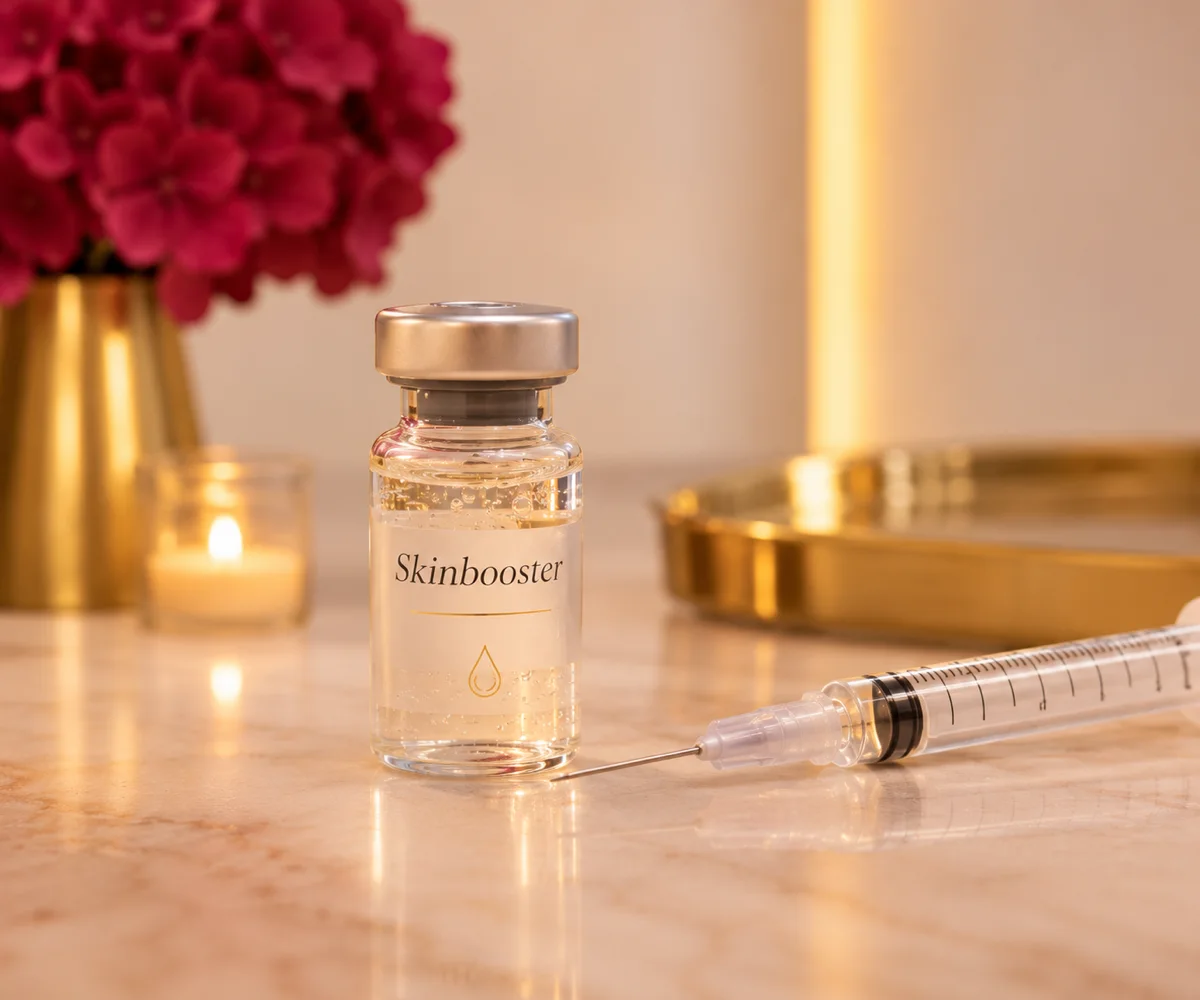
Bottle and syringe on a marble worktop, in warm light

Hydration

Skinbooster

Injections of low-concentration hyaluronic acid in the intimate area, with the aim of hydrating and revitalising the mucosa and tissues and improving comfort. Studies are few and small and the evidence for burning is limited. It does not replace treatment of the cause or vaginal oestrogen when that is what is indicated, and it does not treat infections, contact dermatitis or vulvodynia.

May be considered when

the burning is consistent with a thin, dry mucosa, infections and other causes have been excluded, first-line care has not been enough or cannot be used, the doctor has explained what is known and what is not known, and the decision is yours.

Find out more

What the journey looks like

From the first consultation to the plan tailored to you

No treatment begins without an assessment consultation with the doctor. First the cause is looked for, then the simplest option is chosen, and only later is anything more considered.

  1. 01At the clinic

    Assessment consultation

    The doctor listens to where and when it burns, what you have already done and what you use, and asks about the menopause, breastfeeding, medicines, infections and sex life, in private and without hurry.

  2. 02At the clinic

    Examination and tests

    The vulva and the mucosa are examined, the cotton bud test is done to see where it hurts, swabs are taken and a urine test with culture is requested when there are urinary symptoms. If there is a suspicious area, a biopsy may be done or a referral made to dermatology.

  3. 03At home

    Simplify and treat the cause

    Products that irritate are removed, a suitable moisturiser and lubricant are used and the cause that has been confirmed is treated: infection, dryness with prescribed vaginal oestrogen, skin disease. Repeating antifungals “blindly” is avoided.

  4. 04Over time

    Reassessing and deciding

    It is reassessed after a few weeks. If there is no improvement, another cause is sought, a referral is made to urology, dermatology or pelvic physiotherapy, and only then are additional options discussed, with the evidence explained.

Day to day

What helps while you wait for the consultation

Simple care to soothe the mucosa and the skin, alongside the plan the doctor indicates.

You are not imagining it

Burning that lasts deserves to be taken seriously

Many women are told that “the tests are normal” and spend months with a burning that no one explains. A negative swab excludes an infection but does not exclude other causes, and many of them have treatment. Talking about this at the consultation, in detail, is what speeds up the path the most.

Keep a burning diary

It shows the pattern: whether it gets worse with a product, at a certain time, on passing urine, after sex or before menstruation.

In practice: for 2 weeks, note the day, where it burns, from 0 to 10, what you used and what you did that day.

Simplify hygiene

The vulva is cleaned well with water. What is added on top tends to irritate.

In practice: wash only the outside, with water or a very gentle unperfumed product, dry without rubbing and do not use vaginal douches.

Choose breathable clothing and underwear

Heat, moisture and friction keep the skin irritated.

In practice: prefer cotton, avoid very tight clothing and change out of sports or swimwear after use.

Use a suitable moisturiser and lubricant

They help with dry mucosa and friction, especially during sex.

In practice: choose products with no perfume and no warming or cooling effect, water-based if you use latex condoms, and try a small amount first.

Dr Michelle Campagnoli, clinical director of Clínica Luxmed

Who will look after you

An assessment carried out by the doctor

At Luxmed, the first step is always an assessment consultation with Dr Michelle Campagnoli. She listens to what is going on, examines the vulva and the mucosa, excludes other causes and draws up the plan with you, in private and without hurry, coordinating with urology, dermatology or pelvic physiotherapy when needed.

  • Physical examination and medical historyA conversation about the burning, examination of the vulva and the mucosa, swabs and a urine test when necessary.
  • A plan tailored to youThe cause first and what is simple; additional treatments only if appropriate, with the evidence explained.
  • No obligationThe cost of any treatment is confirmed only after the assessment.
Book an assessment consultation

Book a consultation

Book your consultation

Choose how you prefer to get in touch. We will arrange the assessment consultation with Dr Michelle Campagnoli.

Booking through the website100€70€Assessment consultationExclusive price for those who book the assessment through the website. Outside the website, the price is 100 €.

New Life Miraflores, Algés · Office Center, R. Santa Teresa do Menino Jesus n.º 6, 9.º C, 1495-048

Your details are used only for this contact. Any treatment depends on a prior medical assessment.

Request an appointmentIt takes less than a minute.
Speciality
You do not need to go into detail. The doctor will talk to you during the consultation.
Request received. Our team will contact you as soon as possible.
Why do I have vaginal burning that does not go away, even without an infection?

When swabs and urine show no infection, the burning usually comes from one of a few areas: a thin, dry mucosa from lack of oestrogen, irritation or allergy to a product, a skin disease of the vulva, the nerves and muscles (vulvodynia) or contact of urine with skin that is already irritated. Sometimes there is more than one cause at the same time. Only a consultation, with an examination, says which weighs most in your case.

Why does it burn on passing urine if the urine test is normal?

Burning on passing urine can come from the bladder, but it can also come from urine passing over irritated skin and mucosa around the urethra, in which case it burns on the outside and there is no urinary infection. It is also more common when the mucosa of the urethra and vulva becomes thinner, in the menopause. If there is frequent urgency, cloudy urine or blood, a test with culture is done.

Is vaginal burning always thrush?

No. The symptoms of thrush are not specific and are easily confused with those of dryness, irritation, dermatitis and other diseases. In a study of 95 women who bought an antifungal for presumed thrush, only about a third actually had thrush. That is why it is advisable to confirm with an examination and a swab before repeating treatments, especially when the burning persists or comes back.

Can the menopause cause vaginal burning? And does oestrogen help?

It can: lack of oestrogen leaves the mucosa thinner and drier, and it is one of the most frequent causes of persistent burning at this stage. Low-dose vaginal oestrogen, prescribed and monitored by a doctor, has the best evidence, and a Cochrane review showed that it relieves symptoms. When there is a history of breast cancer, the decision is made together with the oncologist.

Can the burning be an allergy or irritation from a product?

Yes, and it is one of the most neglected causes. Perfumes, preservatives, pads and wipes, intimate washes, fabric softeners, lubricants and spermicides can irritate or cause an allergy in the vulva. The first step is to simplify the routine for a few weeks and, if the suspicion persists, to ask a dermatologist for allergy tests.

Which tests are done for burning that does not go away?

In most cases, the conversation, the examination of the vulva and the mucosa, the cotton bud test (which shows where it hurts), swabs and a urine test with culture when there are urinary symptoms are enough. A biopsy is kept for suspicious areas or skin diseases. It can be useful to show at the consultation, live, where and when it burns.

Do aesthetic gynaecology treatments resolve the burning?

There is not enough evidence. What is known comes from small, heterogeneous studies, mostly about dryness and not about burning itself. The clinic may propose skinbooster (hyaluronic acid) as an additional option when the burning is consistent with a thin, dry mucosa, but only after excluding other causes and explaining the limits of the evidence. No option replaces treatment of the cause.

Do vaginal lasers and radiofrequency treat burning?

There is no proof that they treat burning. A double-blind, sham-controlled trial with 85 women showed no improvement in symptom severity with CO2 laser at 12 months, and in 2018 the FDA (United States) warned that it has not approved these devices to treat menopausal symptoms and that they can cause burns, scars and pain during sex. If anyone promises to resolve the burning “in a few sessions”, be wary.

Does skinbooster have risks?

As with any injection, there may be temporary pain, redness, bruising and swelling at the site, and rarely infection or an inflammatory reaction. It is not done with an active infection, unexplained bleeding, undiagnosed lesions or pregnancy. The doctor explains the risks and the alternatives before deciding.

When should I book a consultation?

Book a consultation if the burning lasts more than a few weeks, comes back after being treated, appears on passing urine without infection, or if you have already used products without improvement. If you have blood in the urine, bleeding after the menopause or after sex, foul-smelling or differently coloured discharge, a sore or patch on the vulva that changes, or persistent pain, do not wait; outside opening hours, call SNS 24 (808 24 24 24). If you cannot pass urine, have a high fever with lower back pain, or severe and sudden pain, call 112.

We could not find that question. Ask us on WhatsApp

Scientific references

This page is based on the sources below and was reviewed by Dr. Michelle Campagnoli. Last updated on .

  1. The NAMS 2020 GSM Position Statement Editorial Panel. The 2020 genitourinary syndrome of menopause position statement of The North American Menopause Society. Menopause 27(9):976-992, 2020.
  2. Portman DJ, Gass ML; Vulvovaginal Atrophy Terminology Consensus Conference Panel. Genitourinary syndrome of menopause: new terminology for vulvovaginal atrophy from the International Society for the Study of Women's Sexual Health and the North American Menopause Society. Menopause 21(10):1063-1068, 2014.
  3. Lethaby A, Ayeleke RO, Roberts H. Local oestrogen for vaginal atrophy in postmenopausal women. Cochrane Database of Systematic Reviews 2016(8):CD001500, 2016.
  4. Perrotta C, Aznar M, Mejia R, Albert X, Ng CW. Oestrogens for preventing recurrent urinary tract infection in postmenopausal women. Cochrane Database of Systematic Reviews 2008(2):CD005131, 2008.
  5. National Institute for Health and Care Excellence (NICE). Urinary tract infection (recurrent): antimicrobial prescribing (NG112). NICE guideline NG112, 2018.
  6. NHS. Urinary tract infections (UTIs). (NHS (nhs.uk), acedido 2026-11-11)
  7. NHS. Thrush in men and women. (NHS (nhs.uk), acedido 2026-11-11)
  8. Workowski KA, Bachmann LH, Chan PA, et al. Sexually Transmitted Infections Treatment Guidelines, 2021 (capítulo Vulvovaginal Candidiasis). MMWR Recomm Rep 70(4):1-187 (CDC), 2021.
  9. NHS. Bacterial vaginosis. (NHS (nhs.uk), acedido 2026-11-11)
  10. Ferris DG, Nyirjesy P, Sobel JD, et al. Over-the-counter antifungal drug misuse associated with patient-diagnosed vulvovaginal candidiasis. Obstetrics & Gynecology 99(3):419-425, 2002.
  11. O'Gorman SM, Torgerson RR. Allergic contact dermatitis of the vulva. Dermatitis 24(2):64-72, 2013.
  12. Chen Y, Bruning E, Rubino J, Eder SE. Role of female intimate hygiene in vulvovaginal health: global hygiene practices and product usage. Women's Health (London) 13(3):58-67, 2017.
  13. NHS. Lichen sclerosus. (NHS (nhs.uk), acedido 2026-11-11)
  14. Lewis FM, Tatnall FM, Velangi SS, et al. British Association of Dermatologists guidelines for the management of lichen sclerosus, 2018. British Journal of Dermatology 178(4):839-853, 2018.
  15. Bornstein J, Goldstein AT, Stockdale CK, et al. 2015 ISSVD, ISSWSH and IPPS consensus terminology and classification of persistent vulvar pain and vulvodynia. Obstetrics & Gynecology 127(4):745-751, 2016.
  16. NHS. Vulvodynia (vulval pain). (NHS (nhs.uk), acedido 2026-11-11)
  17. Li FG, Maheux-Lacroix S, Deans R, et al. Effect of fractional carbon dioxide laser vs sham treatment on symptom severity in women with postmenopausal vaginal symptoms: a randomized clinical trial. JAMA 326(14):1381-1389, 2021.
  18. Prodromidou A, Zacharakis D, Athanasiou S, et al. CO2 Laser versus Sham Control for the Management of Genitourinary Syndrome of Menopause: A Systematic Review and Meta-Analysis of Randomized Controlled Trials. Journal of Personalized Medicine 13(12):1694, 2023.
  19. Medsafe (Nova Zelândia), a retransmitir o alerta da U.S. FDA. Safety Information: energy-based devices used for vaginal 'rejuvenation' or vaginal cosmetic procedures (relays the USFDA safety communication of July 2018). Medsafe, New Zealand Medicines and Medical Devices Safety Authority, 2018.
CallAssistantAvailableBook