Algés, Oeiras Mon to Sat · 09:00 to 13:00 and 14:00 to 19:00
WhatsApp Book a consultation

Hair problem

Hair lossWhen hair falls out more than it should

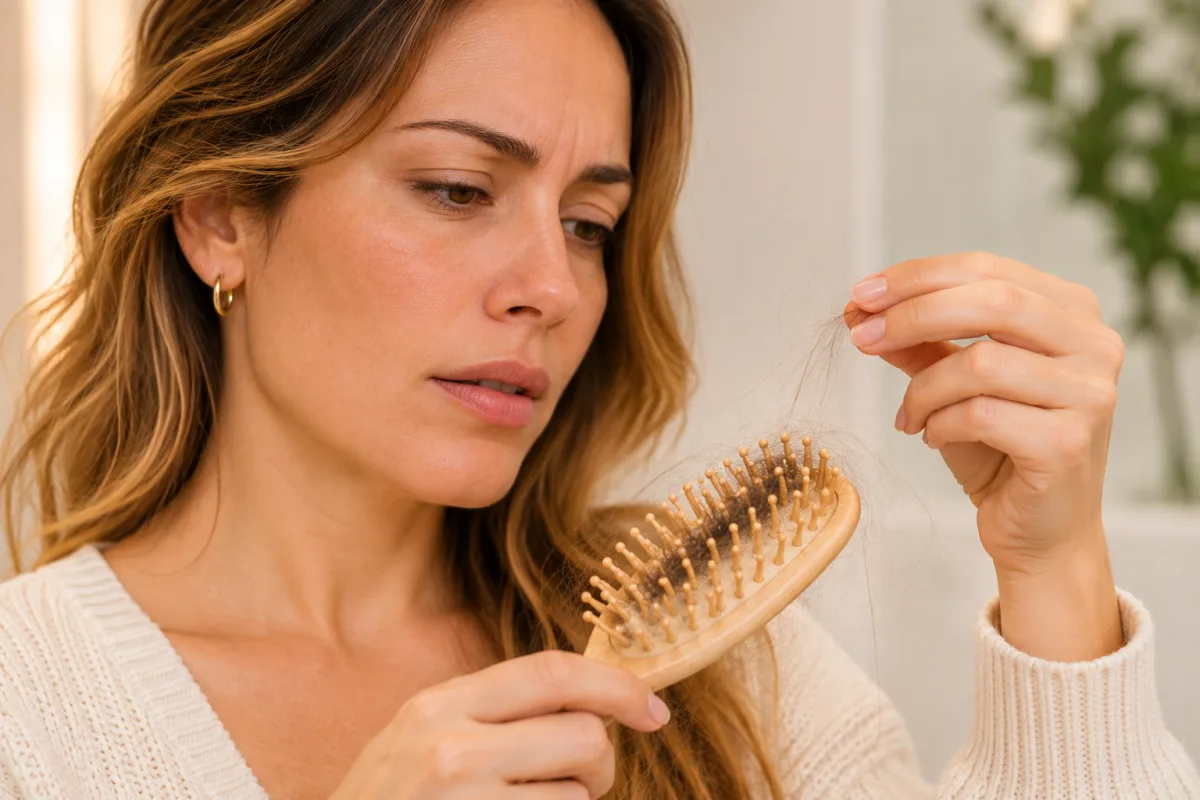
Losing a few hairs every day is normal. It becomes a concern when more fall than usual, over several weeks, or when the scalp starts to show. Here we explain how to tell the difference, why it happens and what the clinic can do for you.

Reviewed by Dr Michelle Campagnoli, clinical director

  • 3treatments the clinic may suggest
  • 1assessment consultation, always first
  • 70 €assessment booked through the website
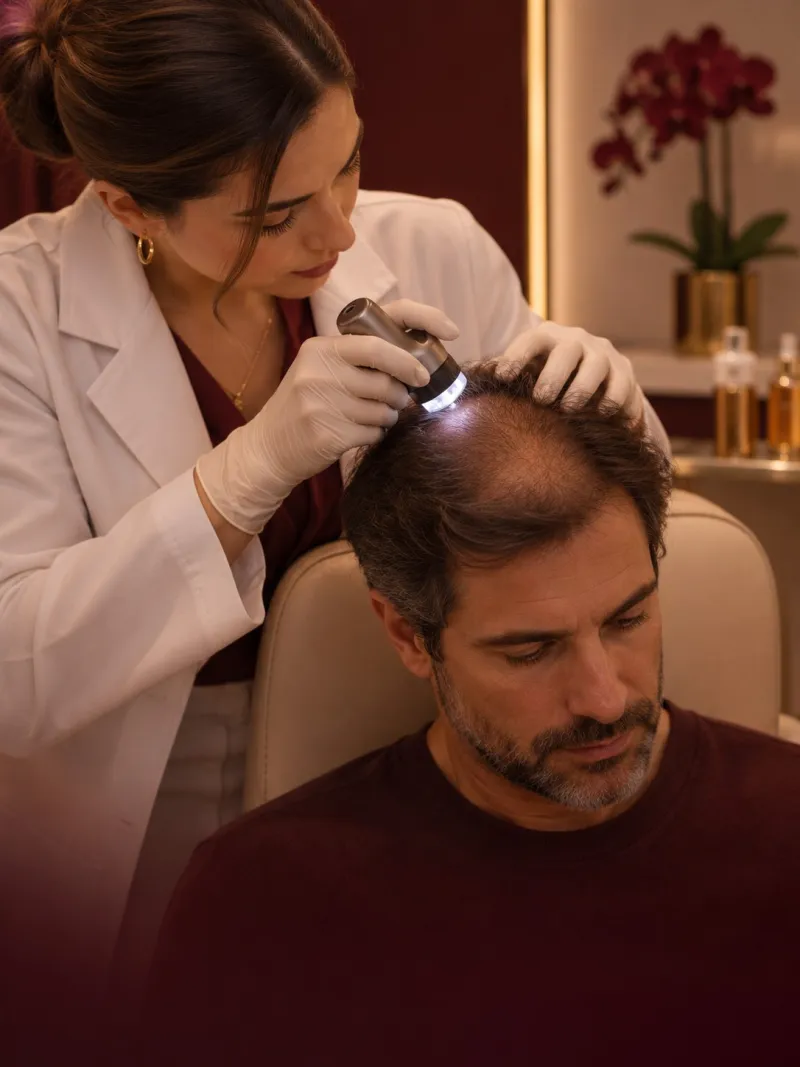
A doctor examining a man's scalp with a dermatoscope during a hair medicine consultation

How to recognise it

Is my hair loss worth having assessed?

Some hair loss is part of the normal cycle. What matters is how much, for how long, and what changed in your life around that time.

Tick what you recognise0/5

Tick the signs you recognise in your hair. This is not a diagnosis; it only gives you an idea.

Only a medical assessment can confirm it. Sudden, patchy hair loss, a painful scalp, sores, pus or heavy scaling should be seen without delay, as there may be another cause.

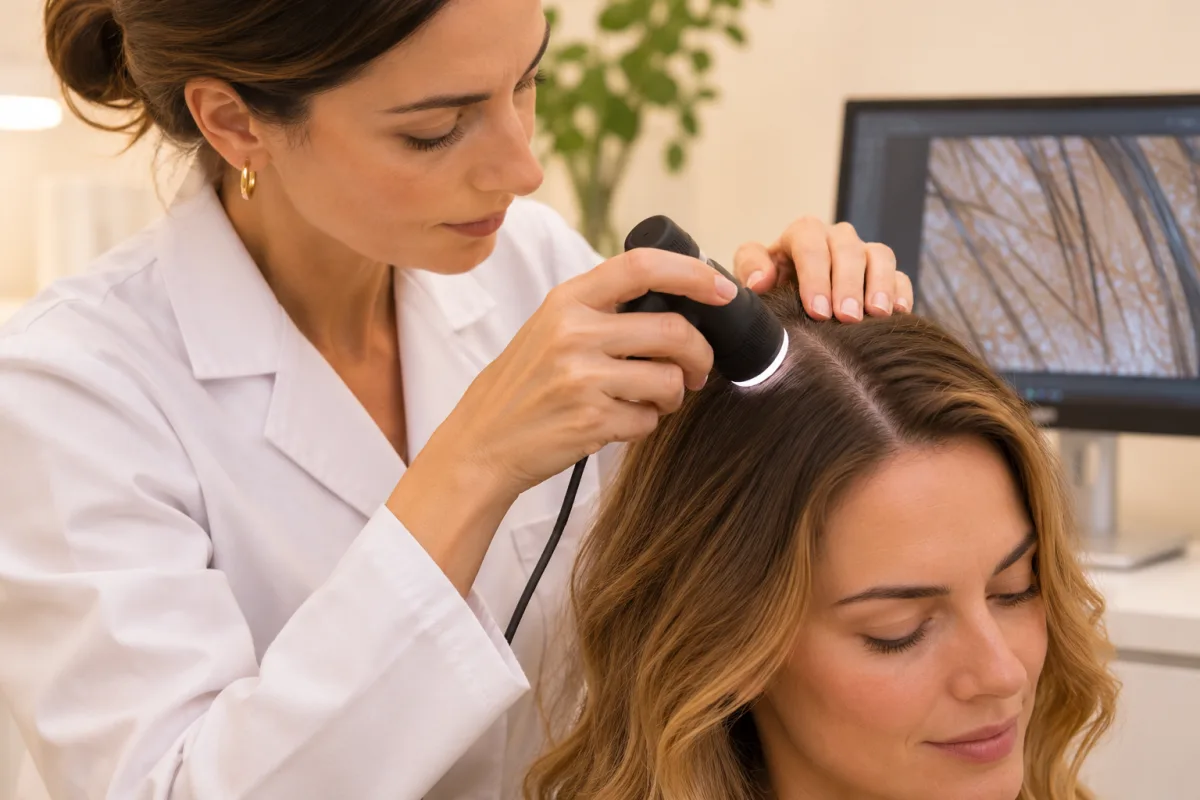
The doctor examining a patient's scalp during a hair assessment consultation
Photograph of an assessment consultation. The dots mark the areas where hair loss is usually noticed; the image does not show hair loss.

Why it happens

What makes hair fall out

Hair loss rarely has a single cause. Choose one of the most common to see what makes it worse and what helps.

Stress and illness

A period of severe stress, an illness with fever or surgery can make many hairs enter the shedding phase at the same time. It is usually noticed two to three months later.

What makes it worse

Prolonged stress, high fever, anaesthesia or recent surgery, and poor sleep.

What helps

Resting, sleeping well and discussing with the doctor if the hair loss does not ease.

Types of hair loss

Diffuse or localised hair loss

Hair loss can spread across the whole scalp or concentrate in one area. The difference helps the doctor understand the cause.

  • What it looks like. The hair becomes sparser everywhere, without marked bald spots. The parting widens and the ponytail gets thinner.

  • Common causes. Stress, illness, childbirth, diets, deficiencies and hormonal changes.

  • What the clinic does. The doctor looks for the cause, examines the scalp and proposes the plan.

  • At home. A balanced diet, rest and gentle scalp care.

Have you already tried several products without results? Tell us when booking the consultation, so the doctor can adapt the plan.

Book an assessment consultation

What the clinic can do

Treatments for hair loss

These are the treatments the clinic may propose to strengthen the follicle and reduce hair loss. They are not chosen by name: the doctor proposes the way forward after understanding the cause.

Book an assessment consultation
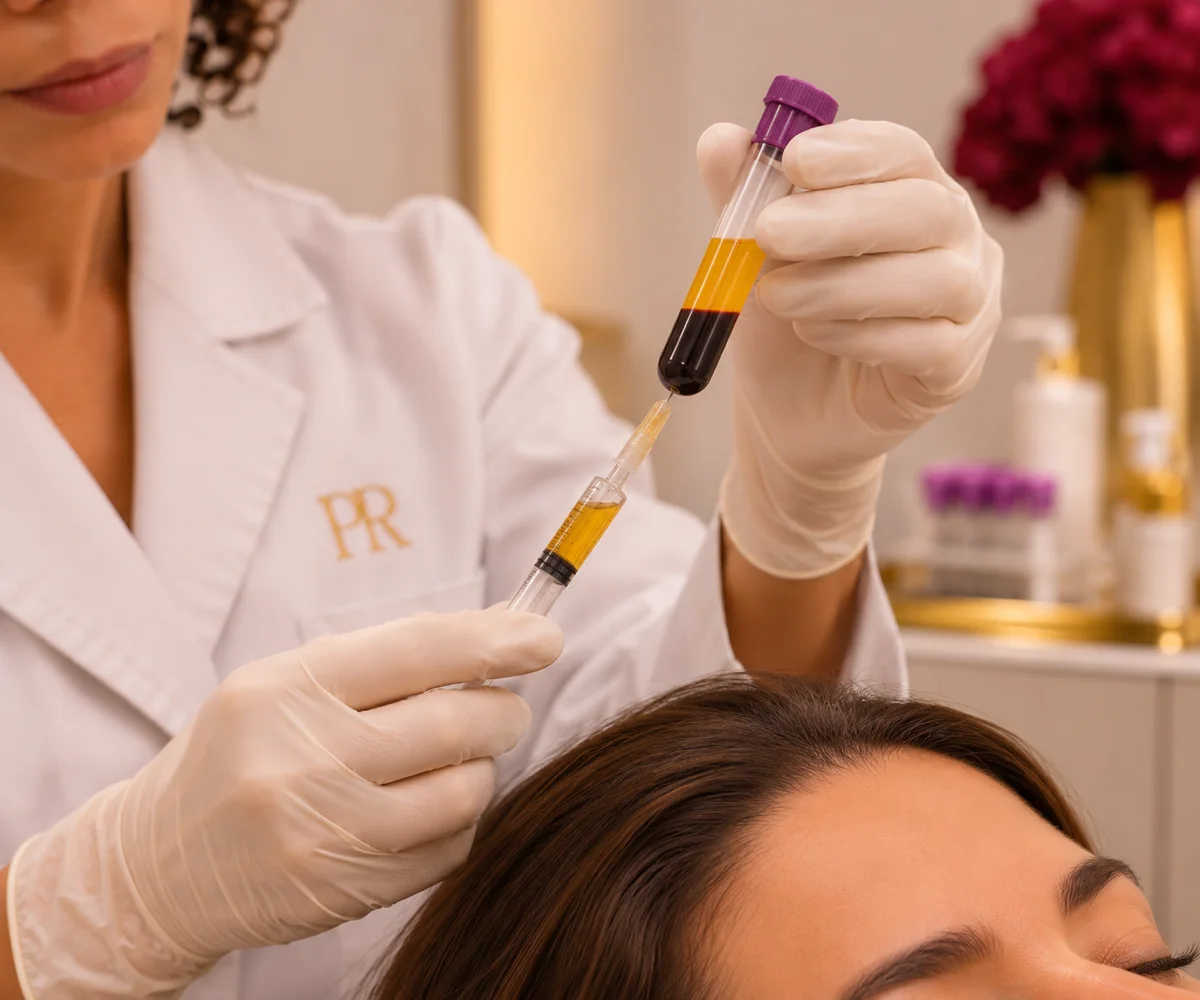
A doctor preparing platelet-rich plasma in a syringe, next to a tube of centrifuged blood

Regeneration

Hair PRP

Platelet-rich plasma, obtained from your own blood and applied to the scalp, to stimulate the follicle and reduce hair loss.

Suitable when

the hair loss has a treatable cause and the doctor considers PRP suitable.

Find out more
Ampoule of NCTF hair revitalisation and a syringe next to the scalp

Regeneration

Hair NCTF

Vitamins, amino acids, minerals and hyaluronic acid, to nourish the scalp and strengthen the hair strand.

Suitable when

the hair is weak or thin and the scalp needs to be nourished.

Find out more
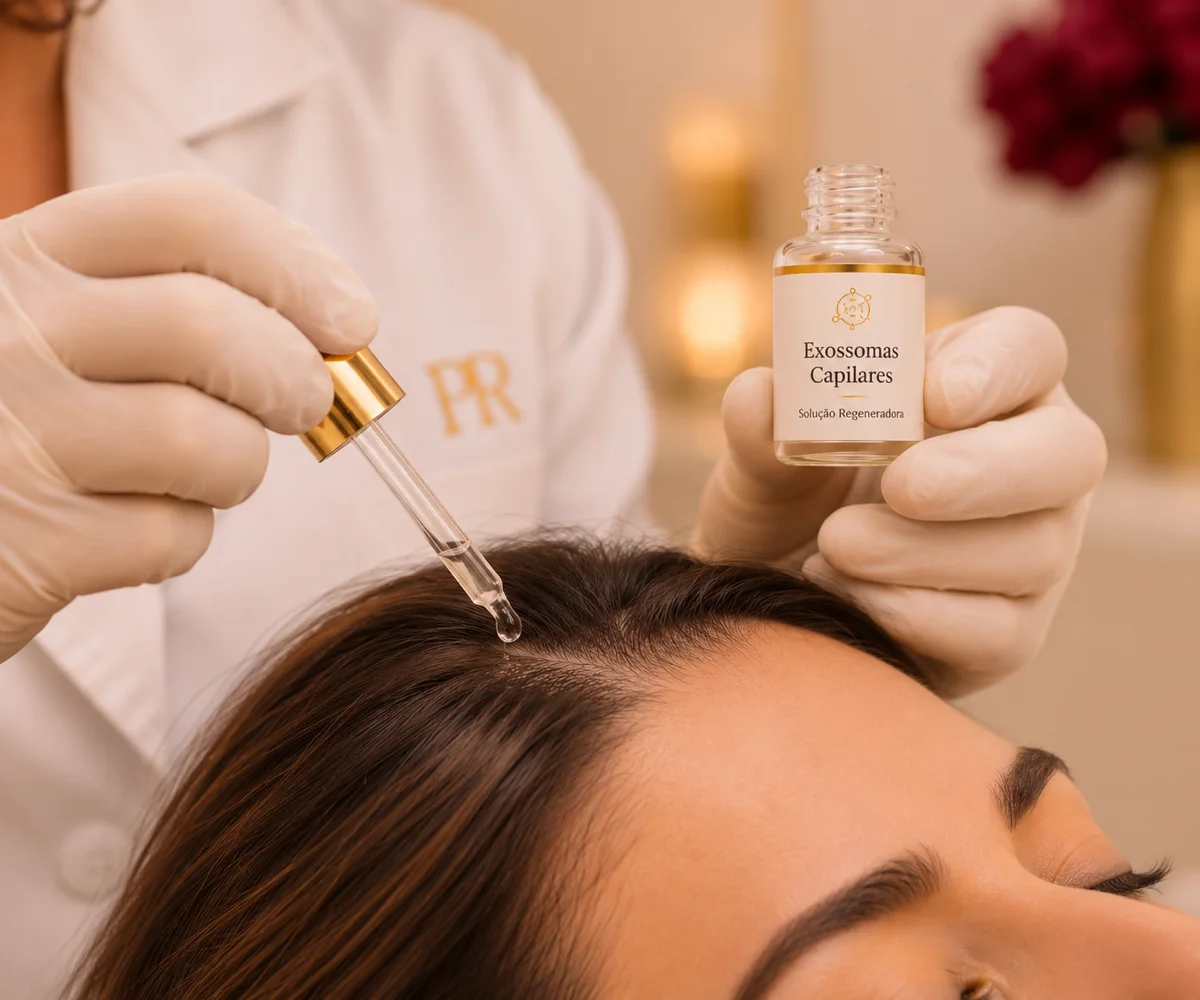
Vial of hair exosomes and a dropper over the scalp

Advanced regeneration

Hair exosomes

Regenerating solution to support the follicle's repair mechanisms and improve strand thickness.

Suitable when

the doctor considers it useful to reinforce the plan with a regenerating active ingredient.

Find out more

What about photobiodynamic therapy, microneedling and oral therapy? They may form part of the plan, alone or combined with these. The doctor decides after understanding the cause of the hair loss, and results are gradual and require maintenance.

What the journey looks like

From the first consultation to maintenance

No treatment starts without an assessment consultation with the doctor. This is how it works.

  1. 01At the clinic

    Assessment consultation

    The doctor asks since when the hair has been falling, what changed, your medication and diet, examines the scalp and, if useful, performs a trichoscopy.

  2. 02At the clinic

    A plan tailored to you

    She explains the most likely cause, the options, what to expect and how long it may take, and chooses the way forward with you.

  3. 03At the clinic and at home

    Treatment and care

    The treatment is done during the consultation and you receive clear instructions for home, with the right care for your scalp.

  4. 04Over time

    Follow-up

    We look at the scalp again, adjust the plan and agree on maintenance, because the hair cycle is slow and results appear gradually.

Day to day

What helps at home

Home care does not replace assessment, but it helps avoid making the hair loss worse. These are the ones that matter most.

The golden rule

Strong hair, calm scalp

Gentle washing, delicate handling and a diet that gives the follicle what it needs. In hair loss, understanding the cause is as important as starting treatment.

Wash gently

A clean, calm scalp is the basis of stronger hair.

In practice: use lukewarm water and a mild shampoo, and massage with your fingertips, without nails.

A complete diet

The strand is made of protein and needs iron, vitamins and minerals.

In practice: include protein at every meal and avoid very restrictive diets.

Sleep and rest

Stress and poor sleep weigh on the hair cycle.

In practice: keep regular hours and set aside time to rest.

Keep a record of the hair loss

It helps the doctor understand when it started and what changed.

In practice: note when the hair loss increased and what happened beforehand: illness, stress, diet or medication.

Dr Michelle Campagnoli, clinical director of Clínica Luxmed

Who will look after you

An assessment carried out by the doctor

At Luxmed, the first step is always an assessment consultation with Dra. Michelle Campagnoli. She examines your scalp, looks for the cause of the hair loss and designs the plan with you, taking the time needed and without rushing.

  • Physical examination and medical historyDetailed assessment of the scalp and hair, with trichoscopy when the doctor considers it useful.
  • A plan tailored to youTreatments, number of sessions and care, clearly explained.
  • No obligationThe cost of any treatment is confirmed only after the assessment.
Book an assessment consultation

Book a consultation

Book your consultation

Choose how you prefer to get in touch. We will arrange the assessment consultation with Dr Michelle Campagnoli.

Booking through the website100€70€Assessment consultationExclusive price for those who book the assessment through the website. Outside the website, the price is 100 €.

New Life Miraflores, Algés · Office Center, R. Santa Teresa do Menino Jesus n.º 6, 9.º C, 1495-048

Your details are used only for this contact. Any treatment depends on a prior medical assessment.

Request an appointmentIt takes less than a minute.
Speciality
You do not need to go into detail. The doctor will talk to you during the consultation.
Request received. Our team will contact you as soon as possible.
How many hairs is it normal to lose per day?

It is normal to lose some hairs every day, usually a few dozen, because hair renews itself in cycles. It becomes a concern when the hair loss clearly increases, lasts for weeks or the hair starts to look sparser.

Why does hair fall out?

There are several causes: heredity, hormones, stress, illness, childbirth, menopause, restrictive diets, certain medications and scalp problems. That is why the assessment starts by understanding the cause, which cannot be told apart on your own.

Is hair loss temporary?

It depends on the cause. Some hair loss, such as that following a period of stress or an illness, usually eases with time; other types, such as hereditary hair loss, tend to continue without treatment. The doctor explains what to expect in your case.

What treatments does the clinic use?

Intradermotherapy and hair microneedling, with regenerative actives such as PRP, PDRN, NCTF and exosomes, photobiodynamic therapy and conservative oral therapy. The doctor defines the plan after the assessment and may combine several.

Is the treatment expensive? Does it hurt?

The price depends on the plan chosen, so it is given at the assessment consultation, after the doctor has seen your scalp. Discomfort varies from person to person and from treatment to treatment, and the doctor explains what to expect before starting.

How long does it take to see results?

Hair grows slowly, so results are gradual and are usually noticed after a few months. No treatment gives the same result to everyone, and maintenance is part of the plan.

Do I need blood tests?

Not always. When the doctor considers it useful, she requests blood tests to understand the state of the body, for example hormonal changes or deficiencies.

When should I book a consultation?

When the hair loss increases, lasts more than a few weeks or the hair looks sparser. Sudden, patchy hair loss, a painful scalp or sores should be seen without delay. The earlier it is assessed, the simpler the plan usually is.

Can I be treated if I am pregnant or breastfeeding?

Some treatments are not indicated at these stages. If you are pregnant or breastfeeding, say so when booking, so the doctor can propose suitable options.

Will a shampoo or an ampoule solve the hair loss?

Over-the-counter products can help with scalp care, but they do not treat the cause. If the hair loss continues, it is worth having it assessed by the doctor rather than switching products.

We could not find that question. Ask us on WhatsApp

CallAssistantAvailableBook