

Algés, Oeiras Mon to Fri · 09:00 to 13:00 and 14:00 to 19:00 · Sat · 09:00 to 14:00
WhatsApp Book a consultation

Aesthetic gynaecology

Difficulty reaching orgasmWhen orgasm takes a long time, fails or no longer comes as it used to, and what may be behind it

Some women have never reached orgasm, others only reach it alone, others used to and no longer do, and others take so long that they tire before it comes. All of these situations fall under what people describe as “difficulty reaching orgasm”, and the medical term, when it is persistent and bothersome, is female orgasmic disorder (or anorgasmia). Sexual response depends at the same time on the body, the mind, the relationship, the context and practical aspects such as the type of stimulation, so there is rarely a single cause. Here we explain what is common and what is not, what is assessed, what helps, starting with information and sex therapy, and what the clinic can propose, with honesty about what the evidence shows.

Reviewed by Dr Michelle Campagnoli, clinical director

  • 18 %of women say that penetration alone is enough for orgasm (a study of 1055 North American women)
  • 1assessment consultation, always first
  • 70 €assessment booked through the website
Woman in a burgundy puffer jacket sitting on the metro with closed eyes and headphones, looking serene

How to recognise it

Could it be difficulty reaching orgasm?

It is not a diagnosis in itself: it is what a woman feels when orgasm takes a very long time, only comes under certain conditions or has stopped coming. What counts is since when it has been happening, in which situations, and whether it bothers you.

Tick what you recognise0/7

Tick the signs you recognise in your case. This is not a diagnosis, it is only meant to give you an idea.

Do you have persistent or sudden pain during sex, bleeding after sex or after the menopause, abnormal discharge, lesions on the vulva that change, loss of sensation with weakness in the legs, difficulty passing urine, or do you feel fear or discomfort with what happens during sex? You need assessment and should not wait. Outside opening hours, call SNS 24: 808 24 24 24.

Female doctor in a white coat and a patient in a mustard sweater talking in a consulting room, with a notepad
Photograph of a consultation. The dots mark what the doctor assesses; the image does not show the intimate area.

Why it happens

What may lie behind difficulty reaching orgasm

Orgasm is a response of the body and the mind at the same time, and it is enough for one of the elements to fail for it to take longer or not to come. Choose a situation to see how it applies.

Stimulation and context

The clitoris is the part of the body most linked to orgasm, with a very rich network of nerves. In a survey of 1055 North American women, only 18.4% said that penetration alone was enough for orgasm, 36.6% needed clitoral stimulation during sex and another 36% said that orgasm was better with it. Hurry, little privacy, little stimulation or stimulation that is not what the woman prefers explain many difficulties.

What weighs on it

Expecting penetration alone to lead to orgasm, or having sex in a hurry, tired or with little privacy.

What helps

Knowing what gives you pleasure, saying so, giving arousal time and including clitoral stimulation.

Normal or to be assessed

Common variation or a difficulty to assess

Not every difficulty reaching orgasm is a problem to treat. It is worth knowing which situation you are in before choosing what to do.

  • How it shows. Orgasm comes with certain types of stimulation (for example, of the clitoris) and not with penetration alone, or takes longer at certain stages of life or on days of tiredness and stress.

  • When it happens. Intermittently and linked to context. If it does not bother you or your relationship, it does not need to be treated.

  • What the clinic does. The doctor listens to what is going on, explains what is common variation and confirms that there is no other cause to treat.

  • At home. Knowing what you like, giving it time and telling your partner, and taking off the weight of “having to get there”.

Have you suddenly lost sensation in the intimate area with weakness in the legs, or are you unable to pass urine? Call 112 or go to the emergency department. If you have pain, bleeding after sex, abnormal discharge or doubts, outside opening hours you can call SNS 24: 808 24 24 24.

Book an assessment consultation

What can help

Options for difficulty reaching orgasm

First-line care is information about sexual response and sex therapy (or psychotherapy), which have the most solid evidence for difficulties with orgasm, and reviewing what may be having an influence: medicines, dryness and menopause (moisturisers, lubricants and, with a prescription, low-dose vaginal oestrogen), underlying diseases and pain, if present. Pelvic floor physiotherapy may have a place when there is pelvic floor dysfunction. There is no medicine specifically approved to treat difficulty reaching orgasm, and testosterone is only recommended, in international consensus, for postmenopausal women with very low sexual desire, and not for orgasm. The treatment below is an additional option, assessed case by case and without promising results, with limited evidence.

Book an assessment consultation
Dr Michelle Campagnoli, clinical director of Clínica Luxmed

First step

Assessment consultation

The doctor listens to what you are experiencing, examines your case and explains the suitable options. No treatment begins without this consultation.

May be considered when

you want to understand the cause and decide on the best path, with time and without commitment.

Book an assessment consultation
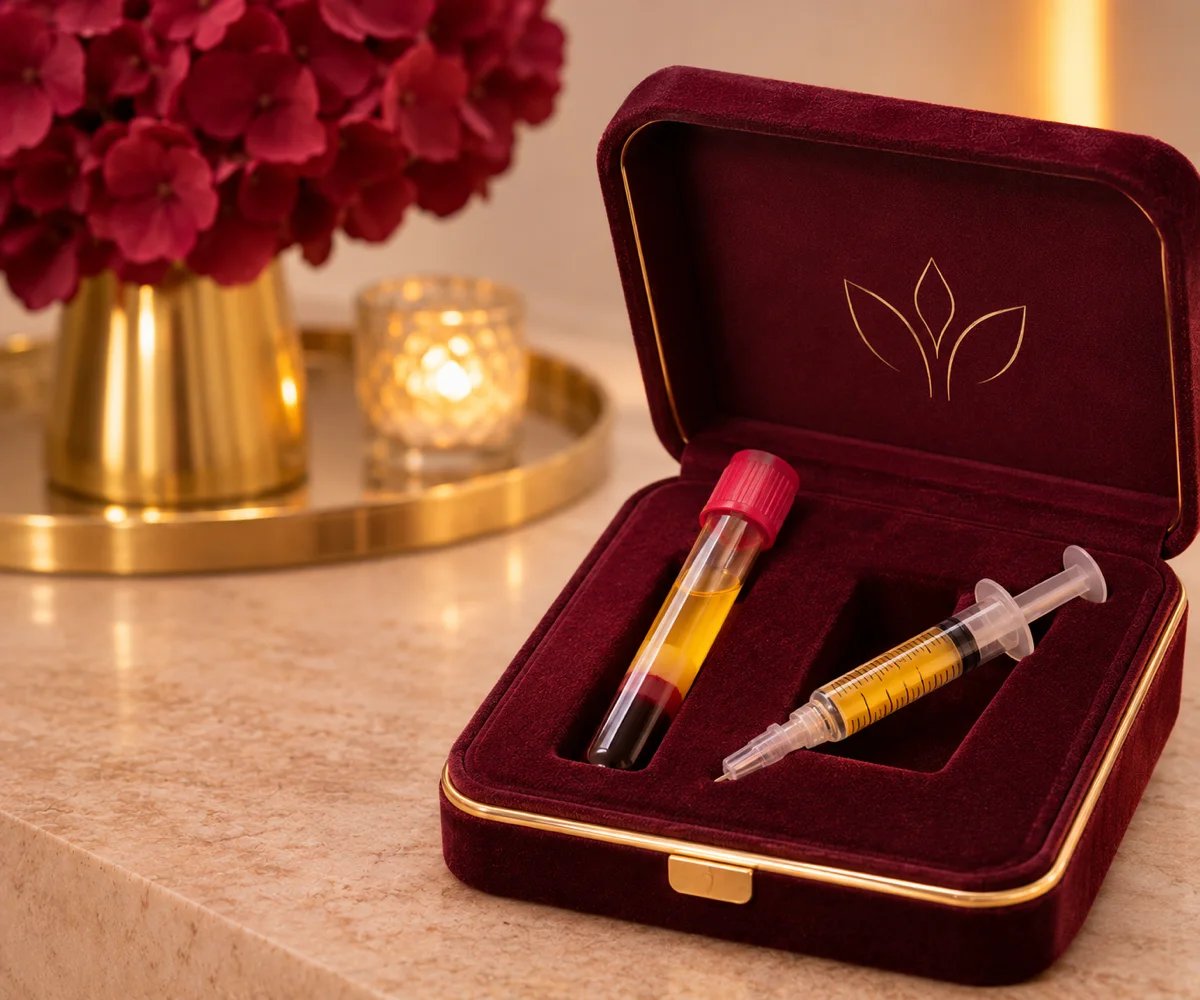
Plasma tube and syringe in a burgundy velvet case on a countertop

Injectable treatment

O-SHOT (Orgasm Shot)

Application of platelet-rich plasma (PRP), obtained from your own blood, in the region of the clitoris and the anterior vaginal wall, with the aim of improving sensitivity and sexual response. Studies are few and small, mostly without a comparison group, and there is no solid proof that it improves difficulty reaching orgasm. It does not replace sex therapy or treatment of the causes.

May be considered when

the medical, hormonal and medication causes have been assessed, information and sex therapy have been tried (or continue) and have not been enough, the doctor has explained what is known and what is not known, and the decision is yours.

Find out more

What the journey looks like

From the first consultation to the plan tailored to you

No treatment starts without an assessment consultation with the doctor. Most women start with the simplest approach, and only then is more considered.

  1. 01At the clinic

    Assessment consultation

    The doctor listens to how and when orgasm fails, since when, what you have already tried and what bothers you, in private and without hurry. She asks about medication, the menopause, births, illnesses and the context of the relationship.

  2. 02At the clinic

    Examination, when it makes sense

    If necessary, and with your consent, a gynaecological examination is done, the mucosa, sensitivity and the pelvic floor are assessed and pain, atrophy or skin conditions are looked for. Blood tests may be requested to investigate an underlying cause.

  3. 03At home and with support

    Information, stimulation and therapy

    It starts with the simplest: information about sexual response, lubricant and suitable stimulation, and treating dryness if present. When it makes sense, the doctor proposes sex therapy, psychology or pelvic physiotherapy and, where relevant, a review of medication with the doctor who prescribes it.

  4. 04Over time

    Reassessing and deciding

    What has changed is assessed again. If it is not enough, or if there are warning signs, the doctor explains the other routes and refers. Additional treatments are only considered afterwards, with the evidence explained.

Day to day

What helps while you wait for the consultation

Simple care that supports sexual response, alongside the plan the doctor indicates.

It is not your fault

Reaching orgasm is not a test

Difficulties are common, and most of the time they have an explanation. Many women stay silent out of embarrassment or think that “the problem is them”. Orgasm is not the only measure of a good sex life, and the pressure to have one is often part of the problem. Talking about it, with the doctor or with a therapist, is the first step.

Know what gives you pleasure

Each body responds differently, and knowing what pleases you helps you to say so and to repeat it.

In practice: explore on your own, without hurry and without a goal, with lubricant if you need it, and notice what you feel instead of trying to reach an end point.

Talk to your partner

Many difficulties dissolve when what you like is said out loud.

In practice: choose a calm moment, outside the bed, and say what you like, what you do not like and what you would like to try.

Give it time and take off the pressure

The anxiety of “having to get there” makes orgasm harder and prolongs the cycle.

In practice: prolong the caresses, agree on moments with no goal of orgasm and pay attention to the sensations of the body instead of watching yourself.

Record what changed and when

It shows whether the difficulty began with a medicine, with the menopause or with another change, and helps the doctor a great deal.

In practice: note since when it has been happening, in which situations, the medicines you take and what you have already tried.

Dr Michelle Campagnoli, clinical director of Clínica Luxmed

Who will look after you

An assessment carried out by the doctor

At Luxmed, the first step is always an assessment consultation with Dr Michelle Campagnoli. She listens to what is going on, assesses the mucosa, the pelvic floor and other possible causes, and draws up the plan with you, in private and without hurry, coordinating with sex therapy, psychology or pelvic physiotherapy when needed.

  • Physical examination and medical historyA conversation about what has changed and since when, medication and health history, and a gynaecological examination when it makes sense.
  • A plan tailored to youFirst information and therapy; additional treatments only if appropriate, with the evidence explained.
  • No obligationThe cost of any treatment is confirmed only after the assessment.
Book an assessment consultation

Book a consultation

Book your consultation

Choose how you prefer to get in touch. We will arrange the assessment consultation with Dr Michelle Campagnoli.

Booking through the website100€70€Assessment consultationExclusive price for those who book the assessment through the website. Outside the website, the price is 100 €.

New Life Miraflores, Algés · Office Center, R. Santa Teresa do Menino Jesus n.º 6, 9.º C, 1495-048

Your details are used only for this contact. Any treatment depends on a prior medical assessment.

Request an appointmentIt takes less than a minute.
Speciality
You do not need to go into detail. The doctor will talk to you during the consultation.
Request received. Our team will contact you as soon as possible.
Is it normal to have difficulty reaching orgasm?

It is common. Sexual difficulties are very common: a meta-analysis estimated that they affect about 41% of premenopausal women, although estimates vary greatly between studies and depending on the definition. Often there is a simple explanation, such as stimulation, context, tiredness or medicines. But if the difficulty is persistent and bothers you, it deserves to be assessed, and there is a way forward.

Are difficulty reaching orgasm and anorgasmia the same thing?

They are linked, but not the same. “Anorgasmia” describes the absence of orgasm, whether it has always been so (primary) or after it previously existed (secondary). “Difficulty” or “delay” also includes those who do reach orgasm, but take a very long time or only under certain conditions. The medical term that covers all of this is female orgasmic disorder, used when it is persistent and causes distress.

I reach orgasm alone but not with another person: why?

It is very common, and almost never indicates a disease. When you are alone, you control the rhythm, the type of touch, the privacy and the attention. With another person, hurry, embarrassment, anxiety or different stimulation can arise. Talking about what you like, giving it time and including clitoral stimulation usually helps, and sex therapy can support anyone who feels blocked.

I need clitoral stimulation to reach orgasm: is something wrong?

No. In the survey of 1055 North American women, only 18.4% said that penetration alone was enough for orgasm, 36.6% needed clitoral stimulation during sex and another 36% said that orgasm was better with it. Anatomy explains it: the clitoris is a structure larger than the visible part, connected to the urethra and the vagina, with many nerves. Needing it is the rule and not a defect.

Does sex therapy help?

It is what has the most evidence. In a meta-analysis of 20 trials, psychological interventions improved the severity of sexual symptoms and satisfaction, with good evidence for female orgasmic disorder; another review considered psychological treatments for orgasm the best established among female dysfunctions. It includes information, exercises to do at home, communication with your partner and, when it makes sense, mindfulness training. It can be done alone or as a couple.

Can medicines make orgasm difficult?

Yes. Some antidepressants, antihypertensives, antipsychotics and antihistamines can make orgasm difficult, and the meta-analysis of antidepressants showed that the effect varies greatly from drug to drug. Do not stop or change your medication on your own: talk to the doctor who prescribed it, who can adjust the dose, change the drug or propose another strategy.

Menopause and hormones: what helps?

The fall in oestrogen thins the mucosa, causes dryness and pain, and can reduce sensitivity, making orgasm harder. Moisturisers and lubricants are first-line, and low-dose vaginal oestrogen, prescribed by a doctor, can help. If you have or have had breast cancer, speak to your oncologist first. Testosterone is only recommended, in international consensus, for postmenopausal women with very low sexual desire, and not to treat difficulty reaching orgasm.

Does the O-SHOT (platelet-rich plasma) resolve difficulty reaching orgasm?

There is not enough evidence. A 2023 systematic review found improvements in sexual function questionnaires in small studies, mostly without a comparison group, and concluded that the level of evidence is low. That is why the doctor only proposes it after assessing the other causes and after information and therapy have been tried, and explains what is and is not known. The decision is always shared with you.

What about vaginal lasers and radiofrequency?

In 2018 the FDA (United States) warned that it has not approved energy-based devices, such as laser and radiofrequency, to treat sexual function, and that they can cause burns, scars and pain during sex. The North American Menopause Society considers that controlled trials are lacking to draw conclusions. They are not what we propose for this problem, and be wary of anyone who promises them as a solution for orgasm.

When should I book a consultation?

Book a consultation if the difficulty has persisted for months and bothers you, if you have suddenly stopped reaching orgasm, if it began after a new medicine, the menopause or an illness, or if you have pain or dryness. If you have persistent or sudden pain, bleeding after sex, abnormal discharge or lesions of the vulva that change, call SNS 24 (808 24 24 24). If you have suddenly lost sensation with weakness in the legs, or cannot pass urine, call 112.

We could not find that question. Ask us on WhatsApp

Scientific references

This page is based on the sources below and was reviewed by Dr. Michelle Campagnoli. Last updated on .

  1. Laan E, Rellini AH, Barnes T; International Society for Sexual Medicine. Standard operating procedures for female orgasmic disorder: consensus of the International Society for Sexual Medicine. Journal of Sexual Medicine 10(1):74-82, 2013.
  2. Frühauf S, Gerger H, Schmidt HM, Munder T, Barth J. Efficacy of psychological interventions for sexual dysfunction: a systematic review and meta-analysis. Archives of Sexual Behavior 42(6):915-933, 2013.
  3. Heiman JR. Psychologic treatments for female sexual dysfunction: are they effective and do we need them?. Archives of Sexual Behavior 31(5):445-450, 2002.
  4. Brotto L, Atallah S, Johnson-Agbakwu C, et al. Psychological and interpersonal dimensions of sexual function and dysfunction. Journal of Sexual Medicine 13(4):538-571, 2016.
  5. Stephenson KR, Kerth J. Effects of mindfulness-based therapies for female sexual dysfunction: a meta-analytic review. Journal of Sex Research 54(7):832-849, 2017.
  6. Herbenick D, Fu TJ, Arter J, Sanders SA, Dodge B. Women's experiences with genital touching, sexual pleasure, and orgasm: results from a U.S. probability sample of women ages 18 to 94. Journal of Sex & Marital Therapy 44(2):201-212, 2018.
  7. O'Connell HE, Sanjeevan KV, Hutson JM. Anatomy of the clitoris. Journal of Urology 174(4 Pt 1):1189-1195, 2005.
  8. McCool ME, Zuelke A, Theurich MA, et al. Prevalence of female sexual dysfunction among premenopausal women: a systematic review and meta-analysis of observational studies. Sexual Medicine Reviews 4(3):197-212, 2016.
  9. Serretti A, Chiesa A. Treatment-emergent sexual dysfunction related to antidepressants: a meta-analysis. Journal of Clinical Psychopharmacology 29(3):259-266, 2009.
  10. The NAMS 2020 GSM Position Statement Editorial Panel. The 2020 genitourinary syndrome of menopause position statement of The North American Menopause Society. Menopause 27(9):976-992, 2020.
  11. The NAMS 2022 Hormone Therapy Position Statement Advisory Panel. The 2022 hormone therapy position statement of The North American Menopause Society. Menopause 29(7):767-794, 2022.
  12. Davis SR, Baber R, Panay N, et al. Global consensus position statement on the use of testosterone therapy for women. Journal of Clinical Endocrinology & Metabolism 104(10):4660-4666, 2019.
  13. Ferreira CH, Dwyer PL, Davidson M, et al. Does pelvic floor muscle training improve female sexual function? A systematic review. International Urogynecology Journal 26(12):1735-1750, 2015.
  14. Pontiroli AE, Cortelazzi D, Morabito A. Female sexual dysfunction and diabetes: a systematic review and meta-analysis. Journal of Sexual Medicine 10(4):1044-1051, 2013.
  15. Dankova I, Pyrgidis N, Tishukov M, Georgiadou E, Nigdelis MP, Dimitrakopoulos P, et al. Efficacy and safety of platelet-rich plasma injections for the treatment of female sexual dysfunction and stress urinary incontinence: a systematic review. Biomedicines 11(11):2919, 2023.
  16. International Urogynecological Association (IUGA), a reproduzir o alerta da U.S. FDA. FDA warns against use of energy-based devices to perform vaginal rejuvenation or vaginal cosmetic procedures: FDA safety communication. IUGA, notícia de 30 de julho de 2018, 2018.
  17. Medsafe (Nova Zelândia), a retransmitir o alerta da U.S. FDA. Safety information: energy-based devices used for vaginal rejuvenation or vaginal cosmetic procedures (relays the USFDA safety communication of July 2018). Medsafe, New Zealand Medicines and Medical Devices Safety Authority, 2018.
  18. Sexual Medicine Society of North America (SMSNA). What can cause orgasm difficulties in women?. SMSNA, informação para doentes, 2026.
CallAssistantAvailableBook