Algés, Oeiras Mon to Fri · 09:00 to 13:00 and 14:00 to 19:00 · Sat · 09:00 to 14:00
WhatsApp Book a consultation

Aesthetic gynaecology

Pain on penetration due to fissuresWhen the skin at the entrance to the vagina splits during sex and leaves pain and burning in the following days

It hurts at the moment of penetration, it feels as if the skin “tears”, and afterwards a small sore remains that burns in the shower, on passing urine or the next time you have sex. This is how many women describe fissures at the entrance to the vagina. They are usually small, but when they recur they should not be treated only as “sensitive skin”: behind them there may be dryness, an infection, a skin disease of the vulva or muscles that contract. Here we explain how to recognise a fissure, what is assessed, what helps at home and what the clinic can propose afterwards, with honesty about the evidence.

Reviewed by Dr Michelle Campagnoli, clinical director

  • 4usual causes to tell apart: fissured skin, dryness, infection and tense muscles
  • 1assessment consultation, always first
  • 70 €assessment booked through the website
A woman with curly hair in a burgundy blouse sits at a restaurant table, making a gesture of discomfort

How to recognise it

Could it be a fissure?

A fissure is a small crack in the skin or mucosa, almost always at the entrance to the vagina. Not all pain on penetration comes from a fissure, but there are signs that suggest one. What counts is where it hurts, whether there is a sore and whether it keeps coming back in the same place.

Tick what you recognise0/7

Tick the signs you recognise in your case. This is not a diagnosis, it is only meant to give you an idea.

Do you have bleeding after sex with no visible sore, bleeding after the menopause, abnormal or foul-smelling discharge, a patch, lump or ulcer on the vulva that changes or does not heal, sudden pain or pain that does not go away, fever, difficulty passing urine or blood in the urine? You need prompt assessment and the pain should not be accepted as normal. Outside opening hours, call SNS 24: 808 24 24 24.

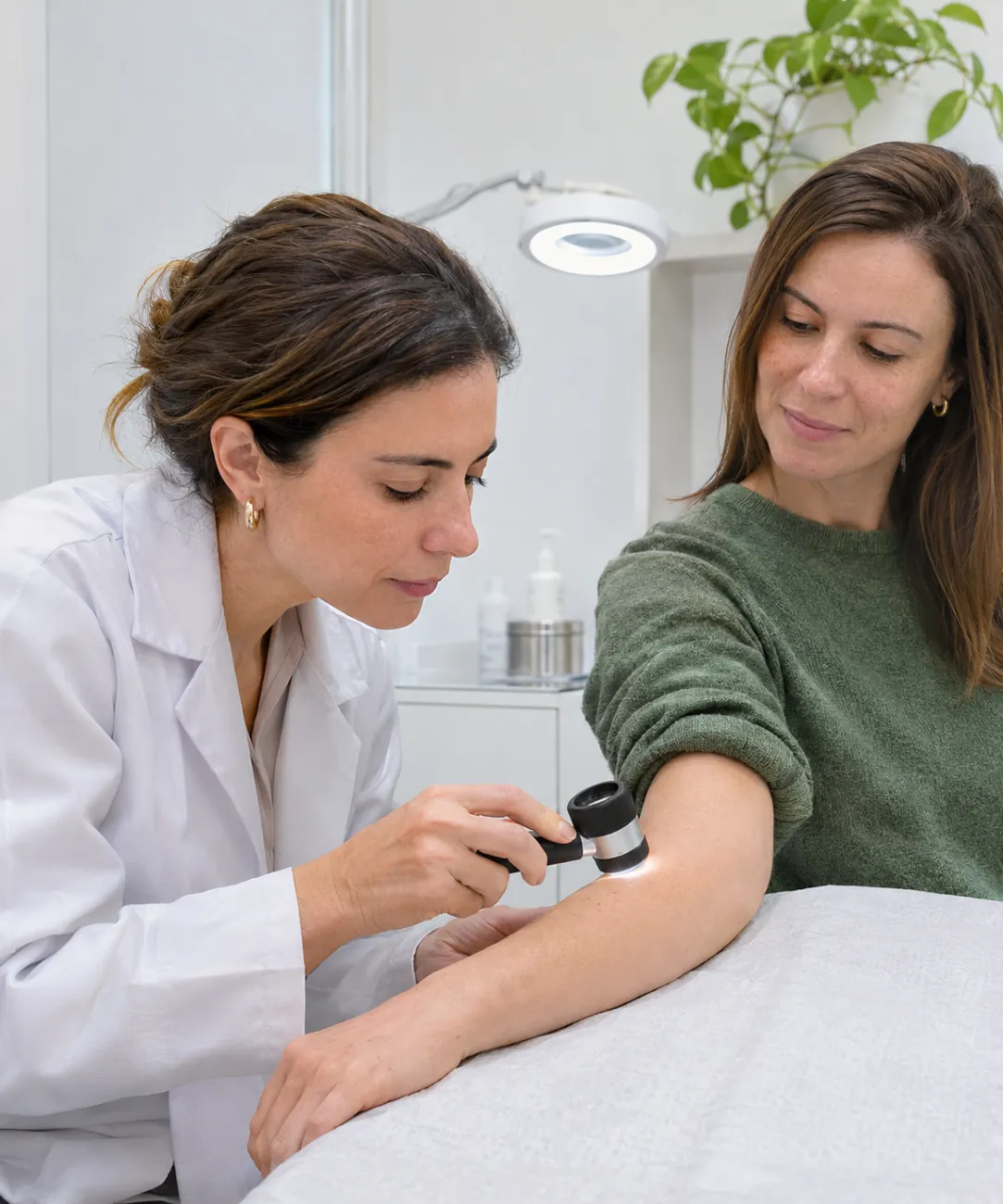
A dermatologist in a white coat examines the forearm of a patient in a green sweater with a dermatoscope
Photograph of a consultation. The dots mark what the doctor assesses; the image does not show the intimate area.

Why it happens

What may lie behind a fissure that hurts

The skin at the entrance to the vagina is thin and has to stretch during penetration. When it is dry, inflamed, infected or tense, instead of stretching it tears. Choose a situation to see how it applies.

The fissure of the posterior fourchette

The posterior fourchette is the small fold of skin at the base of the entrance to the vagina. In some women this skin does not stretch enough and splits in the middle during penetration, always in the same place. It may be primary, with no skin disease identified, or secondary to another cause. It used to be called granuloma fissuratum of the vulva.

What weighs on it

Thinking that it is “just delicate skin” and carrying on forcing it so that the wound never gets a chance to close.

What helps

Treating the cause if there is one, protecting the skin while it heals and, if the fissures persist despite treatment, considering the next options with a specialist.

Normal or to be assessed

An occasional fissure or fissures that keep recurring

A crack after sex with little lubrication is not the same as fissures that keep coming back. Knowing which your situation is helps you decide when to act.

  • How it shows. A small sore after quicker sex or with little lubrication, which burns and heals in a few days.

  • When it happens. On isolated occasions and with an obvious reason, such as tiredness, hurry, lack of lubrication or a period of breastfeeding.

  • What the clinic does. Confirms that there is no other cause, explains how to protect the skin and how to prepare for the next time you have sex.

  • At home. Lubricant, more time for preparation, a pause until the skin closes and gentle hygiene.

Do you have fever, very severe and sudden pain, or are you unable to pass urine? Call 112 or go to the emergency department. If you have bleeding after sex, abnormal discharge or a lesion of the vulva that changes, book a consultation or, outside opening hours, call SNS 24: 808 24 24 24.

Book an assessment consultation

What can help

Options for pain from fissures

First-line care is to find and treat the cause: an antifungal if there is a fungal infection, a topical corticosteroid if there is lichen sclerosus, low-dose vaginal oestrogen, prescribed by a doctor, if there is atrophy, pelvic floor physiotherapy and dilators if there are tense muscles, and protecting the skin with lubricant and emollients while it heals. If the fissure of the posterior fourchette persists despite this, surgery (perineoplasty) may be considered by a specialist. The treatments below are additional options, assessed case by case and without promising results, with limited evidence for fissures.

Book an assessment consultation
Dr Michelle Campagnoli, clinical director of Clínica Luxmed

First step

Assessment consultation

The doctor listens to what you are experiencing, examines your case and explains the suitable options. No treatment begins without this consultation.

May be considered when

you want to understand the cause and decide on the best path, with time and without commitment.

Book an assessment consultation
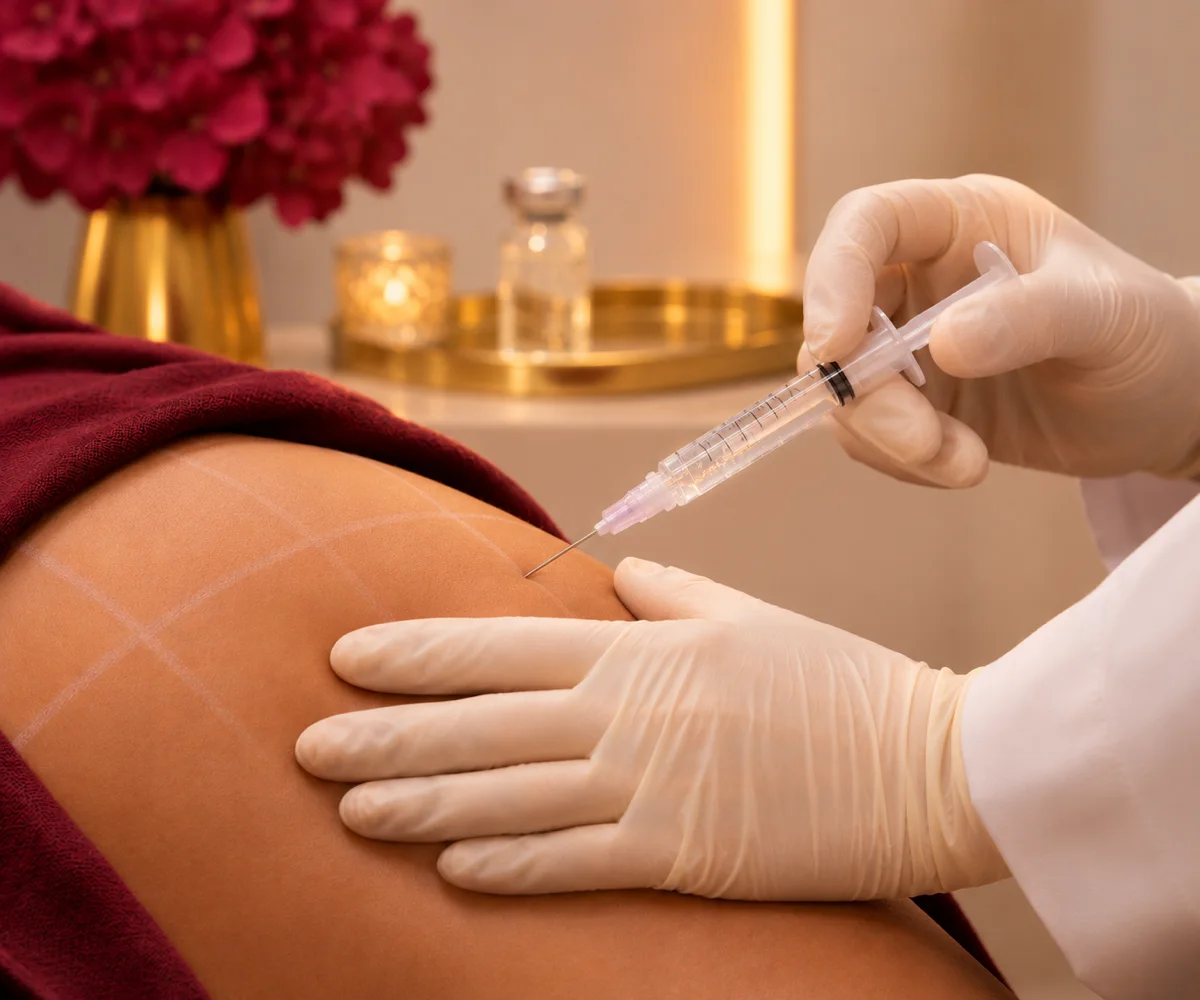
The doctor applying the filler, wearing gloves, on a marked area of the thigh covered by a towel

Hydration and volume

Hyaluronic acid

Hyaluronic acid injected into the area at the entrance to the vagina, with the aim of hydrating and giving the tissues more elasticity. There is a small case series in chronic fissures of the vulva, without a comparison group, and the evidence is still limited.

May be considered when

the fissures persist after the cause has been treated and the first-line options tried, and the doctor considers this option suitable and has explained what is known and what is not known.

Find out more
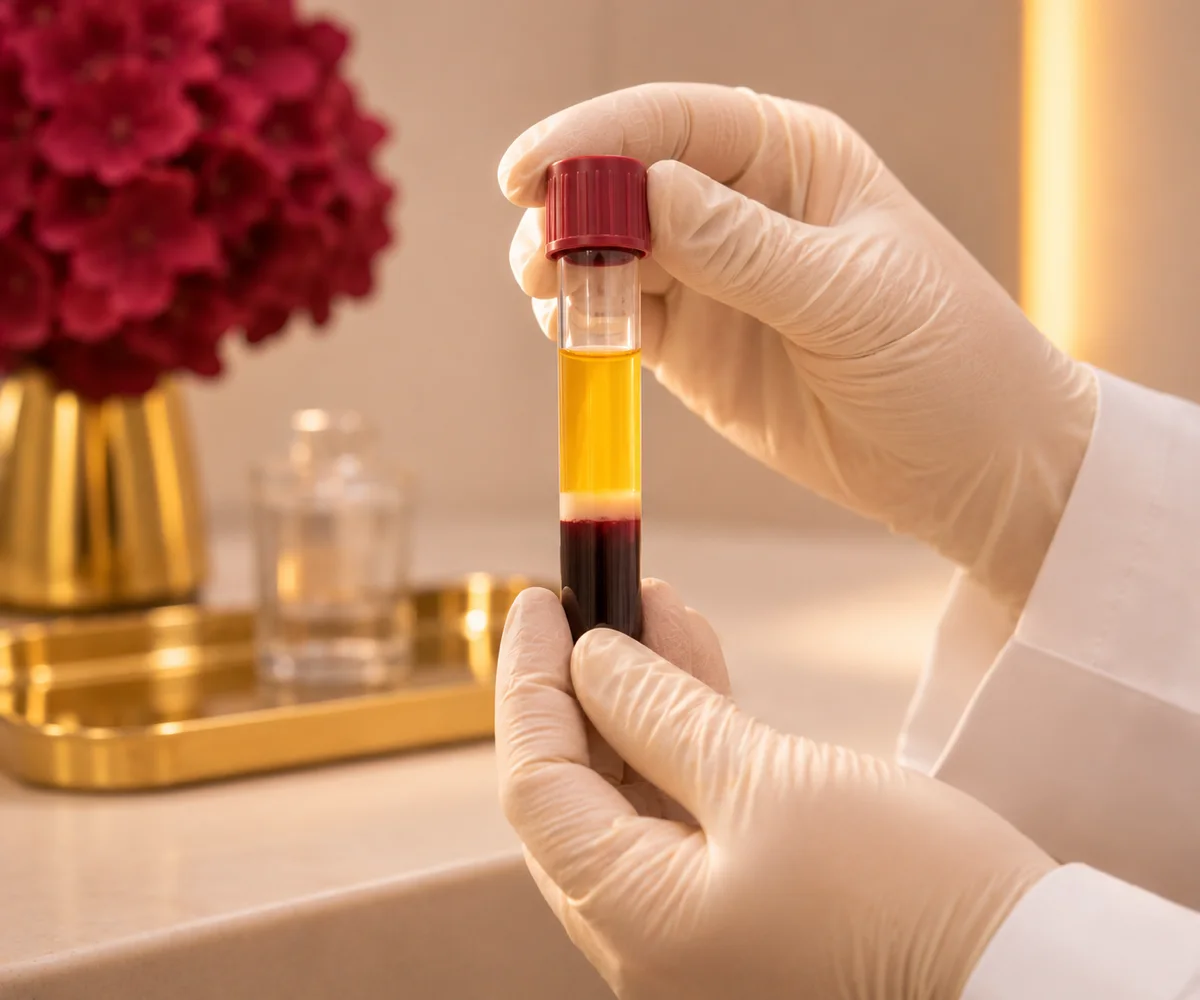
The doctor holding the tube after centrifugation, with the golden plasma separated from the blood

Regeneration

PRP (platelet-rich plasma)

Plasma obtained from your own blood and applied to the area, with the aim of stimulating tissue regeneration. Studies are mainly in vaginal atrophy, are heterogeneous and the evidence is limited.

May be considered when

the doctor has already assessed the other causes and the first-line options and considers PRP suitable for your case, without promising you results.

Find out more

What the journey looks like

From the first consultation to the plan tailored to you

No treatment begins without an assessment consultation with the doctor. Most women start with what is simplest and only then consider more.

  1. 01At the clinic

    Assessment consultation

    The doctor listens to how the pain began, where it is felt, whether there is a sore afterwards, how long it takes to heal and what you have already tried, in private and without hurry. She may propose a simple pain diary.

  2. 02At the clinic

    Look at the skin and look for the cause

    The skin and mucosa of the entrance to the vagina are examined, the crack and signs of infection, atrophy or skin disease are looked for, and muscle tension is assessed. If necessary, a sample is taken or a biopsy is done.

  3. 03At the clinic and at home

    Treat the cause and protect the skin

    It starts with what the cause calls for (antifungal, topical corticosteroid, local oestrogen, physiotherapy), with lubricant, emollients, a pause in penetration until the skin closes and gentle hygiene.

  4. 04Over time

    Reassessing and deciding

    The area is looked at again after a few weeks. If the fissures persist, the doctor explains the other routes, including the clinic’s options and referral to dermatology, gynaecology or surgery, when needed.

Day to day

What protects the skin until the consultation

Simple care that gives the skin time to heal and reduces friction, alongside the plan the doctor indicates.

First of all

Give the skin time to heal

An open fissure opens again if penetration resumes before the skin has closed, and each time it hurts more and takes longer. Taking a break from penetration, while keeping intimacy in other ways, is not giving up: it is what allows the skin to recover.

Pause penetration until the wound closes

Each new episode of friction reopens the fissure and prolongs healing.

In practice: keep up affection and other forms of intimacy, and only resume when the area no longer burns on touch.

Lubricate generously

It reduces friction, which is what tears the skin.

In practice: apply beforehand and reapply during. Water-based and silicone-based ones are compatible with latex condoms.

Protect the outer area

A simple layer over irritated skin helps it to recover.

In practice: use only a simple, unperfumed emollient on the outer skin, and wash only with warm water.

Talk and take notes

Talking reduces tension, and a record helps the doctor to see the pattern.

In practice: agree a pace with your partner without hurry and note when it hurts, where and how long it takes to heal.

Dr Michelle Campagnoli, clinical director of Clínica Luxmed

Who will look after you

An assessment carried out by the doctor

At Luxmed, the first step is always an assessment consultation with Dr Michelle Campagnoli. She listens to what is going on, examines the skin and mucosa of the entrance to the vagina, excludes other causes and draws up the plan with you, in private and without hurry, coordinating with dermatology, pelvic physiotherapy or surgery when needed.

  • Physical examination and medical historyA conversation about the pain, examination of the skin, samples or biopsy when necessary and assessment of the pelvic floor muscles.
  • A plan tailored to youFirst treat the cause and protect the skin; additional treatments only if appropriate, with the evidence explained.
  • No obligationThe cost of any treatment is confirmed only after the assessment.
Book an assessment consultation

Book a consultation

Book your consultation

Choose how you prefer to get in touch. We will arrange the assessment consultation with Dr Michelle Campagnoli.

Booking through the website100€70€Assessment consultationExclusive price for those who book the assessment through the website. Outside the website, the price is 100 €.

New Life Miraflores, Algés · Office Center, R. Santa Teresa do Menino Jesus n.º 6, 9.º C, 1495-048

Your details are used only for this contact. Any treatment depends on a prior medical assessment.

Request an appointmentIt takes less than a minute.
Speciality
You do not need to go into detail. The doctor will talk to you during the consultation.
Request received. Our team will contact you as soon as possible.
Why does penetration hurt and could it be a fissure?

When the pain is felt at the start of penetration, as if the skin were tearing, and afterwards a small sore that burns remains, a fissure is a possible explanation, especially if the sore is at the base of the entrance to the vagina and keeps coming back in the same place. But fissures are a sign, not a cause: behind them there may be dryness, infection, skin disease or tense muscles. Only an examination shows which is yours.

I have a sore after sex: is it normal?

An isolated crack after sex with little lubrication can happen and heals in a few days. If it recurs, takes more than a week or two to heal, comes with itching, discharge or white skin, or bleeds without it being clear where from, it should not be considered normal and should be assessed. Bleeding after sex with no visible sore or after the menopause always calls for medical assessment.

Why do I have pain and burning after sex?

Burning after sex can come from a small fissure in contact with water, urine or semen, from dryness, from an infection (such as thrush), from irritation by hygiene products or from a skin disease of the vulva. If the burning lasts more than a day or two, keeps coming back or comes with discharge, book a consultation.

How can I tell a fissure, dryness and tense muscles apart?

With a fissure there is a visible crack and the pain is at the point of the sore. With dryness, the pain is from friction, improves with lubricant and the skin is irritated. With tense muscles, the pain arises even before friction, with a feeling of a “wall” and of a closed entrance. The three can coexist, which is why it is advisable for the doctor to assess them together.

What can I do at home when the skin is open?

Give the skin time to heal, taking a break from penetration until it no longer burns on touch. Wash only with warm water, use a simple unperfumed emollient on the outer skin, prefer cotton underwear and use generous lubricant the next time you have sex. Avoid applying corticosteroid or antifungal creams without knowing the cause.

The fissures keep coming back: which tests and treatments exist?

When they come back in the same place, the doctor examines the skin, may take a sample to look for fungal or other infections and, if there is white skin or suspicious changes, take a biopsy (for example, for lichen sclerosus). The cause found is treated: antifungal, topical corticosteroid, low-dose local oestrogen or pelvic floor physiotherapy. If a fissure of the posterior fourchette persists, surgery may be considered with a specialist.

Can I have sex while the skin is healing?

The safest thing is to wait until the wound closes and no longer burns on touch, because each episode of friction reopens the fissure. You can keep up intimacy in other ways. When you restart, use generous lubricant and an unhurried pace and stop if it hurts again. If you need more time or are afraid of starting again, talk to the doctor.

Do hyaluronic acid or PRP resolve fissures?

There is not enough evidence. For hyaluronic acid there is a small case series in chronic fissures of the vulva, without comparison, and for PRP the reviews describe limited evidence, mainly in vaginal atrophy. They can be considered after the cause has been treated and the first-line options tried, and the decision is always explained and shared with you.

Is CO2 laser a good idea for fissures?

Sham-controlled trials did not show a clear benefit in vaginal symptoms, and in 2018 the FDA warned that these devices are not approved for menopausal symptoms, urinary incontinence or sexual function, and that they can cause burns, scars and pain during sex. It is not done on open skin, infection or a lesion awaiting explanation. It is only considered after the assessment and the first-line options.

When should I book a consultation?

Book a consultation if the fissures keep coming back, take a long time to heal, if the pain continues outside of sex, if there is itching, discharge or white or shiny skin, or if the pain takes away your wish to have sex. If you have bleeding after sex with no visible sore, bleeding after the menopause, abnormal discharge or a lesion of the vulva that changes, book soon and, outside opening hours, call SNS 24 (808 24 24 24). If you have fever, sudden severe pain or cannot pass urine, call 112.

We could not find that question. Ask us on WhatsApp

Scientific references

This page is based on the sources below and was reviewed by Dr. Michelle Campagnoli. Last updated on .

  1. Edwards L. Vulvar fissures: causes and therapy. Dermatologic Therapy 17(1):111-116, 2004.
  2. Kennedy CM, Dewdney S, Galask RP. Vulvar granuloma fissuratum: a description of fissuring of the posterior fourchette and the repair. Obstetrics & Gynecology 105(5 Pt 1):1018-1023, 2005.
  3. Oakley A (DermNet NZ). Recurrent fissuring of posterior fourchette. (DermNet (dermnetnz.org), acedido 2026-11-11)
  4. Lewis FM, Tatnall FM, Velangi SS, et al. British Association of Dermatologists guidelines for the management of lichen sclerosus, 2018. British Journal of Dermatology 178(4):839-853, 2018.
  5. NHS. Lichen sclerosus. (NHS (nhs.uk), acedido 2026-11-11)
  6. NHS. Thrush in men and women. (NHS (nhs.uk), acedido 2026-11-11)
  7. NHS. Vulvodynia (vulval pain). (NHS (nhs.uk), acedido 2026-11-11)
  8. Bornstein J, Goldstein AT, Stockdale CK, et al. 2015 ISSVD, ISSWSH, and IPPS consensus terminology and classification of persistent vulvar pain and vulvodynia. Obstetrics & Gynecology 127(4):745-751, 2016.
  9. Morin M, Dumoulin C, Bergeron S, Mayrand MH, Khalifé S, Waddell G, et al; Provoked Vestibulodynia Study Group. Multimodal physical therapy versus topical lidocaine for provoked vestibulodynia: a multicenter, randomized trial. American Journal of Obstetrics and Gynecology 224(2):189.e1-189.e12, 2021.
  10. The NAMS 2020 GSM Position Statement Editorial Panel. The 2020 genitourinary syndrome of menopause position statement of The North American Menopause Society. Menopause 27(9):976-992, 2020.
  11. Lethaby A, Ayeleke RO, Roberts H. Local oestrogen for vaginal atrophy in postmenopausal women. Cochrane Database of Systematic Reviews 2016(8):CD001500, 2016.
  12. Faubion SS, Larkin LC, Stuenkel CA, et al. Management of genitourinary syndrome of menopause in women with or at high risk for breast cancer: consensus recommendations from The North American Menopause Society and The International Society for the Study of Women's Sexual Health. Menopause 25(6):596-608, 2018.
  13. González-Isaza P, Sánchez-Prieto M, Sánchez-Borrego R. Chronic vulvar fissure: approach with cross-linked hyaluronic acid. International Urogynecology Journal 34(7):1495-1499, 2023.
  14. Waghe T, Acharya N, Karnik M, Mohammad S, Patel NA, Gemnani R. Role of Platelet-Rich Plasma in Genitourinary Syndrome of Menopause. Cureus 16(1):e53316, 2024.
  15. Li FG, Maheux-Lacroix S, Deans R, et al. Effect of fractional carbon dioxide laser vs sham treatment on symptom severity in women with postmenopausal vaginal symptoms: a randomized clinical trial. JAMA 326(14):1381-1389, 2021.
  16. Prodromidou A, Zacharakis D, Athanasiou S, et al. CO2 Laser versus Sham Control for the Management of Genitourinary Syndrome of Menopause: A Systematic Review and Meta-Analysis of Randomized Controlled Trials. Journal of Personalized Medicine 13(12):1694, 2023.
  17. Medsafe (Nova Zelândia), a retransmitir o alerta da U.S. FDA. Safety Information: energy-based devices used for vaginal 'rejuvenation' or vaginal cosmetic procedures (relays the USFDA safety communication of July 2018). Medsafe, New Zealand Medicines and Medical Devices Safety Authority, 2018.
CallAssistantAvailableBook