
Algés, Oeiras Mon to Fri · 09:00 to 13:00 and 14:00 to 19:00 · Sat · 09:00 to 14:00
WhatsApp Book a consultation

Aesthetic gynaecology

Fissures at the vaginal entranceWhen the skin at the entrance tears instead of stretching and the cut returns after sex

A small cut at the entrance to the vagina, almost always in the lower area (the posterior fourchette), is more common than people think and usually appears during or after sex, when inserting a tampon or during an examination. On its own it heals in a few days, but when it keeps returning to the same place it is worth asking why: the skin may be thinner, drier, inflamed or diseased, or the muscles of the area may be tense. Here we explain what it is, what may be behind it, what is assessed and what helps, starting with simple measures and treatment of the cause, and what the clinic can propose, with honesty about what the evidence shows.

Reviewed by Dr Michelle Campagnoli, clinical director

  • 3additional options the clinic can propose, only after assessment
  • 1assessment consultation, always first
  • 70 €assessment booked through the website
Woman in a blue-striped sweater taking clothes out of a washing machine with a basket, in a self-service laundrette

How to recognise it

Could it be a fissure at the entrance to the vagina?

Almost always the story is very characteristic: a sharp pain, at a single point, linked to stretching of the skin. What counts is where it hurts, when it began and whether the cut returns.

Tick what you recognise0/7

Tick the signs you recognise in your case. This is not a diagnosis, it is only meant to give you an idea.

Do you have bleeding after the menopause or outside of sex, abnormal discharge, white patches or skin that changes in appearance, a sore that does not heal in weeks, a lump, painful blisters or sores, fever or severe and persistent pain? You need assessment and should not wait. Outside opening hours, call SNS 24: 808 24 24 24.

A doctor in a white coat shows a model of the pelvis to a young red-haired woman, with a tablet in front
Photograph of a consultation. The dots mark what the doctor assesses; the image does not show the intimate area.

Why it happens

What may lie behind a fissure that keeps recurring

The posterior fourchette is a thin fold of skin that, in normal conditions, stretches during sex. When the skin is dry, inflamed, diseased or tense, it stops stretching and tears. Choose a situation to see how it applies.

The stretching of the posterior fourchette

The posterior fourchette is the small fold where the lips meet below the entrance to the vagina. During penetration, with a tampon or a speculum, it is the area that stretches most. If the skin has little elasticity or penetration is quick and without preparation, the fold can open into a fine cut, especially in the centre.

What weighs on it

Repeating penetration with skin that is already hurt and without time for arousal and lubrication.

What helps

More time for preparation, suitable lubricant, a slow rhythm and positions in which you control the depth and the angle.

Normal or to be assessed

An occasional fissure or one that calls for assessment

An occasional cut, which heals in a few days and does not return, is common and caring for the area is usually enough. Recurrence, a lesion that does not heal or changes in the skin call for another conversation.

  • How it shows. A fine, painful cut at the point of stretching, with little blood, after drier or rushed sex, a tampon or an examination.

  • When it happens. Rarely, in situations of low lubrication or tiredness, and it heals by itself in a few days without leaving marks.

  • What the clinic does. Confirms, from the history and the examination, that the skin is healthy, and explains how to protect the area.

  • At home. Wash only with water or a neutral product, apply an emollient, pause penetration until healed and use lubricant afterwards.

Do you have bleeding after the menopause, abnormal discharge, a sore that does not heal, a lump or skin that changes in appearance? Book a consultation without waiting. Outside opening hours you can call SNS 24: 808 24 24 24, and 112 only if you have heavy bleeding or are in danger.

Book an assessment consultation

What can help

Options for fissures at the entrance to the vagina

First-line care is to find and treat the cause: an antifungal or antiviral if there is an infection, a topical corticosteroid if there is dermatitis or lichen sclerosus, low-dose vaginal oestrogen if there is atrophy, and pelvic floor physiotherapy if there is tension. Alongside, skin care (emollients, no irritants), lubricant and, if needed, a local anaesthetic help. When the fissure is chronic and does not respond, a small operation (perineoplasty) may be considered, at a gynaecology consultation. The treatments below are additional options, assessed case by case and without promising results, and for fissures at the entrance to the vagina there are no studies showing that they work.

Book an assessment consultation
Dr Michelle Campagnoli, clinical director of Clínica Luxmed

First step

Assessment consultation

The doctor listens to what you are experiencing, examines your case and explains the suitable options. No treatment begins without this consultation.

May be considered when

you want to understand the cause and decide on the best path, with time and without commitment.

Book an assessment consultation
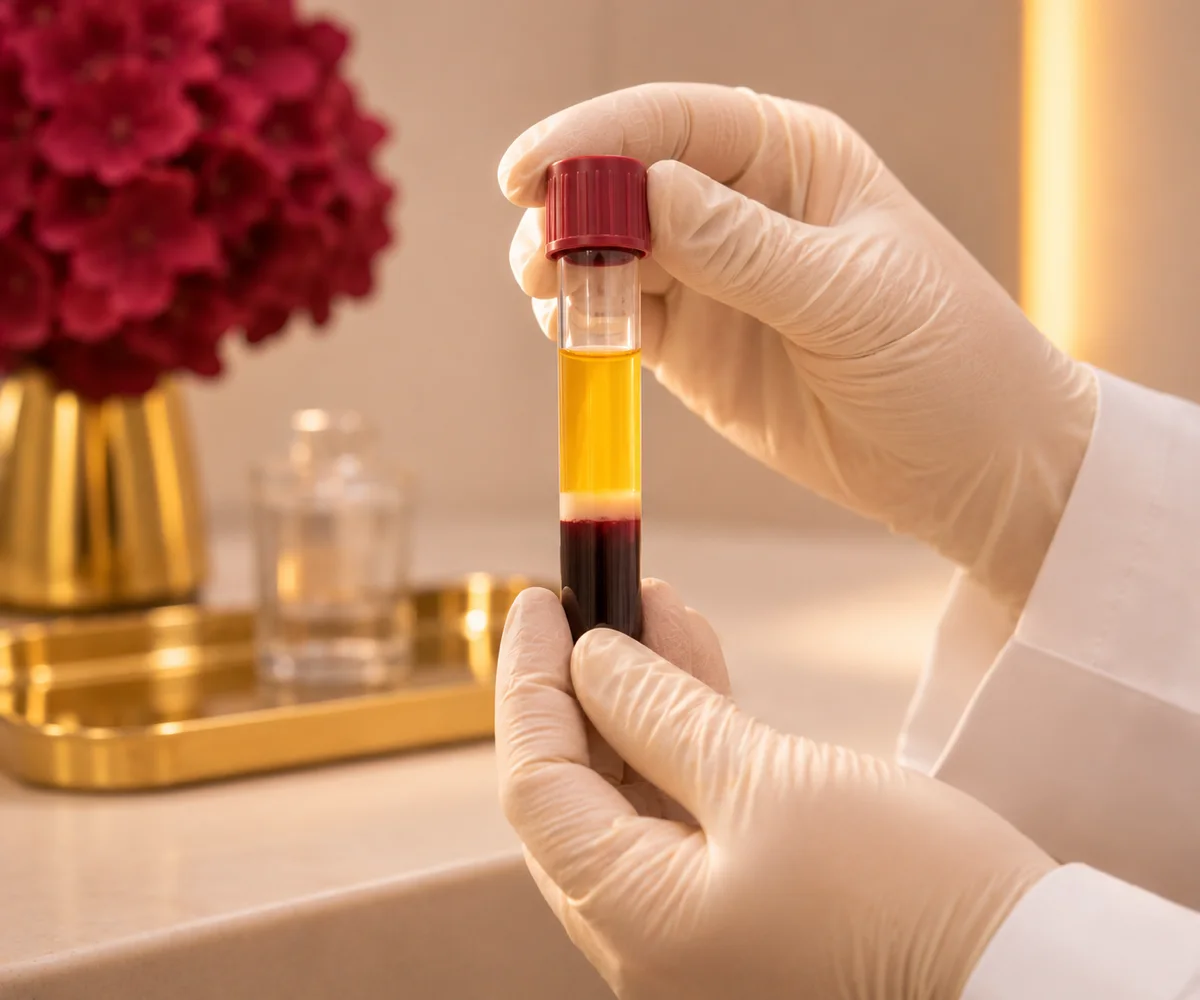
The doctor holding the tube after centrifugation, with the golden plasma separated from the blood

Regeneration

PRP (platelet-rich plasma)

Plasma prepared from your own blood and applied to the area, with the aim of supporting tissue regeneration and healing. The evidence for fissures at the entrance to the vagina is very limited, and it does not treat the skin disease or muscle tension that cause them.

May be considered when

the skin disease and infection have been excluded and treated, the first-line options have been tried, the doctor has explained what is known and what is not known, and the decision is yours.

Find out more
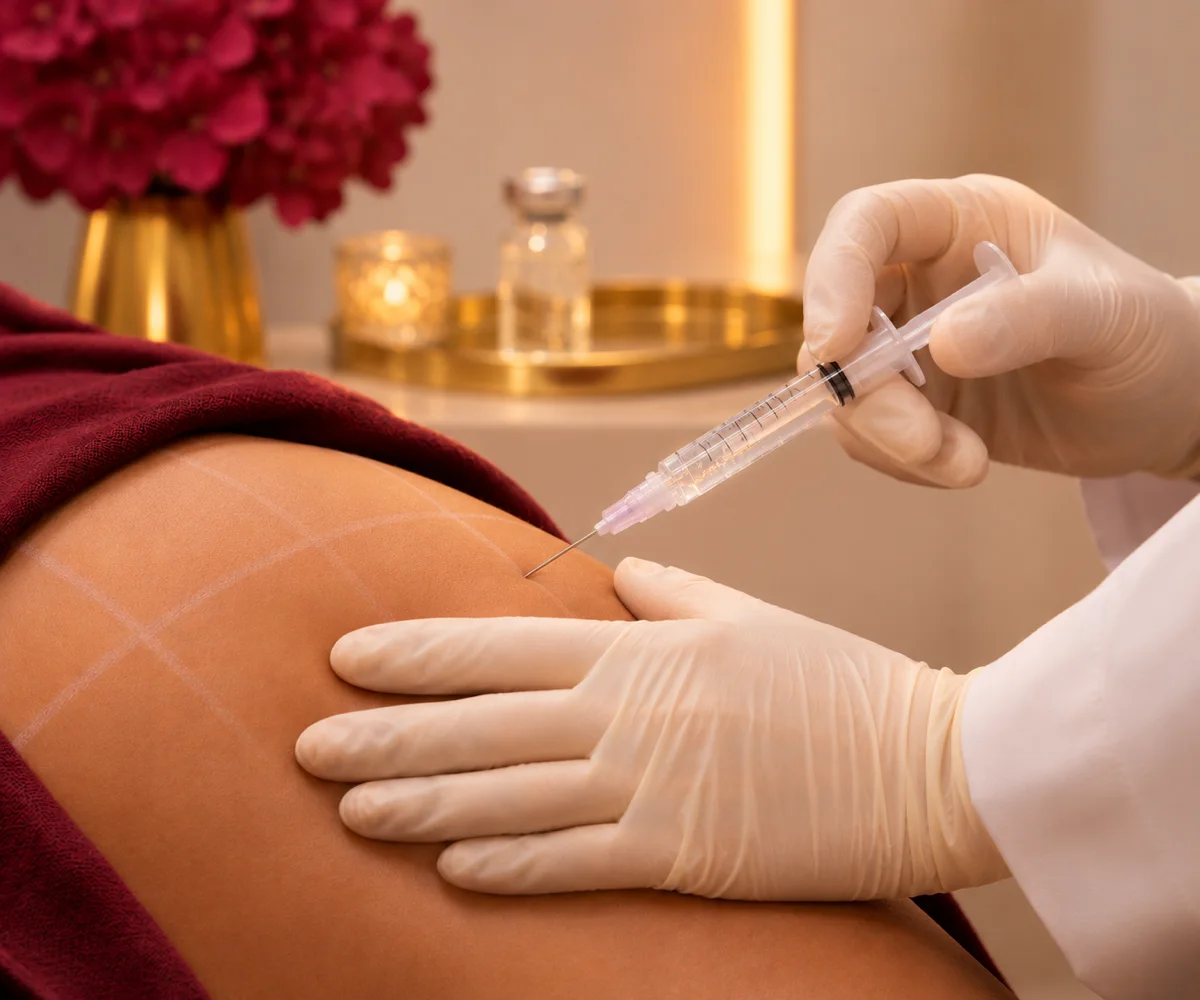
The hyaluronic acid being applied by the doctor, wearing gloves, on a marked area of the thigh covered by a towel

Hydration

Hyaluronic acid

Hyaluronic acid applied in the intimate area, with the aim of improving hydration and comfort of the tissue. The evidence is limited for this problem and it does not replace treatment of the cause or lubricant.

May be considered when

the skin is healthy and without infection, the fragility comes mainly from dryness of the tissue, the first-line options have been considered and the doctor has explained the limits of the evidence.

Find out more

What the journey looks like

From the first consultation to the plan tailored to you

No treatment begins without an assessment consultation with the doctor. Most women start with the simplest measures and with treating the cause, and only then is anything more considered.

  1. 01At the clinic

    Assessment consultation

    The doctor listens to where and when it hurts, whether the fissure comes back and what has changed, and asks about births, menopause, the products you use and your medication, in private and without rushing.

  2. 02At the clinic

    Examination and tests

    The skin of the vulva and of the entrance is examined, the fissure, the colour and texture of the skin and the tension of the muscles are looked at, and swabs are taken when infection is suspected. In selected cases a skin biopsy may be requested.

  3. 03At home and in physiotherapy

    Treat the cause and protect the skin

    What is found is treated (infection, dermatitis, lichen sclerosus, atrophy), emollients and lubricant are used, irritants are avoided and, if there is tension, pelvic floor physiotherapy is started.

  4. 04Over time

    Reassessing and deciding

    We look at whether the fissures have stopped coming back. If that is not enough, or if there are warning signs, the doctor explains the other routes, including surgery, and refers you to dermatology or gynaecology when needed.

Day to day

What helps while you wait for the consultation

Simple care that protects the skin at the entrance and lowers the risk of another tear, alongside the plan the doctor recommends.

It is not “just a matter of technique”

A fissure that keeps coming back deserves to be assessed

Many women put off the consultation out of embarrassment, or accept the pain as normal and adapt to it. But a fissure that keeps recurring almost always has a cause that can be found and treated, and the sooner it is assessed, the shorter the cycle of pain, fear and another tear.

Allow time for arousal and use lubricant

When the skin is better lubricated, it stretches more easily and tears less.

In practice: use a generous amount of lubricant, water-based if you use a condom (oils can damage it), and start slowly.

Control the pace and the angle

Slow penetration and a position in which you choose the depth protect the fourchette.

In practice: try positions in which you control the movement and tell your partner what hurts and what does not.

Wash only with water or a neutral product

Scented soaps and gels dry out and irritate the thin skin of the entrance.

In practice: wash the outer area with warm water or a neutral cleanser and dry by patting, without rubbing.

Protect with an emollient

A simple layer of emollient reduces friction and burning.

In practice: apply an unscented emollient (for example petroleum jelly) to the entrance area after washing, or ask the doctor if you have any doubts.

Dr Michelle Campagnoli, clinical director of Clínica Luxmed

Who will look after you

An assessment carried out by the doctor

At Luxmed, the first step is always an assessment consultation with Dr Michelle Campagnoli. She is the one who listens to what is going on, examines the skin of the vulva and the entrance, looks for other causes and designs the plan with you, in private and without rushing, coordinating with dermatology, pelvic physiotherapy or sex therapy when needed.

  • Physical examination and medical historyA conversation about the fissures, examination of the skin and mucosa, and swabs when infection is suspected.
  • A plan tailored to youFirst treat the cause and protect the skin; additional treatments only if appropriate, with the evidence explained.
  • No obligationThe cost of any treatment is confirmed only after the assessment.
Book an assessment consultation

Book a consultation

Book your consultation

Choose how you prefer to get in touch. We will arrange the assessment consultation with Dr Michelle Campagnoli.

Booking through the website100€70€Assessment consultationExclusive price for those who book the assessment through the website. Outside the website, the price is 100 €.

New Life Miraflores, Algés · Office Center, R. Santa Teresa do Menino Jesus n.º 6, 9.º C, 1495-048

Your details are used only for this contact. Any treatment depends on a prior medical assessment.

Request an appointmentIt takes less than a minute.
Speciality
You do not need to go into detail. The doctor will talk to you during the consultation.
Request received. Our team will contact you as soon as possible.
Why does a fissure appear at the entrance of the vagina after sex?

Because the skin of the entrance, especially the lower fold (the posterior fourchette), is the part that stretches most during penetration. If it is dry, thin, inflamed or tense, instead of stretching it tears, and the cut is usually thin, painful and with little blood. It can happen from lack of lubrication, but when it keeps recurring there is usually a cause behind it, such as an infection, dermatitis, lichen sclerosus, atrophy or muscle tension.

What is the posterior fourchette?

It is the small fold of skin that joins the lips of the vulva below the entrance of the vagina, between the vagina and the perineum. It is thin and stretches during penetration, with a tampon or during an examination, which is why it is a spot where fissures often appear. When the fissure is chronic, this picture used to be called “granuloma fissuratum”.

Is a fissure that always comes back in the same place normal?

It is common, but it should not be accepted without assessment. The skin at the same spot becomes more fragile each time it tears and heals, and if a cause persists (infection, dermatitis, lichen sclerosus, dryness, tension), the cut tends to recur. So, if it comes back, it is worth finding the cause instead of treating only the cut.

Could it be lichen sclerosus?

It could. Lichen sclerosus is a chronic inflammatory disease of the skin of the vulva, which causes itching, whitish, thin or “parchment-like” skin, repeated fissures and, over time, narrowing of the entrance. It has treatment, generally with a potent topical corticosteroid prescribed by a doctor, and follow-up is advisable. Only examination, and sometimes a biopsy, confirms it.

Is it lack of lubrication or is there another cause?

It may be just lack of lubrication, especially if the cut appeared in an isolated context, and in that case lubricant and more time for preparation often solve it. But repeated fissures can also come from infections (yeast, herpes), dermatitis, lichen sclerosus, low oestrogen, a childbirth scar or muscle tension, which is why the skin should be examined.

How are fissures treated as a first line?

The cause that is found is treated: an antifungal or antiviral if there is infection, a topical corticosteroid if there is dermatitis or lichen sclerosus, low-dose vaginal oestrogen if there is atrophy (if you have or have had breast cancer, speak to your oncologist first) and pelvic floor physiotherapy if there is tension. In parallel, the skin is protected with emollients, irritants are avoided and lubricant is used, and sometimes a local anaesthetic ointment.

When is surgery needed?

For a chronic fissure of the fourchette that does not respond to the other measures, a perineoplasty may be considered, in which the fissured skin is removed and the mucosa is advanced to close the area without tension. In a retrospective series of 42 women, the fissure healed in almost all of those who had it, but not all became free of pain during sex, and surgery does not always work. The decision is made case by case, with a gynaecologist, once first-line treatment has been exhausted.

Do laser, PRP or hyaluronic acid cure these fissures?

There is no evidence that they do. As far as we have found, no trial has tested PRP or hyaluronic acid in fissures at the entrance of the vagina. For the CO2 laser, a meta-analysis of 3 trials in lichen sclerosus of the vulva showed no significant benefit, and in genitourinary syndrome of menopause a review found little or no difference compared with sham treatment or vaginal oestrogen. The decision is always explained and shared with you, and these treatments do not replace treating the cause.

Do these treatments carry risks?

In studies the most common effects are mild and temporary: discomfort, a feeling of heat, redness, discharge or burning for a few days. With energy-based devices, burns, scarring, persistent pain and pain during sex have been reported, more rarely, and in 2018 the FDA warned against their use for intimate symptoms. They are not carried out with an active infection, unexplained bleeding, undiagnosed lesions or pregnancy, nor over an open fissure.

When should I book a consultation?

Book a consultation if the fissure comes back, if it takes weeks to heal, if it hurts so much that you avoid sex or examinations, or if the skin at the entrance is white, tight, itchy or different. If you have bleeding after the menopause or outside of sex, abnormal discharge, blisters or painful sores, a wound that does not heal, a lump or intense, persistent pain, book without waiting, and out of hours call SNS 24 (808 24 24 24). Call 112 only if you have heavy bleeding or are in danger.

We could not find that question. Ask us on WhatsApp

Scientific references

This page is based on the sources below and was reviewed by Dr. Michelle Campagnoli. Last updated on .

  1. Oakley A (revisto por Bradford J). Recurrent fissuring of posterior fourchette. (DermNet (dermnetnz.org), acedido 2026-11-11)
  2. Kennedy CM, Dewdney S, Galask RP. Vulvar granuloma fissuratum: a description of fissuring of the posterior fourchette and the repair. Obstetrics & Gynecology 105(5 Pt 1):1018-1023, 2005.
  3. Bornstein J, Goldstein AT, Stockdale CK, et al. 2015 ISSVD, ISSWSH, and IPPS Consensus Terminology and Classification of Persistent Vulvar Pain and Vulvodynia. Journal of Lower Genital Tract Disease 20(2):126-130, 2016.
  4. Lewis FM, Tatnall FM, Velangi SS, et al. British Association of Dermatologists guidelines for the management of lichen sclerosus, 2018. British Journal of Dermatology 178(4):839-853, 2018.
  5. NHS. Lichen sclerosus. (NHS (nhs.uk), acedido 2026-11-11)
  6. NHS. Thrush in men and women. (NHS (nhs.uk), acedido 2026-11-11)
  7. NHS. Vulvodynia. (NHS (nhs.uk), acedido 2026-11-11)
  8. NHS. Vaginal dryness. (NHS (nhs.uk), acedido 2026-11-11)
  9. The NAMS 2020 GSM Position Statement Editorial Panel. The 2020 genitourinary syndrome of menopause position statement of The North American Menopause Society. Menopause 27(9):976-992, 2020.
  10. Lethaby A, Ayeleke RO, Roberts H. Local oestrogen for vaginal atrophy in postmenopausal women. Cochrane Database of Systematic Reviews 2016(8):CD001500, 2016.
  11. Morin M, Dumoulin C, Bergeron S, et al. Multimodal physical therapy versus topical lidocaine for provoked vestibulodynia: a multicenter, randomized trial. American Journal of Obstetrics and Gynecology 224(2):189.e1-189.e12, 2021.
  12. Fernández-Pérez P, Leirós-Rodríguez R, Marqués-Sánchez MP, et al. Effectiveness of physical therapy interventions in women with dyspareunia: a systematic review and meta-analysis. BMC Women's Health 23:387, 2023.
  13. Chedid ML, Setia Santoso LFA, Ibrahim R, et al. Efficacy of ablative laser therapy for vulvar lichen sclerosus: a systematic review and meta-analysis of randomized controlled trials. Lasers in Medical Science 41:284, 2026.
  14. Zerzan NL, Greer N, Ullman KE, et al. Energy-based interventions for genitourinary syndrome of menopause: a systematic review of randomized controlled trials and prospective observational studies. Menopause 32(2):176-183, 2025.
  15. Prodromidou A, Zacharakis D, Athanasiou S, et al. CO2 Laser versus Sham Control for the Management of Genitourinary Syndrome of Menopause: A Systematic Review and Meta-Analysis of Randomized Controlled Trials. Journal of Personalized Medicine 13(12):1694, 2023.
  16. Medsafe (Nova Zelândia), a retransmitir o alerta da U.S. FDA. Safety Information: energy-based devices used for vaginal 'rejuvenation' or vaginal cosmetic procedures (relays the USFDA safety communication of July 2018). Medsafe, New Zealand Medicines and Medical Devices Safety Authority, 2018.
CallAssistantAvailableBook