Algés, Oeiras Mon to Fri · 09:00 to 13:00 and 14:00 to 19:00 · Sat · 09:00 to 14:00
WhatsApp Book a consultation

Aesthetic gynaecology

Labia lacking volume after childbirthWhen the vulva looks emptier or different after childbirth and you wonder whether it will go back to what it was

“Labia without volume after childbirth” is how many women describe a vulva that, after pregnancy, looks emptier, thinner or simply different. We are almost always talking about the labia majora, the “outer” ones. In the first weeks a lot is to be expected: swelling, sensitivity, stitches healing and an unfair comparison with the vulva during pregnancy, which may have been more congested. Later, time, breastfeeding (which can keep oestrogen low), weight and each woman's own variation come into play. Here we explain what is normal, when it usually improves with time, when to ask for help and what the clinic can offer, with honesty about the evidence, which on this subject is scarce.

Reviewed by Dr Michelle Campagnoli, clinical director

  • 64 %of women who breastfeed have vaginal atrophy, according to a 2025 systematic review
  • 1assessment consultation, always first
  • 70 €assessment booked through the website
A woman with curly hair and glasses holds a dress against her body in a clothes shop

How to recognise it

Is it really lack of volume after childbirth?

Not every change is a loss of volume. What counts is how long ago the birth was, whether you are still breastfeeding, whether the skin is thin or dry and what bothers you: the appearance, comfort or both.

Tick what you recognise0/7

Tick the signs you recognise in your case. This is not a diagnosis, it is only meant to give you an idea.

Do you have sudden or very heavy vaginal bleeding, fever or chills, an unpleasant smell or pus, increasing pain, stitches that have opened, painful, tense swelling on one side of the vulva only, cannot pass urine, have blood in the urine, bleeding after sex, or a spot, lump or wound that changes or does not heal? You need a prompt assessment and should not wait. Out of hours, call SNS 24: 808 24 24 24.

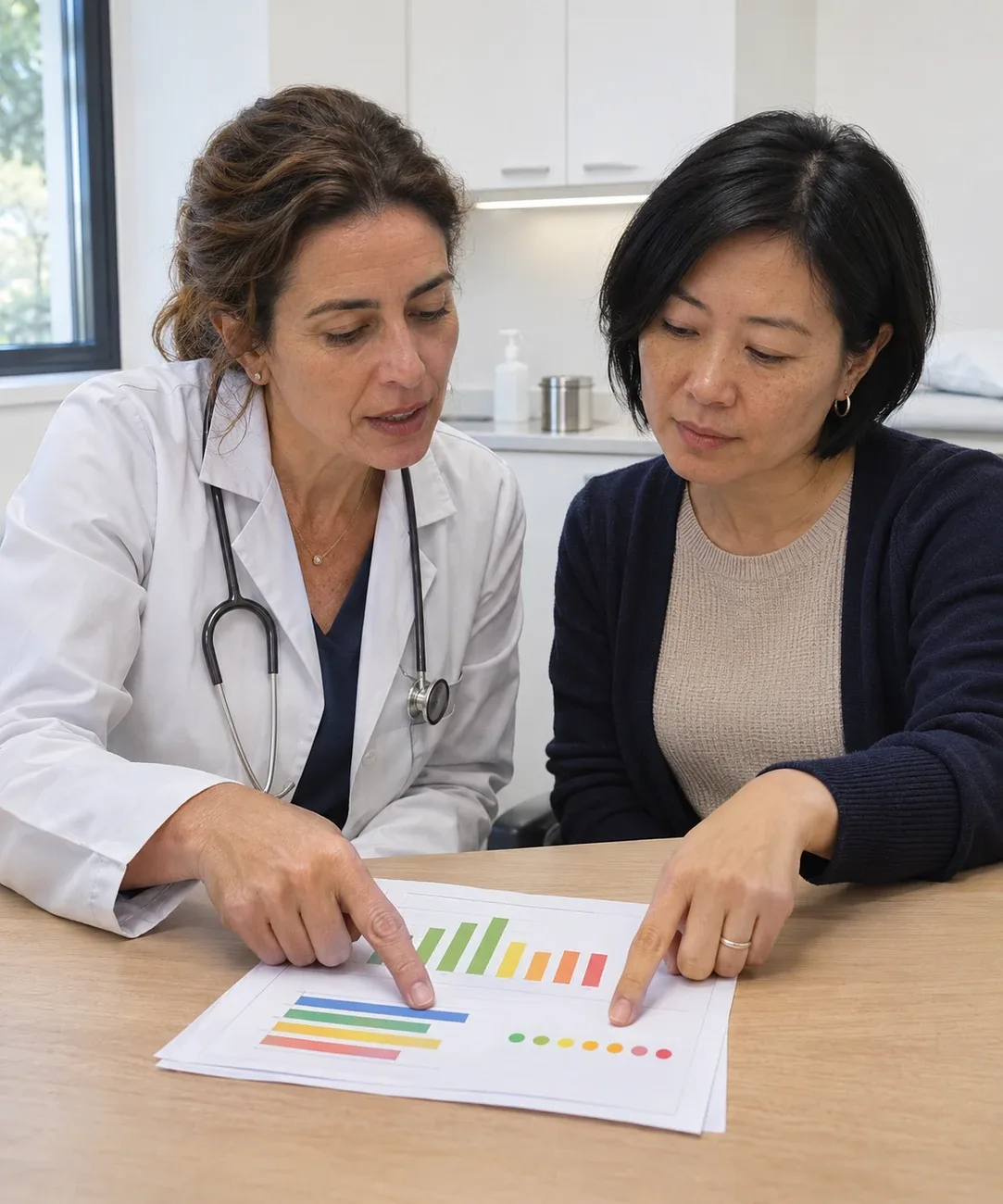
Female doctor in a white coat pointing at a bar chart on a sheet, beside a dark-haired patient
Photograph of a consultation. The dots mark what the doctor assesses; the image does not show the intimate area.

Why it happens

What may be behind labia without volume after childbirth

There is no single cause, and we have not found studies that measure the volume of the labia majora after childbirth. What science describes are changes in the tissues of the vulva and vagina after pregnancy and during breastfeeding. Choose a situation to see how it applies.

Time since the birth

Straight after birth it is normal to have swelling, sensitivity and stitches healing, and the vulva may look different from one day to the next. Follow-up appointments are there to see how the perineum is healing. Much of what is seen in the first weeks is not the final appearance.

What weighs on it

Drawing conclusions in the first weeks, or comparing today's appearance with that of a particularly swollen day.

What helps

Allow time, look after the skin and the scar, and have it looked at again once the body has settled.

Normal or to be assessed

Postpartum change or something to assess

Many changes in the vulva in the first months are part of recovery. Others call for examination. It helps to know how to tell them apart before thinking about treatment.

  • What it looks like. The vulva looks different, thinner or with less volume, without pain, without a wound and without a change in skin colour, in the midst of a recent postpartum period or breastfeeding.

  • When it happens. In the first weeks and months after childbirth, especially while you breastfeed and your periods have not returned. The appearance may keep changing from one month to the next.

  • What the clinic does. The doctor listens to your history, examines the skin and mucosa, confirms there is no other cause and explains what usually settles with time.

  • At home. Gentle skin care, an unscented moisturiser or lubricant if there is dryness, pelvic floor exercises and having it looked at again after a few months.

Do you have sudden and very heavy bleeding, intense and sudden pain, or stitches that have opened with fever? Call 112 or go to the emergency department. If you have an unpleasant smell, painful swelling, bleeding after sex or doubts, out of hours you can call SNS 24: 808 24 24 24.

Book an assessment consultation

What can help

Options for labia without volume after childbirth

The first response is time, with monitoring: in most situations the body keeps recovering for months, and the follow-up consultation is there to see how it is going. In parallel, care of the vulvar skin helps, as do an unscented lubricant or moisturiser when there is dryness, pelvic floor exercises and, if there is atrophy that bothers you while you breastfeed, a conversation with the doctor about low-dose vaginal oestrogen, which is decided case by case and does not restore volume to the labia. The treatments below are additional options for those who, after the recovery period, are still bothered, assessed case by case and without promising results. We have not found studies that evaluate them after childbirth or during breastfeeding, and the evidence for the labia majora is limited, so the doctor decides with you when and whether it makes sense.

Book an assessment consultation
Dr Michelle Campagnoli, clinical director of Clínica Luxmed

First step

Assessment consultation

The doctor listens to what you are experiencing, examines your case and explains the suitable options. No treatment begins without this consultation.

May be considered when

you want to understand the cause and decide on the best path, with time and without commitment.

Book an assessment consultation
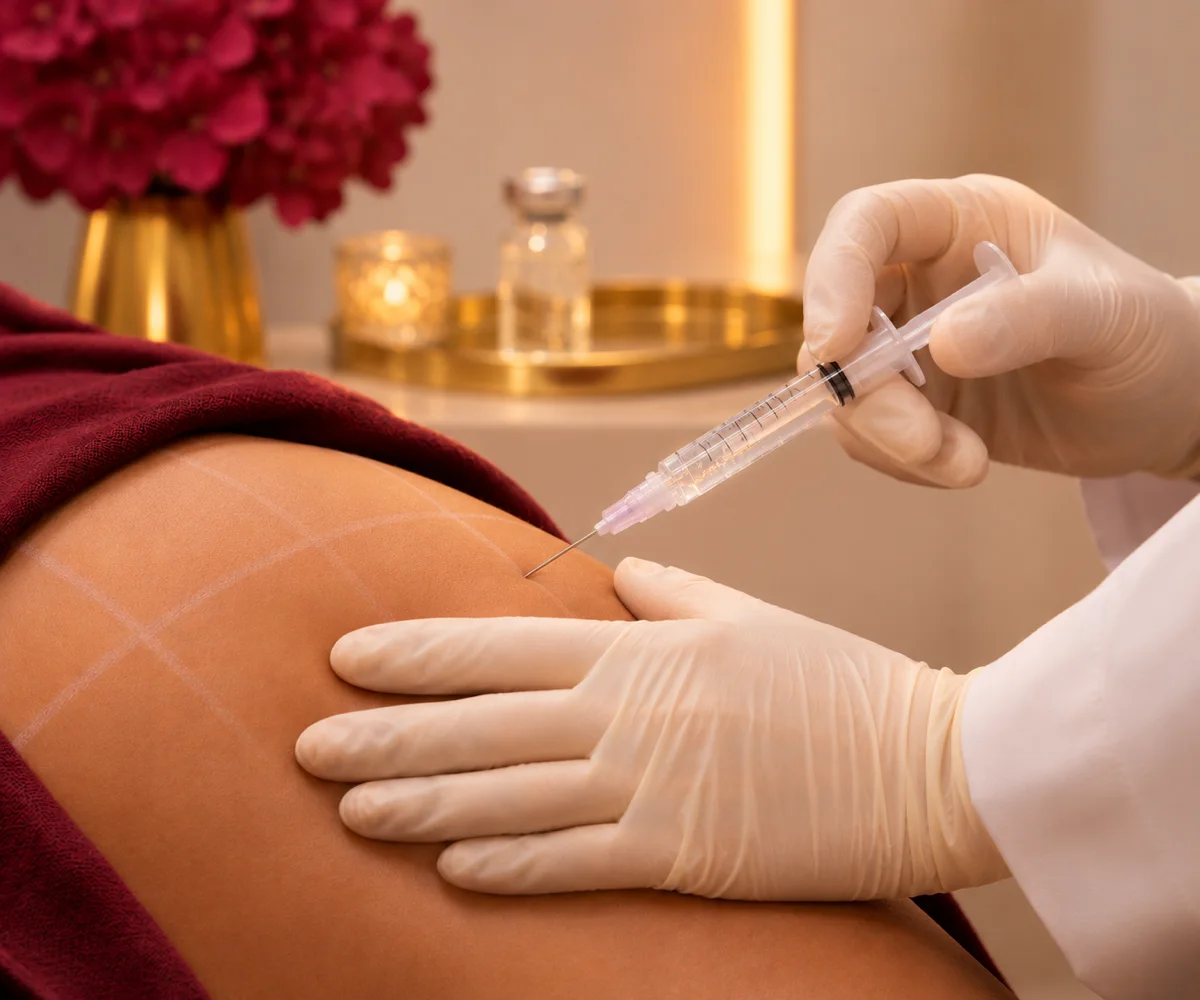
The doctor applying the filler, wearing gloves, on a marked area of the thigh covered by a towel

Injectable

Hyaluronic acid

Gel injected in small amounts into the labia majora, with the aim of restoring volume. The effect is temporary and it can be dissolved with hyaluronidase if the result is not what you wanted or a complication arises. The studies are case series and a 2026 trial in women aged 40 to 65, none specifically in the postpartum period.

May be considered when

the recovery period has passed, breastfeeding has ended or the doctor considers the time appropriate, other causes have been excluded and the decision is yours after the risks have been explained to you.

Find out more
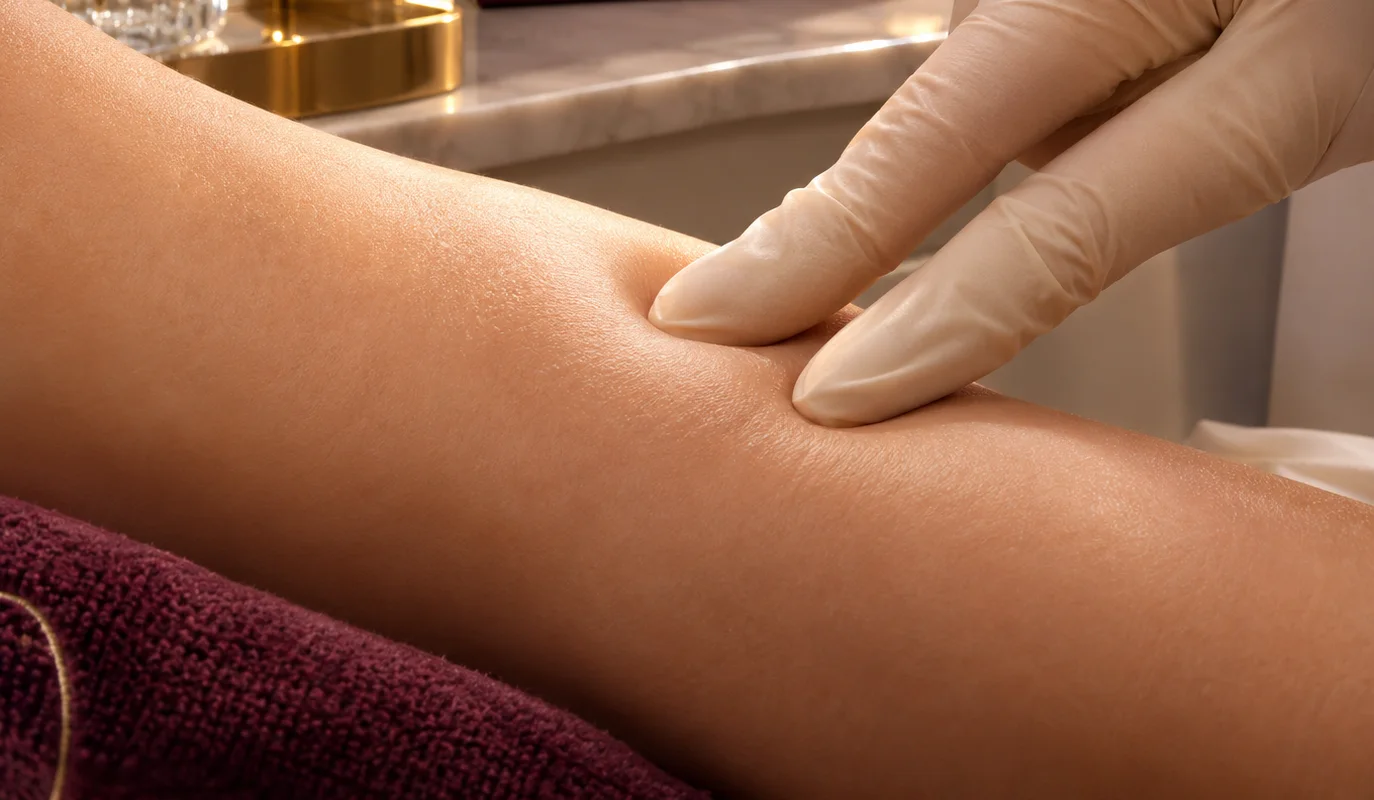
Two gloved fingers of the doctor assessing the firmness of the skin of a forearm

Injectable

Biostimulators

Substances injected into the skin to stimulate collagen gradually, with the aim of improving the quality and thickness of the skin. For the labia majora the evidence is very scarce, from pilot studies and clinical cases, so this is a use outside the usual indications and is only considered with great caution.

May be considered when

what bothers you most is thin, less firm skin and not a lack of volume, simple care has not been enough and you understand that the evidence is very limited.

Find out more

What the journey looks like

From the first consultation to the plan tailored to you

No treatment begins without an assessment consultation with the doctor. After childbirth, the start is almost always to give the body time and treat comfort, and only then is anything more considered.

  1. 01At the clinic

    Assessment consultation

    The doctor listens to what has changed since the birth, how the birth went, whether you are breastfeeding, whether your periods have returned and what bothers you most: the appearance, comfort or intimacy. It is discussed in private and without rushing.

  2. 02At the clinic

    Examination

    The skin and mucosa of the vulva, the volume of the labia, the scar from a tear or episiotomy, the veins and dryness are examined. Infection and vulvar skin disease are excluded. When necessary, you are referred to obstetrics, dermatology or pelvic physiotherapy.

  3. 03At home

    Care and time

    Gentle skin care, an unscented lubricant or moisturiser when there is dryness, pelvic floor exercises and, if atrophy bothers you while you breastfeed, a conversation about low-dose vaginal oestrogen. The body keeps recovering for months.

  4. 04Over time

    Reassessing and deciding

    The examination is repeated after a few months, or when breastfeeding decreases or your periods return. If the discomfort persists, the doctor explains the additional options and their limitations, and the decision is always yours.

Day to day

What helps while the body recovers

Simple care for the vulvar skin, comfort and the pelvic floor, alongside the plan the doctor recommends.

It is not your fault

The postpartum period is a time when a lot changes and a lot needs time

A different vulva after childbirth is common and does not mean that anything went wrong. Many women stay quiet out of embarrassment or because they think they should simply be happy and that is that. Talking to the doctor is not vanity: it helps to tell what settles with time from what deserves assessment.

Care for the skin of the vulva gently

Thinner, drier skin gets irritated more easily, especially with friction and harsh products.

In practice: wash with warm water or a gentle unscented product, dry by patting and prefer cotton underwear.

Use an unscented lubricant or moisturiser

Postpartum hormonal changes can leave the mucosa drier, and a lubricant makes sex more comfortable.

In practice: apply it before sex and choose products without perfume or dyes; a vaginal moisturiser can be used regularly, and the doctor will say which.

Do the pelvic floor exercises

They help the pelvic floor recover, with benefit for incontinence, prolapse and sex. They do not increase the volume of the labia.

In practice: short and long contractions, up to 10 repetitions, at least 3 times a day, without holding your breath or tightening your abdomen.

Note the progress and bring the conversation to the consultation

Seeing the change over months helps the doctor separate what is recovery from what persists.

In practice: note when you breastfeed, when your periods returned and what has changed in comfort and dryness, instead of relying on memory.

Dr Michelle Campagnoli, clinical director of Clínica Luxmed

Who will look after you

An assessment carried out by the doctor

At Luxmed, the first step is always an assessment consultation with Dr Michelle Campagnoli. She is the one who listens to what has changed since the birth, examines the skin, mucosa and scar, excludes other causes and designs the plan with you, in private and without rushing, coordinating with obstetrics, dermatology or pelvic physiotherapy when needed.

  • Physical examination and medical historyA conversation about the birth and the postpartum period, examination of the vulva, the scar and the skin, and clarification of what is recovery and what deserves treatment.
  • A plan tailored to youTime and simple care first; additional treatments only if appropriate, after breastfeeding and with the evidence explained.
  • No obligationThe cost of any treatment is confirmed only after the assessment.
Book an assessment consultation

Book a consultation

Book your consultation

Choose how you prefer to get in touch. We will arrange the assessment consultation with Dr Michelle Campagnoli.

Booking through the website100€70€Assessment consultationExclusive price for those who book the assessment through the website. Outside the website, the price is 100 €.

New Life Miraflores, Algés · Office Center, R. Santa Teresa do Menino Jesus n.º 6, 9.º C, 1495-048

Your details are used only for this contact. Any treatment depends on a prior medical assessment.

Request an appointmentIt takes less than a minute.
Speciality
You do not need to go into detail. The doctor will talk to you during the consultation.
Request received. Our team will contact you as soon as possible.
Does the vulva change after childbirth? What is normal?

It often changes, and almost always only temporarily. In the first weeks it is normal to have swelling, sensitivity, stitches healing and bleeding (lochia) for a few weeks. After that time, the vulva may look thinner or less full, especially while you breastfeed. What is not normal, and cannot wait, is increasing pain, fever, unpleasant smell, heavy bleeding or stitches that open.

Do the labia go back to what they were before pregnancy?

In many women most postpartum changes, such as swelling, sensitivity and the veins of pregnancy, settle over weeks and months. As for volume, there are no studies that measure it after childbirth, so there is no reliable answer. There is also a wide normal variation between women, and in one small study the appearance of the labia was not associated with the number of births. If after a few months the difference persists and bothers you, it is worth having it assessed.

Does breastfeeding make the vulva thinner or drier?

It can. While you breastfeed, oestrogen can stay low, especially without periods, and the vaginal mucosa becomes thinner and drier: in a 2025 systematic review, vaginal atrophy was estimated in about 64% and dryness in about 54% of women who breastfeed. These studies describe the mucosa, dryness and pain during sex, not the volume of the labia majora. It usually improves when breastfeeding decreases and periods return, and there is care that helps in the meantime.

What is the difference between lack of volume and thin or dry skin?

Lack of volume means less “filling” in the labia majora, which have a fat component. Thin or dry skin is a change in the quality of the skin and mucosa, associated with low oestrogen, and one can occur without the other. Different things are done for each, so it is important to understand which weighs more before choosing a treatment.

How long should I wait before thinking about treatment?

There is no proven timeframe. There are useful milestones: the follow-up consultation at 6 to 8 weeks, the return of periods, the end or reduction of breastfeeding and a few months of recovery, bearing in mind that the veins of pregnancy, for example, tend to disappear within 2 to 8 months. The decision is made with the doctor, after examining the skin and the scar, and never out of haste.

Does vaginal oestrogen help after childbirth?

It can help dryness and atrophy of the mucosa, not the volume of the labia. A 2026 systematic review found only 3 studies, with 85 women in total: in one trial, atrophy symptoms were lower with the cream over 12 weeks, with no difference in sexual function and no serious effects, but the data are few. A pilot trial with 59 women with a tear during birth showed only a minimal benefit. When dryness and pain persist, it is a reasonable option after talking to the doctor, and prescribed by her. If you have or have had breast cancer, speak to your oncologist first.

Do pelvic floor exercises affect the labia majora?

They do not increase the volume of the labia, which are not muscle. But they are still recommended after childbirth because the pelvic floor recovers better with training, with benefit for urine leakage, prolapse and sex. If you are unsure whether you are contracting the right muscles, ask for confirmation.

Is hyaluronic acid in the labia majora safe after childbirth?

The studies that exist for the labia majora were not carried out after childbirth or during breastfeeding, and they are case series and one small trial, with few complications described. As with any hyaluronic acid injection, the most serious risk, although rare, is blockage of a blood vessel, which is why the technique and hyaluronidase must be available. It is not done with an active infection, an unhealed wound or doubt about the skin, and as a rule it is postponed during breastfeeding.

Do radiofrequency or laser increase the volume of the labia?

No: they heat the tissues to stimulate collagen and do not restore volume. We have not found studies in the labia majora or after childbirth. In 2018 the FDA warned that it had not approved these devices for vaginal cosmetic procedures or for sexual function, and that they can cause burns, scarring and pain during sex. If the clinic proposes them, it is as an additional option, after the recovery period, with the evidence explained.

When should I book a consultation?

Book a consultation if months have passed and the vulva is still different and bothers you, if there is dryness or pain during sex, a scar that pulls, veins that hurt or skin that is white, smooth or fissured. If you have an unpleasant smell, painful swelling, bleeding after sex, a wound that does not heal or doubts, call SNS 24 (808 24 24 24). If you have sudden and very heavy bleeding, intense and sudden pain or fever with open stitches, call 112.

We could not find that question. Ask us on WhatsApp

Scientific references

This page is based on the sources below and was reviewed by Dr. Michelle Campagnoli. Last updated on .

  1. National Institute for Health and Care Excellence (NICE). Postnatal care (NG194). NICE guideline NG194, 2021.
  2. NHS. Your body after the birth. (NHS (Reino Unido), acedido 2026-11-11)
  3. NHS. Sex and contraception after birth. (NHS (Reino Unido), acedido 2026-11-11)
  4. NHS. Your post-pregnancy body. (NHS (Reino Unido), acedido 2026-11-11)
  5. Wisniewski PM, Wilkinson EJ. Postpartum vaginal atrophy. American Journal of Obstetrics and Gynecology 165(4 Pt 2):1249-1254, 1991.
  6. Perelmuter S, Stokes C, Chapalamadugu M, et al. Postpartum and lactation-related genitourinary symptoms: a systematic review. Obstetrics & Gynecology 146:59-72, 2025.
  7. Orozco Fernández R, Gil-Antuñano SP. Genitourinary syndrome of lactation: an underrecognized postpartum condition affecting women's vulvovaginal, urinary and sexual health. Women's Health (London) 22:17455057261490606, 2026.
  8. Waheed A, Taithongchai A, Robinson D. The use of topical vaginal estrogens in postpartum women: a systematic review. Acta Obstetricia et Gynecologica Scandinavica 105:1405-1410, 2026.
  9. Smith PE, McLaughlin EM, Pandya LK, Hade EM, Lynch CD, Hudson CO. A pilot randomized controlled trial of vaginal estrogen on postpartum atrophy, perineal pain, and sexual function. International Urogynecology Journal 33:3383-3390, 2022.
  10. Gavrilov SG. Vulvar varicosities: diagnosis, treatment, and prevention. International Journal of Women's Health 9:463-475, 2017.
  11. Farage M, Maibach H. Lifetime changes in the vulva and vagina. Archives of Gynecology and Obstetrics 273(4):195-202, 2006.
  12. Kreklau A, Vâz I, Oehme F, Strub F, Brechbühl R, Christmann C, Günthert A. Measurements of a 'normal vulva' in women aged 15-84: a cross-sectional prospective single-centre study. BJOG 125(13):1656-1661, 2018.
  13. Lloyd J, Crouch NS, Minto CL, Liao LM, Creighton SM. Female genital appearance: 'normality' unfolds. BJOG 112(5):643-646, 2005.
  14. American College of Obstetricians and Gynecologists (Committee on Gynecologic Practice). Elective female genital cosmetic surgery (Committee Opinion n.º 795). Obstetrics & Gynecology 135(1):e36-e42, 2020.
  15. Jabbour S, Kechichian E, Hersant B, Levan P, El Hachem L, Noel W, Nasr M. Labia majora augmentation: a systematic review of the literature. Aesthetic Surgery Journal 37(10):1157-1164, 2017.
  16. Fasola E, Gazzola R. Labia majora augmentation with hyaluronic acid filler: technique and results. Aesthetic Surgery Journal 36(10):1155-1163, 2016.
  17. Fasola E, Dridi D, Degliuomini RS, Buzzaccarini G, Benini V, Salvatore S. Performance and safety of hyaluronic acid-based gynaecological filler for labia majora augmentation: a randomised controlled study. Life (Basel) 16(7):1141, 2026.
  18. Deda A, Wiśniewska M, Wilczyński S, Wcisło-Dziedecka D, Stolecka-Warzecha A. Chemical biostimulation of labial majora: first clinical insights. Clinical, Cosmetic and Investigational Dermatology 18:3195-3202, 2025.
  19. Acevedo A, Parra AM, Amado AM, Dicker V, Castelanich D, Velasquez L, Parra LA. Labia majora rejuvenation with hybrid filler: a narrative review of the literature and report of two cases. Journal of Cosmetic Dermatology 24:e70074, 2025.
  20. Krychman M, Rowan CG, Allan BB, DeRogatis L, Durbin S, Yacoubian A, Wilkerson D. Effect of single-treatment, surface-cooled radiofrequency therapy on vaginal laxity and female sexual function (VIVEVE I randomized controlled trial). Journal of Sexual Medicine 14(2):215-225, 2017.
  21. Lowe S. Hyaluronic acid dermal filler-associated vascular occlusion: a review of prevention and management strategies. Journal of Cosmetic Dermatology 25:e70884, 2026.
  22. King M, Convery C, Davies E. This month's guideline: the use of hyaluronidase in aesthetic practice (v2.4). Journal of Clinical and Aesthetic Dermatology 11(6):E61-E68, 2018.
  23. NHS. Lichen sclerosus. (NHS (Reino Unido), acedido 2026-11-11)
  24. NHS. Symptoms of vulval cancer. (NHS (Reino Unido), acedido 2026-11-11)
  25. Medsafe (Nova Zelândia), a retransmitir o alerta da U.S. FDA. Safety Information: energy-based devices used for vaginal 'rejuvenation' or vaginal cosmetic procedures (relays the USFDA safety communication of July 2018). Medsafe, New Zealand Medicines and Medical Devices Safety Authority, 2018.
CallAssistantAvailableBook