
Algés, Oeiras Mon to Fri · 09:00 to 13:00 and 14:00 to 19:00 · Sat · 09:00 to 14:00
WhatsApp Book a consultation

Aesthetic gynaecology

Sagging labia majoraWhen the labia majora sag, develop folds or have excess skin, and how to tell what is changing

“Sagging labia majora” is how many women describe labia majora that are no longer high and full: the skin looks looser, forms folds or hangs, and the outer fold of the vulva loses the contour it had. Behind it there may be three different things, which often combine: less fat (volume), less firm skin (elasticity) and excess skin. Telling them apart is what decides whether it makes sense to treat and how. Here we explain what is normal, what may be happening, what is assessed and what helps, and what the clinic can offer, with honesty about what the evidence shows.

Reviewed by Dr Michelle Campagnoli, clinical director

  • 50 womenwere photographed and measured in a study in London: the appearance of the labia majora varies widely, with no clear relationship to age or births
  • 1assessment consultation, always first
  • 70 €assessment booked through the website
Woman with short grey hair and a knitted jumper reading a leaflet at a kitchen table, with an attentive expression

How to recognise it

Could they be sagging labia majora?

“Sagging” describes what is seen; it is not a diagnosis. What counts is what has changed, since when, whether there is physical discomfort or only unease about the appearance, and whether there are signs that are not simply ageing.

Tick what you recognise0/7

Tick the signs you recognise in your case. This is not a diagnosis, it is only meant to give you an idea.

Do you have swelling on one side only or a soft lump that grows when you stand or strain, a nodule, dilated and sore veins, thin white skin with itching, spots that change, a wound that does not heal or unexplained bleeding? This is not “just sagging” and should be examined without waiting. Heaviness or a “bulge” inside the vagina, or difficulty passing urine, also call for assessment. Out of hours, call SNS 24: 808 24 24 24.

A doctor in a white coat explains a model of the pelvis on the table to a patient in a green sweater
Photograph of a consultation. The dots mark what the doctor assesses; the image does not show the intimate area.

Why it happens

What may be behind sagging labia majora

A labium majus is a fold of skin with a cushion of fat underneath. When the cushion shrinks, there is excess skin; when the skin loses elasticity, it sags even with fat. Choose a situation to see how it applies.

Weight changes

Weight is the factor that shows up most clearly in measurement studies: in the 657 women of a Swiss study, the higher the body mass index, the greater the length of the labia majora. After major weight loss, the fat disappears but the skin that had stretched does not always return to its place, and it is left loose.

What weighs on it

Expecting a filler to solve what is mainly excess skin.

What helps

Telling the doctor at the consultation if there have been significant weight changes. If excess skin predominates, the doctor explains what can and cannot be changed.

Normal or to be assessed

Sagging labia majora or another change

The labia majora vary greatly from woman to woman and change throughout life. That is why it is worth separating gradual sagging from what needs another kind of assessment.

  • What it looks like. Labia majora that are lower, with folds or excess skin, without changes in colour, without wounds and without nodules, and symmetrical or nearly so.

  • When it happens. Over months or years, alongside menopause, weight loss or a pregnancy. One side being slightly different from the other is usual and, as a rule, normal.

  • What the clinic does. The doctor examines the vulva, distinguishes volume, firmness and excess skin, clarifies what is part of normal variation and proposes what makes sense.

  • At home. Gentle washing, simple unscented moisturising, cotton underwear that does not cause friction and a stable weight.

Do you have rapid and very painful swelling, with fever, pus or vomiting, or swelling that does not go back and hurts a lot? Go to the emergency department or call 112. If you have doubts about what you feel, out of hours you can call SNS 24: 808 24 24 24.

Book an assessment consultation

What can help

Options for sagging labia majora

First, an examination that excludes other causes and answers a simple question: is volume lacking, is firmness lacking or is there excess skin? Basic care (gentle washing, moisturising, clothing without friction, a stable weight and, at the menopause, the local treatment of atrophy that the doctor recommends; low-dose vaginal oestrogen is prescribed and, if you have had breast cancer, speak to your oncologist first) improves comfort, but does not change the contour. The next choice depends on what is lacking: volume calls for one thing, firmness another, and when there is excess skin the option that makes most sense is usually surgical. The treatments below are additional options, assessed case by case and without promising results, with limited evidence for the labia majora.

Book an assessment consultation
Dr Michelle Campagnoli, clinical director of Clínica Luxmed

First step

Assessment consultation

The doctor listens to what you are experiencing, examines your case and explains the suitable options. No treatment begins without this consultation.

May be considered when

you want to understand the cause and decide on the best path, with time and without commitment.

Book an assessment consultation
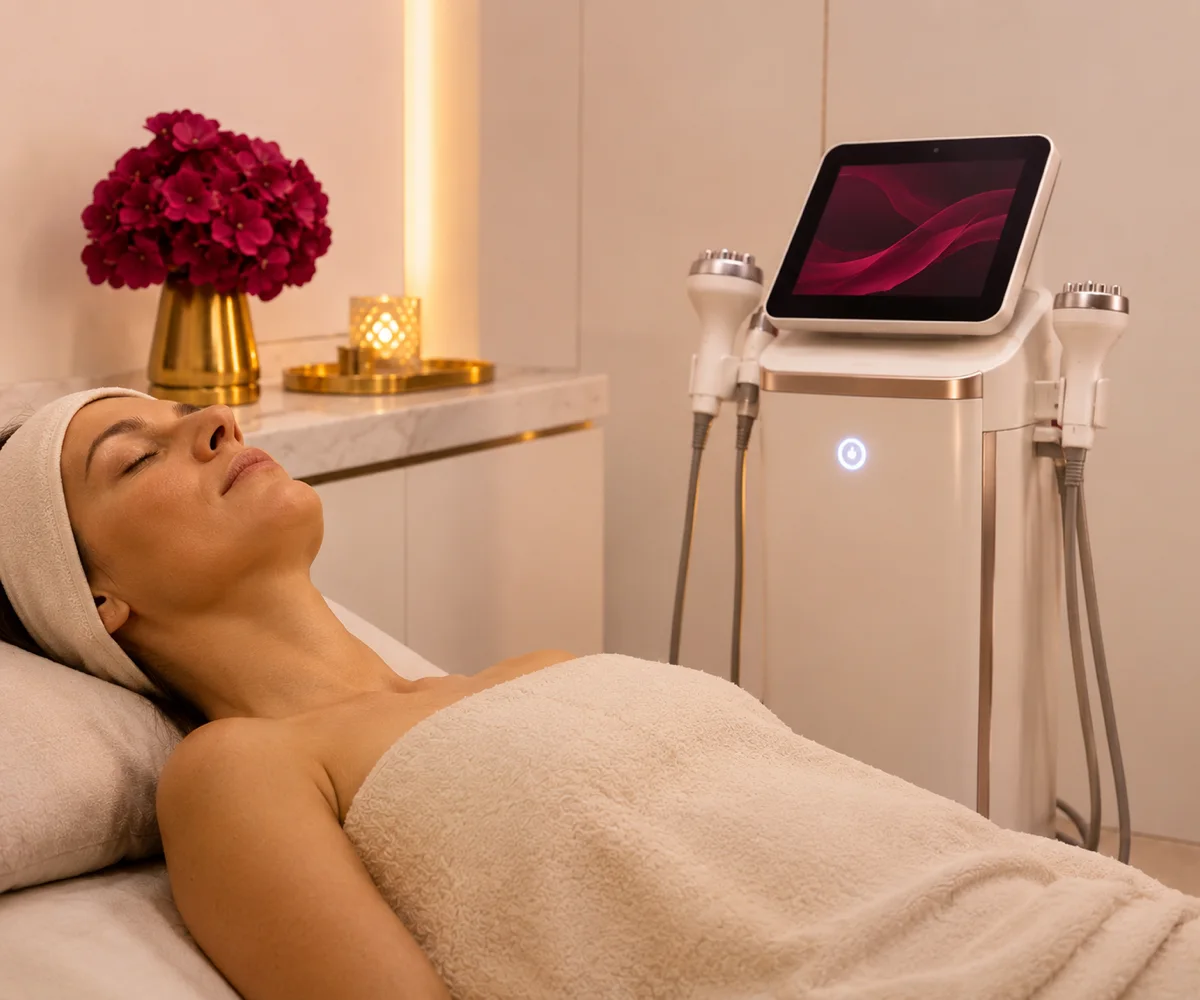
Private treatment room, with the device on an elegant trolley and a patient resting covered with a towel

Technology

Sectum, Neauvia radiofrequency (NRose Protocol)

Low-intensity radiofrequency that heats the skin with the aim of stimulating collagen and improving the firmness of the labia majora. It does not restore volume or remove skin. For this area there is only a pilot study of 9 women without a control group, with another type of radiofrequency, and the duration of the effect is unknown.

May be considered when

the skin is less firm but there is no marked excess skin, other causes have been excluded, the doctor has explained that the evidence is limited and that the result is not guaranteed, and the decision is yours.

Find out more
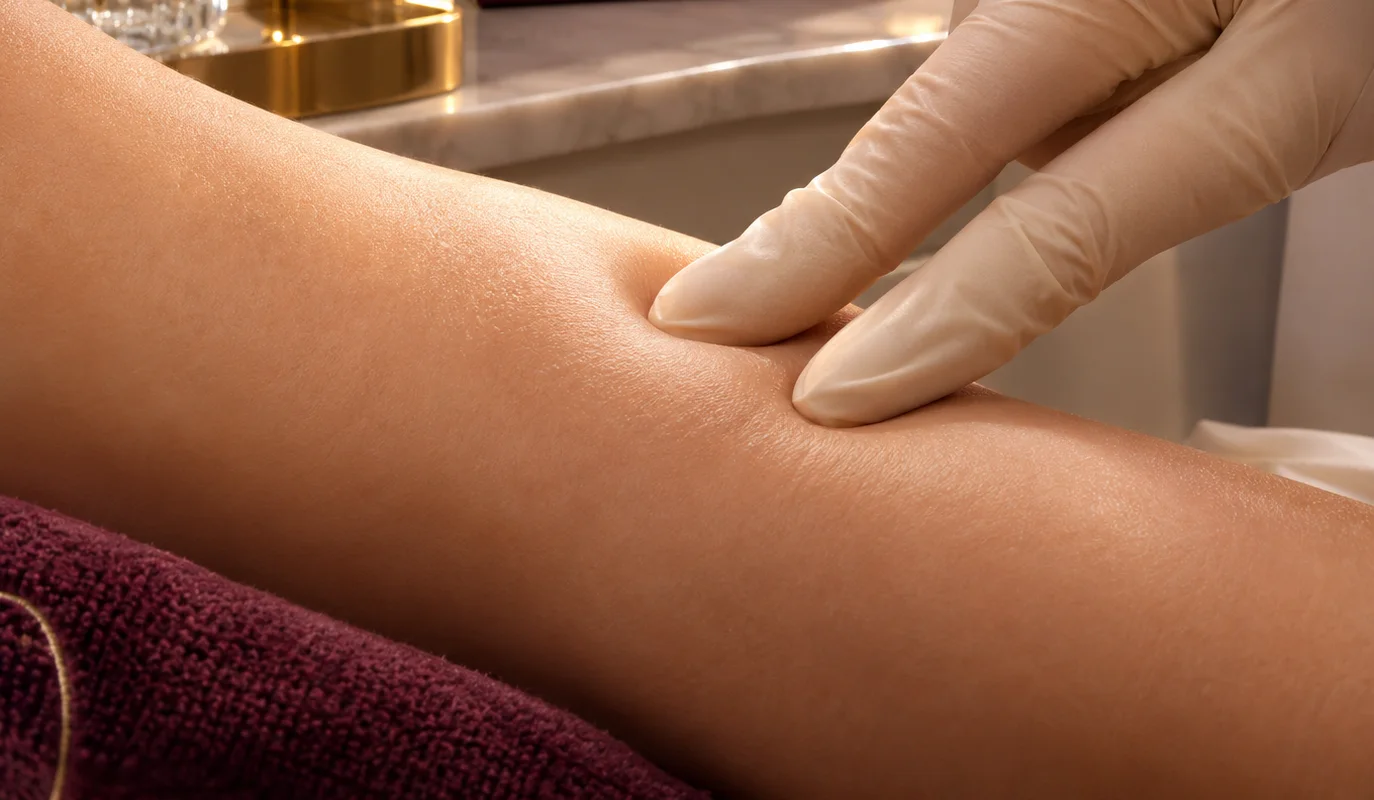
Two gloved fingers of the doctor assessing the firmness of the skin of a forearm

Injectable

Biostimulators

Substances injected into or under the skin to stimulate collagen gradually and improve thickness and firmness. They have been studied mainly on the face and body. For the labia majora there are only case reports, such as one of two cases treated with a hybrid filler, so this is a use outside the usual indications, to be considered with great caution.

May be considered when

what bothers you most is the quality of the skin, simple care has not been enough and the doctor has told you clearly what has and has not been studied.

Find out more

What the journey looks like

From the first consultation to the plan tailored to you

No treatment begins without an assessment consultation with the doctor. Sometimes it is enough to explain what is normal and care for the skin; only then is the rest considered.

  1. 01At the clinic

    Assessment consultation

    The doctor listens to what bothers you and since when, asks about weight changes, menopause, births and what you have already tried, and clarifies what is part of normal variation, in private and without rushing.

  2. 02At the clinic

    Examination, standing and lying down

    The vulva is examined in both positions, because sagging is better seen when standing. Volume, firmness and excess skin are assessed, and lichen sclerosus, varicose veins, cysts, hernia, nodules or prolapse are excluded. If necessary, another test is requested or you are referred.

  3. 03At home and at the clinic

    Volume, firmness or skin?

    With the answer to this question, the doctor proposes basic care and, if the discomfort persists, the option that corresponds to what is lacking, explaining the evidence, the risks, the costs and the maintenance.

  4. 04Over time

    Reassessing and deciding

    It is reassessed over time and, if appropriate, a small touch-up is done. If there is a lot of excess skin or if you prefer a lasting result, surgery is explained and you are referred.

Day to day

What helps while you wait for the consultation

Simple care that improves comfort and the quality of the outer skin of the vulva, alongside the plan the doctor recommends.

It is not a flaw in you

The labia majora change throughout life

They change with weight, years and hormones, and no one has labia majora identical to another woman's. Wanting to know what is going on and what can be done is legitimate, and a good consultation helps to separate what is normal from what deserves treatment, without haste or pressure.

Wash gently

The skin in this area is thin and gets irritated easily, and repeated irritation worsens the appearance and comfort.

In practice: warm water and, if you wish, an unscented product with a suitable pH; dry by patting, without rubbing.

Moisturise the outer skin

It keeps the skin more flexible and comfortable, without changing the contour.

In practice: a simple moisturiser, without perfume or dyes, only on the outer skin of the labia majora.

Choose clothing and sport without friction

It reduces pinching and irritation of loose skin.

In practice: cotton underwear, without hard seams, and sportswear that fits well but is not tight in the area.

Aim for a stable weight

Big swings are among the things that change the skin and volume of this area the most.

In practice: if you are going to lose weight, do it gradually and with support, and talk at the consultation before deciding on any treatment.

Dr Michelle Campagnoli, clinical director of Clínica Luxmed

Who will look after you

An assessment carried out by the doctor

At Luxmed, the first step is always an assessment consultation with Dr Michelle Campagnoli. She is the one who examines the vulva, distinguishes whether volume or firmness is lacking or whether there is excess skin, excludes other causes and clarifies what is part of normal variation, in private and without rushing. If the discomfort continues, she explains what exists, the risks and the alternatives, surgery included, and builds the plan with you.

  • Physical examination and medical historyA conversation about what has changed, examination of the vulva standing and lying down, and clarification of what is normal and what calls for assessment.
  • A plan tailored to youBasic care first; additional treatments only if appropriate, with the evidence explained.
  • No obligationThe cost of any treatment is confirmed only after the assessment.
Book an assessment consultation

Book a consultation

Book your consultation

Choose how you prefer to get in touch. We will arrange the assessment consultation with Dr Michelle Campagnoli.

Booking through the website100€70€Assessment consultationExclusive price for those who book the assessment through the website. Outside the website, the price is 100 €.

New Life Miraflores, Algés · Office Center, R. Santa Teresa do Menino Jesus n.º 6, 9.º C, 1495-048

Your details are used only for this contact. Any treatment depends on a prior medical assessment.

Request an appointmentIt takes less than a minute.
Speciality
You do not need to go into detail. The doctor will talk to you during the consultation.
Request received. Our team will contact you as soon as possible.
Why do the labia majora sag?

The most common cause is a combination of less fat, less elastic skin and, sometimes, excess skin. Weight changes, skin ageing, menopause and, in some women, pregnancy all contribute. In measurement studies weight is the factor most strongly associated with the size of the labia majora, whereas age and births showed no clear relationship. Only an examination shows what weighs most in your case.

Are sagging labia majora normal?

The labia majora vary greatly from woman to woman in size, shape, colour and wrinkling, and change throughout life, so a degree of sagging is common and is not a disease. What deserves attention is physical discomfort, unease that affects your life, or signs that are not those of ageing, such as itching, white skin, a nodule, swelling on one side only, spots or wounds.

Sagging, empty or flaccid labia: is it the same thing?

They describe similar but not identical appearances. “Empty” or “without volume” refers to fat that has decreased; “flaccid” refers to the firmness of the skin; “sagging” usually means that the skin droops or is in excess, with folds. In practice they combine, and the consultation is there to see which weighs most, because the treatment changes: volume, firmness or excess skin call for different responses.

How do I know whether it is excess skin or lack of volume?

A simple way, which the doctor does during the examination, is to see whether the skin can be pinched and whether, when lying down, the fold holds or empties. A lot of skin that can be pinched and hangs, even with some filling, suggests excess skin; a thin, empty, wrinkled fold suggests lack of volume. In many cases both are present.

What treatments are available?

After basic care, hyaluronic acid to restore volume, radiofrequency (Sectum) for skin firmness and, with very little evidence, biostimulators or intradermotherapy may be considered. When there is excess skin, surgery is the option that makes most sense. The choice depends on lack of volume, firmness or excess skin, and the evidence is limited for all options.

What if I have a lot of excess skin?

Injectables and radiofrequency do not remove skin. If the excess is marked, for example after major weight loss, filling can give more volume without improving the sagging. Surgery (reduction of the labia majora, or “majoraplasty”) is usually the option that makes most sense, with its risks and limits, and the doctor explains it and refers you. Most of the published surgical data are on the labia minora, and for the labia majora they are small series.

Does hyaluronic acid lift the labia majora?

It restores filling, and that can improve the look of empty labia majora, but it does not remove skin or “lift” skin that is in excess. The effect is temporary and it can be dissolved with hyaluronidase. The studies are case series, a multicentre study without a control group and a small randomised trial, and long trials with sham treatment are lacking.

Do radiofrequency or laser solve sagging labia?

There is not enough evidence. For radiofrequency in the labia majora there is only a pilot study with 9 women and without a control group. In 2018 the FDA warned that it had not approved energy-based devices for vaginal “rejuvenation” and other genital cosmetic procedures, and that they can cause burns, scarring and pain. No result is promised: the decision is always explained and shared with you.

Do these treatments carry risks?

With injectables, the most frequent effects are mild and pass within days: swelling, bruising and mild pain; more rarely asymmetry, nodules or infection. Blockage of a blood vessel is very rare but urgent: intense and increasing pain, pale or purplish skin, or coldness in the area require contacting the clinic immediately. With energy (radiofrequency, laser), burns and scarring have been described. They are not carried out in pregnancy, during breastfeeding, with an active infection, active genital herpes, wounds in the area or uncontrolled vulvar skin disease.

When should I book a consultation?

Book a consultation if the change in the labia majora bothers you physically or emotionally, if you have itching, white skin or fissures, dilated veins, swelling on one side only, a nodule, new spots, wounds that do not heal, or heaviness and a “bulge” inside the vagina, or if you want to know whether a treatment makes sense in your case. If you have doubts about what you feel, you can call SNS 24 (808 24 24 24). Swelling that grows quickly and comes with severe pain, pus or fever is urgent: call 112 or go to the emergency department.

We could not find that question. Ask us on WhatsApp

Scientific references

This page is based on the sources below and was reviewed by Dr. Michelle Campagnoli. Last updated on .

  1. Farage M, Maibach H. Lifetime changes in the vulva and vagina. Archives of Gynecology and Obstetrics 273(4):195-202, 2006.
  2. Kreklau A, Vâz I, Oehme F, Strub F, Brechbühl R, Christmann C, Günthert A. Measurements of a 'normal vulva' in women aged 15-84: a cross-sectional prospective single-centre study. BJOG 125(13):1656-1661, 2018.
  3. Lloyd J, Crouch NS, Minto CL, Liao LM, Creighton SM. Female genital appearance: 'normality' unfolds. BJOG 112(5):643-646, 2005.
  4. The NAMS 2020 GSM Position Statement Editorial Panel. The 2020 genitourinary syndrome of menopause position statement of The North American Menopause Society. Menopause 27(9):976-992, 2020.
  5. Lethaby A, Ayeleke RO, Roberts H. Local oestrogen for vaginal atrophy in postmenopausal women. Cochrane Database of Systematic Reviews 2016(8):CD001500, 2016.
  6. Lewis FM, Tatnall FM, Velangi SS, Bunker CB, Kumar A, Brackenbury F, Mohd Mustapa MF, Exton LS. British Association of Dermatologists guidelines for the management of lichen sclerosus, 2018. British Journal of Dermatology 178(4):839-853, 2018.
  7. NHS. Lichen sclerosus. (NHS (Reino Unido), acedido 2026-11-11)
  8. Gavrilov SG. Vulvar varicosities: diagnosis, treatment, and prevention. International Journal of Women's Health 9:463-475, 2017.
  9. Prodromidou A, Paspala A, Schizas D, Spartalis E, Nastos C, Machairas N. Cyst of the Canal of Nuck in adult females: a case report and systematic review. Biomedical Reports 12(6):333-338, 2020.
  10. NHS. Bartholin's cyst. (NHS (Reino Unido), acedido 2026-11-11)
  11. NHS. Symptoms of vulval cancer. (NHS (Reino Unido), acedido 2026-11-11)
  12. NHS. Pelvic organ prolapse. (NHS (nhs.uk), acedido 2026-11-11)
  13. American College of Obstetricians and Gynecologists (Committee on Gynecologic Practice). Elective female genital cosmetic surgery (Committee Opinion n.º 795). Obstetrics & Gynecology 135(1):e36-e42, 2020.
  14. Ribeiro RVE. Prevalence of body dysmorphic disorder in plastic surgery and dermatology patients: a systematic review with meta-analysis. Aesthetic Plastic Surgery 41(4):964-970, 2017.
  15. Saheb-Al-Zamani M. Labia majora reduction (majoraplasty). Clinics in Plastic Surgery 49(4):489-494, 2022.
  16. Hunter JG. Labia minora, labia majora, and clitoral hood alteration: experience-based recommendations. Aesthetic Surgery Journal 36(1):71-79, 2016.
  17. Fasola E, Gazzola R. Labia majora augmentation with hyaluronic acid filler: technique and results. Aesthetic Surgery Journal 36(10):1155-1163, 2016.
  18. Boucher F, Eychenne C, Gurriet B, Berreni N, Berrocal J, Foulc P, Levy A, Guzman-Ruiz A, Hersant B. Evaluation of the efficacy and safety of hyaluronic acid injection for volume restoration of the labia majora: ESOLANE study. International Urogynecology Journal 36(6):1243-1253, 2025.
  19. Fasola E, Dridi D, Degliuomini RS, Buzzaccarini G, Benini V, Salvatore S. Performance and safety of hyaluronic acid-based gynaecological filler for labia majora augmentation: a randomised controlled study. Life (Basel) 16(7):1141, 2026.
  20. King M, Convery C, Davies E. This month's guideline: the use of hyaluronidase in aesthetic practice (v2.4). Journal of Clinical and Aesthetic Dermatology 11(6):E61-E68, 2018.
  21. de Melo Romão LG, de Moura Batalha AC, Ribeiro NG, Ananias Mesquita WL, Alves AF, Farias de Melo CG. Collagen remodeling and increased type I collagen density following non-ablative monopolar radiofrequency for vulvar laxity: a prospective pilot study. European Journal of Obstetrics & Gynecology and Reproductive Biology (artigo 115311), 2026.
  22. Acevedo A, Parra AM, Amado AM, Dicker V, Castelanich D, Velasquez L, Parra LA. Labia majora rejuvenation with hybrid filler: a narrative review of the literature and report of two cases. Journal of Cosmetic Dermatology 24(3):e70074, 2025.
  23. Aglamis SO, Akkaya SK, Sahin EO, Sahin H. Labia majora lifting technique with polydioxanone threads. Sexual Medicine 13(5):qfaf064, 2025.
  24. El Danaf AA. Labia majora lipofilling during body contouring: complications. Aesthetic Plastic Surgery 50(15):6141-6149, 2026.
  25. Medsafe (Nova Zelândia), a retransmitir o alerta da U.S. FDA. Safety Information: energy-based devices used for vaginal 'rejuvenation' or vaginal cosmetic procedures (relays the USFDA safety communication of July 2018). Medsafe, New Zealand Medicines and Medical Devices Safety Authority, 2018.
CallAssistantAvailableBook