
Algés, Oeiras Mon to Fri · 09:00 to 13:00 and 14:00 to 19:00 · Sat · 09:00 to 14:00
WhatsApp Book a consultation

Aesthetic gynaecology

Shrunken labia majoraWhen the labia majora lose their filling, the skin becomes thin and wrinkled and the vulva looks emptier

“Deflated” is the word many women use when the labia majora, the two outer folds of the vulva, look emptied, like a balloon that has lost air: flatter, with puckered or wrinkled skin and, sometimes, with the labia minora more visible. The filling of the labia majora comes largely from a cushion of fat under the skin, and it is that cushion that tends to shrink with age, with the fall in oestrogen at the menopause or after weight loss. In most cases it is not a disease, but there are skin changes that look like this and need their own treatment. Here we explain what changes, how to tell losing volume from having excess skin, what is assessed and what helps, and what the clinic can offer, with honesty about what the evidence shows.

Reviewed by Dr Michelle Campagnoli, clinical director

  • 9 studiesis what a 2017 review found on augmenting the labia majora, and only 2 were prospective
  • 1assessment consultation, always first
  • 70 €assessment booked through the website
Woman in a green dress looking at her phone at a restaurant table with two glasses and a candle

How to recognise it

Could they be deflated labia majora?

“Deflated” describes what is seen and felt; it is not a diagnosis. What counts is what has changed, whether it was slow or fast, whether the skin is the same or different and whether there are symptoms, and not just the appearance.

Tick what you recognise0/7

Tick the signs you recognise in your case. This is not a diagnosis, it is only meant to give you an idea.

Do you have swelling or a nodule, a wound that does not heal, white, red or dark spots that change, thin white skin that cracks or bleeds, itching that does not go away, bleeding after the menopause or after sex, or pain in the vulva, sudden or persistent? This is not “just loss of volume” and should be examined without waiting. Unexplained weight loss should also be discussed with the doctor. Out of hours, call SNS 24: 808 24 24 24.

A female doctor in a white coat draws a diagram on a whiteboard for a curly-haired patient, with a laptop nearby
Photograph of a consultation. The dots mark what the doctor assesses; the image does not show the intimate area.

Why it happens

What may be behind deflated labia majora

The labia majora are skin over a layer of fat, and their appearance depends on the amount of that fat, the quality of the skin and oestrogen. When one of these three changes, the filling changes. Choose a situation to see how it applies.

Age

The filling of the labia majora comes mainly from the fatty tissue under the skin. With the years this layer tends to thin, as in other parts of the body, and the skin loses elasticity. In a study of 657 women, the length of the labia majora followed body mass index weakly, which is consistent with the idea that body fat weighs on their appearance.

What weighs on it

Thinking it is a disease or that something was done wrong, when often it is just the expected course.

What helps

An examination that confirms it is an expected change and excludes other causes.

Normal or to be assessed

Deflated labia majora or another change

Not everything that looks “deflated” is just loss of fat. That is why it is worth telling the expected change from what needs treatment before choosing an option.

  • What it looks like. The labia majora are flatter or thinner, with more wrinkled skin, equally on both sides, and the change was gradual.

  • When it happens. With age, after the menopause or weight loss, without itching, fissures, wounds or spots on the skin.

  • What the clinic does. The doctor examines the vulva, excludes other causes, explains what is part of normal variation and assesses the atrophy associated with menopause.

  • At home. Outer skin kept clean and gently moisturised, cotton clothing and, if you have dryness, talking about local treatment with the doctor.

Do you have intense, sudden pain in the vulva, swelling that grows quickly, with fever, or heavy bleeding? Call 112 or go to the emergency department. If you have a nodule, a wound that does not heal, unexplained bleeding or doubts, out of hours you can call SNS 24: 808 24 24 24.

Book an assessment consultation

What can help

Options for deflated labia majora

The first step is to understand the cause. If there is a skin condition, such as lichen sclerosus, it is treated first. If there is menopausal atrophy, local treatment (vaginal moisturisers and lubricants and, on prescription, low-dose vaginal oestrogen; if you have had breast cancer, speak to your oncologist first) improves comfort, although it has not been studied for restoring the volume of the labia majora. Caring for the outer skin, stabilising weight and talking about what really bothers you also count. If, after this, what persists is the lack of volume, there are options, and surgery (grafting of the woman's own fat, among others) is discussed with a specialist. The treatments below are additional options, assessed case by case and without promising results, with limited evidence for this area.

Book an assessment consultation
Dr Michelle Campagnoli, clinical director of Clínica Luxmed

First step

Assessment consultation

The doctor listens to what you are experiencing, examines your case and explains the suitable options. No treatment begins without this consultation.

May be considered when

you want to understand the cause and decide on the best path, with time and without commitment.

Book an assessment consultation
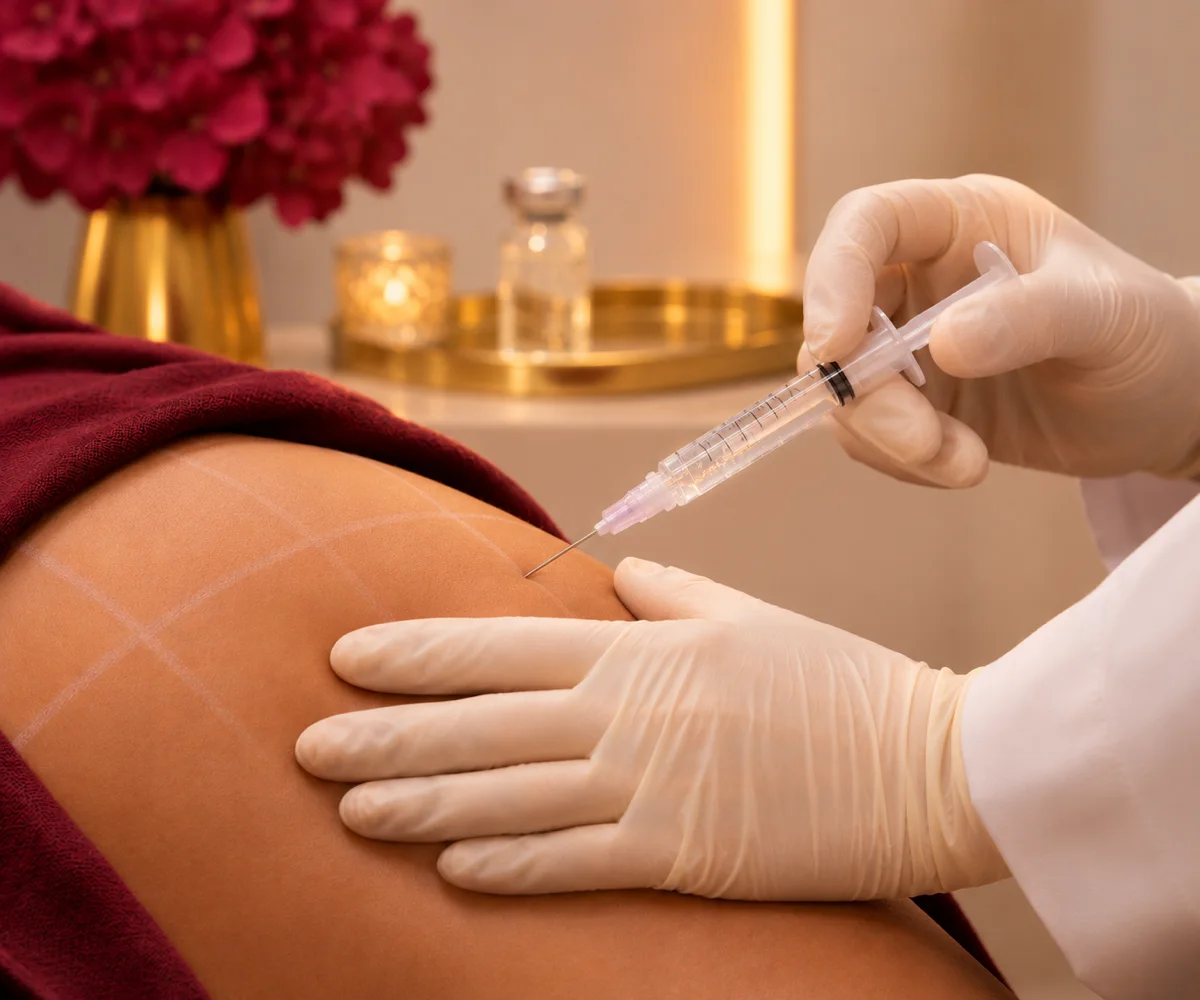
The doctor applying the filler, wearing gloves, on a marked area of the thigh covered by a towel

Injectable

Hyaluronic acid

Hyaluronic acid gel injected under the skin of the labia majora to restore volume. It is the option with the most studies in this area, but they are series without a control group and one small six-month trial. The gel is reabsorbed by the body over time, so it may need repeating, and there are risks, such as nodules, asymmetry, infection and, rarely, blockage of a blood vessel.

May be considered when

what bothers you most is the lack of volume, the skin is healthy, other causes have been assessed, the doctor has explained what is known and what is not, and the decision is yours.

Find out more
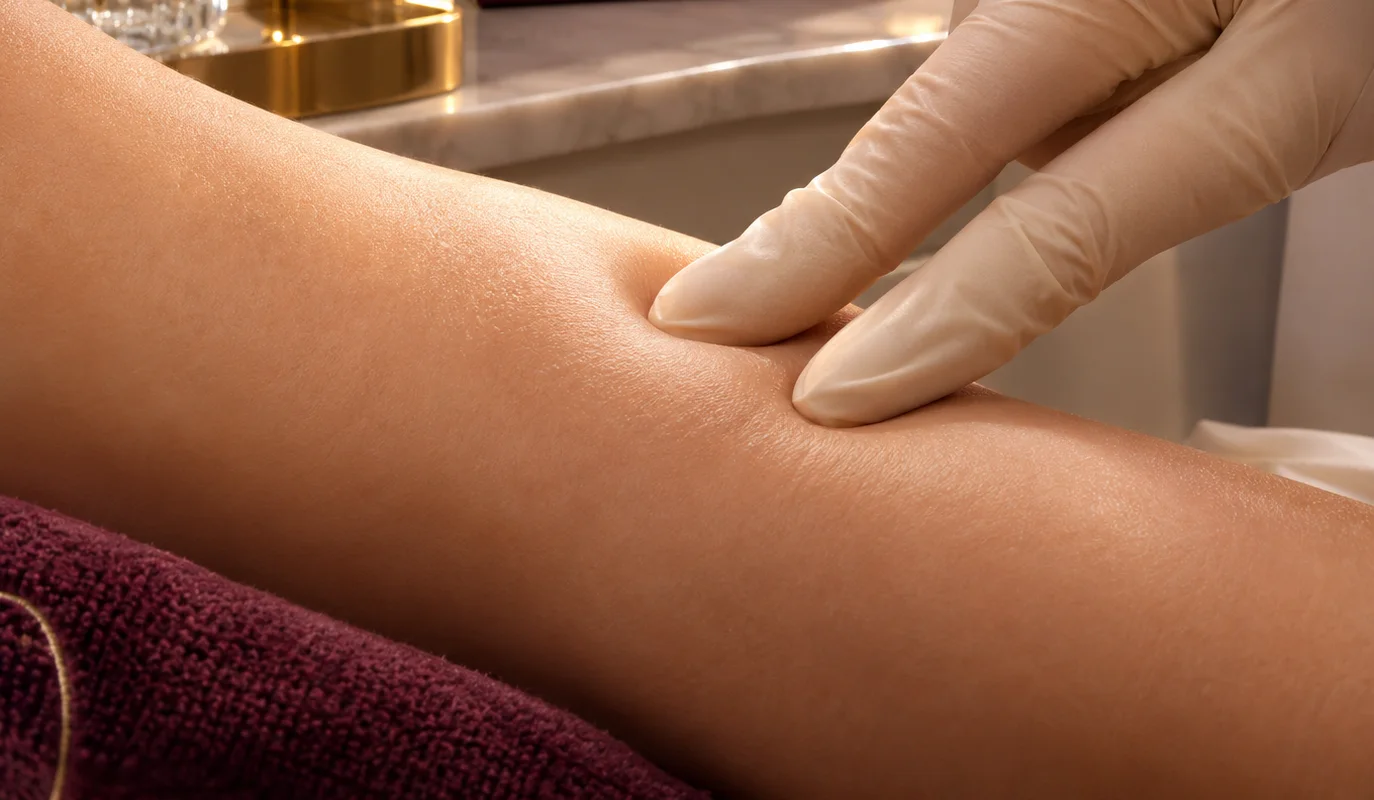
Two gloved fingers of the doctor assessing the firmness of the skin of a forearm

Injectable

Biostimulators

Injectable products that stimulate the body to produce collagen itself, with the aim of improving the firmness and thickness of the skin gradually. In the labia majora there are only reports of a few cases and a narrative review, generally with products that combine more than one substance, so the evidence is very limited.

May be considered when

the skin is thin or less firm, in addition to having little volume, and the doctor has explained that the data are scarce and the alternatives.

Find out more

What the journey looks like

From the first consultation to the plan tailored to you

No treatment begins without an assessment consultation with the doctor. First we understand what has changed and why, and only then do we decide whether there is anything to do.

  1. 01At the clinic

    Assessment consultation

    The doctor listens to what has changed, when and how, asks about menopause, weight, previous treatments and illnesses and what bothers you most, in private and without rushing.

  2. 02At the clinic

    Examination of the vulva

    The volume and thickness of the labia majora, the state of the skin and mucosa and signs of atrophy are looked at, and we look for what is not just ageing, such as a skin condition.

  3. 03At home and with your doctor

    Basis of the plan

    The causes that can be treated are treated: the skin condition, when there is one, menopausal atrophy, skin care and weight. We also talk about what bothers you day to day, in the body and in confidence.

  4. 04Over time

    Reassessing and deciding

    After some time, we see how things are. If the lack of volume continues to bother you and your weight is stable, the doctor explains the options, the risks and the alternatives, including surgery, and the decision is yours.

Day to day

What helps while you wait for the consultation

Simple care that protects the skin and comfort, alongside the plan the doctor recommends.

Changing is not failing

The vulva also changes with the years

Like the skin of the face or hands, that of the vulva changes with age, hormones and weight, and that is expected. It is worth distinguishing what bothers you in the body (friction, dryness, pain) from what bothers you when you look, because the first can almost always be treated and the second calls for an unhurried conversation. In either case, you do not have to deal with this on your own.

Moisturise the outer skin

Moisturised skin is more comfortable and less puckered.

In practice: after the bath, a simple unscented emollient, only on the outer skin, once a day.

Protect from friction

Repeated friction irritates skin that is already thin.

In practice: cotton underwear, clothing that is not tight and changing out of wet clothes after sport.

Lose weight gradually, if that applies

Rapid loss accentuates the loss of fat and leaves the skin no time to adapt.

In practice: a gradual pace, with follow-up, and waiting for the weight to stabilise before deciding on a volume treatment.

Talk about menopause

Atrophy of the tissues can be treated, and local treatment can improve comfort.

In practice: a regular vaginal moisturiser, lubricant during sex and asking at the consultation about vaginal oestrogen.

Dr Michelle Campagnoli, clinical director of Clínica Luxmed

Who will look after you

An assessment carried out by the doctor

At Luxmed, the first step is always an assessment consultation with Dr Michelle Campagnoli. She is the one who listens to what has changed, examines the vulva, assesses the skin and volume, excludes other causes and clarifies what is part of normal variation, in private and without rushing. If the discomfort persists, she explains the options, the risks and the alternatives, and designs the plan with you.

  • Physical examination and medical historyA conversation about what has changed and what bothers you, examination of the vulva and clarification of what is normal and what needs assessment.
  • A plan tailored to youCauses and skin care are treated first; additional treatments only if appropriate, with the evidence explained.
  • No obligationThe cost of any treatment is confirmed only after the assessment.
Book an assessment consultation

Book a consultation

Book your consultation

Choose how you prefer to get in touch. We will arrange the assessment consultation with Dr Michelle Campagnoli.

Booking through the website100€70€Assessment consultationExclusive price for those who book the assessment through the website. Outside the website, the price is 100 €.

New Life Miraflores, Algés · Office Center, R. Santa Teresa do Menino Jesus n.º 6, 9.º C, 1495-048

Your details are used only for this contact. Any treatment depends on a prior medical assessment.

Request an appointmentIt takes less than a minute.
Speciality
You do not need to go into detail. The doctor will talk to you during the consultation.
Request received. Our team will contact you as soon as possible.
Deflated labia majora: is it normal?

It is very common and, in most cases, part of ageing or weight loss, not of a disease. The vulva varies greatly from woman to woman and changes throughout life. Even so, an examination is worthwhile, especially if the change was fast, if it affects only one side, or if the skin is white, thin, itchy, fissured or has spots, because that may be something else.

Why does the vulva become deflated with age?

The labia majora owe their filling to a layer of fat under the skin, and that layer tends to thin with the years. After the menopause, the fall in oestrogen also leaves the skin and mucosa thinner, drier and less elastic. Studies mainly measure the mucosa and symptoms, not the volume of the labia majora, so it is not possible to say how much is due to each factor.

Can losing weight leave the labia majora deflated?

It can. When you lose weight, fat decreases all over the body, and in a study of 657 women the length of the labia majora followed weight a little, a weak association. It is more noticeable after a large or fast loss. After very major weight loss, the opposite may happen: skin and tissue may be left over in the area of the pubis and labia majora, and that calls for its own surgical approach.

Deflated, flaccid or sagging labia majora: are they the same?

They are not the same thing, although they can coincide. “Deflated” describes loss of volume and thickness, and more wrinkled skin. “Flaccid” refers to loss of firmness, and “sagging” to tissue that descends. At the consultation we distinguish which predominates, because that changes what makes sense to propose.

Does vaginal oestrogen help to recover volume?

Low-dose vaginal oestrogen, prescribed by a doctor, treats atrophy and improves dryness and comfort, and is one of the first-line treatments for vaginal atrophy. There are no studies that have measured the volume of the labia majora, so it should not be expected to restore it. If you have or have had breast cancer, speak to your oncologist first.

Do creams or supplements restore volume?

There is no evidence that creams, supplements or home devices give filling back to the labia majora. A simple emollient can improve comfort and the look of the skin, but does not restore the fat that has been lost. Be wary of promises of volume without a prior examination.

What options exist to restore volume?

Injected hyaluronic acid is the option with the most studies in this area, and there is also grafting of the woman's own fat, which is surgery and is discussed with a surgeon. Biostimulators, intradermotherapy, PRP and radiofrequency have little or no evidence for the labia majora, and may be considered in selected cases, without promising results. The overall evidence is limited and made up mainly of small studies without a control group.

What are the risks of filling the labia majora?

In studies serious complications were rare, but the series are small and with short follow-up. The most common effects are mild and temporary: pain, swelling, redness and nodules. Asymmetry, infection and, rarely, blockage of a vessel, with skin damage, can occur. Hyaluronidase dissolves hyaluronic acid and is used when there are complications. The gel is reabsorbed over time, and so the result is not permanent.

Who should not have these treatments, or should wait?

They are not done, or are postponed, with an active infection, undiagnosed lesions of the vulva, unexplained bleeding, an untreated skin condition (such as lichen sclerosus), pregnancy or breastfeeding, and it is advisable to wait for the weight to stabilise. If concern about appearance is very great and distressing, the doctor may first suggest a conversation, because body dysmorphic disorder is more common in people who seek aesthetic procedures.

When should I book a consultation?

Book a consultation if you have noticed a rapid change, if it affects only one side, if you have white, thin or itchy skin, wounds, spots that change, bleeding after the menopause or after sex, persistent pain, or if the appearance bothers you and you want to understand the options. If you have a nodule, a wound that does not heal or doubts out of hours, call SNS 24 (808 24 24 24). If you have intense, sudden pain, swelling that grows quickly with fever, or heavy bleeding, call 112.

We could not find that question. Ask us on WhatsApp

Scientific references

This page is based on the sources below and was reviewed by Dr. Michelle Campagnoli. Last updated on .

  1. Farage M, Maibach H. Lifetime changes in the vulva and vagina. Archives of Gynecology and Obstetrics 273(4):195-202, 2006.
  2. Kreklau A, Vâz I, Oehme F, Strub F, Brechbühl R, Christmann C, Günthert A. Measurements of a 'normal vulva' in women aged 15-84: a cross-sectional prospective single-centre study. BJOG 125(13):1656-1661, 2018.
  3. Lloyd J, Crouch NS, Minto CL, Liao LM, Creighton SM. Female genital appearance: 'normality' unfolds. BJOG 112(5):643-646, 2005.
  4. Alter GJ. Management of the mons pubis and labia majora in the massive weight loss patient. Aesthetic Surgery Journal 29(5):432-442, 2009.
  5. The NAMS 2020 GSM Position Statement Editorial Panel. The 2020 genitourinary syndrome of menopause position statement of The North American Menopause Society. Menopause 27(9):976-992, 2020.
  6. Lethaby A, Ayeleke RO, Roberts H. Local oestrogen for vaginal atrophy in postmenopausal women. Cochrane Database of Systematic Reviews 2016(8):CD001500, 2016.
  7. Lewis FM, Tatnall FM, Velangi SS, Bunker CB, Kumar A, Brackenbury F, Mohd Mustapa MF, Exton LS. British Association of Dermatologists guidelines for the management of lichen sclerosus, 2018. British Journal of Dermatology 178(4):839-853, 2018.
  8. NHS. Lichen sclerosus. (NHS (Reino Unido), acedido 2026-11-11)
  9. NHS. Symptoms of vulval cancer. (NHS (Reino Unido), acedido 2026-11-11)
  10. Jabbour S, Kechichian E, Hersant B, Levan P, El Hachem L, Noel W, et al. Labia Majora Augmentation: A Systematic Review of the Literature. Aesthetic Surgery Journal 37(10):1157-1164, 2017.
  11. Fasola E, Gazzola R. Labia majora augmentation with hyaluronic acid filler: technique and results. Aesthetic Surgery Journal 36(10):1155-1163, 2016.
  12. Boucher F, Eychenne C, Gurriet B, Berreni N, Berrocal J, Foulc P, Levy A, Guzman-Ruiz A, Hersant B. Evaluation of the efficacy and safety of hyaluronic acid injection for volume restoration of the labia majora: ESOLANE study. International Urogynecology Journal 36(6):1243-1253, 2025.
  13. Fasola E, Dridi D, Degliuomini RS, Buzzaccarini G, Benini V, Salvatore S. Performance and safety of hyaluronic acid-based gynaecological filler for labia majora augmentation: a randomised controlled study. Life (Basel) 16(7):1141, 2026.
  14. El Danaf AA. Labia majora lipofilling during body contouring: complications. Aesthetic Plastic Surgery 50(15):6141-6149, 2026.
  15. Acevedo A, Parra AM, Amado AM, Dicker V, Castelanich D, Velasquez L, Parra LA. Labia Majora Rejuvenation With Hybrid Filler: A Narrative Review of the Literature and Report of Two Cases. Journal of Cosmetic Dermatology 24(3):e70074, 2025.
  16. Caron GF. When labiaplasty is not enough: rejuvenation of the labia majora using hybrid calcium hydroxylapatite with hyaluronic acid filler for increased satisfaction and uniform results. Aesthetic Surgery Journal Open Forum 8:ojag101, 2026.
  17. de Melo Romão LG, de Moura Batalha AC, Ribeiro NG, Ananias Mesquita WL, Alves AF, Farias de Melo CG. Collagen remodeling and increased type I collagen density following non-ablative monopolar radiofrequency for vulvar laxity: a prospective pilot study. European Journal of Obstetrics & Gynecology and Reproductive Biology (artigo 115311), 2026.
  18. Lowe S. Hyaluronic Acid Dermal Filler-Associated Vascular Occlusion: A Review of Prevention and Management Strategies. Journal of Cosmetic Dermatology 25(5):e70884, 2026.
  19. King M, Convery C, Davies E. This month's guideline: the use of hyaluronidase in aesthetic practice (v2.4). Journal of Clinical and Aesthetic Dermatology 11(6):E61-E68, 2018.
  20. Medsafe (Nova Zelândia), a retransmitir o alerta da U.S. FDA. Safety Information: energy-based devices used for vaginal 'rejuvenation' or vaginal cosmetic procedures (relays the USFDA safety communication of July 2018). Medsafe, New Zealand Medicines and Medical Devices Safety Authority, 2018.
  21. American College of Obstetricians and Gynecologists (Committee on Gynecologic Practice). Elective female genital cosmetic surgery (Committee Opinion n.º 795). Obstetrics & Gynecology 135(1):e36-e42, 2020.
  22. Ribeiro RVE. Prevalence of body dysmorphic disorder in plastic surgery and dermatology patients: a systematic review with meta-analysis. Aesthetic Plastic Surgery 41(4):964-970, 2017.
CallAssistantAvailableBook