Algés, Oeiras Mon to Fri · 09:00 to 13:00 and 14:00 to 19:00 · Sat · 09:00 to 14:00
WhatsApp Book a consultation

Aesthetic gynaecology

Intimate dark patches after inflammationWhen folliculitis, irritation or a wound heals, but leaves the skin darker in the groin or intimate area

Folliculitis, an ingrown hair, irritation from a product or a hair removal wound has healed, but a brown or greyish mark has been left in the spot and will not go away. It is called post-inflammatory hyperpigmentation: the skin reacted to the inflammation by producing more pigment and, even after the inflammation has gone, the pigment stays. It is very common, almost always benign and usually fades with time, but it calls for two precautions: understanding what caused it, so that it does not recur, and telling this mark apart from others that deserve to be seen by a doctor. Here we explain why it stays, how long it can take, what helps and what the clinic can offer, with honesty about the evidence.

Reviewed by Dr Michelle Campagnoli, clinical director

  • 1 in 10women has a pigmented lesion on the vulva, almost always benign
  • 1assessment consultation, always first
  • 70 €assessment booked through the website
Woman with short hair and a grey jumper folding white towels in a self-service launderette

How to recognise it

Could it be a mark after inflammation?

What helps most in recognising it is the history: there was first an inflammation (spots, burning, itching, a wound) and the mark stayed in the same place. It is not a diagnosis: it is there for the conversation with the doctor.

Tick what you recognise0/7

Tick the signs you recognise in your case. This is not a diagnosis, it is only meant to give you an idea.

A new mark without previous inflammation, that grows, is asymmetrical, has irregular edges or several colours, bleeds or forms a sore? Dark, thick, velvety skin in the folds, with or without itching? White, thin or wrinkled skin with itching that does not go away? Severe pain, heat, pus or fever? You need a medical assessment and should not wait or treat it on your own. Out of hours, call SNS 24: 808 24 24 24.

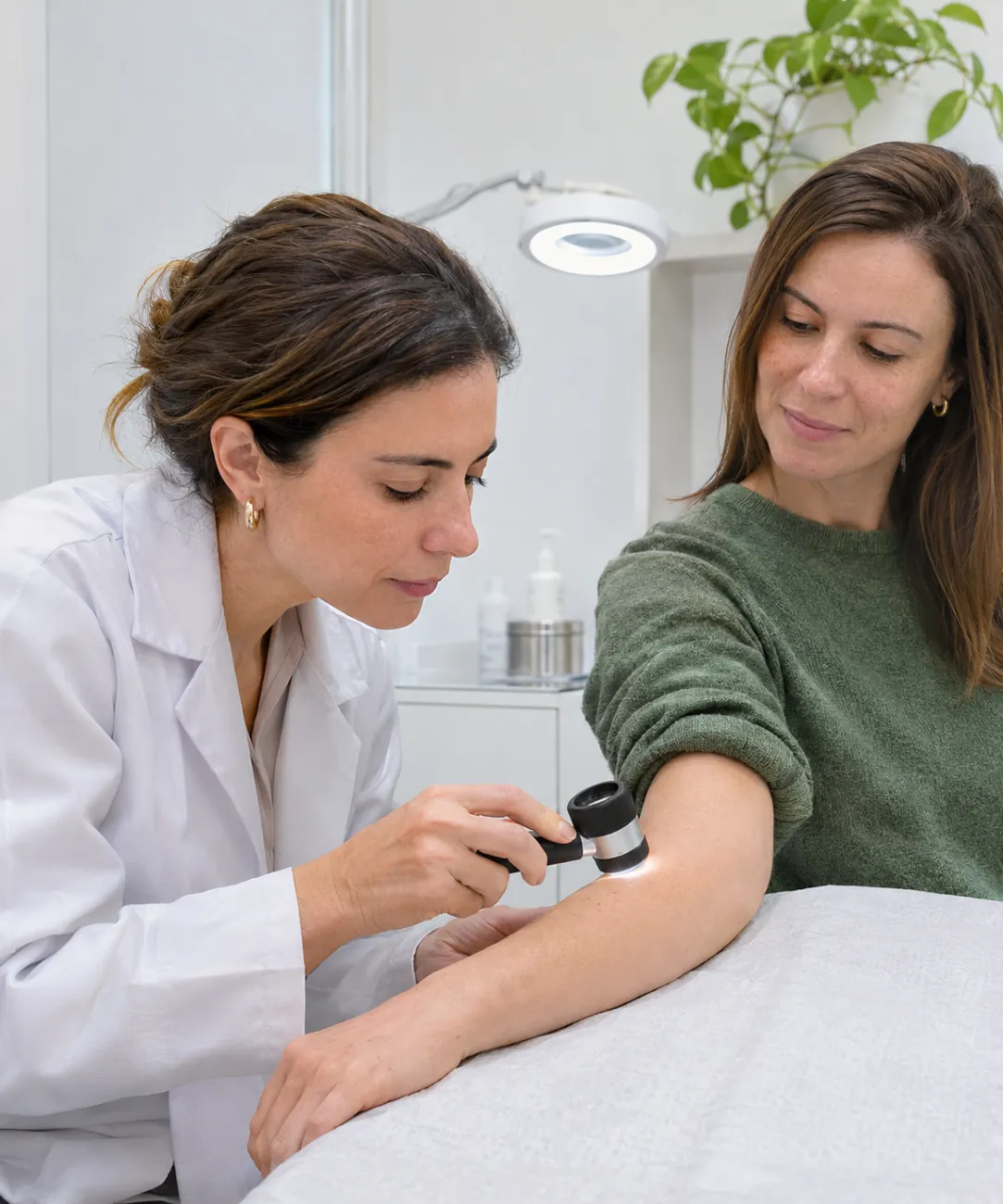
A dermatologist in a white coat examines the forearm of a patient in a green sweater with a dermatoscope
Photograph of a consultation. The dots mark what the doctor assesses; the image does not show the intimate area.

Why it happens

What can inflame the skin and leave a mark

Pigment is the skin's response to inflammation, whatever the cause. So what matters is finding out what inflamed it. Choose a situation to see how it applies.

Folliculitis and ingrown hairs

When the hair grows inwards, or the follicle becomes irritated or infected, a spot or papule forms. Each one leaves, as it heals, a small dark mark in the spot. In a study of 333 women, 60% reported at least one complication of pubic hair removal, mainly abrasions and ingrown hairs.

What weighs on it

Squeezing, picking or pulling out the ingrown hair, which prolongs the inflammation and the mark.

What helps

Letting the lesion heal without touching it and reviewing the hair removal method. If it is very painful, hot, swollen or with fever, see the doctor.

Normal or to be assessed

Post-inflammatory mark or something else

Not every dark area in the intimate region comes from inflammation. There are darker tones that are normal and there are changes that call for a medical look. That is why the history of the mark is the most important part.

  • What it looks like. A flat, brown or greyish mark, with more or less sharp edges, in the place of a previous inflammation and without relief, pain or sores.

  • When it appears. In the weeks following folliculitis, irritation, a wound or a procedure, and it may fade gradually, over months.

  • What the clinic does. The doctor listens to the history, examines the skin, and confirms whether the inflammation has gone and whether there is a cause that is still active.

  • At home. Leave the skin alone, avoid what irritates it, protect exposed areas from the sun and do not use lightening creams without indication.

A mark that changes, forms a sore or bleeds, severe pain with heat and pus, or fever? You need a prompt assessment. Out of hours, you can call SNS 24: 808 24 24 24. If you have a high fever and intense malaise, or a red, painful area that spreads quickly, call 112 or go to the emergency department.

Book an assessment consultation

What can help

Options for marks after inflammation

The first line is to treat the cause and calm the skin: find out what inflamed the area, stop irritating it, review hair removal methods and protect from the sun what is visible. Once the inflammation has gone, the pigment often fades on its own, over months, and the doctor may propose locally applied products on prescription (for example retinoids, mild acids or other depigmenting agents), chosen according to the area, because the skin of the intimate region is thin and irritates easily and the mucosa is not treated like skin. Among the additional treatments, the clinic offers the chemical peel, which is only considered on hair-bearing skin, never on mucosa, after the inflammation has passed, and without promising results.

Book an assessment consultation
Dr Michelle Campagnoli, clinical director of Clínica Luxmed

First step

Assessment consultation

The doctor listens to what you are experiencing, examines your case and explains the suitable options. No treatment begins without this consultation.

May be considered when

you want to understand the cause and decide on the best path, with time and without commitment.

Book an assessment consultation
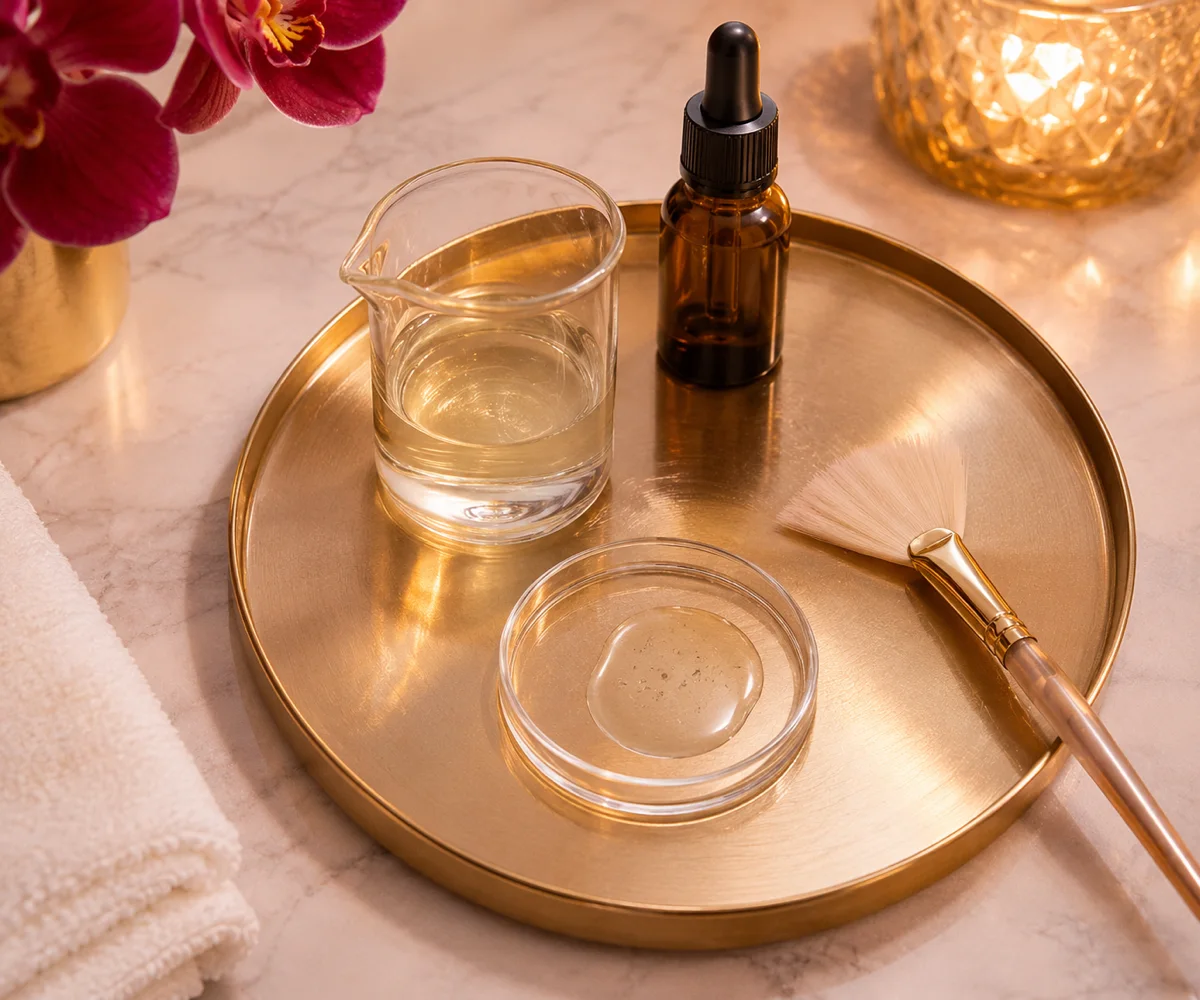
Chemical peel: gold tray with solution, fan brush and dropper bottle, on marble

Peel

Chemical peel

Application of a solution that causes a controlled exfoliation of the superficial layers of the skin, with the aim of helping to fade a superficial post-inflammatory mark. In this area, the skin reacts easily and a peel can inflame it again and worsen the mark. It is only considered on hair-bearing skin, and never on mucosa, and the depth, pace and interval are defined at the assessment.

May be considered when

the inflammation has passed completely, the skin is calm and without wounds, infection or herpes, the mark is superficial and benign in appearance, and first-line measures have been tried and were not enough, after the doctor has explained what is known and what is not.

Find out more

What the journey looks like

From the first consultation to the plan tailored to you

No treatment begins without an assessment consultation with the doctor. In most cases, the most important thing happens before any procedure: treating the cause and calming the skin.

  1. 01At the clinic

    Assessment consultation

    The doctor asks what happened before the mark, since when it has been there, whether it has changed, which products and the methods used you use, which medication you take and which skin conditions you have. She may ask for old photographs of the area, if you have them.

  2. 02At the clinic

    Examination of the skin

    She looks at the colour, outline and relief of the mark, looks for inflammation that is still active and assesses the skin type. If the lesion raises doubts, or if the skin in the folds is thick and velvety, the doctor asks for another opinion, tests or a biopsy before any treatment.

  3. 03At home

    Treat the cause and calm

    What inflamed the skin is removed or treated: hygiene is simplified, irritating products are changed, hair removal is reviewed and what is visible is protected from the sun. Only when the skin is calm do we think about treating the pigment.

  4. 04Over time

    Reassessing and deciding

    A review is booked after a few months, because post-inflammatory hyperpigmentation is slow. If it has faded, we continue to protect the skin. If not, the doctor explains the options (prescription topicals, peel or another route) and answers any questions.

Day to day

What helps while you wait for the consultation

Simple care so as not to prolong the inflammation and to give the skin time, alongside the plan the doctor recommends.

The golden rule

Treat the inflammation before the mark

While there is inflammation, the skin keeps making pigment. Trying to lighten an area that is still irritated, with acids, exfoliants or strong creams, usually worsens the mark. The first step is to calm the skin and find out what inflamed it, and only then treat the colour.

Leave the skin alone

Every friction, exfoliation or wound inflames the area again and prolongs the mark.

In practice: do not rub, do not exfoliate and do not press the area with tight clothing while the skin is irritated.

Review hair removal

Shaving very close, pulling or waxing with irritated skin causes ingrown hairs and new marks.

In practice: let it heal before removing hair, use a clean, sharp blade, in the direction of growth, and do not shave twice over the same spot.

Simplify hygiene

Scented or strong products irritate the thin skin of the genital region.

In practice: wash the outer area with warm water or a gentle unscented product, dry without rubbing and avoid wipes and intimate deodorants.

Protect from the sun what is visible

Sun and visible light can darken skin that is recovering even further.

In practice: on areas that get the sun, such as the groin or pubis, wear swimwear that covers and the sunscreen the doctor recommends.

Dr Michelle Campagnoli, clinical director of Clínica Luxmed

Who will look after you

An assessment carried out by the doctor

At Luxmed, the first step is always an assessment consultation with Dr Michelle Campagnoli. She is the one who listens to the history of the mark, examines the skin, confirms that the inflammation has passed, excludes other causes and designs the plan with you, in private and without rushing, coordinating with dermatology when necessary.

  • Physical examination and medical historyA conversation about what happened before the mark, examination of the skin and, when in doubt, another opinion or a test on the spot.
  • A plan tailored to youTreat the cause and calm the skin first; additional treatments only if appropriate, with the evidence explained.
  • No obligationThe cost of any treatment is confirmed only after the assessment.
Book an assessment consultation

Book a consultation

Book your consultation

Choose how you prefer to get in touch. We will arrange the assessment consultation with Dr Michelle Campagnoli.

Booking through the website100€70€Assessment consultationExclusive price for those who book the assessment through the website. Outside the website, the price is 100 €.

New Life Miraflores, Algés · Office Center, R. Santa Teresa do Menino Jesus n.º 6, 9.º C, 1495-048

Your details are used only for this contact. Any treatment depends on a prior medical assessment.

Request an appointmentIt takes less than a minute.
Speciality
You do not need to go into detail. The doctor will talk to you during the consultation.
Request received. Our team will contact you as soon as possible.
What is post-inflammatory hyperpigmentation in the intimate area?

It is a brown or greyish mark that stays on the skin after an inflammation, such as folliculitis, irritation or a wound. Inflammation stimulates the cells that produce pigment, and it stays in the skin even after the inflammation has gone. It is a very common reaction, more frequent in people with darker skin, and almost always benign.

Why do dark marks remain after folliculitis or irritation?

Because the skin, when it becomes inflamed, produces more pigment in response. The stronger or more repeated the inflammation (for example, from squeezing, rubbing or removing hair over irritated skin), the greater the likelihood of a mark. In darker skin the reaction is more frequent, and the inflammation can be so mild that it is hardly visible.

How long does it take to go away?

There is no timeframe that is the same for everyone. The course is unpredictable and can take months and, in some cases, longer. Superficial hyperpigmentation has a better chance of resolving than deeper pigmentation, and continuing to irritate the area, or exposing it to the sun, delays fading. So the first step is to stop inflaming the skin.

How do I know whether it is a post-inflammatory mark or something else?

The history helps a great deal: it was inflamed first and the mark stayed in the same place, flat and without relief, pain or sores. A new mark with no cause, that grows, is asymmetrical, has irregular edges or several colours, or that changes calls for assessment. Dark, thick, velvety skin in the folds and white, thin skin with persistent itching also call for assessment. Only an examination distinguishes with certainty.

What should I do first?

Treat the inflammation and the cause: stop squeezing, rubbing and exfoliating, review the products and the hair removal method and let the skin heal. Specialists describe this step as the first, before treating the pigment, because while the skin is inflamed it keeps making pigment. If the inflammation does not go away, or returns, book a consultation.

Do lightening creams work?

They can help in some cases, but they should be prescribed and chosen for the area. In a review of studies, retinoids, hydroxy acids and sunscreen were the best supported, and they can cause flaking, burning and itching. In the genital region the skin is thin and the mucosa is not treated like skin, so nothing is used without the doctor's indication.

Is sunscreen needed on an area that hardly gets any sun?

On covered areas, no. On those that are visible, such as the groin, pubis and thighs at the beach or pool, yes: UV radiation and visible light can worsen post-inflammatory hyperpigmentation, and broad-spectrum sunscreen supports the treatment. The doctor tells you which to use and where.

Is a peel on the intimate area safe?

It is only considered on hair-bearing skin, never on mucosa, after the inflammation has passed and with calm skin, and the decision is individual. Peels can cause irritation, pigment changes (darker or lighter), folliculitis, infection, recurrence of herpes and, rarely, scarring, especially in darker skin and with sun afterwards. We do not know of good-quality studies on intimate skin, and no result is guaranteed.

When should a peel be postponed or not done?

It is not done with active inflammation or infection, herpes, irritated or wounded skin, or with a recent tan. As a precaution, pregnancy and breastfeeding also lead to postponement. If there are doubts about the mark, it has to be seen first: no peel is done over a lesion that might not be a simple post-inflammatory mark.

When should I book a consultation or see a doctor?

Book a consultation if the mark does not fade after a few months, if it worsens or becomes inflamed again, if you are not sure what caused it, or if the area continues to hurt or itch. See a doctor without waiting if the mark is new with no cause, grows, changes colour or shape, bleeds or forms a sore, or if the skin in the folds is thick and velvety. Out of hours, SNS 24: 808 24 24 24. If you have a high fever and intense malaise or a red, painful area that spreads quickly, call 112.

We could not find that question. Ask us on WhatsApp

Scientific references

This page is based on the sources below and was reviewed by Dr. Michelle Campagnoli. Last updated on .

  1. Kaufman BP, Aman T, Alexis AF. Postinflammatory Hyperpigmentation: Epidemiology, Clinical Presentation, Pathogenesis and Treatment. American Journal of Clinical Dermatology 19(4):489-503, 2018.
  2. Chaowattanapanit S, Silpa-Archa N, Kohli I, Lim HW, Hamzavi I. Postinflammatory hyperpigmentation: A comprehensive overview: Treatment options and prevention. Journal of the American Academy of Dermatology 77(4):607-621, 2017.
  3. Tan MG, Kim WB, Jo CE, Nabieva K, Kirshen C, Ortiz AE. Topical treatment for postinflammatory hyperpigmentation: a systematic review. Journal of Dermatological Treatment 33(5):2518-2526, 2022.
  4. Davis EC, Callender VD. Postinflammatory hyperpigmentation: a review of the epidemiology, clinical features, and treatment options in skin of color. Journal of Clinical and Aesthetic Dermatology 3(7):20-31, 2010.
  5. Fatima S, Braunberger T, Mohammad TF, Kohli I, Hamzavi IH. The Role of Sunscreen in Melasma and Postinflammatory Hyperpigmentation. Indian Journal of Dermatology 65(1):5-10, 2020.
  6. Murzaku EC, Penn LA, Hale CS, Pomeranz MK, Polsky D. Vulvar nevi, melanosis, and melanoma: an epidemiologic, clinical, and histopathologic review. Journal of the American Academy of Dermatology 71(6):1241-1249, 2014.
  7. De Giorgi V, Gori A, Salvati L, et al. Clinical and Dermoscopic Features of Vulvar Melanosis Over the Last 20 Years. JAMA Dermatology 156(11):1185-1191, 2020.
  8. Haugh AM, Merkel EA, Zhang B, et al. A clinical, histologic, and follow-up study of genital melanosis in men and women. Journal of the American Academy of Dermatology 76(5):836-840, 2017.
  9. Wohlmuth C, Wohlmuth-Wieser I. Vulvar Melanoma: Molecular Characteristics, Diagnosis, Surgical Management, and Medical Treatment. American Journal of Clinical Dermatology 22(5):639-651, 2021.
  10. Hermanns-Lê T, Scheen A, Piérard GE. Acanthosis nigricans associated with insulin resistance: pathophysiology and management. American Journal of Clinical Dermatology 5(3):199-203, 2004.
  11. NHS. Acanthosis nigricans. (NHS (nhs.uk), acedido 2026-11-11)
  12. DeMaria AL, Flores M, Hirth JM, Berenson AB. Complications related to pubic hair removal. American Journal of Obstetrics and Gynecology 210(6):528.e1-5, 2014.
  13. NHS. Ingrown hairs. (NHS (nhs.uk), acedido 2026-11-11)
  14. Bauer A, Rodiger C, Greif C, Kaatz M, Elsner P. Vulvar dermatoses: irritant and allergic contact dermatitis of the vulva. Dermatology 210(2):143-149, 2005.
  15. Olumide YM, Akinkugbe AO, Altraide D, et al. Complications of chronic use of skin lightening cosmetics. International Journal of Dermatology 47(4):344-353, 2008.
  16. Costa IMC, Damasceno PS, Costa MC, Gomes KGP. Review in peeling complications. Journal of Cosmetic Dermatology 16(3):319-326, 2017.
CallAssistantAvailableBook