
Algés, Oeiras Mon to Fri · 09:00 to 13:00 and 14:00 to 19:00 · Sat · 09:00 to 14:00
WhatsApp Book a consultation

Aesthetic gynaecology

Intimate dark patches from frictionWhen skin that rubs against skin or against clothing becomes darker, on the inner thighs and in the folds

The inner thighs, the groin and the intimate folds are areas where skin touches and moves all day long. When friction is repeated, especially with sweat, heat and tight clothing, the skin can become irritated and respond with more pigment, leaving a darker band or shading, symmetrical, that does not come off with washing. It is almost always benign, but not all darkening in these areas is friction: insulin resistance, an infection of the fold or, more rarely, a lesion that has changed can also darken the skin. Here we explain how friction marks the skin, what can be changed day to day, what is assessed at a consultation and what the clinic can offer, with honesty about what the evidence shows.

Reviewed by Dr Michelle Campagnoli, clinical director

  • 3ingredients of friction: skin on skin, moisture and heat
  • 1assessment consultation, always first
  • 70 €assessment booked through the website
Woman in a grey top sitting cross-legged on a cushion with her eyes closed, in a yoga studio

How to recognise it

Could it be a friction mark?

Friction leaves its own pattern: it appears where skin touches skin or where clothing is tight, and it is usually similar on both sides. What counts is where it is, since when, and whether the skin was irritated before it darkened.

Tick what you recognise0/7

Tick the signs you recognise in your case. This is not a diagnosis, it is only meant to give you an idea.

Do you have a mark on one side only that appeared recently or changed colour, shape or size, an area that bleeds, hurts, forms a sore or does not heal, itching that does not go away, velvety dark skin in several folds of the body, or darkening accompanied by fever, pain or a lot of redness? You need a medical assessment and should not wait. Out of hours, call SNS 24: 808 24 24 24.

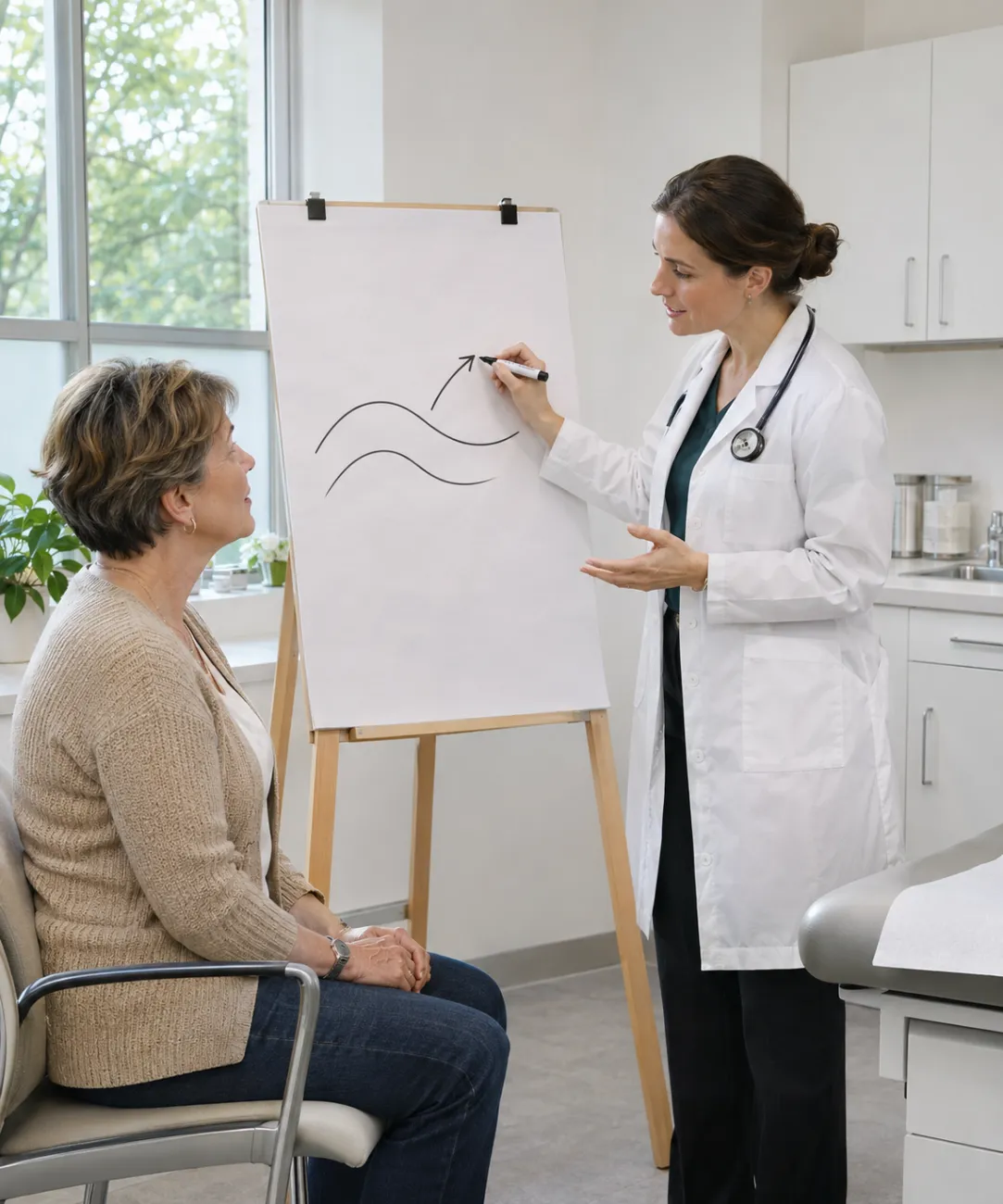
A doctor in a white coat draws a diagram on a sheet on an easel for a seated patient
Photograph of a consultation. The dots mark what the doctor assesses; the image does not show the intimate area.

Why it happens

What is behind friction marks

The skin responds to repeated friction with inflammation, and inflammation stimulates the cells that make pigment. The more it is repeated, the more the pigment builds up. Choose a situation to see how it applies.

Thighs that touch

When walking, running or cycling, the skin of the inner thigh rubs against that of the other thigh thousands of times a day. This repeated friction irritates the skin and, over time, makes pigment build up in the area. It happens in any body, slimmer or not, but is more frequent when the thighs are always in contact.

What weighs on it

Thinking it is lack of hygiene and rubbing more, which increases the friction.

What helps

Reducing direct contact (for example with a layer of soft fabric between the thighs) and giving the skin time to recover.

Normal or to be assessed

Friction mark or another cause

Friction is a very common cause, but not the only one. That is why it is worth knowing what you have before treating the tone.

  • What it looks like. Smooth, brown, symmetrical darkening, that follows the place where the skin rubs or clothing is tight.

  • When it happens. In people who walk, run, cycle or wear tight clothing, and it gets worse in the heat and with sweat. It usually improves slowly when friction decreases.

  • What the clinic does. The doctor listens to the history, examines the skin, confirms that it is pigment after irritation and says what to change before any procedure.

  • At home. Reduce friction, keep the skin dry and aired, protect the exposed part from the sun and do not exfoliate.

Do you have a mark on one side only that has changed, bleeds or does not heal, or fever and intense pain in the region? Seek a medical assessment promptly. If you have doubts or symptoms out of hours, you can call SNS 24: 808 24 24 24. 112 is for what is urgent.

Book an assessment consultation

What can help

Options for friction marks

The first line is to remove the cause: reduce friction and moisture, treat the irritation of the fold, stop rubbing and protect the area from the sun when it is exposed. If there is infection, the infection is treated; if there are signs of insulin resistance, the underlying problem is assessed and treated. When the tone persists after the skin is calm, there are depigmenting creams with medical indication, which are chosen and monitored case by case. The chemical peel is an additional option: it only comes in after the cause is clear and the skin is calm, and without promising results.

Book an assessment consultation
Dr Michelle Campagnoli, clinical director of Clínica Luxmed

First step

Assessment consultation

The doctor listens to what you are experiencing, examines your case and explains the suitable options. No treatment begins without this consultation.

May be considered when

you want to understand the cause and decide on the best path, with time and without commitment.

Book an assessment consultation
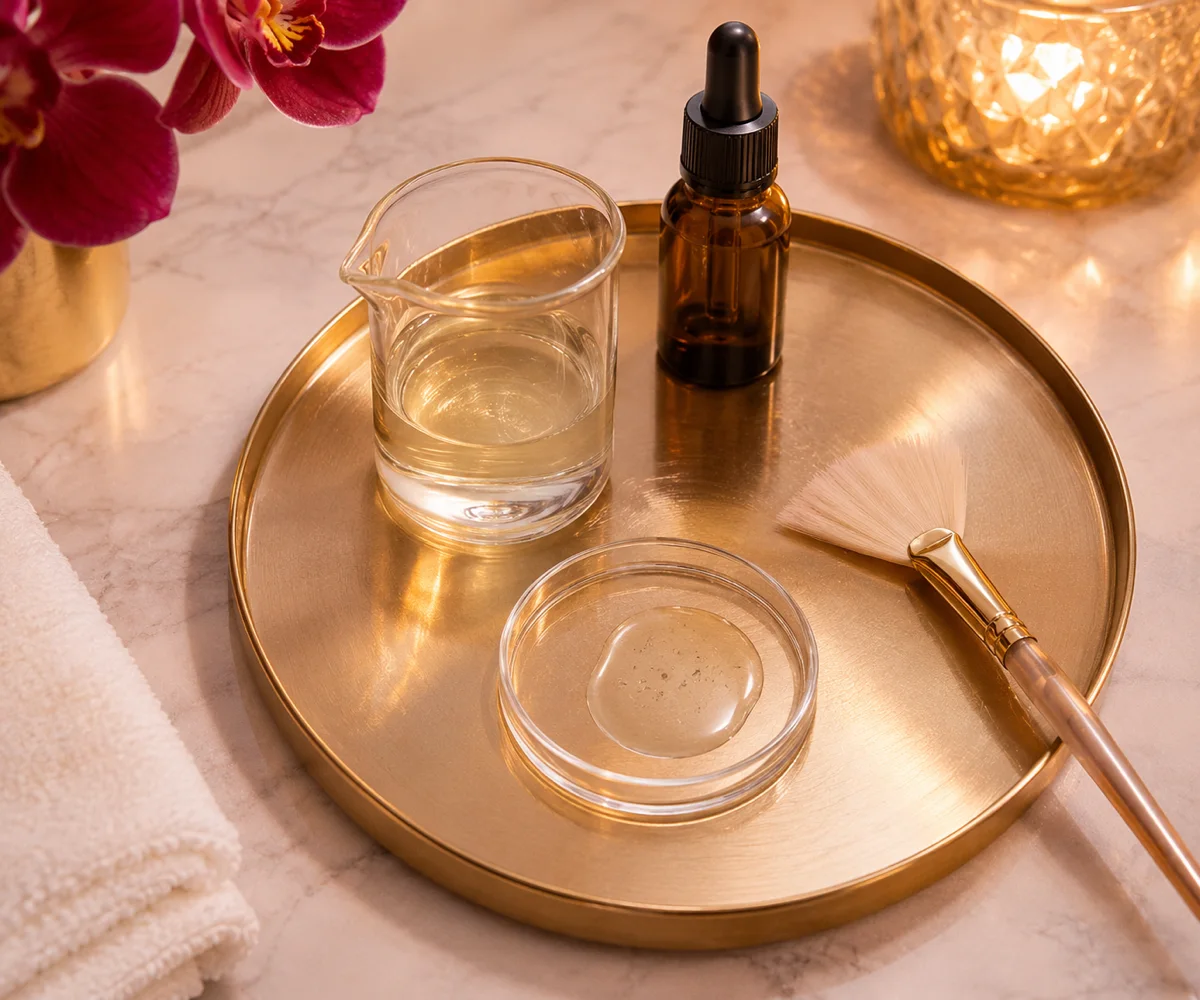
Gold tray with peel solution, a fan brush and a dropper bottle, on marble

Peel

Chemical peel

Application, by a professional, of an acid solution that renews the superficial layers of the skin, with the aim of lessening surface pigment. The type of peel, the concentration and the pace are defined at the assessment. The most solid studies are on the face; for the inner thighs and intimate folds there are very few data, and the skin of these areas irritates easily.

May be considered when

the cause of the friction has been identified and reduced, the skin is calm, without infection or irritation, the mark is superficial and there are no warning signs, and the doctor has explained the risks, including that of darkening even more.

Find out more

What the journey looks like

From the first consultation to the plan tailored to you

No treatment begins without an assessment consultation with the doctor. The simplest always comes before lightening.

  1. 01At the clinic

    Assessment consultation

    The doctor listens to what is going on: since when, where, whether the skin was irritated, what clothing and sport you use, sweating, weight and medication. It is discussed in private and without rushing.

  2. 02At the clinic

    Examination of the skin

    The colour, symmetry and texture of the area are looked at, and we look for irritation or infection of the fold and signs of velvety skin in other folds. A lesion that does not look like the others is looked at closely and, if necessary, referred to dermatology.

  3. 03At home and with the team

    Reduce friction

    What to change is agreed: clothing, fabric, drying the skin, protection against friction and stopping exfoliating. Irritation or infection is treated, if present, and a metabolic assessment is requested when there are signs of insulin resistance.

  4. 04Over time

    Reassessing and deciding

    We see how the skin has responded after a few weeks. Only if the tone persists with calm skin, and the doctor considers it appropriate, is a peel discussed, with the pace and risks explained. The result, when there is one, is gradual.

Day to day

What helps to reduce friction

Simple care that protects the skin from friction and gives it time to recover, alongside the plan the doctor recommends.

Before lightening

When the friction stops, the skin has time to recover

Lightening without removing the friction is like pulling on the rope from both sides: the pigment builds up again. Often the step that counts most is the simplest, changing what rubs, and the tone lightens slowly, over months rather than days.

Give the skin a layer of protection

It prevents skin rubbing against skin and reduces friction between the thighs.

In practice: wear thin shorts in soft fabric under skirts and dresses, or a barrier product for friction. Ask for suggestions at the pharmacy.

Choose fabrics that breathe

They keep the skin drier and reduce irritation.

In practice: prefer cotton or breathable technical fabrics, looser garments in the affected area and flat seams.

Dry and air after sweating

Dry skin rubs less and gets less irritated.

In practice: shower and dry the folds well after sport and change out of damp clothing without waiting.

Protect the skin from the sun

The sun can darken marks, and irritated skin pigments more easily.

In practice: if the area is exposed (for example at the beach), apply broad-spectrum sunscreen and wear clothing that covers it.

Dr Michelle Campagnoli, clinical director of Clínica Luxmed

Who will look after you

An assessment carried out by the doctor

At Luxmed, the first step is always an assessment consultation with Dr Michelle Campagnoli. She is the one who listens to what is going on, examines the skin, looks for causes other than friction and designs the plan with you, in private and without rushing, referring to dermatology when necessary.

  • Physical examination and medical historyA conversation about the origin of the darkening, examination of the skin and, when in doubt, tests or referral.
  • A plan tailored to youReduce friction and treat the cause first; a peel only if appropriate, with the evidence explained.
  • No obligationThe cost of any treatment is confirmed only after the assessment.
Book an assessment consultation

Book a consultation

Book your consultation

Choose how you prefer to get in touch. We will arrange the assessment consultation with Dr Michelle Campagnoli.

Booking through the website100€70€Assessment consultationExclusive price for those who book the assessment through the website. Outside the website, the price is 100 €.

New Life Miraflores, Algés · Office Center, R. Santa Teresa do Menino Jesus n.º 6, 9.º C, 1495-048

Your details are used only for this contact. Any treatment depends on a prior medical assessment.

Request an appointmentIt takes less than a minute.
Speciality
You do not need to go into detail. The doctor will talk to you during the consultation.
Request received. Our team will contact you as soon as possible.
Why do the inner thighs go dark?

Almost always because the skin of the inner thighs rubs against each other and against clothing, many times a day, especially with sweat and heat. The skin reacts to this repeated friction with inflammation, and inflammation stimulates the production of pigment, which builds up. It is benign in the vast majority of cases, but it is worth confirming that there is no other cause, such as a change linked to insulin, an infection of the fold or a lesion that has changed.

Does friction between the thighs really leave marks?

Yes, repeated friction is described as a cause of skin darkening. There are clinical studies of friction pigmentation, in which continuous friction with loofahs, towels or clothing is associated with more melanin in the skin. In the folds, moisture and heat worsen the irritation, and after healing the skin may be darker, especially in darker skin.

Are friction marks dangerous?

In general no: it is pigment, with no risk to health. What deserves attention is what does not look like friction: a mark on one side only, that appeared quickly or changed, that bleeds, hurts or does not heal, or velvety, dark skin in several folds. In those cases an assessment is requested and, if necessary, a closer examination.

How can I tell friction from acanthosis nigricans?

Friction leaves a smooth mark that follows the place where the skin rubs. Acanthosis nigricans is dark, thickened skin with a velvety texture, symmetrical and in several folds (neck, armpits, groin), often associated with insulin resistance and weight. Both can be present at the same time, which is why examination counts. Acanthosis calls for medical assessment, because the cause is treated separately.

Will it go away on its own?

It often lightens slowly when friction decreases and the skin stops being irritated, but it can take months, especially in darker skin, and may not disappear completely. If the friction continues, the pigment stays or returns. So the first step is to change what rubs.

Can I lighten it at home?

You can reduce the cause at home, which is the step that carries most weight: clothing, fabrics, protection against friction, drying the skin, protecting from the sun and not rubbing. To lighten the tone there are depigmenting creams with medical indication, which need care, because they can irritate sensitive skin. Creams without indication, of doubtful origin, can make the mark worse.

Do sport, cycling and weight have anything to do with it?

They do, as factors that increase friction or moisture: repeated movement of the thighs, sportswear that is tight, sweat, and continuous contact between the thighs or folds. This does not mean you should give up sport: it means it is worth choosing suitable clothing and protection and drying the skin. As for weight, the conversation is with your doctor, without hurry.

Does a chemical peel lighten friction marks?

It can lessen surface pigment in some cases, but the evidence comes mainly from the face. For the inner thighs and intimate folds there are very few data, and the skin irritates more easily. That is why it is only considered after reducing friction, with calm skin, and the doctor explains what is known and what is not. No result is promised.

What risks does a peel have in this area?

The most common effects are temporary burning, redness and flaking. The most important risk in this situation is leaving more pigment than before, and it is greater in darker skin, on irritated skin and with sun. Less frequent are burns, infection and scarring. It is not done with irritated or infected skin, or with undiagnosed lesions.

When should I book a consultation?

Book a consultation if the mark bothers you, if it does not improve after a few weeks without friction, if darkening appears in several folds, or if you want to understand the cause before treating. If you have a mark on one side only that has changed, bleeds or does not heal, or fever and pain in the region, seek assessment promptly. Out of hours, you can call SNS 24 (808 24 24 24).

We could not find that question. Ask us on WhatsApp

Scientific references

This page is based on the sources below and was reviewed by Dr. Michelle Campagnoli. Last updated on .

  1. Al-Aboosi M, Abalkhail A, Kasim O, et al. Friction melanosis: a clinical, histologic, and ultrastructural study in Jordanian patients. International Journal of Dermatology 43(4):261-264, 2004.
  2. Siragusa M, Ferri R, Cavallari V, Schepis C. Friction melanosis, friction amyloidosis, macular amyloidosis, towel melanosis: many names for the same clinical entity. European Journal of Dermatology 11(6):545-548, 2001.
  3. DermNet (New Zealand Dermatological Society). Intertrigo. (DermNet (dermnetnz.org), acedido 2026-11-11)
  4. DermNet (New Zealand Dermatological Society). Postinflammatory hyperpigmentation. (DermNet (dermnetnz.org), acedido 2026-11-11)
  5. Davis EC, Callender VD. Postinflammatory hyperpigmentation: a review of the epidemiology, clinical features, and treatment options in skin of color. Journal of Clinical and Aesthetic Dermatology 3(7):20-31, 2010.
  6. Chaowattanapanit S, Silpa-Archa N, Kohli I, Lim HW, Hamzavi I. Postinflammatory hyperpigmentation: a comprehensive overview: treatment options and prevention. Journal of the American Academy of Dermatology 77(4):607-621, 2017.
  7. Tan MG, Kim WB, Jo CE, et al. Topical treatment for postinflammatory hyperpigmentation: a systematic review. Journal of Dermatological Treatment 33(5):2518-2526, 2022.
  8. Fatima S, Braunberger T, Mohammad TF, Kohli I, Hamzavi IH. The role of sunscreen in melasma and postinflammatory hyperpigmentation. Indian Journal of Dermatology 65(1):5-10, 2020.
  9. DermNet (New Zealand Dermatological Society). Chemical peels (face peels). (DermNet (dermnetnz.org), acedido 2026-11-11)
  10. Costa IMC, Damasceno PS, Costa MC, Gomes KGP. Review in peeling complications. Journal of Cosmetic Dermatology 16(3):319-326, 2017.
  11. NHS (National Health Service, Reino Unido). Acanthosis nigricans. (NHS (nhs.uk), acedido 2026-11-11)
  12. Hermanns-Lê T, Scheen A, Piérard GE. Acanthosis nigricans associated with insulin resistance: pathophysiology and management. American Journal of Clinical Dermatology 5(3):199-203, 2004.
  13. Murzaku EC, Penn LA, Hale CS, Pomeranz MK, Polsky D. Vulvar nevi, melanosis, and melanoma: an epidemiologic, clinical, and histopathologic review. Journal of the American Academy of Dermatology 71(6):1241-1249, 2014.
  14. NHS (National Health Service, Reino Unido). Symptoms of vulval cancer. (NHS (nhs.uk), acedido 2026-11-11)
  15. NHS (National Health Service, Reino Unido). Symptoms of melanoma skin cancer. (NHS (nhs.uk), acedido 2026-11-11)
CallAssistantAvailableBook