
Algés, Oeiras Mon to Fri · 09:00 to 13:00 and 14:00 to 19:00 · Sat · 09:00 to 14:00
WhatsApp Book a consultation

Aesthetic gynaecology

Spots in the groinDark groins: where the darker tone comes from and when to have it assessed

Groins darker than the rest of the skin, with brown marks or a different texture, are a very common complaint and rarely dangerous. But “dark groin” is not a diagnosis: behind the same appearance there may be only friction and sweat in a fold of skin, an irritation that left a mark, an infection of the fold, a change linked to insulin and, more rarely, a lesion that deserves a close look. Here we explain how to tell the cases apart, what is assessed, what can be done at home and what the clinic can offer, starting with understanding the cause and without promising results.

Reviewed by Dr Michelle Campagnoli, clinical director

  • 4appearances of a mark in the groin fold: velvety, scaly, ring-shaped or flat
  • 1assessment consultation, always first
  • 70 €assessment booked through the website
A woman with curly hair and glasses holds a dress against her body in a clothes shop

How to recognise it

What kind of mark in the groin is this?

Two dark groins can look the same in the mirror and have different causes. What helps to tell them apart is the texture, the symmetry, what accompanies the mark and since when it has been there.

Tick what you recognise0/7

Tick the signs you recognise in your case. This is not a diagnosis, it is only meant to give you an idea.

Do you have an isolated mark that is new, grows, is asymmetrical, has irregular edges or several colours, bleeds or does not heal? Do you have velvety skin that appeared quickly, especially if you have lost weight without meaning to? Or do you have intense itching, pain, a bad smell, fissures or fever in the region? You need a medical assessment and should not wait. Out of hours, call SNS 24: 808 24 24 24.

Woman with braids talking on a video call with a doctor in a white coat on the laptop screen
Photograph of a consultation. The dots mark what the doctor assesses; the image does not show the intimate area.

Why it happens

What may be behind dark groins

The groin is a fold: two surfaces of skin that touch, heat up and sweat. This environment favours several causes, some only cosmetic and others that deserve treatment. Choose one to see how it is told apart.

Friction and moisture in the fold

When the skin of the groin rubs against that of the thigh and becomes damp, a mild, repeated inflammation sets in, and the skin responds by darkening. It is more frequent in people who sweat a lot, wear tight or synthetic clothing, cycle or have more marked folds. It is usually symmetrical and without relief.

What weighs on it

Rubbing hard, using harsh soaps or tight clothing, which reinforce the irritation.

What helps

Loose cotton clothing, drying the fold well after the bath or exercise and reducing friction.

Normal or to be assessed

Simple darkening or something to assess

Not every dark groin needs treatment, and not every mark is merely cosmetic. These two columns help to separate the cases.

  • What it looks like. Darker skin, flat, of even tone, on both sides, without relief, without flaking and without itching.

  • When it appears. Gradually, associated with friction and sweat, with previous hair removal or irritation, with skin type or with hormonal stages.

  • What the clinic does. Examines the skin, confirms that it is only pigment and that there is no infection or other cause, and proposes care of the fold first.

  • At home. Reduce friction and moisture, do not exfoliate hard and protect the skin from the sun in the area that is exposed.

Do you have an isolated mark that has changed, bleeds or does not heal, or fever and intense pain in the region? Seek a medical assessment promptly. If you have doubts or symptoms out of hours, you can call SNS 24: 808 24 24 24. 112 is for what is urgent.

Book an assessment consultation

What can help

Options for marks in the groin

The first line is to understand the cause. If there is infection, the infection is treated; if there are signs of insulin resistance, the underlying problem is assessed and treated; if it is friction and moisture, what causes them is changed; if it is pigment after an irritation, the skin is allowed to calm down and is protected from the sun. When more is needed, there are depigmenting creams with medical indication, which are chosen and monitored case by case. The chemical peel is an additional option: it only comes in after the cause is clear, with calm skin, and without promising results.

Book an assessment consultation
Dr Michelle Campagnoli, clinical director of Clínica Luxmed

First step

Assessment consultation

The doctor listens to what you are experiencing, examines your case and explains the suitable options. No treatment begins without this consultation.

May be considered when

you want to understand the cause and decide on the best path, with time and without commitment.

Book an assessment consultation
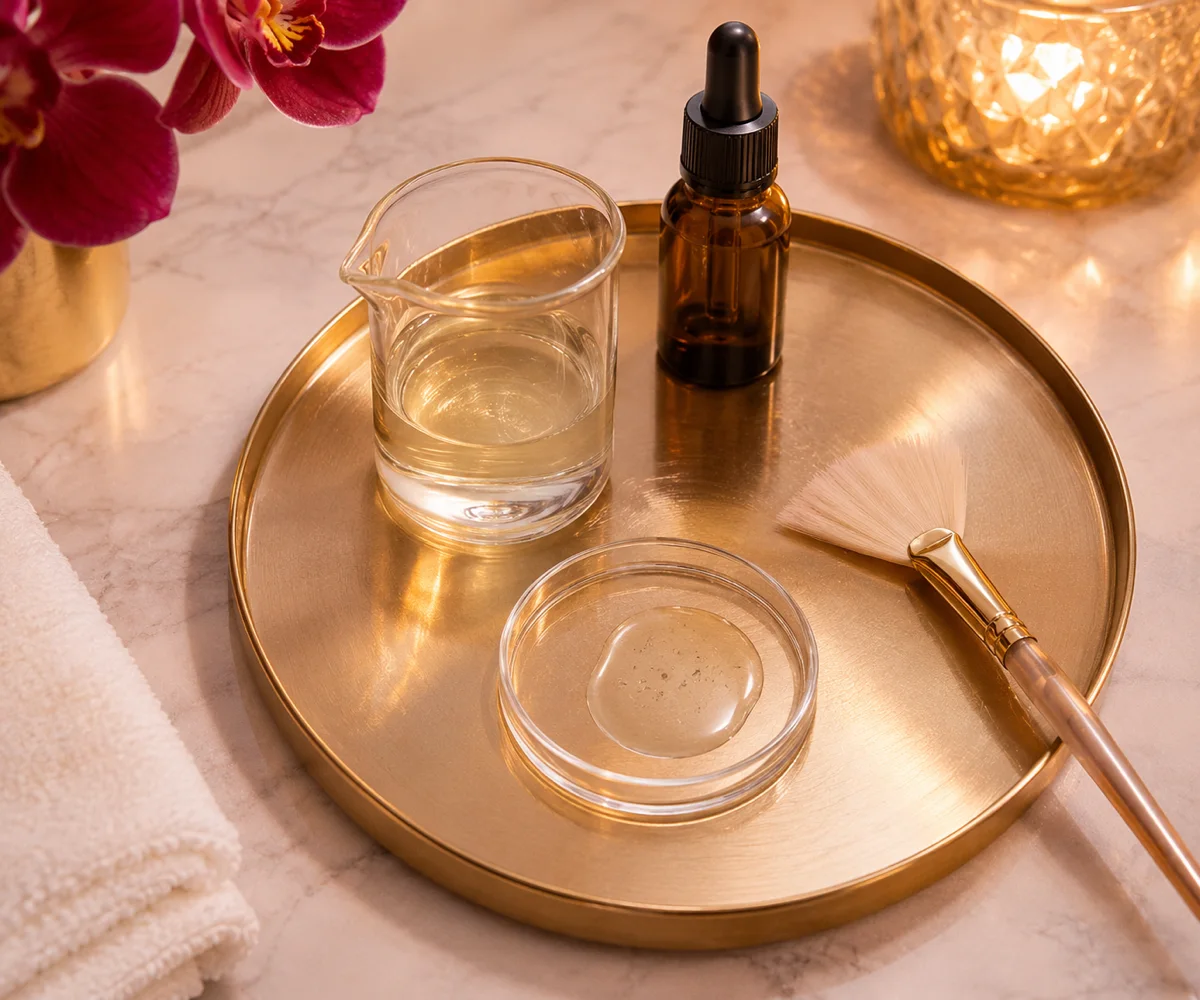
Gold tray with peel solution, a fan brush and a dropper bottle, on marble

Peel

Chemical peel

Application of an acid solution, by a professional, that renews the superficial layers of the skin to lessen surface marks and even out the tone. The type of peel, the concentration and the pace are defined at the assessment. The most solid studies are on the face; in the groin there are fewer data and the skin of the fold is more sensitive.

May be considered when

the cause has been identified and treated, the skin is calm, without infection or irritation, the mark is superficial and there are no warning signs, and the doctor has explained the risks, including that of darkening even more.

Find out more

What the journey looks like

From the first consultation to the plan tailored to you

No treatment begins without an assessment consultation. The simplest measures and the cause always come before lightening.

  1. 01At the clinic

    Assessment consultation

    The doctor listens to the history of the mark: since when, whether it has changed, what preceded it, what you have already applied, medication, weight and other darkened areas. It is discussed in private and without rushing.

  2. 02At the clinic

    Examination of the skin

    The texture, symmetry, edge and colour are looked at, we look for velvety skin, flaking or a ring shape and, when in doubt, a sample is taken for fungi and bacteria. A suspicious lesion is referred to dermatology.

  3. 03At home and with the team

    Treating the cause

    Infection is treated, if present; tests are requested and the underlying problem is managed, if there are signs of insulin resistance; friction and moisture are reduced and the skin is allowed to calm down, with sun protection of the part that is exposed.

  4. 04Over time

    Reassessing and deciding

    We see how the skin has responded. Only if the tone persists and the doctor considers it appropriate is a peel discussed, with the pace and risks explained. The result, when there is one, is gradual.

Day to day

What helps while you wait for the consultation

Simple care that reduces what keeps the skin dark, alongside what the doctor recommends.

It is not a lack of hygiene

Darkening of the groin skin is not dirt

It is one of the most frequent complaints and rarely has to do with hygiene: what weighs most is friction, moisture, inflammation, the skin and metabolism. Rubbing harder or with harsh products usually makes it worse. The better the cause is understood, the simpler it is to choose what to do.

Reduce friction

Less friction, less repeated inflammation in the fold.

In practice: loose underwear and trousers in natural fabrics, and a barrier cream or shorts under the skirt on hot days.

Dry the fold well

Moisture sustains friction and favours fungi and bacteria.

In practice: dry with a clean towel, by patting and without rubbing, after the bath and exercise, and change sweaty clothing.

Wash gently

The skin of the fold gets irritated easily.

In practice: warm water and a gentle, unscented product, without rubbing with rough sponges.

Take a photograph and make a note

It helps to see whether the mark changes and gives the doctor information.

In practice: photograph the area in good light, from time to time, and note since when it has been there and whether it itches.

Dr Michelle Campagnoli, clinical director of Clínica Luxmed

Who will look after you

An assessment carried out by the doctor

At Luxmed, the first step is always an assessment consultation with Dr Michelle Campagnoli. She is the one who listens to the history of the mark, examines the skin of the region, looks for other causes, requests tests or refers to dermatology when necessary and explains what she has found, in private and without rushing.

  • Physical examination and medical historyA conversation about the mark, examination of the skin of the groin and, when necessary, a sample for infection or tests, with your consent.
  • A plan tailored to youThe cause and what can be done at home first; a peel only if appropriate, with the evidence explained.
  • No obligationThe cost of any treatment is confirmed only after the assessment.
Book an assessment consultation

Book a consultation

Book your consultation

Choose how you prefer to get in touch. We will arrange the assessment consultation with Dr Michelle Campagnoli.

Booking through the website100€70€Assessment consultationExclusive price for those who book the assessment through the website. Outside the website, the price is 100 €.

New Life Miraflores, Algés · Office Center, R. Santa Teresa do Menino Jesus n.º 6, 9.º C, 1495-048

Your details are used only for this contact. Any treatment depends on a prior medical assessment.

Request an appointmentIt takes less than a minute.
Speciality
You do not need to go into detail. The doctor will talk to you during the consultation.
Request received. Our team will contact you as soon as possible.
Why do groins go dark?

Most often from friction, sweat and moisture in the fold, or from an irritation that left pigment after healing. But it can also be an infection of the fold, a change linked to insulin (acanthosis nigricans), hormones or medication, or simply the natural tone of the skin in this area. The appearance and symptoms help to tell them apart, but it is examination that says which it is.

Are dark groins normal?

For the skin of the groin and genital area to be somewhat darker than the rest is common and, when it is flat, even and without symptoms, it is usually benign. What deserves assessment is skin that changes texture (velvety, thickened), that flakes or itches, that darkens quickly, or an isolated mark different from the others.

How can I tell a simple dark groin from acanthosis nigricans?

In acanthosis nigricans the skin becomes dark and also thicker and velvety, symmetrically, and is usually seen in other folds, such as the neck and armpits. It is linked to insulin resistance and, for that reason, weight, blood sugar and other causes should be assessed. Flat darkening, without texture, is more likely to be from friction or post-inflammatory. Only examination confirms it.

When is a mark in the groin a warning sign?

When it is isolated and new, grows, is asymmetrical, has irregular edges or several colours, bleeds, hurts, itches persistently or does not heal. Melanomas can arise in areas with little sun exposure, including the genital region, and a mark that changes should be seen by a doctor. Velvety skin that appears quickly also calls for prompt assessment, especially with unexplained weight loss.

Can an infection leave the groin dark?

Yes. Tinea cruris (fungi) and erythrasma (bacteria) are examples, and they can leave the skin darker even after the infection has passed. They are told apart by flaking, the ring-shaped edge and itching, and the treatment is different for each, so it is not advisable to treat on your own, especially with corticosteroids.

Can I lighten my groins at home?

You can reduce what darkens them: less friction and moisture, calm skin, no hard exfoliating, and sun protection of what is exposed. Home recipes and “bleaches” have no basis and can irritate and darken more. There are depigmenting creams with medical indication, which are chosen and monitored case by case. Fading, when it happens, is slow and not always complete.

Can hair removal darken the groin?

It can, through irritation, folliculitis or small wounds, which leave pigment after healing, especially in darker skin. It helps to let the skin calm down before removing hair again, to avoid pulling and rubbing and to ask for guidance on the gentlest method for you.

Does a chemical peel lighten the groins?

It can lessen surface marks, but it is not guaranteed and it does not treat the cause. The data are more solid on the face, and in the groin they are few and from small series. In acanthosis nigricans what counts most is treating the underlying problem. The decision is always explained and shared with you, after the cause is clear and the skin is calm.

What risks does a peel have in the groin area?

Irritation, redness and flaking and, especially in darker skin or with sun, darkening greater than the initial one; more rarely, infection or scarring. In the fold, the skin is more sensitive and moisture complicates recovery. It is not done with infection, irritation, a wound, active herpes or unexplained warning signs.

When should I book a consultation?

Book a consultation if the skin has darkened and you do not know why, if it is velvety, flakes or itches, if there is darkening in other folds, if the mark does not fade after the irritation has passed or if you want to understand what can be done. If you have an isolated mark that grows, changes or bleeds, or pain, fever or a bad smell, seek assessment promptly; out of hours you can call SNS 24 (808 24 24 24). 112 is for what is urgent.

We could not find that question. Ask us on WhatsApp

Scientific references

This page is based on the sources below and was reviewed by Dr. Michelle Campagnoli. Last updated on .

  1. DermNet (New Zealand Dermatological Society). Acanthosis nigricans. (DermNet (dermnetnz.org), acedido 2026-11-11)
  2. Phiske MM. An approach to acanthosis nigricans. Indian Dermatol Online J 5(3):239-249, 2014.
  3. DermNet (New Zealand Dermatological Society). Post-inflammatory hyperpigmentation. (DermNet (dermnetnz.org), acedido 2026-11-11)
  4. Davis EC, Callender VD. Postinflammatory hyperpigmentation: a review of the epidemiology, clinical features, and treatment options in skin of color. J Clin Aesthet Dermatol 3(7):20-31, 2010.
  5. DermNet (New Zealand Dermatological Society). Erythrasma. (DermNet (dermnetnz.org), acedido 2026-11-11)
  6. DermNet (New Zealand Dermatological Society). Tinea cruris. (DermNet (dermnetnz.org), acedido 2026-11-11)
  7. DermNet (New Zealand Dermatological Society). Intertrigo. (DermNet (dermnetnz.org), acedido 2026-11-11)
  8. DermNet (New Zealand Dermatological Society). Chemical peels. (DermNet (dermnetnz.org), acedido 2026-11-11)
  9. Costa IMC, Damasceno PS, Costa MC, Gomes KGP. Review in peeling complications. J Cosmet Dermatol 16(3):319-326, 2017.
  10. Sharad J. Glycolic acid peel therapy - a current review. Clin Cosmet Investig Dermatol 6:281-288, 2013.
  11. NHS (National Health Service, Reino Unido). Melanoma skin cancer: symptoms. (NHS (nhs.uk), acedido 2026-11-11)
  12. Duarte AF, Sousa-Pinto B, Azevedo LF, Barros AM, Puig S, Malvehy J, Haneke E, Correia O. Clinical ABCDE rule for early melanoma detection. Eur J Dermatol 31(6):771-778, 2021.
CallAssistantAvailableBook