
Algés, Oeiras Mon to Fri · 09:00 to 13:00 and 14:00 to 19:00 · Sat · 09:00 to 14:00
WhatsApp Book a consultation

Aesthetic gynaecology

Dark patches on the pubic areaWhen the skin of the mons pubis is darker or has marks it did not have before

“Marks on the pubis” and “dark pubis” are the expressions most used to describe the skin of the mons pubis, the area where pubic hair grows, when it takes on a darker tone or brown marks. In most cases it is a benign hyperpigmentation, linked to habits such as hair removal and friction, to a previous inflammation (for example ingrown hairs), to natural skin tone or to hormonal changes. But a new mark, one that changes appearance or that does not look like the others always deserves to be seen by a doctor. Here we explain what may be behind it, how to tell what is harmless from what needs assessment and what the clinic can offer, with honesty about what is known.

Reviewed by Dr Michelle Campagnoli, clinical director

  • 2 questionssum up the essentials: since when the mark has been there and whether it has changed appearance
  • 1assessment consultation, always first
  • 70 €assessment booked through the website
A woman in a colourful headscarf touches a piece of cotton cloth at a textile stall in a market

How to recognise it

Could they be marks on the pubis?

The skin of the pubis is often a darker tone than the rest of the body and, in itself, that is not a problem. What counts is since when the mark has been there, whether it is changing, what habits preceded it and how the surrounding skin feels.

Tick what you recognise0/7

Tick the signs you recognise in your case. This is not a diagnosis, it is only meant to give you an idea.

Do you have a mark that is new or changes in size, shape or colour, with irregular edges, several colours, relief, a wound that does not heal, bleeding or itching that does not go away? Do you have areas of dark, thick, velvety skin in the folds? Do you have pain, swelling, pus or fever in an area of ingrown hairs? Ask for a medical assessment without waiting. Out of hours, call SNS 24: 808 24 24 24.

Doctor in a white coat showing a patient a sheet with a drawn staircase, on a desk
Photograph of a consultation. The dots mark what the doctor assesses; the image does not show the intimate area.

Why it happens

What may be behind marks on the pubis

The skin darkens when the cells that produce melanin (the pigment) work harder. On the pubis this happens for very different reasons, and the cause decides the path. Choose a situation to see how it applies.

Hair removal

Shaving, waxing or using depilatory creams irritates the skin and follicles. When the skin becomes inflamed, it produces more pigment to defend itself, and the mark that remains after the redness has passed is called post-inflammatory hyperpigmentation. A meta-analysis of 22 cross-sectional studies linked pubic hair removal to more complications, including more gonorrhoea and chlamydia infections, which shows how the skin of the area can suffer from these methods (it is an association, not proof of cause).

What weighs on it

Removing hair dry, with a worn blade, against the direction of the hair or with skin that is still irritated, and repeatedly shaving or pulling the same area.

What helps

Giving the skin time between hair removals, using foam or gel and a clean blade, going in the direction of the hair and, if the skin always reacts, talking at the consultation about another method.

Normal or to be assessed

Usual darkening or a mark to assess

Almost all marks on the pubis are benign, but some lesions need a medical look. It is worth knowing how to tell an even dark tone from one that changes, is different from the others or comes with symptoms.

  • What it looks like. A darker, even tone, or brown marks with a regular outline and all alike, without relief and without changing the texture.

  • When it appears. Often after hair removal, a period of friction, ingrown hairs or a pregnancy, and it tends to stay stable over time.

  • What the clinic does. The doctor examines the skin, confirms that the marks are benign, looks for the cause and explains what can be done and what cannot be achieved.

  • At home. Stop what irritates the skin, protect from the sun and friction and give it time, without harsh products or “lighteners” without indication.

Do you have a mark that grows quickly, bleeds or forms a sore, or fever with pain and swelling in an area of ingrown hairs? Seek a medical assessment the same day, and call 112 only if the situation is serious or you feel very unwell. If you have doubts or a mark that changes, out of hours you can call SNS 24: 808 24 24 24.

Book an assessment consultation

What can help

Options for marks on the pubis

The first line is to treat the cause: stop or change what irritates the skin (the way of removing hair, friction, tight clothing), treat inflammation and ingrown hairs when present, protect the area from the sun and friction and give it time, because these marks usually fade slowly, over months. When more is needed, the doctor may prescribe topical depigmenting agents (such as azelaic acid or hydroquinone), with care, because they can irritate the skin and worsen the mark, and “lighteners” should not be used on your own initiative. The clinic may consider, in suitable cases, the option below, assessed case by case and without promising results.

Book an assessment consultation
Dr Michelle Campagnoli, clinical director of Clínica Luxmed

First step

Assessment consultation

The doctor listens to what you are experiencing, examines your case and explains the suitable options. No treatment begins without this consultation.

May be considered when

you want to understand the cause and decide on the best path, with time and without commitment.

Book an assessment consultation
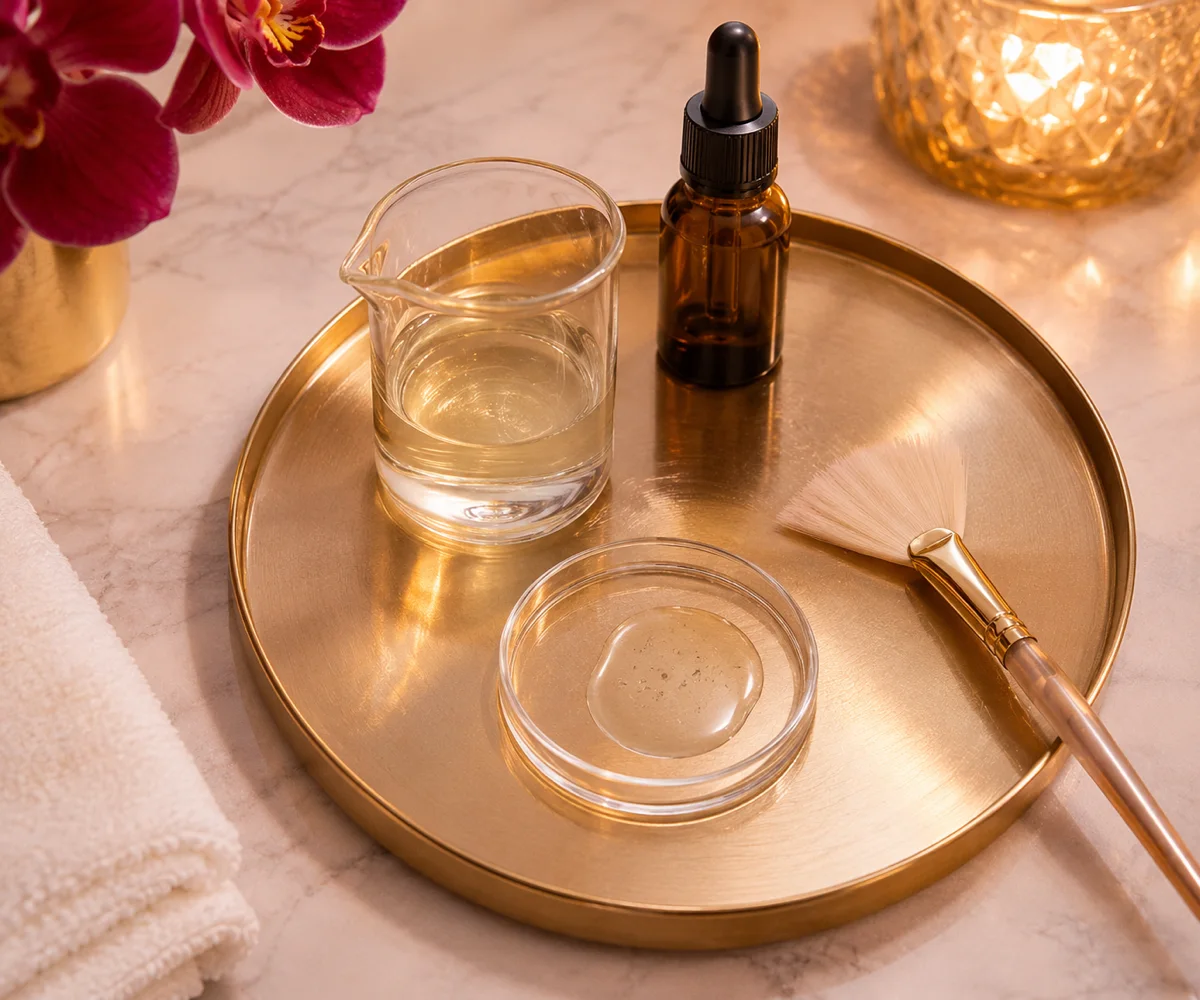
Chemical peel: gold tray with solution, fan brush and dropper bottle, on marble

Professional peels

Chemical peel

Application, at a consultation, of a low-concentration acid that peels the superficial layers of the skin, with the aim of lessening superficial marks and evening out the tone. The evidence comes mainly from studies on facial and body skin, with little information specific to the pubis, and intimate skin is more sensitive and irritates easily, so the pace and concentration are decided case by case.

May be considered when

the mark is superficial and benign, the cause (hair removal, friction, inflammation) has been treated or is controlled, the skin is calm, without wounds, active folliculitis or pregnancy, and the doctor has explained what is known and what is not, including the risk of worsening the mark.

Find out more

What the journey looks like

From the first consultation to the plan tailored to you

No treatment begins without an assessment consultation with the doctor. Most women start with the simplest measures, and only then consider other options.

  1. 01At the clinic

    Assessment consultation

    The doctor asks since when the marks have been there, whether they have changed, how you remove hair, what clothing and products you use, and asks about pregnancies, medication and other symptoms, in private and without rushing.

  2. 02At the clinic

    Examining the skin

    The marks and the surrounding skin are examined, the outline, colours and texture, and we look for folliculitis, ingrown hairs or velvety skin in the folds. If any lesion raises doubts, it is referred to dermatology before any treatment.

  3. 03At home

    Treat the cause and protect

    What irritates the skin is changed, inflammation is treated when present, the area is protected from friction and sun and the skin is given time. If there are signs of a metabolic problem, the doctor requests tests.

  4. 04Over time

    Reassessing and deciding

    The skin is reassessed after a few weeks. If the mark persists, the doctor explains the options, including prescribed topicals and the chemical peel, the benefits and the risks, and only goes ahead if it makes sense for you.

Day to day

What helps the skin of the pubis

Simple care that reduces irritation, prevents new darkening and gives the skin the best conditions, alongside the plan the doctor recommends.

It is very common

A darker tone on the pubis is often normal

Many people have the pubis and groins darker than the rest of the body, and that does not indicate lack of hygiene or disease. What deserves attention is a new mark or one that changes. For the rest, the cause is treated, the tone fades slowly and what is wanted is calm skin, not a colour “the same as the rest of the body” at any cost.

Give the skin time between hair removals

Skin that does not manage to recover stays inflamed and produces more pigment.

In practice: space out hair removals, remove hair only when the skin is calm and consider trimming the hair instead of pulling it or shaving it very close.

Take care with hair removal technique

Less irritation means fewer ingrown hairs and fewer marks.

In practice: clean, moisturised skin, foam or gel, a clean sharp blade, in the direction of the hair and without stretching the skin.

Loose, breathable clothing

It reduces the friction and heat that irritate the area.

In practice: cotton underwear, a waistband that is not tight and changing out of sweaty clothing after exercise.

Moisturising and protecting from the sun

Moisturised skin gets less irritated and the sun darkens inflamed areas.

In practice: a simple, unscented moisturiser, and avoiding direct sun on irritated skin.

Dr Michelle Campagnoli, clinical director of Clínica Luxmed

Who will look after you

An assessment carried out by the doctor

At Luxmed, the first step is always an assessment consultation with Dr Michelle Campagnoli. She is the one who listens to what is going on, examines the marks and the surrounding skin, excludes other causes and designs the plan with you, in private and without rushing, referring to dermatology or for tests when necessary.

  • Physical examination and medical historyA conversation about the history of the marks and of hair removal, examination of the skin (with a dermatoscope when necessary) and, if in doubt, referral to dermatology.
  • A plan tailored to youFirst treat the cause and protect the skin; additional treatments only if appropriate, with the evidence explained.
  • No obligationThe cost of any treatment is confirmed only after the assessment.
Book an assessment consultation

Book a consultation

Book your consultation

Choose how you prefer to get in touch. We will arrange the assessment consultation with Dr Michelle Campagnoli.

Booking through the website100€70€Assessment consultationExclusive price for those who book the assessment through the website. Outside the website, the price is 100 €.

New Life Miraflores, Algés · Office Center, R. Santa Teresa do Menino Jesus n.º 6, 9.º C, 1495-048

Your details are used only for this contact. Any treatment depends on a prior medical assessment.

Request an appointmentIt takes less than a minute.
Speciality
You do not need to go into detail. The doctor will talk to you during the consultation.
Request received. Our team will contact you as soon as possible.
Why is my pubis dark or marked?

Almost always for one of a few reasons: hair removal and the inflammation it causes, friction from clothing, repeated ingrown hairs, the natural tone of the skin or hormonal changes, such as pregnancy. Less often it is a sign of something else, such as velvety skin in the folds, which may be linked to insulin resistance. Only an examination can tell which weighs most in your case.

Is it normal for the pubis to be darker than the rest of the body?

It is very common. The skin of the pubic and genital region usually has more pigment and, in itself, that is not a disease or a sign of lack of hygiene. What justifies a consultation is a new mark, one that changes, bleeds, has several colours or comes with symptoms.

How do I know whether the mark is only from friction or hair removal?

There is usually a link in time (it appeared after hair removal, ingrown hairs or a period of more friction), the marks are alike and have a regular outline, and the surrounding skin is normal. But you should not conclude this on your own: a mark that is different from the others, new or changed should be seen by a doctor.

Do marks on the pubis go away on their own?

They often fade slowly, over months, when the cause is removed (less irritation, less friction, ingrown hairs under control) and the skin is protected. If the cause persists, the mark may stay or come back. In darker skin the darkening tends to last longer.

What treatments exist for marks on the pubis?

First treat the cause and protect the skin. Then, the doctor may prescribe topical depigmenting agents. When the mark persists and is superficial and benign, a chemical peel at a consultation is an option the clinic may consider, case by case. All have benefits and risks and none guarantees the result.

Is a chemical peel safe on the pubic area?

Intimate skin is thinner and more sensitive, so it irritates more easily. The complications described with peels include prolonged irritation, hyper- or hypopigmentation, herpes and, more rarely, scarring, and they are more frequent in darker skin and with deeper peels. That is why it is only done with calm skin, without folliculitis or wounds, and the doctor adapts the choice and pace to each case.

Can I use lightening creams on my own?

It is not recommended. Effective depigmenting agents can irritate the skin and, if they do, worsen the mark, and intimate skin absorbs and reacts more. They should be prescribed and monitored by a doctor, after confirming that the mark is benign and treating the cause.

Does treatment guarantee that the mark will not come back?

No. As long as what caused it persists (irritation, friction, repeated ingrown hairs), the mark may return. That is why treating the cause and protecting the skin weigh as much as any procedure, and the doctor does not promise results.

What is acanthosis nigricans and does it have to do with the pubis?

It is darkening with thickening and a velvety texture, especially in the folds (groins, armpits, neck). It is associated with insulin resistance and pre-diabetes, and therefore deserves a medical assessment, with tests when indicated. Rubbing the skin does not eliminate it; what improves it is treating the cause.

When should I book a consultation?

Book a consultation if you have marks on the pubis that bother you, if they darken for no clear reason, if you have frequent ingrown hairs or thick, velvety skin in the folds. If you have a mark that is new or changes in size, shape or colour, with irregular edges, several colours, bleeding or a wound that does not heal, or fever with pain and swelling, seek a medical assessment straight away. Out of hours, call SNS 24 (808 24 24 24).

We could not find that question. Ask us on WhatsApp

Scientific references

This page is based on the sources below and was reviewed by Dr. Michelle Campagnoli. Last updated on .

  1. DermNet. Post-inflammatory hyperpigmentation. (DermNet (Nova Zelândia), acedido 2026-11-11)
  2. Davis EC, Callender VD. Postinflammatory hyperpigmentation: a review of the epidemiology, clinical features, and treatment options in skin of color. J Clin Aesthet Dermatol, 2010.
  3. Costa IMC, Damasceno PS, Costa MC, Gomes KGP. Review in peeling complications. J Cosmet Dermatol, 2017.
  4. Sharad J. Glycolic acid peel therapy - a current review. Clin Cosmet Investig Dermatol, 2013.
  5. Arif T. Salicylic acid as a peeling agent: a comprehensive review. Clin Cosmet Investig Dermatol, 2015.
  6. Welch D, Usatine RP, Heath CR. Beyond the Razor: Managing Pseudofolliculitis Barbae in Skin of Color. Fed Pract, 2025.
  7. Eltobgy A, Aljabali A, Farag A, Elshorbgy M, Hamed M, Hamouda E, Hamouda H, Refaey A. Effects of pubic hair grooming on women's sexual health: a systematic review and meta-analysis. BMC Womens Health, 2024.
  8. Lohova-Matisa E, Rezeberga D, Miskova A. Feminine Intimate Hygiene: A Review of Healthy and Unhealthy Habits in Women. Medicina (Kaunas), 2025.
  9. Gupta SN, Madke B, Ganjre S, Jawade S, Kondalkar A. Cutaneous Changes During Pregnancy: A Comprehensive Review. Cureus, 2024.
  10. Gillespie J, Roland-McGowan J, Diehl K, Latour E, Nelson J, Tobey T, Paz-Munoz E. Is Acanthosis Nigricans a Marker for Metabolic Syndrome? A Systematic Review. Am J Clin Dermatol, 2026.
  11. AAD. Acanthosis nigricans: overview. (American Academy of Dermatology, acedido 2026-11-11)
  12. NHS. Melanoma skin cancer: symptoms. (NHS (Reino Unido), acedido 2026-11-11)
CallAssistantAvailableBook