Algés, Oeiras Mon to Fri · 09:00 to 13:00 and 14:00 to 19:00 · Sat · 09:00 to 14:00
WhatsApp Book a consultation

Aesthetic gynaecology

Less sensitivity after childbirthFeeling less, or feeling differently, is very common in the first months and almost always has an explanation

Many women notice, after childbirth, that they feel less to the touch or during sex, that desire has gone or that the body “does not respond” as it did before. It is a frequent complaint that hardly anyone talks about: in a study of more than 1,500 women, 89% reported some sexual health problem in the first three months, and only a minority were ever asked about it. Here we explain what is usually normal at each stage, the role of time, breastfeeding, tiredness and the pelvic floor, when the situation deserves assessment and what the clinic can, and cannot, offer, with honesty about the evidence.

Reviewed by Dr Michelle Campagnoli, clinical director

  • 89%of women report some sexual health problem in the first 3 months after childbirth
  • 1assessment consultation, always first
  • 70 €assessment booked through the website
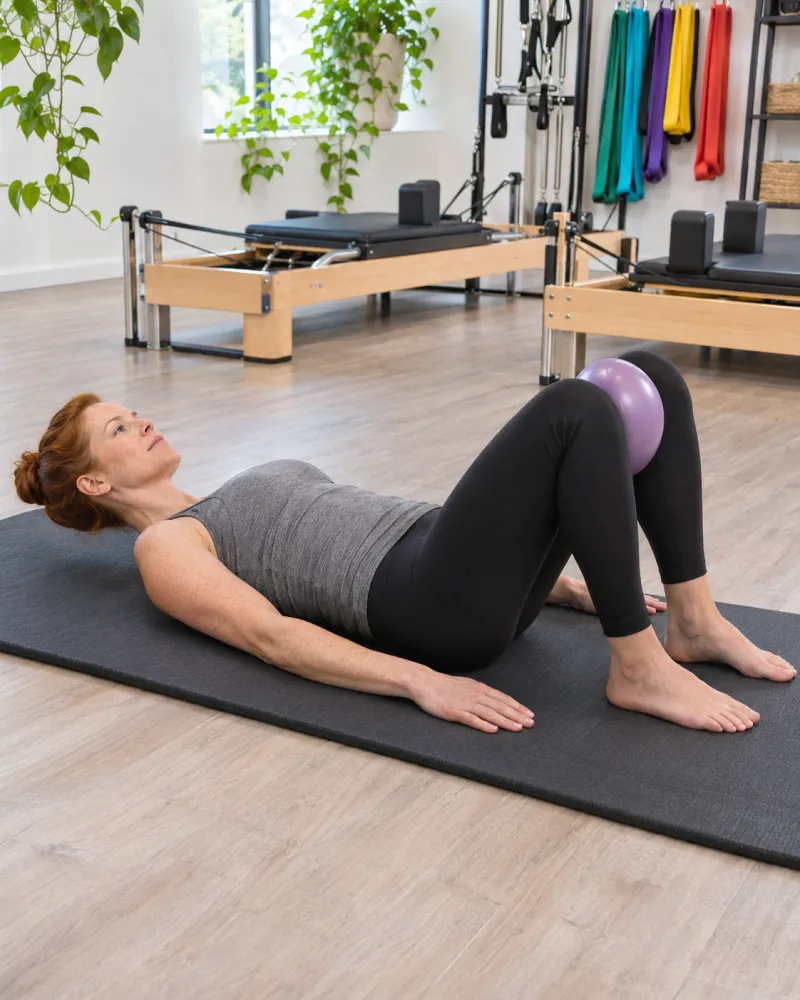
Woman lying on a mat with a small ball between her knees, in a pilates studio with equipment behind her

How to recognise it

Could it be reduced sensitivity after childbirth?

It is not a diagnosis: it is the perception that the body feels or responds differently from before. What helps to understand what is going on is when it began, in which situations it happens and whether it comes with pain, dryness or extreme tiredness.

Tick what you recognise0/7

Tick the signs you recognise in your case. This is not a diagnosis, it is only meant to give you an idea.

Do you have heavy or foul-smelling bleeding, fever, severe pain or pain that is getting worse in a scar, loss of sensation in the region between the legs with weakness in the legs, difficulty passing urine or loss of bowel control, or thoughts of harming yourself or the baby? You need a prompt assessment and should not wait. Out of hours, call SNS 24: 808 24 24 24; in a serious situation, 112.

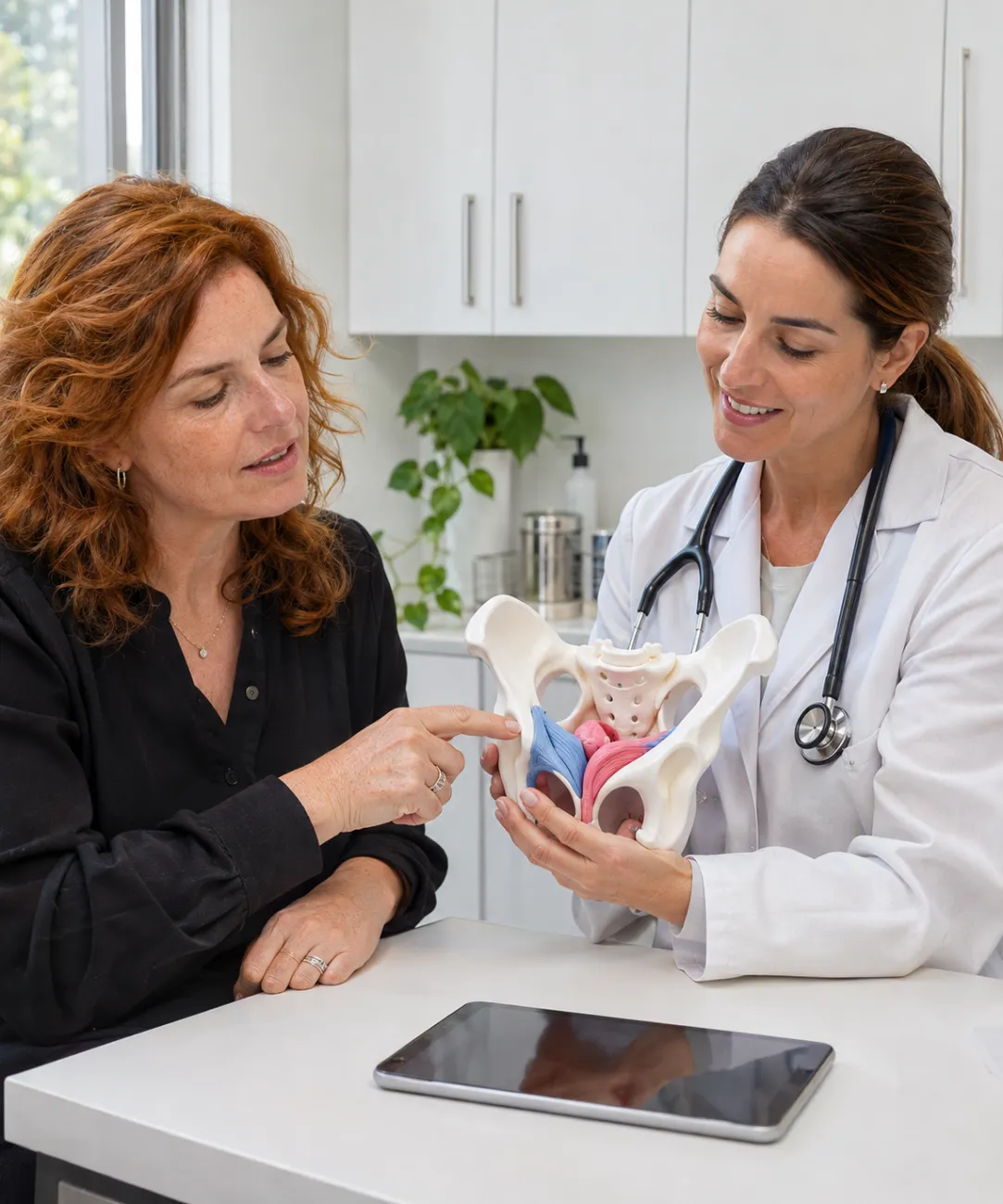
A female doctor in a white coat explains a pelvis model to a red-haired patient, with a tablet on the counter
Photograph of a consultation. The dots mark what the doctor assesses; the image does not show the intimate area.

Why it happens

What may be behind reduced sensitivity after childbirth

There is rarely a single cause. Time, hormones, the birth, tiredness and the mind all work at the same time. Choose a situation to see how it applies.

Nerves and tissues after childbirth

During a vaginal birth the tissues and nerves of the intimate area are stretched a great deal. In a study of 150 women, measured with a testing device, the ability to feel vibration in the vagina and clitoris decreased after birth, and the sensation of stretch, which also fell at first, returned on average to the pre-birth level at 6 months. In vaginal births with vacuum or forceps recovery was slower, and caesarean seemed to protect these nerves.

What weighs on it

Waiting in silence when numbness is very marked, persists or extends to the legs.

What helps

Allowing time, keeping up the pelvic floor exercises and asking for an assessment if there is no improvement after a few months.


Normal or to be assessed

Expected reduced sensitivity or something to assess

In the first months, some of the changes are part of recovery. Others deserve attention sooner. It is worth knowing how to tell them apart.

  • What it looks like. You feel less or feel differently, with mild dryness or less desire, especially in the first months, without severe pain or signs of infection.

  • When it happens. Generally in the first weeks and months, with gradual improvement: between 3 and 6 months the reported sexual problems decrease, although not all women improve at the same pace.

  • What the clinic does. Listens to what is going on, reassures when it is what is expected, treats the dryness and discomfort and agrees when to see you again.

  • At home. Time, water-based lubricant, pelvic floor exercises, rest and intimacy without hurry, while you wait for the follow-up consultation.

Do you have heavy bleeding, high fever, very severe pain, numbness between the legs with weakness or loss of control of urine, or thoughts of harming yourself or the baby? Call 112 or go to the emergency department. If you have doubts or pain that does not go away, out of hours you can call SNS 24: 808 24 24 24.

Book an assessment consultation

What can help

What helps when there is reduced sensitivity after childbirth

The first response is almost never a technology. It is giving time, treating dryness with lubricant and vaginal moisturiser, caring for the scar, training the pelvic floor with guidance, resting as much as possible, talking about intimacy and, when there is persistent pain or sadness, treating those causes. If dryness is significant and persists, the doctor may consider low-dose vaginal oestrogen, prescribed and monitored, including for those who breastfeed, after a shared decision. If the pelvic floor is weak or tense, or the scar hurts, pelvic physiotherapy is the next step. If mood is low, it is treated with those who know about mental health.

Book an assessment consultation
Dr Michelle Campagnoli, clinical director of Clínica Luxmed

First step

Assessment consultation

The doctor listens to what you are experiencing, examines your case and explains the suitable options. No treatment begins without this consultation.

you want to understand the cause and decide on the best path, with time and without commitment.

Book an assessment consultation

What the journey looks like

From the first consultation to the plan tailored to you

No proposal begins without an assessment consultation with the doctor. The right step depends on how much time has passed since the birth, on breastfeeding and on what is bothering you.

  1. 01At the clinic

    Assessment consultation

    The doctor listens to what has changed since the birth, when and in which situations. She asks about the type of birth, the scar, breastfeeding, the contraceptive method, sleep and mood, in private and without rushing.

  2. 02At the clinic

    Examination and ruling out other causes

    The scar and mucosa are examined, sensitivity to touch, the strength and tension of the pelvic floor are assessed and infection, prolapse or localised pain are looked for, all with the woman's consent at each step.

  3. 03At home and in physiotherapy

    Basic care

    It starts with what helps most: lubricant and moisturiser, care of the scar, guided pelvic floor training and a conversation about intimacy, including forms of intimacy that do not involve penetration.

  4. 04Over time

    Reassessing and deciding

    We see again how things have progressed. If dryness persists, local hormonal treatment is considered. If there is pain, tension or sadness, you are referred to physiotherapy, sex therapy or mental health, without waiting too long.

Day to day

What can help while the body recovers

Simple care for the first weeks and months, alongside what the doctor recommends.

You are not alone

Feeling less does not mean you have been “ruined”

It is a very common complaint, and little talked about. Most women feel improvement with time, but some need help beyond the first months, and asking for that help is in no way an exaggeration. During sex, what matters is that there is comfort and desire, not that it resembles what it used to be.

Allow time, without rigid deadlines

The body recovers in stages, and sensitivity can take months to return.

In practice: do not set dates for “being well”. See how you are from month to month and keep your questions for the follow-up consultation.

Use a water-based lubricant

Dryness is common after childbirth, especially when breastfeeding, and friction takes away pleasure and increases pain.

In practice: a water-based lubricant, from the pharmacy, and compatible with condoms. Avoid oils and petroleum jelly, which irritate and damage latex.

Restart intimacy in stages

Without the pressure of penetration, the body relaxes and arousal comes more easily.

In practice: caresses, time together and conversation. If penetration hurts, stop. Talk to the doctor if the pain persists.

Exercise the pelvic floor

It helps the recovery of the muscles and of comfort, especially if done with the right technique.

In practice: slow contractions and complete relaxation afterwards. If you are not sure of the technique, ask for it to be checked.

Dr Michelle Campagnoli, clinical director of Clínica Luxmed

Who will look after you

An assessment carried out by the doctor

At Luxmed, the first step is always an assessment consultation with Dr Michelle Campagnoli. She is the one who listens to what has changed since the birth, assesses the scar, the mucosa and the pelvic floor, excludes other causes and designs the plan with you, in private and without rushing, coordinating with pelvic physiotherapy, mental health or sex therapy when needed.

  • Physical examination and medical historyA conversation about the birth, breastfeeding and the complaints, examination with your consent and exclusion of other causes.
  • A plan tailored to youTime, comfort and the pelvic floor first; any other proposal only if appropriate, with the evidence explained.
  • No obligationThe cost of any treatment is confirmed only after the assessment.
Book an assessment consultation

Book a consultation

Book your consultation

Choose how you prefer to get in touch. We will arrange the assessment consultation with Dr Michelle Campagnoli.

Booking through the website100€70€Assessment consultationExclusive price for those who book the assessment through the website. Outside the website, the price is 100 €.

New Life Miraflores, Algés · Office Center, R. Santa Teresa do Menino Jesus n.º 6, 9.º C, 1495-048

Your details are used only for this contact. Any treatment depends on a prior medical assessment.

Request an appointmentIt takes less than a minute.
Speciality
You do not need to go into detail. The doctor will talk to you during the consultation.
Request received. Our team will contact you as soon as possible.
Is reduced sensitivity after childbirth normal?

It is common, especially in the first months. In a study of 150 women, the ability to feel vibration in the vagina and clitoris, measured with a testing device, decreased after birth, and the sensation of stretch returned on average to the pre-birth level at 6 months. In births assisted with vacuum or forceps recovery was slower. We are talking about averages: only examination confirms what is going on in your case, and the perception of “feeling less” is not a diagnosis.

How long does it take for sensitivity to come back?

There is no set timeframe. In a London study, 83% of women reported some sexual problem in the first three months and 64% at six months, still above the 38% before pregnancy. In another, more than half still reported less sexual interest at 12 months and about 30% still had pain. In other words, many improve with time, but some need help: if there is no improvement after a few months, it is worth asking for an assessment instead of waiting.

Is it normal to lose sexual desire after childbirth?

It is very common and has several causes at the same time: tiredness and little sleep, hormones, especially when breastfeeding, pain or fear of pain, mood and all attention turned to the baby. When sadness, low mood or loss of interest in almost everything are added, it may be postnatal depression, which can arise up to a year later and can be treated. If desire stays low and bothers you, talk to the doctor, without waiting for it to pass on its own.

When can I have sex again after childbirth?

There is no fixed date: the British health service (NHS) says there are no rules and advises not to rush, especially after a tear or an episiotomy, in which pain on penetration is common in the first months. If sex hurts, the advice is to say so and wait. It is worth knowing that it is possible to become pregnant from as early as 3 weeks after birth, even while breastfeeding, so talk about contraception at the postpartum consultation.

Does breastfeeding reduce sensitivity and desire?

It is associated with dryness, less desire and pain during sex: in a review of 22 studies, between 60% and 80% of women who were breastfeeding reported some of these complaints. High prolactin and low oestrogen contribute, but so do tiredness, stress and mood. It is not a reason to stop breastfeeding, and much of the discomfort is treated with lubricant, moisturiser and, when necessary, with options the doctor discusses with you.

Do pelvic floor exercises improve sensitivity?

They can help sexual function: a meta-analysis of 12 trials showed better sexual function after childbirth with pelvic floor training, although with much variation between studies and without measuring sensitivity alone. They work better with guidance. If the muscles are tense and sex hurts, tightening more does not solve it, and pelvic physiotherapy adjusts the training to each case.

Does vaginal oestrogen help and is it safe when breastfeeding?

Low-dose vaginal oestrogen, which is only used on prescription, can relieve persistent dryness, and a recent narrative review considers it a reasonable option in moderate to severe cases, after a shared decision and especially with breastfeeding already established. But the data are scarce: a systematic review of only 3 studies and 85 women found improvement on an atrophy symptom scale, with no difference in sexual function, and no serious problems. It is a decision to take with your doctor, never on your own.

Do laser, radiofrequency or injections improve sensitivity after childbirth?

We have not found controlled trials showing this for this complaint, and in 2018 the FDA warned that vaginal energy-based devices are not approved for sexual function and can cause burns, scarring and pain during sex. That is why the clinic does not propose them as a response to this complaint: what has support is time, care of dryness and of the scar, pelvic floor training and assessment of the causes. If anyone promises you guaranteed results, be wary.

When is it a warning sign?

Seek a prompt assessment if you have heavy or foul-smelling bleeding, fever, a scar that is very sore, swollen or with pus, severe and sudden pain, or numbness between the legs with weakness in the legs, difficulty passing urine or loss of bowel control. Thoughts of harming yourself or the baby also cannot wait. Out of hours, call SNS 24 (808 24 24 24); in a serious situation, 112. Pain during sex that lasts more than a few months should be assessed.

When should I book a consultation and what happens in it?

Book if the complaint bothers you, if it does not improve after a few months, if there is pain or dryness that does not ease, or if desire and mood stay low. At the consultation the doctor listens, asks about the birth, the scar, breastfeeding, sleep and mood, and examines only what the woman accepts. Studies show that few women talk about these concerns with a professional, so do not be afraid to raise them: that is what the consultation is for.

We could not find that question. Ask us on WhatsApp

Scientific references

This page is based on the sources below and was reviewed by Dr. Michelle Campagnoli. Last updated on .

  1. NHS (Serviço Nacional de Saúde do Reino Unido). Sex and contraception after birth. (NHS, página de informação ao público, acedido 2026-11-11)
  2. NHS (Serviço Nacional de Saúde do Reino Unido). Episiotomy and perineal tears. (NHS, página de informação ao público, acedido 2026-11-11)
  3. National Institute for Health and Care Excellence (NICE). Postnatal care (NG194). NICE guideline NG194, 2021.
  4. National Institute for Health and Care Excellence (NICE). Pelvic floor dysfunction: prevention and non-surgical management (NG210). NICE guideline NG210, 2021.
  5. Barrett G, Pendry E, Peacock J, Victor C, Thakar R, Manyonda I. Women's sexual health after childbirth. BJOG 107(2):186-195, 2000.
  6. McDonald E, Woolhouse H, Brown SJ. Consultation about sexual health issues in the year after childbirth: a cohort study. Birth 42(4):354-361, 2015.
  7. Mahoney CK, Reid FM, Smith ARB, Myers JE. The impact of pregnancy and childbirth on pelvic sensation: a prospective cohort study. Scientific Reports 13:1535, 2023.
  8. Adeli M, Shamaeian-Razavi N, Irani M. Sexual function in breastfeeding women: a systematic review. BMC Women's Health 26:145, 2026.
  9. Orozco Fernández R, Gil-Antuñano SP. Genitourinary syndrome of lactation: an underrecognized postpartum condition affecting women's vulvovaginal, urinary and sexual health. Women's Health (London) 22, 2026.
  10. Waheed A, Taithongchai A, Robinson D. The use of topical vaginal estrogens in postpartum women: a systematic review. Acta Obstetricia et Gynecologica Scandinavica 105:1405-1410, 2026.
  11. Hadizadeh-Talasaz Z, Sadeghi R, Khadivzadeh T. Effect of pelvic floor muscle training on postpartum sexual function and quality of life: a systematic review and meta-analysis of clinical trials. Taiwanese Journal of Obstetrics and Gynecology 58(6):737-747, 2019.
  12. Berg-Poppe P, Barker MA, Soodsma K, Danzi B, Molitor WL, Wietfeld S, Groft P, Larsen L, Pullman H. Postpartum sexual function in women with intrapartum pelvic floor muscle trauma. International Urogynecology Journal, 2026.
  13. Hajimirzaie SS, Tehranian N, Razavinia F, Khosravi A, Keramat A, Haseli A, Mirzaii M, Mousavi SA. Evaluation of couple's sexual function after childbirth with the biopsychosocial model: a systematic review of systematic reviews and meta-analysis. Iranian Journal of Nursing and Midwifery Research 26(6):469-478, 2021.
  14. NHS (Serviço Nacional de Saúde do Reino Unido). Postnatal depression. (NHS, página de informação ao público, acedido 2026-11-11)
  15. Medsafe (Nova Zelândia), a retransmitir o alerta da U.S. FDA. Safety Information: energy-based devices used for vaginal 'rejuvenation' or vaginal cosmetic procedures (relays the USFDA safety communication of July 2018). Medsafe, New Zealand Medicines and Medical Devices Safety Authority, 2018.
CallAssistantAvailableBook