Algés, Oeiras Mon to Fri · 09:00 to 13:00 and 14:00 to 19:00 · Sat · 09:00 to 14:00
WhatsApp Book a consultation

Aesthetic gynaecology

Ageing intimate tissueWhen the mucosa of the vagina is no longer the same and calls for other care

The mucosa is the inner lining of the vagina. It is a thin, moist, elastic layer that, during the fertile years, hormones keep thick, well supplied with blood and protected by a flora of lactobacilli. With the years, and especially after the menopause, this mucosa becomes thinner, drier and less elastic, and the balance of the flora changes. Many women call it “aged mucosa” or “vaginal ageing”, and want to know what the vagina is like after 50. Some of these changes are part of normal ageing; when they bother you, they have a medical name (genitourinary syndrome of menopause) and treatment. Here we explain what changes, what is normal, what should be assessed and what helps, starting with care and local treatment prescribed by a doctor, and what the clinic can offer, with honesty about the evidence.

Reviewed by Dr Michelle Campagnoli, clinical director

  • almost halfof women after the menopause report bothersome vulvovaginal symptoms
  • 1assessment consultation, always first
  • 70 €assessment booked through the website
Grey-haired woman in a cardigan leafing through a book in a library with tall shelves

How to recognise it

Could it be an aged intimate mucosa?

It is not a disease or a settled diagnosis: it is a description of a change in the tissues of the vagina. What counts is what has changed, since when and whether it bothers you or comes with other symptoms.

Tick what you recognise0/7

Tick the signs you recognise in your case. This is not a diagnosis, it is only meant to give you an idea.

Do you have bleeding after the menopause (even if only a little or once) or after sex, foul-smelling, bloody or differently coloured discharge, persistent or sudden pelvic pain, a wound, mark or lump on the vulva that does not heal or changes, blood in the urine, fever, or cannot pass urine? This is not “just ageing” and needs assessment without delay. Out of hours, call SNS 24: 808 24 24 24.

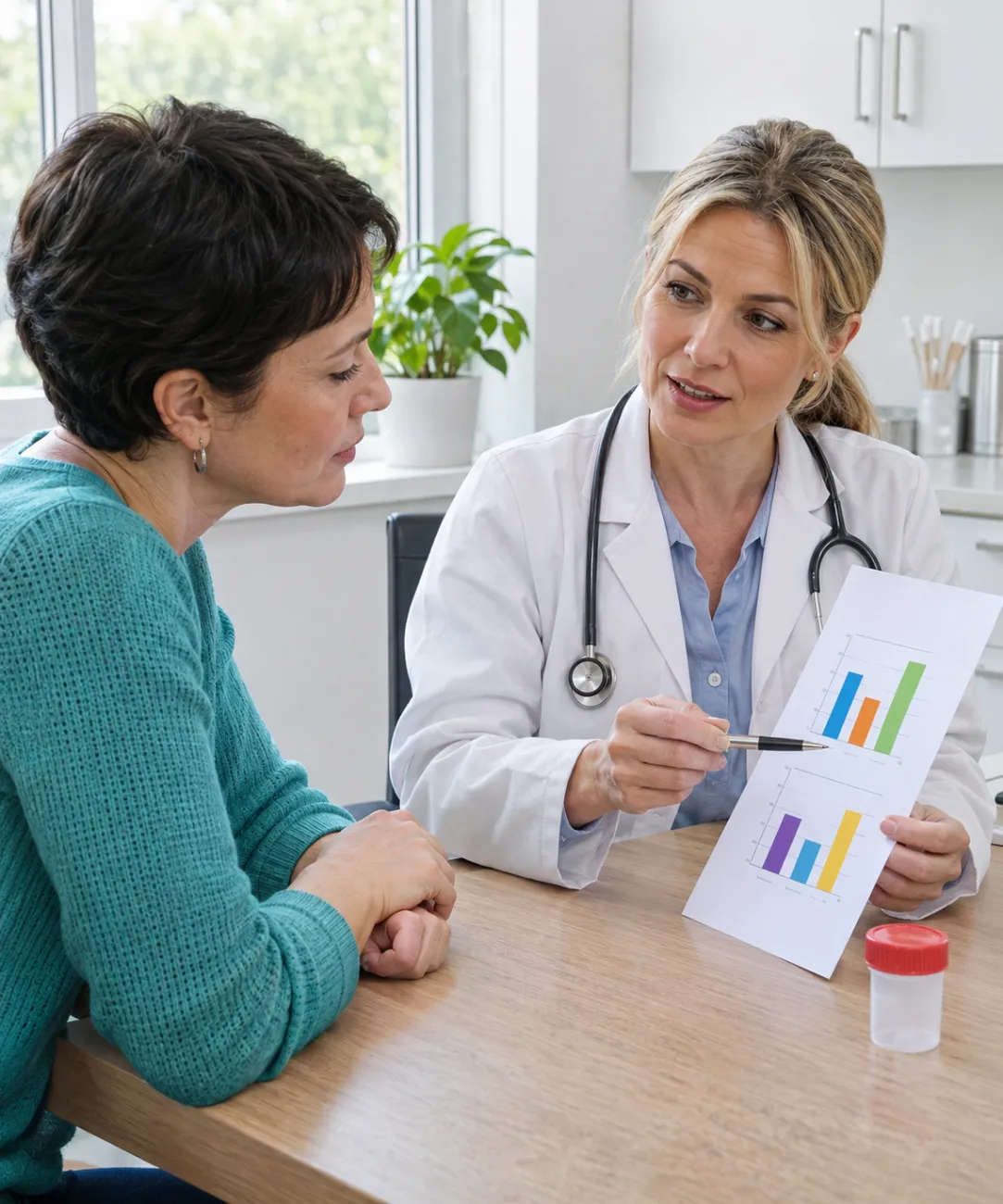
Doctor in a white coat showing a patient a sheet with result charts, at a desk with a sample jar
Photograph of a consultation. The dots mark what the doctor assesses; the image does not show the intimate area.

Why it happens

What is behind an aged mucosa

The vaginal mucosa is a tissue sensitive to hormones, with collagen, vessels and its own flora. With age all these elements change at the same time. Choose a situation to see how it applies.

The fall in oestrogen

After the menopause the mucosa becomes thinner, with fewer folds, less blood supply and less glycogen (the sugar that feeds lactobacilli). Without it, lactobacilli decrease and the pH rises: in one study, samples with more glycogen had a median pH of 4.4, against 5.8 in those with less. In women with signs of vulvovaginal atrophy, the flora tends to be different from that of women without them.

What weighs on it

Putting everything down to age and waiting for it to pass: this change, without treatment, tends to persist or worsen.

What helps

Assessing the mucosa and, if there are symptoms, starting with local treatment: low-dose vaginal oestrogen, prescribed and monitored by a doctor, is what has the most evidence.

Normal or to be assessed

Expected ageing or something else

“Aged mucosa” is a description, not a diagnosis. It is worth separating expected ageing from what may be a skin condition, an infection or another cause that cannot wait.

  • How it feels. More dryness, a little burning or discomfort during sex, a paler or thinner mucosa on examination, without intense pain, blood or lesions.

  • When it happens. In perimenopause and especially after the menopause, but also after medical treatments or in the postpartum period with breastfeeding.

  • What the clinic does. The doctor examines the mucosa, explains what is expected and proposes what has the most basis: moisturising, lubrication and, if appropriate, local treatment with oestrogen.

  • At home. Regular vaginal moisturiser, lubricant during sex, washing only the outer area and cotton underwear.

Do you have heavy bleeding, sudden and intense pelvic pain, high fever with lower back pain or cannot pass urine? Call 112 or go to the emergency department. If you have bleeding after the menopause, abnormal discharge or doubts, out of hours you can call SNS 24: 808 24 24 24.

Book an assessment consultation

What can help

Options for an aged intimate mucosa

The first step is to exclude other causes, such as infection, skin conditions or bleeding that has not been assessed. Then come the measures with the most basis: vaginal moisturisers used regularly, lubricants during sex, avoiding irritants and, if symptoms persist, low-dose vaginal oestrogen, which is prescribed and monitored by a doctor (if you have or have had breast cancer, speak to your oncologist first). There are also other medical treatments, such as vaginal DHEA or ospemifene, which the doctor considers case by case. “Vaginal rejuvenation” is the commercial term for several aesthetic procedures, and the evidence is uneven: the treatments below are additional options, assessed case by case and without promising results. Some have limited evidence and others almost none, and in 2018 the FDA warned of the risks of energy-based devices.

Book an assessment consultation
Dr Michelle Campagnoli, clinical director of Clínica Luxmed

First step

Assessment consultation

The doctor listens to what you are experiencing, examines your case and explains the suitable options. No treatment begins without this consultation.

May be considered when

you want to understand the cause and decide on the best path, with time and without commitment.

Book an assessment consultation
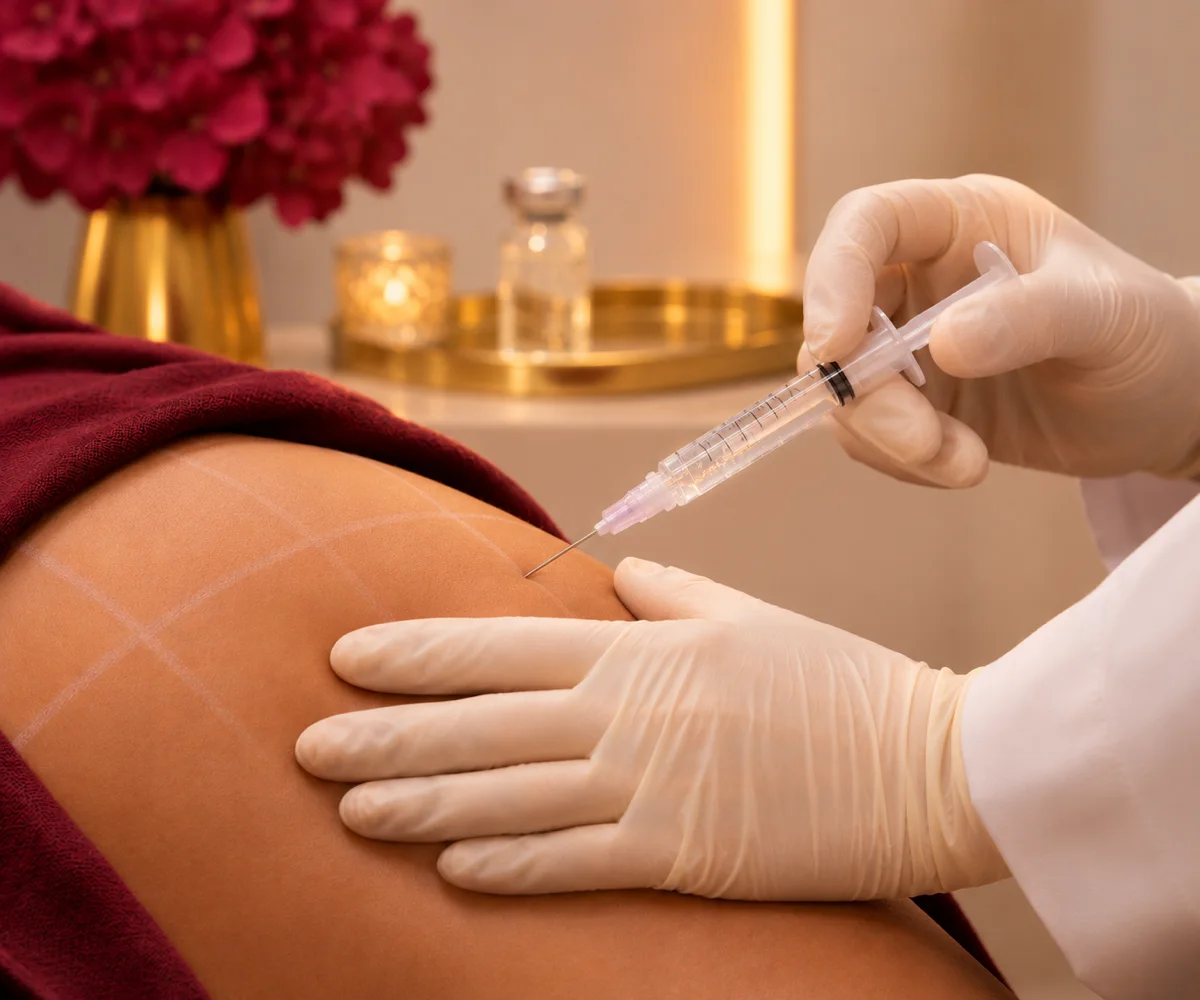
The doctor applying the filler, wearing gloves, on a marked area of the thigh covered by a towel

Gel or injectable

Hyaluronic acid

It can be used in two ways. As a gel or vaginal ovule applied in the vagina, it is a non-hormonal moisturiser with randomised trials and reviews that point to a benefit for dryness. As micro-injections into the mucosa, the evidence is much scarcer, with small, short studies, and the effect is temporary. Neither form replaces local oestrogen treatment when that is indicated.

May be considered when

dryness and fragility persist despite moisturisers and lubricants, and the doctor has explained the difference between the gel and the injectable and that the effect is temporary.

Find out more
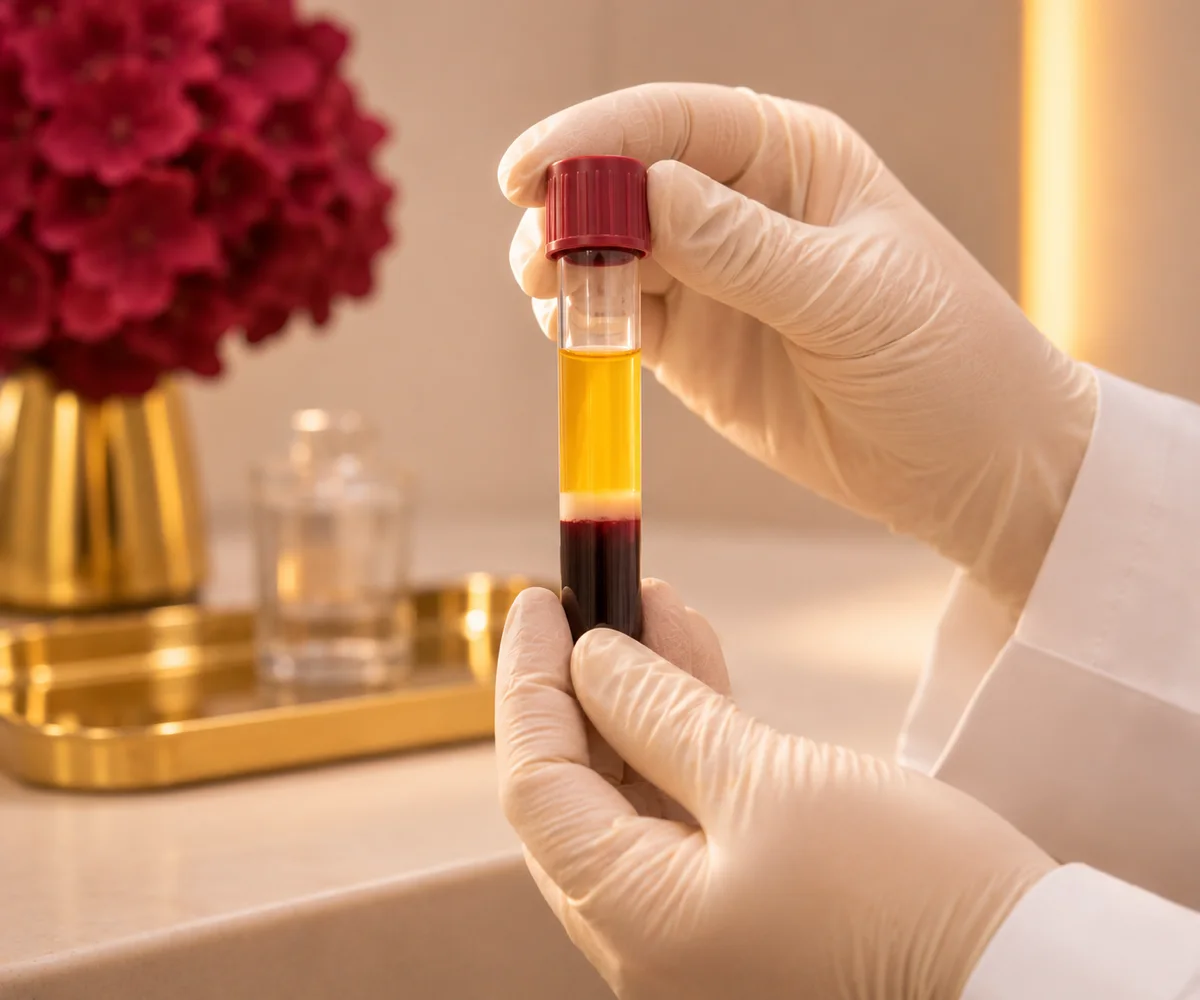
The doctor holding the tube after centrifugation, with the golden plasma separated from the blood

Injectable

PRP (platelet-rich plasma)

Plasma prepared from your own blood and injected into the mucosa, with the aim of stimulating tissue regeneration. A 2026 systematic review brought together 18 studies, only two randomised trials, most of them small and with very different protocols, and concluded that they do not allow definitive conclusions.

May be considered when

the doctor has explained that the evidence is still preliminary, first-line options have been tried or are not suitable, and the decision is yours, without hurry.

Find out more

What the journey looks like

From the first consultation to the plan tailored to you

No treatment begins without an assessment consultation with the doctor. First we understand what has changed and exclude another cause; only then is more considered.

  1. 01At the clinic

    Assessment consultation

    The doctor listens to what has changed, since when and what bothers you: dryness, pain, burning, urinary infections or your sex life. She asks about menopause, the treatments you have had and your medication, in private and without rushing.

  2. 02At the clinic

    Examination of the mucosa

    With your consent, the vulva and mucosa are examined, the pH may be measured and signs of atrophy, lichen sclerosus or infection are looked for. If there is unexplained bleeding, you are referred to gynaecology.

  3. 03At home and in follow-up

    Care and local treatment

    It starts with what has the most basis: a regular moisturiser, lubricant during sex, fewer irritants and, if appropriate, local oestrogen treatment. It is reassessed after a few weeks, because response varies.

  4. 04Over time

    Reassessing and deciding

    If the discomfort persists, the doctor explains the additional options, what the evidence shows, the risks and the costs, and leaves you time to decide. Doing nothing is also an option.

Day to day

What helps while you wait for the consultation

Daily care that protects a thinner mucosa, alongside the plan the doctor recommends.

It is not “getting old”

The mucosa changes, and it can be cared for

Ageing of the vagina does not have to be accepted in silence or turned into an aesthetic emergency. Many of the complaints of this stage, such as dryness, burning and pain, respond to simple care and local treatment, and talking about them with the doctor is part of sexual and urinary health after 50. The conversation is there to understand what really bothers you before deciding on any procedure.

Moisturise regularly

A vaginal moisturiser works through repetition, not just at the moment of sex.

In practice: an unscented vaginal moisturiser, used a few days a week according to the product instructions. If it stings, change product.

Lubricate during sex

A thinner mucosa fissures easily, and friction increases pain.

In practice: a water-based or silicone lubricant, applied generously, and a condom compatible with the product.

Wash only the outer area

The mucosa has its own balance and does not need to be “cleaned” on the inside.

In practice: warm water or a gentle unscented product on the vulva. Dry by patting, without rubbing.

Keep the mucosa in use, without pain

Comfort and elasticity improve when intimacy is possible without pain.

In practice: without hurry, at your own pace, with lubricant and open communication with your partner. If it hurts, stop and talk to the doctor.

Dr Michelle Campagnoli, clinical director of Clínica Luxmed

Who will look after you

An assessment carried out by the doctor

At Luxmed, the first step is always an assessment consultation with Dr Michelle Campagnoli. She is the one who listens to what has changed, examines the vulva and mucosa, excludes infection, skin conditions and other causes and designs the plan with you, in private and without rushing, and with realistic expectations.

  • Physical examination and medical historyA conversation about what has changed and what bothers you, examination of the mucosa and, if needed, pH measurement and ruling out other causes.
  • A plan tailored to youSelf-care and local treatment first; additional treatments only if they are appropriate, with the evidence explained.
  • No obligationThe cost of any treatment is confirmed only after the assessment.
Book an assessment consultation

Book a consultation

Book your consultation

Choose how you prefer to get in touch. We will arrange the assessment consultation with Dr Michelle Campagnoli.

Booking through the website100€70€Assessment consultationExclusive price for those who book the assessment through the website. Outside the website, the price is 100 €.

New Life Miraflores, Algés · Office Center, R. Santa Teresa do Menino Jesus n.º 6, 9.º C, 1495-048

Your details are used only for this contact. Any treatment depends on a prior medical assessment.

Request an appointmentIt takes less than a minute.
Speciality
You do not need to go into detail. The doctor will talk to you during the consultation.
Request received. Our team will contact you as soon as possible.
What is aged vaginal mucosa?

It is how many women describe the changes that time and menopause cause in the lining of the vagina: it becomes thinner, drier, less elastic and more fragile, and the flora and acidity also change. It is not a diagnosis in itself. When these changes bother you, the medical term is genitourinary syndrome of menopause. Only examination confirms what is going on and whether there is another cause to treat.

What is the vagina like after 50?

It changes differently from woman to woman. After the menopause the mucosa tends to become thinner and paler, with fewer folds and less lubrication, and the vagina may seem less elastic. Some women have few symptoms and others have dryness, burning and pain during sex. In a trial with 302 women aged about 61, about 6 in 10 reported pain on penetration as their most bothersome complaint.

Do vaginal pH and flora change with age?

Yes. In the fertile years the mucosa has glycogen, which feeds lactobacilli, and the pH is acidic. After the menopause glycogen and lactobacilli tend to decrease and the pH rises, and studies show that the flora of postmenopausal women with signs of atrophy differs from that of other women. This can alter the type of infections and the discharge, so a new discharge should be assessed instead of being treated on your own.

Are aged mucosa, vaginal atrophy and dryness the same thing?

They are related but not the same. Dryness is a symptom. Vulvovaginal atrophy, or genitourinary syndrome of menopause, is the set of changes in the tissues and symptoms (genital, sexual and urinary) caused by lack of oestrogen. “Aged mucosa” is the broader lay expression: it includes what is expected with age and what already needs treatment. The consultation is there to tell one from the other.

What should I do first: moisturiser, lubricant or local oestrogen?

All three have a place. Vaginal moisturisers are used regularly, lubricants during sex, and low-dose vaginal oestrogen, prescribed by a doctor, is the treatment with the most evidence: in a Cochrane review of 30 trials, it relieved atrophy symptoms. Response varies: in a 12-week trial, neither vaginal oestradiol nor the moisturiser was clearly better than placebo on the most bothersome symptom. If you have or have had breast cancer, speak to your oncologist first.

Does having sex regularly help the mucosa?

It can help, but with caution. In an old, small study, sexually active postmenopausal women had fewer signs of atrophy than inactive ones, which is an association and does not prove a cause-and-effect relationship. If there is pain, the first step is to treat dryness and fragility with lubricant and moisturising, and only then resume gradually. If the pain persists, it should be assessed.

Does hyaluronic acid in the vagina work?

It depends on the form. Hyaluronic acid gel or vaginal ovule is a non-hormonal moisturiser: a randomised trial with 144 women (not blinded) showed improvement in dryness similar to that of an estriol cream, and a 2021 review found results comparable to oestrogens, in heterogeneous studies. Hyaluronic acid injected into the mucosa has much less evidence: a small 2025 trial, with 20 women, compared it with PRP, with no untreated group. The effect of the injectable is temporary.

Does “vaginal rejuvenation” (PRP, laser, biostimulators) work?

The evidence is limited. For PRP, a 2026 systematic review (18 studies, only two randomised trials) concluded that it does not allow definitive conclusions. For the CO2 laser, a trial with sham treatment showed no advantage at 12 months, and a 2025 review found no improvement in the quality of the vaginal epithelium. For biostimulators and intradermotherapy in the vaginal mucosa, we do not know of controlled trials. In 2018 the FDA warned that it had not approved energy-based devices for menopause symptoms, urinary incontinence or sexual function.

Do these treatments have risks and who should avoid them?

There are risks. With injectables, bruising, swelling, nodules, infection and, rarely, blockage of a blood vessel; with energy technologies, burns, scarring and pain, including pain during sex, have been reported. They are not carried out with an active infection, unexplained bleeding, undiagnosed lesions, pregnancy or breastfeeding. After an injectable, if intense pain, fever or rapid swelling appears, contact the clinic immediately or call 112.

When should I book a consultation?

Book a consultation if dryness, burning or pain bother you, if you have recurrent urinary infections, if the discharge has changed, or if you want to understand the options. Any bleeding after the menopause, or after sex, should be assessed without delay. If you have doubts, call SNS 24 (808 24 24 24). If you have heavy bleeding, sudden and intense pelvic pain or high fever with lower back pain, call 112.

We could not find that question. Ask us on WhatsApp

Scientific references

This page is based on the sources below and was reviewed by Dr. Michelle Campagnoli. Last updated on .

  1. Farage M, Maibach H. Lifetime changes in the vulva and vagina. Archives of Gynecology and Obstetrics 273(4):195-202, 2006.
  2. The NAMS 2020 GSM Position Statement Editorial Panel. The 2020 genitourinary syndrome of menopause position statement of The North American Menopause Society. Menopause 27(9):976-992, 2020.
  3. Portman DJ, Gass ML; Vulvovaginal Atrophy Terminology Consensus Conference Panel. Genitourinary syndrome of menopause: new terminology for vulvovaginal atrophy from the International Society for the Study of Women's Sexual Health and the North American Menopause Society. Menopause 21(10):1063-1068, 2014.
  4. Calleja-Agius J, Brincat M. The effect of menopause on the skin and other connective tissues. Gynecological Endocrinology 28(4):273-277, 2012.
  5. Brotman RM, Shardell MD, Gajer P, et al. Association between the vaginal microbiota, menopause status, and signs of vulvovaginal atrophy. Menopause 21(5):450-458, 2014.
  6. Muhleisen AL, Herbst-Kralovetz MM. Menopause and the vaginal microbiome. Maturitas 91:42-50, 2016.
  7. Mirmonsef P, Hotton AL, Gilbert D, et al. Free glycogen in vaginal fluids is associated with Lactobacillus colonization and low vaginal pH. PLoS One 9(7):e102467, 2014.
  8. Lethaby A, Ayeleke RO, Roberts H. Local oestrogen for vaginal atrophy in postmenopausal women. Cochrane Database of Systematic Reviews 2016(8):CD001500, 2016.
  9. Mitchell CM, Reed SD, Diem S, et al. Efficacy of vaginal estradiol or vaginal moisturizer vs placebo for treating postmenopausal vulvovaginal symptoms: a randomized clinical trial. JAMA Internal Medicine 178(5):681-690, 2018.
  10. Perrotta C, Aznar M, Mejia R, Albert X, Ng CW. Oestrogens for preventing recurrent urinary tract infection in postmenopausal women. Cochrane Database of Systematic Reviews 2008(2):CD005131, 2008.
  11. Leiblum S, Bachmann G, Kemmann E, Colburn D, Swartzman L. Vaginal atrophy in the postmenopausal woman. The importance of sexual activity and hormones. JAMA 249(16):2195-2198, 1983.
  12. Chen J, Geng L, Song X, et al. Evaluation of the efficacy and safety of hyaluronic acid vaginal gel to ease vaginal dryness: a multicenter, randomized, controlled, open-label, parallel-group, clinical trial. Journal of Sexual Medicine 10(6):1575-1584, 2013.
  13. Dos Santos CCM, Uggioni MLR, Colonetti T, et al. Hyaluronic acid in postmenopause vaginal atrophy: a systematic review. Journal of Sexual Medicine 18(1):156-166, 2021.
  14. Ragy S, Kahky HE, Elfakkar NMZ, Nassar SAM, El-Husseiny RM. Injection of hyaluronic acid versus platelet rich plasma for treatment of vulvovaginal atrophy in post-menopausal females. Archives of Dermatological Research 317:305, 2025.
  15. De Ponte A, Cabrera S, Sparice SSB, Baulies S, Rodríguez I. Platelet-rich plasma in the management of vulvovaginal disorders: a systematic review. Journal of Sexual Medicine 23(1):qdaf307, 2026.
  16. Li FG, Maheux-Lacroix S, Deans R, et al. Effect of fractional carbon dioxide laser vs sham treatment on symptom severity in women with postmenopausal vaginal symptoms: a randomized clinical trial. JAMA 326(14):1381-1389, 2021.
  17. Vizán-Chaguaceda R, Leirós-Rodríguez R, Hernandez-Lucas P. Efficacy of fractionated carbon dioxide laser for the treatment of genitourinary syndrome of menopause: a systematic review and meta-analysis. Obstetrics & Gynecology 145(5):475-485, 2025.
  18. Faubion SS, Larkin LC, Stuenkel CA, et al. Management of genitourinary syndrome of menopause in women with or at high risk for breast cancer: consensus recommendations from The North American Menopause Society and The International Society for the Study of Women's Sexual Health. Menopause 25(6):596-608, 2018.
  19. ACOG Committee on Gynecologic Practice. ACOG Committee Opinion No. 734: The role of transvaginal ultrasonography in evaluating the endometrium of women with postmenopausal bleeding. Obstetrics & Gynecology 131(5):e124-e129, 2018.
  20. Tarney CM, Han J. Postcoital bleeding: a review on etiology, diagnosis, and management. Obstetrics and Gynecology International 2014:192087, 2014.
  21. NHS. Postmenopausal bleeding. (NHS (nhs.uk), acedido 2026-11-11)
  22. NHS. Vaginal dryness. (NHS (nhs.uk), acedido 2026-11-11)
  23. American College of Obstetricians and Gynecologists. Elective female genital cosmetic surgery: ACOG Committee Opinion, Number 795. Obstetrics & Gynecology 135(1):e36-e42, 2020.
  24. Medsafe (Nova Zelândia), a retransmitir o alerta da FDA. Safety information: energy-based devices used for vaginal 'rejuvenation' or vaginal cosmetic procedures. Medsafe, New Zealand Medicines and Medical Devices Safety Authority, 2018.
CallAssistantAvailableBook