

Algés, Oeiras Mon to Fri · 09:00 to 13:00 and 14:00 to 19:00 · Sat · 09:00 to 14:00
WhatsApp Book a consultation

Aesthetic gynaecology

Not being able to have an orgasmWhen the orgasm never came, or stopped coming, and the woman wants to understand why

“I cannot have an orgasm” is one of the most talked-about and least talked-about intimate complaints at consultations: many women stay silent for years out of embarrassment, because they think the problem is theirs alone or that “nothing can be done any more”. In medicine it is called anorgasmia, or female orgasmic disorder, and it can be lifelong (there has never been an orgasm) or acquired (there was one and it stopped). It almost never has a single cause: stimulation, anxiety, each person’s history, health, medication and the relationship all play a part. Here we explain what may lie behind it, what is assessed, what helps first, and what the clinic can offer, with honesty about how little the evidence shows.

Reviewed by Dr Michelle Campagnoli, clinical director

  • 1an additional option that the doctor may assess, after the essentials
  • 1assessment consultation, always first
  • 70 €assessment booked through the website
Woman with curly hair, glasses and a denim jacket on the metro, with closed eyes and headphones

How to recognise it

Could it be anorgasmia?

It is not a diagnosis in itself: it is what a woman describes when arousal does not lead to orgasm, or does so very rarely, and this bothers her. What matters is since when, with what type of stimulation and in which situations.

Tick what you recognise0/7

Tick the signs you recognise in your case. This is not a diagnosis, it is only meant to give you an idea.

Have you noticed bleeding after sex or after the menopause, abnormal discharge, persistent or sudden pain, a changing lesion on the vulva, fever, or blood in the urine? Or did the loss of sensation appear suddenly, with weakness in the legs or a change in control of urine or stools? You need a prompt assessment and should not wait. Out of hours, call SNS 24: 808 24 24 24.

Female doctor in a white coat talking to a patient in a red sweater, in a consulting room with a laptop
Photograph of a consultation. The dots mark what the doctor assesses; the image does not show the intimate area.

Why it happens

What may lie behind not being able to have an orgasm

Orgasm depends on the body, the mind and the context at the same time, and it takes only one piece to fail for the whole not to come together. It is almost never anyone’s “fault”. Choose a situation to see how it applies.

The type of stimulation

For many women, clitoral stimulation is often the key to orgasm, and penetration alone is not enough. Someone who has never explored what gives her pleasure, or has never talked about it with the person she is with, may not have found the stimulation that works, or the time she needs.

What weighs on it

Expecting orgasm to come from penetration alone, or faking it so as not to cause a fuss.

What helps

Exploring your own body without the aim of “getting there” and telling your partner what works. Sex therapy teaches this step by step.

Normal or to be assessed

Normal variation or anorgasmia to be assessed

Not everything that is difficult is a disorder: sexual response varies from woman to woman and from one phase to another. That is why it is worth knowing where you stand before choosing a path.

  • How it shows. There has never been an orgasm, but without pain, without a sudden change and without medication or illnesses that explain it, and there is desire and comfort during sex.

  • When it happens. In someone who has never explored what gives her pleasure, in phases of stress, tiredness or haste, or when the right stimulation or time is missing.

  • What the clinic does. It listens, explains what sexual response is, dispels myths and, when useful, refers you to sex therapy.

  • At home. Getting to know your body without pressure, talking about what you like and taking orgasm out of the centre of the relationship, while you wait for the consultation.

Have you suddenly lost sensation with weakness in the legs, or lost control of urine or stools? Call 112 or go to the emergency department. If you have bleeding after sex or after the menopause, abnormal discharge, persistent pain or any doubts, out of hours you can call SNS 24: 808 24 24 24.

Book an assessment consultation

What can help

Options for not being able to have an orgasm

The first line is not a device or an injection: it is understanding the cause. It includes explanation and education about sexual response, sex therapy and cognitive-behavioural or mindfulness therapy (the psychotherapies with the most support in studies), a review of medication with the doctor who prescribed it, treatment of dryness and pain (lubricants, moisturisers, prescribed low-dose vaginal oestrogen, and with the oncologist if there is breast cancer) and, when there is tension or weakness, pelvic floor physiotherapy. Hormones have no demonstrated efficacy for orgasm itself. What is below is an additional option, assessed case by case, without promising results, and with limited evidence.

Book an assessment consultation
Dr Michelle Campagnoli, clinical director of Clínica Luxmed

First step

Assessment consultation

The doctor listens to what you are experiencing, examines your case and explains the suitable options. No treatment begins without this consultation.

May be considered when

you want to understand the cause and decide on the best path, with time and without commitment.

Book an assessment consultation
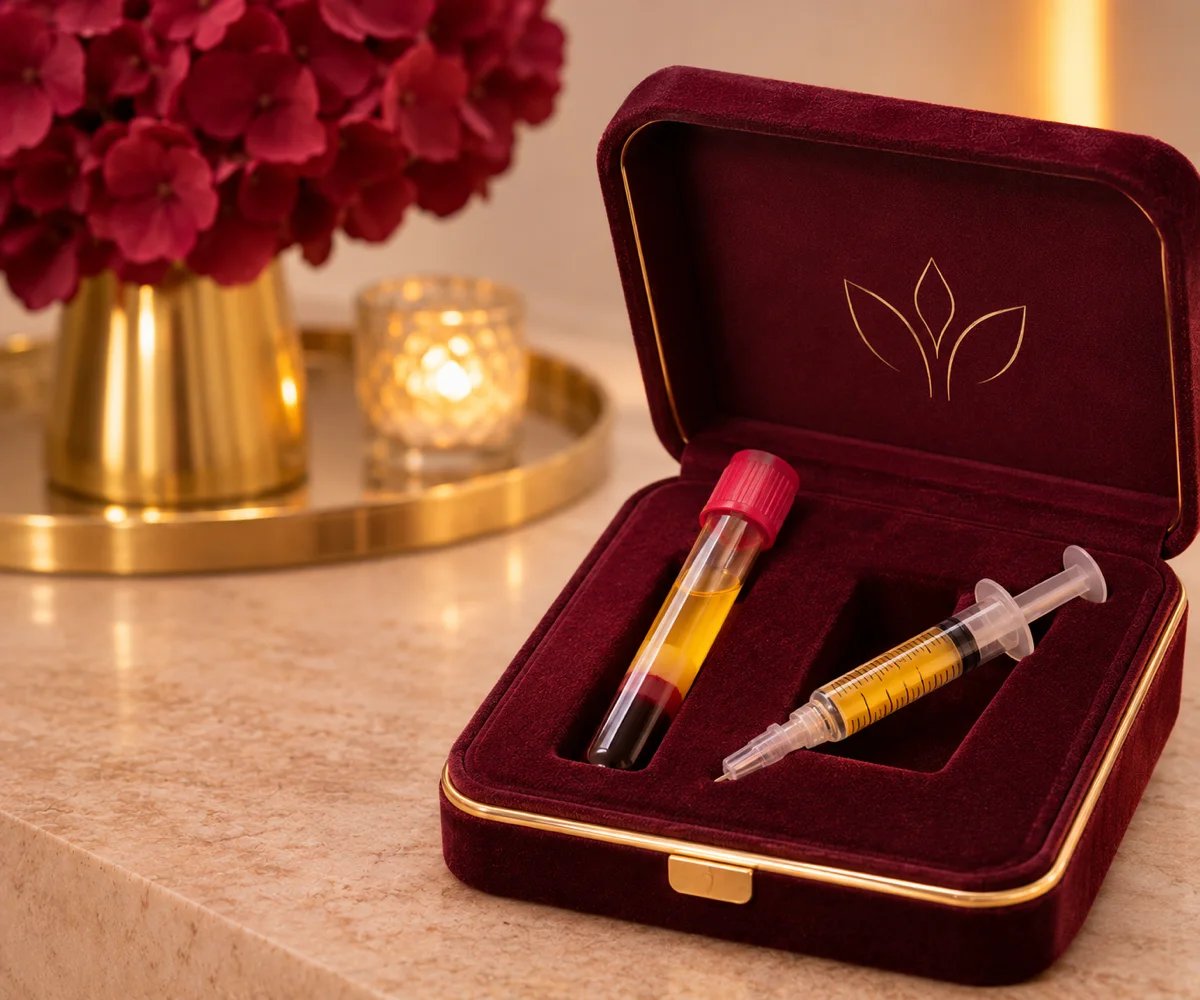
Plasma tube and syringe in a burgundy velvet case on a countertop

Regeneration

O-SHOT (Orgasm Shot)

Platelet-rich plasma (PRP) injection, obtained from your own blood and applied to the intimate area, with the aim of improving the response of the tissues. The studies are few and small and almost all without a comparison group: they show improvement in sexual function scores, but the level of evidence is low and it has not been shown to help someone who has never had an orgasm. It does not replace sex therapy or treatment of the cause.

May be considered when

the assessment has not found a simpler cause to treat, sex therapy and the rest of the first line have been done (or are ongoing) and have not been enough, the doctor has explained what is known and what is not, and the decision is yours.

Find out more

What the journey looks like

From the first consultation to the plan tailored to you

No treatment starts without an assessment consultation with the doctor. You can speak at your own pace and stop whenever you wish.

  1. 01At the clinic

    Assessment consultation

    The doctor listens to what you feel, since when and in which situations, and asks about medication, illnesses, births, the menopause and what you have already tried, in private and without judgement. She may ask you to complete a simple questionnaire on sexual function.

  2. 02At the clinic

    Looking for treatable causes

    If needed and with your consent, a gynaecological examination is carried out to see whether there is dryness, pain, muscle tension or another change to treat, and we discuss whether it is necessary to speak to the doctor who prescribes a medication or to request other tests.

  3. 03At home and with specialists

    Education, therapy and physiotherapy

    It starts with explanation and exercises focusing on sensations; when it makes sense, the doctor refers you to sex therapy, psychology or pelvic floor physiotherapy, and treats dryness and pain.

  4. 04Over time

    Reassessing and deciding

    We talk again about what has changed. If the first line has not been enough and the assessment has not found another cause, the doctor explains the additional options and the evidence that exists, and the decision is always yours.

Day to day

What helps while you wait for the consultation

Simple steps without pressure, alongside the plan the doctor recommends.

It is not a flaw in you

Orgasm is not a duty or a test

It is a response of the body that is learned, and people experience it in different ways. Not being able to have one says nothing about you as a woman or about the relationship. Many women only discover it late, after understanding what was blocking them, and help is available at any age.

Getting to know your own body, without a goal

Understanding what gives you pleasure is the first step, and taking away the pressure of “having to get there” helps your attention stay on the sensations.

In practice: set aside time alone, somewhere comfortable, to explore with curiosity, without a clock and without the aim of orgasm.

Telling your partner what you like

The person you are with cannot guess. Talking about what works spares both of you frustration.

In practice: choose a moment outside the bed, without rushing, and say what you like and how much time you need.

Treating dryness and pain

Uncomfortable sex makes arousal harder, and this is very treatable.

In practice: use lubricant and a vaginal moisturiser and talk to the doctor about low-dose vaginal oestrogen, which is available only on prescription.

Looking after what weighs on your mind

Tiredness, stress, poor sleep, sadness and anxiety leave little room for pleasure.

In practice: sleep, move, take breaks and, if sadness or anxiety are strong, ask for help; a psychologist or a sexologist can guide you.

Dr Michelle Campagnoli, clinical director of Clínica Luxmed

Who will look after you

An assessment carried out by the doctor

At Luxmed, the first step is always an assessment consultation with Dr Michelle Campagnoli. She is the one who listens to what is going on, without judgement, looks for treatable causes, assesses the emotional impact and designs the plan with you, in private and without rushing, working with sexology, psychology, pelvic physiotherapy or the doctor who follows other illnesses or medication when needed.

  • Physical examination and medical historyA conversation about what you feel, history, medication and, only if needed and with your consent, a gynaecological examination.
  • A plan tailored to youFirst the cause, therapy and physiotherapy; additional options only if appropriate, with the evidence explained.
  • No obligationThe cost of any treatment is confirmed only after the assessment.
Book an assessment consultation

Book a consultation

Book your consultation

Choose how you prefer to get in touch. We will arrange the assessment consultation with Dr Michelle Campagnoli.

Booking through the website100€70€Assessment consultationExclusive price for those who book the assessment through the website. Outside the website, the price is 100 €.

New Life Miraflores, Algés · Office Center, R. Santa Teresa do Menino Jesus n.º 6, 9.º C, 1495-048

Your details are used only for this contact. Any treatment depends on a prior medical assessment.

Request an appointmentIt takes less than a minute.
Speciality
You do not need to go into detail. The doctor will talk to you during the consultation.
Request received. Our team will contact you as soon as possible.
I cannot have an orgasm: is it normal and what can I do?

It is a frequent complaint and not a defect: sexual response varies greatly from woman to woman and from one phase to another. What can be done starts with understanding since when it happens, in which situations and with what stimulation, and checking whether there is a treatable cause (dryness, pain, medication, illnesses, anxiety). Explanation, sex therapy and communication often help more than any device. An assessment consultation makes it possible to see what weighs in your case.

I have never had an orgasm. Is that primary anorgasmia?

Yes, that is what it is called when there has never been an orgasm, neither alone nor with a partner. It is not rare and does not mean that your body “does not work”. Often the stimulation that works has not yet been found, or there is anxiety, shame or beliefs that make it difficult. When there is no other cause to assess, the approach is mainly one of learning, with sex therapy when needed.

Is penetration enough to have an orgasm?

No. For many women clitoral stimulation is often the key to orgasm, and penetration alone is not enough. Expecting orgasm to come from penetration alone is one of the myths that creates the most anxiety. Stimulating the clitoris, during or outside penetration, is normal and part of female sexual response.

Can I stop being able to have an orgasm after having been able to?

You can, and it is called acquired anorgasmia. The most common causes are a new medication (for example some antidepressants), the menopause and the dryness or pain it brings, stress, sadness or anxiety, problems in the relationship, chronic illnesses and pelvic surgeries. Because there is so much to consider, it is worth having it assessed rather than accepting it as inevitable.

Can medications prevent orgasm?

They can. Some antidepressants, the SSRIs, are the best known for this. If the change began after a new medication, tell the doctor who prescribed it, because it is sometimes possible to adjust the dose or change the medication. Never stop a medication on your own.

Do the menopause and hormones influence orgasm?

The menopause can cause dryness and pain during sex, which make arousal and orgasm harder. Low-dose vaginal oestrogen, prescribed by a doctor, treats dryness and pain, but hormones have no demonstrated efficacy in improving orgasm itself. If you have or have had breast cancer, speak to your oncologist first.

Do sex therapy and physiotherapy really help?

They are the first line, together with treatment of physical causes. Cognitive-behavioural therapy and mindfulness-based therapies are the psychotherapies with the most support in studies; pelvic floor training improved sexual function and, in a meta-analysis, orgasm, although with low certainty. The studies are heterogeneous and no single path works for everyone, so the plan is individual.

Does the O-SHOT solve not being able to have an orgasm?

There is not enough evidence. Studies of PRP in sexual function are few and small, mostly without a comparison group, and show improvement in scores but with low-level evidence. It has not been shown to help someone who has never had an orgasm. It does not replace sex therapy or treatment of the cause, and is only considered after the first line. The decision is always explained and shared with you.

Do these treatments have risks? And what about laser or radiofrequency?

With PRP, the studies reported few adverse effects, mild ones (such as discomfort at the injection site), but these are small studies with short follow-up. It is not performed with active infection, unexplained bleeding, undiagnosed lesions, pregnancy or certain blood disorders. As for vaginal laser and radiofrequency, the FDA warned in 2018 that it has not approved them for sexual function and that they can cause burns, scarring and pain during sex.

When should I book a consultation?

Book a consultation if orgasm has never come or has stopped coming and this bothers you, if it began after a medication, a birth, surgery or the menopause, or if there is pain, dryness or sadness. If you have bleeding after sex or after the menopause, abnormal discharge, persistent or sudden pain or a changing lesion on the vulva, call SNS 24 (808 24 24 24). If you have suddenly lost sensation with weakness in the legs or lost control of urine or stools, call 112.

We could not find that question. Ask us on WhatsApp

Scientific references

This page is based on the sources below and was reviewed by Dr. Michelle Campagnoli. Last updated on .

  1. Laan E, Rellini AH, Barnes T; International Society for Sexual Medicine. Standard operating procedures for female orgasmic disorder: consensus of the International Society for Sexual Medicine. Journal of Sexual Medicine 10(1):74-82, 2013.
  2. Althof SE, Leiblum SR, Chevret-Measson M, et al. Psychological and interpersonal dimensions of sexual function and dysfunction. Journal of Sexual Medicine 2(6):793-800, 2005.
  3. MedlinePlus (U.S. National Library of Medicine); atualizado por LaQuita Martinez, MD. Orgasmic dysfunction in women. MedlinePlus Medical Encyclopedia, 2026.
  4. Jorge CH, Bø K, Chiazuto Catai C, et al. Pelvic floor muscle training as treatment for female sexual dysfunction: a systematic review and meta-analysis. American Journal of Obstetrics and Gynecology 231(1):51-66, 2024.
  5. Mestre-Bach G, Blycker GR, Potenza MN. Behavioral therapies for treating female sexual dysfunctions: a state-of-the-art review. Journal of Clinical Medicine 11(10):2794, 2022.
  6. Dankova I, Pyrgidis N, Tishukov M, et al. Efficacy and safety of platelet-rich plasma injections for the treatment of female sexual dysfunction and stress urinary incontinence: a systematic review. Biomedicines 11(11):2919, 2023.
  7. The NAMS 2020 GSM Position Statement Editorial Panel. The 2020 genitourinary syndrome of menopause position statement of The North American Menopause Society. Menopause 27(9):976-992, 2020.
  8. Medsafe, New Zealand Medicines and Medical Devices Safety Authority. Safety Information: energy-based devices used for vaginal 'rejuvenation' or vaginal cosmetic procedures (relays the USFDA safety communication of July 2018). Medsafe, New Zealand Medicines and Medical Devices Safety Authority, 2018.
CallAssistantAvailableBook