Algés, Oeiras Mon to Fri · 09:00 to 13:00 and 14:00 to 19:00 · Sat · 09:00 to 14:00
WhatsApp Book a consultation

Aesthetic gynaecology

Uneven skin on the vulvaBumps, roughness or a different texture: what is usually normal and what is worth showing to a doctor

The skin of the vulva is not smooth and uniform like that of a forearm. It has folds, glands, hair, moister areas and drier areas, and it changes with age, pregnancy, the menopause and the way it is cared for. That is why it is common to notice, on any given day, small bumps, tiny dots, roughness or a different texture, and to wonder whether it is normal. It is almost always a harmless variation, but some changes call for examination. Here we explain what is usually normal, what may lie behind irregular skin, what should be shown to a doctor, what helps at home and what the clinic can offer, with honesty about what the evidence shows.

Reviewed by Dr Michelle Campagnoli, clinical director

  • 80%of adults have Fordyce granules, small dots that are a normal variant of the skin
  • 1assessment consultation, always first
  • 70 €assessment booked through the website
A woman in a denim apron shapes a clay jug on a potter's wheel in a pottery studio

How to recognise it

Could it be irregular vulvar skin?

It is not a diagnosis: it is what you see or feel to the touch. What matters is whether the change has always been there, whether it has changed, whether it bothers you and whether it comes with itching, pain or sores.

Tick what you recognise0/7

Tick the signs you recognise in your case. This is not a diagnosis, it is only meant to give you an idea.

Do you have a sore or ulcer that does not heal, a hard or growing lump, a new red, white or dark patch, a mole that changes shape or colour, thickened or raised skin, itching that does not go away, bleeding outside your period or persistent pain? You need an examination and should not wait. Out of hours, call SNS 24: 808 24 24 24.

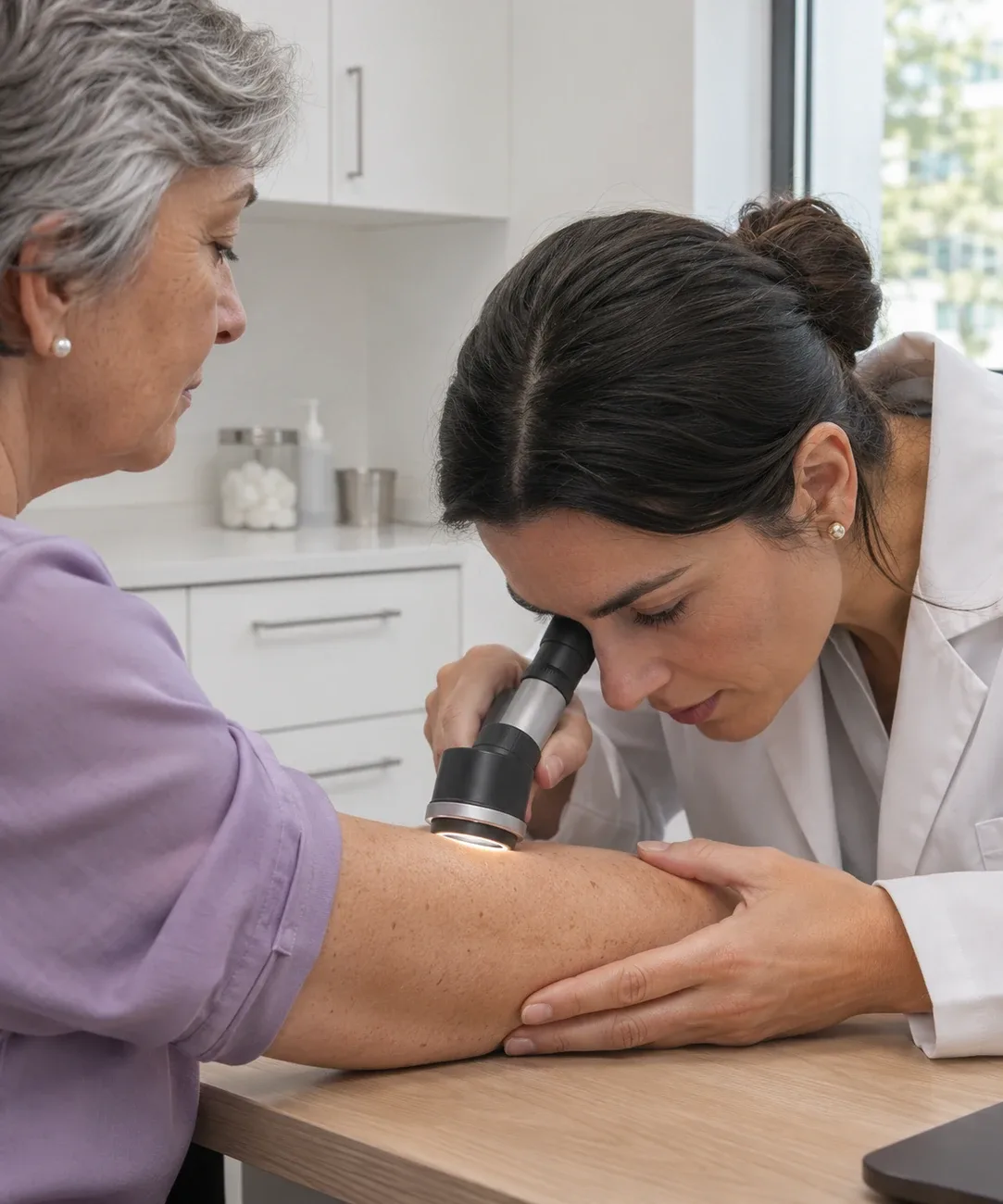
Female dermatologist examining a patient's forearm with a dermatoscope, both seated at a table; patient in a lilac sweater
Photograph of a consultation. The dots mark what the doctor assesses; the image does not show the intimate area.

Why it happens

What may lie behind irregular vulvar skin

The vulva brings together skin, mucosa, glands and hair follicles, in an area that is warm, moist and subject to friction. Any of these elements can give a different texture. Choose a situation to see how it applies.

The normal variation of the vulva

Fordyce granules are visible sebaceous glands, without hair, present in about 80% of adults, and they can also appear on the vulva. Vestibular papillae are small symmetrical bumps at the entrance of the vagina, which for a long time were mistaken for warts. In a biopsy study, only 2 of 29 women (7%) with papillae had signs of HPV, compared with 96% of vulvar warts.

What weighs on it

Trying to squeeze, pull off or “file down” what is a normal variation, which only irritates the skin.

What helps

Examination to confirm what it is. As a rule nothing needs to be treated.

Normal or to be assessed

Irregular vulvar skin: normal or to be assessed

Most changes in texture are benign and need no treatment. Some, however, should not be put off. It is worth knowing the difference.

  • How it shows. Whitish or yellowish dots, or small symmetrical bumps at the entrance of the vagina, that have been there for a long time, are similar to each other and do not change.

  • When it happens. Fordyce granules become more visible from puberty onwards, and the skin becomes more wrinkled with age, the menopause or after weight loss, without there being any disease.

  • What the clinic does. The doctor examines the vulva, confirms that it is a normal variant and explains what it is, which is often enough to reassure you.

  • At home. Leaving the skin alone: do not squeeze or pull, wash with lukewarm water and use fewer products.

Do you have a high fever, intense pain and swelling that is growing quickly on the vulva, or do you feel very unwell? Go to the emergency department and, if it is serious, call 112. If you have a sore, a lump, bleeding or any doubts, out of hours you can call SNS 24: 808 24 24 24.

Book an assessment consultation

What can help

Options for irregular vulvar skin

The first step is to know what it is: an examination confirms whether it is a normal variant (as a rule not treated), a skin condition (which has its own treatment, such as the corticosteroid ointment prescribed for lichen sclerosus), folliculitis or a cyst, or a lesion to be investigated. Then come the care measures that count most: not squeezing or pulling, removing hair less often, washing with lukewarm water and mild soap only on the outside, cotton underwear and, in the menopause, treating dryness and atrophy (low-dose vaginal oestrogen is available only on prescription; if you have had breast cancer, speak to your oncologist first). The treatments below do not remove Fordyce granules or cysts, and do not treat skin conditions: they are additional options, assessed case by case and without promising results, which seek to improve hydration and skin quality, with limited evidence in this area.

Book an assessment consultation
Dr Michelle Campagnoli, clinical director of Clínica Luxmed

First step

Assessment consultation

The doctor listens to what you are experiencing, examines your case and explains the suitable options. No treatment begins without this consultation.

May be considered when

you want to understand the cause and decide on the best path, with time and without commitment.

Book an assessment consultation
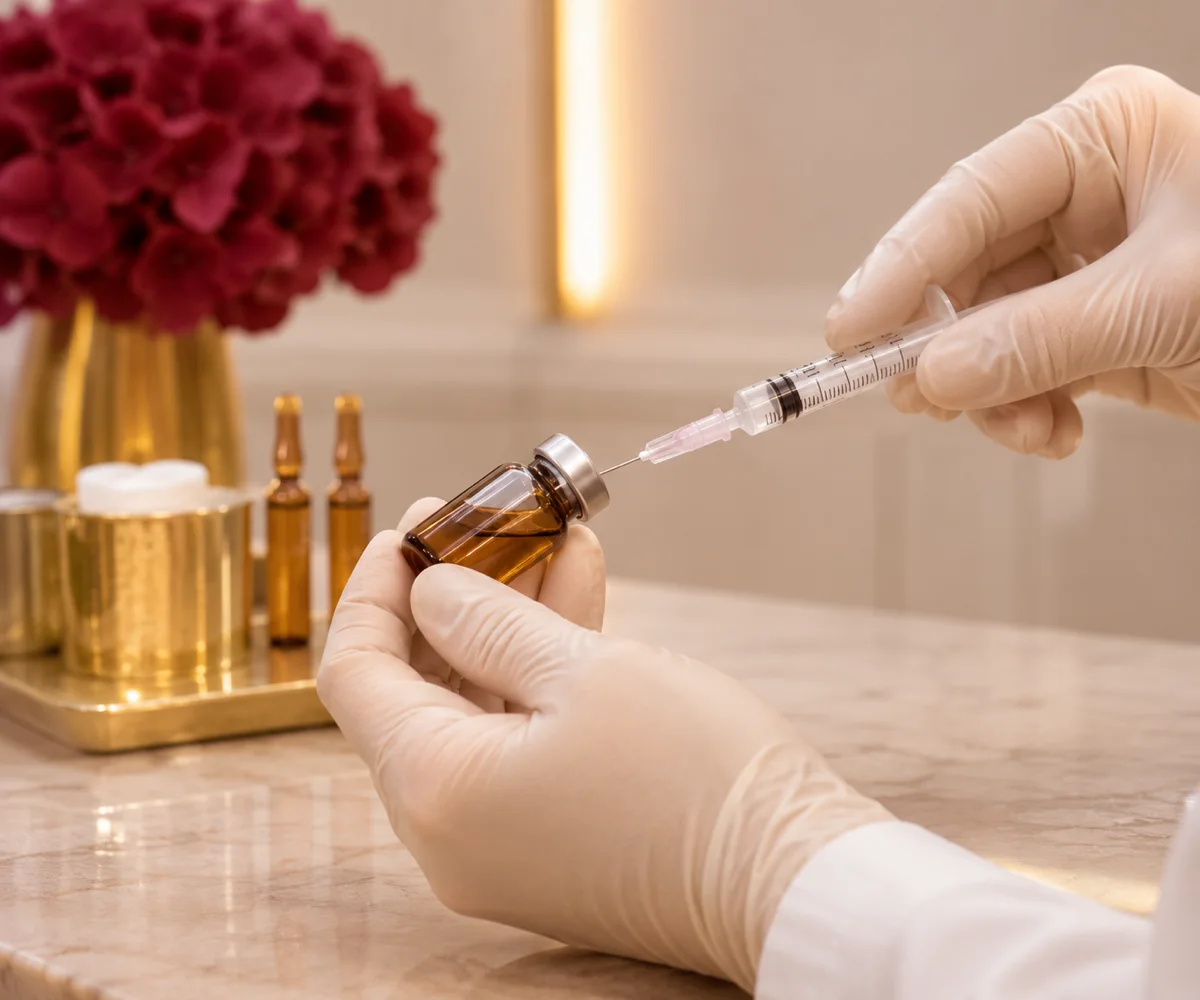
The doctor, wearing gloves, preparing the syringe from the vial

Injectable

Intradermotherapy

Superficial microinjections of moisturising and regenerating substances, intended to improve hydration and the appearance of the skin. It does not remove bumps, cysts or thickened skin, and we have not found studies specific to the texture of the vulva, so expectations should be modest.

May be considered when

the skin is dry, thin and tired-looking, other causes have been ruled out, simple care has not been enough and you accept that the result may be subtle.

Find out more
Bottle and syringe on a marble worktop, in warm light

Hydration

Hyaluronic acid (skinbooster)

Superficial injections of hyaluronic acid in small amounts, which seek to hydrate the skin. In a review of 17 studies of hyaluronic acid in the vulva and vagina there was improvement in symptoms such as dryness, but the authors call for better-designed trials and there are no studies on skin texture.

May be considered when

the skin is dry and dehydrated, the doctor has ruled out other causes and explained that the evidence is limited, and the decision is yours.

Find out more

What the journey looks like

From the first consultation to the plan tailored to you

No treatment starts without an assessment consultation with the doctor. Often the answer is to clarify what it is and care for the skin, and only then is more discussed.

  1. 01At the clinic

    Assessment consultation

    The doctor listens to what you have noticed and since when, asks whether it has changed, whether there is itching, pain or bleeding and how you care for the area, and clarifies what is part of normal variation, in private and without rushing.

  2. 02At the clinic

    Examination of the vulva

    The vulva is examined in good light. A normal variant is distinguished from folliculitis, a cyst, a skin condition or a lesion to be investigated. If there is doubt, a biopsy is requested or a referral is made to dermatology or gynaecological oncology.

  3. 03At home and at the clinic

    Care first

    It starts with skin care, adjusting hair removal and hygiene and treating atrophy when it exists. If there is a skin condition, the cause is treated. If the discomfort persists, the doctor explains the additional options, with the evidence and the risks.

  4. 04Over time

    Reassessing and deciding

    It is reassessed over time, because skin conditions need follow-up and the skin takes time to respond. If a lesion changes, it is examined again and, if needed, a biopsy is performed.

Day to day

What helps while you wait for the consultation

Simple care that protects the skin of the vulva, alongside the plan the doctor recommends.

Before deciding

The skin of the vulva is not smooth or the same in every woman

The vulva has folds, glands, hair and areas of different colours, and the skin varies greatly from woman to woman and over a lifetime. Noticing a new texture is natural, and being bothered by its appearance deserves to be heard. Before thinking about treatment, it helps to understand whether what bothers you is physical (itching, pain, friction) or the image, and to talk about it at the consultation.

Leave the skin alone

Squeezing, pulling or scratching irritates the skin and can cause infection and scarring.

In practice: do not touch the bumps to “get rid of” them and, if you itch, ask for help rather than putting up with it.

Washing with lukewarm water

The skin of the vulva reacts to products and to excess hygiene.

In practice: wash only the outside with lukewarm water, or mild unscented soap, and pat dry.

Removing hair another way

Frequent, close hair removal is one of the causes of ingrown hairs and folliculitis.

In practice: remove hair less often, in the direction of the hair, with a new blade, or choose another method. If painful or pus-filled bumps appear, see a doctor.

Clothing that lets the skin breathe

Friction and moisture irritate the skin and make the texture worse.

In practice: cotton underwear, trousers without friction and changing wet clothing quickly.

Dr Michelle Campagnoli, clinical director of Clínica Luxmed

Who will look after you

An assessment carried out by the doctor

At Luxmed, the first step is always an assessment consultation with Dr Michelle Campagnoli. She is the one who listens to what is going on, examines the vulva, distinguishes a normal variant from a skin condition, a cyst or a lesion to be investigated, and designs the plan with you, in private and without rushing, working with dermatology or gynaecological oncology when needed.

  • Physical examination and medical historyA conversation about what has changed, examination of the vulva and, when needed, a biopsy or referral.
  • A plan tailored to youFirst clarifying and caring for the skin; additional treatments only if appropriate, with the evidence explained.
  • No obligationThe cost of any treatment is confirmed only after the assessment.
Book an assessment consultation

Book a consultation

Book your consultation

Choose how you prefer to get in touch. We will arrange the assessment consultation with Dr Michelle Campagnoli.

Booking through the website100€70€Assessment consultationExclusive price for those who book the assessment through the website. Outside the website, the price is 100 €.

New Life Miraflores, Algés · Office Center, R. Santa Teresa do Menino Jesus n.º 6, 9.º C, 1495-048

Your details are used only for this contact. Any treatment depends on a prior medical assessment.

Request an appointmentIt takes less than a minute.
Speciality
You do not need to go into detail. The doctor will talk to you during the consultation.
Request received. Our team will contact you as soon as possible.
Why is the skin of my vulva irregular?

The vulva is an area with folds, glands, hair and mucosa, so it is rare to have completely smooth skin. The most frequent causes are normal variations (Fordyce granules, vestibular papillae), follicles irritated by hair removal, friction and products, the menopause, cysts and small veins, and some skin conditions. As a rule it is not serious, but only an examination confirms what it is in your case.

What are the whitish or yellowish dots on the vulva?

They are usually Fordyce granules: visible sebaceous glands, without hair, present in about 80% of adults and which can appear on the vulva. They are not infectious or sexually transmitted, and as a rule need no treatment. Some infections can look like them, so if you have doubts or if something has changed, it is worth showing the area to a doctor.

Are the small bumps at the entrance of the vagina warts?

Often not. Vestibular papillae are small symmetrical bumps, all similar, a normal variant that for a long time was mistaken for warts. In a biopsy study, only 7% of women with papillae had signs of HPV, compared with 96% of vulvar warts. Genital warts, on the other hand, can be single or grouped, and the NHS recommends that any new lump be seen at a consultation. Only an examination can tell them apart.

Is it normal for the vulva to become rougher after the menopause?

It is common. With the fall in oestrogen the skin and mucosa become thinner, drier and less elastic, and the loss of volume of the labia majora accentuates the folds. This is part of the genitourinary syndrome of menopause, which also causes dryness and discomfort, and has treatment: moisturisers and, when indicated, low-dose vaginal oestrogen. If you have itching, pain or white patches, it is worth having an examination to rule out a skin condition.

Are bumps after hair removal ingrown hairs?

Frequently yes. Removing hair completely, with wax or by plucking can make the hair grow back inwards and inflame the follicle, with a red bump, sometimes painful or with pus. It helps to remove hair less often, in the direction of the hair, with a new blade, not to squeeze and to leave the skin alone. If there is pain, heat, swelling or pus, or fever, you should see a doctor.

Thickened, white or flaking skin on the vulva: what could it be?

It may be contact dermatitis, lichen simplex chronicus (skin thickened by scratching) or lichen sclerosus (white, thin and wrinkled skin, which can change the shape of the vulva). They have different treatments, for example the corticosteroid ointment prescribed for lichen sclerosus, and so a diagnosis is needed. If there is doubt, or if the thickened skin persists, a biopsy may be needed, which rules out other causes.

Do the clinic’s treatments improve the texture of the vulva?

There are no studies showing that they improve texture. Injectable treatments and laser have been studied mainly in dryness, atrophy and conditions such as lichen sclerosus, and not in skin texture. They do not remove Fordyce granules or cysts, and are not what is proposed first. The doctor explains what is known and what is not, and the decision is always yours.

Are laser and PRP in the vulva safe and effective?

The evidence is limited. A sham-controlled trial (JAMA, 2021) showed no benefit of vaginal CO2 laser on symptoms after the menopause, and a meta-analysis of 7 trials pointed the same way. For PRP and hyaluronic acid there are improvements in symptoms in small and variable studies. In 2018 the FDA warned that these devices can cause burns, scarring and pain and that it has not approved them for genital cosmetic purposes. They are not performed with active infection, undiagnosed lesions or unexplained bleeding.

Could a bump or a patch on the vulva be cancer?

Rarely, but that is why lesions that change should not be ignored. The signs that call for examination are a lump, a sore or ulcer that does not heal, bleeding outside your period, itching that does not go away, red, white or dark patches, thickened or raised skin, and a mole that changes shape or colour. They have many other causes, but finding a precancerous lesion or a cancer early improves the chances of treatment.

When should I book a consultation?

Book a consultation if you have noticed a new change or one that has changed, if there is itching, pain or bleeding, if a small lump is growing or does not go away, or if the appearance bothers you and you want to clarify what it is. If you have a sore that does not heal, a hard lump or bleeding, do not wait: book now, and out of hours call SNS 24 (808 24 24 24). If you have a high fever, intense pain and swelling that is growing quickly, go to the emergency department, and call 112 if it is serious.

We could not find that question. Ask us on WhatsApp

Scientific references

This page is based on the sources below and was reviewed by Dr. Michelle Campagnoli. Last updated on .

  1. Farage M, Maibach H. Lifetime changes in the vulva and vagina. Archives of Gynecology and Obstetrics 273(4):195-202, 2006.
  2. Kreklau A, Vâz I, Oehme F, Strub F, Brechbühl R, Christmann C, Günthert A. Measurements of a 'normal vulva' in women aged 15-84: a cross-sectional prospective single-centre study. BJOG 125(13):1656-1661, 2018.
  3. Lloyd J, Crouch NS, Minto CL, Liao LM, Creighton SM. Female genital appearance: 'normality' unfolds. BJOG 112(5):643-646, 2005.
  4. DermNet (DermNet NZ). Fordyce spots. (DermNet, acedido 2026-11-11)
  5. Moyal-Barracco M, Leibowitch M, Orth G. Vestibular papillae of the vulva. Lack of evidence for human papillomavirus etiology. Archives of Dermatology 126(12):1594-1598, 1990.
  6. Poizeau F, Plantier F, Bell H, Moyal-Barracco M. Vulvar Fordyce adenitis: A cohort of 45 women. Annales de Dermatologie et de Vénéréologie 148(4):221-227, 2021.
  7. Stockdale CK, Boardman L. Diagnosis and Treatment of Vulvar Dermatoses. Obstetrics & Gynecology 131(2):371-386, 2018.
  8. Lewis FM, Tatnall FM, Velangi SS, Bunker CB, Kumar A, Brackenbury F, Mohd Mustapa MF, Exton LS. British Association of Dermatologists guidelines for the management of lichen sclerosus, 2018. British Journal of Dermatology 178(4):839-853, 2018.
  9. NHS. Lichen sclerosus. (NHS (Reino Unido), acedido 2026-11-11)
  10. NHS. Symptoms of vulval cancer. (NHS (Reino Unido), acedido 2026-11-11)
  11. NHS. Ingrown hairs. (NHS (Reino Unido), acedido 2026-11-11)
  12. NHS. Genital warts. (NHS (Reino Unido), acedido 2026-11-11)
  13. Eltobgy A, Aljabali A, Farag A, Elshorbgy M, Hamed A, et al. Effects of pubic hair grooming on women's sexual health: a systematic review and meta-analysis. BMC Women's Health 24:171, 2024.
  14. Farage M, Maibach HI. The vulvar epithelium differs from the skin: implications for cutaneous testing to address topical vulvar exposures. Contact Dermatitis 51(4):201-209, 2004.
  15. O'Gorman SM, Torgerson RR. Allergic contact dermatitis of the vulva. Dermatitis 24(2):64-72, 2013.
  16. The NAMS 2020 GSM Position Statement Editorial Panel. The 2020 genitourinary syndrome of menopause position statement of The North American Menopause Society. Menopause 27(9):976-992, 2020.
  17. NHS. Bartholin's cyst. (NHS (Reino Unido), acedido 2026-11-11)
  18. Gavrilov SG. Vulvar varicosities: diagnosis, treatment, and prevention. International Journal of Women's Health 9:463-475, 2017.
  19. Buzzaccarini G, Marin L, Noventa M, et al. Hyaluronic acid in vulvar and vaginal administration: evidence from a literature systematic review. Climacteric 24(6):560-571, 2021.
  20. De Ponte A, Cabrera S, Sparice SSB, Baulies S, Rodríguez I. Platelet-rich plasma in the management of vulvovaginal disorders: a systematic review. Journal of Sexual Medicine 23(1):qdaf307, 2026.
  21. Li FG, Maheux-Lacroix S, Deans R, et al. Effect of fractional carbon dioxide laser vs sham treatment on symptom severity in women with postmenopausal vaginal symptoms: a randomized clinical trial. JAMA 326(14):1381-1389, 2021.
  22. Prodromidou A, Zacharakis D, Athanasiou S, et al. CO2 Laser versus Sham Control for the Management of Genitourinary Syndrome of Menopause: A Systematic Review and Meta-Analysis of Randomized Controlled Trials. Journal of Personalized Medicine 13(12):1694, 2023.
  23. Bhingradia YM, Patokar AS, Moradiya N. Treatment of Fordyce Spots with CO2 Laser: A Case Series of Three Patients. Journal of Cutaneous and Aesthetic Surgery 17(1):78-80, 2024.
  24. American College of Obstetricians and Gynecologists (Committee on Gynecologic Practice). Elective female genital cosmetic surgery (Committee Opinion n.º 795). Obstetrics & Gynecology 135(1):e36-e42, 2020.
  25. Medsafe (Nova Zelândia), a retransmitir o alerta da U.S. FDA. Safety Information: energy-based devices used for vaginal 'rejuvenation' or vaginal cosmetic procedures (relays the USFDA safety communication of July 2018). Medsafe, New Zealand Medicines and Medical Devices Safety Authority, 2018.
CallAssistantAvailableBook