
Algés, Oeiras Mon to Fri · 09:00 to 13:00 and 14:00 to 19:00 · Sat · 09:00 to 14:00
WhatsApp Book a consultation

Aesthetic gynaecology

Thin intimate skin lacking volumeWhen the skin of the vulva becomes thinner and the labia majora no longer have their former volume

Many women notice, around the menopause or after losing weight, that the skin of the intimate area is thinner, paler and more fragile, and that the vulva looks “empty”, with the labia majora flatter or wrinkled. These are two changes that go together but are not the same: the skin that thins (less oestrogen, less collagen) and the volume that is lost (less fat beneath the skin). Here we explain what may lie behind it, how normal ageing is distinguished from a skin condition that needs treatment, what helps first and what the clinic can offer, with honesty about what the evidence shows.

Reviewed by Dr Michelle Campagnoli, clinical director

  • 2 complaintsthat often go together: skin that thins and volume that is lost, and they do not always have the same cause
  • 1assessment consultation, always first
  • 70 €assessment booked through the website
Woman in a grey apron running her hands over pink fabric on a cutting table in an atelier

How to recognise it

Could it be thin intimate skin and loss of volume?

It is not a diagnosis in itself: it is what you notice when the skin of the vulva thins and the fat of the labia majora decreases. What matters is what has changed, since when and whether there are symptoms, such as burning, fissures or pain.

Tick what you recognise0/7

Tick the signs you recognise in your case. This is not a diagnosis, it is only meant to give you an idea.

Do you have bleeding after the menopause or after sex, white or smooth patches with itching, a sore that does not heal, a patch, lump or lesion that changes in appearance or grows, abnormal discharge, persistent or sudden pain, or fever? You need a prompt assessment and should not wait. Out of hours, call SNS 24: 808 24 24 24.

Doctor in a white coat writing notes while talking with a grey-haired patient in a consulting room
Photograph of a consultation. The dots mark what the doctor assesses; the image does not show the intimate area.

Why it happens

What may lie behind thin intimate skin

The skin of the vulva depends on oestrogen to stay thick, elastic and hydrated, and the labia majora depend on fat and collagen to keep their volume. When one of these fails, the vulva changes. Choose a situation to see how it applies.

The menopause and low oestrogen

With the fall in oestrogen, the vulva and vagina can become paler, with a thinner and less elastic epithelium. In the genitourinary syndrome of menopause these changes involve the labia, the clitoris and the entrance of the vagina, and not just the vagina, and can bring burning, dryness and pain during sex.

What weighs on it

Attributing everything to age and not treating a hormonal change that has treatment.

What helps

Assessing the genitourinary syndrome of menopause. Low-dose local oestrogen, prescribed and monitored by a doctor, is one of the options.

Normal or to be assessed

Thin skin from ageing or another cause

Not all thin intimate skin is just a lack of oestrogen or fat. That is why it is worth knowing whether there is something to treat before thinking about volume.

  • How it shows. Thinner, paler skin, less full labia majora, mild dryness or burning, without white patches, sores or bleeding.

  • When it happens. Usually gradually, after the menopause, after breastfeeding or after losing a lot of weight.

  • What the clinic does. The doctor listens to what has changed, examines the vulva and assesses what can be treated first: hydration, skin care and, when justified, local oestrogen.

  • At home. Gentle hygiene, a moisturiser or emollient and lubricant during sex, while you wait for the consultation.

Do you have bleeding after the menopause or after sex, a sore that does not heal or a lesion that changes in appearance? Book a consultation as soon as possible. Out of hours, or with intense pain, fever or doubts, you can call SNS 24: 808 24 24 24. Call 112 only in a serious situation, such as bleeding that does not stop.

Book an assessment consultation

What can help

Options for thin intimate skin and loss of volume

The first line is to treat what can be treated: ruling out a skin condition, adjusting hygiene, moisturising and protecting the skin and, when there is a lack of oestrogen, considering low-dose local oestrogen, prescribed by a doctor. Only afterwards, if the discomfort (or the appearance) persists and the person wishes, is a volume or regeneration treatment considered. The treatments below are additional options, assessed case by case and without promising results, with limited evidence for the vulva.

Book an assessment consultation
Dr Michelle Campagnoli, clinical director of Clínica Luxmed

First step

Assessment consultation

The doctor listens to what you are experiencing, examines your case and explains the suitable options. No treatment begins without this consultation.

May be considered when

you want to understand the cause and decide on the best path, with time and without commitment.

Book an assessment consultation
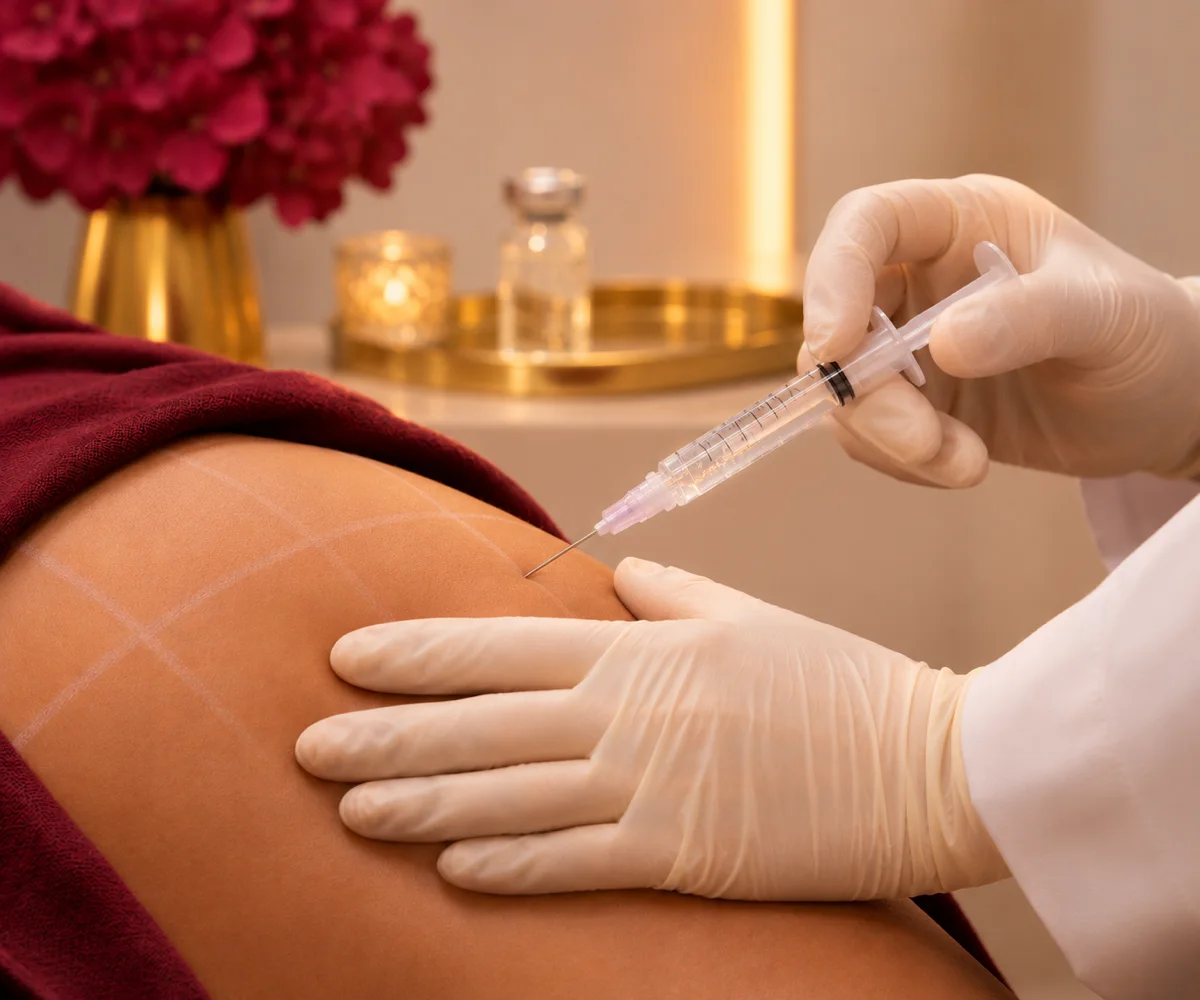
Hyaluronic acid: the doctor, wearing gloves, applying the filler to a marked area of the thigh covered by a towel

Volume

Hyaluronic acid

Filler injected into the labia majora to restore volume. It is the option with the most studies for loss of volume, but they are few, short and without sham treatment. The results are temporary and may require repeating. It does not treat thin skin or the symptoms of a skin condition.

May be considered when

the skin has been assessed and no disease has been found, the loss of volume bothers you, first-line care has been done and the doctor has explained the risks and the limited duration of the effect.

Find out more
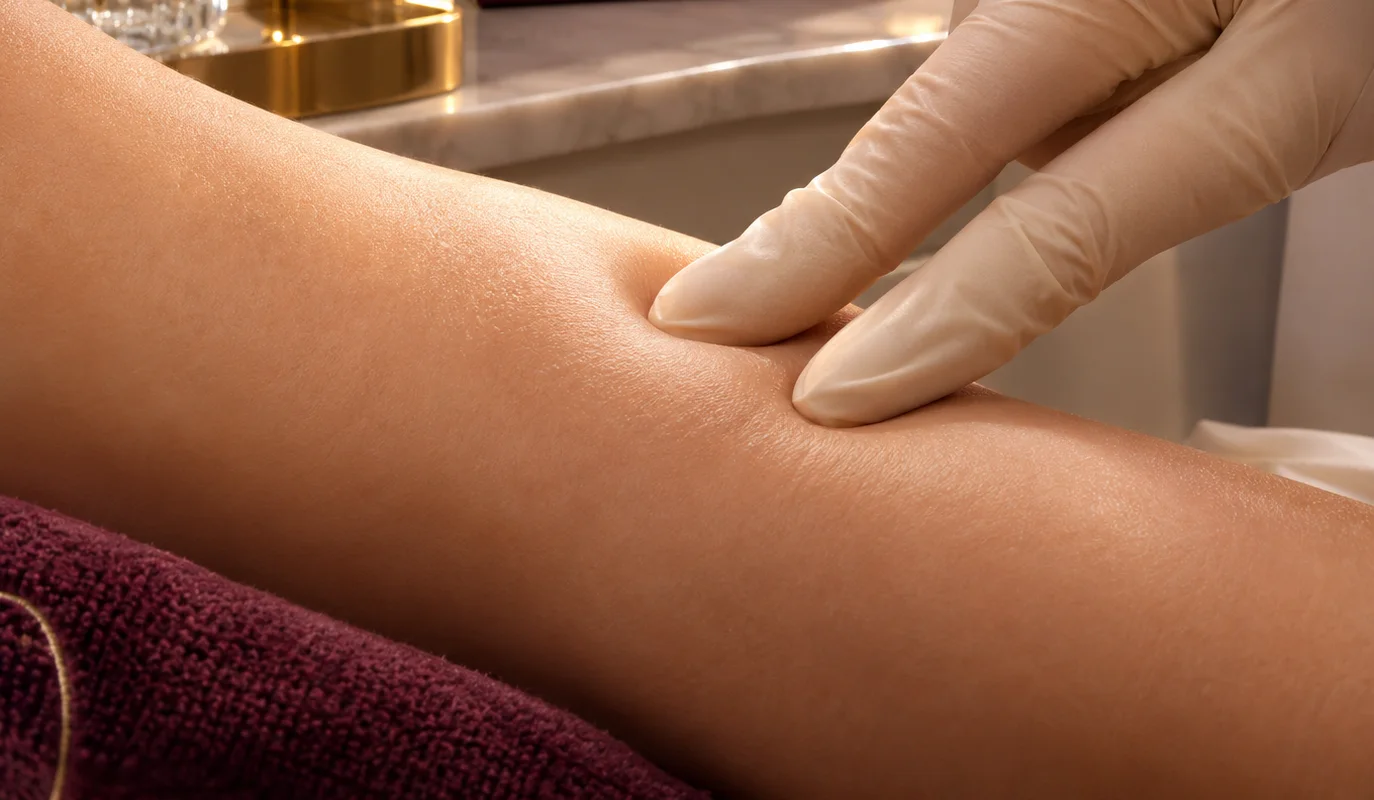
Biostimulators: two gloved fingers of the doctor assessing the firmness of the skin on a forearm

Collagen

Biostimulators

Injections that stimulate the collagen of the skin gradually, intended to improve firmness and thickness. In the labia majora there are only case reports and clinical experience, so the evidence is very limited.

May be considered when

the skin is thin and lacks firmness, there is no disease left to treat, and the decision is yours after the doctor explains what is known and what is not.

Find out more

What the journey looks like

From the first consultation to the plan tailored to you

No treatment starts without an assessment consultation with the doctor. First we understand what is happening to the skin, and only then do we decide what to do.

  1. 01At the clinic

    Assessment consultation

    The doctor listens to what has changed, since when, what you feel and what you have already tried, asks about the menopause, weight, creams and previous treatments, and lets you speak in private and without rushing.

  2. 02At the clinic

    Examination of the vulva

    The skin and mucosa are observed, along with the volume of the labia majora, the colour, the texture and whether there are fissures or patches. When there are doubts, a biopsy or a referral to dermatology or vulvar gynaecology may be needed.

  3. 03At home

    First-line care

    Hygiene is adjusted, a moisturiser or emollient and a lubricant for sex are introduced, whatever has treatment is treated (for example, a skin condition) and local oestrogen is considered, when it makes sense.

  4. 04Over time

    Reassessing and deciding

    The skin and symptoms are reassessed. If the discomfort, or the appearance, persists and you want more, the doctor explains the additional options, the evidence that supports them, the risks and the duration of the effect, and the decision is yours.

Day to day

What helps while you wait for the consultation

Simple care that protects skin that is already thin and sensitive, alongside the plan the doctor recommends.

It is not “just a matter of age”

Thin skin can be treated

It is common, but it is not inevitable, and the cause is not always just age. Many women put off the consultation out of embarrassment or because they have heard that “nothing can be done any more”. There are simple measures that protect the skin and, when there is a condition or a lack of oestrogen, there is specific treatment.

Washing with water or a mild cleanser

It preserves the protective layer of the skin, which repeated water and soap wear away.

In practice: wash the external area with lukewarm water or a mild cleanser without perfume or soap, and dry with gentle pats, without rubbing.

Moisturising and protecting the skin

An emollient or barrier ointment reduces water loss and friction.

In practice: ask the doctor or pharmacist which to use, and apply after washing and drying the area, especially if you have burning or fissures.

Wearing loose cotton underwear

It reduces friction and moisture on sensitive skin.

In practice: prefer cotton, avoid very tight clothing and change out of wet or sweaty clothes as soon as you can.

Using lubricant during sex

It protects thin skin from friction and fissures.

In practice: a water- or silicone-based lubricant, unscented, applied before and during.

Dr Michelle Campagnoli, clinical director of Clínica Luxmed

Who will look after you

An assessment carried out by the doctor

At Luxmed, the first step is always an assessment consultation with Dr Michelle Campagnoli. She is the one who listens to what has changed, examines the skin and mucosa of the vulva, rules out a skin condition or a hormonal cause that needs treating and designs the plan with you, in private and without rushing, working with dermatology or vulvar gynaecology when needed.

  • Physical examination and medical historyA conversation about what has changed, examination of the vulva and, when necessary, a biopsy or referral.
  • A plan tailored to youFirst skin care and treatment of the cause; additional treatments only if appropriate, with the evidence explained.
  • No obligationThe cost of any treatment is confirmed only after the assessment.
Book an assessment consultation

Book a consultation

Book your consultation

Choose how you prefer to get in touch. We will arrange the assessment consultation with Dr Michelle Campagnoli.

Booking through the website100€70€Assessment consultationExclusive price for those who book the assessment through the website. Outside the website, the price is 100 €.

New Life Miraflores, Algés · Office Center, R. Santa Teresa do Menino Jesus n.º 6, 9.º C, 1495-048

Your details are used only for this contact. Any treatment depends on a prior medical assessment.

Request an appointmentIt takes less than a minute.
Speciality
You do not need to go into detail. The doctor will talk to you during the consultation.
Request received. Our team will contact you as soon as possible.
Why does intimate skin become thin and lose volume?

The skin of the vulva needs oestrogen to stay thick, elastic and hydrated, and the labia majora need fat and collagen to keep their volume. With the menopause, breastfeeding, ageing, weight loss or a skin condition, these balances change. That is why the skin becomes thinner, paler and more fragile, and the labia majora lose fullness. Only an examination shows which of these causes is contributing in your case.

Is loss of volume of the vulva normal with age?

It is frequent: the medical literature describes loss of volume of the labia majora as a common consequence of ageing, hormonal changes and some diseases. But “frequent” does not mean it has to be accepted without assessment, especially if there is burning, fissures, pain during sex or bleeding. Without symptoms, it may be just a change in appearance, which needs no treatment.

Can weight loss leave the vulva without volume?

It can. When a lot of fat is lost, it also decreases in the labia majora, and the skin may become looser. It is a plausible and frequent explanation in clinical practice, but there are few specific studies on the vulva, so what happens varies from person to person. If you have lost weight and notice changes in the intimate area, say so at the consultation.

How can thin skin from ageing be distinguished from lichen sclerosus?

It cannot be distinguished with certainty by eye, and that is why assessment is important. Lichen sclerosus causes white, smooth or wrinkled patches, with itching, skin that tears or bleeds easily, and sometimes pain during sex and a change in the shape of the vulva. It has its own medical treatment (usually a potent topical corticosteroid with emollients) and needs follow-up. If you recognise these signs, book a consultation before thinking about aesthetic treatments.

What can be done first?

Ruling out a skin condition, adjusting hygiene (water or a mild cleanser, no soap or douches), moisturising and protecting the skin with an emollient or a barrier ointment, using lubricant during sex and, when there is a lack of oestrogen, considering low-dose local oestrogen. This care comes before any technology or filler, and often is enough to relieve the symptoms.

Does local oestrogen help the skin of the vulva?

It can help when thin skin is due to a lack of oestrogen: low-dose vaginal oestrogen, prescribed and monitored by a doctor, is one of the first-line options for the genitourinary syndrome of menopause. It does not restore volume to the labia majora. If you have or have had breast cancer, speak first to your oncologist, because in that case we start with options without hormones.

Filling the labia majora with hyaluronic acid: what is known?

It restores volume by injection, and the available studies are favourable but small and short: a study of 72 women without a comparison group and a trial of 76 women, compared with no treatment, with improvement in appearance and sexual function at 6 months, without serious adverse effects. The effect is temporary and long-term results are not known. It does not treat thin skin or a skin condition, and the decision should come after the assessment.

Do PRP, biostimulators, intradermotherapy and laser work?

The evidence is limited. PRP has favourable signs in small studies, mainly in lichen sclerosus and atrophy, but has not been studied for restoring volume. For biostimulators there are only case reports in the labia majora, and for intradermotherapy we have not found trials in the vulva. The CO2 laser was no better than sham treatment in trials for menopausal symptoms, and the FDA warned against these devices in 2018. None replaces first-line care, and none is promised.

Do these treatments carry risks?

In studies, the most common effects are mild and temporary: pain, swelling, bruising and discomfort for a few days. More rarely, the risks of any injection may occur, such as infection, lumps or asymmetry, and the laser carries the FDA warning (burns, scarring and pain during sex). They are not performed with active infection, unexplained bleeding, undiagnosed lesions or pregnancy, and the doctor explains the risks of each before deciding.

When should I book a consultation?

Book a consultation if the skin of the intimate area is thinner, sensitive or with fissures, if the vulva has changed in appearance, if you have burning, itching or pain during sex, or if you have noticed changes after weight loss or the menopause. If you have bleeding after the menopause or after sex, white patches with itching, a sore that does not heal, a lesion that changes or abnormal discharge, do not wait: book an urgent consultation or, out of hours, call SNS 24 (808 24 24 24). 112 is reserved for a serious situation, such as bleeding that does not stop.

We could not find that question. Ask us on WhatsApp

Scientific references

This page is based on the sources below and was reviewed by Dr. Michelle Campagnoli. Last updated on .

  1. Portman DJ, Gass ML; Vulvovaginal Atrophy Terminology Consensus Conference Panel. Genitourinary syndrome of menopause: new terminology for vulvovaginal atrophy from the International Society for the Study of Women's Sexual Health and the North American Menopause Society. Menopause 21(10):1063-1068, 2014.
  2. The NAMS 2020 GSM Position Statement Editorial Panel. The 2020 genitourinary syndrome of menopause position statement of The North American Menopause Society. Menopause 27(9):976-992, 2020.
  3. Negris O, Ghafari-Saravi A, Mauskar MM. A Practical Management Approach to Vulvar Dermatoses and Genitourinary Syndrome of Menopause. Obstetrics & Gynecology 148:591-606, 2026.
  4. Kirtschig G, Woelber L, Günthert A, et al. Evidence- and consensus-based guideline on lichen sclerosus. Journal der Deutschen Dermatologischen Gesellschaft 24:566-584, 2026.
  5. NHS. Lichen sclerosus. (NHS (nhs.uk), acedido 2026-11-11)
  6. Bohbot JM, Rebelo C, Nappi RE. Vulvar Care: Reviewing Concepts in Daily Hygiene. Healthcare (Basel) 13(13):1523, 2025.
  7. NHS. Vaginal dryness. (NHS (nhs.uk), acedido 2026-11-11)
  8. Martin BC, Vitorino CN, Souza R, et al. Effect of a non-hormonal vaginal moisturizer on vaginal and vulvar health in postmenopausal women with breast cancer: A randomized clinical trial. Maturitas 207:108880, 2026.
  9. Lethaby A, Ayeleke RO, Roberts H. Local oestrogen for vaginal atrophy in postmenopausal women. Cochrane Database of Systematic Reviews 2016(8):CD001500, 2016.
  10. Faubion SS, Larkin LC, Stuenkel CA, et al. Management of genitourinary syndrome of menopause in women with or at high risk for breast cancer: consensus recommendations from The North American Menopause Society and The International Society for the Study of Women's Sexual Health. Menopause 25(6):596-608, 2018.
  11. Boucher F, Eychenne C, Gurriet B, et al. Evaluation of the Efficacy and Safety of Hyaluronic Acid Injection for Volume Restoration of the Labia Majora: ESOLANE study. International Urogynecology Journal 36:1243-1253, 2025.
  12. Fasola E, Dridi D, Degliuomini RS, et al. Performance and Safety of Hyaluronic Acid-Based Gynaecological Filler for Labia Majora Augmentation: A Randomised Controlled Study. Life (Basel) 16:1141, 2026.
  13. Acevedo A, Parra AM, Amado AM, et al. Labia Majora Rejuvenation With Hybrid Filler: A Narrative Review of the Literature and Report of Two Cases. Journal of Cosmetic Dermatology 24:e70074, 2025.
  14. De Ponte A, Cabrera S, Sparice SSB, et al. Platelet-rich plasma in the management of vulvovaginal disorders: a systematic review. Journal of Sexual Medicine 23:qdaf307, 2026.
  15. Li FG, Maheux-Lacroix S, Deans R, et al. Effect of fractional carbon dioxide laser vs sham treatment on symptom severity in women with postmenopausal vaginal symptoms: a randomized clinical trial. JAMA 326(14):1381-1389, 2021.
  16. Prodromidou A, Zacharakis D, Athanasiou S, et al. CO2 Laser versus Sham Control for the Management of Genitourinary Syndrome of Menopause: A Systematic Review and Meta-Analysis of Randomized Controlled Trials. Journal of Personalized Medicine 13(12):1694, 2023.
  17. Medsafe (Nova Zelândia), a retransmitir o alerta da U.S. FDA. Safety Information: energy-based devices used for vaginal 'rejuvenation' or vaginal cosmetic procedures (relays the USFDA safety communication of July 2018). Medsafe, New Zealand Medicines and Medical Devices Safety Authority, 2018.
CallAssistantAvailableBook