Algés, Oeiras Mon to Fri · 09:00 to 13:00 and 14:00 to 19:00 · Sat · 09:00 to 14:00
WhatsApp Book a consultation

Aesthetic gynaecology

Little lubrication when arousedWhen there is desire and stimulation, but the body does not get moist as the woman expected

Lubrication is one of the physical responses to arousal: with stimulation, blood flow in the genital area increases and the vagina becomes moist. When this happens little, late or stops happening, sex can become uncomfortable or painful and many women think that “something is wrong” with arousal. It is not always so: lubrication depends on hormones, medications, general health, tiredness and anxiety, the time and type of stimulation, and the relationship. Here we explain how to distinguish what is arousal from what is lubrication, what may be failing, what helps first and what the clinic can offer, with honesty about what the evidence shows.

Reviewed by Dr Michelle Campagnoli, clinical director

  • 0,26is the average correlation between the arousal a woman reports and the genital response measured in the laboratory (in men, 0.66)
  • 1assessment consultation, always first
  • 70 €assessment booked through the website
Woman in a green dress looking at her phone at a restaurant table with two glasses and a candle

How to recognise it

Could it be poor lubrication during arousal?

It is not a diagnosis in itself: it is what a woman notices when the body responds less than expected to stimulation. What matters is when it happens, since when, in which situations and whether there is discomfort or pain.

Tick what you recognise0/7

Tick the signs you recognise in your case. This is not a diagnosis, it is only meant to give you an idea.

Do you have bleeding after sex, between periods or after the menopause, discharge with a bad smell or different colour, intense, persistent or sudden pain, lesions on the vulva that change in appearance or fever? You need an assessment and should not wait. Out of hours, call SNS 24: 808 24 24 24.

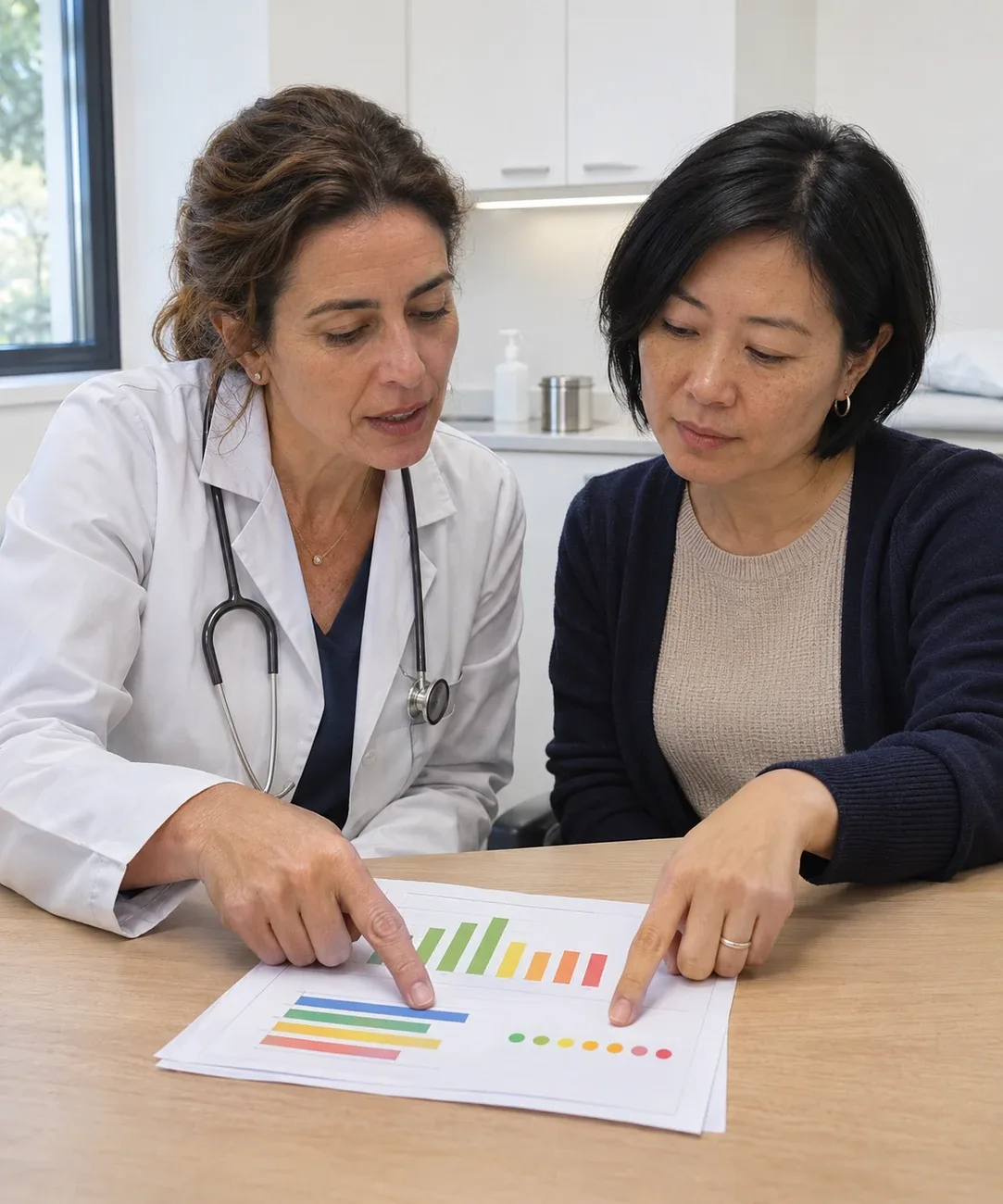
Female doctor in a white coat pointing at a bar chart on a sheet, beside a dark-haired patient
Photograph of a consultation. The dots mark what the doctor assesses; the image does not show the intimate area.

Why it happens

What may lie behind poor lubrication

Lubrication does not depend on oestrogen alone. It needs blood circulation, healthy tissues, time and a context in which the body feels safe. Choose a situation to see how it applies.

Hormones

The fall in oestrogen, in perimenopause and menopause, but also after birth, during breastfeeding or with some hormonal contraceptives, leaves the vaginal mucosa thinner and lubrication scarcer. Removal of the ovaries, with or without the uterus, or certain cancer treatments have a similar effect.

What weighs on it

Attributing everything to age, or thinking that, without the menopause, hormones cannot be the cause.

What helps

Telling the doctor your stage of life, contraception and history. When there is atrophy, prescribed low-dose vaginal oestrogen may be part of the plan.

Normal or to be assessed

Normal variation or cause to assess

Lubrication varies with the day, the phase of the cycle, tiredness and the situation, and that is normal. What deserves attention is what is persistent, new, painful or bothersome.

  • How it shows. Lubrication changes with the cycle, with tiredness, with the stress of a difficult week or with the pace of stimulation, and improves when more time is given.

  • When it happens. In occasional situations, without pain, without bleeding and without the woman feeling bothered.

  • What the clinic does. The doctor listens, reassures you if that is the case and explains what can be adjusted (time, stimulation, lubricant) without unnecessary treatment.

  • At home. More time for preparation, a water-based lubricant and communication with your partner, while you wait for the consultation.

Do you have bleeding after sex or after the menopause, abnormal discharge, intense or sudden pain, fever or a lesion on the vulva that is changing? Seek assessment without waiting. Out of hours you can call SNS 24: 808 24 24 24, and 112 only if there is a serious situation, such as heavy bleeding or sudden, unbearable pain.

Book an assessment consultation

What can help

Options for poor lubrication

The first line is to understand the cause and act on it: giving time to stimulation and preparation, using a suitable lubricant (which relieves discomfort during sex) and, if there is persistent vaginal dryness, a vaginal moisturiser. When there is menopause or vaginal atrophy, low-dose vaginal oestrogen, prescribed and monitored by a doctor, is an option, and, when the cause is a medication, it is worth talking to whoever prescribes it. If anxiety, mood or the relationship is a factor, sex therapy or psychotherapy and pelvic floor physiotherapy have their place. When these routes have been tried and the problem persists, the clinic may consider the option below, assessed case by case and without promising results.

Book an assessment consultation
Dr Michelle Campagnoli, clinical director of Clínica Luxmed

First step

Assessment consultation

The doctor listens to what you are experiencing, examines your case and explains the suitable options. No treatment begins without this consultation.

May be considered when

you want to understand the cause and decide on the best path, with time and without commitment.

Book an assessment consultation
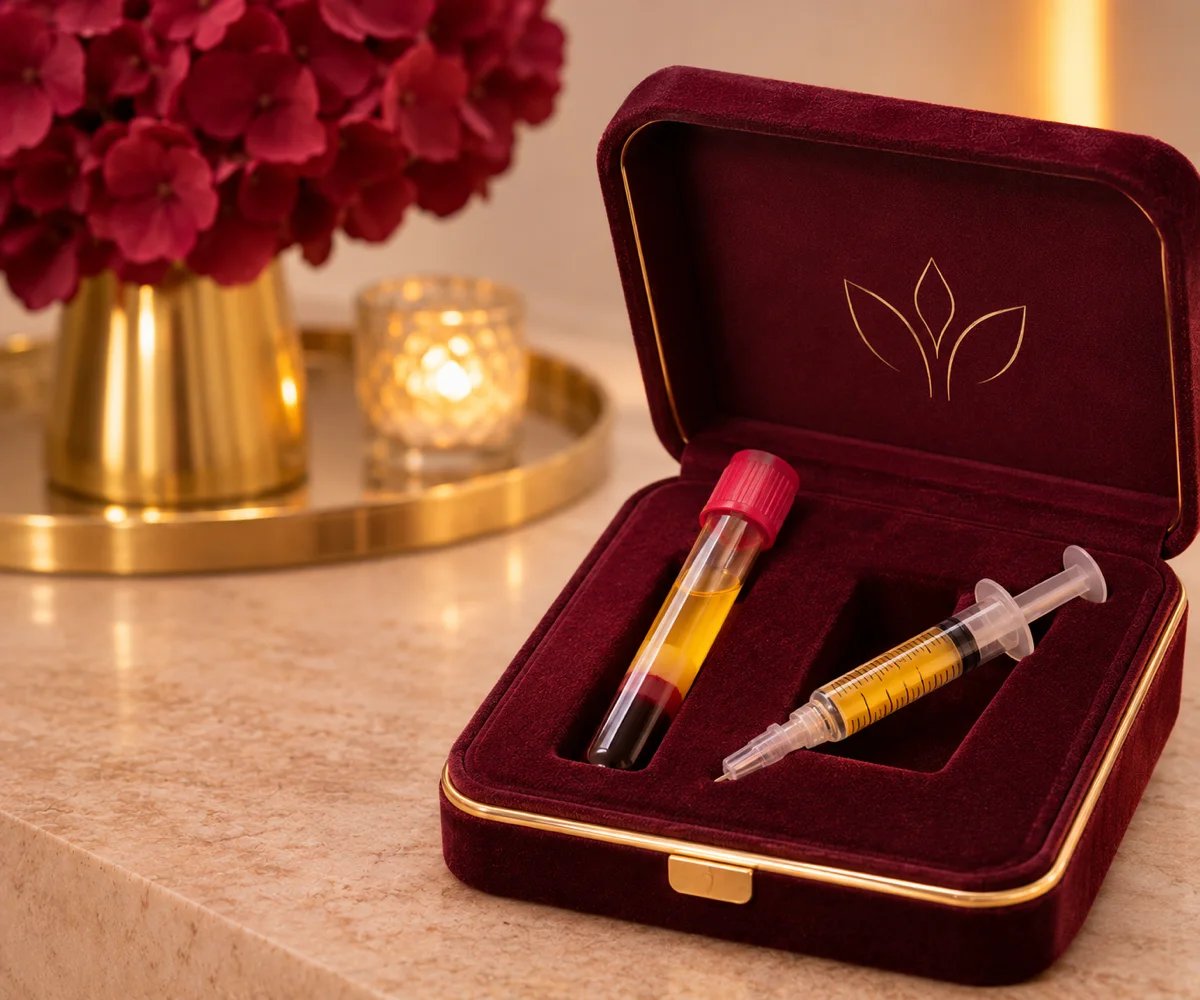
Plasma tube and syringe in a burgundy velvet case on a countertop

Hydration and regeneration

O-SHOT (Orgasm Shot)

Platelet-rich plasma (PRP), obtained from your own blood, injected into the anterior wall of the vagina with the aim of improving sexual response and lubrication. The evidence is still preliminary: the studies are few, small and with different protocols, and it does not replace treatment of the cause.

May be considered when

the possible causes have been assessed, first-line options have been done or considered, the doctor has explained what is known and what is not, and the decision is yours.

Find out more

What the journey looks like

From the first consultation to the plan tailored to you

No treatment starts without an assessment consultation with the doctor. We almost always start with what is simplest and only then consider more.

  1. 01At the clinic

    Assessment consultation

    The doctor listens to when, how and in which situations lubrication fails, and asks about desire, arousal, pain, medications, the cycle, births and stage of life, without rushing and in private. She may suggest a simple questionnaire on sexual function.

  2. 02At the clinic

    Examination and local causes

    A gynaecological examination is carried out, the vulva and mucosa are observed, signs of atrophy, irritation, infection or skin lesions are looked for, the pelvic floor is assessed and blood tests or other tests are requested only when needed.

  3. 03At home and with other professionals

    First measures

    Giving time to preparation and stimulation, using a suitable lubricant, treating the cause (reviewing medications with whoever prescribes them, vaginal oestrogen when indicated) and considering sex therapy or pelvic floor physiotherapy when it makes sense.

  4. 04Over time

    Reassessing and deciding

    What has changed is assessed again. If there is still difficulty, the doctor explains the additional options, among them PRP, with the evidence and the limits, and refers you to other specialties when needed.

Day to day

What helps while you wait for the consultation

Simple care that supports comfort and the response of the body, alongside the plan the doctor recommends.

It is not your fault

Arousal and lubrication do not always go together

In many women, the feeling of arousal and the response of the body do not coincide: there may be desire and little lubrication, or lubrication without feeling aroused. That is why lubrication is not a “proof” of desire, nor does its absence mean there is no interest. Understanding this takes away pressure and makes it possible to treat what is really failing.

Giving time to stimulation and preparation

The body’s response needs time and suitable stimulation, and many women only feel desire after they start.

In practice: prolong the caresses before penetration and say what you like. If penetration is too early, stop and go back.

Using a water-based lubricant

It eases friction and pain during sex, and is what the NHS gives as the first self-care measure.

In practice: apply it at the entrance of the vagina and to your partner or to the toy, and reapply if needed. If condoms are used, check the packaging for compatibility.

Trying a vaginal moisturiser, if there is underlying dryness

A moisturiser (different from a lubricant) is used regularly, outside of sex, for persistent dryness.

In practice: ask the pharmacist or the doctor for an unscented product suitable for the intimate area.

Talking to your partner and, if needed, to a professional

Talking about what you feel reduces pressure and avoids sex that hurts.

In practice: agree pauses and rhythms, and, if the subject is hard, consider sex therapy or pelvic floor physiotherapy.

Dr Michelle Campagnoli, clinical director of Clínica Luxmed

Who will look after you

An assessment carried out by the doctor

At Luxmed, the first step is always an assessment consultation with Dr Michelle Campagnoli. She is the one who listens to what is going on, assesses the vulva and the mucosa, looks for the possible causes and designs the plan with you, in private and without rushing, working with sex therapy, pelvic floor physiotherapy or other specialties when needed.

  • Physical examination and medical historyA conversation about lubrication, desire, pain and medications, gynaecological examination and further tests when necessary.
  • A plan tailored to youFirst treating the cause and providing comfort (lubricants, moisturisers, vaginal oestrogen when indicated); additional options only if appropriate, with the evidence explained.
  • No obligationThe cost of any treatment is confirmed only after the assessment.
Book an assessment consultation

Book a consultation

Book your consultation

Choose how you prefer to get in touch. We will arrange the assessment consultation with Dr Michelle Campagnoli.

Booking through the website100€70€Assessment consultationExclusive price for those who book the assessment through the website. Outside the website, the price is 100 €.

New Life Miraflores, Algés · Office Center, R. Santa Teresa do Menino Jesus n.º 6, 9.º C, 1495-048

Your details are used only for this contact. Any treatment depends on a prior medical assessment.

Request an appointmentIt takes less than a minute.
Speciality
You do not need to go into detail. The doctor will talk to you during the consultation.
Request received. Our team will contact you as soon as possible.
Why am I not lubricated even when I am aroused?

Because arousal and lubrication are not the same thing. Arousal is what you feel; lubrication is a response of the body that depends on hormones, circulation, medications, time and stimulation, and context. In a review of 132 studies, the average agreement between the arousal reported by women and the measured genital response was low (0.26, compared with 0.66 in men). So it is possible to desire, be aroused and lubricate little. The assessment looks for what is contributing in your case.

Is it normal to lubricate less with age?

It is frequent, but it is not inevitable nor does it have to be accepted. With the fall in oestrogen the mucosa becomes thinner and lubrication decreases, so it happens more after the menopause, but also after birth, during breastfeeding, with certain contraceptives or treatments. There is something that can be done, starting with lubricants, moisturisers and, when indicated, vaginal oestrogen.

Are poor lubrication and vaginal dryness the same thing?

They are linked, but not the same. Vaginal dryness is an underlying discomfort, present even outside of sex, often due to hormonal changes in the mucosa. Poor lubrication during arousal is the response that fails during sexual stimulation, and it can exist without underlying dryness, for example because of medications, stress or lack of time. They can coexist, and the assessment tells them apart.

Which medications or illnesses can reduce lubrication?

Some hormonal contraceptives and antidepressants can reduce it, as can the menopause, breastfeeding, removal of the ovaries, cancer treatments, diabetes and autoimmune diseases such as Sjögren’s syndrome. Do not stop a medication on your own: talk to whoever prescribes it, who can adjust the dose or propose an alternative.

What is the best lubricant?

In general, water-based ones, without perfume or irritating substances, are the first choice. Products differ in acidity (pH) and in the concentration of particles (osmolality), and some do not meet the recommended values and can be irritating, so it is worth reading the label and asking the pharmacist or the doctor. If you use a condom, check compatibility on the packaging, because certain oil-based products are not compatible with latex.

Does vaginal oestrogen help?

When the cause is menopausal atrophy, it can help: in a Cochrane review of 30 trials, low-dose vaginal oestrogen relieved the symptoms of vaginal atrophy. It is prescribed and monitored by a doctor. If you have or have had breast cancer, speak to your oncologist first. If the cause is something else (for example, a medication or anxiety), oestrogen may not solve it.

Do sex therapy or physiotherapy help?

They can help, especially when anxiety, diverted attention (“will it hurt?”), pelvic floor tension or the context of the relationship play a part. There is evidence that pelvic floor physiotherapy has a clinical effect on female sexual dysfunction, and that mindfulness programmes can help with difficulty in arousal, although research is still scarce. The doctor can propose this path or refer you.

Does PRP (O-SHOT) solve a lack of lubrication?

There is not enough evidence. A small 2026 trial of 52 premenopausal women with a single injection showed greater improvement in overall sexual function than sham treatment, but the improvement in lubrication was not statistically different from that of the control. A systematic review of 18 studies, almost all small and uncontrolled, reports possible benefit, with few mild adverse effects, but concludes that it does not allow definitive conclusions. That is why PRP is not a first line, and the doctor explains what is known and what is not.

Do vaginal lasers and radiofrequency work for lubrication?

We do not propose them for this problem. In 2018, the FDA (United States) warned that it has not approved vaginal energy devices for menopausal symptoms, urinary incontinence or sexual function, and that they can cause burns, scarring, pain during sex and chronic pain. The evidence for sexual function is limited.

When should I book a consultation?

Book a consultation if poor lubrication has lasted for weeks and lubricant does not solve it, if there is pain during sex, if it affects your life or the relationship, or if it started after a new medication, a birth or the menopause. If you have bleeding after sex, between periods or after the menopause, abnormal discharge, intense or sudden pain, fever or a lesion on the vulva that changes, seek assessment without waiting, and out of hours you can call SNS 24 (808 24 24 24). Call 112 only in a serious situation, such as heavy bleeding or sudden, unbearable pain.

We could not find that question. Ask us on WhatsApp

Scientific references

This page is based on the sources below and was reviewed by Dr. Michelle Campagnoli. Last updated on .

  1. Basson R. Women's sexual dysfunction: revised and expanded definitions. CMAJ 172(10):1327-1333, 2005.
  2. Basson R, Brotto LA, Laan E, Redmond G, Utian WH. Assessment and management of women's sexual dysfunctions: problematic desire and arousal. Journal of Sexual Medicine 2(3):291-300, 2005.
  3. Chivers ML, Seto MC, Lalumière ML, Laan E, Grimbos T. Agreement of self-reported and genital measures of sexual arousal in men and women: a meta-analysis. Archives of Sexual Behavior 39(1):5-56, 2010.
  4. Basson R, Gilks T. Women's sexual dysfunction associated with psychiatric disorders and their treatment. Women's Health (London) 14:1745506518762664, 2018.
  5. NHS. Vaginal dryness. (NHS (nhs.uk), acedido 2026-11-11)
  6. Edwards D, Panay N. Treating vulvovaginal atrophy/genitourinary syndrome of menopause: how important is vaginal lubricant and moisturizer composition?. Climacteric 19(2):151-161, 2016.
  7. Kennedy CE, Yeh PT, Li J, Gonsalves L, Narasimhan M. Lubricants for the promotion of sexual health and well-being: a systematic review. Sexual and Reproductive Health Matters 29(1):2044198, 2021.
  8. Cunha AR, Machado RM, Palmeira-de-Oliveira A, et al. Characterization of commercially available vaginal lubricants: a safety perspective. Pharmaceutics 6(3):530-542, 2014.
  9. Lethaby A, Ayeleke RO, Roberts H. Local oestrogen for vaginal atrophy in postmenopausal women. Cochrane Database of Systematic Reviews 2016(8):CD001500, 2016.
  10. The NAMS 2020 GSM Position Statement Editorial Panel. The 2020 genitourinary syndrome of menopause position statement of The North American Menopause Society. Menopause 27(9):976-992, 2020.
  11. Faubion SS, Larkin LC, Stuenkel CA, et al. Management of genitourinary syndrome of menopause in women with or at high risk for breast cancer: consensus recommendations from The North American Menopause Society and The International Society for the Study of Women's Sexual Health. Menopause 25(6):596-608, 2018.
  12. Berghmans B. Physiotherapy for pelvic pain and female sexual dysfunction: an untapped resource. International Urogynecology Journal 29(5):631-638, 2018.
  13. Ciaurriz Larraz AM, Villena Moya A, Chiclana Actis C. Mindfulness-based intervention and sexuality: a systematic review. Trends in Psychiatry and Psychotherapy 46:e20210459, 2024.
  14. Clarke B, Gaddam N, Garcia B, Iglesia CB, Podolsky R, Dieter AA. Vaginal injection of platelet-rich plasma for sexual function: a randomized controlled trial. Obstetrics & Gynecology, 2026.
  15. De Ponte A, Cabrera S, Sparice SSB, Baulies S, Rodríguez I. Platelet-rich plasma in the management of vulvovaginal disorders: a systematic review. Journal of Sexual Medicine, 2026.
  16. Medsafe (Nova Zelândia), a retransmitir o alerta da U.S. FDA. Safety Information: energy-based devices used for vaginal 'rejuvenation' or vaginal cosmetic procedures (relays the USFDA safety communication of July 2018). Medsafe, New Zealand Medicines and Medical Devices Safety Authority, 2018.
CallAssistantAvailableBook