

Algés, Oeiras Mon to Fri · 09:00 to 13:00 and 14:00 to 19:00 · Sat · 09:00 to 14:00
WhatsApp Book a consultation

Aesthetic gynaecology

Little response to stimulationWhen desire and arousal no longer respond as before to affection, touch or time together

“Little response to stimulation” is how many women describe the feeling that something no longer “switches on”: the wish for intimacy hardly arises, or the body and mind are slow to follow even when there is affection, time and trust. In medicine, this falls mainly within the area of desire and arousal, and almost never has a single cause: hormones, tiredness, mood, medications, pain, the relationship and the stage of life all play a part. Here we explain how desire works, what usually lies behind it, what is assessed and what helps, starting with what has the most evidence (sex therapy, treating pain and dryness, reviewing medications), and what the clinic can offer, with honesty about what the evidence shows.

Reviewed by Dr Michelle Campagnoli, clinical director

  • 10%of adult women are estimated to have low sexual desire with associated distress, according to an expert consensus
  • 1assessment consultation, always first
  • 70 €assessment booked through the website
Woman with braids and a black dress, eyes closed and hand on her chest, listening to a jazz quartet

How to recognise it

Could it be little response to stimulation?

It is not a diagnosis in itself: it is what a woman feels when desire and arousal do not arise or do not last as she expected. What counts is what has changed, since when and, above all, whether this bothers you.

Tick what you recognise0/7

Tick the signs you recognise in your case. This is not a diagnosis, it is only meant to give you an idea.

Do you have bleeding after sex or after the menopause, persistent or sudden pain during sex, abnormal discharge, fever, or has the loss of interest come with deep sadness, severe headaches or changes in vision? You need a prompt assessment and should not wait. If any sexual contact was forced or you are afraid of your partner, seek help without delay. Out of hours, call SNS 24: 808 24 24 24.

Female doctor in a white coat showing a tablet with a circle diagram to a patient in a light blue blouse
Photograph of a consultation. The dots mark what the doctor assesses; the image does not show the intimate area.

Why it happens

What may lie behind little response to stimulation

Desire and arousal depend at the same time on the body, the mind and the context, so there is rarely a single cause. Choose a situation to see how it applies.

How desire works

In many women desire does not arise “out of nowhere” before intimacy: it appears after affection and stimulation begin, if the context is good and there is openness. This is what is called responsive desire, and it is a normal way of functioning, especially in long relationships. Waiting to feel spontaneous desire, and concluding that something is wrong when it does not come, may just be an expectation that does not match your pattern.

What weighs on it

Waiting for spontaneous desire that has never been your pattern and drawing conclusions about yourself or the relationship.

What helps

Creating time and context without rushing, and seeing whether desire appears after starting. The doctor helps to distinguish a normal pattern from a drop that bothers you.

Normal or to be assessed

A stage of life or something to assess

Fluctuating is normal. What justifies assessment is a change that bothers you, that persists or that comes with other symptoms.

  • How it shows. Less desire in a phase of tiredness, stress, postpartum or great change, which improves when the situation improves.

  • When it happens. In periods of overload or change, with desire that reappears in contexts of calm, time and well-being.

  • What the clinic does. The doctor listens, confirms that there is no other cause and guides what helps, even if it is just a conversation and habits.

  • At home. Sleeping, resting, creating time as a couple without pressure and talking about what you feel, while you wait for the consultation.

Do you have thoughts of harming yourself, or is someone hurting you or forcing you to have sex? Call 112 if there is immediate risk. If you have bleeding, persistent pain, abnormal discharge or any doubts, out of hours you can call SNS 24: 808 24 24 24.

Book an assessment consultation

What can help

Options for little response to stimulation

The first line is to understand the cause and treat it: sex therapy or psychotherapy (the usual treatment, with the firmest evidence for mindfulness programmes), treating dryness and pain, adjusting medications and sleep habits and, in the menopause, assessing hormone therapy. In selected cases of postmenopausal women with low desire and distress, there are also medications that a specialist may consider. The treatment below is an additional option, assessed case by case and without promising results, with limited evidence.

Book an assessment consultation
Dr Michelle Campagnoli, clinical director of Clínica Luxmed

First step

Assessment consultation

The doctor listens to what you are experiencing, examines your case and explains the suitable options. No treatment begins without this consultation.

May be considered when

you want to understand the cause and decide on the best path, with time and without commitment.

Book an assessment consultation
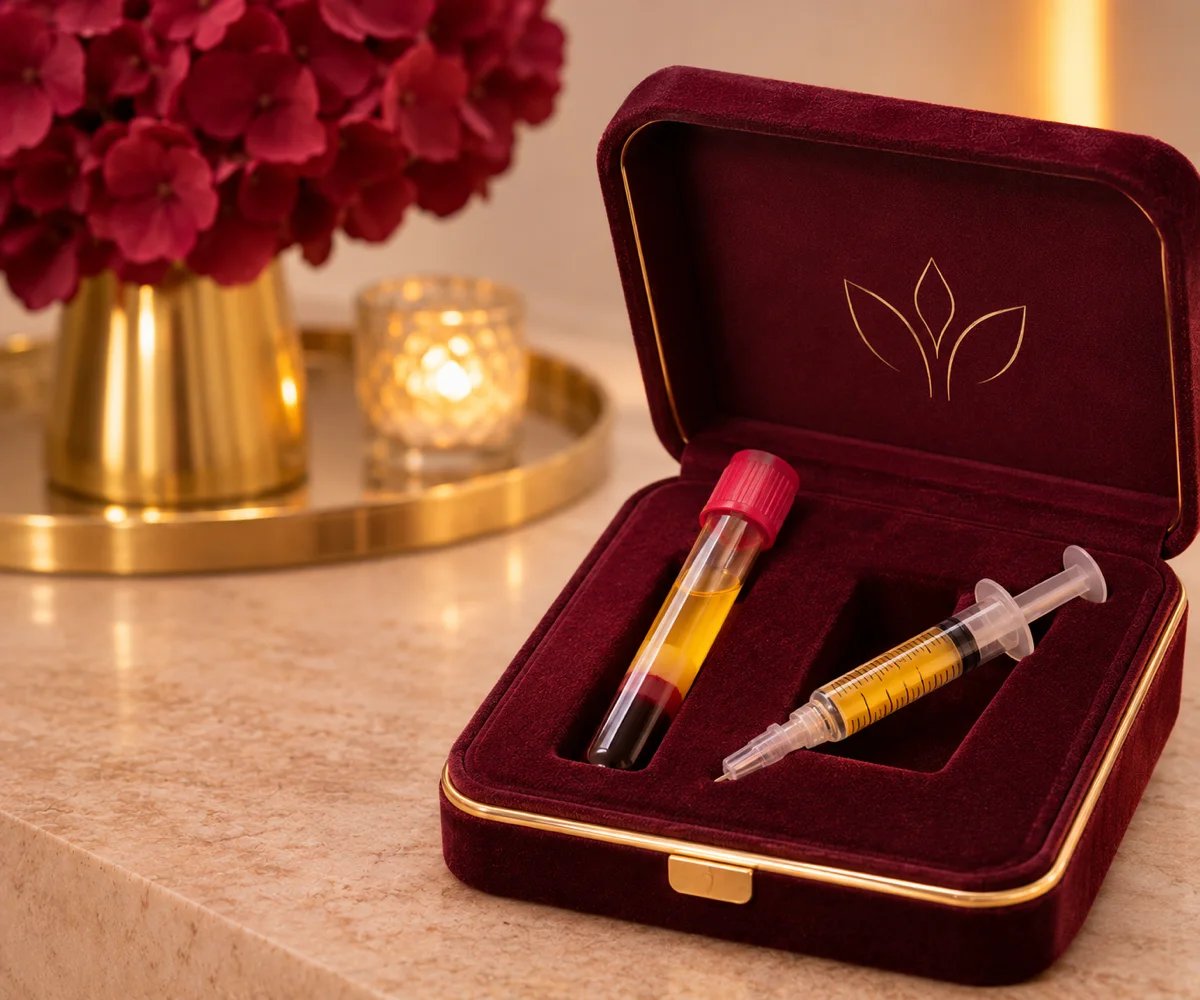
Plasma tube and syringe in a burgundy velvet case on a countertop

Procedure

O-SHOT (Orgasm Shot)

Platelet-rich plasma (PRP) injection, obtained from your own blood, in the intimate area, intended to improve sensitivity and sexual response. Reviews point to low-quality evidence and the studies are few and small. It does not treat the causes of low desire (mood, medications, relationship, pain) and does not replace the first line.

May be considered when

the medical and psychological causes have been assessed and first-line options have been done, the complaint is mainly one of little physical response, there is no contraindication, the doctor has explained what is known and what is not, and the decision is yours.

Find out more

What the journey looks like

From the first consultation to the plan tailored to you

No treatment starts without an assessment consultation with the doctor. We almost always start with what is simplest, and only then consider more.

  1. 01At the clinic

    Assessment consultation

    The doctor listens to what has changed, since when and what bothers you, asks about the menopause, births, medications, sleep and mood, and lets you speak in private and without rushing. She may suggest a simple questionnaire on desire and arousal.

  2. 02At the clinic

    Examination and blood tests

    When it makes sense, a gynaecological examination is carried out to look for dryness, pain or other causes, and blood tests may be requested, for example for the thyroid. The medications you take are reviewed, and any change is agreed with whoever prescribed them.

  3. 03At home and with specialists

    Treating what weighs most

    Dryness and pain are treated, if present, sleep and stress factors are adjusted and, when it makes sense, you are referred to sex therapy, psychology or pelvic floor physiotherapy, alone or as a couple.

  4. 04Over time

    Reassessing and deciding

    The questionnaire is repeated to measure progress. If it is not enough, the doctor explains the other routes, including the clinic’s additional options, with the evidence, or refers you to a specialist in sexual medicine or endocrine gynaecology.

Day to day

What helps while you wait for the consultation

Simple care that gives space to desire and arousal, alongside the plan the doctor recommends.

It is not your fault

Desire changes over a lifetime

It is common, it is not your fault nor a sign that you care less about someone, and the earlier it is assessed the more options there are. Many women stay silent out of embarrassment or because they think “that is just how it is”. Even after years, understanding the cause and adjusting what contributes can make a difference.

Protecting sleep

Sleeping little steals space from desire, and sleeping more was associated with more desire the next day.

In practice: regular schedules, fewer screens at night and a dark, calm bedroom.

Creating time and context, without rushing

For many women desire appears after affection begins, not before.

In practice: set aside time without pressure to be together, with affection and touch without the aim of “getting somewhere”, and see what makes you feel good.

Talking about what you feel and what you like

Little conversation leaves doubts and expectations unclarified.

In practice: choose a calm moment, outside the bedroom, and say what has changed and what you would like, without blaming anyone.

Looking after physical comfort

Dryness or pain take away desire and make arousal harder.

In practice: a water-based lubricant or a vaginal moisturiser can help while you wait for the assessment.

Dr Michelle Campagnoli, clinical director of Clínica Luxmed

Who will look after you

An assessment carried out by the doctor

At Luxmed, the first step is always an assessment consultation with Dr Michelle Campagnoli. She is the one who listens to what has changed, looks for treatable causes, assesses the mucosa and the context, and designs the plan with you, in private and without rushing, working with sex therapy, psychology, pelvic physiotherapy or other specialties when needed.

  • Physical examination and medical historyA conversation about what has changed, a simple questionnaire, review of medications, gynaecological examination when it makes sense and blood tests if indicated.
  • A plan tailored to youFirst the cause and the first line; additional options only if appropriate, with the evidence explained.
  • No obligationThe cost of any treatment is confirmed only after the assessment.
Book an assessment consultation

Book a consultation

Book your consultation

Choose how you prefer to get in touch. We will arrange the assessment consultation with Dr Michelle Campagnoli.

Booking through the website100€70€Assessment consultationExclusive price for those who book the assessment through the website. Outside the website, the price is 100 €.

New Life Miraflores, Algés · Office Center, R. Santa Teresa do Menino Jesus n.º 6, 9.º C, 1495-048

Your details are used only for this contact. Any treatment depends on a prior medical assessment.

Request an appointmentIt takes less than a minute.
Speciality
You do not need to go into detail. The doctor will talk to you during the consultation.
Request received. Our team will contact you as soon as possible.
Why do I have little desire and little arousal?

There is rarely a single cause. The most common are tiredness and stress, mood (sadness, anxiety), hormonal changes (menopause, postpartum, breastfeeding, contraception), some medications, pain or dryness during sex, conditions such as thyroid disease or diabetes, and the relationship or context. In many women several act at the same time. Only a consultation, with history and, if needed, examination and blood tests, shows what is contributing in your case.

Is it normal for desire to decrease over a lifetime?

It is frequent for it to fluctuate, with age, the relationship, children, the menopause and phases of tiredness. But fluctuating is not the same as having a problem: what counts is whether this bothers you. A large survey in the United States showed that many women report sexual problems, but only some feel distress because of them, and it is that group that seeks assessment.

Are desire and arousal the same thing?

They are not, but they are linked. Desire is the wish or interest; arousal is the response of the mind and body to stimulation. In many women desire only appears after arousal begins, and not before, which is called responsive desire. That is why sexual interest and arousal are now discussed together, and desire is not expected to always come first.

Could it be the medications I take?

It could. Some antidepressants, certain blood pressure drugs and hormonal contraception can reduce desire and response. Do not stop any on your own: take the list to the consultation and discuss with whoever prescribed them whether there is an alternative or a dose adjustment, because stopping suddenly can be dangerous.

Do sex therapy or psychotherapy really help?

They are the usual treatment and among the options with the most evidence, especially mindfulness programmes. In a clinical trial of 148 women with reduced desire and arousal, both mindfulness-based group therapy and sex education and therapy improved desire, arousal and distress from baseline, with gains maintained at 12 months. The study had no untreated group, and the evidence for other forms of sex therapy is smaller. It can be done alone or as a couple.

What about hormones and testosterone?

If the cause is the menopause, treating dryness and pain and assessing hormone therapy can help. After the menopause, when low desire causes distress and hormone therapy is not enough, NICE allows testosterone to be considered, and a 2019 international consensus supports it for postmenopausal women with hypoactive desire, with near-physiological doses and follow-up. There are not enough data to recommend it before the menopause. It is an individual medical decision, with monitoring, and if you have or have had breast cancer speak to your oncologist first.

Does the O-SHOT (PRP) help with little response to stimulation?

The evidence is limited. A 2023 systematic review found promising early improvements, but concluded that the level of evidence is low because of shortcomings in the studies. A 2026 randomised pilot trial, with 52 premenopausal women without severe sexual dysfunction, showed a small improvement at the threshold of significance, and no significant differences in the desire and arousal domains. So it is an additional option, discussed case by case, that does not treat the causes of low desire and that never replaces assessment and the first line.

And vaginal lasers and radiofrequency for sexual function?

There is no solid evidence. The FDA warned in 2018 that it has not approved vaginal energy devices for sexual function, nor for incontinence or menopausal symptoms, and that they can cause burns, scarring and pain during sex. If anyone promises you they solve a lack of desire, be wary. The doctor explains what is known and what is not before any decision.

Does intimate PRP have risks?

Because it is done with your own blood, allergic reactions are unlikely, but there are the risks of any injection: discomfort and bruising at the site, and, rarely, infection. In the 2026 trial no serious effects were reported, but the studies are small and do not allow rare or long-term risks to be excluded. It is not performed with active infection, pregnancy, unexplained bleeding or clotting problems.

When should I book a consultation, and when should I not wait?

Book a consultation if the lack of desire or response bothers you, if it came with a new medication, after a birth, in the menopause or with dryness or pain, or if it affects the relationship. If you have bleeding after sex or after the menopause, persistent or sudden pain, abnormal discharge or fever, seek a prompt assessment; out of hours, call SNS 24 (808 24 24 24). If you have thoughts of harming yourself or there is immediate risk, call 112.

We could not find that question. Ask us on WhatsApp

Scientific references

This page is based on the sources below and was reviewed by Dr. Michelle Campagnoli. Last updated on .

  1. American College of Obstetricians and Gynecologists. Female Sexual Dysfunction: ACOG Practice Bulletin Clinical Management Guidelines for Obstetrician-Gynecologists, Number 213. Obstetrics & Gynecology 134(1):e1-e18, 2019.
  2. Shifren JL, Monz BU, Russo PA, Segreti A, Johannes CB. Sexual problems and distress in United States women: prevalence and correlates. Obstetrics & Gynecology 112(5):970-978, 2008.
  3. Goldstein I, Kim NN, Clayton AH, et al. Hypoactive Sexual Desire Disorder: International Society for the Study of Women's Sexual Health (ISSWSH) Expert Consensus Panel Review. Mayo Clinic Proceedings 92(1):114-128, 2017.
  4. Basson R. The female sexual response: a different model. Journal of Sex & Marital Therapy 26(1):51-65, 2000.
  5. Brotto LA, Zdaniuk B, Chivers ML, et al. A randomized trial comparing group mindfulness-based cognitive therapy with group supportive sex education and therapy for the treatment of female sexual interest/arousal disorder. Journal of Consulting and Clinical Psychology 89(7):626-639, 2021.
  6. Davis SR, Baber R, Panay N, et al. Global Consensus Position Statement on the Use of Testosterone Therapy for Women. Journal of Clinical Endocrinology & Metabolism 104(10):4660-4666, 2019.
  7. National Institute for Health and Care Excellence (NICE). Menopause: identifying and assessing, and managing (NG23). NICE guideline NG23, 2015.
  8. NHS. Low sex drive (loss of libido). (nhs.uk, acedido 2026-11-11)
  9. Kalmbach DA, Arnedt JT, Pillai V, Ciesla JA. The impact of sleep on female sexual response and behavior: a pilot study. Journal of Sexual Medicine 12(5):1221-1232, 2015.
  10. Dankova I, Pyrgidis N, Tishukov M, et al. Efficacy and Safety of Platelet-Rich Plasma Injections for the Treatment of Female Sexual Dysfunction and Stress Urinary Incontinence: A Systematic Review. Biomedicines 11(11):2919, 2023.
  11. Clarke B, Gaddam N, Garcia B, Iglesia CB, Podolsky R, Dieter AA. Vaginal Injection of Platelet-Rich Plasma for Sexual Function: A Randomized Controlled Trial. Obstetrics & Gynecology 147(5):627-635, 2026.
  12. The NAMS 2020 GSM Position Statement Editorial Panel. The 2020 genitourinary syndrome of menopause position statement of The North American Menopause Society. Menopause 27(9):976-992, 2020.
  13. Medsafe (Nova Zelândia), reproduzindo o alerta da FDA de 30 de julho de 2018. The USFDA Warns Against Use of Energy-Based Devices to Perform Vaginal 'Rejuvenation' or Vaginal Cosmetic Procedures: FDA Safety Communication. Medsafe, Safety Communications, 2018.
CallAssistantAvailableBook