Algés, Oeiras Mon to Fri · 09:00 to 13:00 and 14:00 to 19:00 · Sat · 09:00 to 14:00
WhatsApp Book a consultation

Facial aesthetics

Preventing ageing before 35When you wonder whether it is time to start preventing and want to know what has evidence and what does not

At 25 or 30, it is natural to notice the first lines, to look at your skin differently and to ask yourself whether you should start “preventing” already. On social media, the message is often that you need to act early, and this pressure can be more tiring than useful. The truth is calmer: what has the best evidence for slowing skin ageing is simple and is not done at a clinic, starting with sunscreen every day and not smoking, and there are also topical retinoids and good moisturising. Procedures, such as “preventive” botulinum toxin, have limited evidence in this role, and we say so clearly. Here we explain what really weighs, what each option can and cannot do, how to recognise when concern about appearance has stopped being ordinary, and when a medical assessment is advisable, at Clínica Luxmed, in Algés.

Reviewed by Dr Michelle Campagnoli, clinical director

  • 3options the clinic may consider
  • 1assessment, always first
  • Nocommitment
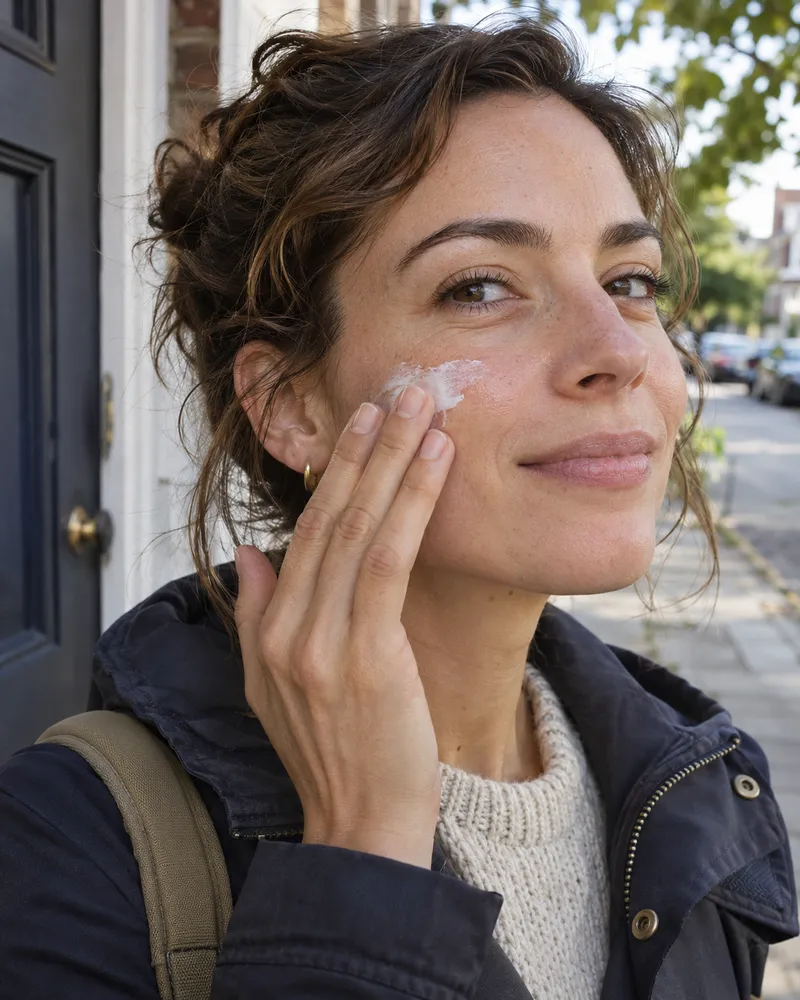
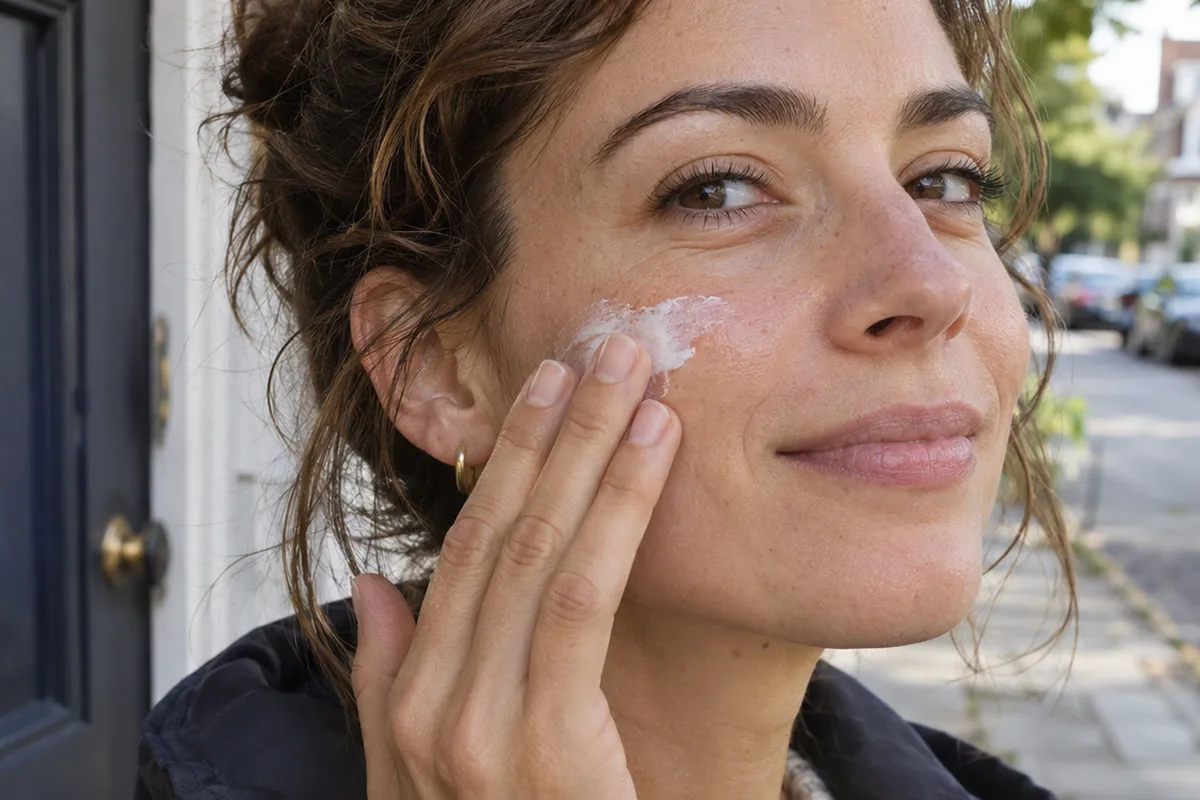
Woman applying sunscreen to her face at her front door before going out

How to recognise it

Is it a common concern about skin ageing?

Being 25 or 30 and noticing your skin is normal, and does not mean you need treatment. These signs help you see where you are before the assessment, without haste and without comparisons.

Tick what you recognise0/7

Tick the signs you recognise in your case. This is not a diagnosis, it is only meant to give you an idea.

Have you noticed a patch or lesion on the skin of the face that grows, changes colour or outline, bleeds or does not heal? You need a dermatological assessment before any treatment. Do you spend a lot of time thinking about a flaw in your appearance that others barely see, and does this affect your day, work or relationships? Speak to your family doctor: it may be a condition that can be treated, and there is no shame in it. If you have already had an injectable treatment and have severe pain, pale skin or skin with purplish patches, changes in vision, a severe headache or facial weakness, call 112 immediately and contact the clinic that injected it. Out of hours, call SNS 24: 808 24 24 24.

Doctor speaking to a seated patient in a consulting room, with an open notepad
Photograph of a consultation. The dots mark what the doctor is assessing.

Why it happens

What really weighs in skin ageing

Ageing is gradual and has several causes at the same time. Some you can influence, others you cannot. Choose a situation to see how it fits into the story and what usually helps.

The sun and photoageing

Ageing caused by the sun is cumulative: it depends mainly on the amount of exposure over a lifetime and on skin type, and is more marked in fair skin and in people who live outdoors. In a trial with 903 adults under 55, people who used sunscreen every day had 24% less skin ageing after 4.5 years than those who used it only when they chose to. What you do at 20 and at 30 counts for your skin at 50.

What weighs on it

Tanning without protection, using sunbeds and forgetting sunscreen on cloudy days, in the car or during hours of walking.

What helps

Broad-spectrum sunscreen with an SPF of 30 or higher every day, reapplied if you are in the sun for a long time, plus shade, a hat and sunglasses.

Normal or to be assessed

Ordinary concern or something to be assessed

Almost always, concern about ageing is normal. But some situations call for an assessment before any treatment, and one of them is when concern about image stops being proportionate.

  • How it looks. Fine or mild expression lines, slightly dry or dull skin, symmetrical, with no pain, no swelling, no lesions, and a concern that does not take up your day or hold back your social life.

  • A clue, not a diagnosis. If the concern arises from time to time, passes when you think about other things and is resolved with information, it is likely to be ordinary. Asking yourself whether you should start “preventing” already is very common.

  • What the clinic does. The doctor listens, examines the skin, says what has evidence and what does not, and only proposes a procedure if it makes sense, without promising results. She may conclude that you do not need any.

  • At home. Sunscreen every day, not smoking, moisturising, a short routine and a realistic view of what the skin can change.

Do you have severe pain, pale skin or skin with purplish patches, a change in vision or a severe headache after an injection in the face, or thoughts of harming yourself? Call 112. If you have a patch that is changing, a concern about your image that takes up your day, or doubts, speak to your family doctor or, out of hours, call SNS 24: 808 24 24 24.

Book an assessment

What the clinic may consider

What the clinic can consider, and what the evidence says

Before any procedure come the measures with the best evidence: sunscreen every day, not smoking, moisturising and, if it makes sense, a topical retinoid. Studies on retinoids, such as tretinoin, show improvement in wrinkles and patches, but were carried out mainly on skin that already had sun damage, and not in 25-year-olds to “prevent”. For this topic, the clinic associates three options: skinbooster, chemical peel and botulinum toxin. None of them has solid evidence that, used early, it prevents wrinkles from appearing: they are procedures that improve the quality of the skin or soften lines that already exist. Skinbooster is intended mainly for hydration and skin quality. A chemical peel renews the surface layers and evens out tone and texture, and reviews show that it improves skin with sun damage, but do not prove that it prevents ageing. Botulinum toxin, when used to “prevent”, has limited evidence, and is the one that calls for the most honest conversation. Results vary, are not permanent and are generally temporary.

Book an assessment
Dr Michelle Campagnoli, clinical director of Clínica Luxmed

First step

Assessment consultation

The doctor listens to what you are experiencing, examines your case and explains the suitable options. No treatment begins without this consultation.

May be considered when

you want to understand the cause and decide on the best path, with time and without commitment.

Book an assessment
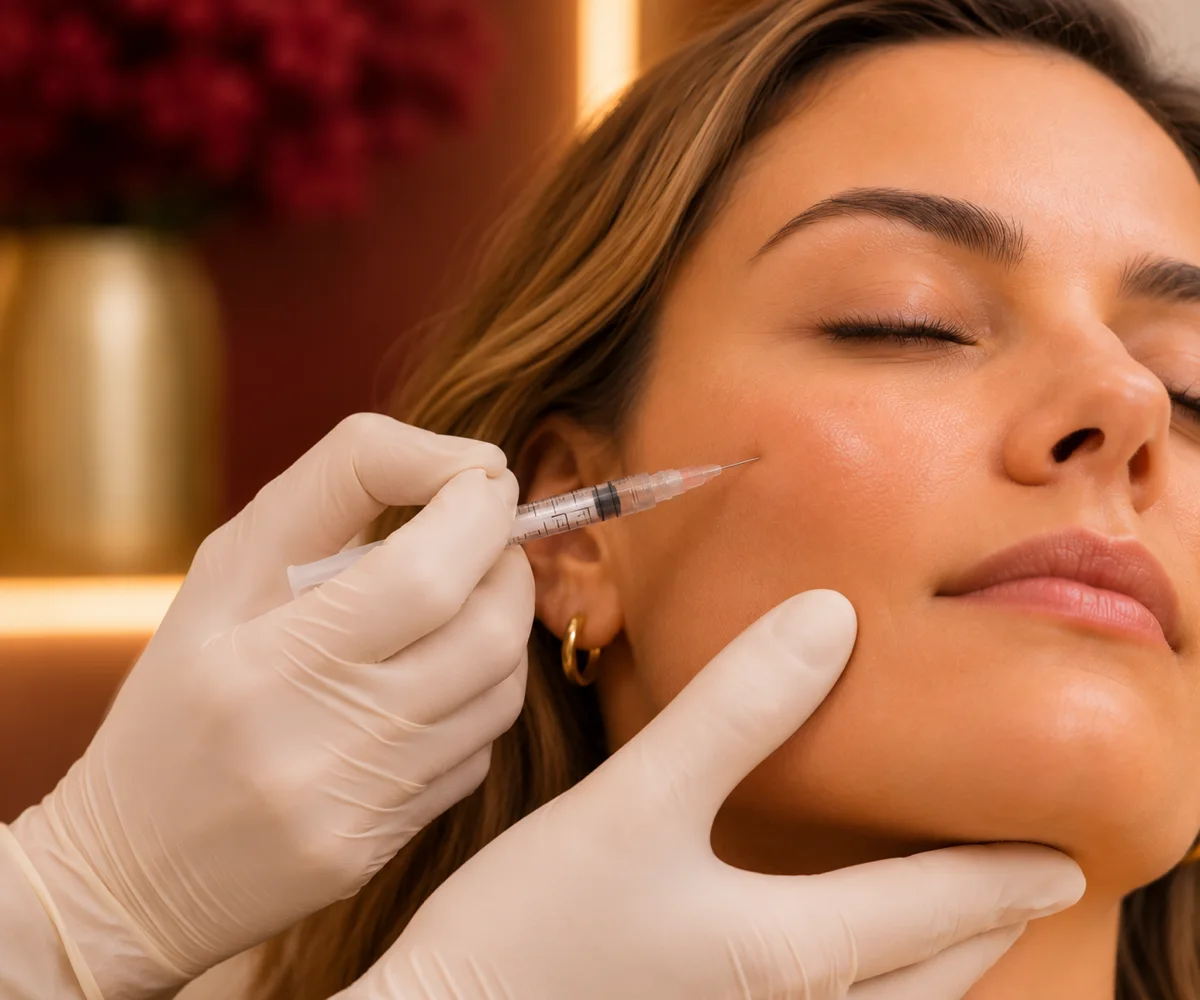
Superficial hydrating micro-injections in the skin of the face, carried out by the doctor in a facial aesthetics consultation

Skin hydration

Skinbooster

Superficial micro-injections of hyaluronic acid, in small amounts, to hydrate the skin in depth and improve elasticity, smoothness and radiance. A review of 13 studies describes improvements in hydration, firmness, texture and radiance, with good safety, but calls for larger studies. It describes improvement in skin quality and does not prove that it prevents ageing; it does not relax the muscle or fill creases. Bruising, swelling, small nodules and, very rarely, vascular complications are possible.

May be considered when

the skin is dry or dull, the simple measures (sunscreen, moisturising, habits) have already been taken, and the doctor has explained that the effect is gradual, variable and temporary and that it is not proven “prevention”.

Find out more
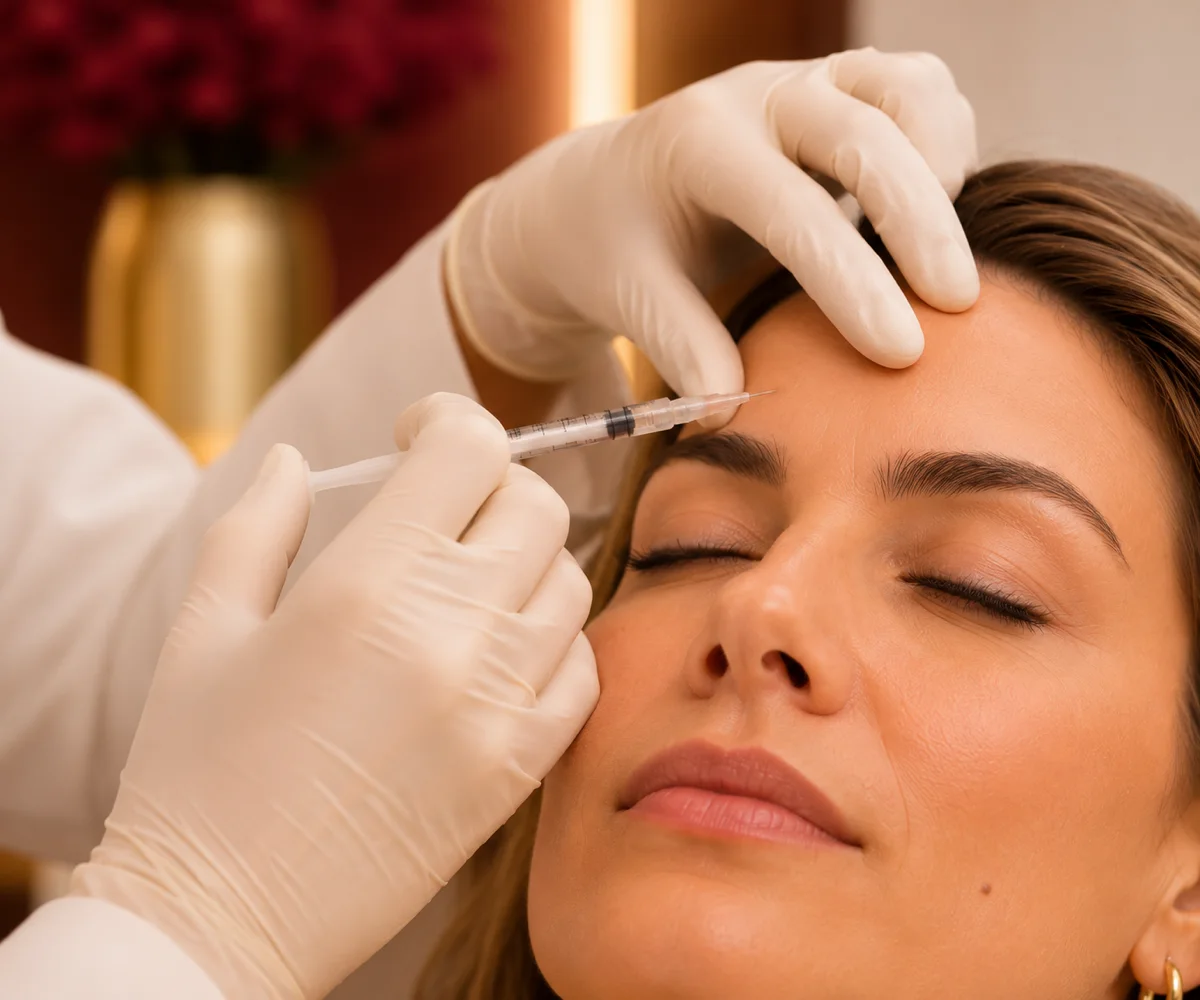
The doctor’s gloved hands injecting botulinum toxin into the forehead with a fine syringe

Expression lines

Botulinum toxin

An injection in small doses that temporarily relaxes the muscle and softens expression lines on the forehead, between the eyebrows and around the eyes. It is well demonstrated for treating lines that already exist: a meta-analysis of 14 trials (8369 people) describes good efficacy, with the effect wearing off after about 6 months. As “prevention”, the evidence is limited: a 2025 review states that it may delay lines, but the data are heterogeneous and long-term safety and efficacy are not well established, and a 2023 review points to the scarcity of good-quality research in young adults. A drooping eyelid or eyebrow is a known effect. It is not carried out in pregnancy or breastfeeding.

May be considered when

there are expression lines that already bother you, the doctor has assessed the balance of the face and the risk of adverse effects, and you understand that the evidence for “preventing” is limited and that the effect is temporary and has to be repeated.

Find out more

What the journey looks like

From the first conversation to a plan tailored to you

No procedure begins without an assessment consultation with the doctor. You do not have to decide anything on the day, and you can leave the consultation with no procedure booked.

  1. 01At the clinic

    Telling your story

    The doctor asks what led you to seek the consultation, what bothers you most and what you expect, what care you already carry out, whether you smoke, the sun you are exposed to, whether you are pregnant or breastfeeding and which medicines you take. She also listens for whether concern about your image takes up a lot of your time.

  2. 02At the clinic

    Examine the skin and the face

    The skin is looked at at rest and in movement, as are the skin type, sun damage and whether there are lesions to be clarified. If there is a suspicious patch, referral to dermatology comes before anything else. If concern about image seems disproportionate, the doctor proposes speaking to your family doctor or to mental health services before any procedure.

  3. 03At home

    Do the essentials first

    Sunscreen every day, not smoking, moisturising and a short routine; if it makes sense, a retinoid, introduced slowly. It is the foundation with the best evidence, and many people find that it is what they needed.

  4. 04Over time

    Decide slowly and follow up

    If there is still something that bothers you, the doctor explains what can be considered, what can be expected, the risks and what the evidence does not prove, without promising results or creating pressure. The examination is repeated and the plan adjusted, including the option of doing nothing.

Day to day

What helps at home

What you do at home counts for more than it seems. These are the measures with the best evidence, which make sense at 25, at 30 and afterwards.

The golden rule

Do the simple things well, every day

The measures with the best evidence for slowing skin ageing are the simplest: sunscreen every day, not smoking, hydrated skin and, if it makes sense, a retinoid. Doing them consistently is worth more than any “preventive” procedure, and it costs nothing to start today.

Using sunscreen every day

The sun is the most avoidable cause of ageing, and the skin keeps what it has accumulated.

In practice: broad-spectrum sunscreen, SPF 30 or higher, in sufficient quantity on the face, neck and hands, reapplied if you are in the sun for a long time; plus shade, a hat and sunglasses.

Do not smoke

Smoking is associated with more damage to the elastic tissue of the skin, alongside sun and age.

In practice: if you smoke, ask your family doctor or a smoking cessation programme for help; it is one of the best measures for the skin and for health.

Moisturise and keep a short routine

Hydrated skin, with an intact barrier, looks better and tolerates other care better.

In practice: gentle cleansing, a suitable moisturiser and sunscreen in the morning; add one product at a time and give it weeks before assessing.

Consider a retinoid, with guidance

It is the class of topical products with the best evidence of improvement in wrinkles and patches, in skin with sun damage.

In practice: speak to the doctor; you start slowly, at night, with sunscreen by day; it is avoided in pregnancy and when planning a pregnancy, and can irritate.

Dr Michelle Campagnoli, clinical director of Clínica Luxmed

Who will look after you

An assessment carried out by the doctor

At Luxmed, in Algés, the first step is always an assessment with Dr Michelle Campagnoli. She examines the skin, listens to what worries you, says frankly what has evidence and what does not, and works with you to decide what makes sense before any procedure. She may conclude that you do not need any.

  • Physical examination and medical historyA conversation about habits, your skincare routine and expectations, and an examination of the face at rest and in movement.
  • A plan tailored to youA clear plan, with no promises and no pressure, with the essentials first and follow-up over time.
  • No obligationThe cost of any treatment is confirmed only after the assessment.
Book an assessment

Book a consultation

Book your consultation

Choose how you prefer to get in touch. We will arrange the assessment consultation with Dr Michelle Campagnoli.

Booking through the websiteAssessment consultationTalk to our assistant on WhatsApp and ask for the current price of the assessment.

New Life Miraflores, Algés · Office Center, R. Santa Teresa do Menino Jesus n.º 6, 9.º C, 1495-048

Your details are used only for this contact. Any treatment depends on a prior medical assessment.

Request an appointmentIt takes less than a minute.
Speciality
You do not need to go into detail. The doctor will talk to you during the consultation.
Request received. Our team will contact you as soon as possible.
At what age should I start preventing skin ageing?

There is no proven age to “start”. What has the best evidence does not depend on an age: sunscreen every day and not smoking are worthwhile at any age, and the earlier they are done, the less damage accumulates. Ageing caused by the sun is cumulative and depends mainly on exposure over a lifetime. Retinoids and procedures are decided with the doctor, case by case, and only if something bothers you. At 25 or 30, for most people, the essentials fit into a short routine and do not require any procedure.

What skincare routine makes sense at 25 or 30?

A short, steady routine: gentle cleansing, a moisturiser suited to your skin type and broad-spectrum sunscreen, SPF 30 or higher, in the morning. If you want to add something, a retinoid is the topical product with the best evidence for wrinkles and patches, but studies were carried out mainly on skin that already had sun damage, and it can irritate, so it is introduced slowly and with guidance. Most other products have weaker evidence. More products does not mean better, and mixing several active ingredients can irritate the skin.

Is it normal to have fine lines at 25 or 30?

Yes. Expression lines, next to the eyes, on the forehead and between the eyebrows, begin to show in many people at this age and are part of the way the face moves. The age at which they appear varies widely, and genetics, sun, smoking and skin type count. Fine superficial lines soften, in large part, with moisturising. They are not a health problem, and the decision to treat them or not is yours, with no rush.

What ages the skin most before 35?

The sun, by a long way: ageing caused by ultraviolet radiation is cumulative and depends mainly on sun exposure and skin type. Smoking follows, which is associated with more damage to the elastic tissue of the skin. Sunbeds, very dry skin irritated by harsh cleansing, genetics and, to a lesser degree, sleep and stress also weigh. The good news is that sun and smoking are among the factors that can be changed the most.

Does “preventive” botulinum toxin work?

The evidence is limited. Botulinum toxin is well demonstrated for softening expression lines that already exist, but its “preventive” use in young people, without marked lines, has no solid evidence. A 2025 systematic review states that early use may reduce muscle overactivity and delay the formation of lines, but concludes that the data are heterogeneous and that long-term efficacy and safety are not well established. A 2023 review points to the scarcity of good-quality research in young adults. It may make sense to treat expression lines that already bother you, with low doses and after an assessment, but it is not necessary to start “as a precaution”, and nobody should feel behind for not doing so.

Do skinboosters or peels make sense at 30?

They can improve the quality of the skin you already have, but they are not proven “prevention”. A review of 13 studies on injectable hyaluronic acid describes improvements in skin hydration, firmness, texture and radiance, with good safety, and calls for larger studies. A 2026 review of 38 studies shows that chemical peels and lasers improve skin rejuvenation, with no difference between them in photoageing, but this is improvement of skin that already has damage, and does not prove that they prevent ageing. They make sense if there is a specific complaint, such as dry, dull or uneven-textured skin, once sunscreen, moisturising and habits are in order. Neither is carried out in pregnancy or while breastfeeding without medical advice.

Do retinoids work? When and how do you start?

Topical retinoids are the class with the best evidence for improving fine wrinkles, patches and texture. Reviews of randomised trials describe tretinoin improving the appearance of photoageing as early as the first month, and the effect being maintained with continued use. Studies were carried out mainly on skin with sun damage, and not to prevent in young skin, so the benefit in someone aged 25 is less certain. They can irritate, with burning and peeling, and retinol and retinaldehyde are usually less irritating than tretinoin. You start slowly, at night, with sunscreen by day, and they are not used in pregnancy or when planning a pregnancy. Speak to the doctor before starting.

Does starting botulinum toxin treatment early lead to dependence or leave a “plastic face”?

There is no solid evidence of dependence, but there are questions still open. The effect of toxin wears off after about 6 months, so those who want to maintain the result repeat it. A group of experts discussed that starting earlier and repeating for years may increase the risk of immune resistance, with loss of effect, and that this is a topic you should be informed about; it is expert opinion and not an established fact, and a small study of 50 people followed for an average of 15 years found no loss of effect. The fear of being “frozen” or looking unnatural is common in younger people, and the 2023 review recommends an individualised approach and lower doses in young adults who have never had toxin.

I spend a lot of time thinking about my face and looking for flaws: is that normal?

Worrying about your appearance is normal. When concern about a small flaw, or one that others barely see, takes up a lot of time, leads you to check the mirror often or avoid it, compare yourself with others, conceal the flaw or pick at your skin, and affects work, relationships or mood, it may be body dysmorphic disorder. It is estimated to be much more frequent in aesthetics and dermatology settings than in the population: a meta-analysis of 22 studies found about 20% in aesthetics and dermatology settings, against 11.3% overall, although with variable quality. It is generally treated with cognitive behavioural therapy and, at times, medication, and aesthetic procedures do not usually resolve it. Speak to your GP; if you have thoughts of harming yourself, call 112.

When should I see a doctor first?

Book a consultation before any treatment if you have a patch or lesion that grows, changes colour, shape or outline, bleeds, flakes or does not heal; if the skin is very irritated, with pain, swelling or fever; or if concern about your face takes up your day and limits your life. After an injectable treatment, severe pain, pale skin or skin with purplish patches, a change in vision, a severe headache or facial weakness are an emergency: call 112 and contact the clinic that injected you. If in doubt, out of hours call SNS 24 (808 24 24 24).

We could not find that question. Ask us on WhatsApp

Scientific references

This page is based on the sources below and was reviewed by Dr. Michelle Campagnoli. Last updated on .

  1. Hughes MCB, Williams GM, Baker P, Green AC. Sunscreen and prevention of skin aging: a randomized trial. Ann Intern Med, 2013.
  2. Kennedy C, Bastiaens MT, Bajdik CD, Willemze R, Westendorp RGJ, Bouwes Bavinck JN. Effect of smoking and sun on the aging skin. J Invest Dermatol, 2003.
  3. Fisher GJ, Kang S, Varani J, Bata-Csorgo Z, Wan Y, Datta S, Voorhees JJ. Mechanisms of photoaging and chronological skin aging. Arch Dermatol, 2002.
  4. Verdier-Sévrain S, Bonté F. Skin hydration: a review on its molecular mechanisms. J Cosmet Dermatol, 2007.
  5. Sitohang IBS, Makes WI, Sandora N, Suryanegara J. Topical tretinoin for treating photoaging: A systematic review of randomized controlled trials. Int J Womens Dermatol, 2022.
  6. Siddiqui Z, Zufall A, Nash M, Rao D, Hirani R, Russo M. Comparing Tretinoin to Other Topical Therapies in the Treatment of Skin Photoaging: A Systematic Review. Am J Clin Dermatol, 2024.
  7. Mukherjee S, Date A, Patravale V, Korting HC, Roeder A, Weindl G. Retinoids in the treatment of skin aging: an overview of clinical efficacy and safety. Clin Interv Aging, 2006.
  8. Ghatge AS, Ghatge SB. The Effectiveness of Injectable Hyaluronic Acid in the Improvement of the Facial Skin Quality: A Systematic Review. Clin Cosmet Investig Dermatol, 2023.
  9. Karanasios G, Wong ZY, Limbu S, Faderani R, Kanapathy M, Mosahebi A. Comparative Efficacy and Safety of Laser versus Chemical Skin Peeling in Skin Rejuvenation: A Systematic Review and Meta-Analysis. Plast Reconstr Surg, 2026.
  10. Rahman E, Mosahebi A, Carruthers JDA, Carruthers A. The Efficacy and Duration of Onabotulinum Toxin A in Improving Upper Facial Expression Lines With 64-Unit Dose Optimization: A Systematic Review and Meta-Analysis With Trial Sequential Analysis of the Randomized Controlled Trials. Aesthet Surg J, 2023.
  11. Michon A. Botulinum toxin for cosmetic treatments in young adults: An evidence-based review and survey on current practice among aesthetic practitioners. J Cosmet Dermatol, 2023.
  12. Marinelli G, Inchingolo AD, Trilli I, Pezzolla C, Sardano R, Inchingolo F, Palermo A. Proactive Aesthetic Strategies: Evaluating the Preventive Role of Botulinum Toxin in Facial Aging. Muscles, 2025.
  13. Ho WWS, Chan L, Corduff N, Lau WT, Martin MU, Tay CM, Wang S. Addressing the Real-World Challenges of Immunoresistance to Botulinum Neurotoxin A in Aesthetic Practice: Insights and Recommendations from a Panel Discussion in Hong Kong. Toxins (Basel), 2023.
  14. Trindade de Almeida AR, Martins da Costa Marques ER, Contin LA, Trindade de Almeida C, Miot HA. Long-Term Consecutive OnabotulinumtoxinA Injections for Facial Aesthetic Treatment: A Real-World Study. Dermatol Surg, 2025.
  15. McGrath LR, Oey L, McDonald S, Berle D, Wootton BM. Prevalence of body dysmorphic disorder: A systematic review and meta-analysis. Body Image, 2023.
  16. Saade N, Chedraoui C, Mitri MT, Salameh P, Said Y, El Khoury J. The prevalence of body dysmorphic disorder in outpatient dermatology clinics: a systematic review. Clin Exp Dermatol, 2024.
  17. Mancin P, Gaudenzi V, Telesca R, Centofanti D, Bartoletti E, Cerea S. Exploring Snapchat Dysmorphia, Body Dysmorphic Disorder Symptoms, and Body Trust in Patients Seeking Aesthetic Medicine Procedures. Aesthet Surg J, 2026.
  18. NHS. Body dysmorphic disorder (BDD). (NHS, acedido 2026-11-11)
  19. NICE. Obsessive-compulsive disorder and body dysmorphic disorder: treatment (CG31). NICE, 2005.
  20. NHS. Sunscreen and sun safety. (NHS, acedido 2026-11-11)
CallAssistantAvailableBook