
Algés, Oeiras Mon to Fri · 09:00 to 13:00 and 14:00 to 19:00 · Sat · 09:00 to 14:00
WhatsApp Book a consultation

Aesthetic gynaecology

Vulval rejuvenationWhen the vulva has changed over time and you want to know what is normal and what can be done

“Vulvar rejuvenation” is an expression used for very different things: caring for the skin of the vulva, restoring the volume of the labia majora, treating dryness or simply asking whether what has changed is normal. It is neither a diagnosis nor a single treatment, and it should not be confused with “vaginal rejuvenation”, which concerns the inner canal. The vulva is the external part, and with age, the menopause, births or weight changes the skin can thin and the volume can decrease. Here we explain what changes, what is normal variation, which skin problems are confused with “ageing”, what helps first and what the clinic can offer, with honesty about what the evidence shows.

Reviewed by Dr Michelle Campagnoli, clinical director

  • 5 areasmake up the vulva, the external part: mons pubis, labia majora, labia minora, clitoris and vestibule
  • 1assessment consultation, always first
  • 70 €assessment booked through the website
Woman with short gray hair and a linen shirt sitting in an armchair by the window, holding a mug

How to recognise it

Is this what you are looking for?

There is no test or diagnosis called “vulvar rejuvenation”: there are only changes that bother you, or doubts about what is normal. What matters is what you have noticed, since when and what you need resolved.

Tick what you recognise0/7

Tick the signs you recognise in your case. This is not a diagnosis, it is only meant to give you an idea.

Do you have a patch, a lump or a sore on the vulva that changes or does not heal, persistent itching with whitish skin, bleeding after the menopause or after sex, abnormal discharge, persistent or sudden pain, fever, are you unable to pass urine or do you see blood in the urine? You need a prompt assessment and should not wait. Out of hours, call SNS 24: 808 24 24 24.

Female doctor in a white coat and a patient in a mustard sweater talking in a consulting room, with a notepad
Photograph of a consultation. The dots mark what the doctor assesses; the image does not show the intimate area.

Why it happens

What may lie behind a vulva that has changed

The vulva has skin, fat and mucosa, and each changes in its own way. Understanding what has changed helps to choose what to do, and sometimes what looks like “ageing” is something else. Choose a situation to see how it applies.

The menopause and age

The fall in oestrogen does not affect only the vagina: the vulva (labia, clitoris and vestibule) is part of the genitourinary syndrome of menopause, with thinner, drier skin and mucosa. In a study of 99 women, the skin of the vulva already had, at baseline, more water loss and less moisture than that of other areas, and age and the menopause did not notably change most of those measures, which shows that there is no single pattern for all.

What weighs on it

Waiting for it to “pass” or buying creams without knowing whether the cause is hormonal.

What helps

Moisturisers and lubricants and, when there is atrophy, low-dose vaginal oestrogen prescribed by a doctor (if you have had breast cancer, speak to the oncologist first).

Normal or to be assessed

A vulva that has changed: normal variation or to be assessed

Many changes are normal. Others call for medical assessment before any aesthetic decision, and it is worth knowing how to tell them apart.

  • How it shows. The labia have less volume, the skin is looser or a different colour, but there is no pain, itching or sores.

  • When it happens. As a rule over the years, after the menopause, pregnancies or weight loss. It is frequent and, in itself, not a disease.

  • What the clinic does. The doctor listens to what bothers you, examines and explains what is normal variation and what can be done, without pressuring you towards a treatment.

  • At home. Moisturising, wearing cotton clothing, avoiding irritants and understanding what really bothers you.

Unable to pass urine, a high fever, sudden severe pain or heavy bleeding? Call 112 or go to the emergency department. If you have bleeding after the menopause or after sex, an abnormal discharge, a lesion that changes or any doubts, outside opening hours you can call SNS 24: 808 24 24 24.

Book an assessment consultation

What can help

Options for vulvar rejuvenation

What is medical is treated first. If the skin is dry and thin with the menopause, moisturisers, lubricants and, when there is atrophy, low-dose vaginal oestrogen, prescribed and monitored by a doctor, are the first line. If there is a skin condition, such as lichen sclerosus, it has its own treatment. If the concern is appearance, it helps to understand what is normal variation and, where appropriate, to talk to a mental health professional. Genital cosmetic surgery (for example, reduction of the labia minora) is a surgical decision to be discussed with an experienced surgeon, and it is not what the clinic proposes in the first place. The treatments below are additional options, assessed case by case and without promising results, with limited evidence for the vulva.

Book an assessment consultation
Dr Michelle Campagnoli, clinical director of Clínica Luxmed

First step

Assessment consultation

The doctor listens to what you are experiencing, examines your case and explains the suitable options. No treatment begins without this consultation.

May be considered when

you want to understand the cause and decide on the best path, with time and without commitment.

Book an assessment consultation
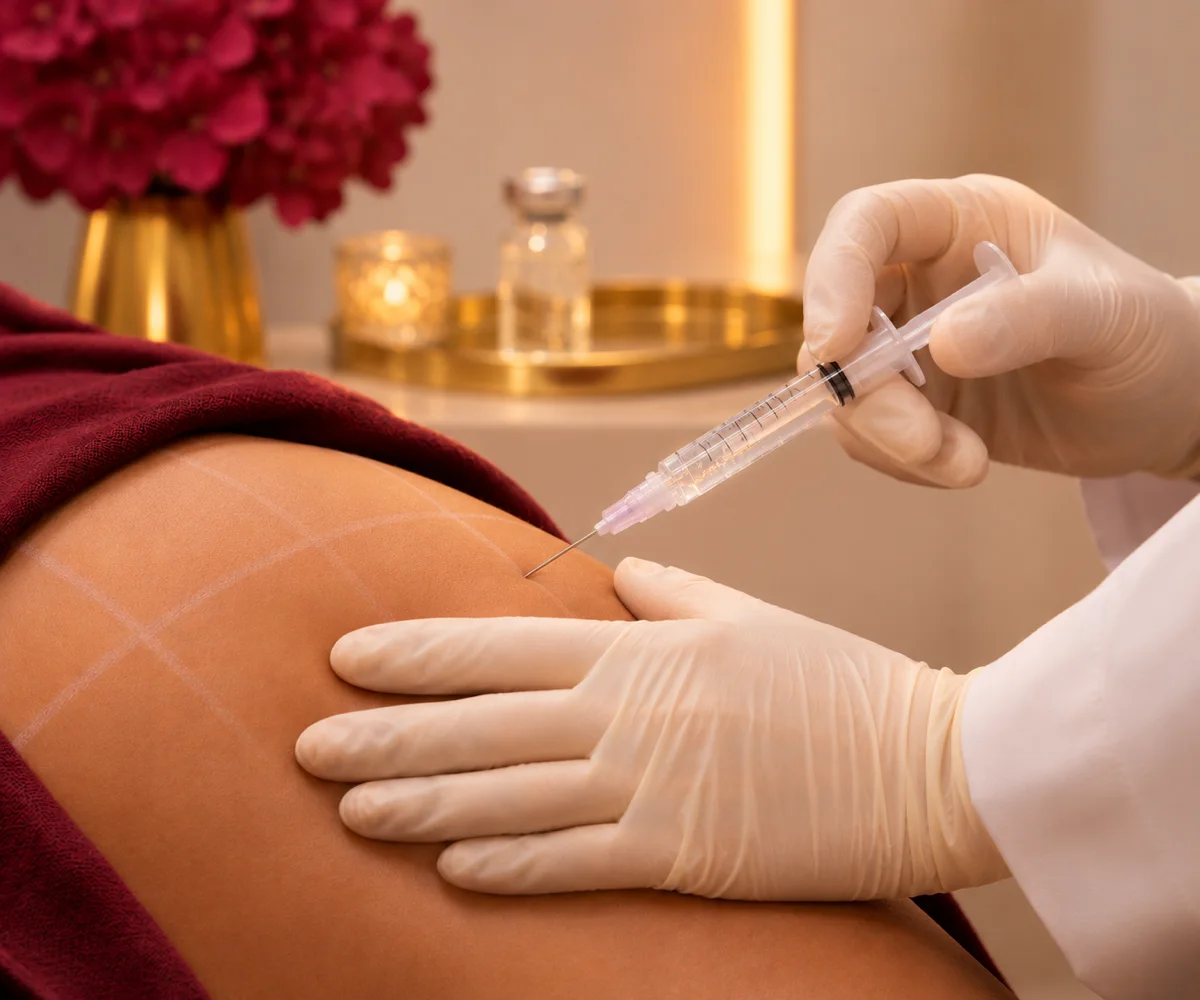
The doctor applying the filler, wearing gloves, on a marked area of the thigh covered by a towel

Injectable

Hyaluronic acid

Filler injected into the labia majora with the aim of restoring lost volume. It is the treatment with the most studies for this purpose, but there are still few and they are small: one review (2017) gathered mostly observational studies, and a recent single-centre randomised trial was favourable at 6 months. The effect is not permanent. It can cause bruising, lumps, infection and, rarely, vascular complications.

May be considered when

the main complaint is loss of volume in the labia majora, there is no skin disease or active infection, the doctor has explained what is known and what is not known, and the decision is yours.

Find out more
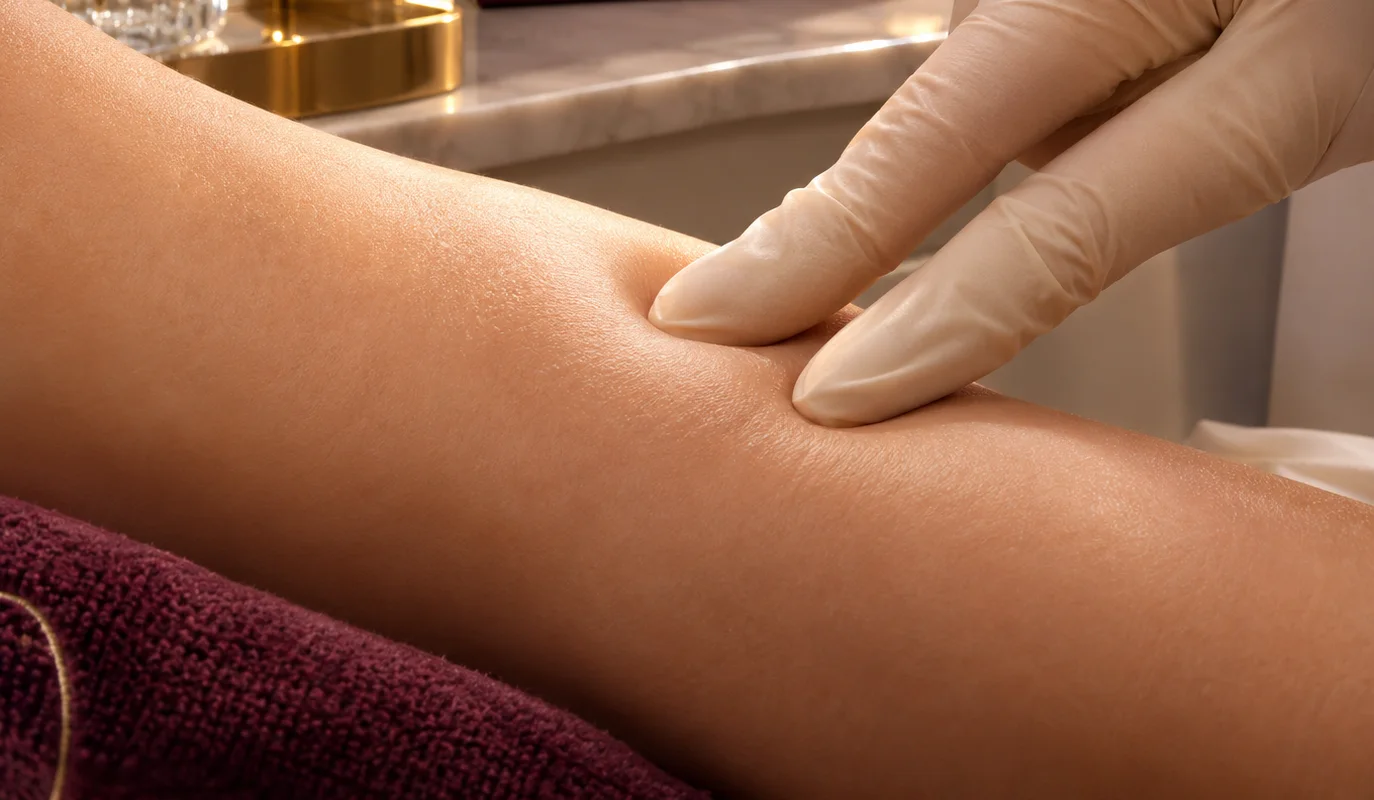
Two gloved fingers of the doctor assessing the firmness of the skin of a forearm

Injectable

Biostimulators

Injectables that stimulate the body to produce collagen gradually, with the aim of improving the firmness and quality of the skin. For the skin of the vulva the specific evidence is very limited, and the idea that results carry over from the skin of other areas has not been demonstrated.

May be considered when

the skin is thin or lacks firmness, a medical cause has been ruled out, first-line options have been considered and the existing doubts have been explained.

Find out more

What the journey looks like

From the first consultation to the plan tailored to you

No treatment starts without an assessment consultation with the doctor. First we understand what has changed and why, and only then do we discuss what to do, or whether anything needs to be done.

  1. 01At the clinic

    Assessment consultation

    The doctor listens to what has changed, what bothers you and what you would like to achieve, asks about the menopause, childbirth, surgeries and medication, and lets you speak in private and without hurry.

  2. 02At the clinic

    Examination and diagnosis

    With your consent, the skin and structures of the vulva are examined, looking for atrophy, skin conditions or lesions that need further study. If necessary, a biopsy is requested or you are referred to dermatology.

  3. 03At home

    Treating what is medical

    We start with what has the most evidence: hydration and protection of the skin, local oestrogen when indicated and treatment of a skin condition, if there is one. For many women, this may be enough.

  4. 04Over time

    Reassessing and deciding

    What has improved is reassessed. If the appearance continues to bother you, the doctor explains the options, the evidence and the risks, and the decision is yours, with no hurry and no obligation to treat.

Day to day

What helps while you wait for the consultation

Simple care for the skin of the vulva, alongside the plan the doctor sets out.

There is no “right” vulva

The vulva varies greatly from woman to woman

In a study of 50 women, the size, colour and shape of the vulva varied greatly, unrelated to age or childbirth. Many of the changes that bother you are normal variation, and others have simple treatment. Knowing what is normal helps you decide calmly, without pressure from standards that almost nobody has.

Moisturising and protecting the skin

Thinner, drier skin is better protected with a simple emollient.

In practice: you can use an emollient without perfume or colourings on the external area. If you have itching or burning, ask for advice.

Wash gently

The skin of the vulva is sensitive and largely cleans itself.

In practice: wash only the external area, with water or a gentle, unperfumed product, and dry by patting.

Choosing clothing and hair removal method

Friction and repeated irritation make the skin worse and can darken it.

In practice: prefer cotton underwear and garments that are not tight, and if you remove hair, use a method that irritates less and give your skin a rest.

Noting what has changed and what bothers you

It helps the doctor and you to understand what you really want to resolve.

In practice: write down what you have noticed, since when and what you would like to change, and bring your questions.

Dr Michelle Campagnoli, clinical director of Clínica Luxmed

Who will look after you

An assessment carried out by the doctor

At Luxmed, the first step is always an assessment consultation with Dr Michelle Campagnoli. She listens to what has changed and what bothers you, examines the skin and structures of the vulva, rules out a medical cause and designs the plan with you, in private and without hurry, and coordinates with dermatology, gynaecology or psychological support when needed.

  • Physical examination and medical historyA conversation about what has changed, your history, an examination of the skin and structures of the vulva and, when necessary, a biopsy or referral.
  • A plan tailored to youFirst what is medical and has the most evidence; additional treatments only if they are appropriate, with the evidence explained.
  • No obligationThe cost of any treatment is confirmed only after the assessment.
Book an assessment consultation

Book a consultation

Book your consultation

Choose how you prefer to get in touch. We will arrange the assessment consultation with Dr Michelle Campagnoli.

Booking through the website100€70€Assessment consultationExclusive price for those who book the assessment through the website. Outside the website, the price is 100 €.

New Life Miraflores, Algés · Office Center, R. Santa Teresa do Menino Jesus n.º 6, 9.º C, 1495-048

Your details are used only for this contact. Any treatment depends on a prior medical assessment.

Request an appointmentIt takes less than a minute.
Speciality
You do not need to go into detail. The doctor will talk to you during the consultation.
Request received. Our team will contact you as soon as possible.
What is vulvar rejuvenation?

It is a broad expression, not a diagnosis or a single treatment. It usually refers to caring for the skin of the vulva (hydration, firmness, texture), restoring the volume of the labia majora or treating dryness, when the vulva has changed with age, the menopause, childbirth or weight. It covers things with very little evidence and things that are medical treatment, so the first step is to understand what has changed and why.

Are vulvar rejuvenation and vaginal rejuvenation the same thing?

No. The vulva is the external part (mons pubis, labia majora and minora, clitoris and vestibule) and the vagina is the internal canal. “Vaginal rejuvenation” is a poorly defined term, which the FDA criticised in 2018, associated with energy-based devices that are not approved for that purpose and that can cause burns, scars and pain. Here we talk about the vulva, and what the page states does not automatically apply to the vagina.

Is it normal for the vulva to change with age?

It is common. With the menopause the skin and mucosa can become thinner and drier, the labia majora can lose volume and scars from childbirth can change the appearance. But there is also a lot of variation between women: in a study of 50 women, size, colour and roughness varied greatly, unrelated to age or childbirth. Understanding what is normal is the first step, and often a conversation is enough.

How do I know whether it is ageing or a skin condition?

Only a medical examination can tell. Persistent itching or burning, whitish, thin or fissured skin, patches or sores that do not heal and lesions that change call for assessment, because conditions such as lichen sclerosus (more common after the age of 50) are treated with a prescribed corticosteroid ointment and not with cosmetic treatments. If you notice a patch or a lump that changes, do not wait.

What are the first options before a cosmetic treatment?

Moisturisers and lubricants, low-dose vaginal oestrogen when there is atrophy (by prescription; if you have had breast cancer, with your oncologist), treatment of a skin condition when there is one, hygiene and clothing care and, if the concern is about body image, an honest conversation about what is normal and, if useful, psychological support. These options have more evidence and fewer risks than the technologies.

Does hyaluronic acid in the labia majora work and is it safe?

It can restore lost volume, and the available studies are favourable, but they are few and small: a 2017 review gathered mostly observational studies, and a recent single-centre randomised trial of 76 women showed improvement at 6 months and only mild local reactions. The effect is not permanent. The risks include bruising, lumps, infection and, rarely, vascular complications. The doctor explains what is known and what is not known.

Is there evidence for PRP, biostimulators and intradermotherapy on the vulva?

The specific evidence for the vulva is very limited. For PRP there are small studies, without a comparison group, in patients with lichen sclerosus who were already using a corticosteroid, and the authors themselves conclude that they are preliminary. For biostimulators and intradermotherapy there are no controlled trials proving a benefit on the vulva. That is why they are additional options, never the first choice, and without promising results.

What about surgery, such as labiaplasty?

Genital cosmetic surgery (for example, reducing the labia minora) is a surgical decision to be discussed with an experienced surgeon. The ACOG (2020) reminds us that good-quality data on effectiveness are lacking and that there are risks such as pain, bleeding, infection, scars, changes in sensation and pain during sex, and that the possibility of body dysmorphic disorder should be assessed when indicated. It is a decision to be taken without hurry, after ruling out a medical cause.

Do these treatments have risks? And the laser?

Yes, all of them do. Injectables can cause bruising, pain, lumps and infection, and rarely vascular complications. With the laser, the FDA warned in 2018 about burns, scars and pain during sex with energy-based devices used for “vaginal rejuvenation”, which it has not approved for that purpose. In sham-controlled trials, in the context of the menopause, the CO2 laser was no better than the sham treatment. They are not carried out in the presence of active infection, undiagnosed lesions, unexplained bleeding or pregnancy.

When should I book a consultation?

Book a consultation if you have noticed changes that bother you, if you have dryness, itching, burning or pain, or if you have doubts about what is normal. If you have a patch, a lump or a sore that changes or does not heal, bleeding after the menopause or after sex, abnormal discharge, persistent pain or fever, seek a prompt assessment; outside opening hours you can call SNS 24 (808 24 24 24). If you cannot pass urine, have sudden severe pain or heavy bleeding, call 112.

We could not find that question. Ask us on WhatsApp

Scientific references

This page is based on the sources below and was reviewed by Dr. Michelle Campagnoli. Last updated on .

  1. American College of Obstetricians and Gynecologists, Committee on Gynecologic Practice. Elective Female Genital Cosmetic Surgery: ACOG Committee Opinion, Number 795. Obstetrics & Gynecology 135(1):e36-e42, 2020.
  2. Developed by the Joint Writing Group of the International Urogynecological Association (IUGA) and the American Urogynecologic Society (AUGS). Joint Report on Terminology for Cosmetic Gynecology. International Urogynecology Journal 33(6):1367-1386, 2022.
  3. Lloyd J, Crouch NS, Minto CL, Liao LM, Creighton SM. Female genital appearance: "normality" unfolds. BJOG 112(5):643-646, 2005.
  4. Jabbour S, Kechichian E, Hersant B, Levan P, El Hage C, Stephan P, et al. Labia Majora Augmentation: A Systematic Review of the Literature. Aesthetic Surgery Journal 37(10):1157-1164, 2017.
  5. Fasola E, Dridi D, Degliuomini RS, Buzzaccarini G, et al. Performance and Safety of Hyaluronic Acid-Based Gynaecological Filler for Labia Majora Augmentation: A Randomised Study. Life (Basel) 16(7):1141, 2026.
  6. Portman DJ, Gass ML; Vulvovaginal Atrophy Terminology Consensus Conference Panel. Genitourinary syndrome of menopause: new terminology for vulvovaginal atrophy from the International Society for the Study of Women's Sexual Health and the North American Menopause Society. Menopause 21(10):1063-1068, 2014.
  7. The NAMS 2020 GSM Position Statement Editorial Panel. The 2020 genitourinary syndrome of menopause position statement of The North American Menopause Society. Menopause 27(9):976-992, 2020.
  8. Lethaby A, Ayeleke RO, Roberts H. Local oestrogen for vaginal atrophy in postmenopausal women. Cochrane Database of Systematic Reviews 2016(8):CD001500, 2016.
  9. Fujimura T, Sato N, Ophaswongse S, Takagi Y, Hotta M, Yamamoto Y, et al. Characterization of vulvar skin of healthy Thai women: influence of sites, age and menopause. Acta Dermato-Venereologica 93(2):242-245, 2013.
  10. Lewis FM, Tatnall FM, Velangi SS, Bunker CB, Kumar A, Brackenbury F, et al. British Association of Dermatologists guidelines for the management of lichen sclerosus, 2018. British Journal of Dermatology 178(4):839-853, 2018.
  11. NHS. Lichen sclerosus. (NHS (nhs.uk), acedido 2026-11-11)
  12. Boero V, Cetera GE, Caia C, Villa S, Montemurro T, et al. Is there a role for platelet rich plasma injection in vulvar lichen sclerosus? A self-controlled pilot study. Archives of Gynecology and Obstetrics 309(6):2719-2726, 2024.
  13. Li FG, Maheux-Lacroix S, Deans R, et al. Effect of fractional carbon dioxide laser vs sham treatment on symptom severity in women with postmenopausal vaginal symptoms: a randomized clinical trial. JAMA 326(14):1381-1389, 2021.
  14. Prodromidou A, Zacharakis D, Athanasiou S, et al. CO2 Laser versus Sham Control for the Management of Genitourinary Syndrome of Menopause: A Systematic Review and Meta-Analysis of Randomized Controlled Trials. Journal of Personalized Medicine 13(12):1694, 2023.
  15. Medsafe (Nova Zelândia), a retransmitir o alerta da U.S. FDA. Safety Information: energy-based devices used for vaginal 'rejuvenation' or vaginal cosmetic procedures (relays the USFDA safety communication of July 2018). Medsafe, New Zealand Medicines and Medical Devices Safety Authority, 2018.
  16. NHS. Vaginal dryness. (NHS (nhs.uk), acedido 2026-11-11)
CallAssistantAvailableBook