
Algés, Oeiras Mon to Fri · 09:00 to 13:00 and 14:00 to 19:00 · Sat · 09:00 to 14:00
WhatsApp Book a consultation

Aesthetic gynaecology

Vagina with less toneWhen the vagina seems less firm or less “toned” and it matters to know which layer is failing

“Less tone” is the expression many women use to describe a vagina that no longer grips as it used to, that feels less firm or that seems not to respond when they try to contract. Tone does not depend on a single structure: what happens in the pelvic floor muscles, in the wall and mucosa of the vagina, in the supporting tissue and even in the arousal of the moment all count. The closest medical term is “vaginal laxity”, which describes a symptom and not a standardised diagnosis. Here we explain what gives tone, how it is assessed and what helps, starting with training the right muscles, and what the clinic can propose, with honesty about what the evidence shows.

Reviewed by Dr Michelle Campagnoli, clinical director

  • 3 monthsis the minimum of supervised pelvic floor training recommended before assessing the result
  • 1assessment consultation, always first
  • 70 €assessment booked through the website
A woman with her hair up sits on a pilates ball, stretching a green elastic band with her arms

How to recognise it

Is it really a vagina with less tone?

“Less tone” is a sensation that can have different origins: muscles with less strength, a thinner mucosa, support that has given way or simply a day of little arousal. Only an examination can tell them apart, and that is what guides what to do.

Tick what you recognise0/7

Tick the signs you recognise in your case. This is not a diagnosis, it is only meant to give you an idea.

Do you have bleeding after the menopause or after sex, discharge with a different smell or colour, persistent or sudden pelvic pain, fever, burning on passing urine, blood in the urine, difficulty passing urine, or do you feel a “ball” or heaviness coming out of the vagina? You need prompt assessment and should not wait. Outside opening hours, call SNS 24: 808 24 24 24.

A physiotherapist in blue scrubs demonstrates a posture to a woman in a room with a pilates ball and bands
Photograph of a consultation. The dots mark what the doctor assesses; the image does not show the intimate area.

Why it happens

What may lie behind a vagina with less tone

Tone results from several layers working together, and many women have more than one failing. Choose a situation to see how it applies.

The pelvic floor muscles

The levator ani muscle forms a kind of sling around the entrance to the vagina. It has a resting tone that keeps the opening narrow, a voluntary contraction that tightens and lifts and a reflex contraction that reacts to coughs and jumps. When it loses strength or stops being used, the feeling of tightness and firmness decreases.

What weighs on it

Thinking that these muscles maintain themselves and do not need training, like any other muscle.

What helps

Training the right muscles, preferably supervised and maintained for at least 3 months.

Normal or to be assessed

Less tone or something else

Not every sensation of a “vagina with no tone” is a lack of strength. That is why it is worth knowing what it is before choosing what to do.

  • How it feels. Less tightness during sex, difficulty feeling the contraction, air coming out of the vagina and, sometimes, stress urinary leakage, with no pain.

  • When it happens. Often after births, with age or after a long period without exercise. It may fluctuate with the day, tiredness and arousal.

  • What the clinic does. The doctor listens to what you feel, assesses the strength, tone and ability to relax of the muscles and confirms whether you contract them correctly.

  • At home. While you wait for the consultation, you can start gentle, regular training, without forcing, and note what you notice each week.

Sudden severe pelvic pain, unable to pass urine, a high fever with severe malaise, or unable to remove an object from the vagina? Call 112 or go to the emergency department. If you have bleeding, abnormal discharge or doubts, outside opening hours you can call SNS 24: 808 24 24 24.

Book an assessment consultation

What can help

Options for a vagina with less tone

First-line treatment, when the muscles are what weighs most, is pelvic floor training: contracting the right muscles, regularly and under supervision, for at least 3 months, with pelvic physiotherapy when needed. Many women do not contract the muscles correctly at first, so it is worth confirming this with a professional. Biofeedback, apps and cones can help with the training, without replacing it. When the mucosa is what weighs most, moisturisers, lubricants and low-dose vaginal oestrogen, on prescription, help. If there is prolapse, there are the pessary and surgery, which are discussed with a specialist. The treatments below are additional options, assessed case by case, without promising results and with limited evidence.

Book an assessment consultation
Dr Michelle Campagnoli, clinical director of Clínica Luxmed

First step

Assessment consultation

The doctor listens to what you are experiencing, examines your case and explains the suitable options. No treatment begins without this consultation.

May be considered when

you want to understand the cause and decide on the best path, with time and without commitment.

Book an assessment consultation
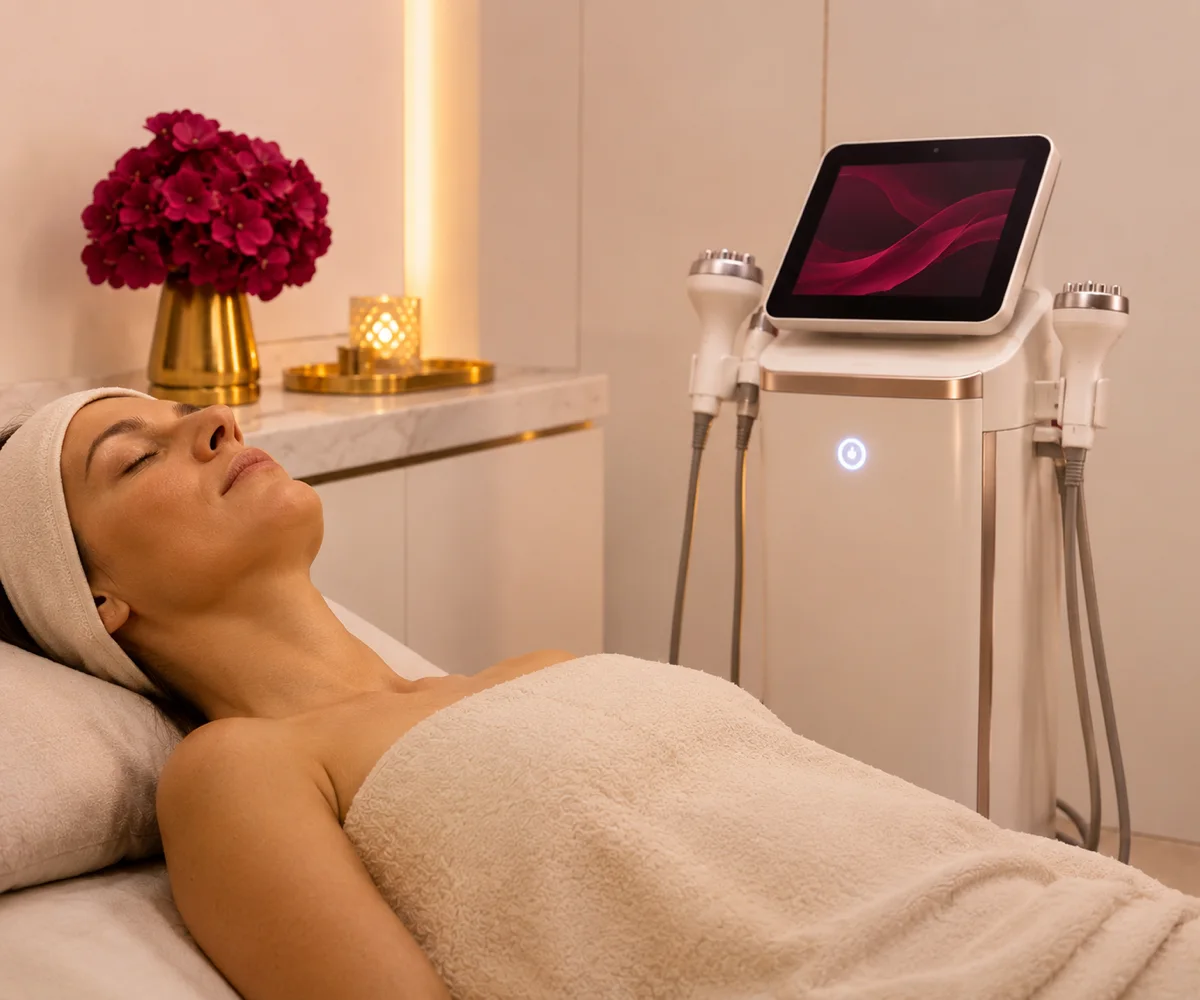
Private treatment room, with the device on an elegant trolley and a patient resting covered with a towel

Technology

Sectum, Neauvia radiofrequency (NRose Protocol)

Low-intensity radiofrequency applied to the intimate region, with the aim of stimulating collagen in the vaginal wall. The available studies are mostly with other radiofrequency devices, and with Sectum there are only small studies without a control group. It acts on the wall and not on the muscles: it does not replace training.

May be considered when

the assessment showed that the vaginal wall and the support play a role, supervised training has been done (or is continuing), the doctor has explained what is known and what is not known, and the decision is yours.

Find out more
The doctor preparing the laser device, with the protective glasses in the foreground

Technology

Fractional CO2 laser

Laser energy applied to the vaginal mucosa, with the aim of renewing the tissue and improving its quality. For the feeling of laxity there are few quality trials, and in 2018 the FDA warned of burns, scars and pain with these devices. It also does not strengthen the muscles.

May be considered when

the mucosa is thin or dry, first-line options have been tried and other alternatives have been considered, after the benefits and risks have been explained to you.

Find out more

What the journey looks like

From the first consultation to the plan tailored to you

No treatment begins without an assessment consultation with the doctor. Most women start with what is simplest, and only then is more considered.

  1. 01At the clinic

    Assessment consultation

    The doctor listens to what you feel, since when and in what situations, asks about births, the menopause, surgeries, medication and sex life, in private and without hurry. If needed, she proposes a simple questionnaire.

  2. 02At the clinic

    Examination of the muscles and mucosa

    The vulva, perineum and entrance to the vagina are examined and, with a vaginal examination, the strength, tone and ability to relax of the muscles are assessed, along with whether the contraction is done correctly. The mucosa is also seen, and whether there is prolapse.

  3. 03At home and in physiotherapy

    Training and care of the mucosa

    Training of the right muscles is started, preferably supervised and with the support of pelvic physiotherapy, for at least 3 months. When there is dryness or atrophy, the mucosa is treated in parallel.

  4. 04Over time

    Reassessing and deciding

    What has changed is reassessed after 3 months. If it is not enough, or if there is prolapse or other signs, the doctor explains the other routes and refers. Technology-based treatments are only considered afterwards, with the evidence explained.

Day to day

What helps while you wait for the consultation

Simple care that supports the muscles and the mucosa, alongside the plan the doctor sets out.

Without guilt

Feeling less tone is not your fault

It is a common complaint and, often, has a concrete explanation and something that can be done. Talking about it, without embarrassment, is the first step. Muscles that have lost strength respond to training, like other muscles, as long as the right group of muscles is trained regularly.

Confirming that you contract the right muscles

Contracting the buttocks or abdomen or holding your breath does not train the pelvic floor, and many women do it without realising.

In practice: ask for your technique to be confirmed at a consultation or in pelvic physiotherapy before carrying on alone.

Training regularly, for months

Pelvic floor muscles respond to training like the others, but slowly.

In practice: a simple programme with slow and quick contractions, repeated several times a day, kept up for at least 3 months. If it helps, use a reminder on your phone.

Learning to relax as well

A muscle that only contracts and never relaxes also loses function, and can hurt.

In practice: after each contraction, let go completely and breathe deeply. If you have pain during sex or tension, talk about it before training.

Caring for the mucosa and arousal

A dry or poorly lubricated mucosa changes the sensation of firmness and contact.

In practice: use a water-based lubricant during sex, a vaginal moisturiser if there is dryness, and allow time for arousal.

Dr Michelle Campagnoli, clinical director of Clínica Luxmed

Who will look after you

An assessment carried out by the doctor

At Luxmed, the first step is always an assessment consultation with Dr Michelle Campagnoli. She listens to what is going on, assesses the pelvic floor muscles, the mucosa and the support, rules out other causes and designs the plan with you, in private and without hurry, coordinating with pelvic physiotherapy when needed.

  • Physical examination and medical historyA conversation about what you feel, an examination of the muscles, mucosa and support and, when necessary, a urine test.
  • A plan tailored to youFirst training the right muscles; additional treatments only if they are appropriate, with the evidence explained.
  • No obligationThe cost of any treatment is confirmed only after the assessment.
Book an assessment consultation

Book a consultation

Book your consultation

Choose how you prefer to get in touch. We will arrange the assessment consultation with Dr Michelle Campagnoli.

Booking through the website100€70€Assessment consultationExclusive price for those who book the assessment through the website. Outside the website, the price is 100 €.

New Life Miraflores, Algés · Office Center, R. Santa Teresa do Menino Jesus n.º 6, 9.º C, 1495-048

Your details are used only for this contact. Any treatment depends on a prior medical assessment.

Request an appointmentIt takes less than a minute.
Speciality
You do not need to go into detail. The doctor will talk to you during the consultation.
Request received. Our team will contact you as soon as possible.
What does it mean to have a vagina with less tone?

It is not a formal diagnosis: it is the way many women describe less firmness, less tightness or difficulty contracting. Vaginal tone depends on the pelvic floor muscles, the wall and mucosa, the supporting tissue and also arousal, and what fails varies from woman to woman. The closest medical term is vaginal laxity, which describes a symptom and has no standardised definition.

Are weak vaginal muscles and a loose vagina the same thing?

They are related, but they are not the same. “Less tone” or weak muscles mainly describes the strength and firmness of the muscles surrounding the vagina and can be assessed on examination. “Loose vagina” is a description of the canal itself, and the “feeling” of a loose vagina is a perception that is not always confirmed on examination. Only an assessment separates these situations.

How do I know whether the problem is in the muscles or the mucosa?

By examination. The doctor assesses the strength, tone and ability to relax of the muscles, and sees the state of the mucosa and whether there is prolapse. In general, less tightness and air in the vagina point to the muscles; dryness, burning and pain during sex point to the mucosa. Many women have both, and the plan changes depending on the cause.

Do childbirth and the menopause take tone away from the vagina?

They can, in different ways. Vaginal birth stretches and can injure the levator ani muscle and the perineum; in a small 3D ultrasound study, about one in three women with a vaginal birth had the muscle detached. The menopause mainly affects the mucosa, which becomes thinner and less elastic. Neither is a life sentence: there is something to be done about both.

Is it possible to strengthen the vagina with exercises?

It is possible to train the pelvic floor muscles, which surround the vagina, and it is the treatment with the most evidence for this type of complaint. It works better if it is supervised, regular and kept up for at least 3 months, and after confirming that you contract the right muscles. If you have pain during sex or tense muscles, the focus is on learning to relax and not on strengthening.

Do Ben Wa balls, cones and devices work?

Vaginal cones were better than no treatment and similar to pelvic floor training for urinary leakage, but some women find them uncomfortable. For Ben Wa balls and stone eggs there are no quality studies. Devices with a sensor and an app can help you train regularly. None replaces training the muscles, and they are not suitable with pelvic pain, pain during sex or muscles that are too tense.

What about moisturisers and vaginal oestrogen?

When the mucosa is what weighs most, they help. Moisturisers and lubricants relieve dryness, and low-dose vaginal oestrogen, prescribed by a doctor, treats atrophy and improves symptoms. If you have or have had breast cancer, speak to your oncologist first. These treatments do not strengthen the muscles, so they go alongside training.

Do vaginal radiofrequency or laser restore tone?

It has not been demonstrated. A 2026 review concluded that the evidence is of low certainty, short-term and mostly subjective; three sham-controlled trials favoured radiofrequency, but in one trial it equalled training at 30 days and fell behind at 6 months. These treatments act on the vaginal wall and do not strengthen the muscles. In 2018 the FDA warned against these devices for symptoms of the menopause, incontinence and sexual function. The decision is always explained and shared with you.

Do these treatments carry risks?

In the studies the most common effects are mild and short-lived: discomfort, a feeling of heat or discharge for a few days. Burns, scars, persistent pain and pain during sex have been reported, more rarely, and the long-term risks are not yet well studied. They are not carried out in the presence of active infection, unexplained bleeding, undiagnosed lesions or pregnancy.

When should I book a consultation?

Book a consultation if the sensation bothers you, if you are not sure you are contracting the right muscles, if you have trained for 3 months without improvement, or if you have urinary leakage, air in the vagina, heaviness, dryness or pain during sex. If you have bleeding after the menopause or after sex, abnormal discharge or doubts, call SNS 24 (808 24 24 24). If you have sudden severe pelvic pain, cannot pass urine or have a high fever with severe malaise, call 112.

We could not find that question. Ask us on WhatsApp

Scientific references

This page is based on the sources below and was reviewed by Dr. Michelle Campagnoli. Last updated on .

  1. Randombage PJS, Hettipathirana PS, Akurugodagama M. Comparative Effectiveness of Conservative and Surgical Interventions for Vaginal Laxity: A Systematic Review and Pairwise Meta-Analysis. International Urogynecology Journal, 2026.
  2. Pereira GMV, Cartwright R, Juliato CRT, Domoney C, Iglesia CB, Brito LGO. Treatment of women with vaginal laxity: systematic review with meta-analysis. The Journal of Sexual Medicine 21(5):430-442, 2024.
  3. Messelink B, Benson T, Berghmans B, Bø K, Corcos J, Fowler C, et al. Standardization of terminology of pelvic floor muscle function and dysfunction: report from the pelvic floor clinical assessment group of the International Continence Society. Neurourology and Urodynamics 24(4):374-380, 2005.
  4. Ashton-Miller JA, DeLancey JO. Functional anatomy of the female pelvic floor. Annals of the New York Academy of Sciences 1101:266-296, 2007.
  5. Dietz HP, Lanzarone V. Levator trauma after vaginal delivery. Obstetrics & Gynecology 106(4):707-712, 2005.
  6. The NAMS 2020 GSM Position Statement Editorial Panel. The 2020 genitourinary syndrome of menopause position statement of The North American Menopause Society. Menopause 27(9):976-992, 2020.
  7. Lethaby A, Ayeleke RO, Roberts H. Local oestrogen for vaginal atrophy in postmenopausal women. Cochrane Database of Systematic Reviews 2016(8):CD001500, 2016.
  8. Bump RC, Hurt WG, Fantl JA, Wyman JF. Assessment of Kegel pelvic muscle exercise performance after brief verbal instruction. American Journal of Obstetrics and Gynecology 165(2):322-327, 1991.
  9. National Institute for Health and Care Excellence (NICE). Pelvic floor dysfunction: prevention and non-surgical management (NG210). NICE guideline NG210, 2021.
  10. Dumoulin C, Cacciari LP, Hay-Smith EJC. Pelvic floor muscle training versus no treatment, or inactive control treatments, for urinary incontinence in women. Cochrane Database of Systematic Reviews 2018(10):CD005654, 2018.
  11. Hagen S, Stark D, Glazener C, Dickson S, Barry S, Elders A, et al; POPPY Trial Collaborators. Individualised pelvic floor muscle training in women with pelvic organ prolapse (POPPY): a multicentre randomised controlled trial. The Lancet 383(9919):796-806, 2014.
  12. Herbison GP, Dean N. Weighted vaginal cones for urinary incontinence. Cochrane Database of Systematic Reviews 2013(7):CD002114, 2013.
  13. Krychman M, Rowan CG, Allan BB, DeRogatis L, Durbin S, Yacoubian A, Wilkerson D. Effect of Single-Treatment, Surface-Cooled Radiofrequency Therapy on Vaginal Laxity and Female Sexual Function: The VIVEVE I Randomized Controlled Trial. The Journal of Sexual Medicine 14(2):215-225, 2017.
  14. Kolczewski P, Parafiniuk M, Zawodny P, Haddad R, Nalewczyńska A, Kolasa AK, Wiszniewska B, Menkes S, et al. Hyaluronic Acid and Radiofrequency in Patients with Urogenital Atrophy and Vaginal Laxity. Pharmaceuticals (Basel) 15(12):1571, 2022.
  15. Medsafe (Nova Zelândia), a retransmitir o alerta da U.S. FDA. Safety Information: energy-based devices used for vaginal 'rejuvenation' or vaginal cosmetic procedures (relays the USFDA safety communication of July 2018). Medsafe, New Zealand Medicines and Medical Devices Safety Authority, 2018.
CallAssistantAvailableBook