Algés, Oeiras Mon to Fri · 09:00 to 13:00 and 14:00 to 19:00 · Sat · 09:00 to 14:00
WhatsApp Book a consultation

Aesthetic gynaecology

Loose vagina after childbirthWhat is normal in the first weeks, what improves with time and when to ask for an assessment

After a birth, many women feel the vagina is different: wider, more “slack”, less firm, sometimes with air coming out or with less “grip” during sex. In the first weeks this is very common, because the tissues are swollen, stretched and healing, the pelvic floor muscles have lost strength and, if you are breastfeeding, oestrogen levels are low. Much improves with time, but not everything returns to what it was, and there are situations that deserve assessment. Here we explain what is expected and when, what breastfeeding changes, what is assessed at a consultation, what helps, with pelvic floor training first, and what the clinic can propose, without hiding what the evidence does not yet show.

Reviewed by Dr Michelle Campagnoli, clinical director

  • 6 to 8weeks after the birth: the time of the postnatal check
  • 1assessment consultation, always first
  • 70 €assessment booked through the website
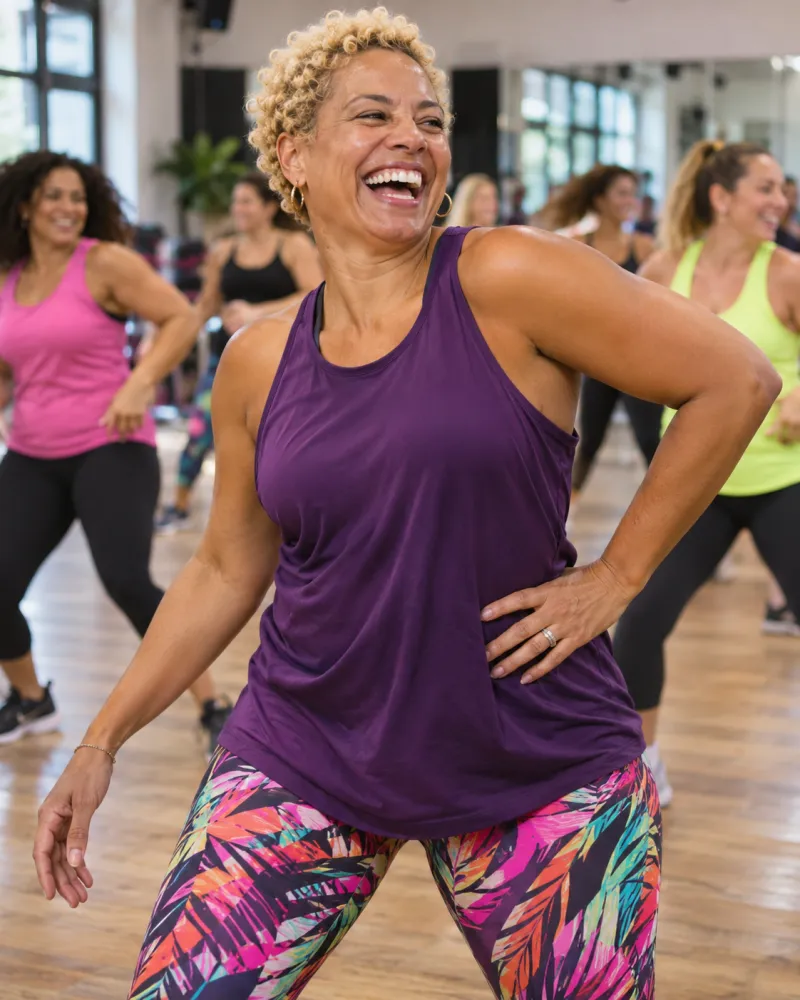
A woman in a purple top and colourful leggings laughs in a zumba class, surrounded by other women dancing

How to recognise it

Could it be a loose vagina after childbirth?

“Loose vagina” is the way many women describe what they feel, and it does not always correspond to a change that can be measured. What matters is what you feel, since when and whether it is improving or not.

Tick what you recognise0/7

Tick the signs you recognise in your case. This is not a diagnosis, it is only meant to give you an idea.

Do you have very heavy or increasing vaginal bleeding, fever or chills, foul-smelling discharge, perineal pain that persists or gets worse, a perineal wound that has opened or looks infected, are you unable to pass urine or have blood in the urine, or do you feel a “ball” in the vagina that you did not have before? You need assessment without delay, and should not wait for the check. Outside opening hours, call SNS 24: 808 24 24 24.

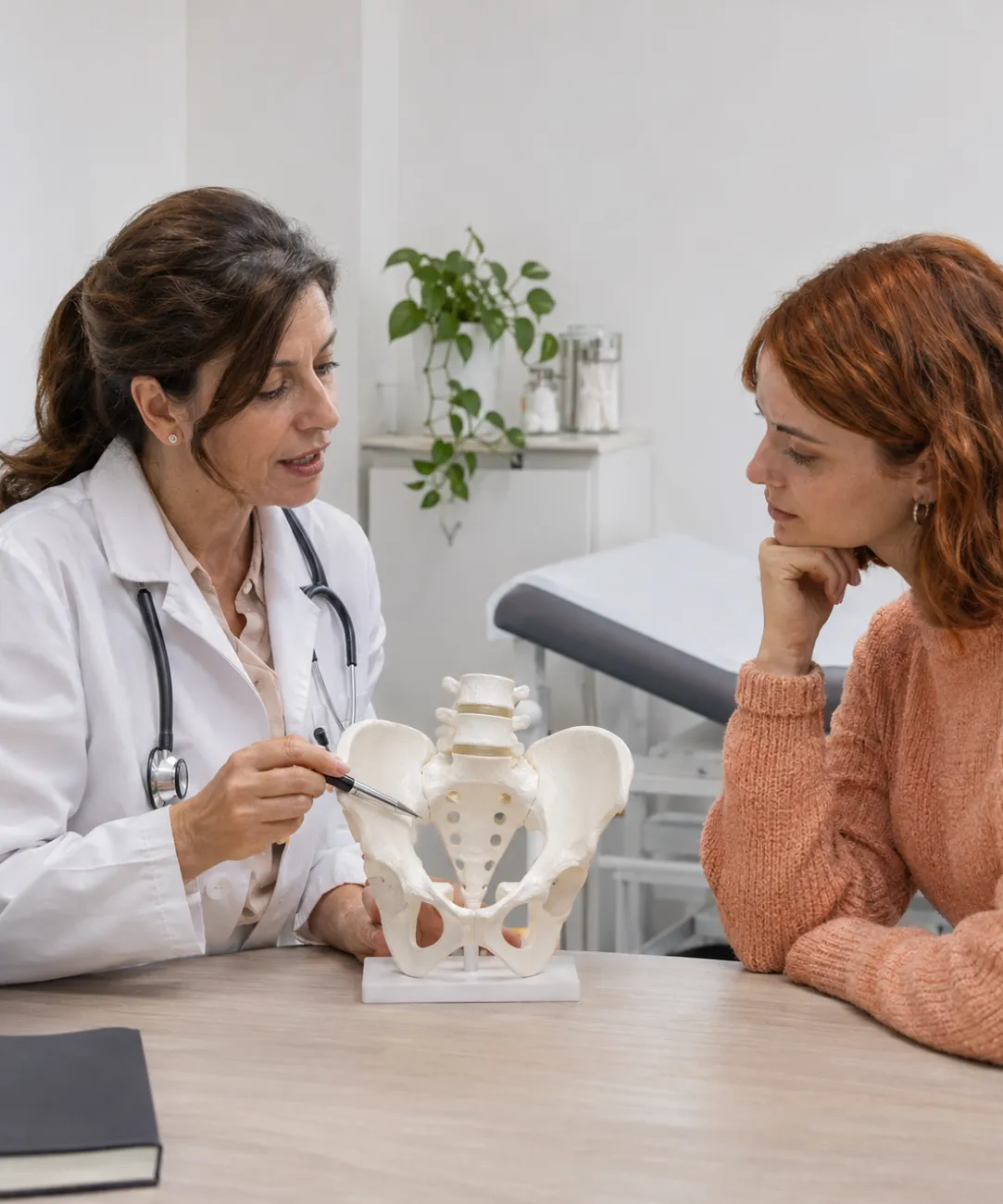
A doctor in a white coat shows a model of the pelvis to a young red-haired woman, with a tablet in front
Photograph of a consultation. The dots mark what the doctor assesses; the image does not show the intimate area.

Why it happens

What may lie behind a loose vagina after childbirth

There is almost never a single cause, and the weight of each changes with the time that has passed since the birth. Choose a situation to see how it applies.

Stretched and swollen tissues

After a vaginal birth, the vagina and perineum are swollen, sore and healing, and the muscles are tired. In a study of 277 women, six weeks after a normal vaginal birth the strength of the pelvic floor muscles was reduced by more than half (54%), and the resting pressure of the vagina by about 29%. It is a big drop, but it is the starting point of a recovery.

What weighs on it

Comparing yourself with your pre-pregnancy self and concluding, at six weeks, that it has “stayed like this forever”.

What helps

Time, rest, making pelvic floor training gradual and bringing your questions to the postnatal check.

Expected or to be assessed

What usually improves by itself and what is worth assessing

In the first weeks, much of the feeling of slackness is part of recovery. After a few months, a sensation that does not change, or that comes with heaviness, air, leakage or pain, deserves assessment.

  • How it shows. A feeling of slackness, swelling, pain or pulling in the perineum in the first weeks, improving from week to week.

  • What usually happens. The muscles gain strength gradually, the scar softens and the dryness of breastfeeding can improve when feeds become more spaced out and the period returns.

  • What the clinic does. At the postnatal check, the doctor listens to what you feel and assesses the perineum, the scar and the strength of the muscles, to see whether it is what is expected.

  • What usually helps. Time, rest, pelvic floor exercises started gently and, if there is dryness, lubricant and vaginal moisturiser.

Very heavy bleeding, shortness of breath, chest pain, pain or swelling in a leg, or unable to pass urine? Call 112 or go to the emergency department. If you have fever, foul-smelling discharge, a perineal wound that looks bad or doubts, outside opening hours you can call SNS 24: 808 24 24 24.

Book an assessment consultation

What can help

Options for a loose vagina after childbirth

What has the most support is to treat first whatever is found: allowing time for recovery, training the pelvic floor, preferably guided by pelvic physiotherapy and for at least 3 months (in women with an instrumental birth, a face-up (occipito-posterior) birth or anal sphincter injury, the British guidelines suggest a supervised programme), and treating dryness with lubricant and vaginal moisturiser. If there is dryness that bothers you while breastfeeding, the doctor can talk to you about low-dose vaginal oestrogen, but there is little evidence in the postpartum period. If there is prolapse, there are the pessary and, in some cases, surgery. A painful scar may call for specific physiotherapy. The options below come after this, are assessed case by case and do not promise results.

Book an assessment consultation
Dr Michelle Campagnoli, clinical director of Clínica Luxmed

First step

Assessment consultation

The doctor listens to what you are experiencing, examines your case and explains the suitable options. No treatment begins without this consultation.

May be considered when

you want to understand the cause and decide on the best path, with time and without commitment.

Book an assessment consultation
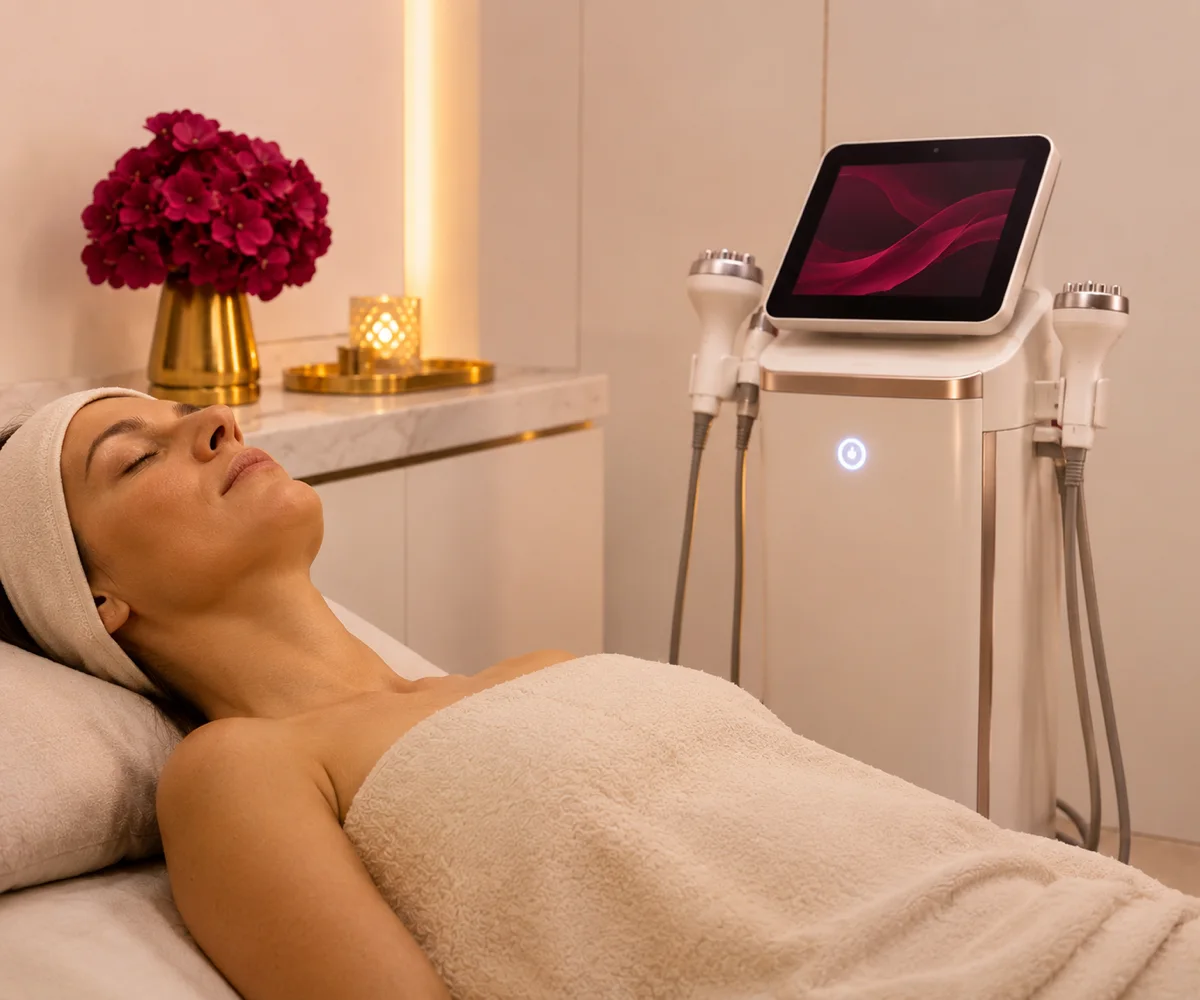
Private treatment room, with the device on an elegant trolley and a patient resting covered with a towel

Technology

Sectum, Neauvia radiofrequency (NRose Protocol)

Low-intensity radiofrequency energy, which aims to stimulate collagen in the intimate tissues. In women complaining of vaginal laxity, the studies have discordant results, short-term and mostly subjective, and pelvic floor training showed better results at 6 months in a trial that compared it with radiofrequency.

May be considered when

the initial recovery period has passed, the assessment has found nothing that calls for another path, guided training has been done regularly and the sensation persists, and the doctor has explained to you what is known and what is not known, and the decision is yours.

Find out more
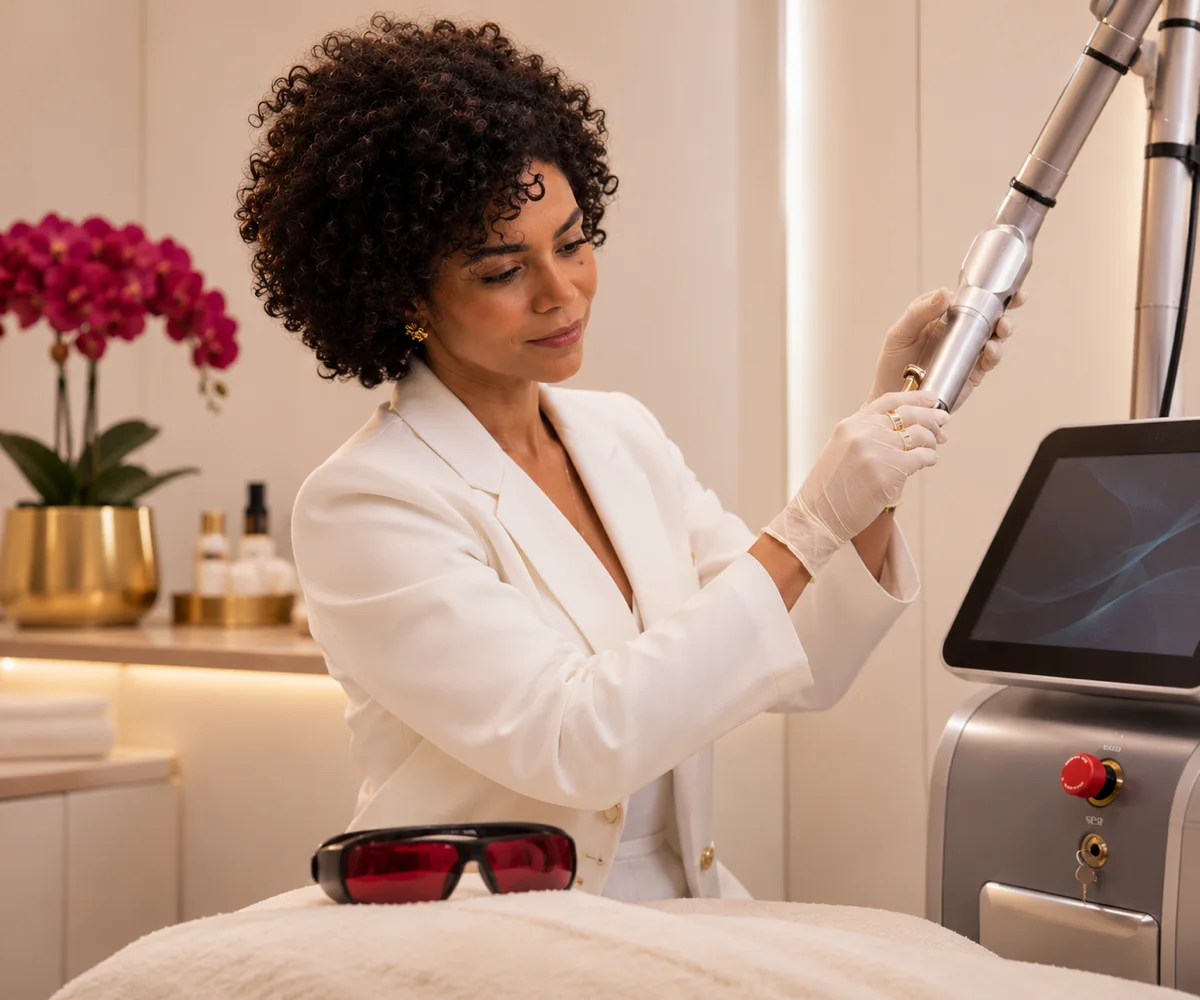
The doctor preparing the laser device, with the protective glasses in the foreground

Technology

Fractional CO2 laser

Laser energy applied to the vaginal mucosa, which aims to improve the quality of the tissues. It does not train the muscles, there are no postpartum-specific studies that we know of and, in sham-controlled trials in menopausal women, the CO2 laser was comparable to the sham on most measures. In 2018 the FDA warned of the risks of these devices.

May be considered when

the doctor has assessed your case, first-line options have been tried and the dryness or thin mucosa persists, and after the benefits, risks and the breastfeeding situation have been explained to you.

Find out more

What the journey looks like

From the first consultation to the plan for your moment

No treatment starts without an assessment consultation with the doctor. This is how it goes, and you can interrupt or decline any part of the examination.

  1. 01At the clinic

    Assessment consultation

    The doctor asks how long ago the baby was born, how the birth went, whether you are breastfeeding and what you feel, and lets you speak in private and without hurry.

  2. 02At the clinic

    Assessing and distinguishing

    The perineum and the scar are examined and, with your consent, the strength, endurance and ability to relax of the muscles are assessed, and prolapse is looked for. If injury to the levator ani is suspected, a pelvic floor ultrasound may be requested. The examination should not hurt, and it can be stopped.

  3. 03At the clinic and at home

    A plan tailored to you

    We start with what has the most support: time, guided pelvic floor training and, if there is dryness, lubricant and moisturiser, coordinating with pelvic physiotherapy. Only if appropriate does the doctor explain the other options.

  4. 04Over time

    Follow-up

    A reassessment is made after about 3 months of training. If the sensation does not improve, or if there is prolapse or suspected injury to the levator, urogynaecology, the pessary or other routes are considered.

Day to day

What helps while you wait for the consultation

Simple, safe care for the postpartum period, alongside the plan the doctor sets out.

Allow time, but do not sit and wait

Recovery is gradual

In the first weeks the body is healing, and the feeling of slackness usually improves with time, rest and gentle exercises. But research shows that, a year after a vaginal birth, the pelvic floor muscles may not have fully recovered. So the best thing is not to compare the vagina at six weeks with that before pregnancy, to start gently and to bring your questions to the postnatal check, rather than waiting for them to disappear.

Feeling the muscles, gently

Finding out whether you can contract them is the first step, and it can start in the first days, if there is no pain.

In practice: lying down, with your knees bent, contract gently as if holding in urine and wind, without holding your breath or squeezing the buttocks, and let go completely. If it hurts or you feel nothing, stop and mention it at the check.

Contract before effort

It helps to stop urinary leakage when you strain.

In practice: contract the pelvic floor a moment before coughing, sneezing or lifting the baby.

Lubricant and moisturiser, calmly

The dryness of breastfeeding and of the scar makes the vagina more sensitive and sex more difficult.

In practice: a water-based lubricant helps during sex, and you can use a vaginal moisturiser day to day. There is no fixed date for sex: when you feel ready and without pain. Also talk about contraception.

Showing the scar and saying where it hurts

A scar that hurts, pulls or has opened should be seen.

In practice: at the check (6 to 8 weeks) or earlier, if you have signs of infection, ask for your perineum to be examined.

Dr Michelle Campagnoli, clinical director of Clínica Luxmed

Who will look after you

An assessment carried out by the doctor

At Luxmed, the first step is always an assessment consultation with Dr Michelle Campagnoli. She listens to what is going on, looks at the type of birth and the stage of breastfeeding, assesses the perineum, the scar and the pelvic floor muscles, looks for prolapse and other causes and explains what she has found, in private and without hurry. The plan is adjusted to your moment and coordinated, when needed, with pelvic physiotherapy, gynaecology or urogynaecology.

  • Physical examination and medical historyA conversation about the birth, breastfeeding and what you feel, examination of the perineum and assessment of the muscles and prolapse, with your consent.
  • A plan tailored to youFirst time and guided training; additional treatments only if they are appropriate, with the evidence explained.
  • No obligationThe cost of any treatment is confirmed only after the assessment.
Book an assessment consultation

Book a consultation

Book your consultation

Choose how you prefer to get in touch. We will arrange the assessment consultation with Dr Michelle Campagnoli.

Booking through the website100€70€Assessment consultationExclusive price for those who book the assessment through the website. Outside the website, the price is 100 €.

New Life Miraflores, Algés · Office Center, R. Santa Teresa do Menino Jesus n.º 6, 9.º C, 1495-048

Your details are used only for this contact. Any treatment depends on a prior medical assessment.

Request an appointmentIt takes less than a minute.
Speciality
You do not need to go into detail. The doctor will talk to you during the consultation.
Request received. Our team will contact you as soon as possible.
Does the vagina return to normal after childbirth?

In part. The swelling and pain pass within a few weeks, and the strength of the muscles recovers gradually. But research shows that not everything returns to the starting point: in one study, 12 months after a vaginal birth the muscles had still not fully recovered, and in another, the enlargement of the hiatus (the opening of the pelvic floor) did not decrease between 4 months and 2 to 3 years. Many women have no complaints, and pelvic floor training helps. If the sensation persists or comes with heaviness, air or leakage, it is assessed.

Is it normal to feel the vagina is loose after childbirth? How long does it last?

It is very common in the first weeks, because of the swelling, the stretching of the tissues and the loss of muscle strength, and it usually improves from week to week. There is no fixed timescale, because it depends on the type of birth and on each woman. If after 2 or 3 months the sensation is not improving or is getting worse, or if there is heaviness, air from the vagina, urinary leakage or pain, it is worth talking about it at the postnatal check, between 6 and 8 weeks, or at a consultation.

Does breastfeeding change the vagina?

It can. While you breastfeed, oestrogen levels stay low and the mucosa can become drier, thinner and more sensitive, with burning or pain during sex. The name “lactational genitourinary syndrome” has been proposed for this picture, which is still little studied. Breastfeeding does not widen the vagina, but it can make the discomfort more noticeable, and it can improve when feeds become more spaced out or the period returns. Lubricant and moisturiser help, and the doctor can talk to you about low-dose vaginal oestrogen, for which there is little evidence in the postpartum period.

Does this also happen after a caesarean section?

It can, but it is less likely. Pregnancy alters the tissues and hormones, and the feeling of slackness, dryness and tiredness also affect women who have had a caesarean. In one study, injury to the levator ani muscle did not appear in any woman who had a caesarean and appeared in 13% of those who had a vaginal birth. The route of birth is decided for obstetric reasons, and a caesarean should not be chosen to avoid this problem without talking to the obstetrician.

How is the pelvic floor recovered after childbirth?

With time, with pelvic floor exercises started gently and with the correct technique, preferably guided by pelvic physiotherapy for at least 3 months. In England, the guidelines recommend encouraging all women to do them and suggest a supervised programme for those who have had an instrumental birth, a face-up (occipito-posterior) birth or anal sphincter injury. For treating urinary leakage after childbirth, the 2020 Cochrane review considers the effect of training uncertain, but training is recommended all the same, as it is safe and may help prevent symptoms. If you feel pain or cannot feel the muscles, ask for an assessment before persisting.

What is an injury to the levator ani and how do I know if I have one?

The levator ani is a muscle that supports the pelvis and surrounds the opening of the vagina. It can be stretched or torn from the bone during a vaginal birth, especially with forceps or after a long second stage, and in one review it occurs in 13% to 36% of vaginal births. In one study it was associated with the perception of greater slackness of the vagina and pelvic floor. It is suspected from the examination and confirmed by pelvic floor ultrasound or MRI. It is not possible to know from symptoms alone, and the assessment decides the plan.

When can I have sex again? Why is it different?

There is no fixed date: when you feel ready and without pain, calmly and, if necessary, with lubricant. It is common in the first months to have more pain, less desire and less sensation, because of the scar, the dryness of breastfeeding, tiredness and body image, and it usually improves. If the pain persists, talk to the doctor. And talk about contraception too, because breastfeeding is not a completely reliable contraceptive method.

Do vaginal laser or radiofrequency help after childbirth?

There is no solid evidence. Studies in women with vaginal laxity have discordant results and, in general, low certainty, short-term and mostly subjective, and those we consulted are not specific to the postpartum period. In a trial that compared radiofrequency with pelvic floor training, training had better results at 6 months. In 2018, the FDA warned that it had not approved these devices to treat urinary incontinence or sexual function. The doctor assesses whether and when it makes sense, after the recovery period and the first lines of treatment, and the decision is shared with you.

Do these treatments carry risks?

In the studies, the most common effects are mild and short-lived: discomfort, a feeling of heat, discharge or burning for a few days. Burns, scars, persistent pain and pain during sex have been reported, more rarely, and the long-term risks remain to be clarified. They are not carried out in the presence of active infection, unexplained bleeding, undiagnosed lesions or pregnancy, and breastfeeding is a point to discuss with the doctor before deciding.

When should I book a consultation?

Book a consultation if the feeling of slackness does not improve or gets worse after 2 or 3 months, if you feel heaviness or a “ball” in the vagina, if air comes out of the vagina, if you leak urine or stool, if you have pain during sex or a scar that hurts, if the dryness of breastfeeding bothers you, or if you want to know whether you are doing the exercises properly. Without waiting: bleeding that increases, fever, foul-smelling discharge, an open perineal wound, blood in the urine or being unable to pass urine. Outside opening hours, call SNS 24 (808 24 24 24). If you have very heavy bleeding, shortness of breath, chest pain or cannot pass urine, call 112.

We could not find that question. Ask us on WhatsApp

Scientific references

This page is based on the sources below and was reviewed by Dr. Michelle Campagnoli. Last updated on .

  1. National Institute for Health and Care Excellence (NICE). Postnatal care (NG194). NICE guideline NG194, 2021.
  2. National Institute for Health and Care Excellence (NICE). Pelvic floor dysfunction: prevention and non-surgical management (NG210). NICE guideline NG210, 2021.
  3. National Institute for Health and Care Excellence (NICE). Urinary incontinence and pelvic organ prolapse in women: management (NG123). NICE guideline NG123, 2019.
  4. Hilde G, Stær-Jensen J, Siafarikas F, Engh ME, Brækken IH, Bø K. Impact of childbirth and mode of delivery on vaginal resting pressure and on pelvic floor muscle strength and endurance. American Journal of Obstetrics and Gynecology 208(1):50.e1-7, 2013.
  5. Bø K, Næss K, Stær-Jensen J, Siafarikas F, Ellström Engh M, Hilde G. Recovery of pelvic floor muscle strength and endurance 6 and 12 months postpartum in primiparous women: a prospective cohort study. International Urogynecology Journal 33(12):3455-3464, 2022.
  6. Schwertner-Tiepelmann N, Thakar R, Sultan AH, Tunn R. Obstetric levator ani muscle injuries: current status. Ultrasound in Obstetrics & Gynecology 39(4):372-383, 2012.
  7. Shek KL, Dietz HP. Intrapartum risk factors for levator trauma. BJOG 117(12):1485-1492, 2010.
  8. Shek KL, Chantarasorn V, Langer S, Dietz HP. Does levator trauma "heal"?. Ultrasound in Obstetrics & Gynecology 40(5):570-575, 2012.
  9. Thibault-Gagnon S, Yusuf S, Langer S, Wong V, Shek KL, Martin A, Dietz HP. Do women notice the impact of childbirth-related levator trauma on pelvic floor and sexual function? Results of an observational ultrasound study. International Urogynecology Journal 25(10):1389-1398, 2014.
  10. Blomquist JL, Muñoz A, Carroll M, Handa VL. Association of delivery mode with pelvic floor disorders after childbirth. JAMA 320(23):2438-2447, 2018.
  11. Woodley SJ, Lawrenson P, Boyle R, Cody JD, Mørkved S, Kernohan A, Hay-Smith EJC. Pelvic floor muscle training for preventing and treating urinary and faecal incontinence in antenatal and postnatal women. Cochrane Database of Systematic Reviews 2020(5):CD007471, 2020.
  12. Boarta A, Gluhovschi A, Craina ML, Marta CI, Dumitriu B, Socol ID, et al. Determinants of postpartum sexual dysfunction in the first year: a systematic review. Healthcare (Basel) 13(22):2977, 2025.
  13. Orozco Fernández R, Gil-Antuñano SP. Genitourinary syndrome of lactation: an underrecognized postpartum condition affecting women's vulvovaginal, urinary and sexual health. Women's Health (London) 22:17455057261490606, 2026.
  14. Waheed A, Taithongchai A, Robinson D. The use of topical vaginal estrogens in postpartum women: a systematic review. Acta Obstetricia et Gynecologica Scandinavica 105(7):1405-1410, 2026.
  15. Pereira GMV, Cartwright R, Juliato CRT, Domoney C, Iglesia CB, Brito LGO. Treatment of women with vaginal laxity: systematic review with meta-analysis. Journal of Sexual Medicine 21(5):430-442, 2024.
  16. Pereira GMV, Almeida CM, Martinho N, de Andrade KC, Juliato CRT, Brito LGO. Pelvic floor muscle training vs radiofrequency for women with vaginal laxity: randomized clinical trial. Journal of Sexual Medicine 21(8):700-708, 2024.
  17. Randombage PJS, Hettipathirana PS, Akurugodagama M. Comparative effectiveness of conservative and surgical interventions for vaginal laxity: a systematic review and pairwise meta-analysis. International Urogynecology Journal, 2026.
  18. Prodromidou A, Zacharakis D, Athanasiou S, Kathopoulis N, Varthaliti A, et al. CO2 laser versus sham control for the management of genitourinary syndrome of menopause: a systematic review and meta-analysis of randomized controlled trials. Journal of Personalized Medicine 13(12):1694, 2023.
  19. NHS. Vaginal dryness. (NHS (nhs.uk), acedido 2026-11-11)
  20. Medsafe (Nova Zelândia), a retransmitir o alerta da U.S. FDA. Safety Information: energy-based devices used for vaginal 'rejuvenation' or vaginal cosmetic procedures (relays the USFDA safety communication of July 2018). Medsafe, New Zealand Medicines and Medical Devices Safety Authority, 2018.
CallAssistantAvailableBook