Algés, Oeiras Mon to Fri · 09:00 to 13:00 and 14:00 to 19:00 · Sat · 09:00 to 14:00
WhatsApp Book a consultation

Aesthetic gynaecology

Loose vagina (vaginal laxity)What is measured on examination, what changes with childbirth and age and what the evidence says about the options

“Loose vagina” is the way many women describe what medicine calls vaginal laxity: the entrance to the vagina and the muscles around it no longer give the firmness they once did, especially after vaginal births and with the years. It is a common complaint, little talked about and often laden with shame, but it is not a disease or a “defect”: it has identifiable causes and, on examination, what has changed can be measured. Here we explain what is assessed, why it happens, what sex and age really do, what helps, starting with pelvic floor training, and what the clinic can propose, with honesty about what the evidence shows.

Reviewed by Dr Michelle Campagnoli, clinical director

  • 83%of the urogynaecology doctors surveyed think that women do not talk about this complaint
  • 1assessment consultation, always first
  • 70 €assessment booked through the website
A woman in a denim apron shapes a clay jug on a potter's wheel in a pottery studio

How to recognise it

Could it be vaginal laxity?

Laxity is a complaint described by the woman, and not a fixed measurement: what matters is what you feel, since when and what has changed. When the examination finds changes that explain it (a wider entrance, a shorter perineum, an injured muscle), the complaint has a concrete cause that can be treated.

Tick what you recognise0/7

Tick the signs you recognise in your case. This is not a diagnosis, it is only meant to give you an idea.

Do you feel a “ball” or heaviness in the vagina, leak urine, wind or stool without control, have persistent or sudden pain, bleeding after the menopause or after sex, abnormal discharge, fever, or are you unable to pass urine? You need prompt assessment and should not wait. Outside opening hours, call SNS 24: 808 24 24 24.

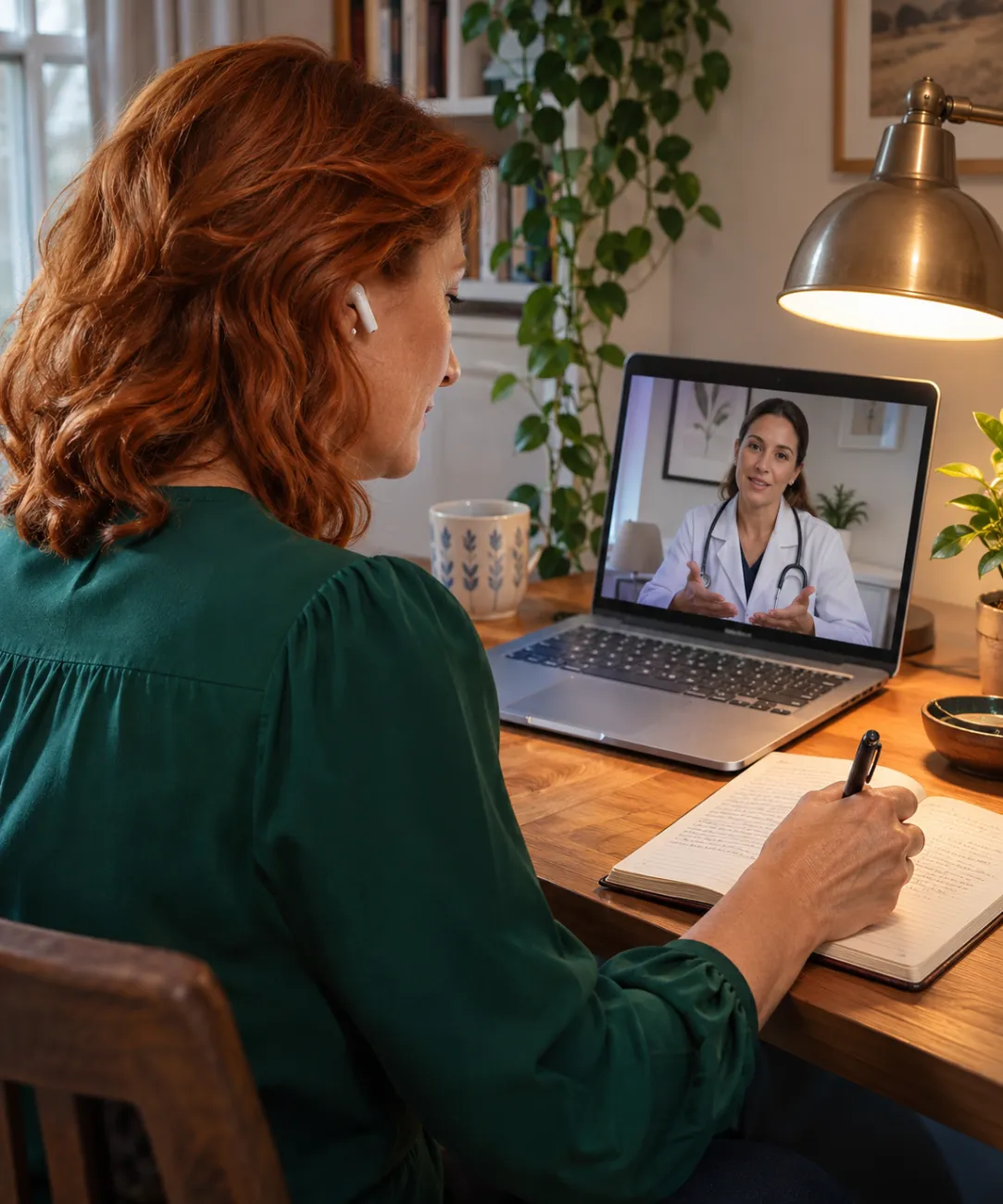
A red-haired woman takes notes on a laptop during a video call with a doctor
Fotografia de uma consulta. Os pontos assinalam o que a médica avalia; a imagem não mostra a zona íntima.

Why it happens

What may lie behind a loose vagina

The firmness that is felt depends on the width of the entrance to the vagina, the strength of the muscles around it, the integrity of the perineum and the quality of the mucosa. When one of these elements changes, the sensation changes. Choose a situation to see how it applies.

Vaginal birth

During birth, the entrance to the vagina and the muscles around it stretch a great deal and, in most women, recover to a large extent in the following months. In some there is injury, such as partial detachment of the levator ani muscle from the bone where it attaches. In one ultrasound study, it happened in about one in three women after a first vaginal birth. In another study, the complaint of laxity was about three times more frequent in women who had vaginal births than in those who only had caesareans, mainly because of the first birth.

What weighs on it

Concluding that, if the birth went “well”, the muscles stayed intact, or that the sensation is just “in the mind”.

What helps

Telling the doctor at the consultation how the births and tears went, and asking for an assessment of the muscles if the sensation persists after the first months.

Normal or to be assessed

Loose vagina or another explanation

Not every feeling of a loose vagina is laxity, and not all laxity calls for the same treatment. Before choosing, it is worth knowing what the examination shows.

  • How it shows. A feeling of a wider or less firm vagina since a birth or for some years, with less friction during sex, air or noise, tampons that slip.

  • What the examination may show. A wider entrance at rest or when bearing down, a shorter or scarred perineum, muscles with less strength or with a gap at the point of attachment.

  • What the clinic does. The doctor listens to what you feel, examines the entrance to the vagina, the perineum and the muscles, looks for prolapse and atrophy and explains what she has found.

  • At home. Pelvic floor training and intimate moisturising, while you wait for the consultation.

Severe pain, heavy bleeding, a high fever with discharge or unable to pass urine? Call 112 or go to the emergency department. If you have bleeding after sex or after the menopause, abnormal discharge or doubts, outside opening hours you can call SNS 24: 808 24 24 24.

Book an assessment consultation

What can help

Options for vaginal laxity

First-line treatment is supervised training of the pelvic floor muscles, for at least 3 months, which has good evidence for muscle function and is almost risk-free. In the menopause, dryness and atrophy are also treated, with moisturisers, lubricants and, when indicated, low-dose vaginal oestrogen on prescription. When there is perineal injury or prolapse, there are routes to be discussed with a specialist, such as the pessary or surgery, which the clinic does not propose in the first place. The treatments below are additional options, assessed case by case, without promising results and with limited evidence.

Book an assessment consultation
Dr Michelle Campagnoli, clinical director of Clínica Luxmed

First step

Assessment consultation

The doctor listens to what you are experiencing, examines your case and explains the suitable options. No treatment begins without this consultation.

May be considered when

you want to understand the cause and decide on the best path, with time and without commitment.

Book an assessment consultation
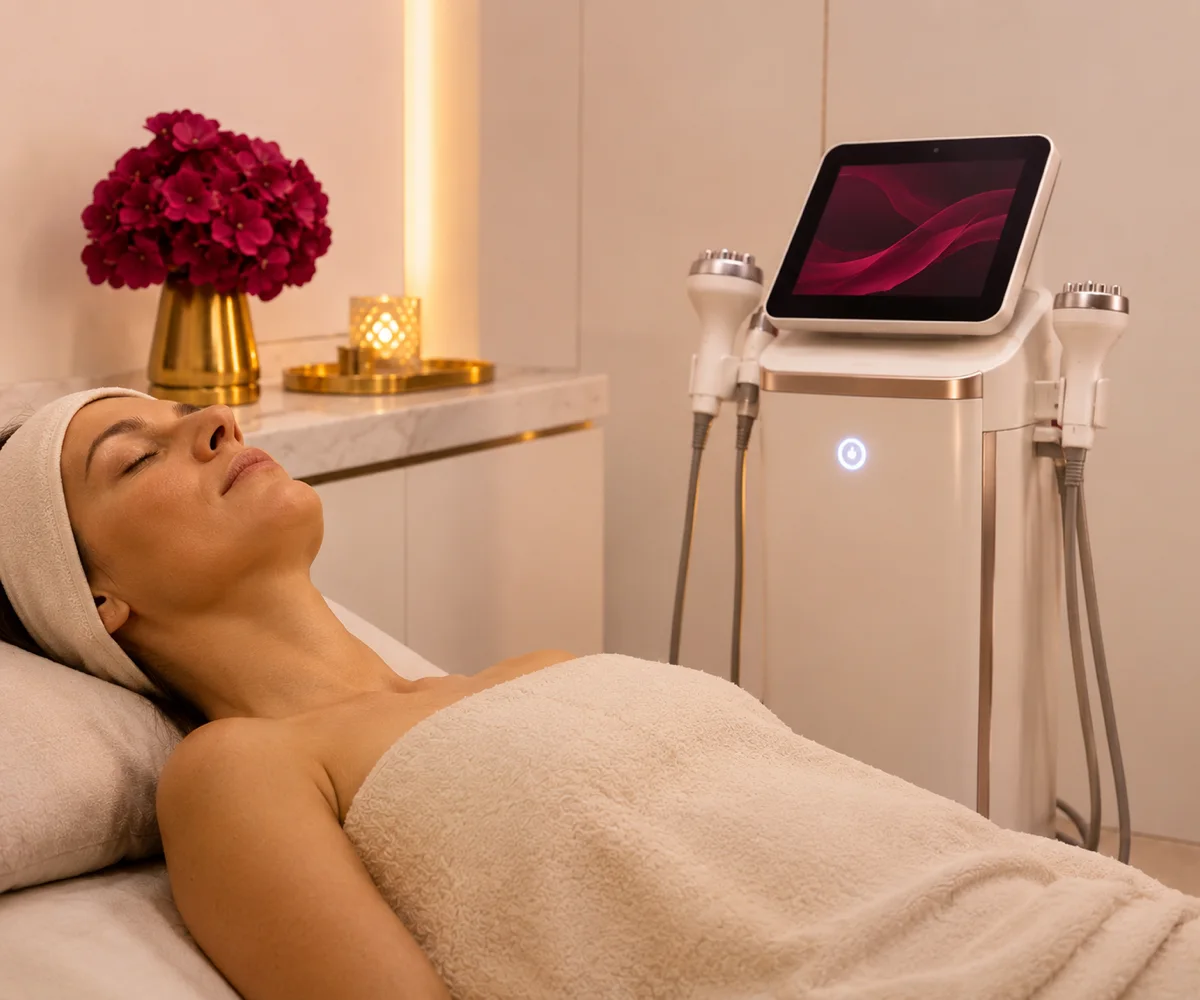
Private treatment room, with the device on an elegant trolley and a patient resting covered with a towel

Technology

Sectum, Neauvia radiofrequency (NRose Protocol)

Low-intensity radiofrequency, with the aim of warming the vaginal wall and stimulating collagen. For laxity, the sham-controlled trials were carried out with other devices, in premenopausal women, with modest, short-term benefit; there are no long-term data and it does not replace pelvic floor training.

May be considered when

the assessment showed no prolapse or injury calling for another route, pelvic floor training has been done (or is continuing), the doctor has explained what is known and what is not known and the decision is yours.

Find out more
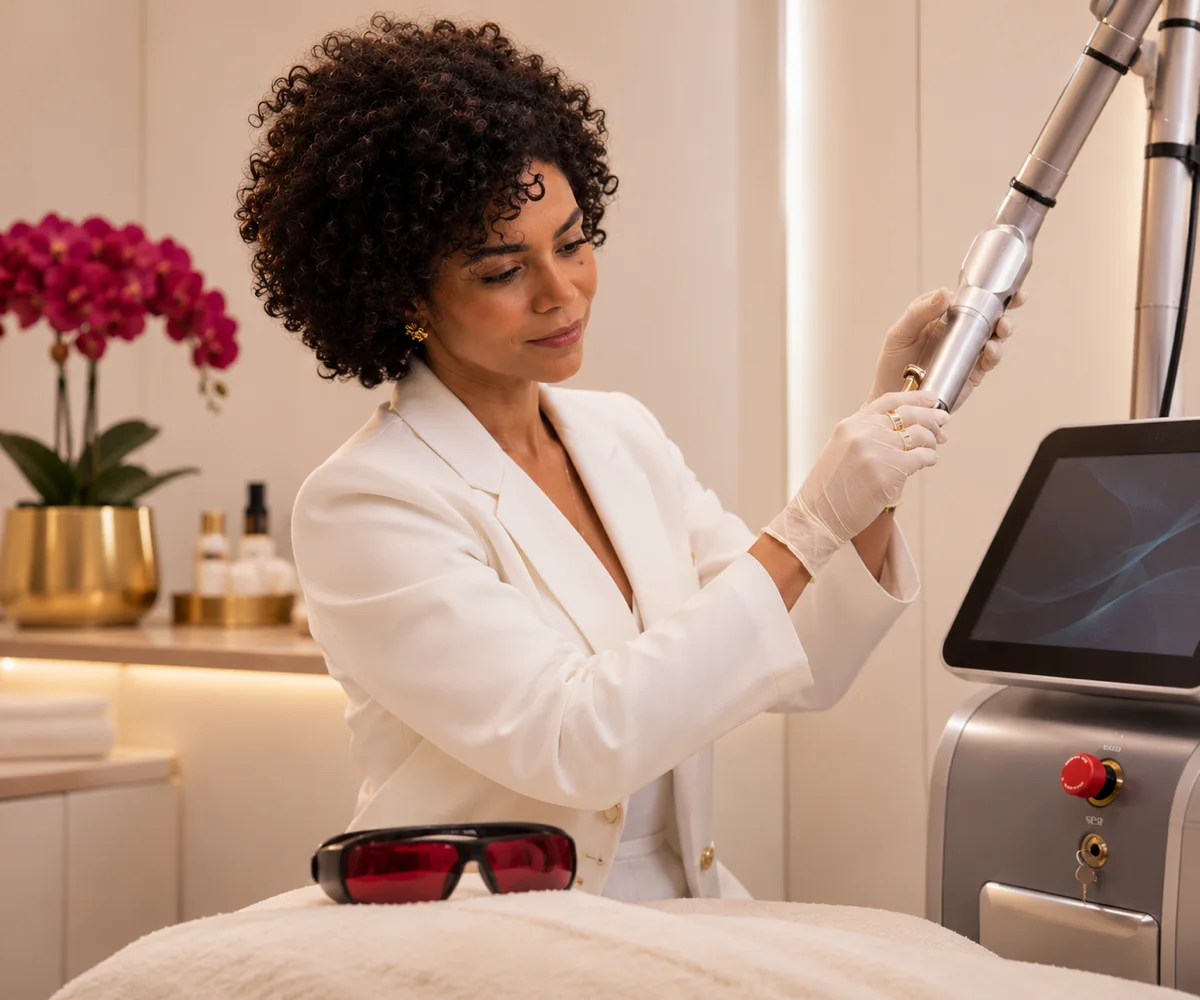
The doctor preparing the laser device, with the protective glasses in the foreground

Technology

Fractional CO2 laser

Laser energy applied to the mucosa, with the aim of renewing the tissue. For laxity, the studies are mostly small and without a control group, and in 2018 the FDA warned of burns, scars and pain during sex with these devices.

May be considered when

the assessment has been done, first-line options have been considered and the doctor has explained the benefits, risks and alternatives to you.

Find out more

What the journey looks like

From the first consultation to the plan tailored to you

No treatment begins without an assessment consultation with the doctor. Most women start with what is simplest, and only then is more considered.

  1. 01At the clinic

    Assessment consultation

    The doctor listens to what you feel and what has changed, asks about births, tears, the menopause and surgeries, and about the impact on sex life, and lets you speak in private, without hurry and without judgement.

  2. 02At the clinic

    Examination

    The width of the entrance to the vagina and the perineum, and the strength and integrity of the muscles are assessed, prolapse is looked for and the mucosa is examined. Ultrasound is kept for selected cases.

  3. 03At home and in physiotherapy

    Training and moisturising

    Supervised pelvic floor training is started, for at least 3 months, and dryness or atrophy is treated where present. This is often where the biggest difference is noticed.

  4. 04Over time

    Reassessing and deciding

    The sensation and the examination are reassessed. If it is not enough, or if there is injury or prolapse, the doctor explains the other routes, including energy-based technologies with the limited evidence, and refers to urogynaecology or surgery when needed.

Day to day

What helps while you wait for the consultation

Simple care that supports the muscles and the mucosa, alongside the plan the doctor sets out.

It is not your fault

The vagina is elastic and sex does not widen it

The vagina dilates during arousal and childbirth and returns to its usual state. Neither the frequency of sex nor the number of partners widens it permanently, and the hymen says nothing about a woman's sex life. What can really change is what childbirth and the years do to the muscles and perineum, and that can be assessed and treated.

Pelvic floor training, with guidance

It strengthens the muscles that surround the vagina and improves tone and the sensation of firmness.

In practice: slow, sustained contractions, with complete relaxation between each one, every day. If you are not sure you are contracting the right muscles, ask for confirmation.

Telling whoever is assessing you what you feel

Laxity is a complaint that women keep quiet about; talking about it allows the cause to be understood.

In practice: note since when you have felt it, what changed after the birth and what bothers you most, and bring it to the consultation.

Taking care of hydration

A well-hydrated mucosa improves comfort and changes the sensation during sex.

In practice: a water-based lubricant during sex and a regular vaginal moisturiser, if there is dryness.

Easing the pressure on the pelvic floor

Constipation with straining, chronic cough and heavy weights overload the muscles every day.

In practice: eat fibre, drink water, rest your feet on a small stool at the toilet and contract the pelvic floor before lifting a weight.

Dr Michelle Campagnoli, clinical director of Clínica Luxmed

Who will look after you

An assessment carried out by the doctor

At Luxmed, the first step is always an assessment consultation with Dr Michelle Campagnoli. She listens to what you feel, examines the entrance to the vagina, the perineum, the pelvic floor muscles and the mucosa, looks for prolapse, rules out other causes and designs the plan with you, in private, without hurry and without judgement, coordinating with pelvic physiotherapy or urogynaecology when needed.

  • Physical examination and medical historyA conversation about what you feel, an examination of the entrance to the vagina, the perineum and the muscles, and a search for prolapse and atrophy.
  • A plan tailored to youPelvic floor training first; additional treatments only if appropriate, with the evidence explained.
  • No obligationThe cost of any treatment is confirmed only after the assessment.
Book an assessment consultation

Book a consultation

Book your consultation

Choose how you prefer to get in touch. We will arrange the assessment consultation with Dr Michelle Campagnoli.

Booking through the website100€70€Assessment consultationExclusive price for those who book the assessment through the website. Outside the website, the price is 100 €.

New Life Miraflores, Algés · Office Center, R. Santa Teresa do Menino Jesus n.º 6, 9.º C, 1495-048

Your details are used only for this contact. Any treatment depends on a prior medical assessment.

Request an appointmentIt takes less than a minute.
Speciality
You do not need to go into detail. The doctor will talk to you during the consultation.
Request received. Our team will contact you as soon as possible.
Why do I have a loose vagina and what is vaginal laxity?

Vaginal laxity is the complaint of a vagina that is wider, looser or with less “tightness”. It is not a diagnosis in itself, but describes a sensation that the examination may explain. The most frequent cause is vaginal birth, which can stretch or injure the muscles and perineum; age, the menopause, loss of pelvic floor strength and prolapse also count. Only an assessment shows what is contributing in your case.

Does sex or having many partners widen the vagina?

No. The vagina dilates during arousal and returns to its usual state, and there is no evidence that the frequency of sex, the number of partners or the use of toys widens it permanently. This myth has no scientific basis and is often used to judge women's sex lives. Nor is it possible to tell from examining the hymen whether a woman has had sex.

Does the vagina stay loose after childbirth? Does it go away?

Vaginal birth stretches the entrance to the vagina and the muscles a great deal, and in most women recovery is considerable in the following months. In some, an injury remains, such as a partially detached muscle or a shorter perineum, and the sensation persists. If it continues to bother you after a few months, it is worth asking for an assessment: there is treatment, and pelvic floor training helps in many cases.

Does the menopause make the vagina loose?

In general, no: the fall in oestrogen makes the mucosa thinner and less elastic and, sometimes, narrower and drier. What can decrease with age is the strength of the muscles and the support of the walls, which gives a feeling of less firmness. That is why dryness and atrophy are also treated, with moisturisers, lubricants and, when indicated, low-dose vaginal oestrogen on prescription.

How do I know whether it is laxity or prolapse?

Prolapse usually gives a feeling of heaviness, pressure or a “ball” in the vagina, and may come with urinary leakage or difficulty emptying the bladder or bowel. Laxity is mainly a sensation of a wide or less firm entrance. The two can coexist, and the distinction is made on gynaecological examination, with the woman bearing down.

Do Kegel exercises solve a loose vagina?

They strengthen the muscles and improve tone, and in many women they improve the sensation of firmness and sexual function. In a trial in first-time mothers, early training improved muscle strength and several domains of sexual function. The best result comes from a supervised programme, for at least 3 months; they do not repair a serious anatomical injury or a shortened perineum.

Does radiofrequency (Sectum) tighten the vagina?

There is no proof that it “tightens”. Sham-controlled trials, carried out with other radiofrequency devices, showed more women reporting less laxity at 6 months than with the sham treatment, but the benefit was modest, short-term and mostly subjective, and in a comparison with pelvic floor training the latter was better at 6 months. Sectum has no trials of its own for laxity. It is an additional option, assessed case by case, which does not replace training.

Do these treatments carry risks?

In the studies, the most common effects are mild and short-lived: discomfort, a feeling of heat, discharge or redness for a few days. Burns, scars, persistent pain and pain during sex have been reported, more rarely, and the long-term risks are not well studied. In 2018 the FDA warned against these devices for sexual function purposes. They are not carried out in the presence of active infection, unexplained bleeding, undiagnosed lesions or pregnancy.

Is surgery to narrow the vagina safe? And the laser?

Surgery (perineoplasty, colporrhaphy) can correct a real anatomical injury of the perineum or vaginal wall, but has risks such as pain during sex, altered sensation and overcorrection, is permanent and difficult to reverse, and scientific societies urge caution when the indication is purely cosmetic. For the laser, the studies on laxity are mostly small and without a control group, and the duration of the effect is little known.

When should I book a consultation? Can I be treated before having more children?

Book a consultation if the sensation bothers you or affects your sex life, if there is air or noise in the vagina, if you leak urine, wind or stool, have heaviness or a “ball”, or if you have noticed changes after a birth that have not improved in months. Training and treatment of atrophy can be done at any time; for surgery, it is generally advisable to wait until you no longer want more children. If you have doubts, outside opening hours call SNS 24 (808 24 24 24); with severe pain, heavy bleeding or inability to pass urine, call 112.

We could not find that question. Ask us on WhatsApp

Scientific references

This page is based on the sources below and was reviewed by Dr. Michelle Campagnoli. Last updated on .

  1. Pauls RN, Fellner AN, Davila GW. Vaginal laxity: a poorly understood quality of life problem; a survey of physician members of the International Urogynecological Association (IUGA). International Urogynecology Journal 23(10):1435-1448, 2012.
  2. Randombage PJS, Hettipathirana PS, Akurugodagama M. Comparative Effectiveness of Conservative and Surgical Interventions for Vaginal Laxity: A Systematic Review and Pairwise Meta-Analysis. International Urogynecology Journal, 2026.
  3. Krychman M, Rowan CG, Allan BB, DeRogatis L, Durbin S, Yacoubian A, Wilkerson D. Effect of Single-Treatment, Surface-Cooled Radiofrequency Therapy on Vaginal Laxity and Female Sexual Function: The VIVEVE I Randomized Controlled Trial. Journal of Sexual Medicine 14(2):215-225, 2017.
  4. Qureshi AA, Tenenbaum MM, Myckatyn TM. Nonsurgical Vulvovaginal Rejuvenation With Radiofrequency and Laser Devices: A Literature Review and Comprehensive Update for Aesthetic Surgeons. Aesthetic Surgery Journal 38(3):302-311, 2018.
  5. Medsafe (Nova Zelândia), a retransmitir o alerta da U.S. FDA. Safety Information: energy-based devices used for vaginal 'rejuvenation' or vaginal cosmetic procedures (relays the USFDA safety communication of July 2018). Medsafe, New Zealand Medicines and Medical Devices Safety Authority, 2018.
  6. Dietz HP, Lanzarone V. Levator trauma after vaginal delivery. Obstetrics & Gynecology 106(4):707-712, 2005.
  7. Mustafa-Mikhail S, Gillor M, Francis YN, Dietz HP. Is Vaginal Laxity Associated with Vaginal Parity and Mode of Delivery?. International Urogynecology Journal 35(12):2323-2328, 2024.
  8. Barnhart KT, Izquierdo A, Pretorius ES, Shera DM, Shabbout M, Shaunik A. Baseline dimensions of the human vagina. Human Reproduction 21(6):1618-1622, 2006.
  9. World Health Organization; UN Human Rights; UN Women. Eliminating virginity testing: an interagency statement. WHO, Genebra (WHO/RHR/18.15), 2018.
  10. Citak N, Cam C, Arslan H, Karateke A, Tug N, Ayaz R, Celik C. Postpartum sexual function of women and the effects of early pelvic floor muscle exercises. Acta Obstetricia et Gynecologica Scandinavica 89(6):817-822, 2010.
  11. National Institute for Health and Care Excellence (NICE). Pelvic floor dysfunction: prevention and non-surgical management (NG210). NICE guideline NG210, 2021.
  12. Hagen S, Stark D, Glazener C, Dickson S, Barry S, Elders A, et al; POPPY Trial Collaborators. Individualised pelvic floor muscle training in women with pelvic organ prolapse (POPPY): a multicentre randomised controlled trial. The Lancet 383(9919):796-806, 2014.
  13. NHS. Pelvic organ prolapse. (NHS (nhs.uk), acedido 2026-11-11)
  14. American College of Obstetricians and Gynecologists (ACOG). Elective Female Genital Cosmetic Surgery: ACOG Committee Opinion, Number 795. Obstetrics & Gynecology 135(1):e36-e42, 2020.
  15. The NAMS 2020 GSM Position Statement Editorial Panel. The 2020 genitourinary syndrome of menopause position statement of The North American Menopause Society. Menopause 27(9):976-992, 2020.
  16. Low N, Chersich MF, Schmidlin K, Egger M, Francis SC, van de Wijgert JHHM, et al. Intravaginal practices, bacterial vaginosis, and HIV infection in women: individual participant data meta-analysis. PLoS Medicine 8(2):e1000416, 2011.
CallAssistantAvailableBook