
Algés, Oeiras Mon to Fri · 09:00 to 13:00 and 14:00 to 19:00 · Sat · 09:00 to 14:00
WhatsApp Book a consultation

Aesthetic gynaecology

Vagina that closes up during penetrationWhat happens when the body closes the entrance, and what can help

Saying that the vagina “closes” is the most common way of describing something many women feel and few talk about: the body tightens or pulls back at the entrance when trying to insert a tampon, have an examination or have sex, even when the wish is otherwise. In most cases there is nothing wrong with the anatomy: it is a protective reflex of the muscles around the entrance, which medicine calls vaginismus. Here we explain what it feels like, what may lie behind it, how it is told apart from an anatomical barrier or other pain and what is done, with honesty about what the evidence says.

Reviewed by Dr Michelle Campagnoli, clinical director

  • 2first lines: therapy and pelvic physiotherapy
  • 1assessment consultation, always first
  • 70 €assessment booked through the website
Woman in a denim jacket and backpack looking at the shelves of a pharmacy, with a hesitant look

How to recognise it

Is it a vagina that closes on penetration?

Not all women feel the same, and the difficulty may always have been there or may have started later. What matters is what happens to your body, in which situations and since when.

Tick what you recognise0/7

Tick the signs you recognise in your case. This is not a diagnosis, it is only meant to give you an idea.

Do you have bleeding after sex or after the menopause, discharge with a smell or itching, sudden or persistent pain, lesions on the vulva that change, fever, pain on passing urine or blood in the urine? Or have you never had a period, or do you have cyclical lower abdominal pain without a period? You need assessment, without waiting or trying to resolve it on your own. Outside opening hours, call SNS 24: 808 24 24 24.

Therapist in glasses talking with a woman in armchairs in a therapy room, with a box of tissues
Photograph of a consultation. The dots mark what the doctor assesses; the image does not show the intimate area.

Why it happens

What lies behind a vagina that closes

There is almost never a single cause. It is usually a reflex that is learned and reinforced with each attempt, to which fear, pain and the way one learned to look at sex are added. Choose a situation to see how it applies.

The protective reflex

When the brain associates penetration with pain or threat, the muscles around the entrance contract by themselves, before any decision. Each painful attempt reinforces the association, and the vagina closes more and more quickly.

What weighs on it

Telling yourself to relax, or trying to “push through” by force: the body reads that as more threat.

What helps

Undoing the association with gradual training, at your own pace, instead of forcing.

Reflex or something else

A reflex, or something to assess

The same sentence, “I can't”, can have different explanations, and the treatment depends on which it is. The assessment exists to tell them apart, not to put you to the test.

  • How it shows. The thighs close, the body pulls back or the entrance tightens when penetration is attempted or imagined; desire and arousal may be present.

  • What usually happens. It happens with the tampon, the examination and sex, and gets worse with fear and anxiety.

  • What the clinic does. It listens, rules out other causes and explains what it finds, and guides you to psychosexual therapy and pelvic physiotherapy.

  • What usually helps. Gradual approach, relaxation, pelvic physiotherapy and sex therapy, with or without a partner.

Sudden severe pain, fever, unable to pass urine, or have you never had a period and have cyclical lower abdominal pain? Call 112 or go to the emergency department. If you have bleeding after sex, abnormal discharge or doubts, outside opening hours you can call SNS 24: 808 24 24 24.

Book an assessment consultation

What can help

What is done when the vagina closes on penetration

First-line treatments are sex or psychosexual therapy (with techniques of graded exposure and relaxation), pelvic floor physiotherapy and graded training with vaginal dilators, alone or with a partner, after an assessment that rules out a physical cause. This is what has the best evidence: in one trial, graded exposure guided by a therapist allowed sex in 31 of 35 women. Treating the underlying pain (infection, dryness, skin) is part of the plan. The treatments below are additional options, assessed case by case, do not replace these and do not promise results.

Book an assessment consultation
Dr Michelle Campagnoli, clinical director of Clínica Luxmed

First step

Assessment consultation

The doctor listens to what you are experiencing, examines your case and explains the suitable options. No treatment begins without this consultation.

May be considered when

you want to understand the cause and decide on the best path, with time and without commitment.

Book an assessment consultation
The doctor checking a fine syringe before the treatment, in a bright room

Injection

Botulinum toxin

It temporarily relaxes the pelvic floor muscles around the entrance. Its use in vaginismus is outside the approved indications, the studies are mostly small series without a comparison group, and there are possible side effects, such as temporary urinary or faecal leakage. It does not treat the fear or the underlying pain.

May be considered when

first-line treatments have been tried for long enough and the muscles still prevent training, the doctor has explained what is known and what is not known, and the decision is yours.

Find out more
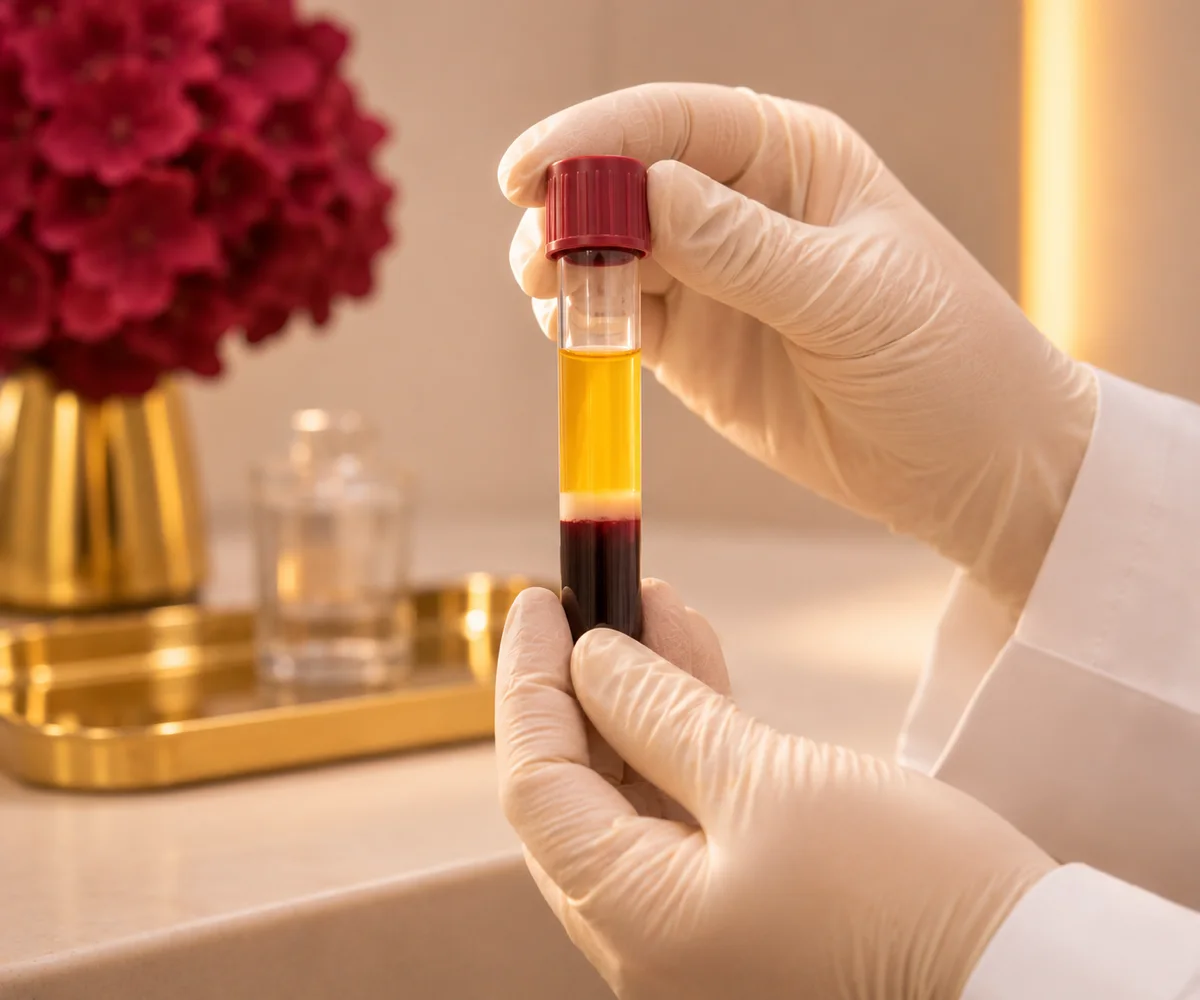
PRP: the doctor holding the tube after centrifugation, with the golden plasma separated from the blood

Regeneration

PRP (platelet-rich plasma)

Plasma from your own blood, which aims to support tissue recovery. There are no studies showing benefit in vaginismus, and the evidence in the vaginal mucosa is limited. It can be discussed only if there is a fragile mucosa or associated fissures, and it does not act on the muscular reflex.

May be considered when

the doctor has identified a fragile mucosa or fissures, first-line treatments are under way and the decision was taken after explaining to you what is known and what is not known.

Find out more

What the journey looks like

From the first conversation to graded training

No treatment starts without an assessment consultation with the doctor. This is how it goes, and you can interrupt or decline any part of the examination.

  1. 01At the clinic

    Assessment consultation

    The doctor listens to what happens, when and since when, asks about pain, periods, births and surgeries and what you have already tried. She lets you speak in private, without hurry and without judgement.

  2. 02At the clinic

    Ruling out other causes

    If you wish and when you wish, the examination is carried out, which can begin with external observation only and go at your pace, and infection, skin, pain or anatomical change is looked for. You can stop at any moment.

  3. 03At the clinic and at home

    A plan tailored to you

    If appropriate, sex or psychosexual therapy, pelvic physiotherapy and graded training with dilators are combined, and the underlying pain is treated. Only then does the doctor explain the other options.

  4. 04Over time

    Follow-up

    Reassessment is regular and the pace is adjusted to you. If the steps stall, the plan is rethought, and therapy can continue alongside any other treatment.

Day to day

What helps while you wait for the consultation

Simple care that reduces pressure and fear, alongside the plan the doctor sets out.

It is not a lack of willingness

The body is protecting you, not refusing

The reflex does not depend on willpower: it happens even when you want it very much and try with all your effort. Insisting, putting up with the pain or “getting it over with” tends to reinforce the fear. What usually works is the opposite: going slowly, with control of your own, and in safety. Asking for help is not failing, and most women improve with the right treatment.

Talking to someone who listens without judging

Putting it into words takes the weight off and lets you choose the pace.

In practice: choose a person you trust, your partner or the doctor, and say what you feel and what you need, including stopping whenever you wish.

Learning to breathe and let go

Slow breathing helps the body come out of the state of alert.

In practice: lying down, with your legs supported, breathe out slowly and let go of the belly and thighs. Ten minutes a day, with nothing to try to do.

Getting to know your body calmly

Looking and touching gently, in your own time, helps to break the association with fear.

In practice: start where you feel safe, on the outside, and only move on if and when you wish. If you feel strong anxiety, stop.

Agreeing a “stop signal” with your partner

Knowing that you can stop at any moment takes away the pressure.

In practice: agree a word or gesture that stops everything, and always respect it. You can approach other forms of intimacy in the meantime.

Dr Michelle Campagnoli, clinical director of Clínica Luxmed

Who will look after you

An assessment carried out by the doctor

At Luxmed, the first step is always an assessment consultation with Dr Michelle Campagnoli. She listens to what is going on, rules out other causes, assesses, if and when you wish, the entrance and the pelvic floor muscles and explains what she has found, in private and without hurry. The plan is adjusted to you and coordinated with sex therapy and pelvic physiotherapy.

  • Physical examination and medical historyA conversation about what happens, ruling out other causes and, with your consent, an examination at your pace.
  • A plan tailored to youFirst therapy and physiotherapy; additional treatments only if they are appropriate, with the evidence explained.
  • No obligationThe cost of any treatment is confirmed only after the assessment.
Book an assessment consultation

Book a consultation

Book your consultation

Choose how you prefer to get in touch. We will arrange the assessment consultation with Dr Michelle Campagnoli.

Booking through the website100€70€Assessment consultationExclusive price for those who book the assessment through the website. Outside the website, the price is 100 €.

New Life Miraflores, Algés · Office Center, R. Santa Teresa do Menino Jesus n.º 6, 9.º C, 1495-048

Your details are used only for this contact. Any treatment depends on a prior medical assessment.

Request an appointmentIt takes less than a minute.
Speciality
You do not need to go into detail. The doctor will talk to you during the consultation.
Request received. Our team will contact you as soon as possible.
Why does my vagina close when I try penetration?

In most cases it is a protective reflex: the muscles around the entrance contract by themselves, without a conscious decision, when the body anticipates pain or threat. Medicine calls it vaginismus. It is not a lack of willingness, nor a failing of yours, and it does not mean there is anything wrong with the anatomy. But only an assessment confirms that this is what it is and rules out other causes, such as pain, infection or an anatomical change.

I cannot insert a tampon: does that mean I have vaginismus?

Not necessarily. Difficulty with a tampon is one of the signs of vaginismus, but it can also have other explanations: pain at the entrance, dryness, infection, sensitive skin, a tampon of the wrong size or shape, tension or an anatomical change. If you try and cannot, or if it hurts, it is worth talking about it at a consultation rather than persisting.

Is my vagina too small or narrow?

Almost always not. The vagina is elastic and adapts, and in the great majority of women who “cannot”, the anatomy is normal. There are rare situations in which there is a barrier, such as a hymen that obstructs the entrance, a septum or a short or absent vagina from birth, and only an examination identifies them. In those cases the plan is different.

Can this be cured?

In most cases it improves greatly with appropriate treatment. Studies show that, with psychosexual therapy, pelvic physiotherapy or a combination of the two, most women manage to achieve penetration, although studies vary greatly and so do the definitions of success. A cure is not promised, but there is a lot that can be done, and the pace is yours.

How is it treated? What happens in therapy?

First-line treatments are sex or psychosexual therapy (with techniques of graded exposure, relaxation and breathing), pelvic floor physiotherapy and graded training with vaginal dilators, at home or accompanied. The underlying pain is also treated. A trial of graded exposure guided by a therapist, in a few sessions, had good results in women who had never had intercourse. The plan is adjusted to you and your pace.

Does my partner have to take part? And what if the problem is theirs?

They do not have to take part, but if you wish they can help: in a review of studies, partner involvement did not change the outcome of treatment. In cases of an “unconsummated marriage”, the difficulty is not always only the woman's: there may also be erection difficulties or anxiety in the partner, so it is worth talking about everything at the consultation, together or separately, as you prefer.

Will the gynaecological examination hurt? Can I refuse?

It should not hurt, and you can refuse or stop at any moment. It can start with just conversation and external observation, and only go further if and when you wish. You can ask for it to be done by a woman doctor, come accompanied by someone you trust and agree a signal to stop. The aim is to understand what is going on, not to put you to the test.

Is botulinum toxin for me?

It can be considered in cases that have not responded to first-line treatments, after assessment. Its use in vaginismus is outside the approved indications, the studies are small and without an adequate comparison group, and there are possible side effects, such as temporary urinary or faecal leakage, especially with higher doses. It does not treat the fear or the underlying pain, so it does not replace therapy. The doctor explains to you what is known and what is not known, and the decision is shared.

When might this not be vaginismus and be an emergency?

Seek assessment without delay if you have sudden severe pain, fever, bleeding after sex, abnormal discharge, pain on passing urine or blood in the urine, or if you have never had a period or have cyclical lower abdominal pain without a period, which may indicate an obstruction. Also if the difficulty began after radiotherapy or pelvic surgery. Outside opening hours, call SNS 24 (808 24 24 24). If you cannot pass urine or the pain is very severe, call 112.

When should I book a consultation? Is there a deadline to “consummate the marriage”?

Book a consultation when the difficulty bothers you, or your relationship, and you do not need to wait for any special moment: neither to have a partner, nor a deadline. There is no medical deadline for “consummation”, and pressure to meet one tends to make the reflex worse. If you have blood, discharge, pain or doubts about the anatomy, book without waiting. Outside opening hours, call SNS 24 (808 24 24 24).

We could not find that question. Ask us on WhatsApp

Scientific references

This page is based on the sources below and was reviewed by Dr. Michelle Campagnoli. Last updated on .

  1. NHS. Vaginismus. (NHS (nhs.uk), acedido 2026-11-11)
  2. Melnik T, Hawton K, McGuire H. Interventions for vaginismus. Cochrane Database of Systematic Reviews 2012(12):CD001760, 2012.
  3. Maseroli E, Scavello I, Rastrelli G, Limoncin E, Cipriani S, Corona G, et al. Outcome of Medical and Psychosexual Interventions for Vaginismus: A Systematic Review and Meta-Analysis. Journal of Sexual Medicine 15(12):1752-1764, 2018.
  4. Zulfikaroglu E. Vaginismus treatment: a systematic review and meta-analysis of contemporary therapeutic approaches. Journal of Sexual Medicine 23:qdaf295, 2026.
  5. Ter Kuile MM, Melles R, de Groot HE, Tuijnman-Raasveld CC, van Lankveld JJ. Therapist-aided exposure for women with lifelong vaginismus: a randomized waiting-list control trial of efficacy. Journal of Consulting and Clinical Psychology 81(6):1127-1136, 2013.
  6. Lahaie MA, Boyer SC, Amsel R, Khalifé S, Binik YM. Vaginismus: a review of the literature on the classification/diagnosis, etiology and treatment. Women's Health (London) 6(5):705-719, 2010.
  7. Binik YM. The DSM diagnostic criteria for vaginismus. Archives of Sexual Behavior 39(2):278-291, 2010.
  8. Reissing ED, Binik YM, Khalifé S, Cohen D, Amsel R. Vaginal spasm, pain, and behavior: an empirical investigation of the diagnosis of vaginismus. Archives of Sexual Behavior 33(1):5-17, 2004.
  9. Tetik S, Yalçınkaya Alkar Ö. Vaginismus, Dyspareunia and Abuse History: A Systematic Review and Meta-analysis. Journal of Sexual Medicine 18(9):1555-1570, 2021.
  10. Ghazizadeh S, Nikzad M. Botulinum toxin in the treatment of refractory vaginismus. Obstetrics & Gynecology 104(5 Pt 1):922-925, 2004.
  11. Bertolasi L, Frasson E, Cappelletti JY, Vicentini S, Bordignon M, Graziottin A. Botulinum neurotoxin type A injections for vaginismus secondary to vulvar vestibulitis syndrome. Obstetrics & Gynecology 114(5):1008-1016, 2009.
  12. Karp BI, Tandon H, Vigil D, Stratton P. Methodological approaches to botulinum toxin for the treatment of chronic pelvic pain, vaginismus, and vulvar pain disorders. International Urogynecology Journal 30(7):1071-1081, 2019.
  13. Morin M, Dumoulin C, Bergeron S, Mayrand MH, Khalifé S, Waddell G, et al; Provoked Vestibulodynia Study Group. Multimodal physical therapy versus topical lidocaine for provoked vestibulodynia: a multicenter, randomized trial. American Journal of Obstetrics and Gynecology 224(2):189.e1-189.e12, 2021.
  14. Bornstein J, Goldstein AT, Stockdale CK, et al. 2015 ISSVD, ISSWSH, and IPPS consensus terminology and classification of persistent vulvar pain and vulvodynia. Obstetrics & Gynecology 127(4):745-751, 2016.
  15. Lewis FM, Tatnall FM, Velangi SS, et al. British Association of Dermatologists guidelines for the management of lichen sclerosus, 2018. British Journal of Dermatology 178(4):839-853, 2018.
  16. NHS. Vulvodynia (vulval pain). (NHS (nhs.uk), acedido 2026-11-11)
  17. Committee on Adolescent Health Care, American College of Obstetricians and Gynecologists. ACOG Committee Opinion No. 728: Müllerian Agenesis: Diagnosis, Management, and Treatment. Obstetrics & Gynecology 131(1):e35-e42, 2018.
  18. Lee KH, Hong JS, Jung HJ, Jeong HK, Moon SJ, Park WH, et al. Imperforate Hymen: A Comprehensive Systematic Review. Journal of Clinical Medicine 8(1):56, 2019.
  19. Miles T, Johnson N. Vaginal dilator therapy for women receiving pelvic radiotherapy. Cochrane Database of Systematic Reviews 2014(9):CD007291, 2014.
  20. Waghe T, Acharya N, Karnik M, Mohammad S, Patel NA, Gemnani R. Role of Platelet-Rich Plasma in Genitourinary Syndrome of Menopause. Cureus 16(1):e53316, 2024.
  21. Li S, Wang H, Zhang T, Li C. Unconsummated marriage: etiology and treatment of erectile dysfunction in newlywed men-a narrative review with a focus on China. Translational Andrology and Urology, 2026.
CallAssistantAvailableBook