
Algés, Oeiras Mon to Fri · 09:00 to 13:00 and 14:00 to 19:00 · Sat · 09:00 to 14:00
WhatsApp Book a consultation

Aesthetic gynaecology

VaginismusWhen the muscles close by themselves as penetration approaches, without the woman deciding it

Vaginismus is an involuntary contraction of the muscles around the entrance to the vagina, which makes penetration painful or impossible: sex, a tampon, a finger or a speculum at a consultation. It is not a lack of willingness or “all in the head”: it is a protective reflex that the woman does not control, and which is often fed by fear of pain. It has treatment, and the best evidence is on the side of pelvic floor physiotherapy, graded exposure and sex therapy, with or without dilators. Here we explain how it is recognised, what may lie behind it, what is assessed and the honest, limited role of treatments such as botulinum toxin and PRP.

Reviewed by Dr Michelle Campagnoli, clinical director

  • Involuntary reflexof the pelvic floor muscles, which the woman does not control
  • 1assessment consultation, always first
  • 70 €assessment booked through the website
Woman in a green top sitting cross-legged on a cushion, with her eyes closed and her hands on her abdomen

How to recognise it

Is it vaginismus?

The central feature is the automatic contraction of the muscles when something is about to enter the vagina, or just at the thought of it. Many women have normal desire and arousal and feel that the problem only appears at the moment of penetration.

Tick what you recognise0/7

Tick the signs you recognise in your case. This is not a diagnosis, it is only meant to give you an idea.

Do you have bleeding after sex or between periods, foul-smelling or abnormally coloured discharge, fever, sudden or severe pelvic pain, a sore or patch on the vulva that changes or does not heal, or pain that does not go away and keeps getting worse? You need medical assessment and should not wait. Outside opening hours, call SNS 24: 808 24 24 24.

Doctor in a white coat showing a patient a sheet with a drawn staircase, on a desk
Photograph of a consultation. The dots mark what the doctor assesses; the image does not show the intimate area.

Why it happens

What may lie behind vaginismus

There is almost never a single cause. The most frequent is a circle: the expectation of pain tenses the muscles, the tension causes pain, and the pain reinforces the fear. Choose a situation to see how it applies.

A protective reflex

The pelvic floor muscles contract automatically in the face of what the body interprets as a threat, just as the eyelid closes when something approaches the eye. The woman does not decide this and cannot “relax by force”, and the more she tries, the more the muscles contract.

What weighs on it

Thinking that it is enough to “relax” or “want to”, or that the problem is a lack of effort.

What helps

Understanding that it is a reflex and training the body, little by little, to stop triggering it.


Normal or to be assessed

Vaginismus or another cause of pain

Pain on penetration has several origins, and vaginismus is only one of them. That is why it is worth telling them apart before choosing the treatment.

  • How it shows. The muscles close as something approaches (penis, finger, tampon, speculum), with or without pain, and the woman feels she does not control them.

  • When it happens. From the first attempts (primary) or after a period without problems (secondary). Desire and arousal may be intact.

  • What the clinic does. The doctor listens, examines the vulva carefully, rules out other causes and explains what vaginismus is and how it is treated, at the woman's pace.

  • At home. Breathing and relaxation, learning the anatomy of your own body and avoiding forcing painful attempts, while you wait for the consultation.

A high fever, sudden severe pelvic pain, or heavy bleeding? Call 112 or go to the emergency department. If you have bleeding after sex, abnormal discharge or doubts, outside opening hours you can call SNS 24: 808 24 24 24.

Book an assessment consultation

What can help

Options for vaginismus

First-line treatment, with the best evidence, is a multi-pronged programme: an explanation of what is happening, pelvic floor physiotherapy to learn to relax the muscles, graded exposure (with dilators or with the woman's own fingers) and sex therapy or cognitive behavioural therapy to treat the fear. In many women this alone is enough. Botulinum toxin is kept for selected cases that do not respond, and PRP has no evidence in vaginismus: both are additional options, assessed case by case and without promising results.

Book an assessment consultation
Dr Michelle Campagnoli, clinical director of Clínica Luxmed

First step

Assessment consultation

The doctor listens to what you are experiencing, examines your case and explains the suitable options. No treatment begins without this consultation.

May be considered when

you want to understand the cause and decide on the best path, with time and without commitment.

Book an assessment consultation
The doctor checking a fine syringe before the treatment, in a bright room

Injectable

Botulinum toxin

Injection in small doses into the pelvic floor muscles that contract, with the aim of temporarily weakening them and making penetration and training easier. In clinical practice it is used outside the approved indications (off-label), in cases that do not respond to other approaches. The evidence comes mainly from small studies without a placebo group, and in one trial pelvic floor physiotherapy had better results than the toxin.

May be considered when

the diagnosis is confirmed, other causes have been ruled out, the first-line programme (physiotherapy, graded exposure and psychosexual support) has been done and has not been enough, the doctor has explained the limitations of the evidence and the decision is yours.

Find out more
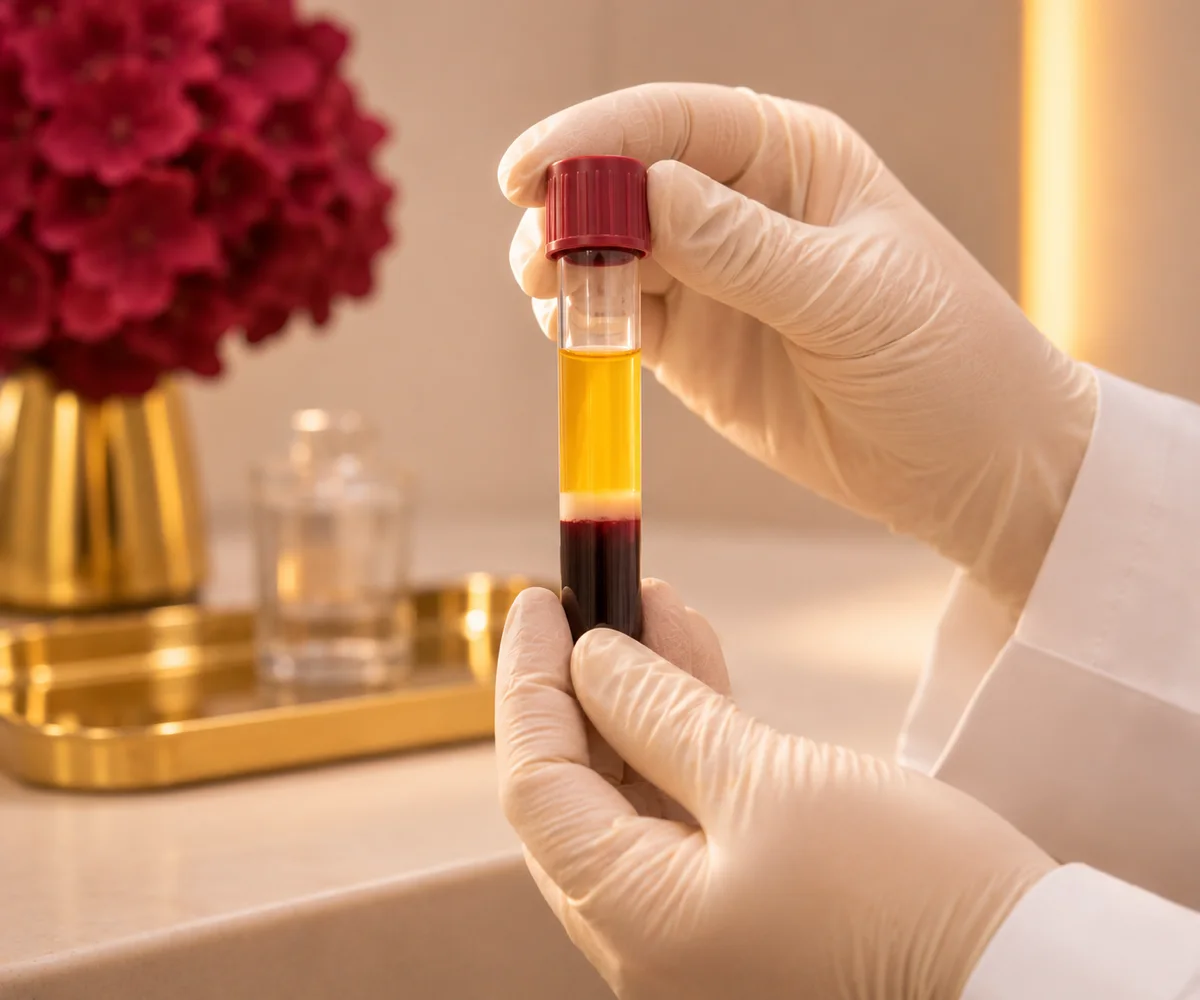
PRP: the doctor holding the tube after centrifugation, with the golden plasma separated from the blood

Injectable

PRP (platelet-rich plasma)

Plasma obtained from your own blood and applied to the intimate tissues, with the aim of supporting regeneration and the quality of the mucosa. We did not find controlled studies showing benefit in vaginismus itself. It is only considered when, in addition to vaginismus, there is a thin or sensitive mucosa, and never as a treatment for the muscular reflex or in place of first-line options.

May be considered when

the assessment has shown an associated thin, dry or sensitive mucosa, first-line options are under way or have been done, and the doctor has explained that there is no evidence that PRP treats vaginismus.

Find out more

What the journey looks like

From the first consultation to the plan tailored to you

No treatment starts without an assessment consultation with the doctor. No one asks more of you than you are ready to do, and you can stop whenever you wish.

  1. 01At the clinic

    Assessment consultation

    The doctor listens to what is going on and since when, explains what vaginismus is and answers your questions, in private and without hurry. Your partner can be included if you wish.

  2. 02At the clinic

    Observation and ruling out other causes

    The vulva is examined for infection, fissures, skin disease or pain at the entrance, and only afterwards, if the woman is ready, is the pelvic floor assessed. The speculum examination can wait until later. Tests or swabs are requested when necessary.

  3. 03At home and with the team

    Relaxation and graded exposure

    With pelvic floor physiotherapy and, where appropriate, sex therapy or psychology, you learn to relax the muscles and progress in steps: from external touch to dilators or fingers, at the woman's pace and only when the previous step is comfortable.

  4. 04Over time

    Reassessing and deciding

    Together, we see what has changed and what is missing. If the first-line programme is not enough, the doctor explains the additional options, such as botulinum toxin, with their limitations, and coordinates with other specialties.

Day to day

What helps while you wait for the consultation

Simple care that reduces tension and fear, alongside the plan the doctor recommends.

It is not your fault

Vaginismus is not a lack of willingness

It is a reflex of the body, not a failing of character, effort or love. Many women spend years in silence out of embarrassment, thinking they are the only ones. Talking to someone who knows about the subject is usually the greatest relief, and treatment, done at your pace, improves the situation in most women.

Daily breathing and relaxation

They reduce the baseline tension of the body and the pelvic floor.

In practice: breathe deeply, letting the belly and perineum “let go” as you breathe out, for 5 to 10 minutes a day, even without any attempt at penetration.

Getting to know your anatomy

Understanding what the body looks like inside and out reduces fear of the unknown.

In practice: use illustrations or a mirror, if you feel comfortable, and ask the doctor to explain the anatomy to you.

Communicating with your partner

It reduces pressure and guilt and puts the couple on the same side.

In practice: explain that it is a reflex and agree that penetration can be set aside until there is a plan.

Keeping up other forms of intimacy

It preserves closeness and pleasure without the fear of penetration.

In practice: caresses, kisses and external stimulation, at your pace and without a goal.

Dr Michelle Campagnoli, clinical director of Clínica Luxmed

Who will look after you

An assessment carried out by the doctor

At Luxmed, the first step is always an assessment consultation with Dr Michelle Campagnoli. She listens to you in private and without hurry, examines the vulva carefully, rules out other causes of pain and designs the plan with you, coordinating with pelvic physiotherapy and sex therapy or psychology when needed.

  • Physical examination and medical historyA conversation, observation of the vulva at your pace and, where appropriate, tests or swabs. Nothing is done without your consent.
  • A plan tailored to youFirst the work of relaxation and graded exposure; additional treatments only if they are appropriate, with the evidence explained.
  • No obligationThe cost of any treatment is confirmed only after the assessment.
Book an assessment consultation

Book a consultation

Book your consultation

Choose how you prefer to get in touch. We will arrange the assessment consultation with Dr Michelle Campagnoli.

Booking through the website100€70€Assessment consultationExclusive price for those who book the assessment through the website. Outside the website, the price is 100 €.

New Life Miraflores, Algés · Office Center, R. Santa Teresa do Menino Jesus n.º 6, 9.º C, 1495-048

Your details are used only for this contact. Any treatment depends on a prior medical assessment.

Request an appointmentIt takes less than a minute.
Speciality
You do not need to go into detail. The doctor will talk to you during the consultation.
Request received. Our team will contact you as soon as possible.
What is vaginismus?

It is the involuntary contraction of the muscles around the entrance to the vagina, which makes penetration painful or impossible: sex, a tampon, a finger or a speculum. It is an automatic reflex, which the woman does not control, and is usually linked to fear of pain. Sometimes there is normal desire and arousal, and the problem only arises at the moment of penetration. Specialists now consider vaginismus part of a broader group, genito-pelvic pain/penetration disorder, in which fear, pain and muscle tension all count. What matters is that it has treatment.

What are the symptoms of vaginismus?

Contraction or a “block” when penetration is attempted, pain or burning, difficulty or inability to use tampons and to have gynaecological consultations, fear or anxiety before penetration and avoiding situations in which it may happen. Other types of intimacy are generally possible. Vaginismus can be present from the start (primary) or appear after a period without problems (secondary).

Is vaginismus “all in the head”?

No. There is always a physical component, which is the involuntary contraction of the muscles, and an emotional component, fear of pain, which feed each other. Saying that “it is psychological” does not help and is not accurate: the body really does react, and the reflex cannot be switched off by willpower. That is why treatment combines the physical (physiotherapy, graded exposure) and the emotional (sex therapy), and begins by ruling out other causes of pain, such as infections, skin conditions or vestibulodynia.

Can I have gynaecological examinations if I have vaginismus?

It can be difficult, and that is perfectly understandable. Say right at the start that you have this worry: the doctor can adapt the consultation, begin with conversation and external observation, explain each step, stop when you ask and leave the speculum examination for later, until treatment has progressed. The smear test can wait a little, but should not be forgotten, and do not hesitate to seek help if you have bleeding or persistent pain.

Can vaginismus be cured?

It has treatment and most women improve significantly. In a trial of women with lifelong vaginismus, 89% had intercourse after therapist-assisted graded exposure, and reviews of several studies point to success rates of around 80% with multi-pronged programmes. These are figures from small studies, with different criteria, and each case is unique: the pace and the result vary. We do not promise results, but there is a lot that can improve.

How is vaginismus treated?

First-line treatment combines an explanation of the problem, pelvic floor physiotherapy (to learn to feel and relax the muscles, sometimes with biofeedback), graded exposure with dilators or with fingers and sex therapy or cognitive behavioural therapy, which treats the fear. It is teamwork, at the woman's pace. When there is a physical cause, such as an infection, a skin condition or dryness, it is also treated.

How are vaginal dilators used?

They are smooth rods of graded sizes, made of silicone or plastic. You start with the smallest, with lubricant, in a comfortable position and with calm breathing, and only move to the next size when the previous one is comfortable, without forcing or tolerating pain. The aim is to train the body not to contract, not to “widen”. They work better with guidance (a physiotherapist or doctor) than on your own. In trials, dilators, with or without biofeedback, improved sexual function; the benefit was greater with biofeedback.

Do botulinum toxin and PRP resolve vaginismus?

Botulinum toxin can help in selected cases that have not responded to first-line treatment, but the evidence is limited: few controlled trials, small studies and, in one trial, a worse result than physiotherapy. It is used outside the approved indications and does not replace physiotherapy or psychosexual support. For PRP we did not find controlled studies in vaginismus, so we do not propose it as a treatment for the muscular reflex. The decision is always explained and shared with you.

Do these treatments carry risks?

Any injection can cause pain, bruising or infection at the site. With botulinum toxin there is also the risk of weakening nearby muscles too much, so the dose and site are chosen carefully and the effect is temporary. They are not carried out in the presence of active infection, unexplained bleeding, allergy to the product, neuromuscular disease or pregnancy. Dilators and physiotherapy are safe if done without pain and at the right pace.

When should I book a consultation?

Book a consultation if you cannot have penetration, if it hurts a lot, if you are afraid of gynaecological consultations, if you cannot use tampons or if this causes you distress or affects your relationship. If you have bleeding after sex or between periods, abnormal discharge, fever, sudden pelvic pain or lesions of the vulva that change, seek assessment without delay and, outside opening hours, call SNS 24 (808 24 24 24). Call 112 only if there is a high fever, sudden severe pain or heavy bleeding.

We could not find that question. Ask us on WhatsApp

Scientific references

This page is based on the sources below and was reviewed by Dr. Michelle Campagnoli. Last updated on .

  1. NHS. Vaginismus. (NHS (Reino Unido), acedido 2026-11-11)
  2. Crowley T, Goldmeier D, Hiller J. Diagnosing and managing vaginismus. BMJ 338:b2284, 2009.
  3. Chalmers KJ. Clinical assessment and management of vaginismus. Australian Journal of General Practice 53(1-2):37-41, 2024.
  4. Binik YM. The DSM diagnostic criteria for vaginismus. Archives of Sexual Behavior 39(2):278-291, 2010.
  5. Melnik T, Hawton K, McGuire H. Interventions for vaginismus. Cochrane Database of Systematic Reviews 2012(12):CD001760, 2012.
  6. ter Kuile MM, Melles R, de Groot HE, Tuijnman-Raasveld CC, van Lankveld JJDM. Therapist-aided exposure for women with lifelong vaginismus: a randomized waiting-list control trial of efficacy. Journal of Consulting and Clinical Psychology 81(6):1127-1136, 2013.
  7. Yaraghi M, Ghazizadeh S, Mohammadi F, et al. Comparing the effectiveness of functional electrical stimulation via sexual cognitive/behavioral therapy of pelvic floor muscles versus local injection of botulinum toxin on the sexual functioning of patients with primary vaginismus: a randomized clinical trial. International Urogynecology Journal 30(11):1821-1828, 2019.
  8. Jokar F, Fani M, Isfahani NT, Sabahi R. Effectiveness of biofeedback with dilator therapy for sexual function in women with primary vaginismus: randomized controlled trial study. International Urogynecology Journal 36(3):557-565, 2025.
  9. Aslan M, Yavuzkır Ş, Baykara S. Is «dilator use» more effective than «finger use» in exposure therapy in vaginismus treatment?. Journal of Sex & Marital Therapy 46(4):354-360, 2020.
  10. Ferreira JR, Souza RP. Botulinum toxin for vaginismus treatment. Pharmacology 89(5-6):256-259, 2012.
  11. Zulfikaroglu E. Vaginismus treatment: a systematic review and meta-analysis of contemporary therapeutic approaches. The Journal of Sexual Medicine 23(1):qdaf295, 2026.
  12. Morin M, Dumoulin C, Bergeron S, Mayrand MH, Khalifé S, Waddell G, et al; Provoked Vestibulodynia Study Group. Multimodal physical therapy versus topical lidocaine for provoked vestibulodynia: a multicenter, randomized trial. American Journal of Obstetrics and Gynecology 224(2):189.e1-189.e12, 2021.
  13. Bornstein J, Goldstein AT, Stockdale CK, et al. 2015 ISSVD, ISSWSH, and IPPS consensus terminology and classification of persistent vulvar pain and vulvodynia. The Journal of Sexual Medicine 13(4):607-612, 2016.
CallAssistantAvailableBook