Why is my face always red?
Almost always for one of a few reasons: rosacea, which is the most common in the centre of the face; a dermatitis, for example seborrhoeic or contact; the effect of creams, especially those with cortisone; sun damage accumulated over the years; or repeated flushing with heat, alcohol and hormones. Less often, it is a condition that is not only of the skin. Because each cause is treated differently, the first step is an assessment to find out which one is yours, rather than trying products at random.
Is persistent redness rosacea or something else?
It can be rosacea when the redness is in the centre of the face, comes and goes and ends up staying, with burning, small veins and sometimes spots without blackheads. Seborrhoeic dermatitis causes fine scales and shine in the creases of the nose and the eyebrows, and the two need to be told apart. Cortisone on the face, a new cosmetic or lupus also cause redness. The difference is made at the consultation, and only a medical assessment can confirm it.
What are the “broken veins” on the face? Do they go away on their own?
“Broken veins” are small dilated vessels at the surface of the skin, called telangiectasias, and have nothing to do with a stroke. They appear with age, the sun, a family predisposition and rosacea. A dilated vessel does not usually return to normal on its own. They can be treated, mainly with vascular lasers or pulsed light, which are not options the clinic associates with this problem, and the results are partial: new vessels can form if the factors continue.
Which treatments can the clinic consider for redness?
After the assessment, the clinic’s catalogue includes photobiodynamic therapy, NCTF and the LuxFusion deep peel for this problem, and the doctor will tell you whether any of them makes sense in your case, and when. None treats the cause, and for visible vessels the most studied devices are different ones. Before any of these there is always sun protection, skincare and medical treatment of rosacea or dermatitis, when that is the cause.
Does photobiodynamic therapy treat redness?
A photosensitiser is used, followed by light. A systematic review found only nine small studies in rosacea, with favourable preliminary results, and concluded that rigorous trials are lacking; for persistent redness in general the evidence is limited. It is not a first step or a guaranteed treatment. The skin is sensitive to light for some time, and there may be redness and burning during the treatment. The doctor assesses whether it is appropriate, and it is not carried out on inflamed or infected skin.
Do NCTF and the deep peel help a red face?
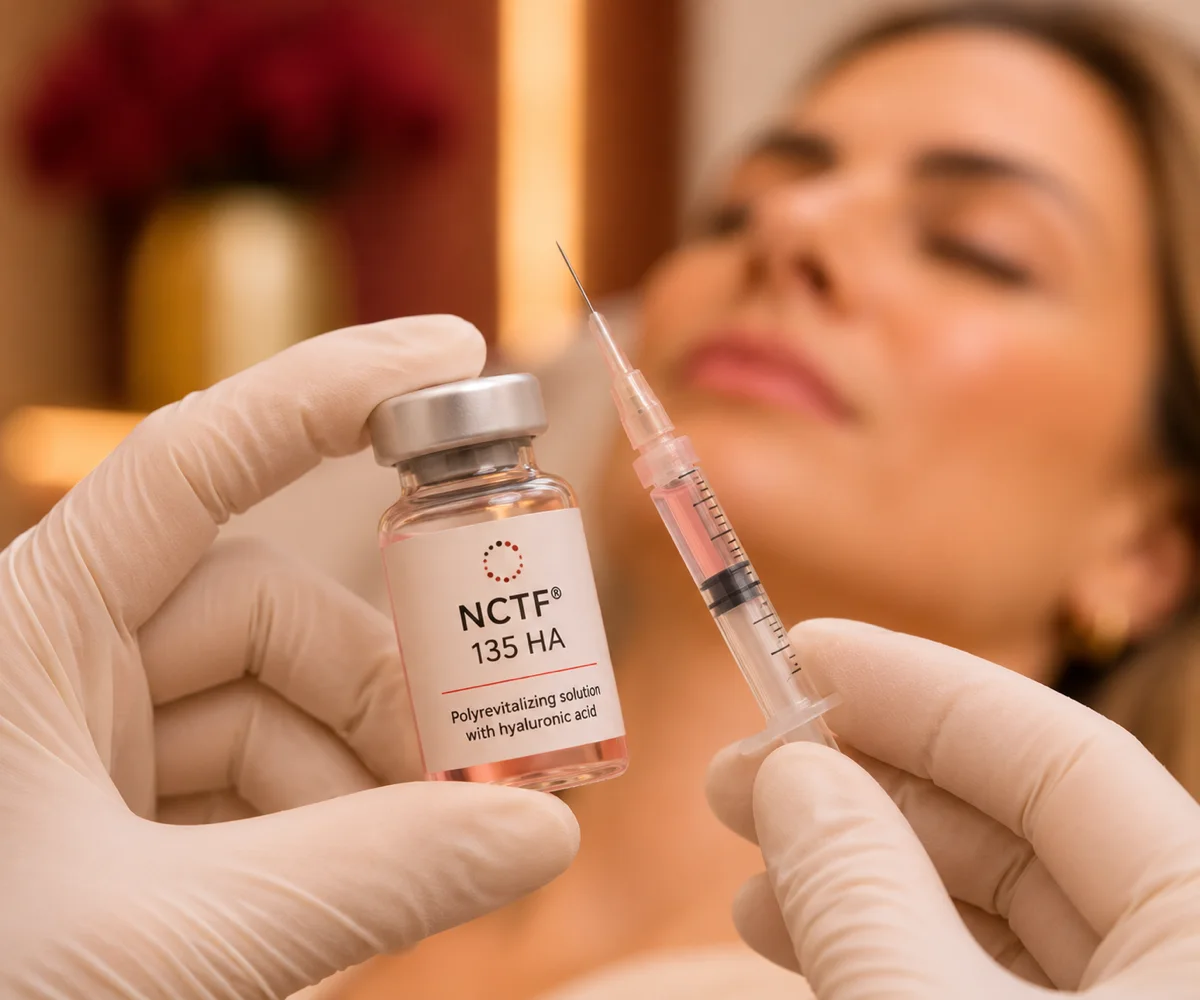
NCTF nourishes and hydrates the skin, and can improve the overall appearance and radiance, but it does not treat dilated vessels or the cause of the redness, and the evidence that it reduces erythema is scarce. The deep peel renews the skin intensely, is the most aggressive procedure and can worsen redness in reactive skin, so it is only considered with great caution, once the skin is calm and the cause is known. In many cases, the doctor chooses another path.
Is redness after a treatment normal? How long does it last?
Some redness is expected after procedures such as peels, microneedling, light treatments or lasers, and it usually fades over hours to a few days, longer with deeper procedures. The doctor will tell you what to expect in your case. It is not normal, and you should contact the clinic immediately, if the redness increases instead of decreasing, if there is severe pain, increasing heat and swelling, blisters, pus or fever. If there is pallor or purplish patches, severe pain or a change in vision after a filler, it is an emergency: go to the emergency department (112) and contact the clinic that carried out the treatment.
Which signs on the face call for urgent help?
A red, hot, swollen and painful face, especially with a fever or chills, may be a skin infection and calls for assessment on the same day. A red or painful eye, blurred vision or discomfort in the light call for urgent assessment, sometimes by ophthalmology. So does sudden redness with shortness of breath, wheezing, diarrhoea or fainting. After a filler, severe pain, pallor, darkening or purplish patches on the skin, a change in vision, a severe headache or facial weakness are an immediate emergency. Contact SNS 24 (808 24 24 24) and, with loss of vision, severe pain or confusion, call 112.
Which home care helps and which products should I avoid?
Sunscreen every day, gentle cleansing with lukewarm water, a moisturiser without fragrance or alcohol and few products at a time. Avoid cortisone creams on the face without a prescription, exfoliants and brushes, and products with a lot of alcohol or fragrance. If you have used a cortisone cream for a long time, do not stop it abruptly on your own: speak to the doctor, who will guide the withdrawal. These measures do not cure the cause, but they reduce irritation and triggers.
When should I see a doctor first?
Book a consultation if the redness lasts more than a few weeks, if there is burning, scales, spots or small veins, if it started after a cream or a treatment, or if there is tiredness, joint pain, fever or eye symptoms. If in doubt, out of hours, call SNS 24 (808 24 24 24). With severe pain, loss of or change in vision, shortness of breath, confusion or weakness on one side of the face, call 112.