Algés, Oeiras Mon to Fri · 09:00 to 13:00 and 14:00 to 19:00 · Sat · 09:00 to 14:00
WhatsApp Book a consultation

Aesthetic gynaecology

Loose vulvaWhen the vulva has lost volume and firmness and the skin no longer looks the same

“Sagging vulva” (or vulvar sagging) is how many women describe a vulva that has less volume, with looser, thinner or wrinkled skin, especially in the labia majora and the mons pubis. With age, the menopause, weight changes and births, these changes are frequent and, in most cases, part of normal ageing. But they can bother you, in friction with clothing, in sport, in sex life or in the image you have of your body, and there are changes that look like sagging and are something else. Here we explain what changes, what is normal, what should be assessed and what can help, starting with skin care and treatment of the menopause, and what the clinic can propose, with honesty about the evidence.

Reviewed by Dr Michelle Campagnoli, clinical director

  • 657women aged 15 to 84 were measured in one study: the “normal” vulva varies greatly
  • 1assessment consultation, always first
  • 70 €assessment booked through the website
A silver-haired woman in a dark blue full skirt twirls in a salsa class, with other students behind her

How to recognise it

Is it a sagging vulva?

It is not a disease or a closed diagnosis: it is the description of a change in the volume and firmness of the skin of the vulva. What matters is what has changed, since when and whether it bothers you or comes with other symptoms.

Tick what you recognise0/7

Tick the signs you recognise in your case. This is not a diagnosis, it is only meant to give you an idea.

Do you have white, thin or shiny skin with itching, fissures or sores that do not heal, a patch or lesion that changes colour or shape, a lump or swelling on one side only, bleeding after the menopause or after sex, or a “ball” or heaviness at the entrance to the vagina? This is not “just sagging” and needs assessment without delay. Outside opening hours, call SNS 24: 808 24 24 24.

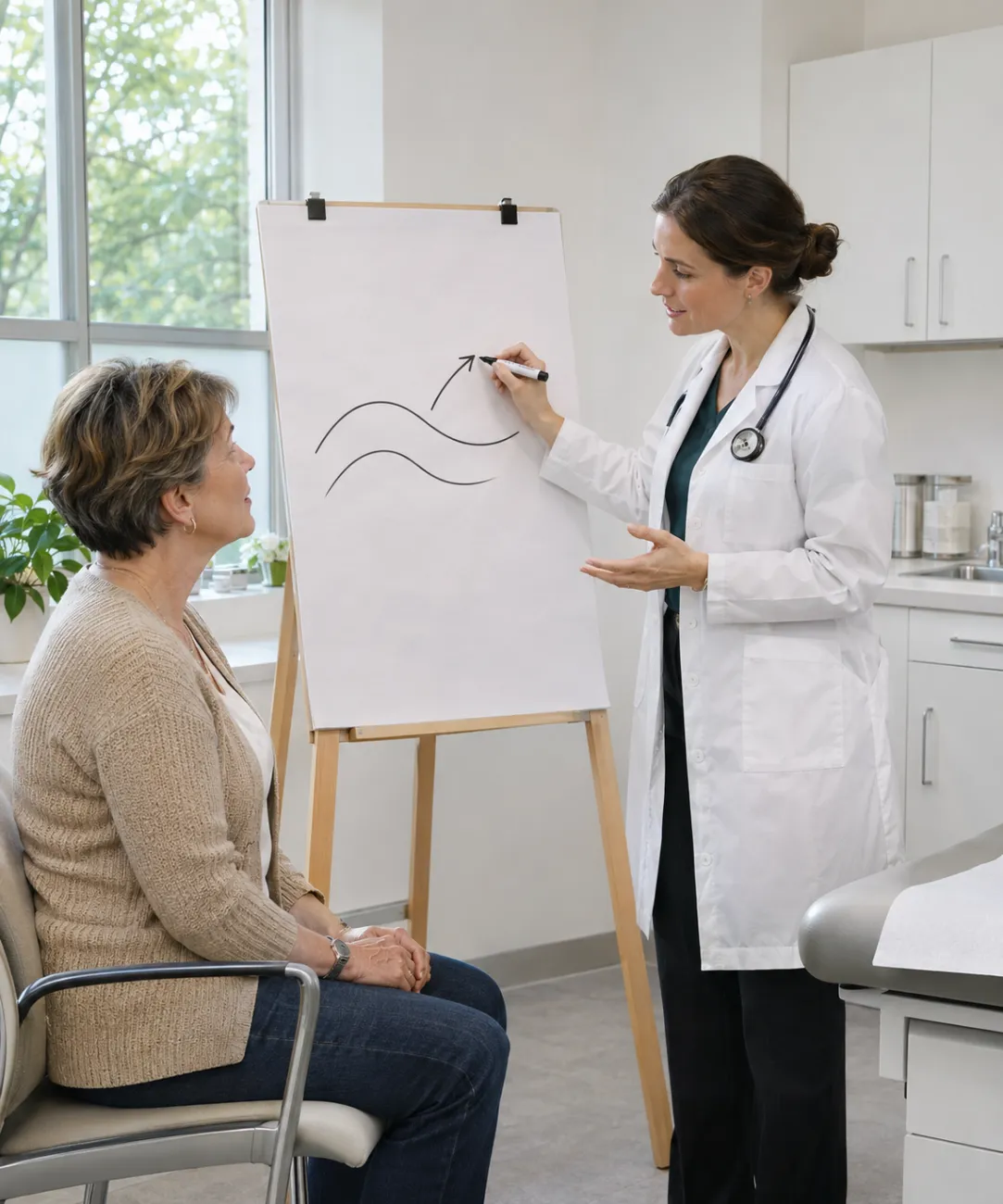
A doctor in a white coat draws a diagram on a sheet on an easel for a seated patient
Photograph of a consultation. The dots mark what the doctor assesses; the image does not show the intimate area.

Why it happens

What may lie behind a sagging vulva

The vulva is skin and fat over muscle and ligaments, and responds to hormones. With the years collagen, elastin and fat change, just as on the face, neck or arms. Choose a situation to see how it applies.

Age

With the years the skin produces less collagen and elastin, becomes thinner and less elastic, and the fat of the labia majora and the mons pubis redistributes. It is the same process seen in the rest of the body, and the pace varies greatly from woman to woman.

What weighs on it

Comparing yourself with retouched images or with pornography, which do not show real diversity.

What helps

Understanding that “normal” is very broad and caring for the skin of the area with gentle, unperfumed products.

Normal or to be assessed

Sagging vulva or something else

“Intimate sagging” is an expression used for different things: a vulva with less volume, a feeling of a wider vagina, less sensitivity or a weaker pelvic floor. Here we talk about the vulva, the external part. It is worth separating what is appearance from what may be function or disease.

  • How it shows. Labia majora with less volume, thinner or wrinkled skin, more visible or asymmetrical labia minora, with no itching, pain or lesions.

  • When it happens. With age, after the menopause, weight loss or births. Asymmetry of the lips is very frequent and, as a rule, has no significance.

  • What the clinic does. The doctor examines the vulva, explains what normal variation is and, if the discomfort is about appearance or friction, talks about the options and about what the evidence shows.

  • At home. Gentle washing, unperfumed moisturising of the outer skin, cotton underwear that is not tight and a stable weight.

A rapid, painful swelling of the vulva with fever, or heavy bleeding? Call 112 or go to the emergency department. If you have itching, white skin, sores, a “ball” in the vagina or doubts, outside opening hours you can call SNS 24: 808 24 24 24.

Book an assessment consultation

What can help

Options for a sagging vulva

The first step is to rule out skin diseases and understand what bothers you. Then come the care measures with the most basis: gentle washing and moisturising of the outer skin with unperfumed products, treating menopausal atrophy with local treatment prescribed by a doctor, keeping a stable weight and training the pelvic floor, which does not change the skin of the vulva but improves the support and the sensation of firmness of the area. If the discomfort persists, there are cosmetic treatments and, in marked cases of excess skin, surgery, which is discussed with a specialist and is not what the clinic proposes in the first place. The treatments below are additional options, assessed case by case and without promising results, with limited evidence on the vulva.

Book an assessment consultation
Dr Michelle Campagnoli, clinical director of Clínica Luxmed

First step

Assessment consultation

The doctor listens to what you are experiencing, examines your case and explains the suitable options. No treatment begins without this consultation.

May be considered when

you want to understand the cause and decide on the best path, with time and without commitment.

Book an assessment consultation
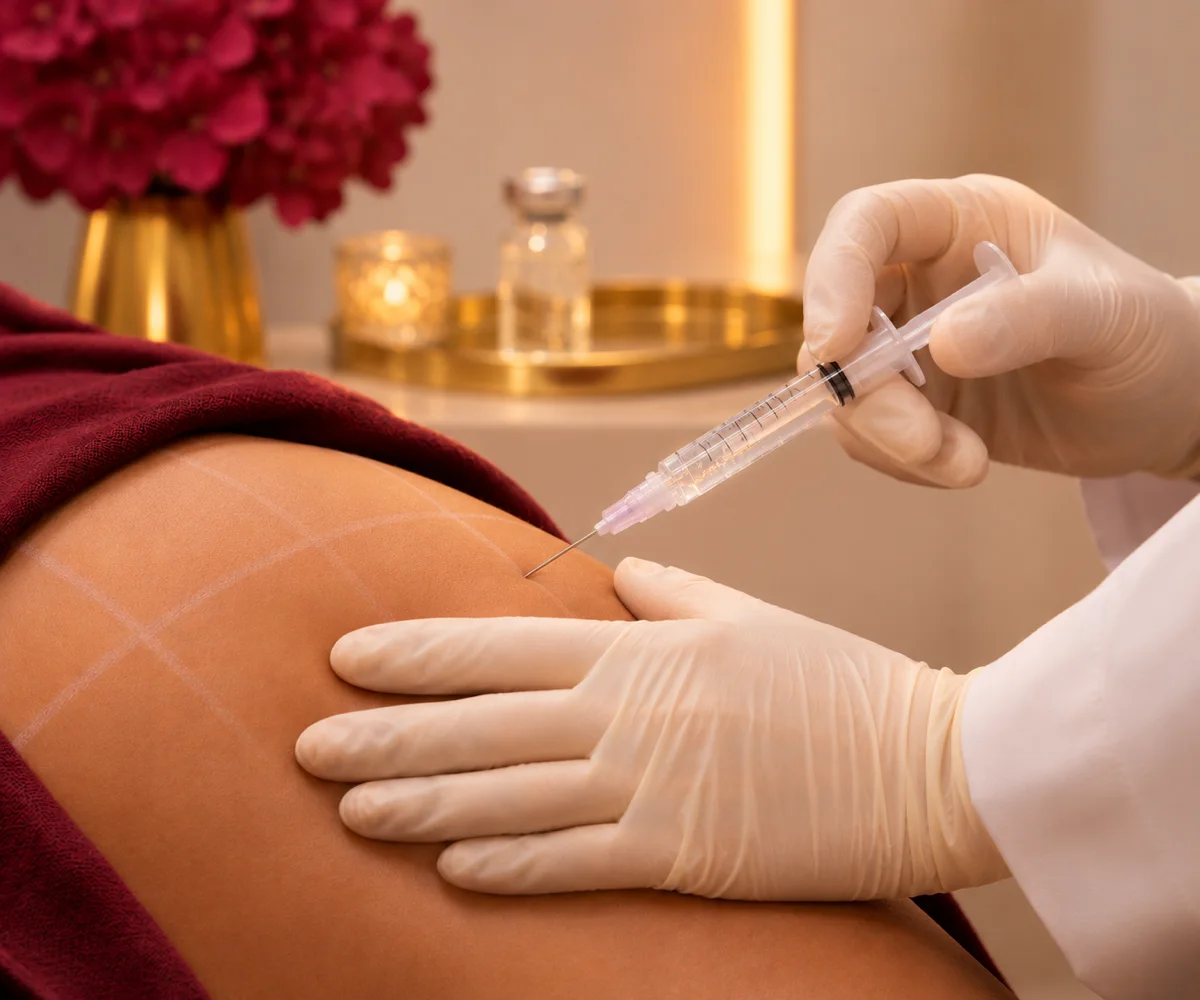
The doctor applying the filler, wearing gloves, on a marked area of the thigh covered by a towel

Injectable

Hyaluronic acid

Gel injected into the labia majora to restore volume and hydrate the tissue. The effect is temporary, generally from a few months to a year and a half, and can be dissolved with an enzyme if needed. The evidence comes mainly from case series and a small recent trial, with results that the authors themselves consider preliminary.

May be considered when

the discomfort is loss of volume of the labia majora, the skin has been assessed and there is no disease or infection left untreated, and the decision was taken after knowing that the effect is temporary and that there are risks.

Find out more
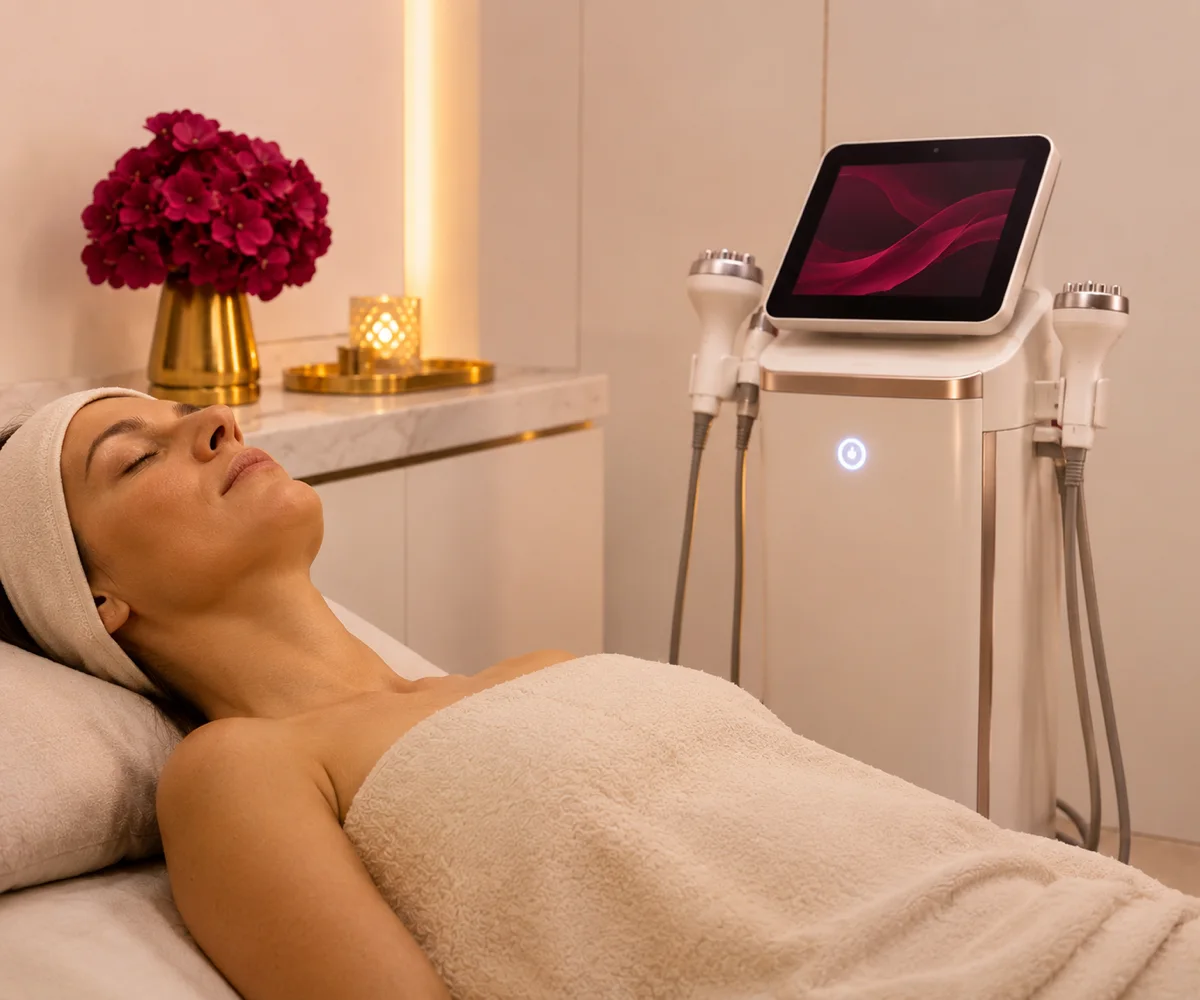
Private treatment room, with the device on an elegant trolley and a patient resting covered with a towel

Technology

Sectum, Neauvia radiofrequency (NRose Protocol)

Low-intensity radiofrequency, with the aim of stimulating collagen and improving the quality of the intimate tissues. The studies concentrate on laxity of the vaginal canal and are short and of low quality; on the external skin of the vulva the evidence is even scarcer. It does not replace skin care or the treatment of atrophy.

May be considered when

the skin has been assessed, atrophy has been treated or ruled out, the doctor has explained what is known and what is not known, and the decision is yours.

Find out more

What the journey looks like

From the first consultation to the plan tailored to you

No treatment starts without an assessment consultation with the doctor. First we understand what bothers you and rule out disease; only then is more considered.

  1. 01At the clinic

    Assessment consultation

    The doctor listens to what has changed, since when and what bothers you: the appearance, friction, sport or sex life. She asks about the menopause, births, weight, smoking and medication, in private and without hurry.

  2. 02At the clinic

    Examination of the vulva

    With your consent, the skin, volume and firmness are examined, atrophy, lichen sclerosus and other lesions are looked for and the entrance to the vagina and the pelvic floor are assessed. It can be interrupted at any moment.

  3. 03At home and in follow-up

    Caring for the skin and treating the cause

    We start with what has the most basis: gentle skin care, local treatment of atrophy when present, a stable weight and pelvic floor training. A skin disease is treated and followed up first.

  4. 04Over time

    Reassessing and deciding

    If the discomfort persists, the doctor explains the additional options, what the evidence shows, the risks and the costs, and leaves you time to decide. Doing nothing is also an option.

Day to day

What helps while you wait for the consultation

Simple care that protects the skin of the vulva and eases friction, alongside the plan the doctor sets out.

It is not a flaw in you

The vulva changes throughout life, and that is normal

Like the rest of the skin, the vulva changes with the years, and the variation between women is enormous. Feeling good about your own vulva is part of sexual health, so discomfort should be taken seriously, without automatically being turned into a problem to correct with a procedure. Before any treatment it is worth understanding whether what weighs is physical discomfort, sex life or self-image.

Wash gently

The skin of the vulva is thin and more fragile with the menopause, and aggressive washing irritates it.

In practice: lukewarm water and, if you wish, a gentle unperfumed product only on the outer part. Dry by patting, without rubbing.

Moisturise the outer skin

It improves comfort and skin quality, although it does not restore volume.

In practice: a simple moisturiser, without perfume or colourings, on the outer skin. If irritation increases, stop.

Easing friction

Friction with clothing and with sport can cause redness and discomfort.

In practice: cotton underwear, without hard seams, and sportswear that is neither tight nor binding.

Training the pelvic floor

It does not change the skin of the vulva, but improves the support and the sensation of firmness of the area.

In practice: slow, controlled contractions, with guidance from a physiotherapist if you are not sure you are contracting the right muscles.

Dr Michelle Campagnoli, clinical director of Clínica Luxmed

Who will look after you

An assessment carried out by the doctor

At Luxmed, the first step is always an assessment consultation with Dr Michelle Campagnoli. She listens to what bothers you, examines the vulva and assesses the skin, volume and firmness, rules out diseases such as lichen sclerosus or marked atrophy and designs the plan with you, in private and without hurry, and with realistic expectations.

  • Physical examination and medical historyA conversation about what has changed and what bothers you, examination of the skin and volume of the vulva and of the pelvic floor, and ruling out skin diseases.
  • A plan tailored to youSkin care and treatment of atrophy first; additional treatments only if appropriate, with the evidence explained.
  • No obligationThe cost of any treatment is confirmed only after the assessment.
Book an assessment consultation

Book a consultation

Book your consultation

Choose how you prefer to get in touch. We will arrange the assessment consultation with Dr Michelle Campagnoli.

Booking through the website100€70€Assessment consultationExclusive price for those who book the assessment through the website. Outside the website, the price is 100 €.

New Life Miraflores, Algés · Office Center, R. Santa Teresa do Menino Jesus n.º 6, 9.º C, 1495-048

Your details are used only for this contact. Any treatment depends on a prior medical assessment.

Request an appointmentIt takes less than a minute.
Speciality
You do not need to go into detail. The doctor will talk to you during the consultation.
Request received. Our team will contact you as soon as possible.
What is a sagging vulva?

It is not a formal diagnosis or a disease: it is the expression many women use for a vulva that has lost volume and firmness, with emptier labia majora, looser, thinner or wrinkled skin and, sometimes, a mons pubis with a different appearance. It usually results from age, the menopause, weight changes and births. Only an examination shows whether it is a normal change or whether there is atrophy or another cause to treat.

Is it normal for the vulva to change with age?

Yes. Like the rest of the skin, the vulva produces less collagen and elastin with the years, and the fat of the labia majora and the mons pubis redistributes. After the menopause the fall in oestrogen accentuates these changes, with drier, thinner skin. Studies that measured the vulva of hundreds of women showed enormous variation in size, shape and colour, unrelated to any health problem.

Does the vulva change after childbirth or weight loss?

It can. Vaginal birth stretches the entrance to the vagina and the surrounding tissues and can leave scars, and many women notice differences that tend to improve over the months. A significant weight loss, especially if rapid, reduces the volume of the labia majora and the mons pubis and the skin can become loose.

Are a sagging vulva and a loose vagina the same thing?

No. The vulva is the external part (mons pubis, lips, clitoris, entrance to the vagina) and vulvar sagging describes the skin and volume of that area. A loose vagina or the feeling of a loose vagina refer to the internal canal and the pelvic floor, and the feeling of descent or of a “ball” is linked to prolapse, which is a different medical diagnosis. They can coexist, but are assessed and treated differently.

Do pelvic floor exercises improve sagging of the vulva?

They do not change the skin of the vulva, because they work the muscles and not the skin or the volume. But they strengthen the pelvic floor and can improve the support and the sensation of firmness of the area and sexual function. The best result comes from a guided programme, with contraction of the right muscles.

Do creams or local oestrogen resolve vulvar sagging?

Moisturisers improve skin comfort, but do not restore volume. After the menopause, low-dose vaginal oestrogen, prescribed by a doctor, can improve the thickness, hydration and elasticity of the tissues, and a Cochrane review showed that it relieves the symptoms of atrophy. If you have or have had breast cancer, speak to your oncologist first.

Does hyaluronic acid in the labia majora work? How long does it last?

It restores volume and can improve the appearance of sagging. The evidence comes mainly from case series, plus a small recent trial of 76 women that the authors consider preliminary. The effect is temporary, generally from a few months to a year and a half, depending on the product and the person, and hyaluronic acid can be dissolved with an enzyme if necessary. Some products have an approved indication for this area and others are used outside it: ask which one will be used.

Do radiofrequency or laser resolve sagging of the vulva?

There is not enough evidence. For radiofrequency, the studies concentrate on laxity of the vaginal canal and the evidence is of low certainty and short duration; on the skin of the vulva there are even fewer data. For the CO2 laser, a sham-controlled trial did not show an advantage at 12 months in the vaginal symptoms of the menopause. The FDA warned in 2018 that it had not approved energy-based devices for “vaginal rejuvenation”. The decision is always explained and shared with you.

Do these treatments have risks and who should avoid them?

There are risks. With injectables, bruising, swelling, lumps, infection, migration of the product and, rarely, occlusion of a blood vessel; with energy-based technologies, burns, scars and pain, including pain during sex, have been reported. They are not carried out in the presence of active infection, undiagnosed lesions, uncontrolled skin disease, pregnancy or breastfeeding, nor in those under 18 except in specific medical situations. After an injectable, if there is severe pain, pale, purplish or blotchy skin, fever or rapid swelling, contact the clinic immediately or call 112.

When should I book a consultation?

Book a consultation if the sagging bothers you physically or emotionally, if you have itching, burning or pain on the vulva, if you notice white skin, fissures, sores or new patches, if the labia minora seem to change shape or disappear, or if you feel heaviness or a “ball” in the vagina. If you have doubts, call SNS 24 (808 24 24 24). If you have a rapid, painful swelling of the vulva with fever, or heavy bleeding, call 112.

We could not find that question. Ask us on WhatsApp

Scientific references

This page is based on the sources below and was reviewed by Dr. Michelle Campagnoli. Last updated on .

  1. Farage M, Maibach H. Lifetime changes in the vulva and vagina. Archives of Gynecology and Obstetrics 273(4):195-202, 2006.
  2. Lloyd J, Crouch NS, Minto CL, Liao LM, Creighton SM. Female genital appearance: «normality» unfolds. BJOG 112(5):643-646, 2005.
  3. Kreklau A, Vâz I, Oehme F, et al. Measurements of a 'normal vulva' in women aged 15-84: a cross-sectional prospective single-centre study. BJOG 125(13):1656-1661, 2018.
  4. The NAMS 2020 GSM Position Statement Editorial Panel. The 2020 genitourinary syndrome of menopause position statement of The North American Menopause Society. Menopause 27(9):976-992, 2020.
  5. Lethaby A, Ayeleke RO, Roberts H. Local oestrogen for vaginal atrophy in postmenopausal women. Cochrane Database of Systematic Reviews 2016(8):CD001500, 2016.
  6. Lewis FM, Tatnall FM, Velangi SS, et al. British Association of Dermatologists guidelines for the management of lichen sclerosus, 2018. British Journal of Dermatology 178(4):839-853, 2018.
  7. NHS. Lichen sclerosus. (NHS (nhs.uk), acedido 2026-11-11)
  8. NHS. Pelvic organ prolapse. (NHS (nhs.uk), acedido 2026-11-11)
  9. American College of Obstetricians and Gynecologists. Elective female genital cosmetic surgery: ACOG Committee Opinion, Number 795. Obstetrics & Gynecology 135(1):e36-e42, 2020.
  10. Herbenick D, Reece M. Development and validation of the female genital self-image scale. Journal of Sexual Medicine 7(5):1822-1830, 2010.
  11. Fasola E, Gazzola R. Labia majora augmentation with hyaluronic acid filler: technique and results. Aesthetic Surgery Journal 36(10):1155-1163, 2016.
  12. Fasola E, Dridi D, Degliuomini RS, et al. Performance and safety of hyaluronic acid-based gynaecological filler for labia majora augmentation: a randomised controlled study. Life (Basel) 16(7):1141, 2026.
  13. Krychman M, Rowan CG, Allan BB, et al. Effect of single-treatment, surface-cooled radiofrequency therapy on vaginal laxity and female sexual function: the VIVE randomized controlled trial. Journal of Sexual Medicine 14(2):215-225, 2017.
  14. Pereira GMV, Cartwright R, Juliato CRT, et al. Treatment of women with vaginal laxity: systematic review with meta-analysis. Journal of Sexual Medicine 21(5):430-442, 2024.
  15. Randombage PJS, Hettipathirana PS, Akurugodagama M. Comparative effectiveness of conservative and surgical interventions for vaginal laxity: a systematic review and pairwise meta-analysis. International Urogynecology Journal (publicação em linha), 2026.
  16. Li FG, Maheux-Lacroix S, Deans R, et al. Effect of fractional carbon dioxide laser vs sham treatment on symptom severity in women with postmenopausal vaginal symptoms: a randomized clinical trial. JAMA 326(14):1381-1389, 2021.
  17. Poleva I, Markova N, Sulamanidze M. Open pilot study on the rejuvenation effect of absorbable threads in the genital area. Clinical, Cosmetic and Investigational Dermatology 16:2237-2248, 2023.
  18. Acevedo A, Parra AM, Amado AM, et al. Labia majora rejuvenation with hybrid filler: a narrative review of the literature and report of two cases. Journal of Cosmetic Dermatology 24:e70074, 2025.
  19. Ribeiro RVE. Prevalence of body dysmorphic disorder in plastic surgery and dermatology patients: a systematic review with meta-analysis. Aesthetic Plastic Surgery 41(4):964-970, 2017.
  20. National Institute for Health and Care Excellence (NICE). Urinary incontinence and pelvic organ prolapse in women: management (NG123). NICE guideline NG123, 2019.
  21. Medsafe (Nova Zelândia), a retransmitir o alerta da FDA. Safety information: energy-based devices used for vaginal 'rejuvenation' or vaginal cosmetic procedures. Medsafe, New Zealand Medicines and Medical Devices Safety Authority, 2018.
CallAssistantAvailableBook