

Algés, Oeiras Mon to Fri · 09:00 to 13:00 and 14:00 to 19:00 · Sat · 09:00 to 14:00
WhatsApp Book a consultation

Aesthetic gynaecology

Darkened intimate areaWhen the skin of the groin and intimate region is darker than the rest of the body and the question is whether it is normal, where it comes from and whether there is a solution

Darker skin in the groin, around the vulva or the anus is very common and, most of the time, is simply the way the skin in this area is: it naturally has more pigment than that of the rest of the body. In some women the shade becomes more marked with friction, hair removal, inflammation or the years, and some people are bothered by this. Other times, more rarely, the darkening is the first sign of a situation that needs assessment, such as thickened, velvety skin in the folds or a patch that changes. Here we explain how to tell one from the other, what can be done at home and what a chemical peel can (and cannot) offer, with honesty about the evidence.

Reviewed by Dr Michelle Campagnoli, clinical director

  • 1 in 10women have a pigmented lesion on the vulva, and most are benign
  • 1assessment consultation, always first
  • 70 €assessment booked through the website
Woman with braids and a burgundy sweater looking out the window of a bright room, with a serene expression

How to recognise it

Is it a darkened intimate area?

It is not a diagnosis in itself: it is the description of a darker shade in the groin, labia majora, pubis or around the anus. What matters is since when, how it has changed, whether there are symptoms and what the texture of the skin is like.

Tick what you recognise0/7

Tick the signs you recognise in your case. This is not a diagnosis, it is only meant to give you an idea.

Do you have a new patch or mole, or one that has changed colour, shape or size? Is the dark skin thickened or velvety in the folds? Is there a sore that does not heal, bleeding, itching that does not go away, white patches or a lump? Ask for a medical assessment before treating. Outside opening hours, call SNS 24: 808 24 24 24.

Female doctor in a white coat showing a tablet with a circle diagram to a patient in a light blue blouse
Photograph of a consultation. The dots mark what the doctor assesses; the image does not show the intimate area.

Why it happens

What may lie behind a darkened intimate area

The colour of the skin depends on cells that produce pigment, the melanocytes. In this area there are several reasons for them to produce more, and the cause counts, because it decides what makes sense to do. Choose a situation to see how it applies.

The natural variation in shade

The skin of the genital region and groin is, in many people, darker than that of the rest of the body, and this variation is more marked in more pigmented skin. It is a characteristic of the skin and not a disease: it does not need treatment and does not indicate poor hygiene.

What weighs on it

Comparing yourself with retouched images or thinking that the shade “has to” be the same as that of the rest of the body.

What helps

Understanding what is normal for you and treating only if it bothers you and after confirming that there is no other cause.

Normal or to be assessed

Darkened intimate area or another situation

Not all darkening is the same. That is why it is worth knowing what type it is before deciding what to do.

  • How it shows. A darker, even shade with soft edges, without relief, pain or itching, especially in the groin, labia majora, pubis or around the anus.

  • When it happens. Gradually, over the years, or after friction, irritation or hair removal. It usually stabilises and can even lighten slowly when what irritates is avoided.

  • What the clinic does. The doctor examines the skin, confirms that there is no other cause and, if it bothers you, explains what can be done and what the evidence shows.

  • At home. Less friction and less aggressive hair removal, gentle hygiene and no exfoliating or scraping the skin, while you wait for the consultation.

A patch or mole that has changed colour or shape, that bleeds or that does not heal? Ask for a medical assessment without waiting. If you have doubts or symptoms outside opening hours, you can call SNS 24: 808 24 24 24.

Book an assessment consultation

What can help

Options for a darkened intimate area

First-line treatment is assessment: confirming that the darkening is a normal variation or post-irritation pigmentation and ruling out other causes, such as acanthosis nigricans. Then, treating the cause when there is one (reducing friction, treating inflammation, assessing diabetes or weight) and giving the skin time. Often this is enough, and the darkened intimate area may simply be your colour. When it continues to bother you, the clinic can consider a chemical peel, assessed case by case and without promising results, with limited evidence for this region.

Book an assessment consultation
Dr Michelle Campagnoli, clinical director of Clínica Luxmed

First step

Assessment consultation

The doctor listens to what you are experiencing, examines your case and explains the suitable options. No treatment begins without this consultation.

May be considered when

you want to understand the cause and decide on the best path, with time and without commitment.

Book an assessment consultation
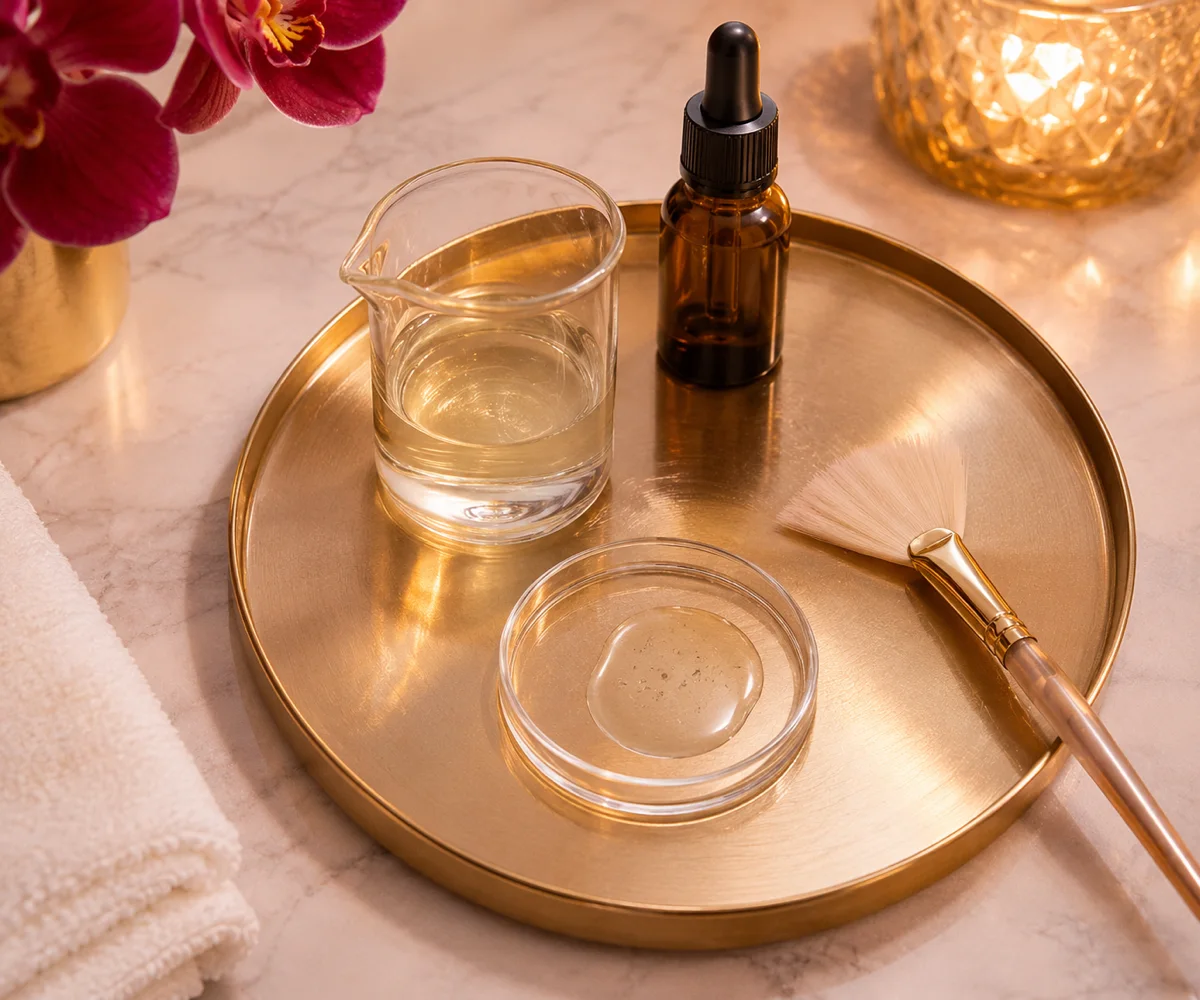
Chemical peel: gold tray with solution, fan brush and dropper bottle, on marble

Skin treatment

Chemical peel

Application, by the doctor, of a solution that renews the superficial layers of the skin, with the aim of evening out the shade of intimate skin and lessening hyperpigmentation. In this region the studies are few, small and short-term, and results vary from person to person. It can cause irritation, redness, peeling and, more rarely, a burn or even darker pigmentation.

May be considered when

the assessment has confirmed that there is no lesion to monitor or acanthosis nigricans left untreated, the cause of the friction or irritation has been treated, the skin is intact and without inflammation, the doctor has explained what is known and what is not known, and the decision is yours.

Find out more

What the journey looks like

From the first consultation to the plan tailored to you

No treatment starts without an assessment consultation with the doctor. Most women start with the simplest approach, and only then is more considered.

  1. 01At the clinic

    Assessment consultation

    The doctor listens to since when the shade changed, whether there has been irritation, inflammation, hair removal or friction, what products you use and what medication you take, and lets you speak in private and without hurry. She also asks about pregnancies, weight, diabetes and other darkened folds.

  2. 02At the clinic

    Examination of the skin

    The shade, texture and boundaries of the darkening are examined, and signs of inflammation, thickened skin or lesions to monitor are looked for. If acanthosis nigricans is suspected, tests are requested, and if a lesion raises doubts you are referred to dermatology.

  3. 03At home

    Treat the cause and protect the skin

    What irritates is reduced: friction, aggressive hair removal, perfumed products and scrubs. Inflammation is treated, if present, and the skin is given time, as it may improve on its own over months.

  4. 04Over time

    Reassessing and deciding

    The skin is looked at again. If it continues to bother you and there is no contraindication, the doctor explains the peel option, what to expect and the risks, and only proceeds with your consent. If there are warning signs, she refers.

Day to day

What helps while you wait for the consultation

Simple care that protects the skin of this area, alongside the plan the doctor sets out.

It is not a lack of hygiene

Darker skin is not a sign of dirt

A darker shade in the groin and intimate area is very common and has nothing to do with lack of cleanliness, nor with sex life. Many women keep quiet out of embarrassment or by comparison with images that are not real. Rubbing more or using stronger products, thinking it is dirt, usually irritates the skin and darkens it more.

Wash gently

Intimate skin is thin and sensitive, and irritation is one of the causes of darkening.

In practice: wash the outer area with water and, if you wish, a gentle, unperfumed product, once a day, and dry without rubbing.

Reduce friction

Repeated friction inflames the skin and can leave it darker.

In practice: prefer cotton underwear and garments that are not tight, and wear sportswear that is fitted but without seams in the groin.

Removing hair with less aggression

Each irritating hair removal is a small inflammation, and the skin can darken as it heals.

In practice: space out hair removal, do not remove hair on irritated skin and moisturise afterwards; ask the doctor which method is most suitable for you.

Examining the skin

Knowing your skin helps you see what changes and what does not.

In practice: notice whether the shade is stable and note what has changed, and if a new patch or mole appears, or one that changes, ask for an assessment.

Dr Michelle Campagnoli, clinical director of Clínica Luxmed

Who will look after you

An assessment carried out by the doctor

At Luxmed, the first step is always an assessment consultation with Dr Michelle Campagnoli. She listens to what is going on, examines the skin, rules out other causes and designs the plan with you, in private and without hurry, and refers to dermatology or for tests when needed.

  • Physical examination and medical historyA conversation about what has changed, examination of the skin of the region and, when necessary, tests or referral.
  • A plan tailored to youFirst assessing and treating the cause; the peel only if it is appropriate, with the evidence explained.
  • No obligationThe cost of any treatment is confirmed only after the assessment.
Book an assessment consultation

Book a consultation

Book your consultation

Choose how you prefer to get in touch. We will arrange the assessment consultation with Dr Michelle Campagnoli.

Booking through the website100€70€Assessment consultationExclusive price for those who book the assessment through the website. Outside the website, the price is 100 €.

New Life Miraflores, Algés · Office Center, R. Santa Teresa do Menino Jesus n.º 6, 9.º C, 1495-048

Your details are used only for this contact. Any treatment depends on a prior medical assessment.

Request an appointmentIt takes less than a minute.
Speciality
You do not need to go into detail. The doctor will talk to you during the consultation.
Request received. Our team will contact you as soon as possible.
Is a dark intimate area normal?

Most of the time, yes. The skin of the groin, labia majora and the area around the anus is, in many people, darker than that of the rest of the body, and this is a natural variation, more marked in more pigmented skin. It is only worth asking for an assessment if the shade changed quickly, if there is thickened, velvety skin in the folds, if there are symptoms, or if a new patch or mole appears, or one that changes.

Why does the intimate area darken?

For several reasons, which can add up: the natural variation in shade, hormonal changes (puberty, pregnancy), age, friction, hair removal, an inflammation or irritation that leaves pigment, excess weight and diabetes. In all cases the cause guides what makes sense to do, and so the doctor begins by assessing.

Is darkening of the intimate area a sign of disease?

Almost always not. But there are two cases to tell apart: dark, thickened, velvety skin in the folds may be acanthosis nigricans, which is associated with excess weight, type 2 diabetes and hormonal changes, and deserves assessment and tests; and a patch or mole that changes colour, shape or size, or that bleeds, should be seen by a doctor, because it may rarely be a lesion to monitor.

Does a dark intimate area have to do with hygiene or sex life?

No. The dark shade of this area does not indicate poor hygiene nor is it related to sexual activity. Rubbing more or using harsher products, thinking it is dirt, usually irritates and darkens the skin.

How can the intimate area be lightened?

First the cause is assessed and the factors that maintain it are treated: friction, aggressive hair removal, irritation and, if present, acanthosis nigricans. The skin can improve slowly, over months. If, even so, it continues to bother you, the doctor can consider a chemical peel, assessed case by case. There is no method that guarantees a shade or that works the same in everyone.

What is an intimate peel and does it work?

It is the application, by the doctor, of a solution that renews the superficial layers of the skin of the region, with the aim of evening out the shade. In this region the studies are few, small and short-term, so the evidence is limited. In studies on the face, peels help with some types of patches, but the result varies and there can be complications. It may work in some cases, with no guarantees.

Are intimate lightening creams safe?

It depends on what they contain, and often that is not known. In the European Union, mercury and corticosteroids are prohibited in cosmetics, and hydroquinone is not permitted in skin-lightening products, but products bought online or of doubtful origin may contain them, and irritate, burn or even darken more. In the intimate area, where the skin is thin, the risk of irritation is greater. Show the doctor what you use before applying any cream.

What are the risks of a peel in the intimate area?

The most common are irritation, redness, burning and peeling, usually temporary. More rarely, a burn, infection or pigmentation that is darker than before, and the risk is greater in more pigmented skin, with skin that is already irritated and with sun afterwards. In the intimate area there is also the risk of contact with the mucous membranes, so the doctor assesses which areas of skin can be treated.

Is the result permanent?

There is no guarantee that it is. If the cause of the darkening continues, such as friction, hair removal or irritation, the skin can darken again. That is why the plan involves treating the cause and protecting the skin, and the doctor explains in what way care may need to be maintained.

Who should not have a peel in the intimate area and when should I book a consultation?

It is not carried out with active infection, irritated skin or sores, undiagnosed lesions, a patch that has changed, or pregnancy. Anyone who is taking or has taken isotretinoin should say so, because the doctor decides. Book a consultation if the shade bothers you or you have doubts, and without waiting if you have a new patch or mole or one that has changed, thickened, velvety skin in the folds, bleeding or a sore that does not heal. Outside opening hours, you can call SNS 24 (808 24 24 24).

We could not find that question. Ask us on WhatsApp

Scientific references

This page is based on the sources below and was reviewed by Dr. Michelle Campagnoli. Last updated on .

  1. Murzaku EC, Penn LA, Hale CS, Pomeranz MK, Polsky D. Vulvar nevi, melanosis, and melanoma: an epidemiologic, clinical, and histopathologic review. J Am Acad Dermatol 2014;71(6), 2014.
  2. Venkatesan A. Pigmented lesions of the vulva. Dermatol Clin 2010;28(4), 2010.
  3. Wang RF, Ko D, Friedman BJ, Lim HW, Mohammad TF. Disorders of hyperpigmentation. Part I. Pathogenesis and clinical features of common pigmentary disorders. J Am Acad Dermatol 2023;88(2), 2023.
  4. Davis EC, Callender VD. Postinflammatory hyperpigmentation: a review of the epidemiology, clinical features, and treatment options in skin of color. J Clin Aesthet Dermatol 2010;3(7), 2010.
  5. Kutlubay Z, Engin B, Bairamov O, Tüzün Y. Acanthosis nigricans: a fold (intertriginous) dermatosis. Clin Dermatol 2015;33(4), 2015.
  6. NHS (Reino Unido). Acanthosis nigricans. (NHS, Conditions A to Z, acedido 2026-11-11)
  7. American Academy of Dermatology. Acanthosis nigricans: overview. (AAD, Diseases & conditions, acedido 2026-11-11)
  8. NHS (Reino Unido). Vulval cancer: symptoms. (NHS, Conditions A to Z, acedido 2026-11-11)
  9. NHS (Reino Unido). Lichen sclerosus. (NHS, Conditions A to Z, acedido 2026-11-11)
  10. Costa IMC, Damasceno PS, Costa MC, Gomes KGP. Review in peeling complications. J Cosmet Dermatol 2017;16(3), 2017.
  11. Sharad J. Glycolic acid peel therapy - a current review. Clin Cosmet Investig Dermatol 2013;6, 2013.
  12. Arif T. Salicylic acid as a peeling agent: a comprehensive review. Clin Cosmet Investig Dermatol 2015;8, 2015.
  13. Almeman AA. Evaluating the efficacy and safety of alpha-hydroxy acids in dermatological practice: a comprehensive clinical and legal review. Clin Cosmet Investig Dermatol 2024;17, 2024.
  14. Mohammed GF, Al-Dhubaibi MS, Mohamed ML. Genital whitening with topical Cyperus rotundus oil enhances sexuality and quality of life. J Cosmet Dermatol 2022;21(9), 2022.
  15. Spring LK, Krakowski AC, Alam M, et al. Isotretinoin and timing of procedural interventions: a systematic review with consensus recommendations. JAMA Dermatol 2017;153(8), 2017.
  16. Parlamento Europeu e Conselho da UE. Regulamento (CE) n.º 1223/2009 relativo aos produtos cosméticos (anexos II e III). Jornal Oficial da União Europeia, 2009.
CallAssistantAvailableBook