


- Home
- Body aesthetics
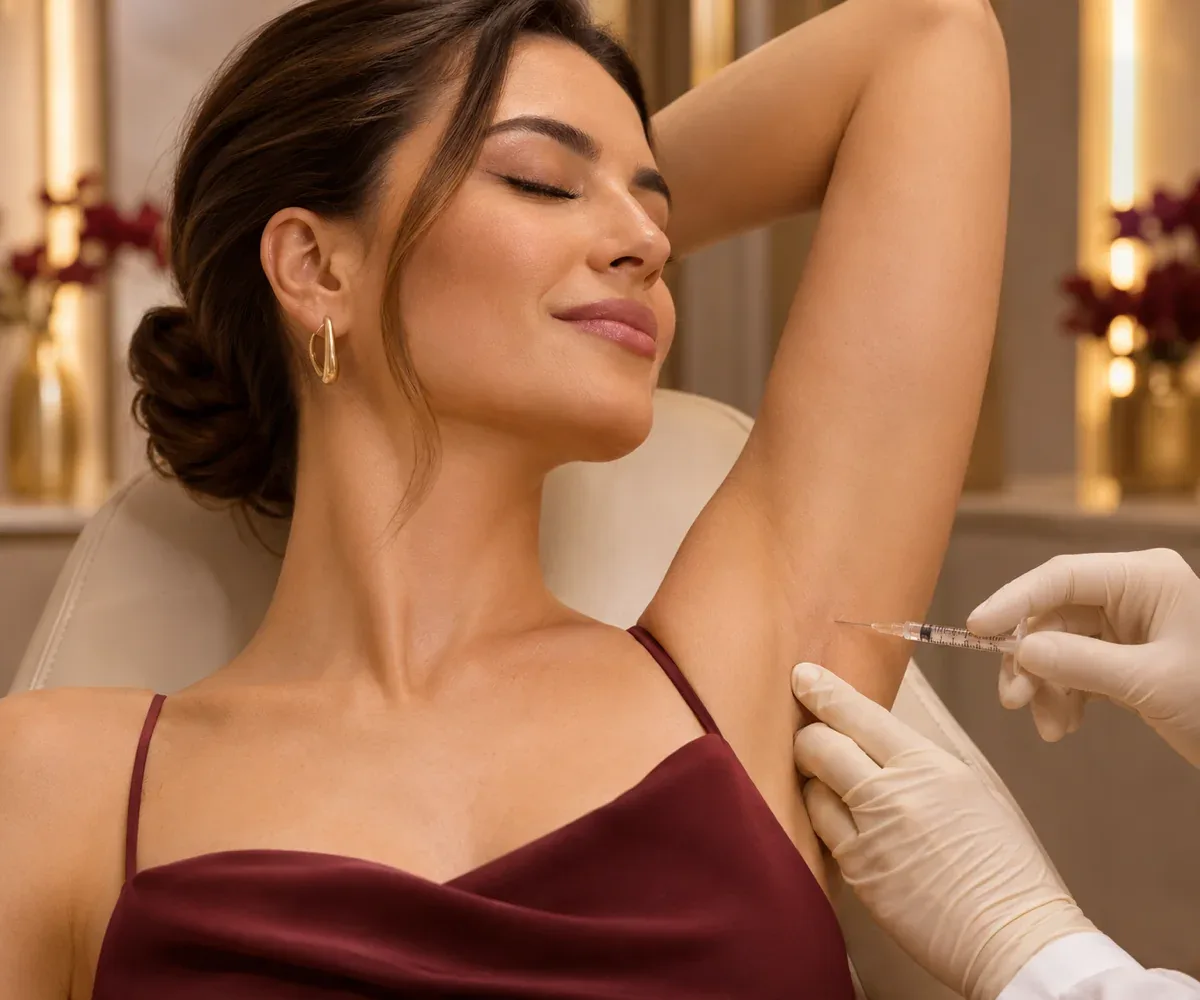
- Botulinum toxin for excessive sweating
- Hyperhidrosis: Botox, miraDry or surgery
Hyperhidrosis: Botox, miraDry or surgery? The differences
Botulinum toxin, microwave treatment and sympathectomy surgery work in very different ways and carry very different risks. See how they compare.
 Luxmed TeamAuthor
 Dr Michelle CampagnoliClinical review · OM no. 69467
In this article
People who experience excessive underarm sweating often hear about three main options besides antiperspirants: botulinum toxin (“Botox”), microwave thermolysis, known by the brand name miraDry, and thoracic sympathectomy surgery. They work in very different ways and carry very different risks. This article compares them side by side.
Three ideas to remember.
Comparing the options
| Criterion | Botulinum toxin | Microwave treatment (miraDry) | Thoracic sympathectomy |
|---|---|---|---|
| How it acts | Blocks the nerve signal to the glands | Heats and destroys glands in the underarm | Cuts or clamps the sympathetic chain in the chest |
| Areas | Underarms, hands, feet, face | Underarms only | Mainly hands; also underarms and face |
| Duration | Approximately 4 to 9 months | Long-lasting in studies with 1 to 2 years of follow-up | Permanent |
| Anaesthesia | None or topical | Local, with several injections | General |
| Recovery | Immediate | Swelling and discomfort for days to weeks | Several days of surgical recovery |
| Main risks | Bruising, mild pain; muscle weakness in the hands | Swelling, changes in sensation in the arm, nodules | Compensatory sweating, surgical risks |
| Reversible | Yes | No | With difficulty |
Botulinum toxin
Randomised, placebo-controlled trials involving hundreds of patients show a clear reduction in underarm sweating. In one year-long study, the median duration of the effect was approximately 6.5 to 7 months (Lowe et al., 2007). The main advantage is that it is reversible and causes little discomfort; the disadvantage is that treatment must be repeated. It is a prescription medicine administered only by doctors.
Microwave treatment
The device applies microwave energy to the area where the sweat glands are located, between the skin and fat, while cooling the surface. The destroyed glands do not regenerate.
In a randomised sham-controlled trial (120 adults), after 30 days, 89% responded in the active-treatment group compared with 54% in the sham-treatment group (Glaser et al., 2012). A study of 31 patients with 12 months of follow-up reported that approximately 90% maintained the improvement (Hong et al., 2012). The most commonly reported adverse effect was a temporary change in sensation in the skin of the arm. The studies were funded by the manufacturer. The response in the sham-treatment group is a reminder that some of the perceived improvement may be due to the placebo effect.
Thoracic sympathectomy
This surgery is performed through small incisions in the chest under general anaesthesia and involves interrupting the sympathetic nerve chain. It is very effective for the hands. The Society of Thoracic Surgeons expert consensus recognises it as an option for severe primary hyperhidrosis (Cerfolio et al., 2011), but compensatory sweating, especially on the back, chest and legs, is common and may be more troublesome than the original problem. It should therefore be reserved for severe cases that do not respond to other options, following a frank discussion with a thoracic surgeon.
What about the other treatments?
- Antiperspirants containing aluminium chloride: first-line, inexpensive and without significant risks, although they can irritate the skin.
- Oral anticholinergic medicines: reduce sweating throughout the body, but can cause dry mouth, blurred vision and other effects.
- Tap-water iontophoresis: useful for the hands and feet, but less practical for the underarms.
- Local underarm surgery (curettage or liposuction of the glands): an option used in some centres, with variable results.
At Luxmed Clinic
At Luxmed in Algés, near Lisbon, the consultation begins by confirming the diagnosis and the impact of sweating on daily life, and by explaining the advantages and limitations of each option, including those that require referral to another specialty.
Talk to us
The assessment is a conversation, with no obligation. Tell us what concerns you and our team will reply.
This article is for information purposes and is not a substitute for a medical consultation. Botulinum toxin is a prescription medicine and may only be administered by doctors following an individual assessment. Brand names are mentioned solely to aid identification.
Frequently asked questions
Which treatment offers the most permanent results for the underarms?
Microwave treatment and surgery have long-lasting effects. Botulinum toxin is temporary, but reversible and carries fewer risks.
Is sympathectomy worthwhile for the underarms alone?
It is rarely the first choice because the risk of compensatory sweating is high and the procedure is difficult to reverse.
Can I have botulinum toxin after microwave treatment?
Yes. If some sweating remains, the toxin can be used in the areas that still sweat.
Does microwave treatment also remove hair?
It may reduce some underarm hair, but it is not a hair-removal treatment.
Scientific references 5
- Lowe NJ, Glaser DA, Eadie N, et al. Botulinum toxin type A in the treatment of primary axillary hyperhidrosis: a 52-week multicenter double-blind, randomized, placebo-controlled study of efficacy and safety. J Am Acad Dermatol. 2007;56(4):604-611. Artigo
- Glaser DA, Coleman WP 3rd, Fan LK, et al. A randomized, blinded clinical evaluation of a novel microwave device for treating axillary hyperhidrosis: the dermatologic reduction in underarm perspiration study. Dermatol Surg. 2012;38(2):185-191. Artigo
- Hong HC, Lupin M, O'Shaughnessy KF. Clinical evaluation of a microwave device for treating axillary hyperhidrosis. Dermatol Surg. 2012;38(5):728-735. Artigo
- Cerfolio RJ, De Campos JR, Bryant AS, et al. The Society of Thoracic Surgeons expert consensus for the surgical treatment of hyperhidrosis. Ann Thorac Surg. 2011;91(5):1642-1648. Guideline
- Hornberger J, Grimes K, Naumann M, et al. Recognition, diagnosis, and treatment of primary focal hyperhidrosis. J Am Acad Dermatol. 2004;51(2):274-286. Artigo
Editing and development: Rúben Brito · Operial Development
Keep exploring