


- Home
- Facial aesthetics
- Dark circles
- Dark circles: the types
Dark circles: the types and why treatment depends on them
“Dark circles” is not a diagnosis: it is a name for several conditions that darken the area under the eyes. Understanding the type is what determines the treatment.
 Luxmed TeamAuthor
 Dr Michelle CampagnoliClinical review · OM no. 69467
In this article
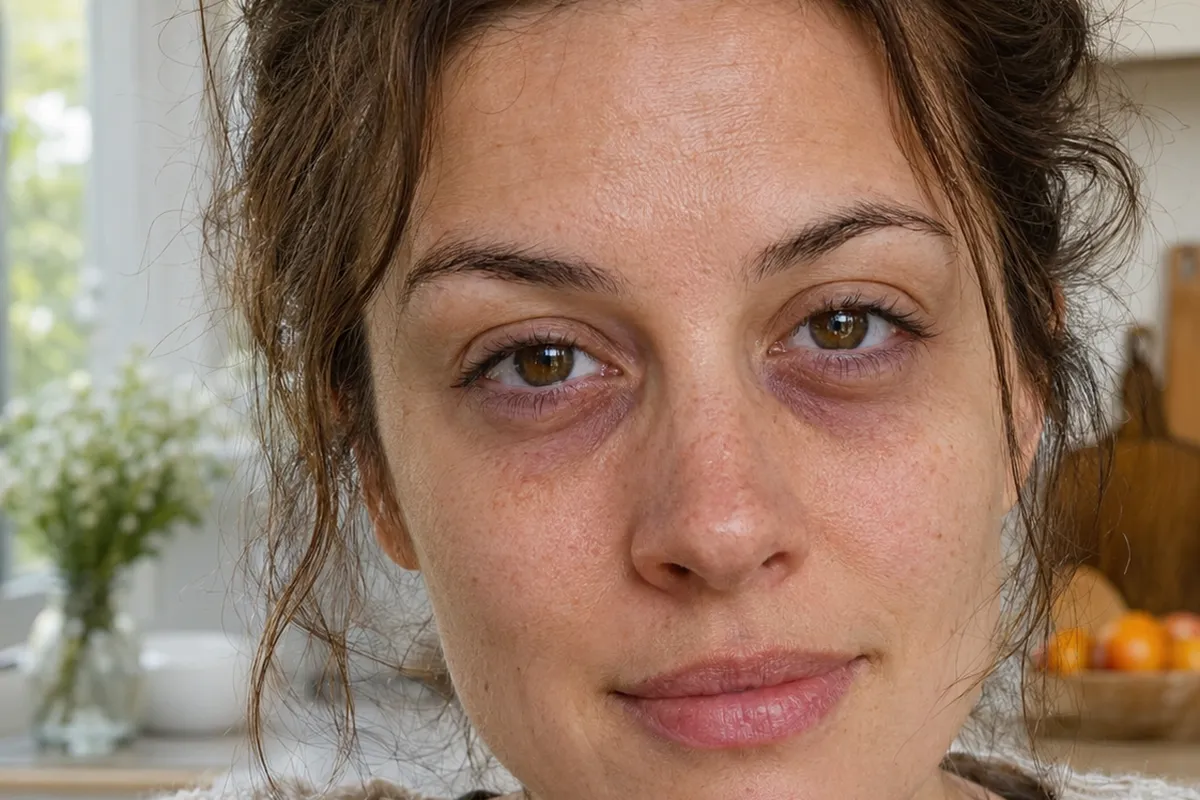
Dark circles are one of the most common complaints in consultations, and also one of the most misunderstood. “Dark circles” is not a diagnosis: it is a name for several different conditions that darken the area under the eyes. It may be pigment, visible vessels, a shadow created by a groove, or a combination of these causes. Understanding which type of dark circle you have is what determines the treatment, and it explains why the cream that worked for a friend did not work for you.
Three ideas to remember.
The types of dark circles
| Type | How to recognise it | Main cause |
|---|---|---|
| Pigmented | Brown colour, more common in darker skin; does not change when the skin is stretched | Excess melanin, genetics, sun, friction, inflammation |
| Vascular | Bluish, purplish or pinkish colour; more visible when tired | Thin skin that lets the vessels and the muscle underneath show through |
| Structural | Shadow that changes with the light and the position of the head | Tear trough, loss of volume, eye bags |
| Combination | Combination of two or more | Several causes at the same time |
A clinical study that analysed patients with dark circles proposed a similar classification and concluded that the mixed type is very common (Huang et al., 2014). A comprehensive review of hyperpigmentation around the eyes reinforces that the cause should be assessed before treatment (Sarkar et al., 2016).
Simple tests
- Stretching the skin: if the colour stays the same, it is probably pigment; if it improves, there is a vascular or shadow component.
- Changing the light: if the dark circle changes a lot with light from above, the structural component is important.
- Looking upwards: with the head tilted back and the gaze directed upwards, the shadow of a groove tends to lessen.
What makes dark circles worse
- Genetics: many dark circles run in the family.
- Lack of sleep and tiredness, which make the skin paler and the vessels more visible.
- Allergies and rhinitis, which congest the vessels and lead to eye rubbing.
- Rubbing or scratching the area, which stimulates pigment.
- Sun, which darkens the pigment.
- Age, which thins the skin and accentuates the groove.
How they are treated, by type
| Type | Usual options |
|---|---|
| Pigmented | Sunscreen, topical depigmenting agents, gentle peels, some lasers |
| Vascular | Improving skin quality (skinbooster, PRF), looking after sleep and allergies |
| Structural | Hyaluronic acid in the tear trough, in selected cases; surgery when there are fat bags |
| Combination | A combination of the previous approaches, in stages |
There are dedicated articles on dark or purplish dark circles, PRF and the tear trough.
At Luxmed Clinic
At Luxmed, we start by identifying the type of dark circle, with observation, lighting and simple tests. Only then do we suggest the treatment, which often combines home care with in-clinic treatments.
Talk to us
The assessment is a conversation, with no obligation. Tell us what concerns you and our team will reply.
This article is for information purposes and does not replace a consultation. The results of any treatment vary from person to person.
Frequently asked questions
Does sleeping more get rid of dark circles?
It helps with vascular dark circles and a tired look, but it does not resolve pigmented or structural dark circles.
Do eye creams work?
Some help with pigmented dark circles and thin skin. They do not correct grooves or eye bags.
Are dark circles hereditary?
Often, yes. Genetics influences pigment, skin thickness and the anatomy of the area.
Can they indicate a health problem?
Rarely. Very marked and recent dark circles, with other symptoms, may warrant a medical assessment, for example for allergies or anaemia.
Can filler treat all types of dark circles?
No. It only helps when there is a groove creating a shadow, and even then it is not suitable in every case.
Scientific references 2
- Huang YL, Chang SL, Ma L, Lee MC, Hu S. Clinical analysis and classification of dark eye circle. Int J Dermatol. 2014;53(2):164-170. Artigo
- Sarkar R, Ranjan R, Garg S, Garg VK, Sonthalia S, Bansal S. Periorbital hyperpigmentation: a comprehensive review. J Clin Aesthet Dermatol. 2016;9(1):49-55. Artigo
Editing and development: Rúben Brito · Operial Development
Keep exploring