Algés, Oeiras Mon to Fri · 09:00 to 13:00 and 14:00 to 19:00 · Sat · 09:00 to 14:00
WhatsApp Book a consultation

Facial aesthetics

Dark circlesWhen the skin under your eyes looks dark, bluish or hollow and you want to understand why

Dark circles are among the most common concerns on the face and are rarely a sign of disease. But “dark circles” are not just one thing: it can be brown pigment in the skin, vessels showing through very thin skin, or simply the shadow of a groove that deepens with age, and often it is a mixture of the three. That is why what works for one person may not suit another. Here we explain how to distinguish the types, what usually lies behind them, what helps at home, what the evidence says about treatments in this delicate area and when a medical assessment is advisable before any procedure, at Clínica Luxmed, in Algés.

Reviewed by Dr Michelle Campagnoli, clinical director

  • 3main types: pigment, vessels and shadow
  • 1assessment, always first
  • Nocommitment
Fotografia · olheiras-hero800 × 1000 px · vertical 4:5Mulher de uns 35 anos, de perfil, sentada junto a uma janela luminosa de manhã com uma chávena nas mãos, expressão tranquila; retrato discreto e de meio-corpo, sem close da zona dos olhos

How to recognise it

Are they dark circles or something else?

Not all dark circles are the same: some are colour, some are shadow, and the cause changes what makes sense to do. These signs help you understand what is going on before the assessment.

Tick what you recognise0/7

Tick the signs you recognise in your case. This is not a diagnosis, it is only meant to give you an idea.

Do you have sudden swelling or redness around one eye, with pain, fever or blurred vision? Do you have pain in the eye, double vision, loss of vision or does the eye seem to bulge? You need ophthalmological emergency care: call 112 or go to an emergency department. If you have already had a filler and have severe pain, pallor or purplish patches on the skin, changes in vision, a severe headache or weakness on one side of the face, call 112 immediately and contact the clinic that injected. A dark circle on one side only, of recent onset, or a patch on the eyelid that grows, changes colour or bleeds calls for medical assessment before any treatment. Out of hours, call SNS 24: 808 24 24 24.

Fotografia · olheiras-consulta1083 × 1300 px · vertical 5:6Mãos da médica de bata branca a segurar um espelho de mão e um bloco de notas, diante de uma paciente desfocada em primeiro plano, numa sala de consulta de luz natural; enquadramento discreto, sem close do rosto nem da zona dos olhos
Frame for the consultation photograph. The dots mark what the doctor assesses.

Why it happens

What may lie behind dark circles

There is almost always more than one cause at the same time, and what looks like a coloured dark circle may be mainly shadow. Choose a situation to see how it fits into the picture and what usually helps.

Genetics and pigment

In many people the skin around the eyes has, from early on, more melanin than the rest of the face. It is a frequent pattern in families and seen more in brown and dark skin. It is not a disease, does not depend on hygiene and tends to persist throughout life, with slight variations.

What weighs on it

Expecting a cream to undo a colour that is part of your skin type, and comparing it with other people’s.

What helps

Protecting the area from the sun, avoiding irritation, and working out in the consultation what is realistic to improve, because pigment of family origin is the most stubborn.

Normal or to be assessed

Ordinary dark circles or something to assess

Most dark circles have a simple, benign cause. But some situations call for an assessment before any treatment, because the colour is only the visible part.

  • What it looks like. Darkening or shadow that is equal on both sides, present for a long time or since you were young, that varies with sleep, light or heat, without pain, without persistent swelling and without any change in vision.

  • A clue, not a diagnosis. Gently stretch the skin and observe: if the colour stays, it tends to be pigment; if it lessens, it is usually more vascular; if it changes with light and when looking from the side, it is usually shadow. Often there is a mixture.

  • What the clinic does. The doctor listens to the history, examines the area in front and side light, works out the type of dark circle and what makes sense to propose, without promising results.

  • At home. Sleeping well, treating allergy, not rubbing the eyes, protecting from the sun and giving the skin time.

Do you have severe pain in the eye, loss of or a change in vision, or, after a filler, pale skin or skin with purplish patches, a severe headache or weakness on one side of the face? Call 112 immediately and tell the clinic that injected. Only a doctor can use hyaluronidase, which dissolves hyaluronic acid, and you should not massage the area on your own. If in doubt, out of hours you can call SNS 24: 808 24 24 24.

Book an assessment

What the clinic may consider

Options for softening dark circles

Before any procedure come the right habits: sleeping, treating allergy, not rubbing the eyes and protecting from the sun, and assessment of the type of dark circle. Only then is a procedure considered. For this area, the clinic associates three options: hyaluronic acid, PRF and Skinbooster. The evidence is limited and of modest quality: reviews describe improvements with several methods, mainly fillers when the problem is loss of volume, but few studies are large or compare methods well against one another. Results vary, are not permanent and are generally temporary. Skinbooster, which hydrates the skin deeply, may also be considered for skin quality, but we did not find specific studies on dark circles, so it does not appear on a card. What is most relevant is decided in the consultation. Other options described in the literature (depigmenting creams, peels, lasers and eyelid surgery) are not part of this page and may require referral.

Book an assessment
Dr Michelle Campagnoli, clinical director of Clínica Luxmed

First step

Assessment consultation

The doctor listens to what you are experiencing, examines your case and explains the suitable options. No treatment begins without this consultation.

May be considered when

you want to understand the cause and decide on the best path, with time and without commitment.

Book an assessment
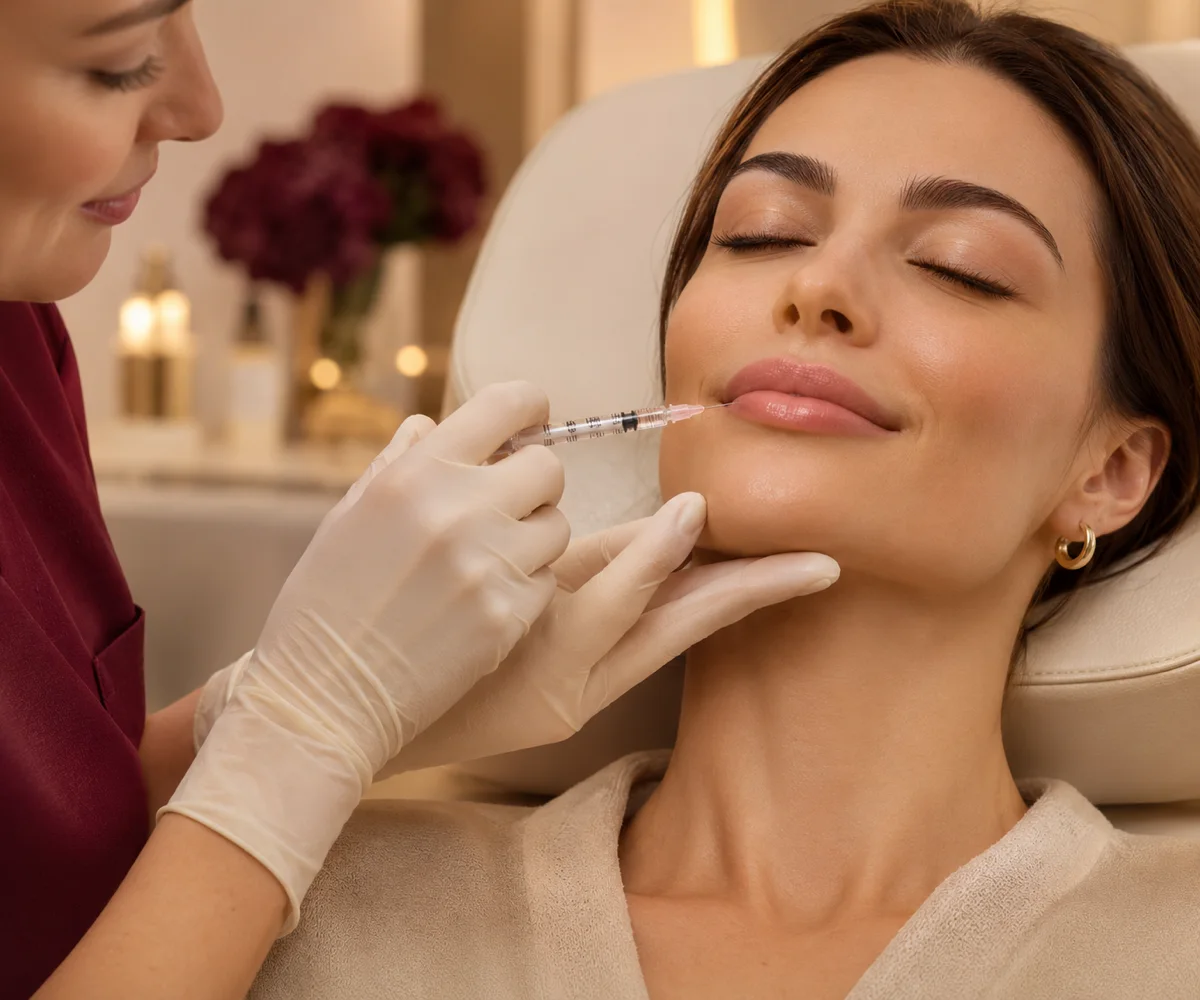
Doctor injecting hyaluronic acid in a facial aesthetics consultation, in bright consulting-room light

Restoring volume

Hyaluronic acid

An injectable gel that restores volume in the groove between the eyelid and the cheek, where the shadow makes it look like a dark circle. It can soften structural shadow, but it does not lighten brown pigment or the bluish tone of vessels. This area is delicate and calls for experience: swelling, lumps, bluish patches and, very rarely, serious vascular complications are possible. Results are temporary.

May be considered when

the dark circle is mainly a shadow or a groove from loss of volume and not just pigment, the skin is healthy and without an active allergy, and the doctor has explained the risks and what is realistic to expect.

Find out more
A tube after centrifugation, in the doctor’s hands

Skin regeneration

PRF

A concentrate prepared from the person’s own blood and injected in small amounts into the skin under the eyes, to improve skin texture and quality. Reviews describe improvements in texture and fine lines and a good safety profile, but with small studies, and the effect usually diminishes after a few months. For pigment, the evidence exists mainly for PRP, which is a different method.

May be considered when

the skin under the eyes is thin, dull or with fine lines, the treatable causes have been assessed and the doctor has explained that the benefit is uncertain, modest and temporary.

Find out more

What the journey looks like

From the first conversation to a plan tailored to you

No procedure begins without an assessment by the doctor. Most people start with the simplest approach, and only then is anything further considered.

  1. 01At the clinic

    Telling your story

    The doctor asks since when you have had dark circles, whether they run in the family, whether they get worse with sleep, allergies or heat, whether there is swelling in the morning, which medicines you take and whether you have had treatments in the area.

  2. 02At the clinic

    Observing the area

    The colour, skin thickness and groove are observed, in front and side light, and the skin is gently stretched to work out the type. If there are signs of allergy, pallor, persistent swelling or asymmetry, tests are requested or you are referred to another specialty.

  3. 03At home

    Treat the cause and look after the area

    What can be treated is treated: the allergy, sleep, the habit of rubbing the eyes. The skin is protected from the sun and moisturised with gentle products. In many cases, this alone improves the appearance.

  4. 04Over time

    Decide and follow up

    If the dark circle persists, the doctor explains whether a procedure makes sense, what can be expected, the risks and whether it needs repeating, without promising results. The examination is repeated and the plan adjusted.

Day to day

What helps at home

What you do at home matters more than you might think. These are sensible measures to take while you wait for your consultation and alongside the clinic’s plan.

The golden rule

Understand which dark circle it is before treating it

A pigment dark circle, a vascular one and a shadow one call for different things, and a cream that lightens a little does little for a shadow. Treating allergy, sleeping better and protecting from the sun always helps; the rest is decided after knowing the type, and ruling out a medical cause.

Sleep and regulate your routine

Sleeping badly accentuates the dark circle that already exists, and tiredness makes the skin look paler.

In practice: regular hours, a dark bedroom, fewer screens at bedtime and hydration throughout the day.

Treat allergy and do not rub

Itching leads to rubbing, and repeated irritation leaves a dark mark.

In practice: talk to the doctor about the allergy, wash the face with cool water and use cold compresses instead of rubbing.

Protect from the sun

Ultraviolet radiation stimulates pigment and ages the thin skin of the area.

In practice: facial sunscreen every day, sunglasses and a hat, applied carefully near the eyes.

Record and bring to the consultation

It helps the doctor to work out whether the dark circle has changed, and with what.

In practice: photographs in the same light and at the same distance, and a list of medicines, products and symptoms.

Dr Michelle Campagnoli, clinical director of Clínica Luxmed

Who will look after you

An assessment carried out by the doctor

At Luxmed, in Algés, the first step is always an assessment with Dr Michelle Campagnoli. She is the one who examines the area, works out what type of dark circle you have, rules out other causes and decides with you what makes sense, before any procedure.

  • Physical examination and medical historyA conversation about the history and habits, and an examination of the area in front and side light.
  • A plan tailored to youA clear plan, without promises, with the cause treated first and follow-up over time.
  • No obligationThe cost of any treatment is confirmed only after the assessment.
Book an assessment

Articles on dark circles

From our blog
Fotografia · olheiras-blog-11200 × 800 px · horizontal 3:2Natureza-morta numa mesa de cabeceira: óculos de leitura, um livro fechado e um copo de água, com luz suave de fim de tarde; só objetos, sem rostos

Facial aesthetics

Dark circles: the types and why treatment depends on them

Pigment, vessels, shadow from the groove, allergy and loss of volume: the type of dark circle determines what makes sense to treat and why.

Fotografia · olheiras-blog-21200 × 800 px · horizontal 3:2Bancada clara de casa de banho com um frasco de protetor solar de rosto e uma toalha dobrada, em luz suave da manhã; só objetos, sem rostos

Facial aesthetics

Dark or purplish dark circles: what helps

Day-to-day care and the options that can be considered when the dark circle is dark or purplish, and what is reasonable to expect.

Fotografia · olheiras-blog-31200 × 800 px · horizontal 3:2Bancada clara de consultório com um tubo de colheita, compressas e um pequeno tabuleiro, em luz suave; só objetos, sem rostos

Facial aesthetics

PRF for dark circles: how it works and what to expect

PRF is prepared from the person’s own blood: how it is done, what the evidence describes and why results vary and are not permanent.

Book a consultation

Book your consultation

Choose how you prefer to get in touch. We will arrange the assessment consultation with Dr Michelle Campagnoli.

Booking through the websiteAssessment consultationTalk to our assistant on WhatsApp and ask for the current price of the assessment.

New Life Miraflores, Algés · Office Center, R. Santa Teresa do Menino Jesus n.º 6, 9.º C, 1495-048

Your details are used only for this contact. Any treatment depends on a prior medical assessment.

Request an appointmentIt takes less than a minute.
Speciality
You do not need to go into detail. The doctor will talk to you during the consultation.
Request received. Our team will contact you as soon as possible.
Why do I have dark circles?

There are three main mechanisms, which often mix: brown pigment in the skin itself (closely linked to genetics and irritation), vessels and muscle that show through very thin skin, and a shadow cast by a groove between the eyelid and the cheek, which deepens with age. Allergy, rubbing the eyes, sun and tiredness make it worse, but are rarely the only cause. That is why the first step is to work out what type of dark circle you have.

Are dark circles always a lack of sleep? Can they be a sign of disease?

No. Sleeping badly accentuates a dark circle that already exists, but does not explain it on its own, and many people who sleep well have dark circles. In most cases they are benign. More rarely, they are associated with anaemia, thyroid conditions, kidney disease, untreated allergies or medicines, and then other signs usually appear, such as marked tiredness, pallor, persistent swelling of the eyelids or changes in weight. If you have these signs, talk to your doctor before treating the colour.

How do I know whether my dark circles are pigment, vessels or shadow?

There are clues, not a diagnosis. Gently stretch the skin under the eye: if the colour stays, it tends to be pigment; if it lessens, it is usually more vascular. If the dark circle changes in intensity with light or when looking from the side and looks like a depression, it is usually shadow. Many people have a mixture, and only a medical examination, in front and side light, distinguishes them well.

Are dark circles hereditary? Do they get worse with age?

Often yes: pigment around the eyes is a family trait and is seen more in brown and dark skin. With age the skin becomes thinner and the groove between the eyelid and the cheek deepens, so the shadow tends to increase, even in people who never had much colour. Genetics cannot be changed, but what is made worse by sun, irritation and loss of volume can be softened.

How can I get rid of dark circles at home?

There is no cream or home trick with solid evidence that it makes them disappear, and none resolves a shadow, which has no colour. What helps consistently is sleeping regularly, treating allergies, not rubbing the eyes, protecting the area from the sun every day and moisturising with gentle products. A cold compress relieves puffiness for a moment. If the dark circle persists and bothers you, the doctor explains what else can be considered.

Does hyaluronic acid under the eyes resolve dark circles?

It can soften those that are mainly shadow from loss of volume, by filling the groove, and reviews point to fillers as the most effective method in that case. It does not lighten brown pigment or the bluish tone of vessels, and may even accentuate skin that is already thin. In a meta-analysis of 31 studies and 2556 people, satisfaction was about 91%, with swelling in about 19%, bruising in about 18% and lumps in about 5%. The effects last months and may need repeating.

Do PRF and Skinbooster help with dark circles?

PRF is prepared from the person’s own blood. A review of 14 studies on the eye contour described improvements in texture and fine wrinkles, with few and mild adverse effects, but the duration is uncertain and the effect usually diminishes after months; for pigment, the evidence comes mainly from PRP, which is another method. Skinbooster hydrates the skin deeply and can improve its quality, but we did not find specific studies on dark circles. The doctor explains what is reasonable to expect in your case.

What risks does treating the eye area carry?

It is one of the most delicate areas of the face. With fillers, swelling, bruising and redness are common, and generally temporary; more rarely lumps, bluish patches and, later, persistent swelling or lumps appear. Very rarely, the filler enters a vessel and can cause loss of vision or skin necrosis. That is why an experienced doctor is essential. If you have severe pain, pale skin or skin with purplish patches, a change in vision, a severe headache or facial weakness, call 112 and tell the clinic that injected.

Are the results permanent? How many sessions are needed?

There are no guaranteed or permanent results. Hyaluronic acid lasts months and may need top-ups, and the effect of PRF usually diminishes within a few months. The number of sessions depends on the type of dark circle, the method and the person, and the doctor sets it at the assessment. If the cause continues, such as sun, allergy or rubbing, the dark circle tends to return, so care at home counts as much as the procedure.

When should I see a doctor first?

Book a consultation if the dark circle appeared quickly, is on one side only, if it comes with marked tiredness, pallor, persistent swelling of the eyelids, changes in weight, or if yellowish plaques or a patch on the eyelid that grows, changes colour or bleeds have appeared. If there is sudden swelling or redness around one eye, with pain, fever, blurred or double vision, call 112 or go to the emergency department. If in doubt, out of hours call SNS 24 (808 24 24 24).

We could not find that question. Ask us on WhatsApp

Scientific references

This page is based on the sources below and was reviewed by Dr. Michelle Campagnoli. Last updated on .

  1. Freitag FM, Cestari TF. What causes dark circles under the eyes?. J Cosmet Dermatol, 2007.
  2. Sarkar R, Ranjan R, Garg S, Garg VK, Sonthalia S, Bansal S. Periorbital Hyperpigmentation: A Comprehensive Review. J Clin Aesthet Dermatol, 2016.
  3. Roberts WE. Periorbital hyperpigmentation: review of etiology, medical evaluation, and aesthetic treatment. J Drugs Dermatol, 2014.
  4. Michelle L, Pouldar Foulad D, Ekelem C, Saedi N, Mesinkovska NA. Treatments of Periorbital Hyperpigmentation: A Systematic Review. Dermatol Surg, 2021.
  5. Beer J, Boghosian T, Sherif R, et al. What's New With Under Eye Treatment: A Multispecialty Systematic Review of Recent Under Eye Treatments. Dermatol Surg, 2026.
  6. Liu X, Gao Y, Ma J, Li J. The Efficacy and Safety of Hyaluronic Acid Injection in Tear Trough Deformity: A Systematic Review and Meta-analysis. Aesthetic Plast Surg, 2024.
  7. Trinh LN, McGuigan KC, Gupta A. Delayed Complications following Dermal Filler for Tear Trough Augmentation: A Systematic Review. Facial Plast Surg, 2022.
  8. Sollitto CF, Narduzzi M, Wolinsky C. A Systematic Review of Platelet-Rich Plasma Versus Platelet-Rich Fibrin for Periorbital Rejuvenation. J Cosmet Dermatol, 2025.
  9. Beleznay K, Carruthers JDA, Humphrey S, Carruthers A, Jones D. Update on Avoiding and Treating Blindness From Fillers: A Recent Review of the World Literature. Aesthet Surg J, 2019.
  10. Sundelin T, Lekander M, Kecklund G, Van Someren EJW, Olsson A, Axelsson J. Cues of fatigue: effects of sleep deprivation on facial appearance. Sleep, 2013.
  11. Liew S, De Silva D. Tear Trough and Lid-Cheek Junction Anatomy: Current Understanding and Nonsurgical Treatment. Facial Plast Surg, 2022.
  12. Hughes MCB, Williams GM, Baker P, Green AC. Sunscreen and prevention of skin aging: a randomized trial. Ann Intern Med, 2013.
  13. Manual MSD (versão para a família). Edema das pálpebras. Manual MSD, Distúrbios oftalmológicos, 2025.
CallAssistantAvailableBook