
Algés, Oeiras Mon to Fri · 09:00 to 13:00 and 14:00 to 19:00 · Sat · 09:00 to 14:00
WhatsApp Book a consultation

Facial aesthetics

Droopy eyelidsWhen your eyelid looks heavy or drops over the eye and you want to understand what is descending

“Drooping eyelid” can mean three very different things: excess skin hanging over the eyelid (dermatochalasis), an eyelid muscle or tendon that no longer lifts it well (ptosis) or an eyebrow that has dropped and weighs on the eye. In most people it is a slow change, linked to age, but there are also medical causes that must not be missed, especially when the drooping is sudden, on one side only or comes with double vision. Here we explain how to tell them apart, what can be tried without surgery and what each option can and cannot do, and when surgery is the best choice, at Clínica Luxmed, in Algés.

Reviewed by Dr Michelle Campagnoli, clinical director

  • 3main causes: skin, muscle and eyebrow
  • 1assessment, always first
  • Nocommitment
Fotografia · palpebras-descaidas-hero800 × 1000 px · vertical 4:5Mulher de uns 55 anos, de perfil, sentada junto a uma janela ao fim da tarde com um livro aberto, luz suave e expressão serena; retrato discreto e de meio-corpo, sem close dos olhos

How to recognise it

Are they drooping eyelids or something else?

Not all drooping eyelids are the same: in some cases it is skin, in others muscle or eyebrow, and the cause changes what makes sense to do. These signs help you understand what is going on before the assessment.

Tick what you recognise0/7

Tick the signs you recognise in your case. This is not a diagnosis, it is only meant to give you an idea.

Did the eyelid droop suddenly, within hours or a few days, especially on one side only? Is there double vision, a severe headache, pain in the eye, pupils of different sizes, weakness or a drooping mouth, difficulty speaking, swallowing or breathing? Call 112 or go to an emergency department. If the eyelid drops at the end of the day and improves with rest, with double vision, you need medical assessment without delay. If the drooping appeared after botulinum toxin, it is generally transient, but you should contact the clinic that injected; with double vision or pain, seek emergency care. If excess skin blocks your vision, or there is a lesion on the eyelid that grows, changes colour or bleeds, you need a medical assessment before any treatment. Out of hours, call SNS 24: 808 24 24 24.

Fotografia · palpebras-descaidas-consulta1083 × 1300 px · vertical 5:6Mãos da médica de bata branca a segurar um espelho de mão e uma pequena lanterna de consulta, diante de uma paciente desfocada em primeiro plano, numa sala de luz natural; enquadramento discreto, sem close do rosto nem dos olhos
Frame for the consultation photograph. The dots mark what the doctor assesses.

Why it happens

What may lie behind drooping eyelids

There is almost always more than one cause at the same time, and often what looks like a drooping eyelid is also an eyebrow that has dropped. Choose a situation to see how it fits into the picture and what usually helps.

Excess skin on the eyelid

With the years the skin of the upper eyelid loses elasticity, stretches and forms a fold that hangs over the eye. This dermatochalasis is the most common cause and can exist with or without true drooping of the eyelid. In many people it is also associated with an eyebrow that has dropped, which leaves even more skin in excess.

What weighs on it

Expecting it to “go back into place” on its own, or stretching the skin with your fingers every day, which does not restore it.

What helps

Assessing whether there is also ptosis or a drooping eyebrow and, when the excess is small, considering methods that firm the skin; when it is large, surgery is the most reliable option.

Normal or to be assessed

Slow and symptom-free drooping or something to assess

Most drooping eyelids appear slowly, with age, and do not hide a disease. But some situations call for medical assessment before any treatment, because the problem is not only an aesthetic one.

  • What it looks like. A fold of skin or a lower eyelid, similar on both sides, set in slowly over years, that does not vary over the day and does not come with double vision or pain.

  • A clue, not a diagnosis. If, when you lift the eyebrow with a finger, the eyelid improves, the eyebrow has a part in the story; if the edge of the eyelid stays low, there may be ptosis.

  • What the clinic does. The doctor examines the skin, the eyebrow and the edge of the eyelid, distinguishes what is descending and says what can be considered and what should be seen by ophthalmology or plastic surgery.

  • At home. Sun protection, not rubbing the eyes, reviewing the use of contact lenses and taking monthly photographs, to see whether it changes.

Did the eyelid droop suddenly, with double vision, a severe headache, different pupils, weakness in the face or difficulty speaking or swallowing? Call 112 immediately. If you have doubts or the drooping is recent, out of hours you can call SNS 24: 808 24 24 24.

Book an assessment

What the clinic may consider

Options without surgery for drooping eyelids

Before any treatment comes the assessment: working out whether what is descending is skin, muscle or eyebrow, ruling out medical causes, protecting the skin from the sun and reviewing habits. Only then is a procedure considered, and the truth is that, when there is a lot of skin or the muscle is slack, surgery (blepharoplasty or ptosis surgery) is the option that corrects most reliably and durably. Non-surgical methods, intended to firm the skin, may be considered in mild or moderate cases, and the doctor tells you whether they make sense in yours. For this area, the clinic associates HIFU, fractional CO2 laser and collagen biostimulators. The studies are small, many with funding from or links to manufacturers, and show gains of only a few millimetres, which vary from person to person and, in general, are not permanent. Biostimulators do not appear on a card because we did not find specific studies on the eyelids, and botulinum toxin is another matter, which can even cause ptosis. What is most suitable is decided in the consultation.

Book an assessment
Dr Michelle Campagnoli, clinical director of Clínica Luxmed

First step

Assessment consultation

The doctor listens to what you are experiencing, examines your case and explains the suitable options. No treatment begins without this consultation.

May be considered when

you want to understand the cause and decide on the best path, with time and without commitment.

Book an assessment
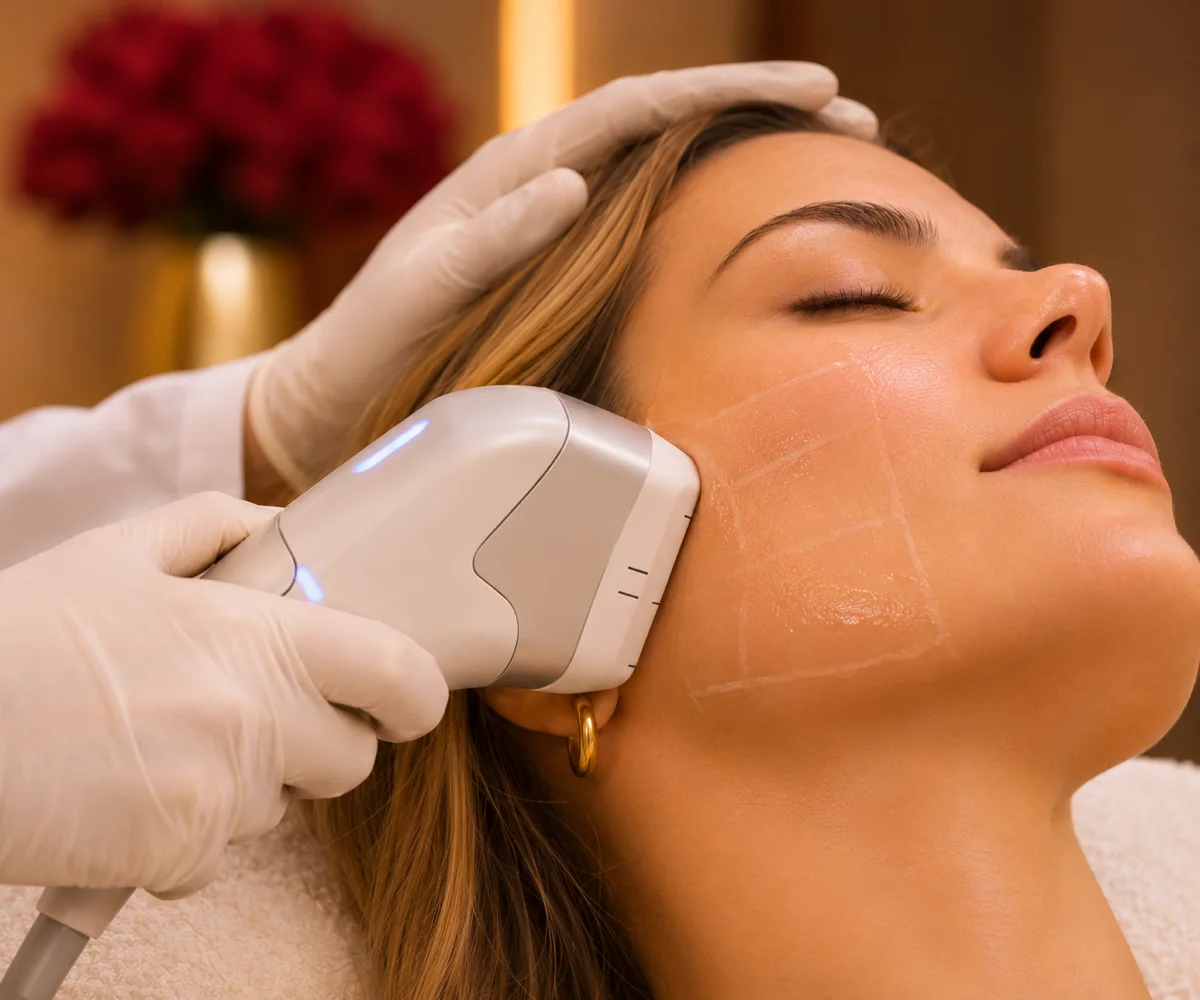
A focused ultrasound handpiece resting against the contour of the face, in bright consulting-room light

Firmness without surgery

HIFU

Focused ultrasound that heats the skin in depth and stimulates collagen, with the aim of firming it. In a study of 35 people, the eyebrow rose by an average of 1.7 mm at 90 days, but the study was funded by the manufacturer. Near the eyelids it has to be carried out with care: there are described cases of eye injuries, such as cataract and inflammation of the iris, so it requires technique, eye protection and experience. The result is modest, variable and not permanent.

May be considered when

the cause has been assessed, the excess skin or the descent of the eyebrow is mild, there is no eyelid disease awaiting treatment, and the doctor has explained the risks of this area and what is realistic to expect.

Find out more
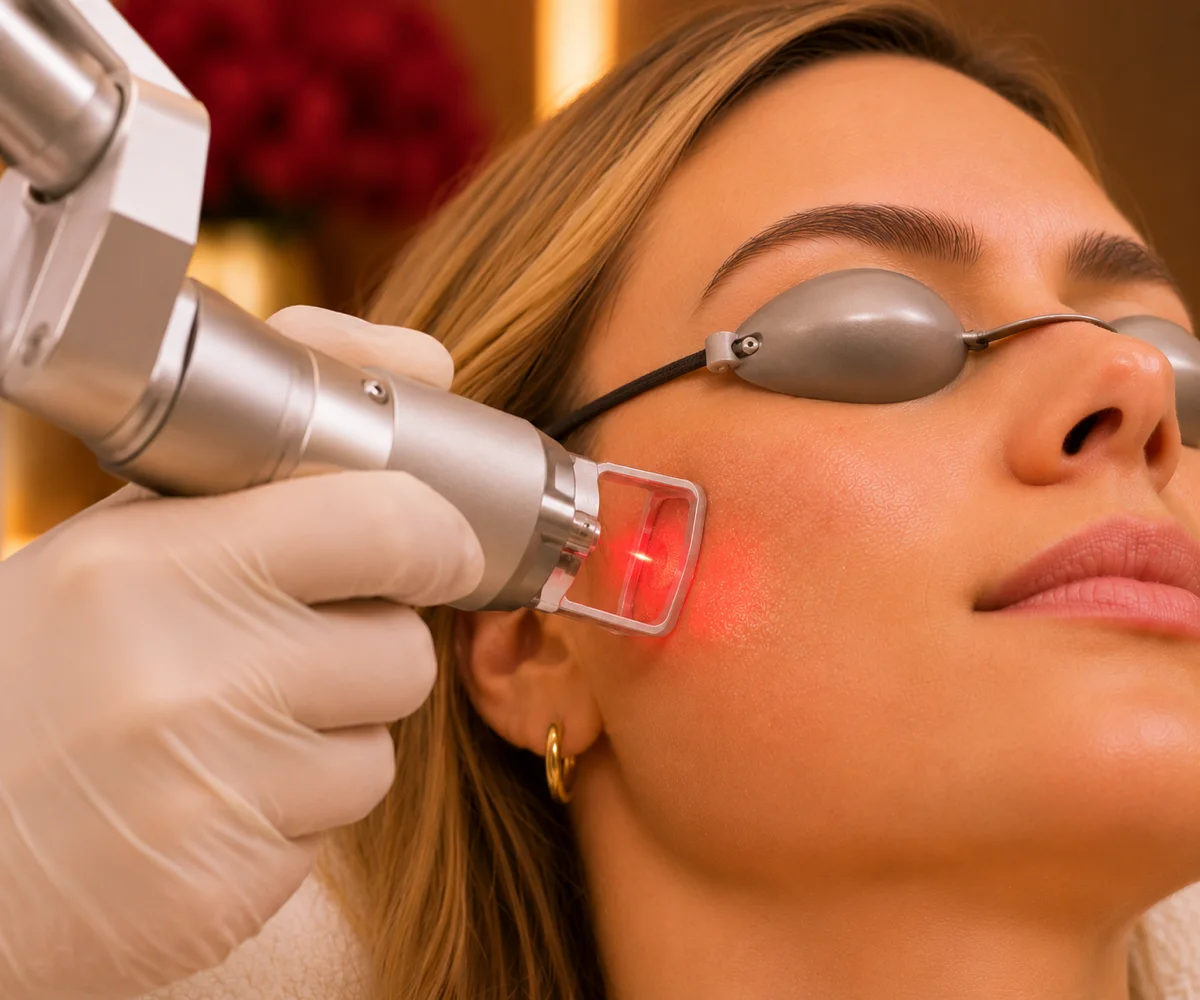
Fractional laser equipment next to the face, with eye protection, in a consulting room

Skin renewal and firmness

Fractional CO2 laser

A laser that creates controlled micro-injuries in the skin of the eyelid to stimulate its renewal and tightening. In small studies of mild to moderate dermatochalasis, the eyelid fold and the eyebrow rose by an average of about 1.6 to 2.3 mm at 3 to 6 months, with redness, swelling and crusts for about 1 to 2 weeks. It does not treat ptosis of the muscle, requires eye protection and there is a risk of changes in skin colour. In darker skin the risk of marks is greater.

May be considered when

the eyelid has thin, lax, wrinkled skin, without ptosis of the muscle and without marked excess skin, the skin is healthy and the doctor has explained the risks and what is realistic to expect.

Find out more

What the journey looks like

From the first conversation to a plan tailored to you

No procedure begins without an assessment consultation with the doctor. First you work out what is descending and whether there is any cause to investigate, and only then is it decided what to do.

  1. 01At the clinic

    Telling your story

    The doctor asks since when you noticed the drooping, whether it was slow or sudden, whether it varies over the day, whether there is double vision, whether the eyelid blocks your vision and which treatments, toxin or surgery you have already had in the area.

  2. 02At the clinic

    Observing the area

    The position of the eyebrows, the skin of the eyelid and the edge of the eyelid in relation to the pupil are observed, and one eye is compared with the other. If there are signs of a medical cause, or if vision is affected, referral is to ophthalmology or another specialty.

  3. 03At home

    Protect and record

    Daily sunscreen, not rubbing the eyes, and monthly photographs in the same light. If the drooping changes quickly, contact the clinic or a doctor.

  4. 04Over time

    Decide and follow up

    The doctor explains the options, including surgery when it is the most suitable, what can be expected from a non-surgical method and how many sessions may be needed, without promising results. The examination is repeated and the plan adjusted.

Day to day

What helps at home

What is done at home does not lift the eyelid, but it protects the skin and helps to work out what is changing. These are the measures that make sense while you wait for the consultation.

The golden rule

First understand what is descending

Skin, muscle and eyebrow call for different solutions, and sudden drooping or drooping on one side only calls for medical assessment instead of an aesthetic treatment. Getting the diagnosis right is worth more than any procedure.

Photographing every month

It helps to see whether the eyelid is changing and at what pace, and gives the doctor a point of comparison.

In practice: photographs from the front, in the same light and the same position, and without raising your forehead.

Protect from the sun

The skin of the eyelid is thin, and ultraviolet radiation speeds up the loss of elasticity.

In practice: sunscreen every day and sunglasses, even on cloudy days.

Look after your eyes and lenses

Rubbing the eyes and years of contact lenses can stretch the tendon of the eyelid.

In practice: avoid rubbing, treat allergies and talk about your lenses in the consultation.

Check the field of vision

If the skin blocks vision, there may be a functional indication for treatment.

In practice: if the fold blocks your gaze, you drive with difficulty or you have headaches from straining your forehead, ask for an ophthalmology assessment.

Dr Michelle Campagnoli, clinical director of Clínica Luxmed

Who will look after you

An assessment carried out by the doctor

At Luxmed, in Algés, the first step is always an assessment with Dr Michelle Campagnoli. She is the one who examines the area, works out whether what is descending is the skin, the muscle or the eyebrow, rules out other causes and decides with you what makes sense, before any procedure, referring to ophthalmology or plastic surgery whenever that is the route.

  • Physical examination and medical historyA conversation about the history and habits, and an examination of the area with the eyelid and eyebrow at rest.
  • A plan tailored to youA clear plan, without promises, in which the cause is assessed first and your progress is monitored over time.
  • No obligationThe cost of any treatment is confirmed only after the assessment.
Book an assessment

Articles on drooping eyelids

From our blog
Fotografia · palpebras-descaidas-blog-11200 × 800 px · horizontal 3:2Natureza-morta numa mesa de cabeceira: óculos de leitura, um espelho de mão pousado e um bloco de notas, com luz suave de fim de tarde; só objetos, sem rostos

Facial aesthetics

Drooping eyelid: excess skin or ptosis?

How to distinguish excess skin, slackness of the eyelid muscle and a drooping eyebrow, and why this changes what is proposed.

Fotografia · palpebras-descaidas-blog-21200 × 800 px · horizontal 3:2Bancada clara de consultório com uma lanterna de consulta, compressas e um frasco de protetor solar de rosto, em luz suave; só objetos, sem rostos

Facial aesthetics

Drooping eyelids: what can be achieved without surgery

What the evidence says about laser, focused ultrasound and other options that firm the skin, what can be expected and their limits.

Fotografia · palpebras-descaidas-blog-31200 × 800 px · horizontal 3:2Mulher de uns 60 anos, de perfil, sentada numa sala de consulta de luz natural a conversar com a médica; enquadramento discreto e de meio-corpo, sem close dos olhos

Facial aesthetics

Blepharoplasty: when it is the best option

In which situations eyelid surgery is the most reliable choice, what it can improve in vision and appearance and what is assessed beforehand.

Book a consultation

Book your consultation

Choose how you prefer to get in touch. We will arrange the assessment consultation with Dr Michelle Campagnoli.

Booking through the websiteAssessment consultationTalk to our assistant on WhatsApp and ask for the current price of the assessment.

New Life Miraflores, Algés · Office Center, R. Santa Teresa do Menino Jesus n.º 6, 9.º C, 1495-048

Your details are used only for this contact. Any treatment depends on a prior medical assessment.

Request an appointmentIt takes less than a minute.
Speciality
You do not need to go into detail. The doctor will talk to you during the consultation.
Request received. Our team will contact you as soon as possible.
Why do eyelids droop and what can be done?

For three main causes, often combined: excess skin (dermatochalasis), slackness of the muscle or tendon that lifts the eyelid (ptosis) and a descending eyebrow. With age, the skin loses elasticity, the tendon stretches and the eyebrow descends. What can be done depends on what is descending: skin care and sun protection in every case, methods that firm the skin in mild cases and surgery when the excess is large or the muscle is slack. The first step is an assessment.

How do I tell excess skin from ptosis?

In dermatochalasis there is a fold of skin that falls over the eyelid, and when you gently lift it you can see that the edge of the eyelid is in a normal position. In ptosis, the edge of the eyelid is low and covers part of the pupil or the iris, even without excess skin. Both can exist, and a drooping eyebrow can mimic either. This test at home is only a clue: the doctor is the one who distinguishes accurately, and it is important because the treatment is different.

Is a drooping eyelid on one side only serious?

When the difference appeared slowly, over years, it is usually a natural asymmetry or the effect of age. But an eyelid that drops suddenly, within hours or a few days, especially on one side only, may have a nerve or neuromuscular cause, and requires urgent assessment, particularly if there is double vision, a severe headache, pupils of different sizes or weakness. In those cases, call 112 or go to an emergency department.

Can it be the eyebrow and not the eyelid? And is it hereditary?

Yes. The eyebrow descends with age and pushes skin onto the eyelid, and many people lift their forehead without realising to compensate. That is why the position of the eyebrow is assessed before any decision. The anatomy of the eyelid and eyebrow has a family component, but the type of drooping, and whether there is anything to treat, can only be seen in an assessment.

Can eyelids be lifted without surgery?

In some mild to moderate cases it is possible to improve the look a little, with methods that firm the skin, such as fractional CO2 laser or focused ultrasound. Studies show gains of a few millimetres, are small, many with links to manufacturers, and results vary and, in general, are not permanent. They do not correct ptosis of the muscle, and when the excess skin is large, surgery is the most reliable option. The doctor explains what is realistic in your case.
Does HIFU lift the eyelids? Is it safe around the eyes?

HIFU has been studied mainly for lifting the eyebrow, with an average rise of about 1.7 mm at 90 days in a study of 35 people funded by the manufacturer. It does not reliably lift the eyelid itself. Near the eyes there are published cases of eye injuries, such as cataract and inflammation of the iris, when it is used with excess energy or without protection, so this area requires technique, experience and eye protection. The doctor assesses whether it makes sense and in which area.

How does fractional CO2 laser work on the eyelids and what risks does it carry?

It creates controlled micro-injuries in the skin to stimulate renewal and tightening. In small studies of mild to moderate dermatochalasis, the eyelid and the eyebrow rose by an average of about 1.6 to 2.3 mm at 3 to 6 months. Afterwards there is redness, swelling and crusts for 1 to 2 weeks. The risks include changes in skin colour, especially in darker skin, infection and, rarely, scars, and eye protection is needed. It does not treat ptosis.

And collagen biostimulators and botulinum toxin?

The clinic associates biostimulators with this topic, but we did not find specific studies on eyelids, so we do not present them as a treatment for a drooping eyelid; the doctor may consider them for facial firmness. Botulinum toxin is another matter: it can lift the eyebrow a little when properly indicated, but it can also cause ptosis, when it spreads to the muscle that lifts the eyelid.

When is blepharoplasty the best option?

When there is a lot of excess skin, when the skin blocks vision, or when there is ptosis of the muscle, which only surgery corrects. A review of 28 studies reports a greater visual field, fewer headaches and better quality of life after upper blepharoplasty, although results on other parameters are inconsistent. It is carried out by a surgeon, and the decision depends on an assessment, including of the eyebrow, which can change the technique.

When should I seek a doctor urgently?

Seek urgent assessment if the eyelid has drooped suddenly, especially on one side, with double vision, a severe headache, pain in the eye, different pupils, facial weakness, or difficulty speaking, swallowing or breathing: call 112. If it drops at the end of the day and improves with rest, or if there is a lesion on the eyelid that grows, changes colour or bleeds, seek a medical assessment. After toxin, ptosis is usually transient, but tell the clinic that injected; with double vision or pain, emergency care. Out of hours, call SNS 24 (808 24 24 24).

We could not find that question. Ask us on WhatsApp

Scientific references

This page is based on the sources below and was reviewed by Dr. Michelle Campagnoli. Last updated on .

  1. Latting MW, Huggins AB, Marx DP, Giacometti JN. Clinical Evaluation of Blepharoptosis: Distinguishing Age-Related Ptosis from Masquerade Conditions. Semin Plast Surg, 2017.
  2. Hollander MHJ, Contini M, Pott JW, Vissink A, Schepers RH, Jansma J. Functional outcomes of upper eyelid blepharoplasty: A systematic review. J Plast Reconstr Aesthet Surg, 2019.
  3. Balzani A, Chilgar RM, Nicoli M, Sapountzis S, Lazzeri D, Cervelli V, Nicoli F. Novel approach with fractional ultrapulse CO2 laser for the treatment of upper eyelid dermatochalasis and periorbital rejuvenation. Lasers Med Sci, 2013.
  4. Toyos MM. Continuous Wave Fractional CO2 Laser for the Treatment of Upper Eyelid Dermatochalasis and Periorbital Rejuvenation. Photomed Laser Surg, 2017.
  5. Alam M, White LE, Martin N, Witherspoon J, Yoo S, West DP. Ultrasound tightening of facial and neck skin: a rater-blinded prospective cohort study. J Am Acad Dermatol, 2010.
  6. Xiao G, Jan C, Hong L, Ye J, Li N, Li Y, Zhong N, Li Y. Eye injuries caused by high intensity macro and micro focused ultrasound treatment: a case report. BMC Ophthalmol, 2024.
  7. Nestor MS, Han H, Gade A, Fischer D, Saban Y, Polselli R. Botulinum toxin-induced blepharoptosis: Anatomy, etiology, prevention, and therapeutic options. J Cosmet Dermatol, 2021.
  8. Slonim CB, Foster S, Jaros M, Kannarr SR, Korenfeld MS, Smyth-Medina R, Wirta DL. Association of Oxymetazoline Hydrochloride, 0.1%, Solution Administration With Visual Field in Acquired Ptosis: A Pooled Analysis of 2 Randomized Clinical Trials. JAMA Ophthalmol, 2020.
  9. Beleznay K, Carruthers JDA, Humphrey S, Carruthers A, Jones D. Update on Avoiding and Treating Blindness From Fillers: A Recent Review of the World Literature. Aesthet Surg J, 2019.
  10. Hughes MCB, Williams GM, Baker P, Green AC. Sunscreen and prevention of skin aging: a randomized trial. Ann Intern Med, 2013.
CallAssistantAvailableBook