Why do puffiness and eye bags appear?
Because the lower eyelid is an area where three things come together: a cushion of fat that, with age or through family make-up, moves forward when the septum that holds it gives way; fluid that accumulates easily in very thin skin; and skin and muscle that lose firmness. In a study of 114 people who sought assessment for bags, none of these causes dominated in most cases: the anatomy varies widely from person to person. So the first step is to work out what dominates in your case.
Puffiness in the eyes: is it fluid or fat?
Often it is both. Fluid gives a soft swelling, more marked on waking, that varies with sleep, salt, alcohol and allergies. Fat gives a firm, stable bulge, which is noticeable all day and does not change with habits. A clue: if it improves over the morning, there is fluid; if it stays the same, there is probably fat. Only a medical examination distinguishes reliably and tells you which of the two weighs more.
Why are my eyes swollen in the morning?
Lying down, fluid spreads across the face and the skin of the eyelids, which is very thin, accumulates it easily. Added to this are the previous evening’s salt, alcohol, little sleep, crying and allergies. It usually settles over the morning. If the swelling is always the same every day, appears suddenly, is on one side only or comes with pain, redness, tiredness, changes in weight or swelling in other areas, see a doctor, because there may be another cause.
Can puffiness and eye bags be a sign of disease?
In the great majority of cases they are benign. But persistent swelling around the eyes can be linked to thyroid disease, including that which affects the orbit, kidney disease, allergies, infection or inflammation of the eyelid, and some medicines. The signs to watch for are sudden onset, swelling on one side only, pain, redness, blurred or double vision, a more bulging eye and other symptoms such as tiredness, changes in weight or foamy urine.
How can eye bags be removed without surgery?
It depends on what predominates. If it is fluid, sleep, a raised head, moderate salt and alcohol, treatment of allergies and cold on waking help. If it is thin, lax skin, sun protection and, in some cases, procedures that firm the skin can improve the look in a discreet way. If it is fat that has moved forward, there is no non-surgical treatment that removes it: creams, massage and devices do not change fat, and the procedures the clinic may consider do not eliminate it. The doctor explains at the assessment what is realistic.
Does carboxytherapy resolve eye bags?
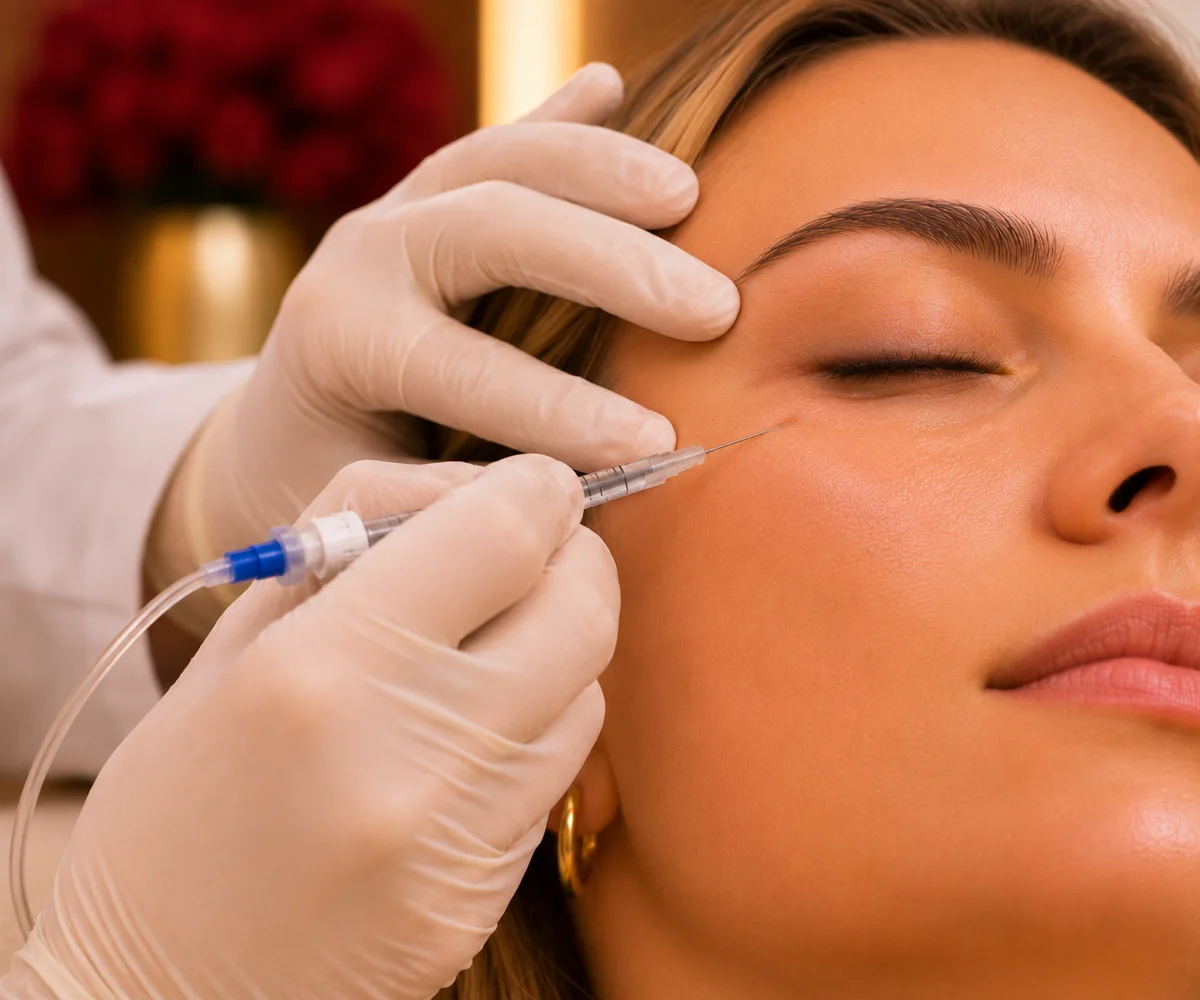
There is no evidence that it resolves bags. Published studies on carboxytherapy around the eyes are small and are about dark circles, in which improvements in colour and vascularisation were measured, without serious adverse effects. For the bulge of the eyelid, as far as we found, there are no specific studies. For that reason it is an option to consider with caution, after an assessment, and not for those who expect a fat bag to disappear. It is carried out over several sessions and results vary.
Do PRF and radiofrequency help with puffiness and eye bags?
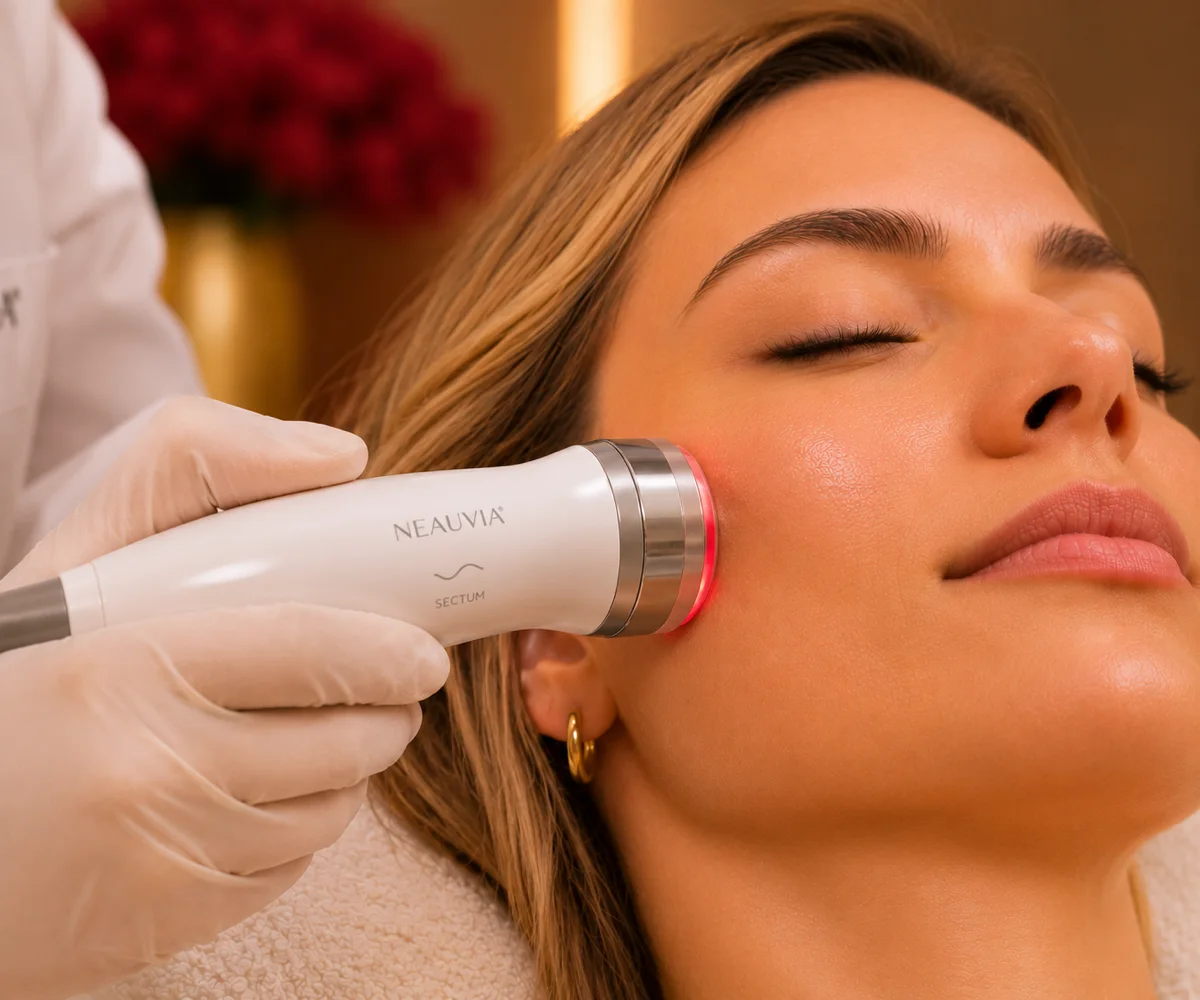
They can help the skin, not the fat. A systematic review of PRP and PRF around the eyes found a lot of variation between studies, high satisfaction, mixed improvements in wrinkles and texture and only a moderate effect on pigmentation, with no data showing that they remove bags. Radiofrequency gives a mild to moderate tightening of the skin, with the evidence rated as moderate in a recent review, and protocols that vary; near the eyes it calls for careful technique and protection, and burns can occur. When the bag is mainly fat, firmer skin does not make it disappear.
When is the solution surgical?
When the main component is fat that has moved forward, or there is a lot of excess skin, and the person wants a correction that lasts. Lower eyelid surgery (blepharoplasty) is the reference in those cases: it can remove or reposition the fat and remove skin, and is carried out by an eyelid or plastic surgeon. It has its own risks, such as asymmetry, dry eye, or changes in the position of the eyelid, and a recovery of a few weeks. The clinic’s doctor explains when it makes sense to ask for that opinion, without pressure.
Do the treatments carry risks?
The most common effects around the eyes are mild and temporary: redness, swelling, small bruises or discomfort for a few days. More rarely, burns, irritation, infection or changes in pigmentation can occur, and the skin of the eyelid is thin and the area is sensitive. That is why these techniques call for experienced professionals, prior assessment and eye protection, and are not carried out on irritated or infected skin, during pregnancy without indication or in the presence of some conditions. The doctor explains the risks of each option before any decision.
When should I see a doctor about swollen eyes?
Book a consultation if the swelling appeared recently, is on one side only, does not settle during the day, comes with tiredness, changes in weight, palpitations, swelling of the feet or foamy urine, or if there is a palpable mass. If you have pain in the eye, blurred or double vision, the eye seems more bulging, or the eyelid is red, hot and sore, with fever, go straight to an emergency department or call 112. If in doubt, out of hours call SNS 24 (808 24 24 24).