Why do I look tired even after sleeping well?
Because a tired look does not come from sleep alone. It comes from the sum of several signs: the heavier upper eyelid, the lower eyebrow, the shadow of the groove under the eye, thin, dull skin, redness and swelling. In an experiment with images altered on a computer, lowering the upper eyelid and the tip of the eyebrow was what most made the face look tired, and this does not depend on having slept. Sleep accentuates what is already there, but often the underlying cause is the structure of the face and the skin. So the first step is to work out what weighs most in your case.
Are tired eyes the same as a tired look? Can it be a sign of disease?
They are different things. “A tired look” is the appearance the face gives to others. “Tired eyes” can also be a sensation: burning, watering, red eyes or blurred vision at the end of the day, which may come from dry eye, uncorrected vision, allergy or many hours of screen time and calls for an ophthalmological examination, not an aesthetic treatment. In most cases a tired look is benign. More rarely it is associated with untreated allergies, thyroid conditions, medicines or eyelid problems, and then there are usually other signs. If you have pain, blurred or double vision, or an eye that seems to bulge, it is an ophthalmological emergency.
How do I know whether the problem is the eyelid, the groove or the skin?
There are clues, not a diagnosis. If the skin of the upper eyelid seems to weigh on the eye and the eyebrow has dropped, the weight is mainly structural. If the shadow is under the eye and changes with light or when looking from the side, it is mainly groove and volume. If the skin is thin, dull and lined, it is skin quality. Many people have a mixture of the three. Only a medical examination, from the front and the side and with different light, distinguishes them well.
Is it possible to rejuvenate the gaze without surgery? And when is surgery needed?
In part. Skin quality and some fine lines can improve with care and with some procedures, but with modest, temporary results. What is structural, such as excess skin over the eyelid, a drooping eyelid or a very low eyebrow, usually calls for surgery, and care is needed with what is promised: in a digital simulation, removing skin from the upper eyelid made the face look even more tired, which shows that each case is different. The doctor tells you in the consultation what aesthetic treatment can do and when you should be seen by ophthalmology or plastic surgery.
What can I do at home to look less tired?
Sleep at regular hours, protect the area from the sun every day, treat allergies, do not rub the eyes, take breaks from screens and have your vision checked. A cold compress relieves puffiness for a moment. There is no cream or home trick with solid evidence that it undoes a heavy eyelid or a shadow from the groove, and make-up can help to disguise but does not change the structure. If the look persists and bothers you, the doctor explains what else can be considered.
Does CO2 laser work on the eyelids? Who is it suitable for?
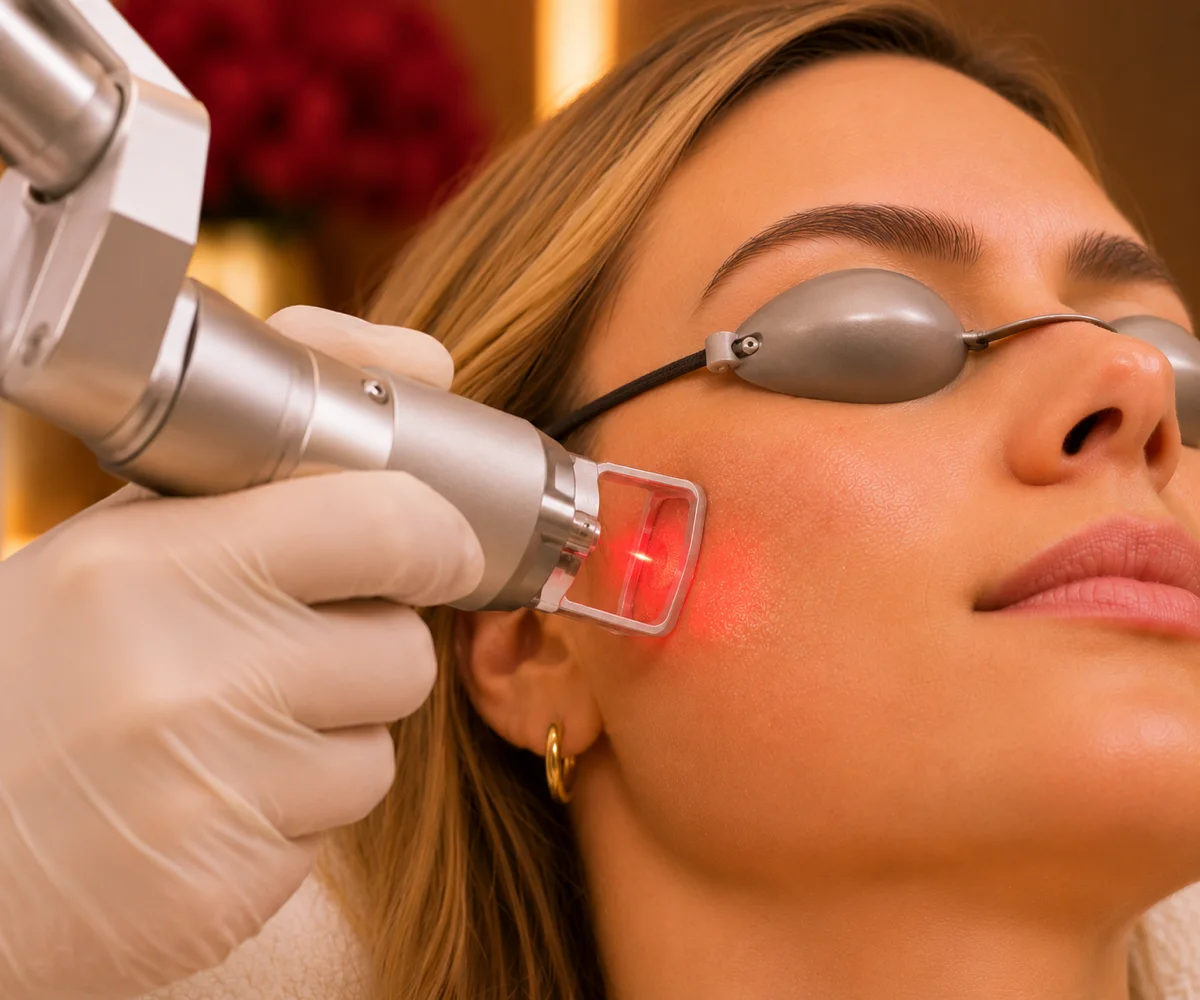
Fractional CO2 laser treats the skin: fine lines, texture and some firmness. In a prospective study of 100 people with wrinkles around the eyes, about half maintained a 26 to 50% improvement at 12 months and close to 40% maintained 1 to 2 mm of eyebrow lift, with redness and swelling in the first 3 to 4 days. A series of 424 people treated on the lower eyelids, almost all with fair to medium skin and an average age of 63, had high satisfaction, but also darkening of the skin (about 9%) and outbreaks of cold sores (less than 1%), and most also had eyelid surgery at the same time. It does not remove excess skin or correct a drooping eyelid. It is not carried out on irritated skin or with an active cold sore, and the doctor assesses the skin type, because darker skin darkens more after laser.
Do PRF and Skinbooster help with a tired look?
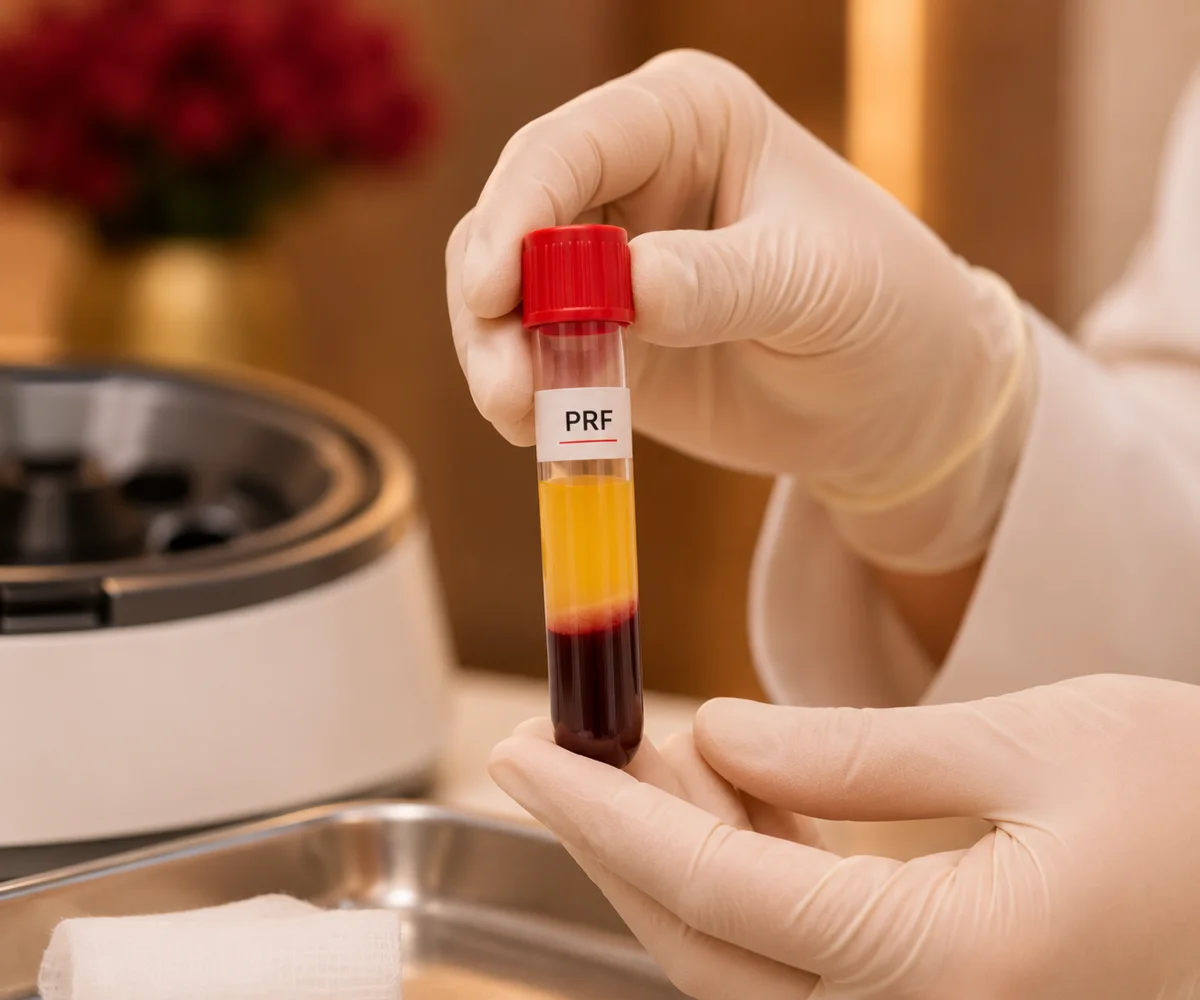
PRF is prepared from the person’s own blood. A systematic review of 14 studies on the eye area described improvements in texture, fine wrinkles and the “tissue paper” look, with few and mild adverse effects, but the effect often diminished after 6 months; another, of 26 studies, concluded that satisfaction is high but that objective improvements in wrinkles and texture are mixed, and that techniques vary widely. Skinbooster hydrates the skin deeply: we only found one small study (23 women) with a mix of hyaluronic acid and amino acids around the eyes, with improvements in dark circles and wrinkles, which does not prove the effect of the product used at the clinic. Neither corrects a heavy eyelid or a marked groove.
What risks does treating the eye area carry?
It is one of the most delicate areas of the face. With laser it is essential to protect the eyes, because without adequate protection serious and even irreversible injuries can occur, and after treatment redness, swelling, darkening of the skin, infections and, more rarely, scars or changes to the eyelid can appear. With injections swelling and bruising are common, and very rarely a filler enters a vessel and can cause loss of vision or skin necrosis. That is why an experienced doctor and anatomical knowledge are essential. If you have severe pain, pale skin or skin with purplish patches, a change in vision, a severe headache or facial weakness, call 112 and tell the clinic that carried out the treatment.
Are the results permanent? How many sessions are needed?
There are no guaranteed or permanent results. The effect of PRF usually diminishes after about 6 months, and that of laser depends on the number of sessions and each person’s response. The number of sessions depends on the method and the person, and the doctor sets it at the assessment. If the cause continues, such as sun, poor sleep or allergy, the tired look tends to return, so care at home counts as much as the procedure.
When should I see a doctor first?
Book a consultation if the tired look is on one side only, appeared quickly, if the eyelid has drooped or the eye seems to bulge, if there is persistent swelling of the eyelids, eyes that often burn, are red or have blurred vision, or if there is a lesion on the eyelid that grows, changes colour or bleeds. If there is pain in the eye, blurred or double vision or loss of vision, call 112 or go to the emergency department. If in doubt, out of hours call SNS 24 (808 24 24 24).