


- Home
- Facial aesthetics
- Droopy eyelids
- Drooping eyelid
Drooping eyelid: excess skin or ptosis?
When the upper eyelid looks heavy or droopy, there are two very different main causes: excess skin and ptosis. Confusing them leads to the wrong treatments.
 Luxmed TeamAuthor
 Dr Michelle CampagnoliClinical review · OM no. 69467
In this article
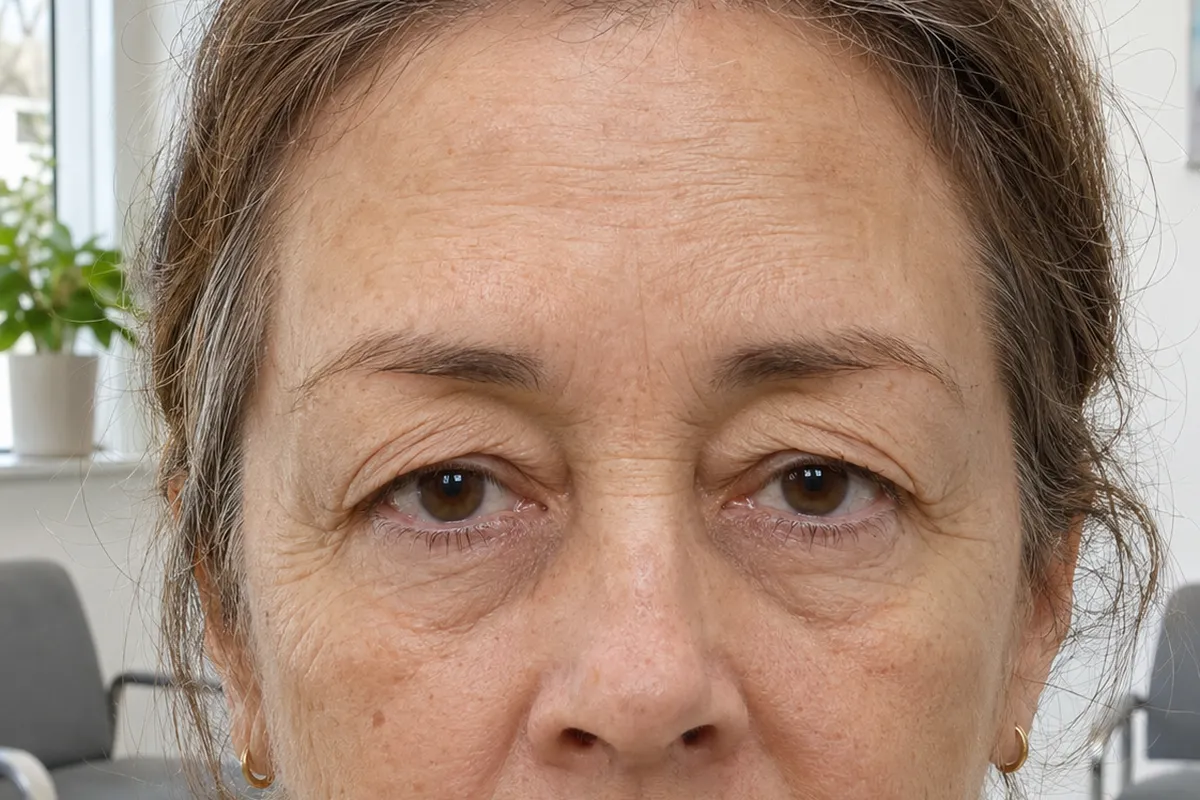
When the upper eyelid looks heavy or droopy, there are two very different main causes. One is excess skin, which falls over the eyelid but does not affect its position. The other is ptosis, in which the eyelid itself is lower because the muscle that lifts it has lost strength or come loose. Confusing them leads to the wrong treatments.
Three ideas to remember.
Excess skin, ptosis and drooping brow
| Excess skin | Ptosis | Drooping brow | |
|---|---|---|---|
| What it is | Extra skin that falls over the eyelid | Lower eyelid margin | Brow below its usual position |
| Eyelid margin | Normal | Low | Normal |
| Usual cause | Ageing | Detachment of the muscle tendon with age, contact lens use, other causes | Ageing |
| Treatment | Upper blepharoplasty | Ptosis correction surgery | Brow lift |
A clinical review of ptosis stresses that excess skin, a drooping brow and other causes can mimic ptosis, and that failing to tell them apart may lead to unnecessary or insufficient surgery (Koka et al., 2026).
Causes of ptosis
- Ageing: the most common cause in adults, due to detachment of the levator muscle tendon.
- Contact lenses worn for many years.
- Botulinum toxin that spreads to the eyelid muscle, usually temporary.
- Neurological or muscle diseases, such as myasthenia gravis.
- Congenital causes.
Ptosis may have neurological causes that require medical assessment before any aesthetic treatment (Finsterer, 2003).
Warning signs
See a doctor urgently if the eyelid drops suddenly and there is:
- double vision;
- severe headache;
- pupils of different sizes;
- weakness in other muscles or weakness that worsens towards the end of the day.
How it is treated
- Excess skin: upper blepharoplasty. Skin treatments can improve texture, but have a limited effect on excess skin.
- Ptosis: surgery that strengthens or repositions the levator muscle. There are eye drops that temporarily lift the eyelid in mild cases, on medical prescription.
- Drooping brow: botulinum toxin for a slight lift or surgery in marked cases.
At Luxmed Clinic
At Luxmed, we carefully distinguish excess skin, ptosis and a drooping brow. When there is ptosis, we guide towards assessment by ophthalmology or oculoplastic surgery.
Talk to us
The assessment is a conversation, with no obligation. Tell us what concerns you and our team will reply.
This article is for information purposes and does not replace a consultation. The results of any treatment vary from person to person.
Frequently asked questions
How do I know if I have ptosis?
If the eyelid margin covers part of the pupil or is lower than that of the other eye, it may be ptosis. It is confirmed in a consultation.
Does ptosis affect vision?
It can affect the upper visual field when it is marked.
Can the toxin cause ptosis?
Rarely, when it spreads to the eyelid muscle. It is usually temporary.
Does blepharoplasty correct ptosis?
Not on its own. Ptosis requires its own correction, which can be done in the same surgery.
Scientific references 2
- Koka K, Zeppieri M, Vadeo A, Patel BC. Blepharoptosis (ptosis): classification, evaluation, and surgical management. In: StatPearls. Treasure Island (FL): StatPearls Publishing; 2026. Artigo
- Finsterer J. Ptosis: causes, presentation, and management. Aesthetic Plast Surg. 2003;27(3):193-204. doi:10.1007/s00266-003-0127-5 Artigo
Editing and development: Rúben Brito · Operial Development
Keep exploring