


- Home
- Therapeutic massage
- Heavy legs and swelling
- Heavy, tired legs
Heavy, tired legs: causes, what helps and when to see a doctor
The most common cause of heavy legs is venous. See what worsens them, what helps lastingly, the role of massage and signs that call for a doctor.
 Rúben BritoAuthor
 Dr Michelle CampagnoliClinical review · OM no. 69467
In this article
You reach the end of the day and your legs feel like lead. The ankles are swollen, the mark of your socks stays on the skin, there is tingling or cramps at night. In summer, it gets worse. After a long journey or a whole day on your feet, too.
The feeling of heavy legs is very common, especially in women and in those who spend many hours standing or sitting. In most cases, it is related to the veins. But not always, and there are signs that should not be ignored.
Three ideas to remember.
Fica por baixo do resumo, se existir uma segunda foto.
Why legs feel heavy
How the return of blood works
Blood reaches the legs pushed by the heart. To return, it has to rise against gravity. For this, it relies on:
- Valves inside the veins, which only let blood go upwards.
- The calf muscle pump: every time we walk, the leg muscles contract and squeeze the veins, pushing blood upwards.
- Breathing and the sole of the foot, which also help.
Chronic venous disease
When the valves stop closing properly or the vein walls become more dilated, blood tends to pool in the legs. Pressure in the veins increases, more fluid leaves into the tissues and symptoms appear: heaviness, tiredness, swelling, tingling, night cramps, itching.
It is very common. In the Edinburgh Vein Study, a large population study, around a third to 40% of adults had varicose veins and the great majority had small visible vessels (telangiectasias, or “spider veins”) (Evans and colleagues, 1999).
Venous disease progresses in stages, described by the international CEAP classification (Lurie and colleagues, 2020):
- Symptoms without visible signs (heavy, tired legs).
- Telangiectasias and reticular veins: tiny, fine, red or bluish vessels.
- Varicose veins: dilated, tortuous veins, 3 mm or more.
- Oedema: swollen ankles.
- Skin changes: darkening, eczema, hardening, especially around the ankles.
- Venous ulcer, healed or active.
Not everyone progresses, and progression is generally slow. But skin changes and ulcers require medical follow-up.
What increases the risk
- Age and family history of varicose veins.
- Female sex and hormonal variations.
- Pregnancy: more blood volume, hormones that relax the veins and pressure from the uterus.
- Excess weight.
- Occupations with many hours of standing still or sitting.
- Sedentary behaviour.
- Previous venous thrombosis.
Everyday aggravating factors
- Heat: dilates the veins. Very hot baths, sauna, prolonged sun exposure, hot-wax hair removal.
- Staying still for a long time, standing or seated, especially with the legs crossed.
- Long flights, car or coach journeys.
- Clothing that is very tight at the waist and groin.
Other causes to consider
Not all heavy or swollen legs come from the veins. Other causes include:
- Lymphoedema and lipoedema. See Lymphatic drainage: what it is for, indications and when not to have it and Cellulite or lipoedema: how to tell the difference.
- Heart, kidney or liver failure, which cause swelling on both sides.
- Medicines, such as some antihypertensives (for example, amlodipine and others in the same group), anti-inflammatories, corticosteroids and hormone therapy.
- Thyroid problems.
- Peripheral arterial disease: pain in the calf when walking, which eases on stopping. It is a problem of the arteries, different from the veins, and requires assessment.
- Restless legs syndrome: an irresistible need to move the legs in the evening and at night, relieved by movement.
What helps
The recommendations of the European Society for Vascular Surgery on chronic venous disease give prominence to simple lifestyle measures and compression, reserving other treatments for selected cases (De Maeseneer and colleagues, 2022).
1. Activate the calf pump
The most important and cheapest measure: moving your legs.
- Walking every day, preferably 30 minutes or more.
- If you work seated, stand up and walk a little every 30 to 60 minutes.
- If you work standing, alternate your weight, walk on the spot, avoid standing still.
- Simple exercises, seated or standing: rise and lower on tiptoe 10 to 20 times, make circles with the ankles, flex and stretch the feet.
- Swimming, aqua aerobics, cycling and walking are especially good for the veins.
2. Raise the legs
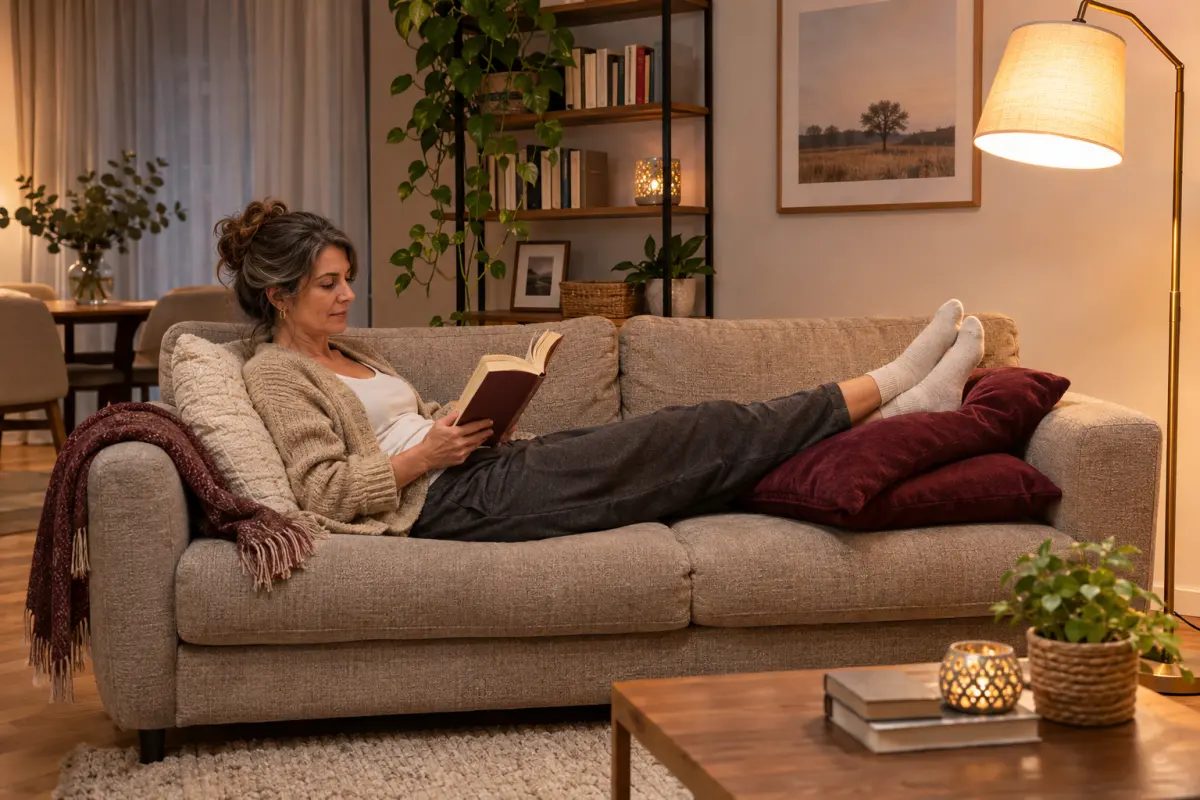
Lying down, with the legs above heart level (for example, resting on a pillow or against the wall), for 15 to 30 minutes, once or more a day. Slightly raising the foot of the bed may also help, except in people with heart or arterial problems, who should ask their doctor.
3. Compression stockings
Graduated elastic compression stockings exert more pressure at the ankle and less above, helping blood to flow upwards. They relieve heaviness, tiredness and swelling in many people and are a mainstay of treatment in more advanced stages. The evidence that they change the progression of varicose veins in the early stages is, however, limited (Shingler and colleagues, 2011).
Important precautions:
- The degree of compression and the size must be appropriate. Ask your doctor or pharmacist, who will measure your legs.
- They are put on in the morning, before the legs swell.
- Do not use compression stockings without medical assessment if you have peripheral arterial disease, diabetes with sensory changes or decompensated heart failure: they can be dangerous.
- On long journeys, light compression stockings can help, especially in people at risk of thrombosis.
4. Controlling weight and looking after habits
- Losing weight, if there is excess, reduces pressure on the veins.
- Avoid clothing that is very tight at the waist and groin.
- Prefer comfortable shoes. Very high heels for many hours reduce the action of the leg pump.
- Avoid direct heat on the legs: very hot baths, sauna, prolonged sun.
- Finishing a shower with cool water on the legs, from the bottom upwards, is a popular measure that gives relief to many people, although without robust studies.
5. Massage and lymphatic drainage
Gentle massage and lymphatic drainage, carried out from the feet towards the thighs, give many people a feeling of lightness and relief from heaviness and swelling. The effect is temporary: it does not correct the valves or treat varicose veins. It works best as a complement to movement and compression. Find out more in Lymphatic drainage: what it is for, indications and when not to have it.
Precautions when massaging the legs:
- Gentle pressure, never deep, over varicose veins.
- Do not massage very prominent, painful or hardened varicose veins directly.
- Never have a massage if thrombosis is suspected.
6. Medical treatments
When symptoms are significant or there are varicose veins, skin changes or ulcers, the doctor (family doctor, angiologist or vascular surgeon) may propose:
- Venoactive drugs (phlebotonics): they may relieve oedema and some symptoms, according to a Cochrane review, although with modest benefit and no demonstrated effect on ulcer healing (Martínez-Zapata and colleagues, 2020). They should be used on medical advice.
- Sclerotherapy, for spider veins and small varicose veins.
- Endovenous techniques (laser, radiofrequency) or surgery, for larger varicose veins.
The choice depends on a clinical examination and, generally, a venous Doppler ultrasound.
Warning signs
See also Swelling in one leg only: when it may be thrombosis and what to do. If in doubt, call SNS 24 (808 24 24 24).
At Luxmed Clinic
At Luxmed Clinic, in Algés, massage and lymphatic drainage for heavy legs are carried out by a massage therapist, with a gentle technique, after asking about your health history and ruling out warning signs. If we notice signs that warrant a medical assessment, we recommend that you speak to your doctor before going ahead.
Talk to us
The assessment is a conversation, with no obligation. Tell us what concerns you and our team will reply.
Telephone 214 044 241 · info@luxmed.pt
Massage and drainage are wellbeing complements and do not replace medical assessment or treatment. Results vary from person to person.
Frequently asked questions
Why do my legs feel heavy at the end of the day?
In most cases, because blood pools in the legs after many hours standing or sitting, especially when the veins already have some insufficiency. Heat makes it worse.
Do heavy legs mean I have varicose veins?
Not necessarily. Symptoms can appear before there are visible varicose veins, and can also have other causes. If they are persistent, speak to your doctor.
Do compression stockings work?
They relieve heaviness and swelling in many people. They must be the right grade and size, and must not be used without assessment in the case of arterial disease or diabetes with sensory changes.
Does lymphatic drainage fix heavy legs?
It can give temporary relief and a feeling of lightness, but does not treat the cause. It works best with movement, elevation and compression.
Is heat bad for the legs?
Heat dilates the veins and worsens heaviness and swelling. Avoid very hot baths, saunas and prolonged sun on the legs.
Which exercise is best for heavy legs?
Walking, swimming, aqua aerobics and cycling. At work, rise and lower yourself on tiptoe and make circles with your ankles.
Are heavy legs in pregnancy normal?
They are common. Movement, elevation and compression stockings prescribed by the doctor help. Swelling on one side only, pain or sudden swelling of the face and hands require assessment.
Scientific references 5
- Evans CJ, Fowkes FG, Ruckley CV, Lee AJ. Prevalence of varicose veins and chronic venous insufficiency in men and women in the general population: Edinburgh Vein Study. J Epidemiol Community Health. 1999;53(3):149-153. Artigo
- Lurie F, Passman M, Meisner M, et al. The 2020 update of the CEAP classification system and reporting standards. J Vasc Surg Venous Lymphat Disord. 2020;8(3):342-352. Artigo
- De Maeseneer MG, Kakkos SK, Aherne T, et al. European Society for Vascular Surgery (ESVS) 2022 clinical practice guidelines on the management of chronic venous disease of the lower limbs. Eur J Vasc Endovasc Surg. 2022;63(2):184-267. Guideline
- Shingler S, Robertson L, Boghossian S, Stewart M. Compression stockings for the initial treatment of varicose veins in patients without venous ulceration. Cochrane Database Syst Rev. 2011;(11):CD008819. Artigo
- Martínez-Zapata MJ, Vernooij RW, Simancas-Racines D, et al. Phlebotonics for venous insufficiency. Cochrane Database Syst Rev. 2020;11:CD003229. Artigo
Keep exploring