


- Home
- Facial aesthetics
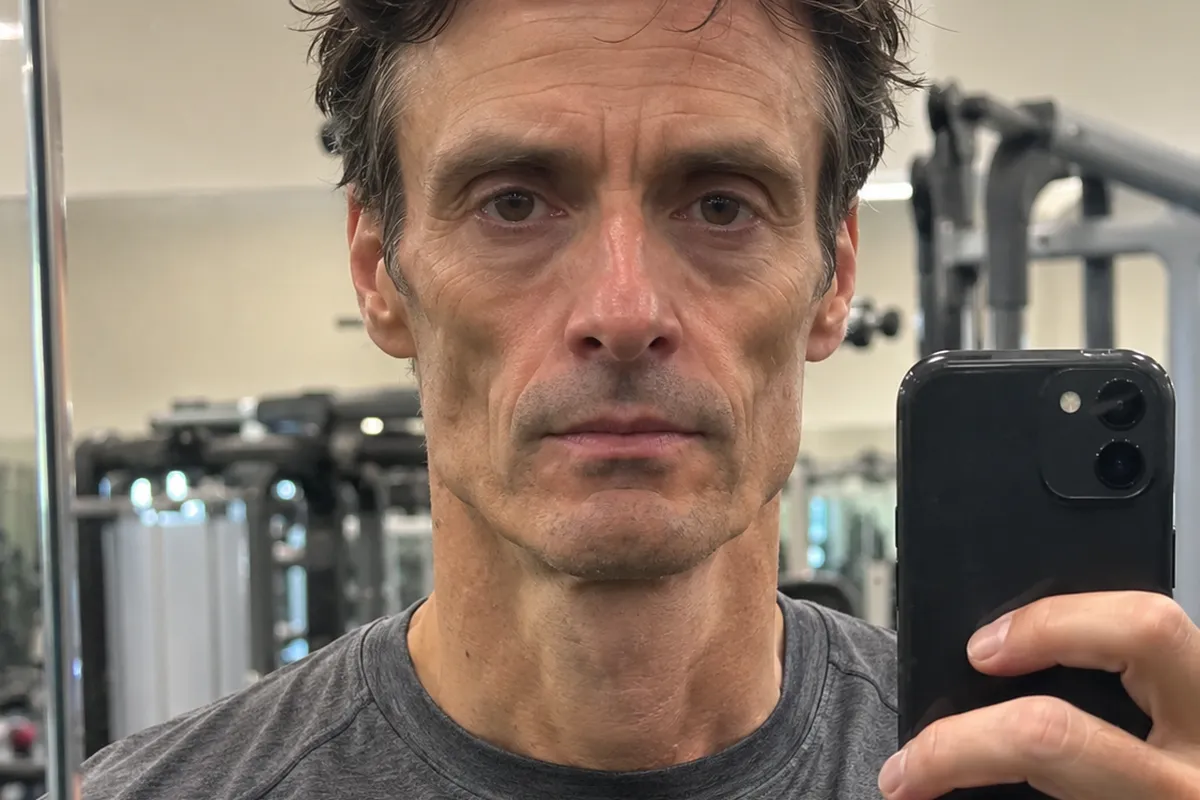
- Aged face after weight loss
- Older-looking face after weight loss
Older-looking face after rapid weight loss: why it happens
When weight loss is rapid or large, the face can become more hollow, lax and older-looking: facial fat gives support and volume, and the skin does not always keep up.
 Luxmed TeamAuthor
 Dr Michelle CampagnoliClinical review · OM no. 69467
In this article
Losing weight brings important health benefits, but when the loss is rapid or large, the face can become more hollow, lax and older-looking. This happens because facial fat gives support and volume, and the skin cannot always keep up with the change. The phenomenon has become more visible with the new weight-loss medicines.
Three ideas to remember.
Why it happens
- Loss of facial fat: the fat compartments of the face lose volume, as in ageing (Rohrich and Pessa, 2007).
- Skin that does not keep up: with age and sun damage, the skin has less collagen and elasticity.
- Speed: rapid losses give the skin less time to adapt.
- Age: after the age of 40, the changes tend to be more visible.
In a study of 20 people treated with medicines that mimic the hormone GLP-1, with imaging before and after, midface volume fell by an average of 9%, about 7% for every 10 kg lost. The loss in superficial fat followed the weight loss. The study was small and does not separate the effect of the medicine from the effect of the weight loss (Sharma et al., 2025).
Most common signs
- More hollow temples and cheeks.
- More marked dark circles and tear trough.
- More visible nasolabial folds and marionette lines.
- Less defined jawline and sagging double chin.
- Skin with less firmness.
What can be done
- Wait for weight to stabilise before volume treatments.
- Restore volume with hyaluronic acid or biostimulators.
- Improve firmness with biostimulators, microfocused ultrasound or radiofrequency.
- Look after the skin with sun protection and retinoids.
- Surgery, in marked laxity.
At Luxmed Clinic
At Luxmed Clinic, we support people who have lost weight and want to regain a rested look, with plans that respect the new face and the pace of the weight loss.
Talk to us
The assessment is a conversation, with no obligation. Tell us what concerns you and our team will reply.
This article is for information purposes and does not replace a consultation. The results of any treatment vary from person to person.
Frequently asked questions
Does it happen to everyone who loses weight?
No. It depends on age, skin, genetics and the amount of weight lost.
Does losing weight slowly help?
It can help the skin to adapt better.
If I regain weight, will my face go back to what it was?
Partly, but not always in the same way.
Should I stop the medicine because of my face?
That decision is a medical one and should weigh up the health benefits.
Scientific references 2
- Rohrich RJ, Pessa JE. The fat compartments of the face: anatomy and clinical implications for cosmetic surgery. Plast Reconstr Surg. 2007;119(7):2219-2227. doi:10.1097/01.prs.0000265403.66886.54 Artigo
- Sharma RK, Vittetoe KL, Barna AJ, et al. Radiographic midfacial volume changes in patients on GLP-1 agonists. Otolaryngol Head Neck Surg. 2025;173(2):360-366. doi:10.1002/ohn.1209 Artigo
Editing and development: Rúben Brito · Operial Development
Keep exploring