Algés, Oeiras Mon to Fri · 09:00 to 13:00 and 14:00 to 19:00 · Sat · 09:00 to 14:00
WhatsApp Book a consultation

Facial aesthetics

Aged face after weight lossWhen you have lost weight and your face has become more hollow, looser and more tired-looking

Losing weight often improves health, and the face changes with it too: the fat that filled it decreases, the cheeks and temples look more hollow, the skin can become loose and the contour of the jaw loses definition. The result is a face that many people describe as older or more tired, even when they are well. It happens with weight loss through dieting, bariatric surgery and weight-loss medicines, the GLP-1 receptor agonists (such as semaglutide and tirzepatide), much talked about as “Ozempic face”. Here we explain why it happens, what the studies show and what is not yet known, what helps before thinking about treatments, when it makes sense to restore volume and what hyaluronic acid, biostimulators and HIFU can and cannot do, at Clínica Luxmed, in Algés.

Reviewed by Dr Michelle Campagnoli, clinical director

  • 3options the clinic may consider
  • 1assessment, always first
  • Nocommitment
Fotografia · rosto-envelhecido-depois-de-emagrecer-hero800 × 1000 px · vertical 4:5Mulher de uns 45 anos, de três quartos, junto a uma janela com luz natural suave, de camisa clara e cabelo solto, com um ar sereno e a olhar para o lado; retrato do busto para cima, sem close do rosto nem marcações na pele

How to recognise it

Is your face showing the weight you have lost?

Not all faces change in the same way with weight loss: it depends on age, skin and how much has been lost. These signs help you understand what is going on before the assessment.

Tick what you recognise0/7

Tick the signs you recognise in your case. This is not a diagnosis, it is only meant to give you an idea.

Have you lost weight without trying, or are you still losing it, with tiredness, fever, night sweats or changes in bowel habit? Are you afraid of putting on weight, eating less and less or feeling that weight dominates your thoughts? Do you have severe, persistent abdominal pain, with or without vomiting, while taking a weight-loss medicine? You need a medical assessment before any aesthetic treatment. After a filler, severe pain, skin that is pale, darkened or has purplish patches, a change in vision, a severe headache or weakness on one side of the face are an emergency: call 112 and contact the clinic that injected it. Out of hours, for other cases, call SNS 24: 808 24 24 24.

Fotografia · rosto-envelhecido-depois-de-emagrecer-consulta1083 × 1300 px · vertical 5:6Médica de bata branca sentada de frente para uma mulher de uns 45 anos, numa sala de consulta de luz natural, com um espelho de mão, um bloco de notas e uma balança de consultório ao fundo; enquadramento de ombros para cima, sem close do rosto
Photograph of a consultation. The dots mark what the doctor is assessing.

Why it happens

What may be behind an older-looking face after weight loss

There is almost always more than one contributing factor. Choose a situation to see how it may play a part and what usually helps.

The fat of the face that decreases

The face has fat in pockets under the skin, which gives it volume and support. When weight is lost, these pockets shrink, especially in the middle of the face, and the skin loses its support. In a small, retrospective study, using CT and MRI images from 20 patients who took GLP-1-type medicines, the volume of the midface fell by 9% (median), about 7% for every 10 kg lost. It is an estimate from one centre and a few patients, not a rule.

What weighs on it

Expecting the face to look the same as before the weight loss, and comparing yourself only with photographs from years ago.

What helps

Understanding that part of the change comes from the volume that has gone, and that restoring it may be considered once your weight has stabilised.

Normal or to be assessed

Expected change or something to assess

Most faces that change after weight loss have a simple cause. But some situations call for an assessment before any treatment, because the face is only the visible part.

  • How it looks. More hollow cheeks and temples, looser skin, a more marked double chin and lines, in a similar way on both sides, alongside a known and wanted weight loss.

  • When it is noticed. Mainly in photographs and at certain times of day, and more when your weight is still falling. The scales stop and the face continues to change, which is common.

  • What the clinic does. The doctor listens to your weight history, examines the face and proposes whatever makes sense, including waiting and monitoring.

  • At home. Protect the skin from the sun, do not smoke, look after nutrition and muscle with your doctor and give your weight time to stabilise.

After a filler, do you have severe pain, pale or darkened skin, purplish patches, a change in vision, a severe headache or weakness on one side of the face? Call 112 straight away and contact the clinic that injected it. For other doubts, out of hours, you can call SNS 24: 808 24 24 24.

Book an assessment

What the clinic may consider

Options for restoring volume and firmness

The first steps are the ones that are not injected: a stable weight managed by whoever prescribed the treatment, good nutrition and guided strength exercise, sun protection and not smoking. Only then, and after an assessment, is a procedure considered. The clinic may consider hyaluronic acid, which restores volume (for example in the cheeks, temples and contour), collagen biostimulators, which improve the quality and firmness of the skin gradually, and HIFU, focused ultrasound that seeks to firm the skin without surgery and which, because it does not restore volume, makes more sense when it is mainly firmness that is lacking. There are no trials comparing these options in people who have lost weight: what is known comes from small studies, reviews and surveys of doctors, and the most common idea, that of waiting for your weight to stabilise, is clinical practice and not the result of a study. Results vary, are not permanent, and no treatment gives back the face you had before. The temples and the areas below the eyes are among the most delicate to fill.

Book an assessment
Dr Michelle Campagnoli, clinical director of Clínica Luxmed

First step

Assessment consultation

The doctor listens to what you are experiencing, examines your case and explains the suitable options. No treatment begins without this consultation.

May be considered when

you want to understand the cause and decide on the best path, with time and without commitment.

Book an assessment
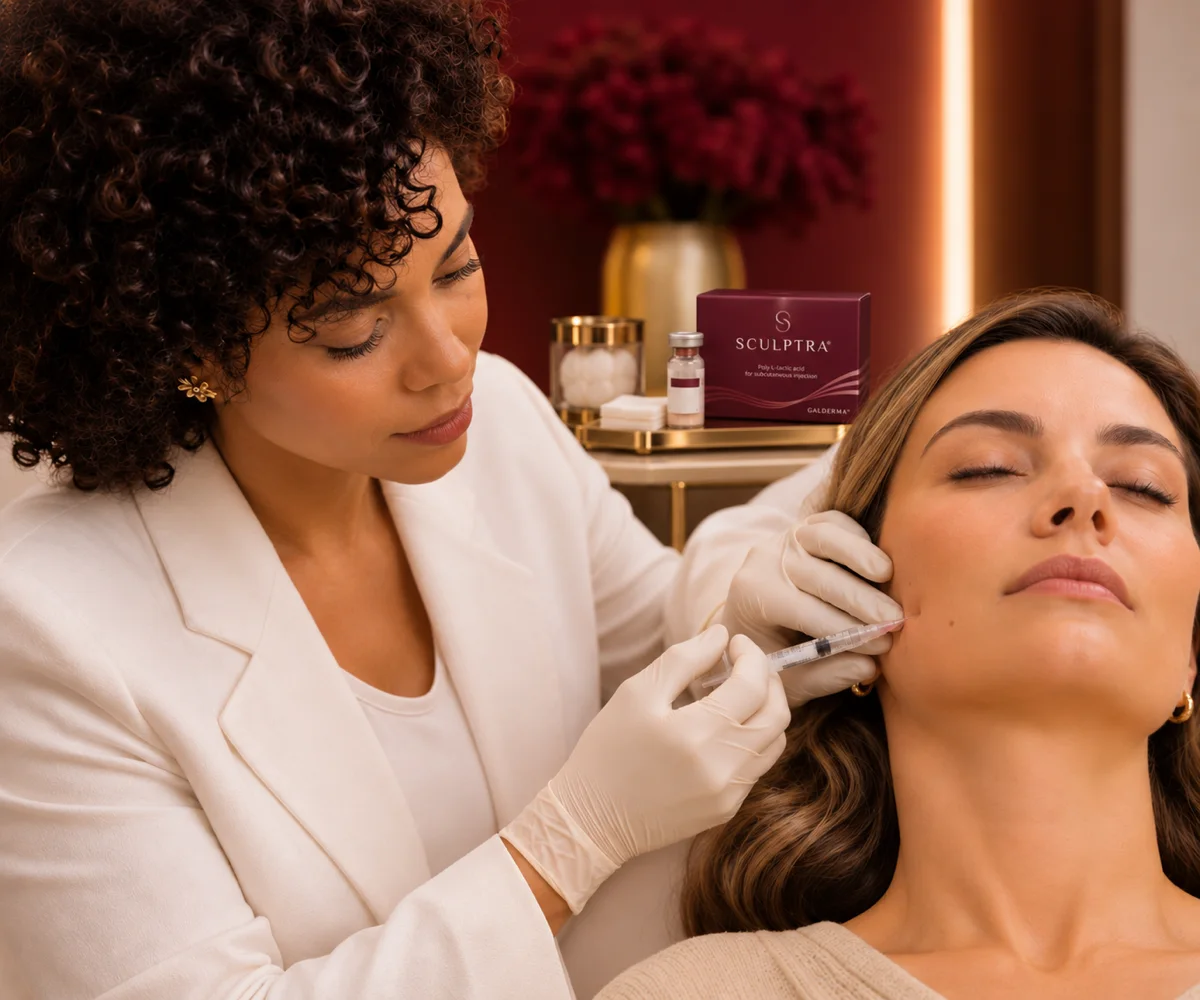
Doctor applying a collagen biostimulator along the contour of the face, in a controlled movement, at a consultation

Firmness and skin quality

Collagen biostimulators

Injection of a substance that stimulates the skin’s own collagen production, gradually and over weeks, to improve the firmness, elasticity and contour of the face. It does not fill like a gel and the effect appears slowly, may need more than one session and is not permanent. It calls for an experienced doctor.

May be considered when

it is mainly firmness and skin quality that are lacking, the weight loss has already stabilised, you accept an effect that is gradual and varies from person to person, and the doctor has explained the limitations and the risks, such as nodules and swelling.

Find out more
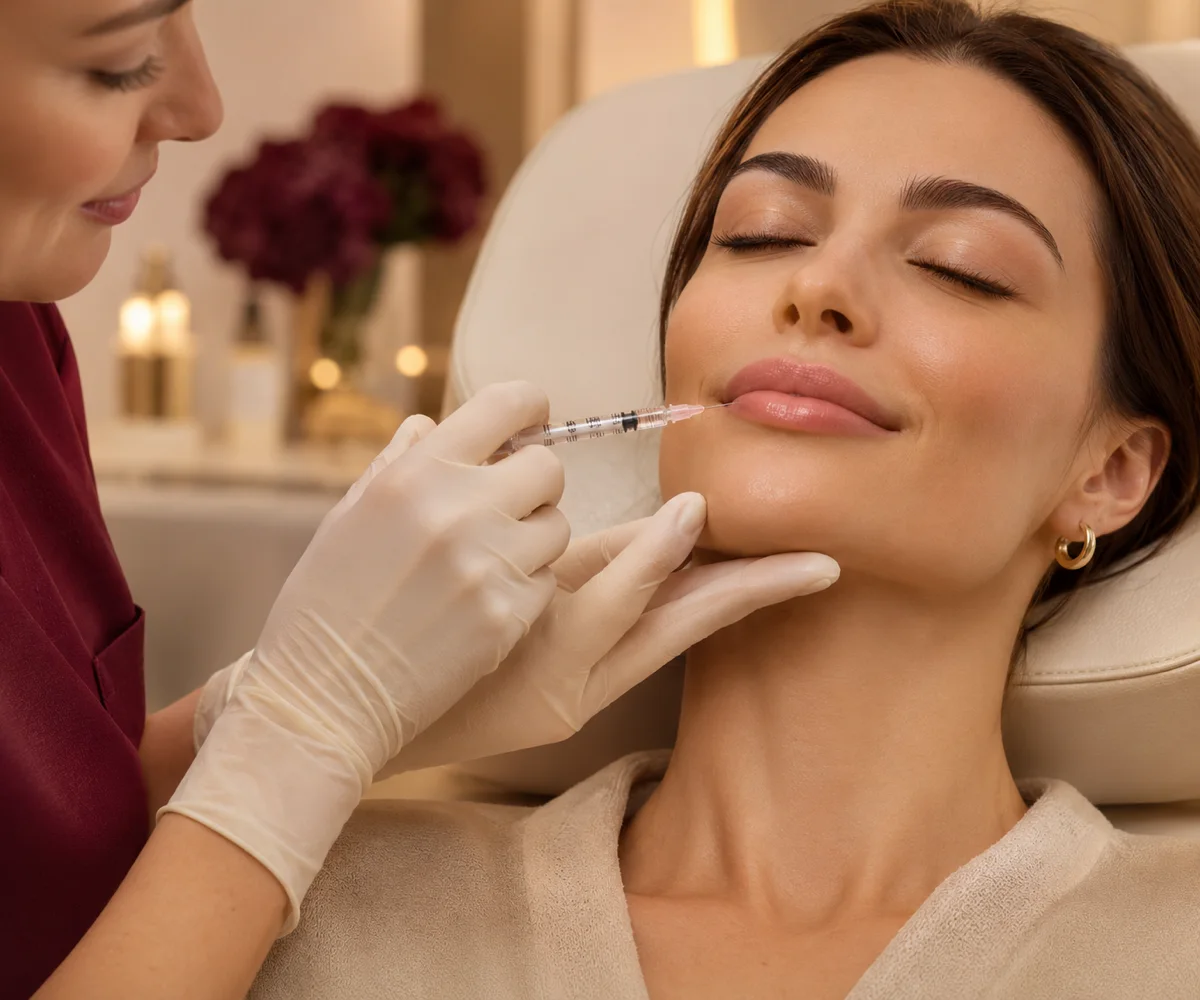
Doctor applying hyaluronic acid with a fine syringe, in a controlled movement, at a consultation

Restoring volume

Hyaluronic acid

Filling with a gel that dissolves over time, to restore volume and redefine contours, for example in the cheeks, temples and chin. It does not stretch the skin that is left over and, if your weight changes again, the result may no longer be what was intended. In the temples and around the nose and eyes there are delicate vessels: it calls for an experienced doctor, who knows the anatomy and has hyaluronidase available.

May be considered when

volume is lacking in defined areas, your weight is already stable, the doctor has assessed the anatomy and explained the risks, including vascular occlusion, and you accept small volumes, a gradual result that is not permanent.

Find out more

What the journey looks like

From the first conversation to a plan tailored to you

No procedure begins without an assessment consultation with the doctor. Many people decide to wait a few more months until their weight stabilises, and that is also a valid decision.

  1. 01At the clinic

    Describe your weight-loss journey

    The doctor asks how much weight you have lost, over what period and how, whether it has stabilised, which medicines you take and what bothers you most in the mirror. We also ask what has already been injected or operated on.

  2. 02At the clinic

    Examining the face

    The face is examined from the front and in profile: where volume is lacking, how much skin is left over, how the contour looks and whether there are asymmetries. If there are doubts about health or nutrition, assessment by whoever manages your weight is advised.

  3. 03At home

    Stabilise and look after the skin

    You speak to whoever prescribed the weight treatment, look after nutrition and muscle, protect the skin from the sun and let your weight settle. Photographs are recorded over time.

  4. 04Over time

    Decide and follow up

    Once your weight is steady, the doctor explains the options, what can be expected and the risks, without promising results. The effects are gradual and not permanent; the examination is repeated and the plan adjusted.

Day to day

What helps at home

Nothing at home restores the volume that has been lost, but there are measures that protect the skin and health, and that help you decide calmly. These make sense while you wait for the consultation.

The golden rule

Health and weight first, then the face

Losing weight can be good for health, and the face should not decide alone what happens to your treatment. Before thinking about restoring volume, it is best for your weight to be monitored and stable, because filling a face that is still changing gives a result that stops suiting you. And a complication after a filler, such as severe pain, pale or darkened skin or a change in vision, is an emergency: call 112.

Speak to whoever prescribed it

The medicine and the weight plan have to be decided with whoever is managing them, and the change in your face is useful information for that conversation.

In practice: say that your face concerns you, ask about protein, strength exercise and the pace of loss, and do not stop or change the dose on your own.

Look after nutrition and muscle

Part of the weight lost may be muscle, and it is a tissue worth protecting.

In practice: meals with protein and strength exercise, at the pace and in the amount your doctor or nutritionist advises.

Protect the skin and do not smoke

The sun and smoking take elasticity away from skin that already has to adjust.

In practice: sunscreen every day, a hat in summer, moisturising and, if you smoke, ask for help to stop.

Record and bring to the consultation

It helps the doctor to see what has changed and when, and to work out whether the face has already stabilised.

In practice: monthly photographs in the same light and the same position, and a list of medicines and weight over time.

Dr Michelle Campagnoli, clinical director of Clínica Luxmed

Who will look after you

An assessment carried out by the doctor

At Luxmed, in Algés, the first step is always an assessment with Dr Michelle Campagnoli. She examines the face, works out what has changed with weight and whether it makes sense to wait, work on the skin or restore volume, and works with you to decide what makes sense before any procedure.

  • Physical examination and medical historyA conversation about your weight history, medication and previous procedures, and an examination of the face from the front and in profile.
  • A plan tailored to youA clear plan, with no promises, with health first and the decision made calmly and without pressure.
  • No obligationThe cost of any treatment is confirmed only after the assessment.
Book an assessment

Articles about the face after weight loss

From our blog
Fotografia · rosto-envelhecido-depois-de-emagrecer-blog-11200 × 800 px · horizontal 3:2Natureza-morta numa secretária: um espelho de mão, um bloco de notas com um esquema simples do rosto de perfil e uma caneta, com luz natural suave e tons neutros e bordô

Facial aesthetics

Older-looking face after rapid weight loss: why it happens

The fat the face loses, the skin that does not keep up and the role of age and sun: what explains a more hollow and looser face after weight loss.

Fotografia · rosto-envelhecido-depois-de-emagrecer-blog-21200 × 800 px · horizontal 3:2Mãos de uma pessoa a segurar uma caneta de injeção fechada e uma caixa neutra sobre uma mesa de cozinha clara, com luz natural suave e fundo desfocado; sem rosto e sem marca visível

Facial aesthetics

Weight-loss medicines and changes in the face

What is known, and what is not yet known, about GLP-1 agonists and the appearance of the face, with caution about the evidence and why treatment should not be stopped on your own.

Fotografia · rosto-envelhecido-depois-de-emagrecer-blog-31200 × 800 px · horizontal 3:2Mulher de uns 45 anos, sentada à mesa de uma cozinha luminosa, a ler com atenção uma folha de papel e a tomar notas, com uma chávena ao lado; cena calma de luz natural, vista de três quartos

Facial aesthetics

Restoring volume after losing weight: when to start

Why it is advised to wait for your weight to stabilise, what hyaluronic acid, biostimulators and HIFU can and cannot do, and the questions to bring to the consultation.

Book a consultation

Book your consultation

Choose how you prefer to get in touch. We will arrange the assessment consultation with Dr Michelle Campagnoli.

Booking through the websiteAssessment consultationTalk to our assistant on WhatsApp and ask for the current price of the assessment.

New Life Miraflores, Algés · Office Center, R. Santa Teresa do Menino Jesus n.º 6, 9.º C, 1495-048

Your details are used only for this contact. Any treatment depends on a prior medical assessment.

Request an appointmentIt takes less than a minute.
Speciality
You do not need to go into detail. The doctor will talk to you during the consultation.
Request received. Our team will contact you as soon as possible.
Why does the face look older after weight loss?

Because the face loses part of the fat that gave it volume and support, especially in the middle of the face, and the skin has to adjust to a smaller content. When the skin is already less elastic, through age, sun or smoking, it is left over and forms folds and a double chin. In one study, a year after bariatric surgery the age that doctors attributed to the face rose by an average of 2.9 years, but people and weight losses are very different. It varies from person to person, and the assessment serves to work out what weighs in your case.

Do weight-loss medicines (semaglutide, tirzepatide) age the face?

It is not known for certain. There are clinical reports, a systematic review and small studies that describe more hollow faces, and a study using CT and MRI images saw losses of midface volume in 20 patients. But reviews note that the evidence is limited and subject to bias, and it is not possible to separate the effect of the medicine from the effect of losing a lot of weight, which also happens with diet and with surgery. “Ozempic face” is a popular name, not a diagnosis. These medicines have health benefits for people who have an indication for them, and the face is only one of the aspects to take into account.

Does the face go back to what it was if I put weight back on? Will it go away on its own?

Part of the volume may return if your weight goes back up, but putting on weight is not an advisable solution, and skin that has stretched does not always retract completely. When your weight stabilises, some of the hollow appearance may soften over time, and there is more laxity in people who already had skin that was not very elastic. There are no data that say how much, which is why assessment and follow-up count more than a prediction.

Do I have to stop the medicine because of my face?

You should not do so on your own. The British health service (NHS) advises speaking to the doctor before stopping and not stopping suddenly, and these medicines are only used on prescription, bought from a registered pharmacy. Whoever prescribed it decides whether there is another dose, another strategy or a pause. If the change in your face concerns you, say so: it is useful information for the plan.

When can I start restoring volume after losing weight?

Many doctors advise waiting for your weight to stabilise, for example for a few months without major variations, before restoring volume, because a face that is still changing gives results that stop suiting you. This is clinical practice and expert opinion, not the result of trials, and there is no single timeframe. The doctor decides with you, after seeing your face and weight history, and waiting is also a valid decision.

Hyaluronic acid or biostimulators: which should I choose?

They are not equivalent, and can be used together. Hyaluronic acid is a gel that restores volume where it is lacking, has a more immediate effect and dissolves over time. Collagen biostimulators stimulate the skin itself to produce collagen, gradually, and improve firmness and quality, but do not fill like a gel. A survey of 406 doctors, which is opinion and not a trial, said that hyaluronic acid was considered the best option for loss of facial volume for around half of patients. The choice depends on where volume is lacking, how much skin is left over and what you accept.

Does HIFU help to firm the face after weight loss?

It can help when the problem is mainly a lack of firmness. A review of 17 studies, with 477 people, found a moderate improvement in the face and neck, with few long-term data, and a review of microfocused ultrasound saw mainly mild improvements according to the patients themselves, also without long-term data. HIFU does not restore volume, so in a face that is already very hollow, the result may be limited. It is a procedure to be assessed at the consultation, with results that vary and are not permanent.

What are the risks of filling the temples or cheeks?

They are rare, but can be serious. In areas such as the temples, the nose and the eye area, hyaluronic acid can block a vessel (vascular occlusion) and, in rare cases, cause loss of vision, skin necrosis or neurological changes. This is why it calls for an experienced doctor, with knowledge of the anatomy and hyaluronidase available. If you have severe pain, pale or darkened skin, purplish patches, a change in vision, a severe headache or weakness in the face, call 112 straight away and contact the clinic that injected it. Hyaluronidase should only be applied by a doctor. Never massages or self-medication.

Can I be treated while taking the medicine? And if I am pregnant or breastfeeding?

It depends on the case, and the doctor assesses it at the consultation, including whether your weight is still falling. There are no specific studies on these treatments in people taking these medicines. In pregnancy and breastfeeding, aesthetic injectables are postponed, for lack of safety data, and weight-loss medicines themselves are not used in pregnancy, according to the NHS. Always say if you are pregnant, planning a pregnancy or breastfeeding.

When should I see a doctor first?

Book a medical consultation if you have lost weight without trying, if you are still losing it, if you have tiredness, fever, night sweats or changes in bowel habit, or if your relationship with food and weight worries you. If you take a weight-loss medicine and have severe, persistent abdominal pain, with vomiting, go to an emergency department. Out of hours, for doubts, you can call SNS 24 (808 24 24 24). After a filler, severe pain, pale or darkened skin, a change in vision, a severe headache or facial weakness: call 112 straight away.

We could not find that question. Ask us on WhatsApp

Scientific references

This page is based on the sources below and was reviewed by Dr. Michelle Campagnoli. Last updated on .

  1. Daneshgaran G, Shauly O, Gould DJ. "Ozempic Face" in Plastic Surgery: A Systematic Review of the Literature on GLP-1 Receptor Agonist Mediated Weight Loss and Analysis of Public Perceptions. Aesthet Surg J Open Forum, 2025.
  2. Sharma RK, Vittetoe KL, Barna AJ, Takkouche S, Varelas AN, Yang SF, Stephan SJ, Patel PN. Radiographic Midfacial Volume Changes in Patients on GLP-1 Agonists. Otolaryngol Head Neck Surg, 2025.
  3. Valente DS, Braga da Silva J, Cora Mottin C, et al. Influence of Massive Weight Loss on the Perception of Facial Age: The Facial Age Perceptions Cohort. Plast Reconstr Surg, 2018.
  4. Papoian V, Mardirossian V, Hess DT, Spiegel JH. Effects of Bariatric Surgery on Facial Features. Arch Plast Surg, 2015.
  5. Batsis JA, Gavras A, Gross DC, et al. Effect of Incretin-Based and Nonpharmacologic Weight Loss on Body Composition: A Systematic Review. Ann Intern Med, 2026.
  6. Fabi S, Yoo J, Kaufman-Janette J, Dayan S, Boyd C, Sangha S, Ashourian N. Aesthetic Concerns and Nonsurgical Treatment Trends in Patients With GLP-1 Agonist-Associated Weight Loss. Dermatol Surg, 2026.
  7. Ayatollahi A, Gholami J, Saberi M, Hosseini H, Firooz A. Systematic review and meta-analysis of safety and efficacy of high-intensity focused ultrasound (HIFU) for face and neck rejuvenation. Lasers Med Sci, 2020.
  8. Contini M, Hollander MHJ, Vissink A, Schepers RH, Jansma J, Schortinghuis J. A Systematic Review of the Efficacy of Microfocused Ultrasound for Facial Skin Tightening. Int J Environ Res Public Health, 2023.
  9. Vleggaar D, Fitzgerald R, Lorenc ZP. Composition and mechanism of action of poly-L-lactic acid in soft tissue augmentation. J Drugs Dermatol, 2014.
  10. Signorini M, Liew S, Sundaram H, et al.; Global Aesthetics Consensus Group. Global Aesthetics Consensus: avoidance and management of complications from hyaluronic acid fillers. Evidence- and opinion-based review and consensus recommendations. Plast Reconstr Surg, 2016.
  11. Tran AQ, Lee WW. Vision Loss and Blindness Following Fillers. J Dermatol Skin Sci, 2021.
  12. Murray G, Convery C, Walker L, et al. Guideline for the Safe Use of Hyaluronidase in Aesthetic Medicine, Including Modified High-dose Protocol. J Clin Aesthet Dermatol, 2021.
  13. NHS. Semaglutide: a medicine to manage type 2 diabetes or treat obesity. (nhs.uk, acedido 2026-11-11)
CallAssistantAvailableBook