Algés, Oeiras Mon to Fri · 09:00 to 13:00 and 14:00 to 19:00 · Sat · 09:00 to 14:00
WhatsApp Book a consultation

Facial aesthetics

Facial laxityWhen the skin of the face gives way and the contour loses definition and you want to understand what can be done

Facial laxity is the gradual loss of firmness of the face: the skin becomes less elastic, the supporting tissues descend a little and the contour of the jaw, the cheeks and the neck lose definition. It is a normal part of ageing, but its pace depends above all on age, genetics, weight and habits, and the sun accelerates skin ageing. Here we explain what happens beneath the skin, how to tell laxity from other changes in the face, what really helps before any technology, what HIFU, collagen biostimulators and radiofrequency can and cannot do, and when a medical assessment is advisable, at Clínica Luxmed, in Algés.

Reviewed by Dr Michelle Campagnoli, clinical director

  • 3Treatments in our catalogue for this concern
  • 1assessment, always first
  • Nocommitment
Fotografia · flacidez-facial-hero800 × 1000 px · vertical 4:5Mulher de uns 52 anos, fotografada de perfil, cabelo apanhado, a olhar ao longe com um sorriso sereno, em luz natural suave junto a uma janela; retrato elegante e discreto, sem close da pele nem sinais de tratamento

How to recognise it

Could it be facial laxity?

Laxity rarely appears overnight: it shows mainly in the contour, in photographs and at the end of the day. These signs help you understand what is going on before the assessment.

Tick what you recognise0/7

Tick the signs you recognise in your case. This is not a diagnosis, it is only meant to give you an idea.

Has your face suddenly drooped, on one side only, with difficulty smiling or speaking or weakness in an arm? Call 112 straight away. Is there a new swelling, a hard area or a lump on the face or neck, a red, hot and painful area, or a lump that is growing? You need a medical assessment before any treatment. Out of hours, call SNS 24: 808 24 24 24.

Fotografia · flacidez-facial-consulta1083 × 1300 px · vertical 5:6Médica de bata branca sentada de frente para uma paciente de meia-idade, fotografada de lado e ao fundo, numa sala de consulta de luz natural; em primeiro plano as mãos da médica a traçar, sem tocar, a linha da mandíbula no ar; ambiente calmo e acolhedor, sem close do rosto
Frame for the consultation photograph. The dots mark what the doctor assesses.

Why it happens

What may be behind a lax face

The face ages in several layers at the same time: skin, fat, muscle and bone. There is rarely a single cause. Choose a situation to see how it fits into the story and what usually helps.

The structure of the face and age

With the years the skin loses collagen and elasticity, the fat of the face descends and is redistributed, the bone is slightly reabsorbed and gravity does the rest. The result is not just looser skin: it is a face with less volume above and more weight below, which explains the less defined contour.

What weighs on it

Thinking it is just “skin sagging” and treating only the skin, when there is also loss of volume and support.

What helps

Working out what has given way, the skin, the volume or the support, and choosing accordingly, knowing that the effect of any treatment is partial.

Mild or to be assessed

Mild to moderate laxity or something to be assessed

Not all laxity responds to the same type of treatment, and some situations call for an assessment before any procedure. The way the face gives way helps to decide.

  • How it looks. A less defined contour, slightly more marked lines and less elastic skin, but without excess skin or heavy folds, mainly in the lower third of the face and on the neck.

  • When it is noticed. In profile photographs, when looking down and at the end of the day, or when you pull the skin back and the face immediately looks firmer.

  • What the clinic does. The doctor examines the face, works out whether what is giving way is the skin, the volume or the support, and explains what, without surgery, has a chance of helping and what does not.

  • At home. Sun protection every day, stopping smoking, a stable weight, hydration and a simple skincare routine, which are the foundation of any plan.

Has your face suddenly drooped on one side, with difficulty speaking or weakness in an arm? Call 112 straight away. If you have doubts, or a new swelling or hard area, out of hours you can call SNS 24: 808 24 24 24.

Book an assessment

What the clinic may consider

Options for facial firmness

The foundation is the usual one: daily sun protection, not smoking, a stable weight and guided skincare. Only after that, and after an assessment, is a medical procedure considered. The clinic’s catalogue associates three options with facial laxity: collagen biostimulators, HIFU and radiofrequency (Sectum, Neauvia). Here we explain the two most used for contour and firmness. Radiofrequency, which heats the skin to stimulate collagen, has reviews showing a measurable and, in general, modest improvement in the firmness of facial skin, especially in mild laxity, and the doctor will tell you whether it makes sense in your case. The evidence for all of these techniques is of moderate efficacy and limited duration. They do not replace surgery when there is a lot of excess skin, and results vary from person to person and are not permanent.

Book an assessment
Dr Michelle Campagnoli, clinical director of Clínica Luxmed

First step

Assessment consultation

The doctor listens to what you are experiencing, examines your case and explains the suitable options. No treatment begins without this consultation.

May be considered when

you want to understand the cause and decide on the best path, with time and without commitment.

Book an assessment
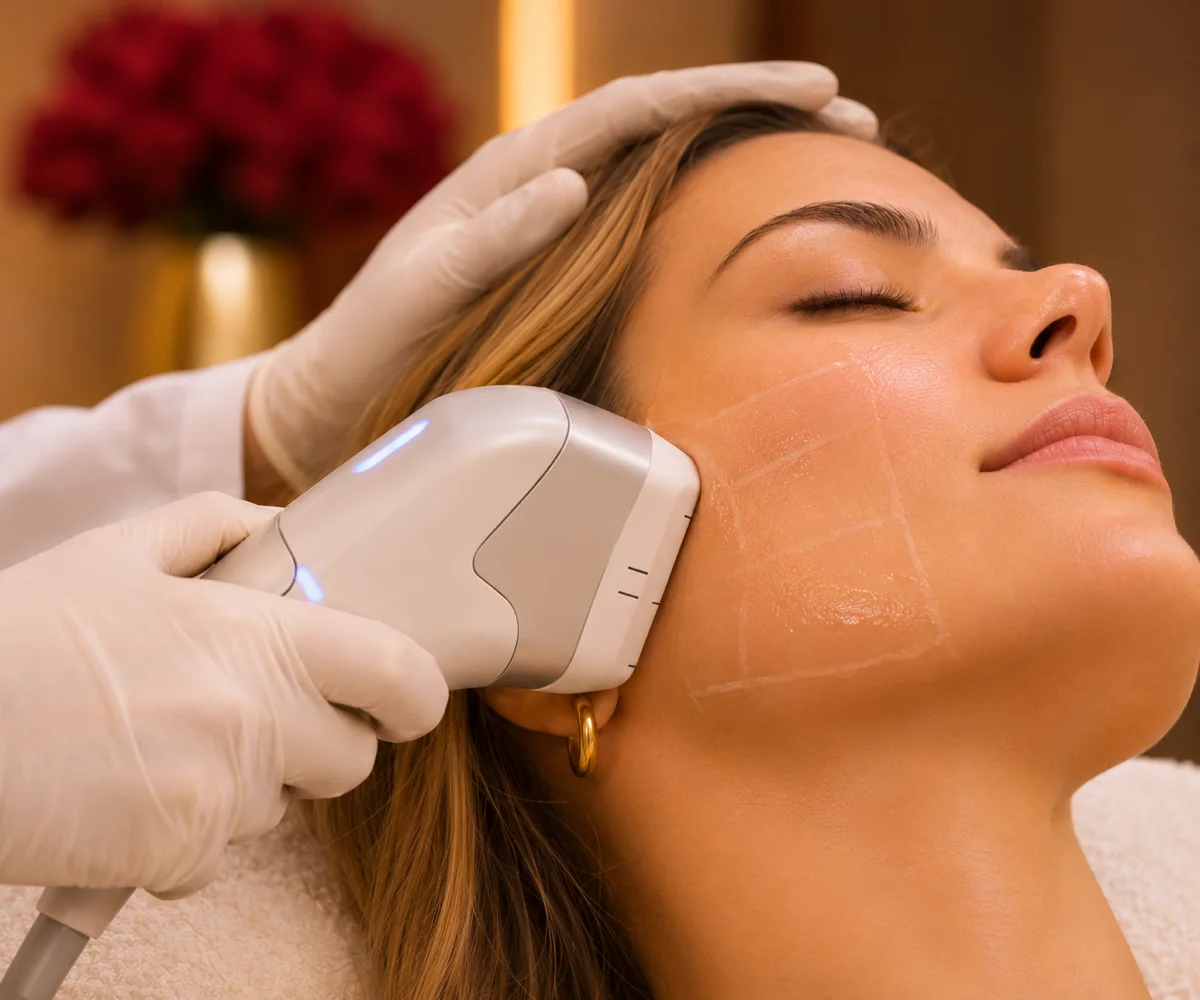
Ultrasound applicator gliding along the contour of the face, in profile, in clear consulting-room light

Technology

HIFU

Focused ultrasound that heats precise points in deep layers, as far as the supporting tissue, and seeks to stimulate collagen. The effect is gradual, over weeks to months. Reviews show a moderate improvement in firmness in the contour, the neck and around the eyes, with discomfort during the session and, at times, temporary redness or swelling. There are few long-term follow-up data.

May be considered when

the laxity is mild to moderate, the skin still has elasticity, the assessment has ruled out other causes and contraindications, and you accept an effect that is moderate, variable and may need repeating.

Find out more
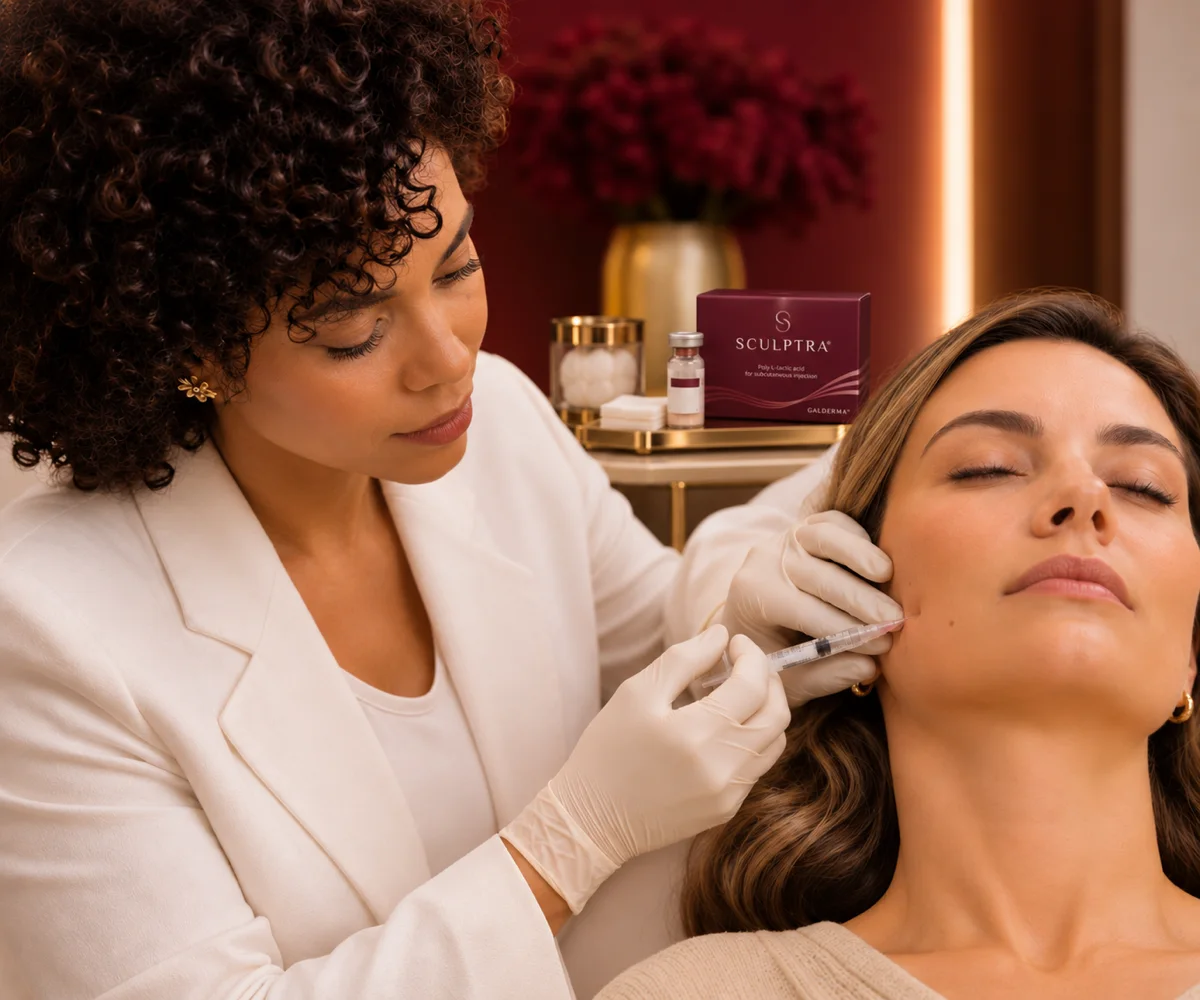
The doctor applying a biostimulator along the contour of the face, in profile, in soft light

Injectable

Collagen biostimulators

Injected substances that stimulate the body itself to produce collagen progressively, improving the firmness and quality of the skin and, in some cases, restoring some volume. The effect builds up over weeks, usually calls for more than one session and lasts, in studies, between about one and two years. They can cause pain, swelling and nodules; serious complications are rare.

May be considered when

the laxity is mild to moderate, there is some volume and support to recover, and it has been explained that the effect is gradual, partial and carries risks, including nodules.

Find out more

What the journey looks like

From the first conversation to a plan tailored to you

No procedure begins without a consultation and assessment by the doctor. Most people start with the simplest measures, and further options are only considered afterwards.

  1. 01At the clinic

    Telling your story

    The doctor asks what bothers you and since when, whether there has been weight loss, pregnancy, the menopause or illness, your sun exposure, smoking, medication and treatments you have already had.

  2. 02At the clinic

    Examining the face

    The face is examined from the front, in profile and in movement, together with the elasticity of the skin, to work out what has given way: the skin, the volume or the support. If there are signs of another cause or excess skin, this is said frankly.

  3. 03At home

    Get the foundation right first

    Daily sun protection, stopping smoking, a stable weight, hydration and appropriate skincare. They are the foundation and slow the ageing of the skin, even if they do not undo what has already happened.

  4. 04Over time

    Decide and follow up

    If the laxity persists and bothers you, the doctor explains what can be considered, how many sessions, what to expect and what risks there are, without promising results. The plan is reassessed and adjusted over time.

Day to day

What helps at home

What is done every day weighs more than it seems. These are the measures that make sense while you wait for the consultation and alongside the clinic’s plan.

The golden rule

Protect today what has not yet given way

No product or technology restores the firmness of twenty years ago, but there is a great deal that can be done for the skin: sun protection every day, not smoking, a stable weight and sleeping well. This is worth more than any “lifting” cream, and gives any treatment a better chance of lasting.

Protect from the sun every day

The sun accelerates wrinkles, texture and patches, and weighs heavily on the appearance of the skin.

In practice: broad-spectrum sunscreen on the face and neck every morning, with shade, a hat and sunglasses.

Keeping a stable weight

Repeatedly gaining and losing weight asks the skin to stretch and shrink.

In practice: gradual, supervised weight loss; if you have lost a lot of weight, wait for it to stabilise before assessing the face.

Sleeping and moisturising

The skin regenerates at night and dehydration accentuates the signs of tiredness.

In practice: moisturise the skin and drink water, and protect your sleep; cleanse the face gently, without rubbing.

Record and bring to the consultation

It helps the doctor to work out since when and with what the face has changed.

In practice: photographs from the front and in profile, in the same light, from time to time, and a list of medication and treatments already tried.

Dr Michelle Campagnoli, clinical director of Clínica Luxmed

Who will look after you

An assessment carried out by the doctor

At Luxmed, in Algés, the first step is always an assessment with Dr Michelle Campagnoli. She examines the face, works out whether what is giving way is the skin, the volume or the support, says frankly whether a non-surgical treatment has a chance of helping and works with you to decide what makes sense before any procedure.

  • Physical examination and medical historyA conversation about the history of the face, weight, medication and habits, and an examination from the front, in profile and in movement.
  • A plan tailored to youA clear plan, with no promises, with the foundation first and follow-up over time.
  • No obligationThe cost of any treatment is confirmed only after the assessment.
Book an assessment

Articles about facial laxity

From our blog
Fotografia · flacidez-facial-blog-11200 × 800 px · horizontal 3:2Mulher de uns 50 anos, fotografada de perfil, sentada junto a uma janela com luz natural suave, a segurar uma chávena e a olhar para fora; cena calma e elegante, sem close da pele

Facial aesthetics

Facial laxity: why the skin gives way with age

What is lost over the years (collagen, elasticity, volume and support), the role of the sun, weight and genetics, and what can and cannot be changed.

Fotografia · flacidez-facial-blog-21200 × 800 px · horizontal 3:2Mãos de médica de luvas claras a segurar uma ponteira de ultrassons sobre a bancada de um gabinete, ao lado do aparelho, em luz fria e limpa; plano de pormenor do equipamento, sem rosto

Facial aesthetics

Facial HIFU: what it is and what to expect

How focused ultrasound works, how the session goes, how long it takes to notice an effect and what the evidence says about results and duration.

Fotografia · flacidez-facial-blog-31200 × 800 px · horizontal 3:2Frasco e seringa de uso médico em cima de uma bandeja de inox num gabinete luminoso, com as mãos de uma médica de luvas a prepará-los; plano de pormenor, sem rosto e sem marcas visíveis

Facial aesthetics

Collagen biostimulators: how they work

How they stimulate collagen, how many sessions are usually carried out, what to expect in the following months and which risks and warning signs it is worth knowing about.

Book a consultation

Book your consultation

Choose how you prefer to get in touch. We will arrange the assessment consultation with Dr Michelle Campagnoli.

Booking through the websiteAssessment consultationTalk to our assistant on WhatsApp and ask for the current price of the assessment.

New Life Miraflores, Algés · Office Center, R. Santa Teresa do Menino Jesus n.º 6, 9.º C, 1495-048

Your details are used only for this contact. Any treatment depends on a prior medical assessment.

Request an appointmentIt takes less than a minute.
Speciality
You do not need to go into detail. The doctor will talk to you during the consultation.
Request received. Our team will contact you as soon as possible.
Why does the skin of the face become lax with age?

Because the face ages in several layers at the same time: the skin loses collagen and elasticity, fat descends and is redistributed, the bone is slightly reabsorbed and gravity accumulates over the years. Genetics, weight changes, the menopause, smoking and the sun accelerate or slow the process, although the sun weighs more on wrinkles and patches than on the descent of the tissues. This is why laxity is not just “skin sagging”, and the first step is to work out what has given way in your case.

At what age does facial laxity begin?

There is no fixed age. It depends a great deal on genetics, weight, smoking and habits, and some people notice a less defined contour earlier while others take longer. What counts is what you feel and what you see, not your age. If what bothers you is slight and the skin is still elastic, the most useful thing is usually to protect the skin and keep up basic care.

Is facial laxity the same as loss of volume?

No, and the difference matters. In laxity, the skin and supporting tissues lose firmness and descend. In loss of volume, the fat and bone of the face decrease, and the face looks more hollow or thinner. Often there are both, and the treatments are different. The assessment tells them apart, and this is what guides what makes sense.

Does the face become lax after losing weight or in the menopause?

It can. When weight is lost quickly, the skin does not always keep up, and the face can look more tired or aged. In the menopause, falling oestrogen is associated with thinner, less elastic skin. In both cases it is worth waiting for the weight to stabilise and speaking to the doctor about the whole picture, rather than looking for a treatment straight away.

What can I do at home for facial laxity?

What helps most is protecting the skin from the sun every day, not smoking, keeping a stable weight, sleeping well and moisturising. “Lifting” creams have a limited, surface effect and do not lift the contour. “Facial exercises” have little supporting evidence, so you should not expect much of them. None of this undoes what has already happened, but it protects the skin and gives any treatment a better chance of lasting.

Does HIFU work for facial laxity? How long does it last?

It can help in mild to moderate laxity. A meta-analysis of studies on HIFU on the face and neck found a moderate improvement and good short-term safety, and a more recent review reports improvements in laxity of between 18% and 30%, mainly in the lower third of the face, the neck and around the eyes. But the studies vary widely and few follow patients for a long time, so it is not clear how long it lasts and it may need repeating. The effect builds up over weeks to months.

How do collagen biostimulators work? How do they differ from fillers?

Biostimulators are injected into or beneath the skin and seek to stimulate the body itself to produce collagen, so the effect is gradual, over weeks, and usually calls for more than one session. Fillers, in general, add volume immediately. A systematic review of studies on the face reports improvements in elasticity, wrinkles and volume, which last around one to two years, with frequent but temporary pain and swelling, and rare serious cases.

Which is better: HIFU, biostimulators or radiofrequency (Sectum)?

There is no single best option for everyone. HIFU acts with ultrasound in the deep layers and is used more for the contour and neck. Biostimulators inject a substance that stimulates collagen and can restore some volume. Radiofrequency heats the skin to stimulate collagen, and reviews show a measurable but modest effect. What is chosen, and whether or not they are combined, is decided at the assessment, depending on what is giving way, the skin, expectations and contraindications, without promising results.

Do these treatments have risks? Who should not have them?

They do. With HIFU and radiofrequency, redness, swelling and discomfort can occur, and rarely burns. With biostimulators, pain, swelling, nodules that can appear weeks later and, very rarely, a serious vascular complication. Severe pain, pallor or purplish patches on the skin, a change in vision, a severe headache or facial weakness after an injectable treatment are an emergency: call 112 and contact the clinic that carried out the treatment immediately, and do not massage the area or self-medicate. The doctor checks beforehand, among other things, pregnancy, active infections, medication and implants.

When should I see a doctor first?

Book a consultation if the face has changed quickly, if there is a new swelling, hard area or lump on the face or neck, a red, hot and painful area, or a new asymmetry. Out of hours, if in doubt, call SNS 24 (808 24 24 24). If the face has suddenly drooped on one side, with difficulty speaking or smiling, or weakness in an arm, call 112 immediately.

We could not find that question. Ask us on WhatsApp

Scientific references

This page is based on the sources below and was reviewed by Dr. Michelle Campagnoli. Last updated on .

  1. Coleman SR, Grover R. The anatomy of the aging face: volume loss and changes in 3-dimensional topography. Aesthet Surg J, 2006.
  2. Flament F, Bazin R, Laquieze S, Rubert V, Simonpietri E, Piot B. Effect of the sun on visible clinical signs of aging in Caucasian skin. Clin Cosmet Investig Dermatol, 2013.
  3. Ayatollahi A, Gholami J, Saberi M, Hosseini H, Firooz A. Systematic review and meta-analysis of safety and efficacy of high-intensity focused ultrasound (HIFU) for face and neck rejuvenation. Lasers Med Sci, 2020.
  4. Haykal D, Sattler S, Verner I, Madhumita M, Cartier H. A Systematic Review of High-Intensity Focused Ultrasound in Skin Tightening and Body Contouring. Aesthet Surg J, 2025.
  5. Fabi SG. Noninvasive skin tightening: focus on new ultrasound techniques. Clin Cosmet Investig Dermatol, 2015.
  6. Austin GK, Struble SL, Quatela VC. Evaluating the effectiveness and safety of radiofrequency for face and neck rejuvenation: A systematic review. Lasers Surg Med, 2022.
  7. Rohrich RJ, Schultz KP, Chamata ES, Bellamy JL, Alleyne B. Minimally Invasive Approach to Skin Tightening of the Face and Body: Systematic Review of Monopolar and Bipolar Radiofrequency Devices. Plast Reconstr Surg, 2022.
  8. Ferreira ACM, Silva LR, Espasandin I, Sant'Anna JF, Mourão CA, Tedesco AD. Efficacy, Durability, and Safety of Collagen Biostimulators Based on Poly-L-Lactic Acid (PLLA) and Calcium Hydroxyapatite (CaHA) in the Face: A Systematic Review. Aesthetic Plast Surg, 2026.
  9. Flores Rodríguez JC, Porras Zamora BM, Rico Macías NM, Martínez LV, Camacho Frausto LY, Rossiere Echazarreta NL. The Management of Poly-L-Lactic Acid (PLLA) Nodules: A Scoping Review and Evidence-Mapped Clinical Pathway. Cureus, 2026.
  10. Lee KWA, Chan LKW, Lee AWK, Lee CH, Wan J, Yi KH. Biodegradable polymers and platelet-rich plasma causing visual impairment: a literature review. J Dermatolog Treat, 2024.
  11. NHS. Sunscreen and sun safety. (nhs.uk, acedido 2026-11-11)
CallAssistantAvailableBook