Algés, Oeiras Mon to Fri · 09:00 to 13:00 and 14:00 to 19:00 · Sat · 09:00 to 14:00
WhatsApp Book a consultation

Aesthetic gynaecology

Intimate itching from drynessWhen the skin and mucosa become dry, thin and itchy, and the difficulty is knowing whether it really is dryness

Intimate itching is a symptom, not a diagnosis, and dryness is only one of its possible causes. When the mucosa and the skin of the vulva become dry and thin, for example with the menopause, breastfeeding or certain medicines, the stinging and pulling sensation can turn into itching, often without discharge and worse at night. But it is also the complaint of an infection, contact dermatitis or a skin disease such as lichen sclerosus, and blindly treating a fungal infection that turns out not to exist is a frequent mistake. Here we explain how to tell one from the other, what helps first and what the clinic can propose, with honesty about what the evidence shows.

Reviewed by Dr Michelle Campagnoli, clinical director

  • 1 in 3women who treated themselves for a “fungal infection” actually had thrush, in a study of 95 women
  • 1assessment consultation, always first
  • 70 €assessment booked through the website
Woman in a denim jacket and backpack looking at the shelves of a pharmacy, with a hesitant look

How to recognise it

Could it be itching from dryness?

It is not a diagnosis in itself: it is the description of a symptom. Dryness usually leaves clues, but only an examination shows whether it is the cause, or whether something else underneath calls for a different treatment.

Tick what you recognise0/7

Tick the signs you recognise in your case. This is not a diagnosis, it is only meant to give you an idea.

Do you have bleeding after the menopause or after sex, foul-smelling or abnormally coloured discharge, a sore that does not heal, a lump or a patch that changes in appearance, itching that has not gone away for weeks, persistent or sudden pain, or fever? You need assessment and should not wait. Outside opening hours, call SNS 24: 808 24 24 24.

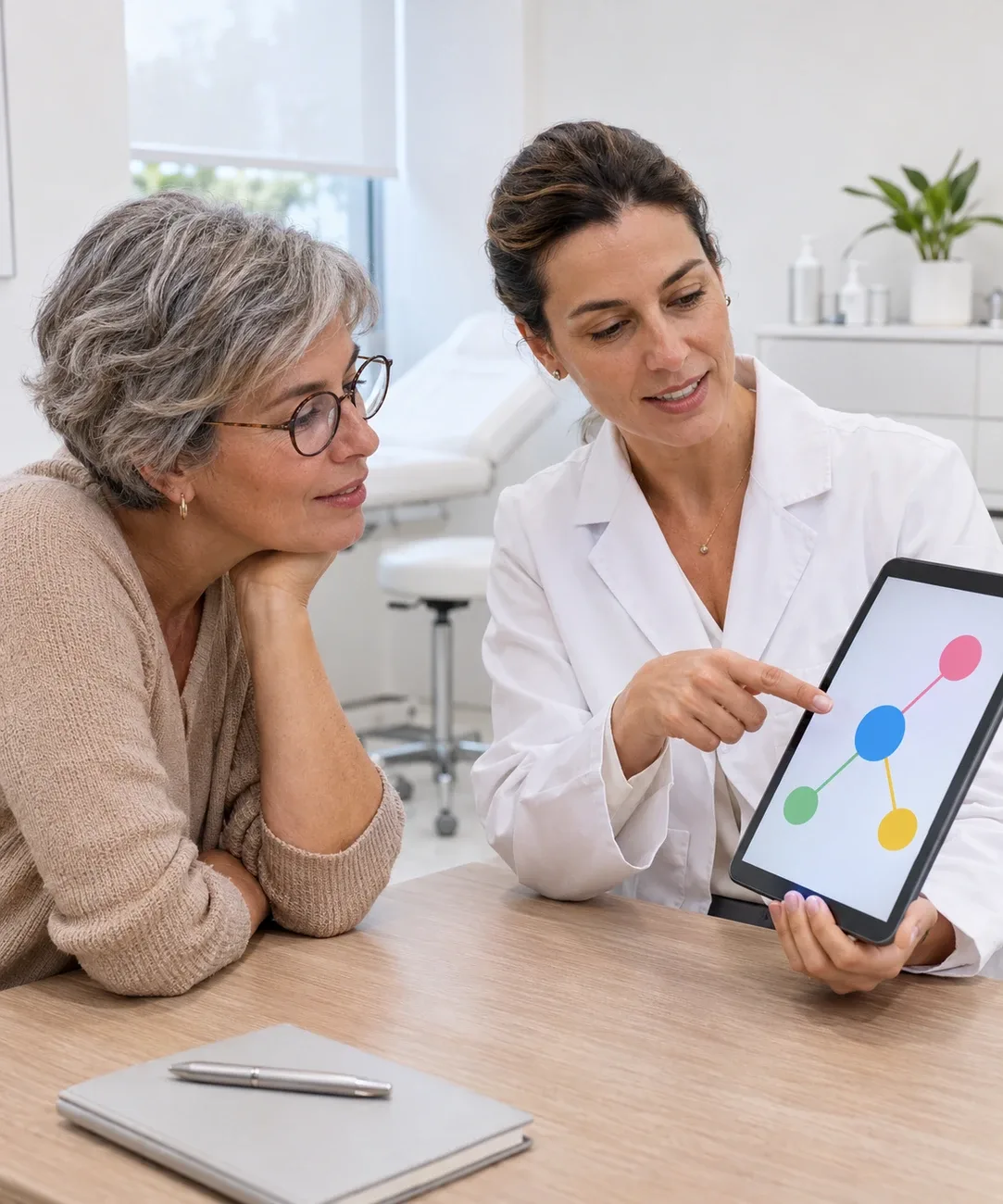
Female doctor in a white coat showing a tablet with coloured circles to a grey-haired patient
Photograph of a consultation. The dots mark what the doctor assesses; the image does not show the intimate area.

Why it happens

What may lie behind intimate itching from dryness

Dryness of the mucosa is a possible explanation, but not the most frequent: infections and skin diseases come before it on the list. That is why the useful question is “why is it dry” and also “what else could it be”. Choose a situation to see how it applies.

The lack of oestrogen

When oestrogen falls, in the menopause and also after childbirth during breastfeeding, the vulvovaginal mucosa becomes thinner, less lubricated and more fragile. This is what is called genitourinary syndrome of menopause, which can come with dryness, burning and itching and which, unlike hot flushes, does not improve on its own with time.

What weighs on it

Accepting the itching as “just a matter of age” and postponing the consultation, or treating it as thrush when it is not.

What helps

A regular vaginal moisturiser, lubricant during sex and, if the doctor indicates it, low-dose vaginal oestrogen. With a history of breast cancer, speak to the oncologist first.

Normal or to be assessed

Itching from dryness or another cause

Not all intimate itching comes from dryness. That is why it is worth knowing which type it is before trying anything.

  • How it shows. Itching or a pulling sensation without discharge or bad smell, dry skin and mucosa, sometimes pale and thin, and a context that explains it: menopause, breastfeeding, medicines or cancer treatment.

  • When it happens. More after friction (tight clothing, sex, cycling) and at bedtime, with ups and downs and relief with moisturising.

  • What the clinic does. The doctor listens to what is going on, examines the vulva and the vagina and confirms that there are signs of dry, thin mucosa and that there is no infection or skin disease.

  • At home. A regular vaginal moisturiser, lubricant during sex and avoiding anything perfumed, while you wait for the consultation.

Do you have a high fever, severe and sudden pain, rapid swelling and redness of the vulva, or are you unable to pass urine? Call 112 or go to the emergency department. If you have bleeding after the menopause or after sex, abnormal discharge or a lesion that changes, book a consultation and, outside opening hours, call SNS 24: 808 24 24 24.

Book an assessment consultation

What can help

Options for itching from dryness

The first step is knowing the cause: an infection is treated with the right medicine, dermatitis by removing what irritates, and lichen sclerosus with its own treatment. When the cause really is dryness, first-line care is simple and does not involve any device: a vaginal moisturiser used regularly, a lubricant during sex, a rich, unperfumed emollient on the skin of the vulva and, when lack of oestrogen is the reason and the doctor indicates it, low-dose vaginal oestrogen, which is only used with a prescription. When these routes have been tried and the itching persists, the clinic may consider the option below, assessed case by case and without promising results.

Book an assessment consultation
Dr Michelle Campagnoli, clinical director of Clínica Luxmed

First step

Assessment consultation

The doctor listens to what you are experiencing, examines your case and explains the suitable options. No treatment begins without this consultation.

May be considered when

you want to understand the cause and decide on the best path, with time and without commitment.

Book an assessment consultation
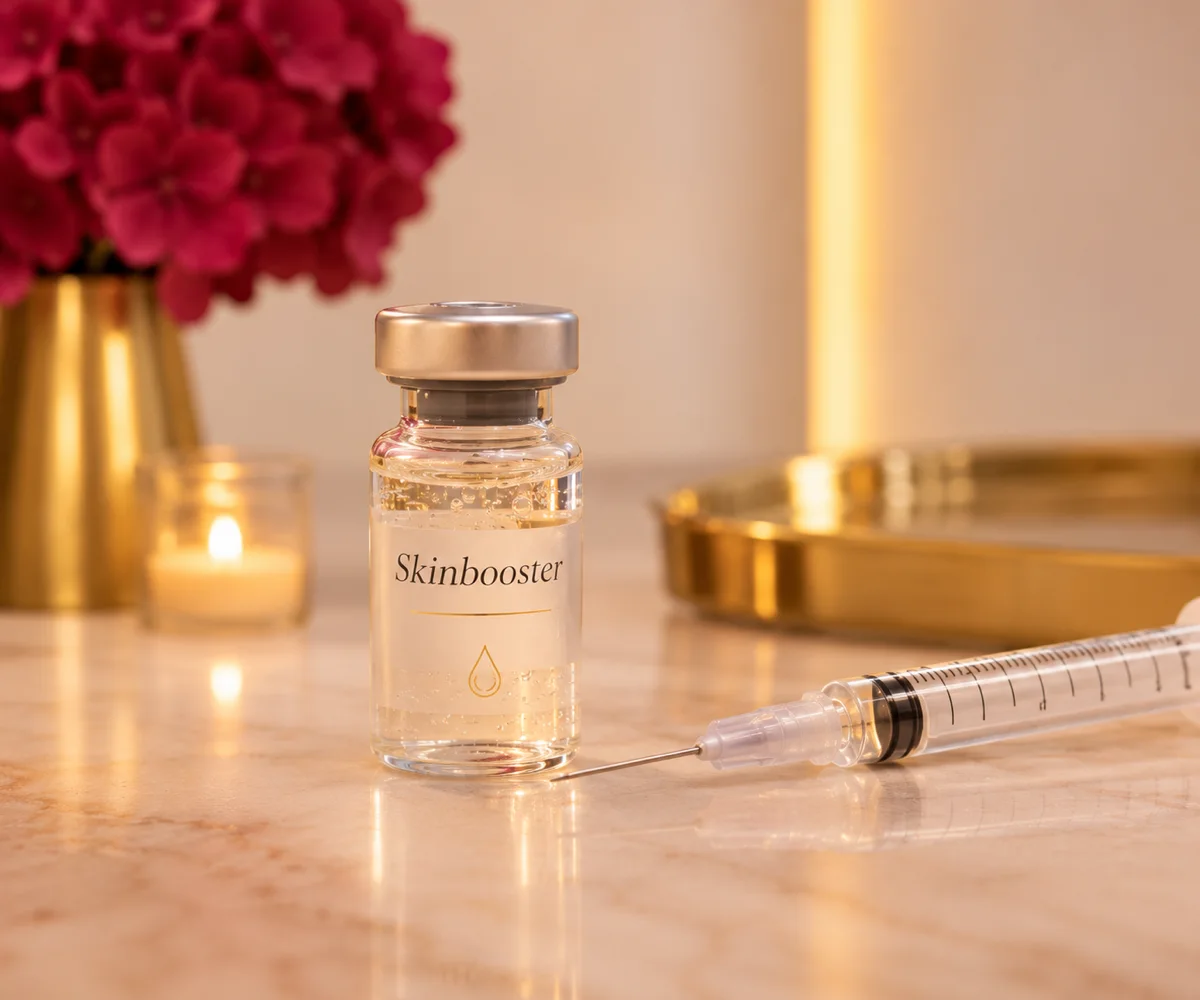
Bottle and syringe on a marble worktop, in warm light

Hydration

Skinbooster

Small injections of hyaluronic acid applied in the intimate area, with the aim of hydrating the tissues and making them more comfortable. There are studies reporting improvement in symptoms such as dryness, itching and burning, but they are few, small and use different methods. It does not treat an infection, a skin disease or an atrophy that needs its own treatment.

May be considered when

the assessment showed dryness and thin mucosa without infection or skin disease, the first-line options have been tried or are not suitable, the doctor has explained what is known and what is not known, and the decision is yours.

Find out more

What the journey looks like

From the first consultation to the plan tailored to you

No treatment begins without an assessment consultation with the doctor. Most women start with what is simplest, and only then is more considered.

  1. 01At the clinic

    Assessment consultation

    The doctor asks since when, at what time and what makes the itching worse, asks about the menopause, breastfeeding, medicines, hygiene products and what has already been tried, and lets you speak in private and without hurry.

  2. 02At the clinic

    Examination and, if needed, tests

    The skin and mucosa of the vulva and the vagina are examined and, when there are doubts, a sample is taken to exclude an infection. If there is a suspicious lesion or one that cannot be explained, a biopsy is taken or a referral is made to dermatology or a vulva clinic.

  3. 03At home

    Treat the cause and protect the skin

    What was found is treated, the mucosa is moisturised, hygiene is simplified, irritants are avoided and, if the doctor indicates it, low-dose vaginal oestrogen is started. A simple record is kept of when the itching gets worse.

  4. 04Over time

    Reassessing and deciding

    The itching and what has changed are reviewed. If there is no improvement, the cause is sought again, rather than insisting. Only after the other causes have been excluded and the first lines tried are additional options considered, such as the clinic’s.

Day to day

What helps while you wait for the consultation

Simple care that protects the skin and mucosa of the vulva and breaks the scratching cycle, alongside the plan the doctor indicates.

You do not have to put up with it

Intimate itching is not inevitable

It is common, has causes that can be identified and has treatment. Many women postpone the consultation out of embarrassment, or spend months trying one cream and pessary after another. Telling the doctor exactly what you feel saves time, avoids unnecessary treatments and leads sooner to what helps.

Moisturise the mucosa regularly

A vaginal moisturiser, used continuously and not only on bad days, helps to keep the mucosa more comfortable.

In practice: follow the product’s dosage and give it a few weeks. If it does not improve, talk to the doctor instead of switching products from week to week.

Protect the skin of the vulva

A rich, unperfumed emollient creates a barrier and reduces friction.

In practice: apply a small amount to the outer skin, after washing and drying, and again before bed.

Sleep with the itching under control

Night-time itching feeds on warmth and on scratching without realising it.

In practice: short nails, cotton bedding and nightwear, a cold compress over clothing and, if needed, cotton gloves for sleeping.

Wash less, and more carefully

The skin of the vulva reacts to perfumes, soaps and excessive washing.

In practice: warm water on the outside only, a gentle unperfumed cleanser if you wish, and dry by dabbing, without rubbing.

Dr Michelle Campagnoli, clinical director of Clínica Luxmed

Who will look after you

An assessment carried out by the doctor

At Luxmed, the first step is always an assessment consultation with Dr Michelle Campagnoli. She listens to what is going on, examines the skin and mucosa of the intimate area, excludes an infection or a skin disease and draws up the plan with you, in private and without hurry, referring to dermatology or a vulva clinic when needed.

  • Physical examination and medical historyA conversation about the itching, examination of the vulva and the vagina and, when necessary, sample collection or biopsy.
  • A plan tailored to youFirst treat the cause; additional treatments only if appropriate, with the evidence explained.
  • No obligationThe cost of any treatment is confirmed only after the assessment.
Book an assessment consultation

Book a consultation

Book your consultation

Choose how you prefer to get in touch. We will arrange the assessment consultation with Dr Michelle Campagnoli.

Booking through the website100€70€Assessment consultationExclusive price for those who book the assessment through the website. Outside the website, the price is 100 €.

New Life Miraflores, Algés · Office Center, R. Santa Teresa do Menino Jesus n.º 6, 9.º C, 1495-048

Your details are used only for this contact. Any treatment depends on a prior medical assessment.

Request an appointmentIt takes less than a minute.
Speciality
You do not need to go into detail. The doctor will talk to you during the consultation.
Request received. Our team will contact you as soon as possible.
Why do I have intimate itching without discharge?

Without discharge, the most likely causes are dryness of the mucosa (from menopause, breastfeeding or medicines), irritation from hygiene products or clothing, a skin disease of the vulva such as lichen sclerosus or eczema and, more rarely, thrush with little discharge. Dryness is a possible explanation, but not the most frequent, and only an examination tells one from another.

Why does intimate itching get worse at night?

It is not known for certain. In a review on night-time itching, the authors point to daily rhythms of the substances involved in itching, changes in temperature and in the skin barrier, and psychological factors, and say that there are few specific treatments. In practice, without distractions and with the warmth of the bed, it is more noticeable, and you scratch in your sleep without realising. Cold compresses, short nails and light cotton clothing help.

Is it dryness or a fungal infection?

It cannot always be told apart at home. Thrush causes itching and burning and, typically, a thick white discharge, but not always. In one study, only a third of the women who treated themselves for a fungal infection actually had one. If it is the first time, if the treatment did not work or if the itching comes back, an examination is done before repeating.

Can the itching be a sign of another disease?

It can. Besides infections and contact dermatitis, lichen sclerosus is a chronic skin disease that causes itching and patches of white skin, is more common after the age of 50 and can cause fissures and painful sex. More rarely, a lesion that changes, a sore that does not heal or itching that does not go away may require a biopsy to exclude a pre-cancerous lesion or vulvar cancer. That is why persistent itching should be assessed.

What can I use to relieve itching from dryness?

What has the most basis is a vaginal moisturiser used regularly, a lubricant during sex and a rich, unperfumed emollient on the skin of the vulva. If you are menopausal, low-dose vaginal oestrogen, prescribed and monitored by a doctor, is an option. Avoid perfumes, wipes and soaps. Before using creams with corticosteroid or antifungals, talk to the doctor.

The menopause and vaginal oestrogen: do they help?

When the itching comes from the thin, dry mucosa of the menopause, low-dose vaginal oestrogen is usually among the first options, and a Cochrane review of 30 trials showed that it relieves symptoms, with low to moderate quality evidence. It is only used with a prescription. If you have or have had breast cancer, speak to your oncologist first, because the decision is individual.

Do I have to stop using panty liners?

Panty liners retain heat and moisture and can irritate, and many are perfumed. It is not obligatory to give them up, but if you have itching it is reasonable to see whether it improves without them, or to switch to an unperfumed one and change it often. If it continues, the cause has to be looked for elsewhere.

Does skinbooster resolve itching from dryness?

There is not enough evidence to promise it. A systematic review of 17 studies of hyaluronic acid in the vulva and vagina showed overall improvement in symptoms such as itching, burning and dryness, but the authors call for a well-designed randomised trial, and an injection study of 20 women had no placebo group. It is only considered after other causes have been excluded and the first lines tried, and the decision is always explained and shared with you.

Do these treatments carry risks?

Like any injection, it can cause discomfort, redness, lumps and bruising at the site, which are usually temporary, and rarely infection or allergic reactions. It is not done with an active infection, inflamed skin or undiagnosed lesions, or with unexplained bleeding. Vaginal energy-based devices (laser and radiofrequency) are not something we propose for this problem, because the FDA warned in 2018 that they can cause burns, scars and pain.

When should I book a consultation and when should I not wait?

Book a consultation if the itching lasts more than a few weeks despite simple care, if it comes back, if it wakes you at night, or if you have discharge, burning, pain or fissures. Do not wait if you have bleeding after the menopause or after sex, a sore that does not heal, a lump or a patch that changes: call SNS 24 (808 24 24 24) outside opening hours. If you have a high fever, severe and sudden pain, rapid swelling of the vulva or cannot pass urine, call 112.

We could not find that question. Ask us on WhatsApp

Scientific references

This page is based on the sources below and was reviewed by Dr. Michelle Campagnoli. Last updated on .

  1. Woelber L, Prieske K, Mendling W, Schmalfeldt B, Tietz HJ, Jaeger A. Vulvar pruritus: causes, diagnosis and therapeutic approach. Deutsches Ärzteblatt International 117(8):126-133, 2020.
  2. Stockdale CK, Boardman L. Diagnosis and Treatment of Vulvar Dermatoses. Obstetrics & Gynecology 131(2):371-386, 2018.
  3. Ferris DG, Nyirjesy P, Sobel JD, et al. Over-the-counter antifungal drug misuse associated with patient-diagnosed vulvovaginal candidiasis. Obstetrics & Gynecology 99(3):419-425, 2002.
  4. Workowski KA, Bachmann LH, Chan PA, et al. Sexually Transmitted Infections Treatment Guidelines, 2021 (capítulo Vulvovaginal Candidiasis). MMWR Recomm Rep 70(4):1-187 (CDC), 2021.
  5. NHS. Thrush in men and women. (NHS (nhs.uk), acedido 2026-11-11)
  6. Lewis FM, Tatnall FM, Velangi SS, et al. British Association of Dermatologists guidelines for the management of lichen sclerosus, 2018. British Journal of Dermatology 178(4):839-853, 2018.
  7. NHS. Lichen sclerosus. (NHS (nhs.uk), acedido 2026-11-11)
  8. Bauer A, Rödiger C, Greif C, Kaatz M, Elsner P. Vulvar dermatoses: irritant and allergic contact dermatitis of the vulva. Dermatology 210(2):143-149, 2005.
  9. O'Gorman SM, Torgerson RR. Allergic contact dermatitis of the vulva. Dermatitis 24(2):64-72, 2013.
  10. Farage M, Maibach HI. The vulvar epithelium differs from the skin: implications for cutaneous testing to address topical vulvar exposures. Contact Dermatitis 51(4):201-209, 2004.
  11. Bohbot JM, Rebelo C, Nappi RE. Vulvar Care: Reviewing Concepts in Daily Hygiene. Healthcare (Basel) 13(13):1523, 2025.
  12. The NAMS 2020 GSM Position Statement Editorial Panel. The 2020 genitourinary syndrome of menopause position statement of The North American Menopause Society. Menopause 27(9):976-992, 2020.
  13. Lethaby A, Ayeleke RO, Roberts H. Local oestrogen for vaginal atrophy in postmenopausal women. Cochrane Database of Systematic Reviews 2016(8):CD001500, 2016.
  14. Mitchell CM, Reed SD, Diem S, et al. Efficacy of Vaginal Estradiol or Vaginal Moisturizer vs Placebo for Treating Postmenopausal Vulvovaginal Symptoms: A Randomized Clinical Trial. JAMA Internal Medicine 178(5):681-690, 2018.
  15. NHS. Vaginal dryness. (NHS (nhs.uk), acedido 2026-11-11)
  16. Patel T, Ishiuji Y, Yosipovitch G. Nocturnal itch: why do we itch at night?. Acta Dermato-Venereologica 87(4):295-298, 2007.
  17. Buzzaccarini G, Marin L, Noventa M, et al. Hyaluronic acid in vulvar and vaginal administration: evidence from a literature systematic review. Climacteric 24(6):560-571, 2021.
  18. Dos Santos CCM, Uggioni MLR, Colonetti T, et al. Hyaluronic acid in postmenopause vaginal atrophy: a systematic review. Journal of Sexual Medicine 18(1):156-166, 2021.
  19. Ragy S, Kahky HE, Elfakkar NMZ, Nassar SAM, El-Husseiny RM. Injection of hyaluronic acid versus platelet rich plasma for treatment of vulvovaginal atrophy in post-menopausal females. Archives of Dermatological Research 317:305, 2025.
  20. NHS. Vulval cancer: symptoms. (NHS, página de informação, acedido 2026-11-11)
  21. NHS. Postmenopausal bleeding. (NHS (nhs.uk), acedido 2026-11-11)
  22. Negris O, Ghafari-Saravi A, Mauskar MM. A Practical Management Approach to Vulvar Dermatoses and Genitourinary Syndrome of Menopause. Obstetrics & Gynecology 148:591-606, 2026.
  23. Medsafe (Nova Zelândia), a retransmitir o alerta da U.S. FDA. Safety Information: energy-based devices used for vaginal 'rejuvenation' or vaginal cosmetic procedures (relays the USFDA safety communication of July 2018). Medsafe, New Zealand Medicines and Medical Devices Safety Authority, 2018.
CallAssistantAvailableBook