

Algés, Oeiras Mon to Fri · 09:00 to 13:00 and 14:00 to 19:00 · Sat · 09:00 to 14:00
WhatsApp Book a consultation

Aesthetic gynaecology

Discomfort during penetrationWhen penetration does not quite hurt, but is uncomfortable and has to be endured

“Discomfort on penetration” is what many women feel when penetration is not painful, but not comfortable either: pressure, tightness, a slight burning, the feeling that “it does not go in well” or that you have to brace yourself to bear it. It can happen at the entrance or deeper, always or only with certain positions, rhythms or days. There is rarely a single cause: it usually combines little time for arousal, little lubrication, tension, a less elastic mucosa or a medical situation to be assessed. Here we explain what may be behind it, what can be adjusted alone or as a couple, what the consultation assesses and what the clinic can propose, starting with the simplest and with honesty about what the evidence shows.

Reviewed by Dr Michelle Campagnoli, clinical director

  • 7,5 %of sexually active women in a large British survey reported pain during sex lasting 3 months or more
  • 1assessment consultation, always first
  • 70 €assessment booked through the website
A woman with curly hair in a burgundy blouse sits at a restaurant table, making a gesture of discomfort

How to recognise it

Could it be discomfort on penetration?

It is not a diagnosis in itself: it is what a woman feels when penetration stops being easy. It matters more to work out when it appears, where it is felt and what makes it better or worse than to give it a name.

Tick what you recognise0/7

Tick the signs you recognise in your case. This is not a diagnosis, it is only meant to give you an idea.

Do you have bleeding after sex or after the menopause, foul-smelling discharge or discharge of a different colour from usual, sudden or severe pain or pain that does not go away, fever, or sores or lesions on the vulva that change? You need assessment and should not wait. Outside opening hours, call SNS 24: 808 24 24 24.

Female doctor in a white coat showing a tablet with a circle diagram to a patient in a light blue blouse
Photograph of a consultation. The dots mark what the doctor assesses; the image does not show the intimate area.

Why it happens

What may lie behind discomfort on penetration

Comfortable penetration depends on the body being prepared, healthy tissues and muscles that cooperate. When one of these pieces fails, discomfort appears. Choose a situation to see how it applies.

Time and arousal

With arousal, the genital area receives more blood flow, lubrication is produced and the body prepares for penetration. In many women, especially in long relationships, arousal arises in response to touch and context and not beforehand, as the Basson model describes. If penetration begins before the body is prepared, what is felt is friction and pressure. The British health service (NHS) states that not being aroused during sex is a cause of dryness and advises trying other kinds of foreplay.

What weighs on it

Starting penetration out of habit, in a hurry or because the other person is ready, without waiting for the body’s own signals.

What helps

Giving time, varying the kind of touch and only penetrating when the woman wants it and the body allows it, and not because “it is time”.

Normal or to be assessed

Discomfort that improves with adjustments or that calls for assessment

Not all discomfort has the same origin. That is why it is worth knowing when simple adjustments may be enough and when a consultation is needed.

  • How it shows. The discomfort is pressure or friction, greater at the start, and improves with more time, more lubricant or a different rhythm.

  • When it happens. On days of tiredness or stress, when penetration is quick, or with certain positions, without other symptoms.

  • What the clinic does. The doctor listens to what is going on, assesses the skin and mucosa and confirms that there is no other cause behind it.

  • At home. More time for foreplay, water-based lubricant, adjusting position and rhythm and open communication with your partner.

Do you have sudden and severe abdominal pain, fainting, heavy bleeding or a high fever with malaise? Call 112 or go to the emergency department. If you have bleeding after sex, abnormal discharge or doubts, outside opening hours you can call SNS 24: 808 24 24 24.

Book an assessment consultation

What can help

Options for discomfort on penetration

First-line care is not a technology. It is giving arousal time and varying the stimuli, using a water-based lubricant, adjusting position, depth and rhythm, and talking to your partner about what helps. When there is dryness, vaginal moisturiser and, in the menopause, low-dose vaginal oestrogen (with a prescription; anyone who has or has had breast cancer speaks to the oncologist first) are part of the plan. If there is an infection or skin condition, the cause is treated. Pelvic floor physiotherapy and sex therapy help when there is muscle tension or fear. The treatment below is an additional option, assessed case by case and without promising results, with evidence that is still limited.

Book an assessment consultation
Dr Michelle Campagnoli, clinical director of Clínica Luxmed

First step

Assessment consultation

The doctor listens to what you are experiencing, examines your case and explains the suitable options. No treatment begins without this consultation.

May be considered when

you want to understand the cause and decide on the best path, with time and without commitment.

Book an assessment consultation
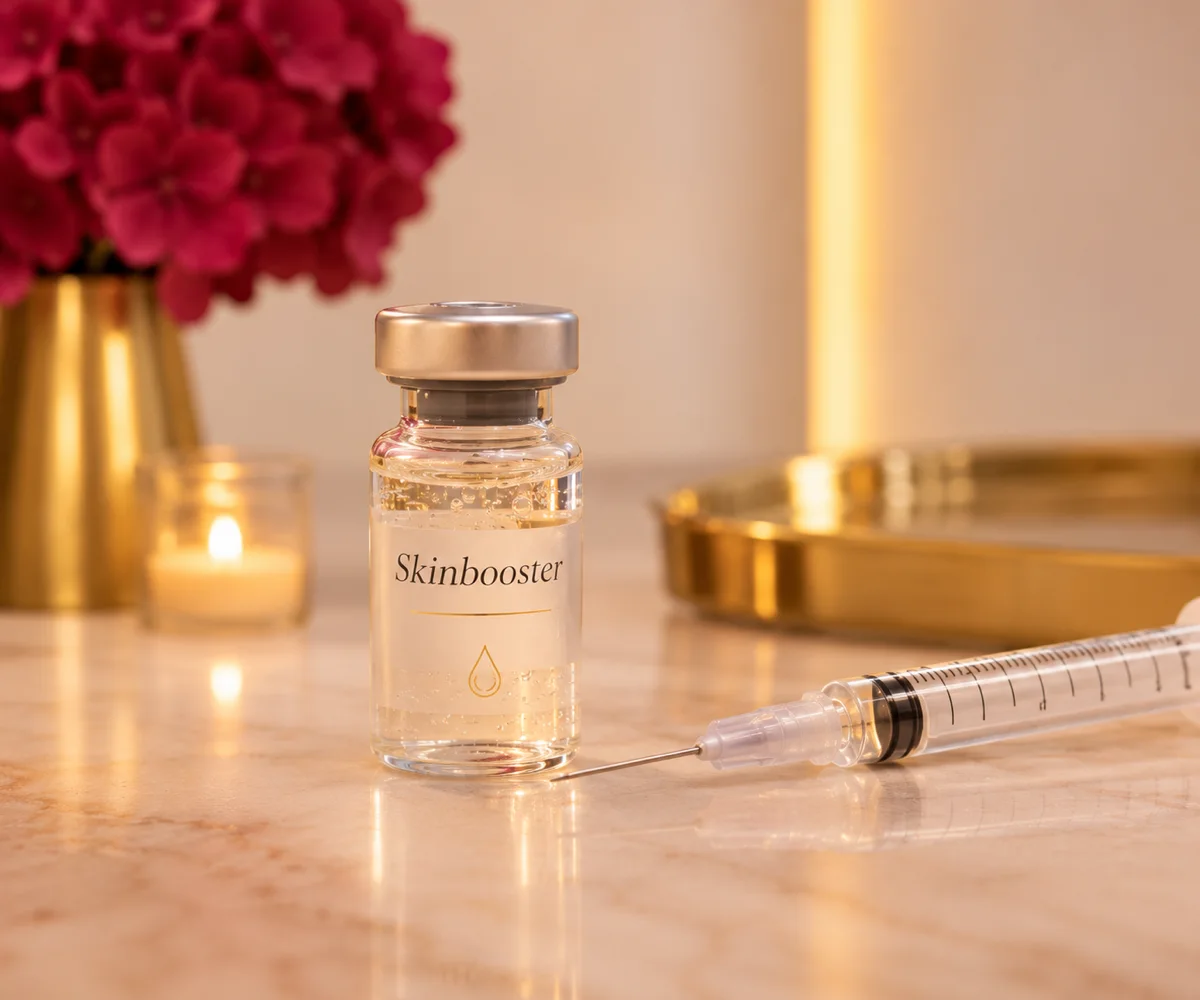
Bottle and syringe on a marble worktop, in warm light

Hydration

Skinbooster

Micro-injections of hyaluronic acid in the intimate area, with the aim of hydrating and improving the elasticity of the mucosa. Most studies of vaginal hyaluronic acid are with gel or pessaries and not with injection, and the injection studies are small and without a comparison group. It does not replace time, lubricant, assessment of other causes or physiotherapy or sex therapy.

May be considered when

the previous steps have been tried or considered, the doctor has excluded other causes, the mucosa appears thin or dry and the doctor has explained what is known and what is not known, with the decision being yours.

Find out more

What the journey looks like

From the first consultation to the plan tailored to you

No treatment begins without an assessment consultation with the doctor. Most women start with what is simplest, and only then is more considered.

  1. 01At the clinic

    Assessment consultation

    The doctor listens to where and when it bothers you, with which positions and rhythms, since when and what you have already tried. She asks about births, the menopause, medicines and the cycle, and lets you speak in private and without hurry.

  2. 02At the clinic

    Examination and tests

    She examines the vulva and the entrance to the vagina, the skin and the mucosa, looks for fissures, infection or a skin condition and, with your consent, assesses the tension of the pelvic floor muscles. She may request tests if there is discharge or suspected infection.

  3. 03At home and as a couple

    Adjustments and communication

    More time for foreplay, water-based lubricant, a different rhythm and a different position are tried, without pressure to “get somewhere”. If necessary, dryness, infection or skin problems are treated and physiotherapy or sex therapy is started.

  4. 04Over time

    Reassessing and deciding

    The discomfort is reassessed. If it has not improved, if there are warning signs or if the cause is something else, the doctor explains the alternatives and refers, for example, to gynaecology, pelvic physiotherapy or sex therapy. An additional treatment is only considered after these steps.

Day to day

What helps while you wait for the consultation

Simple care that reduces friction and tension, alongside the plan the doctor indicates.

Without putting up with it in silence

Discomfort is reason enough to speak up

You do not have to wait until it hurts a lot. Discomfort that is endured usually brings more tension, less desire and more avoidance, and the sooner the cause is understood the simpler it tends to be to resolve. Telling your partner what helps, instead of only what does not work, also matters: in a study of women with pain at the entrance, partner responses that facilitate sex were associated with less pain and overly solicitous responses with more pain.

Give time before penetration

The body needs time to become aroused and to lubricate, and that time reduces friction.

In practice: try different kinds of touch and only go ahead when the woman asks, even if it takes longer than usual.

Use a water-based lubricant

It reduces friction and is the safest choice to start with, including with a condom.

In practice: put it at the entrance and on your partner, reapply during sex if needed and choose one without perfume.

Control the depth and the rhythm

The woman who decides the rhythm and the depth usually feels less discomfort.

In practice: try positions in which she has more control, go slowly at first and agree on a signal to slow down or stop.

Stop without guilt and try again

Persisting with discomfort reinforces fear and muscle contraction.

In practice: if it is uncomfortable, take a break, go back to caressing and resume only if you both want to; sex does not have to end with penetration.

Dr Michelle Campagnoli, clinical director of Clínica Luxmed

Who will look after you

An assessment carried out by the doctor

At Luxmed, the first step is always an assessment consultation with Dr Michelle Campagnoli. She listens to what is going on, examines the skin and mucosa, excludes other causes and draws up the plan with you, in private and without hurry, coordinating with pelvic physiotherapy, sex therapy or other specialities when needed.

  • Physical examination and medical historyA conversation about what you feel and when, a gentle examination of the vulva and the entrance to the vagina and, when necessary, tests to exclude infection.
  • A plan tailored to youFirst time, lubrication, adjusting position and rhythm and treating the cause; additional treatments only if appropriate, with the evidence explained.
  • No obligationThe cost of any treatment is confirmed only after the assessment.
Book an assessment consultation

Book a consultation

Book your consultation

Choose how you prefer to get in touch. We will arrange the assessment consultation with Dr Michelle Campagnoli.

Booking through the website100€70€Assessment consultationExclusive price for those who book the assessment through the website. Outside the website, the price is 100 €.

New Life Miraflores, Algés · Office Center, R. Santa Teresa do Menino Jesus n.º 6, 9.º C, 1495-048

Your details are used only for this contact. Any treatment depends on a prior medical assessment.

Request an appointmentIt takes less than a minute.
Speciality
You do not need to go into detail. The doctor will talk to you during the consultation.
Request received. Our team will contact you as soon as possible.
Why is penetration uncomfortable if it does not quite hurt?

Discomfort is common and almost always has an explanation. The most common causes are little time for arousal, little lubrication, tension or fear that it will hurt, a position or depth that does not work and, sometimes, irritated skin, an infection or a thinner mucosa. Often several add up. Only an assessment shows what weighs most in your case, and it can start with a simple conversation.

Is it the same as dyspareunia?

Dyspareunia is the medical term for pain during sexual intercourse, at the entrance or deeper. Discomfort on penetration is the milder form, in which the woman feels pressure, tightness or a slight burning and not necessarily pain. In practice the assessment is the same, and what starts as discomfort can turn into pain if it is ignored, so it is worth acting early.

Is it normal to feel discomfort at the start of penetration?

Slight discomfort when arousal has not yet arrived or lubrication is low is common and usually improves with more time, lubricant and a different rhythm. It is not a reason to resign yourself: if it happens often, if it gets worse, if there is burning, bleeding or pain, or if it makes you avoid sex, it is worth talking about it with a doctor.

Can I have discomfort only in some positions?

Yes. Position changes the angle and depth, and therefore what is pressed on. When the discomfort is only in certain positions or only deeper in, it is worth telling the doctor, because it can point to pelvic causes such as endometriosis, which need assessment. Even when there is no disease, controlling depth and rhythm and trying other positions usually helps.

Does lubricant resolve the discomfort?

Often it helps and it is the first step. In a study of 2453 women, using lubricant was associated with more pleasure and satisfaction and rarely with symptoms, especially with water-based ones. If the discomfort remains despite lubricant, or if dryness is also felt outside of sex, other causes should be assessed. For the menopause, vaginal moisturiser and low-dose vaginal oestrogen, with a prescription, can be part of the plan.

Can physiotherapy or sex therapy help?

They can, when there is tension in the pelvic floor muscles, fear or pain at the entrance. In a review of 19 studies, physiotherapy interventions improved pain and quality of life in women with dyspareunia, although without clear improvement in sexual function in the pooled results. In a trial of 212 women with vestibulodynia, multimodal physiotherapy was more effective than topical lidocaine. Sex therapy and couples therapy address fear, anticipation and communication.

What if I have dryness because of the menopause?

The fall in oestrogen leaves the mucosa thinner and drier, and penetration is more uncomfortable. Low-dose vaginal oestrogen, prescribed and monitored by a doctor, is a first-line option, and moisturisers and lubricants also help. If you have or have had breast cancer, speak to your oncologist first, because there are specific recommendations.

Does Skinbooster resolve discomfort on penetration?

There is not enough evidence. Studies of hyaluronic acid injected into the vaginal mucosa are small and without a comparison group, in menopausal women, and the larger studies are mostly with gel or pessaries. It is an additional option, after the first-line steps and once other causes have been excluded, assessed case by case and explained beforehand. It does not replace assessment or physiotherapy or sex therapy when indicated.

Does this treatment have risks?

As with any injection, pain, bruising, swelling, lumps or infection at the site may occur, usually mild and temporary. At least one fatal case of pulmonary embolism has been described after a vaginal hyaluronic acid injection given by a person without medical qualifications, and long-term risks are still not well studied. It is not done with an active infection, unexplained bleeding, undiagnosed lesions or pregnancy.

When should I book a consultation?

Book a consultation if the discomfort recurs, increases, already makes you avoid sex or comes with burning, itching, discharge, bleeding or pain. If you have bleeding after sex or after the menopause, foul-smelling discharge, sudden or severe pain or fever, do not wait: see a doctor, and outside opening hours you can call SNS 24 (808 24 24 24). Call 112 if you have sudden and severe abdominal pain, fainting, heavy bleeding or a high fever with malaise.

We could not find that question. Ask us on WhatsApp

Scientific references

This page is based on the sources below and was reviewed by Dr. Michelle Campagnoli. Last updated on .

  1. NHS. Vaginal dryness. (NHS (nhs.uk), acedido 2026-11-11)
  2. NHS. Vaginismus. (NHS (nhs.uk), acedido 2026-11-11)
  3. Mitchell KR, Geary R, Graham CA, et al. Painful sex (dyspareunia) in women: prevalence and associated factors in a British population probability survey. BJOG 124(11):1689-1697, 2017.
  4. Brauer M, ter Kuile MM, Janssen SA, Laan E. The effect of pain-related fear on sexual arousal in women with superficial dyspareunia. European Journal of Pain 11(7):788-798, 2007.
  5. Brauer M, Laan E, ter Kuile MM. Sexual arousal in women with superficial dyspareunia. Archives of Sexual Behavior 35(2):191-200, 2006.
  6. Basson R. The female sexual response: a different model. Journal of Sex & Marital Therapy 26(1):51-65, 2000.
  7. Sutton KS, Boyer SC, Goldfinger C, Ezer P, Pukall CF. To lube or not to lube: experiences and perceptions of lubricant use in women with and without dyspareunia. Journal of Sexual Medicine 9(1):240-250, 2012.
  8. Herbenick D, Reece M, Hensel D, Sanders S, Jozkowski K, Fortenberry JD. Association of lubricant use with women's sexual pleasure, sexual satisfaction, and genital symptoms: a prospective daily diary study. Journal of Sexual Medicine 8(1):202-212, 2011.
  9. Seehusen DA, Baird DC, Bode DV. Dyspareunia in women. American Family Physician 90(7):465-470, 2014.
  10. The NAMS 2020 GSM Position Statement Editorial Panel. The 2020 genitourinary syndrome of menopause position statement of The North American Menopause Society. Menopause 27(9):976-992, 2020.
  11. Lethaby A, Ayeleke RO, Roberts H. Local oestrogen for vaginal atrophy in postmenopausal women. Cochrane Database of Systematic Reviews 2016(8):CD001500, 2016.
  12. Mitchell CM, Reed SD, Diem S, et al. Efficacy of vaginal estradiol or vaginal moisturizer vs placebo for treating postmenopausal vulvovaginal symptoms: a randomized clinical trial. JAMA Internal Medicine 178(5):681-690, 2018.
  13. Faubion SS, Larkin LC, Stuenkel CA, et al. Management of genitourinary syndrome of menopause in women with or at high risk for breast cancer: consensus recommendations from The North American Menopause Society and The International Society for the Study of Women's Sexual Health. Menopause 25(6):596-608, 2018.
  14. Fernández-Pérez P, Leirós-Rodríguez R, Marqués-Sánchez MP, et al. Effectiveness of physical therapy interventions in women with dyspareunia: a systematic review and meta-analysis. BMC Women's Health 23(1):387, 2023.
  15. Morin M, Dumoulin C, Bergeron S, et al. Multimodal physical therapy versus topical lidocaine for provoked vestibulodynia: a multicenter, randomized trial. American Journal of Obstetrics and Gynecology 224(2):189.e1-189.e12, 2021.
  16. Bergeron S, Vaillancourt-Morel MP, Corsini-Munt S, et al. Cognitive-behavioral couple therapy versus lidocaine for provoked vestibulodynia: a randomized clinical trial. Journal of Consulting and Clinical Psychology 89(4):316-326, 2021.
  17. Rosen NO, Bergeron S, Glowacka M, Delisle I, Baxter ML. Harmful or helpful: perceived solicitous and facilitative partner responses are differentially associated with pain and sexual satisfaction in women with provoked vestibulodynia. Journal of Sexual Medicine 9(9):2351-2360, 2012.
  18. Bornstein J, Goldstein AT, Stockdale CK, et al. 2015 ISSVD, ISSWSH and IPPS consensus terminology and classification of persistent vulvar pain and vulvodynia. Obstetrics & Gynecology 127(4):745-751, 2016.
  19. American College of Obstetricians and Gynecologists. Female sexual dysfunction: ACOG Practice Bulletin No. 213. Obstetrics & Gynecology 134(1):e1-e18, 2019.
  20. Becker CM, Bokor A, Heikinheimo O, et al. ESHRE guideline: endometriosis. Human Reproduction Open 2022(2):hoac009, 2022.
  21. Enzelsberger SH, Oppelt P, Brandstetter N, et al. Painful Sexual poSiTions in endometriosis patients (the PSST! Study): a prospective cohort study. Journal of Sexual Medicine 23(1):qdaf296, 2026.
  22. Lewis FM, Tatnall FM, Velangi SS, et al. British Association of Dermatologists guidelines for the management of lichen sclerosus, 2018. British Journal of Dermatology 178(4):839-853, 2018.
  23. Workowski KA, Bachmann LH, Chan PA, et al. Sexually transmitted infections treatment guidelines, 2021. MMWR Recommendations and Reports 70(4):1-187, 2021.
  24. Dos Santos CCM, Uggioni MLR, Colonetti T, et al. Hyaluronic acid in postmenopause vaginal atrophy: a systematic review. Journal of Sexual Medicine 18(1):156-166, 2021.
  25. Buzzaccarini G, Marin L, Noventa M, et al. Hyaluronic acid in vulvar and vaginal administration: evidence from a literature systematic review. Climacteric 24(6):560-571, 2021.
  26. Berreni N, Salerno J, Chevalier T, et al. Evaluation of the effect of multipoint intra-mucosal vaginal injection of a specific cross-linked hyaluronic acid for vulvovaginal atrophy: a pilot study. BMC Women's Health 21(1):322, 2021.
  27. Leylek O, Peker BH, Bahat PY, et al. Short-term outcomes using of hyaluronic acid injection for genitourinary syndrome of menopause: a pilot study. Journal of Sexual Medicine 23(10):qdag293, 2026.
  28. Kong J, Yang T, Yang X, et al. Death from pulmonary embolism caused by vaginal injection of hyaluronic acid: a case report and a literature review. Aesthetic Plastic Surgery 47(4):1535-1541, 2023.
  29. Medsafe (Nova Zelândia), a retransmitir o alerta da U.S. FDA. Safety Information: energy-based devices used for vaginal 'rejuvenation' or vaginal cosmetic procedures (relays the USFDA safety communication of July 2018). Medsafe, New Zealand Medicines and Medical Devices Safety Authority, 2018.
CallAssistantAvailableBook