
Algés, Oeiras Mon to Fri · 09:00 to 13:00 and 14:00 to 19:00 · Sat · 09:00 to 14:00
WhatsApp Book a consultation

Aesthetic gynaecology

Less elastic intimate tissueWhen the vagina no longer gives way as it used to and penetration is difficult, pulls or hurts

“Less elastic vagina” or “loss of vaginal elasticity” are the words many women use to describe a specific change: the entrance and the inside of the vagina feel tighter, or pull or hurt when something has to pass, whether during sex, an examination or when using a tampon. The vaginal mucosa needs to be thin, moist and flexible to stretch without hurting, and this flexibility depends on oestrogen, on the blood supply to the tissue, on the absence of scars and on muscles that are able to relax. Here we explain what maintains elasticity, what reduces it, what can be done first and what the clinic can offer, with honesty about what the evidence shows.

Reviewed by Dr Michelle Campagnoli, clinical director

  • less than halfwas the elasticity index of the vaginal wall measured, in a small sample, in women with atrophy compared with those without atrophy
  • 1assessment consultation, always first
  • 70 €assessment booked through the website
Grey-haired woman in a red jumpsuit smiling and dancing in a dance studio with mirrors

How to recognise it

Could it be a less elastic intimate mucosa?

It is not a diagnosis in itself: it describes what a woman feels when the tissue no longer stretches as easily as before. What matters is when it happens, in which situations and since when.

Tick what you recognise0/7

Tick the signs you recognise in your case. This is not a diagnosis, it is only meant to give you an idea.

Do you have bleeding after the menopause or after sex, abnormal discharge, pain that persists or came on suddenly, white patches, sores or changing lesions on the vulva, fever, difficulty passing urine or blood in the urine? You need a prompt assessment and should not wait. If you had radiotherapy to the pelvis and the vagina has become very narrow, also speak to your oncology team. Out of hours, call SNS 24: 808 24 24 24.

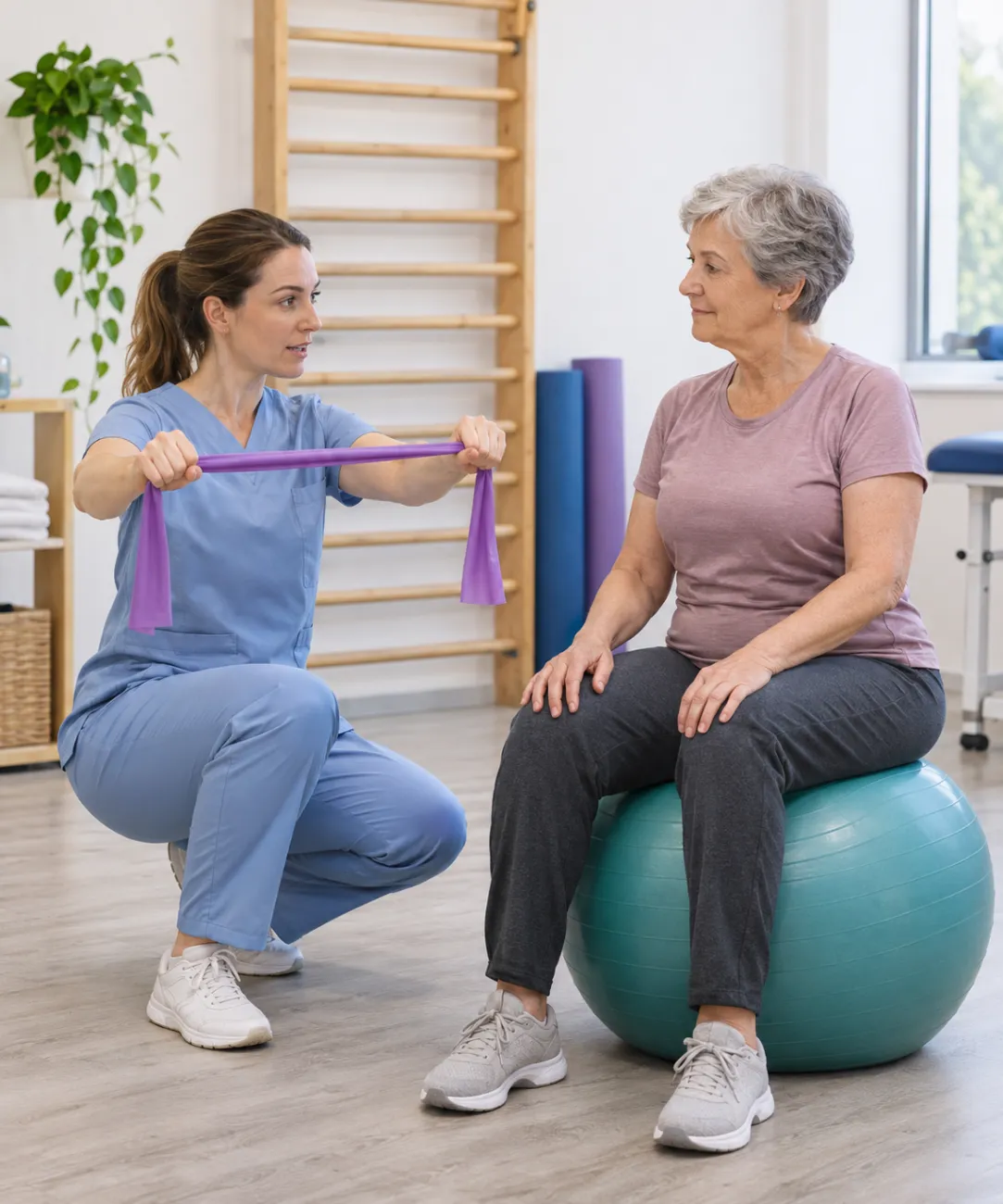
A physiotherapist and a patient sitting on a pilates ball do an exercise with an elastic band
Photograph of a consultation. The dots mark what the doctor assesses; the image does not show the intimate area.

Why it happens

What maintains elasticity and what reduces it

The vagina stretches well when the mucosa is thick and moist, the tissue beneath has collagen and a good blood supply, there are no scars holding it back and the muscles are able to relax. It is enough for one of these pieces to fail for the feeling of tightness to appear. Choose a situation to see how it applies.

Lower oestrogen

Oestrogen keeps the mucosa thick, well supplied with blood and rich in collagen. When it falls, in the menopause, during breastfeeding or with certain hormonal treatments, the epithelium thins, the tissue loses elasticity and becomes more fragile. In a small study using elastography, the vaginal wall of women with atrophy was clearly less elastic than that of women without atrophy.

What weighs on it

Waiting for it to go away on its own: with the menopause the tendency is for it to persist or get worse if nothing is done.

What helps

Moisturisers and lubricants and, when indicated, low-dose vaginal oestrogen, prescribed and monitored by a doctor.

Normal or to be assessed

Less elasticity or another cause

Not all difficult penetration is a lack of elasticity of the mucosa. That is why it is worth knowing what lies behind it before choosing a treatment.

  • How it shows. The vagina feels tighter, pulls or hurts when stretched, sex needs more lubricant and the examination is more uncomfortable than before.

  • When it happens. Usually gradually, during phases of lower oestrogen (menopause, breastfeeding) or after a long break from sexual activity.

  • What the clinic does. The doctor listens to what is going on, examines the vulva and the mucosa, rules out other causes and explains what can be done.

  • At home. A vaginal moisturiser used regularly, lubricant during sex and resuming gradually and without rushing, while you wait for the consultation.

Do you have very severe and sudden pain, high fever with pelvic pain, heavy bleeding or are you unable to pass urine? Call 112 or go to the emergency department. If you have bleeding after the menopause or after sex, abnormal discharge or any doubts, out of hours you can call SNS 24: 808 24 24 24.

Book an assessment consultation

What can help

Options for a less elastic intimate mucosa

The first step is to find out what explains the loss of elasticity. Then come the measures with the strongest basis: vaginal moisturisers used regularly, lubricants during sex, low-dose vaginal oestrogen when there is atrophy (prescribed and monitored by a doctor; if you have or have had breast cancer, speak to your oncologist first), pelvic floor physiotherapy when there is muscle tension, specific treatment of a skin condition such as lichen sclerosus and, in some cases, guided use of vaginal dilators. The treatment below is an additional option, assessed case by case and without promising results, and the evidence for elasticity is limited.

Book an assessment consultation
Dr Michelle Campagnoli, clinical director of Clínica Luxmed

First step

Assessment consultation

The doctor listens to what you are experiencing, examines your case and explains the suitable options. No treatment begins without this consultation.

May be considered when

you want to understand the cause and decide on the best path, with time and without commitment.

Book an assessment consultation
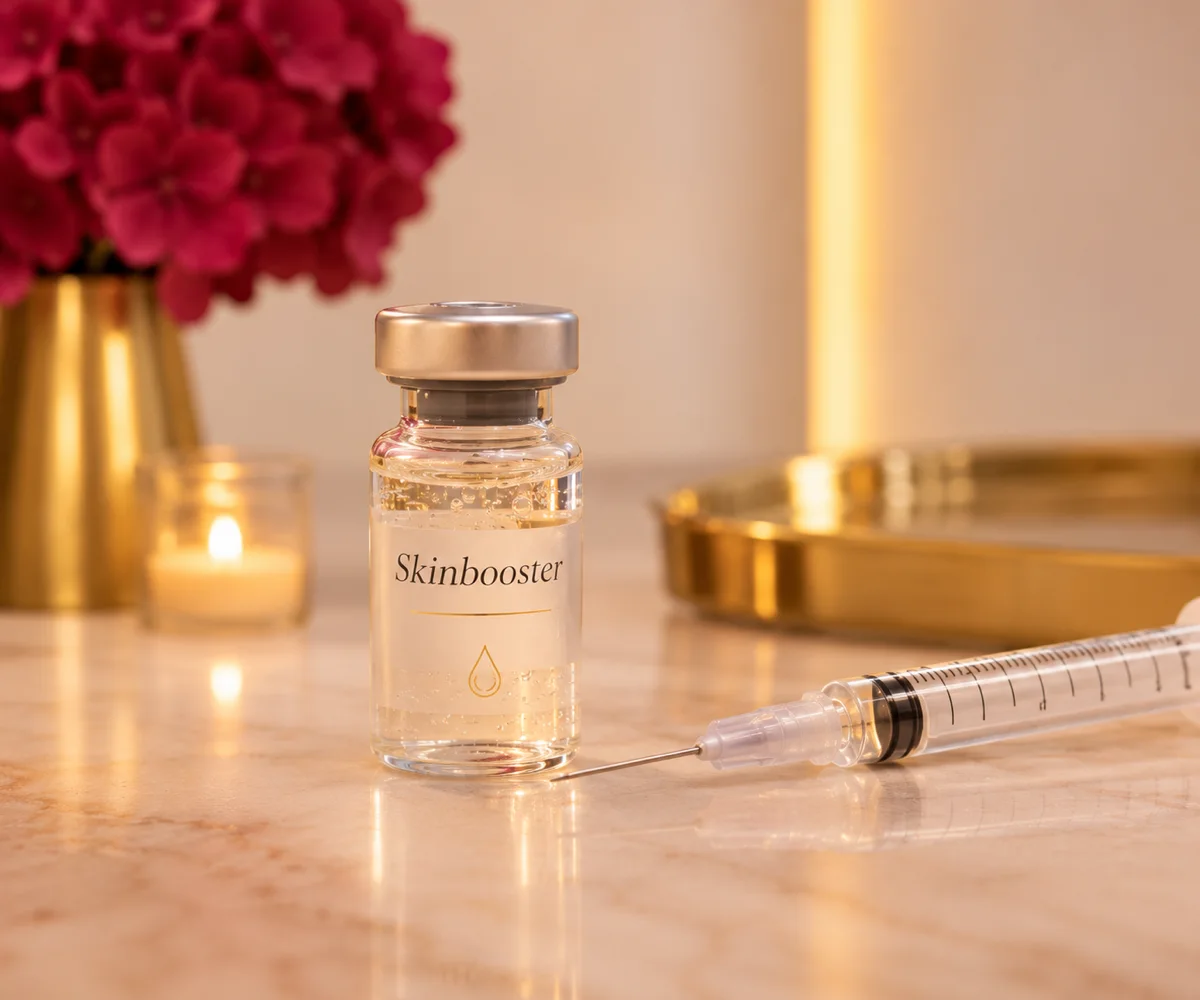
Bottle and syringe on a marble worktop, in warm light

Hydration

Skinbooster

Superficial injections of hyaluronic acid, intended to hydrate the intimate tissues in depth and improve comfort. Elasticity itself has hardly been measured: studies mainly assess dryness, are small and the effect is temporary. It does not replace first-line care.

May be considered when

the loss of elasticity persists despite moisturisers, lubricants and treatment of the cause, the doctor has explained that the evidence is limited and that the effect is temporary, and the decision is yours.

Find out more

What the journey looks like

From the first consultation to the plan tailored to you

No treatment begins without an assessment consultation with the doctor. This is how it usually goes.

  1. 01At the clinic

    Assessment consultation

    The doctor asks when and in which situations the vagina “does not give way”, when it started, your stage of life (menopause, breastfeeding), births, surgeries, cancer treatments and medication, in private and without rushing.

  2. 02At the clinic

    Examination and ruling out other causes

    The skin of the vulva and the mucosa are observed, and the doctor looks for lichen sclerosus, infection, scars and signs of atrophy and assesses whether the pelvic floor muscles are tense. If there are doubts, tests are requested or a referral is made.

  3. 03At home and with support

    First measures

    Moisturisers and lubricants are started and, when indicated, low-dose vaginal oestrogen. When there is muscle tension, pelvic physiotherapy teaches relaxation, and the doctor explains whether dilators make sense and how to use them.

  4. 04Over time

    Reassessing and deciding

    Pain and ease of penetration are assessed again. If this is not enough, the doctor explains the other options, including the skinbooster, with the evidence stated clearly, and the decision is always yours.

Day to day

What helps while you wait for the consultation

Simple care that supports the mucosa and comfort, alongside the plan the doctor recommends.

It is not just “a matter of age”

Pain does not have to be something you accept

The mucosa changes over a lifetime, but pain when stretched has causes that can be identified and often treated. Many women put off the conversation out of embarrassment or because they think nothing can be done. The earlier it is assessed, the simpler the path usually is.

A vaginal moisturiser used regularly

It keeps the mucosa more hydrated and flexible between sexual encounters, and not just at the moment.

In practice: use it a few times a week, as directed on the product, even if you are not having sex.

Generous water-based lubricant

It reduces friction and the pulling sensation during penetration.

In practice: apply it at the entrance and to whatever is going to enter. If you use a latex condom, avoid oil-based lubricants.

Going at your own pace

Without rushing or any aim of “performance”, the body relaxes and penetration hurts less.

In practice: start with touch and exploration, stop if it hurts and try again another day. Talk to your partner about what helps.

Breathe and relax the pelvic floor

Relaxed muscles let the vagina give way with less effort.

In practice: breathe out slowly and “release” the muscles of the area before any penetration. If you cannot, pelvic physiotherapy can teach you.

Dr Michelle Campagnoli, clinical director of Clínica Luxmed

Who will look after you

An assessment carried out by the doctor

At Luxmed, the first step is always an assessment consultation with Dr Michelle Campagnoli. She is the one who listens to what is going on, examines the skin of the vulva and the mucosa, rules out other causes and designs the plan with you, in private and without rushing, working with pelvic physiotherapy, dermatology or oncology when needed.

  • Physical examination and medical historyA conversation about what hurts and since when, examination of the vulva and mucosa and ruling out other causes.
  • A plan tailored to youFirst-line measures and treatment of the cause; additional treatment only if appropriate, with the evidence explained.
  • No obligationThe cost of any treatment is confirmed only after the assessment.
Book an assessment consultation

Book a consultation

Book your consultation

Choose how you prefer to get in touch. We will arrange the assessment consultation with Dr Michelle Campagnoli.

Booking through the website100€70€Assessment consultationExclusive price for those who book the assessment through the website. Outside the website, the price is 100 €.

New Life Miraflores, Algés · Office Center, R. Santa Teresa do Menino Jesus n.º 6, 9.º C, 1495-048

Your details are used only for this contact. Any treatment depends on a prior medical assessment.

Request an appointmentIt takes less than a minute.
Speciality
You do not need to go into detail. The doctor will talk to you during the consultation.
Request received. Our team will contact you as soon as possible.
What is vaginal elasticity and why is it lost?

It is the ability of the vaginal wall to stretch and return to shape without hurting. It depends on the thickness and hydration of the mucosa, the collagen of the tissue beneath, the blood supply, the absence of scars and muscles that relax. It is lost mainly when oestrogen falls (menopause, breastfeeding, some treatments), but also because of skin conditions, scars, muscle tension or cancer treatments. Only an examination shows which weighs most in your case.

Does the vagina become tighter or shorter with age?

After the menopause the mucosa tends to become thinner, drier and less elastic, and many women feel the entrance is tighter. It is not inevitable and does not happen to everyone, and marked shortening or narrowing is more typical of pelvic radiotherapy or skin conditions such as lichen sclerosus. If your vagina feels so narrow that penetration is difficult, it is worth having it examined.

Is less elastic the same as “loose” or “with less tone”?

No. Less elastic describes a vagina that gives way with difficulty, with tightness and pain; the feeling of a loose vagina or of less tone describes the opposite and has other causes, such as the pelvic floor and births, which are assessed separately. That is why it is worth telling the doctor exactly what you feel, and not just “I feel different”.

What other causes make penetration hurt?

Besides a lack of elasticity of the mucosa, there may be infection or irritation, lichen sclerosus, localised pain at the entrance (vestibulodynia), tension in the pelvic floor muscles, scars from births or surgeries and emotional factors. They often coexist. A 2026 review on pain during sex in peri- and postmenopause stresses precisely the importance of distinguishing these causes, rather than treating everything as dryness.

Does regular sexual activity help maintain elasticity?

There is an association: in a study of 52 women after the menopause, those who had sex regularly had fewer signs of vaginal atrophy. But it is an old, small, observational study, which does not prove that it is the activity that protects the tissue. In practice, maintaining or resuming sexual activity (with a partner or alone) may help, provided it is comfortable, with lubricant and at your own pace, and never as an obligation.

Moisturisers, lubricants and vaginal oestrogen: how do they help?

They are the first line. Moisturisers and lubricants relieve dryness and friction without hormones. Low-dose vaginal oestrogen, prescribed by a doctor, relieves the symptoms of atrophy and is considered the option of choice in moderate to severe atrophy, although its effect may vary from woman to woman. If you have or have had breast cancer, speak to your oncologist first.

Do vaginal dilators maintain elasticity?

Dilators are devices of progressive size used with lubricant, to accustom the tissue and muscles to giving way. The evidence comes mainly from women who have had pelvic radiotherapy: an observational study linked regular use to less stenosis, but a Cochrane review found no trials from which to conclude, and a trial in women operated on for prolapse showed no difference. In the menopause the evidence is scarce. They may make sense in selected cases, with guidance and without forcing.

Does the skinbooster help the elasticity of the mucosa?

There is no solid evidence. Hyaluronic acid vaginal gel has trials showing improvement in dryness, similar in one of them to that of an oestrogen cream, but microinjections into the mucosa have only been studied in very small samples, without an untreated group, and elasticity was not the main outcome. The effect, when there is one, is temporary. It is an additional option, and the decision is shared with you after we explain this.

Do these treatments have risks? And what about laser or radiofrequency?

Superficial injections can cause pain, swelling, lumps or bruising at the site, and rarely infection or an allergic reaction. They are not performed with active infection, unexplained bleeding, undiagnosed lesions or pregnancy. Vaginal laser and radiofrequency are also promoted for elasticity, but a sham-controlled trial found no improvement with the CO2 laser at 12 months, and the FDA warned in 2018 about burns, scarring and pain with these devices, which it has not approved for menopausal symptoms. They are not the options the clinic associates with this problem.

When should I book a consultation?

Book a consultation if penetration is uncomfortable or painful, if fissures, burning or tightness appear that do not go away, or if you are undergoing cancer treatment. If you have bleeding after the menopause or after sex, abnormal discharge, changing lesions on the vulva or any doubts, call SNS 24 (808 24 24 24). If you have very severe and sudden pain, high fever with pelvic pain, heavy bleeding or are unable to pass urine, call 112.

We could not find that question. Ask us on WhatsApp

Scientific references

This page is based on the sources below and was reviewed by Dr. Michelle Campagnoli. Last updated on .

  1. Nair N, Brenner S, Rivera A, Norquist B, Rimel BJ. Vaginal dilator therapy for pelvic cancer patients: a review. Gynecologic Oncology Reports 66:102140, 2026.
  2. Pákozdy K, Sipos AG, Bombicz M, Lampé R, Póka R, Takacs P, Kozma B. Vaginal elasticity is significantly decreased in vaginal atrophy: a strain elastography study. Menopause 27(12):1420-1424, 2020.
  3. Calleja-Agius J, Brincat M. The effect of menopause on the skin and other connective tissues. Gynecological Endocrinology 28(4):273-277, 2012.
  4. Farage M, Maibach H. Lifetime changes in the vulva and vagina. Archives of Gynecology and Obstetrics 273(4):195-202, 2006.
  5. The NAMS 2020 GSM Position Statement Editorial Panel. The 2020 genitourinary syndrome of menopause position statement of The North American Menopause Society. Menopause 27(9):976-992, 2020.
  6. Murina F, Di Carlo C, Cagnacci A, Gambacciani M, Capozzi A, Nocera F, Lello S, et al. Recommendations for the Diagnosis and Treatment of Genitourinary Syndrome of Menopause from the Italian Society of Menopause (SIM) and Italian Society of Gynecology of the Third Age (SIGiTE). Healthcare (Basel) 14(19):3205, 2026.
  7. Lethaby A, Ayeleke RO, Roberts H. Local oestrogen for vaginal atrophy in postmenopausal women. Cochrane Database of Systematic Reviews 2016(8):CD001500, 2016.
  8. Mitchell CM, Reed SD, Diem S, et al. Efficacy of vaginal estradiol or vaginal moisturizer vs placebo for treating postmenopausal vulvovaginal symptoms: a randomized clinical trial. JAMA Internal Medicine 178(5):681-690, 2018.
  9. Leiblum S, Bachmann G, Kemmann E, Colburn D, Swartzman L. Vaginal atrophy in the postmenopausal woman. The importance of sexual activity and hormones. JAMA 249(16):2195-2198, 1983.
  10. Kirchheiner K, Zaharie A, Smet S, Spampinato S, Chargari C, Haie-Meder C, et al. Association between the regular use of vaginal dilators and/or sexual activity and vaginal morbidity in locally advanced cervical cancer survivors: an EMBRACE-I study report. International Journal of Radiation Oncology, Biology, Physics 121(2):452-464, 2025.
  11. Miles T, Johnson N. Vaginal dilator therapy for women receiving pelvic radiotherapy. Cochrane Database of Systematic Reviews 2014(9):CD007291, 2014.
  12. Antosh DD, Gutman RE, Park AJ, Sokol AI, Peterson JL, Kingsberg SA, Iglesia CB. Vaginal dilators for prevention of dyspareunia after prolapse surgery: a randomized controlled trial. Obstetrics & Gynecology 121(6):1273-1280, 2013.
  13. Liu M, Juravic M, Mazza G, Krychman ML. Vaginal dilators: issues and answers. Sexual Medicine Reviews 9(2):212-220, 2021.
  14. Broul M, Vančo M, Banýrová J, Hujová A. Assessment and management of dyspareunia in peri- and postmenopausal women: a phenotype-based gynecologic approach. International Journal of Gynecology & Obstetrics (2026), 2026.
  15. NHS. Lichen sclerosus. (NHS (nhs.uk), acedido 2026-11-11)
  16. Lewis FM, Tatnall FM, Velangi SS, Bunker CB, Kumar A, Brackenbury F, et al. British Association of Dermatologists guidelines for the management of lichen sclerosus, 2018. British Journal of Dermatology 178:839-853, 2018.
  17. Faubion SS, Larkin LC, Stuenkel CA, et al. Management of genitourinary syndrome of menopause in women with or at high risk for breast cancer: consensus recommendations from The North American Menopause Society and The International Society for the Study of Women's Sexual Health. Menopause 25(6):596-608, 2018.
  18. Chen J, Geng L, Song X, et al. Evaluation of the efficacy and safety of hyaluronic acid vaginal gel to ease vaginal dryness: a multicenter, randomized, controlled, open-label, parallel-group, clinical trial. Journal of Sexual Medicine 10(6):1575-1584, 2013.
  19. Dos Santos CCM, Uggioni MLR, Colonetti T, et al. Hyaluronic acid in postmenopause vaginal atrophy: a systematic review. Journal of Sexual Medicine 18(1):156-166, 2021.
  20. Ragy S, Kahky HE, Elfakkar NMZ, Nassar SAM, El-Husseiny RM. Injection of hyaluronic acid versus platelet rich plasma for treatment of vulvovaginal atrophy in post-menopausal females. Archives of Dermatological Research 317:305, 2025.
  21. Li FG, Maheux-Lacroix S, Deans R, et al. Effect of fractional carbon dioxide laser vs sham treatment on symptom severity in women with postmenopausal vaginal symptoms: a randomized clinical trial. JAMA 326(14):1381-1389, 2021.
  22. Medsafe (Nova Zelândia), a retransmitir o alerta da FDA. Safety information: energy-based devices used for vaginal 'rejuvenation' or vaginal cosmetic procedures. Medsafe, New Zealand Medicines and Medical Devices Safety Authority, 2018.
  23. NHS. Postmenopausal bleeding. (NHS (nhs.uk), acedido 2026-11-11)
  24. Tarney CM, Han J. Postcoital bleeding: a review on etiology, diagnosis, and management. Obstetrics and Gynecology International 2014:192087, 2014.
  25. ACOG Committee on Gynecologic Practice. ACOG Committee Opinion No. 734: The role of transvaginal ultrasonography in evaluating the endometrium of women with postmenopausal bleeding. Obstetrics & Gynecology 131(5):e124-e129, 2018.
  26. NHS. Vaginal dryness. (NHS (nhs.uk), acedido 2026-11-11)
CallAssistantAvailableBook