Algés, Oeiras Mon to Sat · 09:00 to 13:00 and 14:00 to 19:00
WhatsApp Book a consultation

Facial skin concern

Oily skin, enlarged pores and acneWhen your face shines, pores show and pimples keep coming back, and your skin asks for balance, not aggression

Oiliness, visible pores and pimples seem like the same complaint, but they are not, and mixing them up leads to choosing the wrong care. Skin can be oily without acne, have very noticeable pores without a single pimple, or have acne while not being very oily. Here we explain what lies behind each one, what it is realistic to expect (pores, for example, do not close), what an in-clinic ritual is and what falls within the doctor's remit, and how an assessment at Clínica Luxmed, in Algés, helps to choose the path.

Reviewed by Dr Michelle Campagnoli, clinical director

  • 3rituals for this topic
  • 1assessment, always first
  • Noobligation
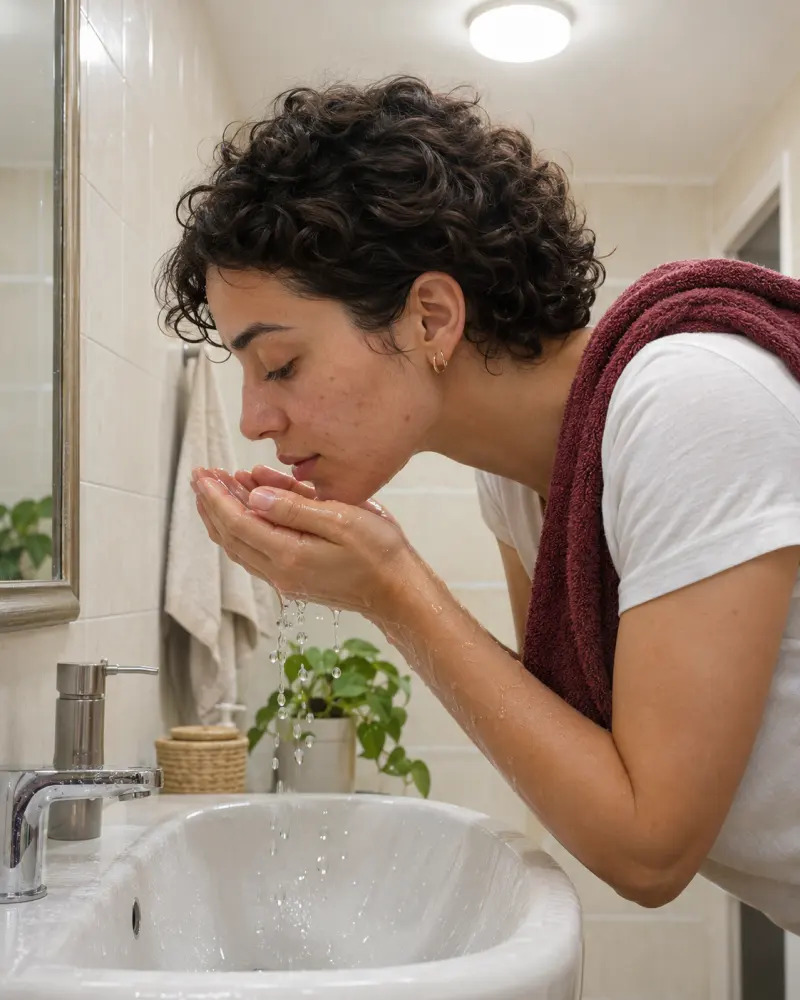
Curly-haired woman washing her face at a bathroom sink

How to recognise it

Oiliness, pores or acne: what do you see in the mirror?

These three complaints often appear together, but they call for different care. The signs below help you work out which weighs most in your case before the assessment.

Tick what you recognise0/7

Tick the signs you recognise in your own case. This is not a diagnosis, it is only meant to give you an idea.

Large, painful pimples under the skin (nodules), of sudden and intense onset, or that leave scars, call for a medical consultation without delay. Acne that comes with irregular cycles or excess hair, or with fever and malaise, should also be assessed.

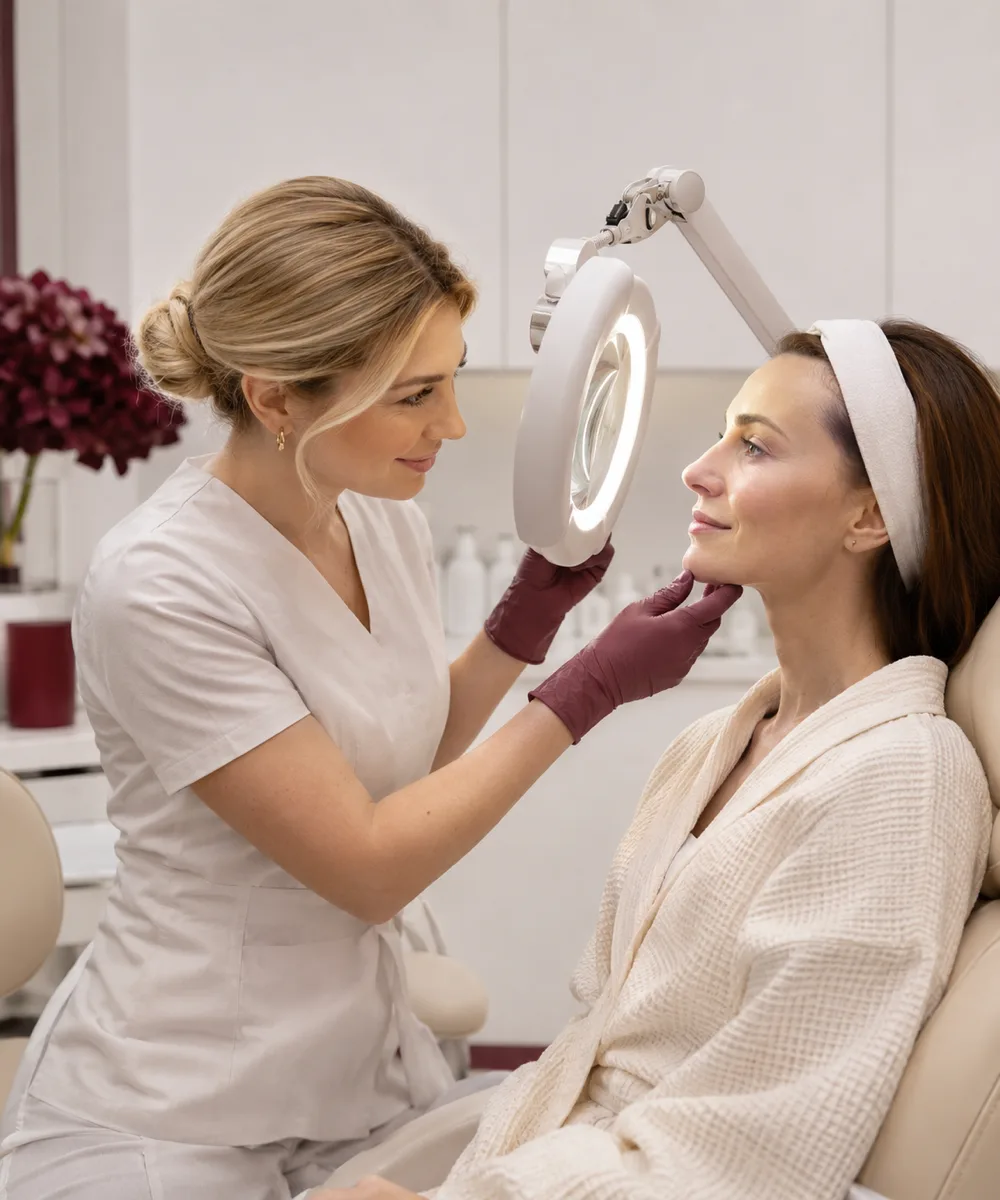
The doctor, wearing gloves, examining a patient's face with the help of an illuminated magnifier, in a skin assessment room
Photograph of a skin assessment. The dots mark the areas of the face where these complaints tend to be noticed; the image does not show skin with acne.

Why it happens

What weighs on oiliness, pores and acne

It is almost never just one thing, and it has nothing to do with a lack of hygiene. Choose a factor to see what makes it worse and what helps.

Sebum and hormones

The sebaceous glands produce sebum, a fat that protects the skin. When androgen hormones stimulate these glands, especially from puberty onwards, production increases and the skin looks shinier. Acne is described as a disease of the follicle in which increased sebum, altered keratinisation, inflammation and colonisation by bacteria come together. Some people have a lot of sebum and little acne, and the other way round.

What makes it worse

Thinking that oily skin is «dirty» skin and attacking it with harsh products, which irritate and do not reduce the sebum that comes from within.

What helps

Cleansing gently, using suitable products and accepting that oiliness is managed, not wiped out.

Two ways of looking

Oily skin with pores, or skin with acne

The boundary is not always clear, but telling them apart helps to choose the path: some complaints call mainly for care and rituals, others call for a medical assessment.

  • What it looks like. The skin shines in the T-zone, pores are visible on the nose and cheeks, there may be blackheads, and there are hardly any inflamed pimples.

  • What changes over time. Oiliness tends to be greater in adolescence and young adulthood and, in general, eases with the years. Pores, on the contrary, tend to become more noticeable with age, because the surrounding skin loses elasticity.

  • What may be behind it. Excess sebum, genetics, loss of elasticity around the pore and skincare habits that irritate the skin.

  • What usually helps. Gentle cleansing, products that balance oiliness without being harsh, and sun protection. In the treatment room, a deep-cleansing and sebum-regulating ritual.

  • Tell us at the consultation. How long your skin has been like this, which products you use, whether it changes with your cycle and whether anything makes it worse, such as heat or make-up.

Not sure if it is just oiliness or already acne? Book an assessment, so the doctor can look at your skin and tell you what the first step is.

Book an assessment

What the clinic can do

Rituals for oily skin, pores and blemishes

It is important to be clear: an in-clinic ritual is not a medical treatment for acne. The rituals below are carried out with professional mesoestetic® actives and manual technique, after an assessment, and serve to cleanse, balance and support the skin. They usually follow a protocol with several steps, such as cleansing, application of actives, the mask and facial massage, and the steps vary from ritual to ritual. Inflammatory acne, nodules and prescribing medication are within the doctor's remit. Results vary from person to person, and the doctor explains what you can expect before any decision.

Book an assessment
Woman in a white bathrobe dipping her hands into a glass bowl of rose petals

Deep cleansing

Ritual Pureza

A deep cleanse that frees the skin of impurities, oiliness and dead cells and prepares it to receive the care that follows.

Suitable when

the skin has a clogged surface, with blackheads, shine and a tired look, and the doctor considers a deep cleanse appropriate.

Find out more
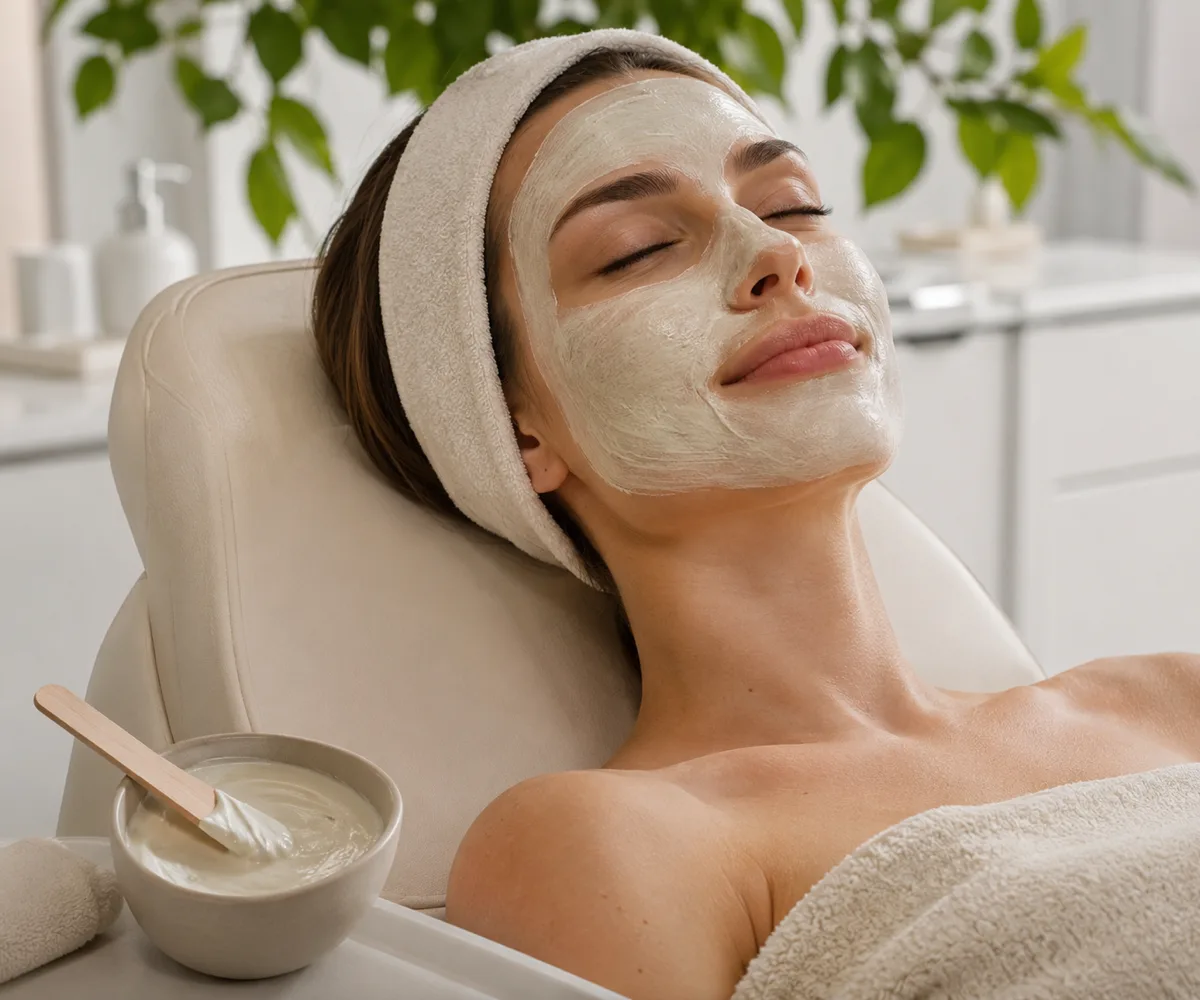
Woman lying down with a creamy mask on her face, beside a bowl of cream and a spatula

Balance

Ritual Sebo Balance

Oily skin needs balance, not aggression. This ritual regulates oiliness and softens the look of pores, for a more matte, even finish.

Suitable when

the skin shines easily, the pores are visible and the skin reacts badly to drying products, and the doctor considers a regulating ritual appropriate.

Find out more
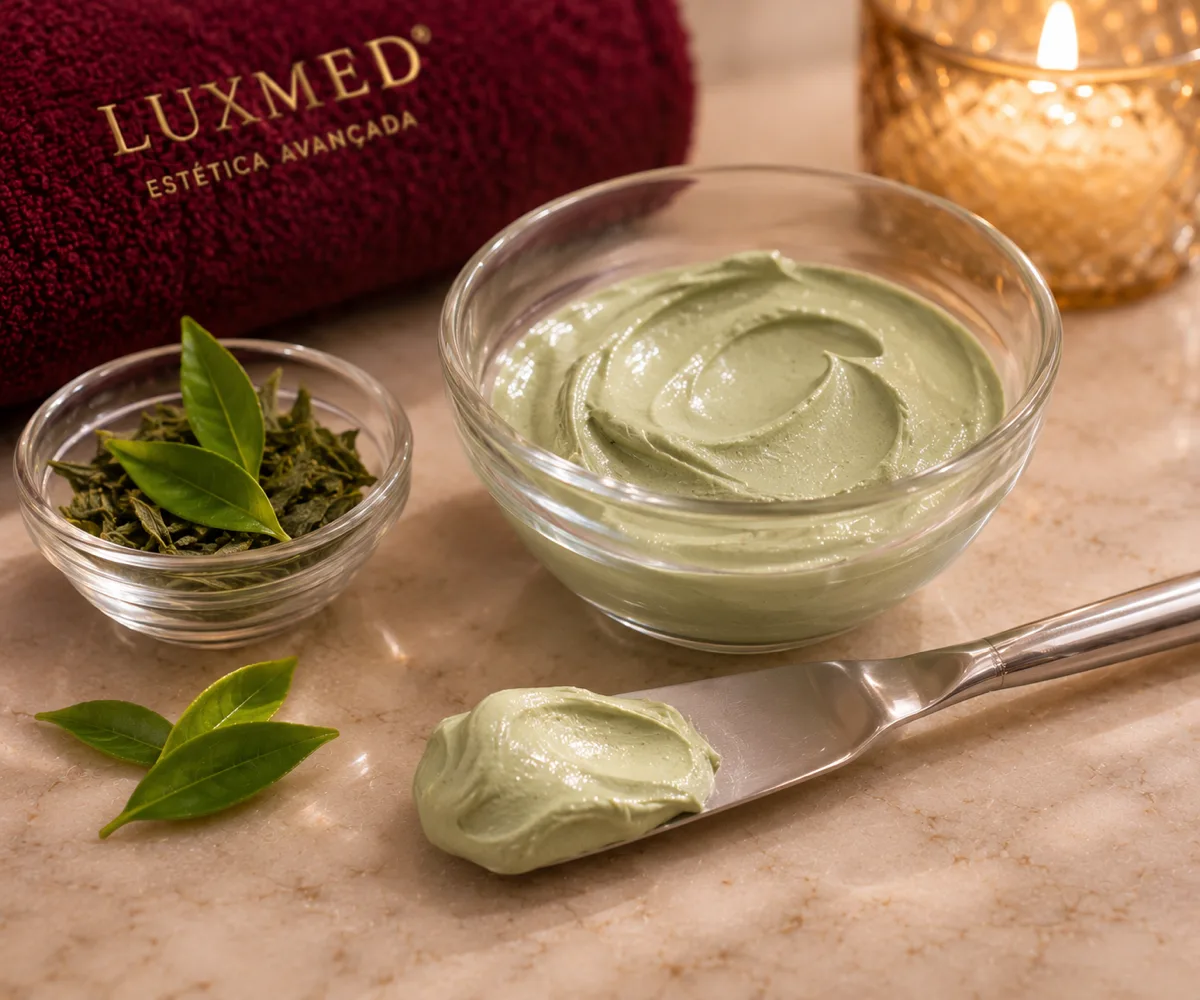
Glass bowl of light green cream and green tea leaves on a marble countertop

Acne-prone skin

Ritual Acné Protocol

An in-clinic protocol for skin prone to acne and blemishes, which helps to control the signs and improve texture, always with a prior assessment.

Suitable when

the skin has comedones and blemishes that tend to recur, with no signs of more inflammatory acne, and the doctor considers the protocol suitable.

Find out more

How to choose? By the skin, not by the name. The doctor looks at the type of lesions, the areas and the sensitivity, and decides between a cleansing ritual, a sebum-regulating one, the protocol for acne-prone skin or, when lesions are inflamed or tender, the medical path. If the skin is very inflamed or there is active herpes or infection, the ritual is postponed. Nothing is decided before the assessment, and results are gradual.

What the journey looks like

From the first assessment to follow-up

No ritual begins without an assessment with the doctor. This is how it goes.

  1. 01At the clinic

    Telling the story of your skin

    The doctor asks since when your skin has been like this, at what age it began, whether it changes with your cycle, which products you use and for how long, and what you have already tried. She also wants to know about medication, any pregnancy or breastfeeding, and whether you have taken or are taking isotretinoin or antibiotics.

  2. 02At the clinic

    Examining the skin

    She looks at the types of lesion (comedones, papules, pustules, nodules), the affected areas, the oiliness, the size of the pores, the sensitivity and the marks. She looks for signs that it is another skin condition or that the acne needs medical treatment.

  3. 03At the clinic

    Deciding the path

    Between an in-clinic ritual, medical treatment or both together. If there are hormonal signs, such as irregular cycles or excess hair, the doctor may suggest further tests. If the skin is very inflamed, the ritual waits.

  4. 04At the clinic

    The ritual, when indicated

    The rituals are carried out by members of the team with mesoestetic® actives and manual technique, and usually include cleansing, application of actives, a mask, facial massage and protective care. The number of sessions and the interval are set at the assessment.

  5. 05Over time

    Follow-up

    Acne and oiliness tend to vary, so the doctor reviews the skin, adjusts the plan and adapts the routine at home. The aim is to keep the skin balanced, not to promise that there will never be another pimple.

Day to day

What helps at home

Much of the result is played out at home. These are the habits that count most, alongside the doctor's plan.

The golden rule

Balance, not aggression

Oily or acne-prone skin does not need to be stripped. When you scrub, dry it out and layer products, the face becomes irritated and the skin reacts with inflammation and, often, with more oiliness. What tends to work is a simple, gentle routine, kept up with patience, and a plan made to measure.

Cleanse gently, without overdoing it

A trial found no statistically significant differences between washing once, twice or four times a day, with some support for twice a day with a gentle product.

In practice: wash your face in the morning and in the evening with a gentle product and lukewarm water, and do not repeat the wash every time you shine. If you have sweated a lot, an extra wash makes sense.

Moisturise, oily skin too

Oily skin can also be dehydrated, and good hydration helps the skin tolerate treatments better.

In practice: choose a light texture suited to oily skin, and apply it after cleansing. If the skin feels tight, the product may be too harsh.

Protect from the sun every day

The sun can darken the marks left by pimples, and some acne medications make the skin more sensitive to light.

In practice: use a light-textured sun protector suited to oily skin, and reapply when you are outdoors.

Introduce one product at a time

When everything is changed at once, you cannot tell what helped or what irritated.

In practice: give each new product a few weeks before adding another, and stop if the skin stings, flakes or turns red.

Keeping track of the pattern

Noticing when pimples appear helps to tell the cause.

In practice: note down on which day of the cycle they appear, what changed in your routine and which medicines or products you started using.

Dr Michelle Campagnoli, clinical director of Clínica Luxmed

Who will look after you

An assessment carried out by the doctor

At Luxmed, the first step is always an assessment with Dr. Michelle Campagnoli. She examines the skin, works out whether it is oiliness, visible pores or acne, and decides whether an in-clinic ritual is enough or medical treatment is needed.

  • Physical examination and medical historyExamination of the skin, the affected areas and the type of lesions, and a conversation about products, cycle, medication and history.
  • A plan tailored to youA plan suited to your skin, saying which ritual makes sense, when and with what care at home, with follow-up over time.
  • No obligationThe cost of any treatment is confirmed only after the assessment.
Book an assessment

Book a consultation

Book your consultation

Choose how you prefer to get in touch. We will arrange the assessment consultation with Dr Michelle Campagnoli.

Booking through the websiteAssessment consultationTalk to our assistant on WhatsApp and ask for the current price of the assessment.

New Life Miraflores, Algés · Office Center, R. Santa Teresa do Menino Jesus n.º 6, 9.º C, 1495-048

Your details are used only for this contact. Any treatment depends on a prior medical assessment.

Request an appointmentIt takes less than a minute.
Speciality
You do not need to go into detail. The doctor will talk to you during the consultation.
Request received. Our team will contact you as soon as possible.
Why is my face so oily and my pores so visible?

Because the sebaceous glands of the face, especially in the T-zone, produce a lot of sebum, and sebum makes pores more visible. A review points to three main causes of very visible pores: a lot of sebum, less elasticity in the surrounding skin and a bulkier follicle. Age, sex, the menstrual cycle and genetics also count. It is not a lack of hygiene, and washing more often does not reduce sebum. The assessment helps to work out which cause weighs most in your case.

What is the difference between oily skin, enlarged pores and acne?

They often occur together, but they are not the same thing. Oily skin is a matter of sebum production. Enlarged pores are a matter of appearance, of how visible the pore is. Acne is a disease of the hair follicle, involving blockage, inflammation and bacteria, and it can appear on skin that is not very oily. You can have one without the others, and telling them apart matters, because the care and the treatment differ. The doctor examines your skin and tells you where you stand.

Why do I have acne in my 30s and 40s?

Acne is not only a teenage matter. In adults, and especially in women, it may be a continuation of acne from youth or appear for the first time in adulthood. There are genetic and hormonal factors, and it tends to concentrate on the chin, jawline and neck, often with closed comedones. It tends to be chronic or recurrent and calls for follow-up. Adult skin is also more sensitive to irritation, which means products must be chosen carefully. Only the assessment tells what is behind it.

How do I know if my acne is hormonal?

There is no single sign. Common clues are pimples on the chin and jawline that get worse around menstruation, and onset after the age of 25. But only the doctor can assess it. Irregular cycles, excess hair or hair loss call for a hormonal or gynaecological assessment, because they may have another cause. If so, the doctor may request tests and suggest the way forward. In-clinic rituals do not treat the hormonal cause, they only support the skin.

How do you remove blackheads from the nose?

A blackhead is an open pore whose contents have oxidised, not dirt. Squeezing with your nails, or using strips or tools without care, can injure the follicle, cause inflammation and mark the skin. When comedones need to be extracted, it is done with the right technique and equipment and by professionals, and the team explains at the assessment what is part of each ritual. At home, what helps is cleansing gently, keeping a regular routine and asking the doctor for a product suited to your skin type.

Skin cleansing at the clinic or at home: what is the difference?

At home you do the daily cleansing, which keeps the skin's surface clean. In the treatment room, the cleansing is deeper: the Ritual Pureza frees the skin of impurities, oiliness and dead cells and prepares it for the care that follows, and it is carried out by professionals. It does not replace the daily routine, and one does not make the other unnecessary. The frequency is not the same for every skin, and after the assessment the team tells you what makes sense for you, so as not to irritate.

Acne treatment: at the clinic or with a doctor?

It depends on the acne. When lesions are mild, with comedones and blemishes, an in-clinic ritual can support the skin. When they are inflamed, tender, deep or leave marks, treatment is medical, with a prescription, and may include products applied to the skin or oral medication. Clinical guidelines describe several options, and the choice is always individual. At Luxmed, the doctor assesses the skin and decides whether the ritual is enough, whether medical treatment is needed, or both.

Can enlarged pores close?

No. The pore is the natural opening of the follicle, it has no muscle and does not open or close with heat or cold. It cannot be eliminated, and any promise to «close pores» is misleading. What can be achieved, in some cases, is to soften the look: reduce oiliness, unblock the pores and protect the skin from the sun, which degrades the elasticity around them. That is the realistic aim of the Ritual Sebo Balance, which regulates oiliness and softens the look of pores, and results vary from person to person.

Should I wash my face two or three times a day if I have oily skin?

There is no single answer. In a trial in men with mild to moderate acne, washing once, twice or four times a day showed no statistically significant differences, with some support for twice a day with a gentle product. Washing too much and scrubbing can irritate the skin, and irritated skin tends to react with inflammation. In general, morning and evening, with lukewarm water and a gentle product, plus one extra wash after sweating a lot. If your skin feels tight, it is too much.

How are acne marks removed?

It helps to separate dark or pinkish marks, which are changes in skin colour, from scars, which are changes in texture. The former tend to fade with time and sun protection, and the doctor assesses what helps most. Scars are a different matter, and the best way to avoid them is to treat inflamed acne early and not to squeeze. We do not promise scar treatment here. Blemishes and skin texture have their own page, and the assessment tells you which path to take.

Can I squeeze blackheads and pimples?

Better not to. Squeezing an inflamed pimple pushes the contents deeper, increases inflammation and is one of the causes of marks and scars. Comedones can be extracted, but with the right technique, clean equipment and by professionals, not with your nails. If a lesion bothers you a lot, you can ask for help instead of treating it yourself. And if there is infection, active herpes or very inflamed skin, no ritual should be done until the situation has cleared.

When should I see a doctor first?

When the pimples are large, painful and under the skin, when they appear suddenly and intensely, when they leave scars or marks, or when they do not improve with suitable care over a few months. Also if the acne comes with irregular cycles or excess hair, or if there is fever and malaise. In these cases, the first step is an assessment consultation with Dr. Michelle Campagnoli, and only afterwards do we discuss whether an in-clinic ritual has a place. If you have doubts, book the assessment and we will talk it through.

How many sessions are needed and how soon will I notice results?

There is no single number, and we do not promise one before the assessment. It depends on the skin, the type of complaint and the ritual, and the team sets the plan and the interval with you. In general, oily skin and acne vary over time, so the aim is to balance and maintain, not to resolve everything at once. Some rituals can be noticed from the first session, in freshness and texture, and others are more gradual. Results vary from person to person.

What should I bring and tell the doctor?

Bring the list of products you use and your daily routine, and say since when your skin has been like this. Tell the doctor about medication you take or have taken, especially isotretinoin, antibiotics, oral contraceptives or corticosteroids, and whether you are pregnant or breastfeeding. The waiting times for peels or other procedures after isotretinoin vary and the decision is the doctor's. Also say if you have cold sores, if your skin reacts easily and how your menstrual cycles are.

We could not find that question. Ask us on WhatsApp

Scientific references

This page is based on the sources below and was reviewed by Dr. Michelle Campagnoli. Last updated on .

  1. Reynolds RV, Yeung H, Cheng CE, Cook-Bolden F, Desai SR, Druby KM, Freeman EE, Keri JE, Stein Gold LF, Tan JKL, et al. Guidelines of care for the management of acne vulgaris. J Am Acad Dermatol, 2024.
  2. Zaenglein AL, Pathy AL, Schlosser BJ, Alikhan A, Baldwin HE, Berson DS, Bowe WP, Graber EM, Harper JC, Kang S, Keri JE, et al. Guidelines of care for the management of acne vulgaris. J Am Acad Dermatol, 2016.
  3. Williams HC, Dellavalle RP, Garner S. Acne vulgaris. Lancet, 2012.
  4. Dréno B, Layton A, Zouboulis CC, López-Estebaranz JL, Zalewska-Janowska A, Bagatin E, Zampeli VA, Yutskovskaya Y, et al. Adult female acne: a new paradigm. J Eur Acad Dermatol Venereol, 2013.
  5. Bagatin E, Freitas THP, Rivitti-Machado MC, Machado MCR, Ribeiro BM, Nunes S, Rocha MADD. Adult female acne: a guide to clinical practice. An Bras Dermatol, 2019.
  6. Roh M, Han M, Kim D, Chung K. Sebum output as a factor contributing to the size of facial pores. Br J Dermatol, 2006.
  7. Lee SJ, Seok J, Jeong SY, Park KY, Li K, Seo SJ. Facial Pores: Definition, Causes, and Treatment Options. Dermatol Surg, 2016.
  8. Choi JM, Lew VK, Kimball AB. A single-blinded, randomized, controlled clinical trial evaluating the effect of face washing on acne vulgaris. Pediatr Dermatol, 2006.
  9. Spring LK, Krakowski AC, Alam M, Bhatia A, Brauer J, Cohen J, Del Rosso JQ, Diaz L, Dover J, Eichenfield LF, et al. Isotretinoin and Timing of Procedural Interventions: A Systematic Review With Consensus Recommendations. JAMA Dermatol, 2017.
  10. Semedo D, Ladeiro F, Ruivo M, D'Oliveira C, De Sousa F, Gayo M, Lima C, Magalhães F, Brandão R, Branco M, et al. Adult Acne: Prevalence and Portrayal in Primary Healthcare Patients, in the Greater Porto Area, Portugal. Acta Med Port, 2016.
CallAssistantAvailableBook