Algés, Oeiras Mon to Sat · 09:00 to 13:00 and 14:00 to 19:00
WhatsApp Book a consultation

Facial mesoaesthetics

First wrinkles and expression linesWhen the fine lines start to become more visible, on the forehead, between the eyebrows or at the corners of the eyes

One day, in the mirror or in a close-up photograph, you notice a line that was not there before, or that used to appear only when you smiled. It is not cause for alarm: first lines are a normal sign of living skin and an expressive face. What matters is understanding what kind of line it is, because a fine surface line, an expression line and an established wrinkle do not call for the same thing. At Clínica Luxmed, in Algés, the assessment serves to tell them apart and to decide, without hurry, what makes sense for you.

Reviewed by Dr Michelle Campagnoli, clinical director

  • 3rituals for this topic
  • 1assessment, always first
  • Nocommitment
Woman laughing out loud at a marble table in a Lisbon pastry shop

How to recognise it

Could these be your first lines?

Not every mark on the face is a wrinkle, and many are only seen when the face moves. These signs help you work out where you stand before the assessment.

Tick what you recognise0/7

Tick the signs you recognise in your case. This is not a diagnosis, it is only meant to give you an idea.

A wrinkle that appears suddenly, a spot or lesion that changes, very dry skin with itching or flaking, or very pronounced wrinkles at an early age deserve to be seen by a doctor, and not treated as a purely aesthetic matter.

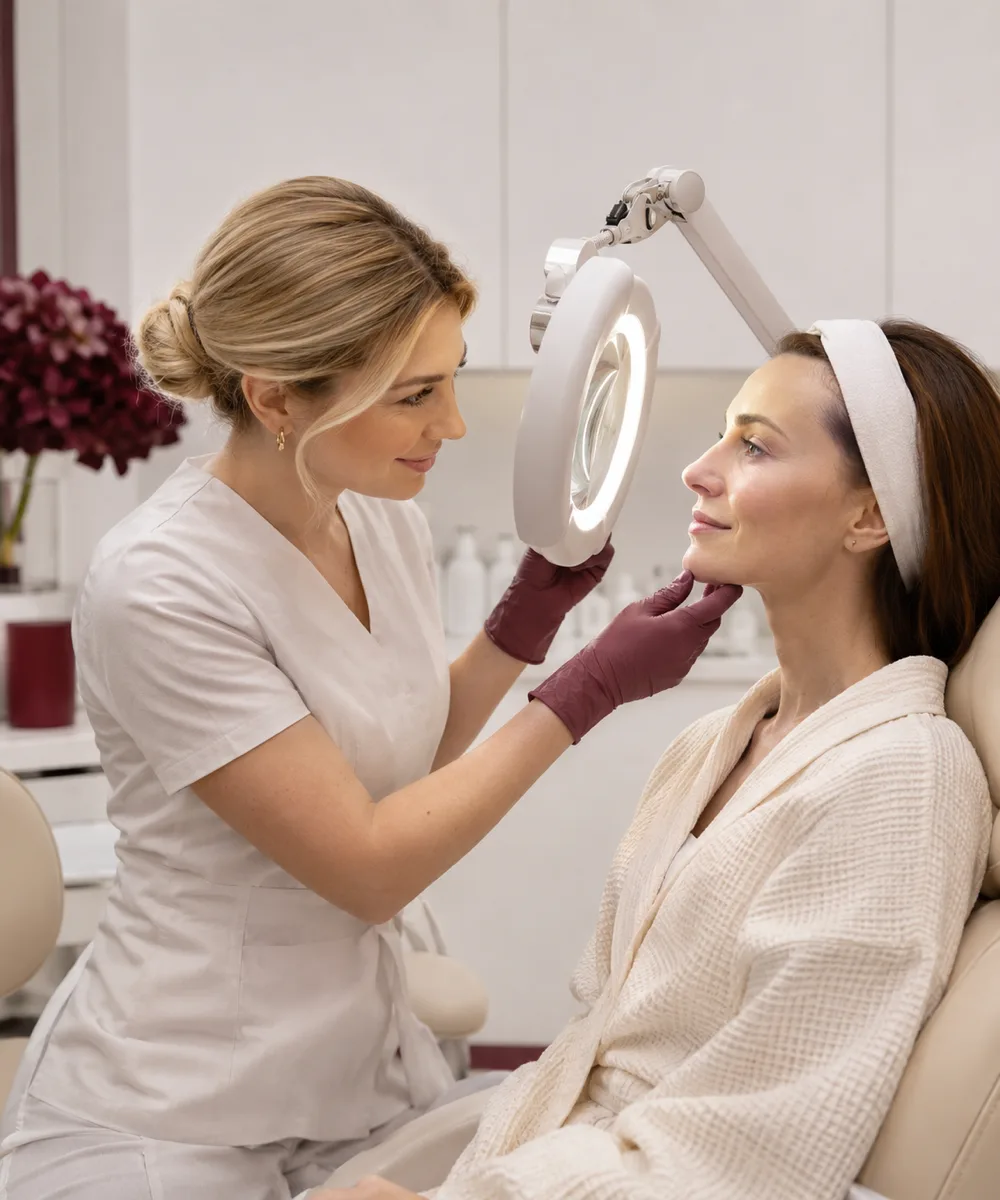
Beautician in wine-colored gloves examining a client's face under an illuminated magnifying lamp
Photograph of a skin assessment. The dots mark the areas where the first lines tend to show; the image does not show wrinkles.

Why it happens

What makes the first lines appear

It is rarely just one thing, and it is not a flaw. Choose a factor to see what aggravates it and what tends to help.

The repeated expression of the face

Every time we smile, frown or raise our eyebrows, the skin folds in the same place. Over the years, the skin gradually loses its ability to return to its original position, and the fold leaves a faint mark that becomes more visible as it repeats. The literature describes wrinkles as fracture lines that form where ageing skin is repeatedly distorted, whether by expression or by compression during sleep.

What makes it worse

Trying not to express yourself, or deliberately frowning, which creates tension and solves nothing.

What helps

Understanding that expression is normal, moisturising the skin and asking for an assessment if a line becomes visible with the face still.

Lines and wrinkles

Expression lines or established wrinkles

In clinical language, a simple distinction is made between the line that only appears with movement and the one that is already visible with the face still. The difference is one of degree and helps you understand the decision point.

  • How they look. They only appear with movement: when raising the eyebrows, frowning, smiling. At rest, the skin is smooth or nearly so.

  • When they appear. From the early years of adulthood, in many people, and more often in the areas where the face moves the most.

  • What lies behind them. The repetition of movement on skin that still has elasticity, plus hydration and the age of the skin.

  • What usually helps. Looking after your skin, protecting it from the sun and, if it makes sense for you, a deep-hydration ritual such as Linéa.

  • Tell us at the assessment. In which areas you notice them, since when, and whether the face at rest already shows any mark.

Not sure where you stand? Book an assessment and the doctor will examine your face at rest and in movement, and explain what she sees and what can be done.

Book an assessment

What the clinic can do

Rituals for first lines

The Facial Mesoaesthetics rituals are carried out with professional mesoestetic® active ingredients and manual technique, after an assessment. They work on the surface of the skin: they help care for, hydrate and protect. They do not relax muscles, fill in creases or make an established wrinkle disappear. Those are medical procedures, described on other pages, and are only discussed after the doctor has examined your face. Results vary from person to person.

Book an assessment
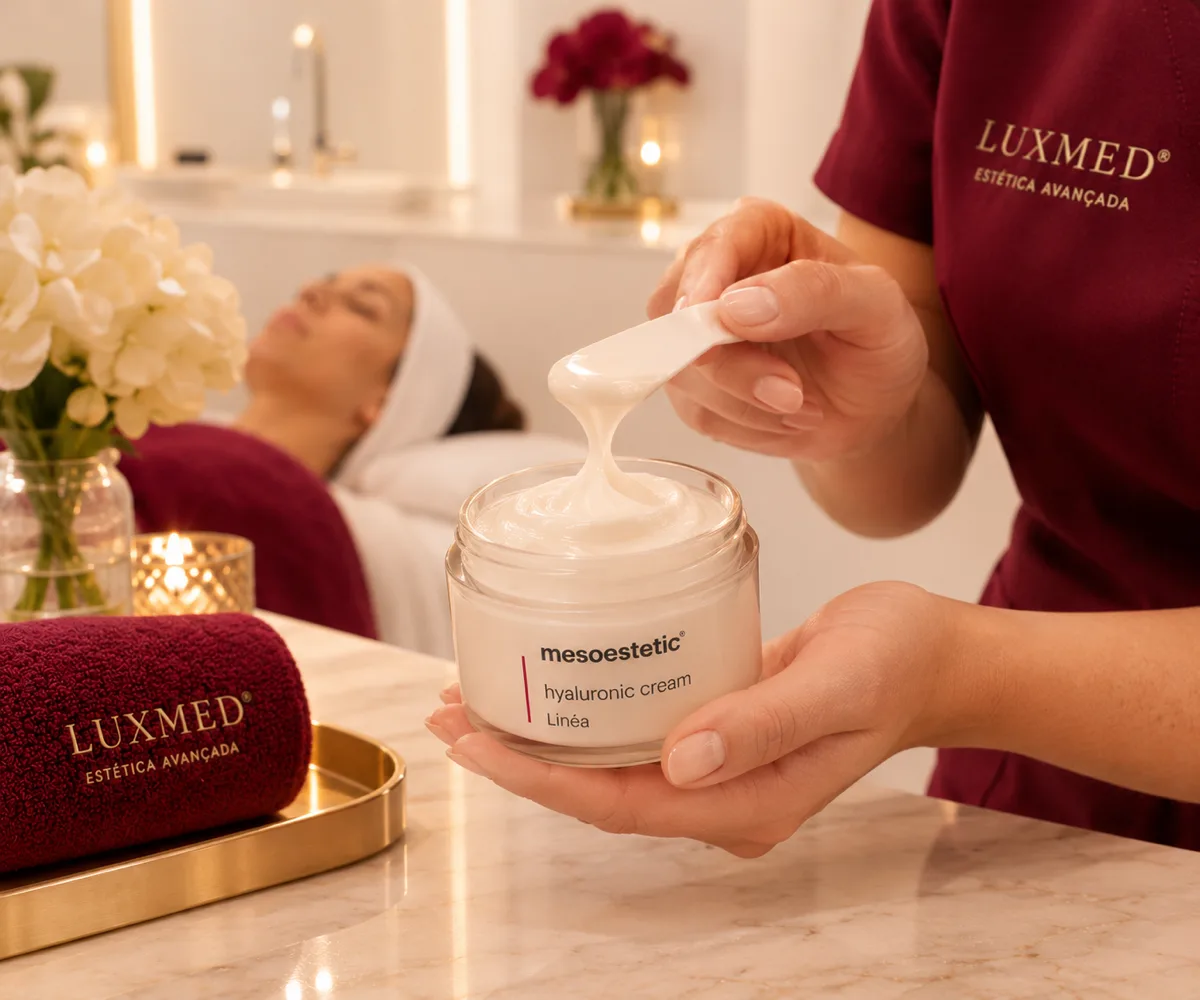
Beautician in a wine-colored uniform holding an open jar of Linéa cream, with a client behind

Age and expression

Ritual Linéa

Designed for first wrinkles and expression lines: it hydrates deeply and softens marks before they set in. It is the central ritual on this page.

Suitable when

the first lines are already visible, but the skin still responds well, and you want to care for them over time, without going down the medical-procedure route.

Find out more
Clear hyaluronic acid gel dripping from a glass spatula, in drops with golden highlights

Hydration

Ritual Hydralux

It replenishes missing water and restores comfort, radiance and softness, with an effect you can notice from the first session. It can be the starting point when the skin feels tight.

Suitable when

fine lines appear mainly because the skin is dry or tight, and the assessment points to hydration as the priority.

Find out more
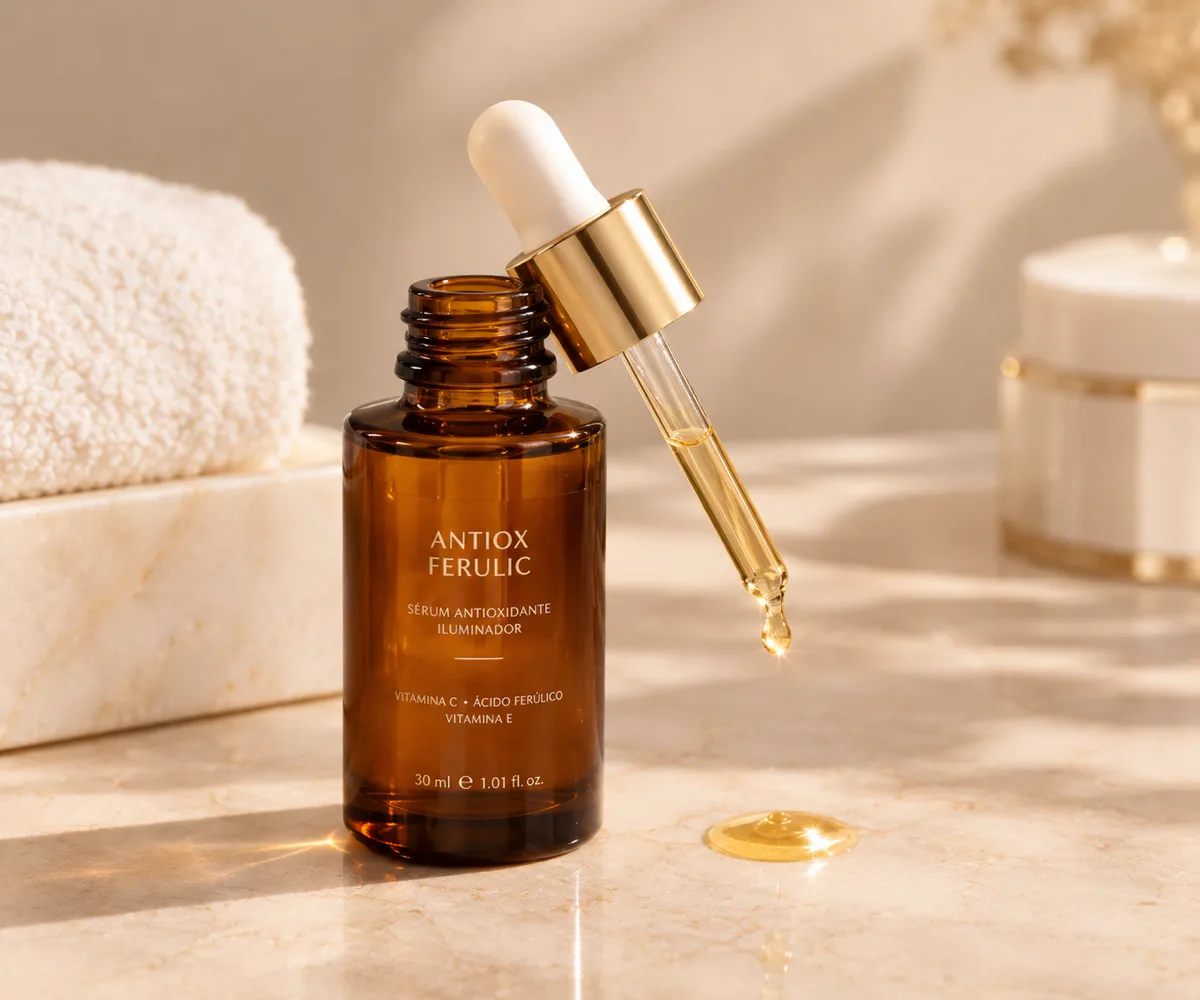
Amber bottle of Antiox Ferulic serum with a golden dropper and a drop at the tip, on marble

Protection

Ritual Antiox Ferulic

It creates a protective barrier against pollution, sun and everyday stress, with a brightening and anti-ageing effect. It can be combined with the previous ones.

Suitable when

the assessment shows skin heavily exposed to sun and pollution, and you want to reinforce protection while caring for the first lines.

Find out more

Which to choose? The three are not meant to be done all together, or at the same time. The assessment decides which makes sense, in what order and at what pace, and whether, for your case, there is another path to discuss. We do not promise numbers of sessions before seeing your skin.

What the journey looks like

From assessment to follow-up

No ritual begins without an assessment with Dra. Michelle Campagnoli. This is how it goes.

  1. 01At the clinic

    Telling us what you have noticed

    We ask since when you have seen the lines, in which areas, whether they change during the day, what products you use, how you sleep, whether you smoke and how much sun you get. The history weighs as much as the observation.

  2. 02At the clinic

    Observing the face at rest and in movement

    The doctor looks at the marks with the face at rest, smiling, frowning and raising the eyebrows. This is how she tells fine lines, expression lines and set wrinkles apart.

  3. 03At the clinic

    Asking what matters before deciding

    Asking about allergies, reactive skin, wounds, active infection, pregnancy or breastfeeding, and products such as retinoids. If anything is active on the skin, the ritual is postponed until it has been treated.

  4. 04At the clinic

    Proposing a plan with realistic expectations

    It explains what a surface ritual can do, what it cannot do and, where that is the case, that there are medical procedures described on other pages. The decision is always the doctor's and yours.

  5. 05Over time

    Follow-up

    It reviews the skin and adjusts the pace and the plan. First lines call for neither hurry nor constant corrections: they call for consistency and an attentive eye.

Day to day

What helps prevent them

For first lines, what you do every day weighs more than any ritual. These are the habits that count most, alongside the doctor's plan.

The golden rule

A few habits, every day

There is no secret: skin appreciates simple, consistent routines. Cleansing gently, moisturising, protecting from the sun and sleeping well do more for the first lines than a shelf full of products used at random.

Hydrate every day

A well-hydrated skin holds water better, and surface fine lines become less noticeable.

In practice: a moisturiser suited to your skin type, morning and night. In studies with hyaluronic acid creams, the improvement in hydration was clear and that in wrinkles modest and dependent on the formula.

Protect from the sun, even without a beach trip

Photoageing is cumulative, and everyday exposure counts.

In practice: broad-spectrum sunscreen on the face every day. In a trial with 903 adults, those who used it daily showed less skin ageing than those who used it only occasionally.

Paying attention to sleep

Pressure on the pillow contributes to sleep wrinkles, and sleeping too little does not help the skin.

In practice: if it is comfortable, try sleeping on your back, or alternate sides, with a soft pillow.

Introducing one product at a time

That way you see what your skin tolerates and what works.

In practice: wait a few weeks before adding another. If the skin reacts, it is easier to identify the cause.

Take a calm look

Lines change over the course of the day and with tiredness.

In practice: always compare under the same light and at the same time of day, for example with photographs every six months, before drawing conclusions.

Dr Michelle Campagnoli, clinical director of Clínica Luxmed

Who will look after you

An assessment carried out by the doctor

At Luxmed, the first step is always an assessment with Dra. Michelle Campagnoli. She examines your face at rest and in movement, works out what kind of lines you have and decides with you what makes sense.

  • Physical examination and medical historyObservation of the lines with the face at rest and in movement, of the products you use, your habits and your history.
  • A plan tailored to youA tailored plan with realistic expectations, clearly explained and followed up over time.
  • No obligationThe cost of any treatment is confirmed only after the assessment.
Book an assessment

Book a consultation

Book your consultation

Choose how you prefer to get in touch. We will arrange the assessment consultation with Dr Michelle Campagnoli.

Booking through the websiteAssessment consultationTalk to our assistant on WhatsApp and ask for the current price of the assessment.

New Life Miraflores, Algés · Office Center, R. Santa Teresa do Menino Jesus n.º 6, 9.º C, 1495-048

Your details are used only for this contact. Any treatment depends on a prior medical assessment.

Request an appointmentIt takes less than a minute.
Speciality
You do not need to go into detail. The doctor will talk to you during the consultation.
Request received. Our team will contact you as soon as possible.
From what age do the first wrinkles appear? Is it normal at 30?

There is no right age. Many people notice fine lines in their 30s, and some notice them earlier or only later, because they depend on genetics, accumulated sun, habits and the way each face expresses itself. Having lines at 30 is very common and does not mean anything is wrong. What matters is the type of line and how it evolves over time, and that is what the assessment helps you understand.

Fine lines, expression lines and wrinkles: what is the difference?

Fine lines are superficial marks, often linked to dry skin, that ease with hydration. Expression lines form with facial movement, when frowning, smiling or raising the eyebrows. Wrinkles are creases that are already visible with the face still. In practice, one type shades gradually into another, and a person can have all three in different areas. There are even clinical scales to grade the depth of wrinkles, which the doctor uses in the examination.

Dynamic and static wrinkles: what do they mean?

In clinical language, dynamic wrinkles only appear when the face moves, and static ones are visible even at rest. The shift from one to the other happens gradually: an expression line repeated for years on skin that is losing elasticity gradually leaves a mark that no longer disappears completely. Telling these stages apart is the basis of the conversation at the assessment, because the possible paths differ for each.

Why do the lines on the forehead, between the eyebrows and at the corners of the eyes appear first?

Because they are the areas where the face moves the most and where the skin folds most often each day: raising the eyebrows, frowning, smiling, squinting. The skin at the corners of the eyes is also very thin. The repetition of the same movement over years, on skin that is gradually losing elasticity, leaves its mark in those places first. It is not a lack of care, and it does not mean you should stop expressing yourself.

Does sleeping on your side cause wrinkles?

It can contribute. Sleep wrinkles differ from expression wrinkles in cause, location and pattern, and the literature describes compression and shear forces on the face when sleeping on your side or on your stomach. That does not mean everyone who sleeps on their side will have pronounced wrinkles, and sleeping on your back is not always comfortable. If you can, alternating position and using a soft pillow costs little, but it is not a promise.

Do anti-wrinkle creams work?

It depends on what you expect. Moisturising creams improve hydration and, in some trials with hyaluronic acid, slightly improved the depth of wrinkles around the eyes after two months, with differences between formulas. An established wrinkle does not disappear with a cream. Daily sunscreen, on the other hand, has evidence of slowing skin ageing. In short: they help care for and prevent, but do not replace an assessment.

Is it possible to prevent wrinkles in your early 20s?

You can delay and soften them, but not prevent them from appearing. What matters most is protecting your skin from the sun every day, not smoking, sleeping well and keeping a simple cleansing and hydration routine. Starting early does not mean doing rituals or using lots of products: most of the work is in daily habits. If you wish, an assessment shows your starting point and gives you an unhurried plan.

How can I slow the ageing of the facial skin?

There are factors you cannot control, such as genetics and the passing of time, and others you can: sun, smoking, sleep and hydration. Skin ageing has an intrinsic part and an external part, and it is on the second that you can act. Daily sun protection, not smoking, a simple and consistent routine and regular assessments are the foundation. The rituals can accompany this plan, but do not replace it, and results vary from person to person.

Expression lines: is there a treatment that is not a medical procedure?

There are surface rituals that help hydrate and soften the look of fine lines and first expression lines, such as Ritual Linéa. They do not relax muscles or fill in creases, so they do not replace the medical procedures described on other pages. For lines that are already established with the face at rest, the assessment may conclude that those procedures need to be discussed separately. The choice is always the doctor's, after examining your face, and yours.

What does Ritual Linéa do?

It is the ritual designed for first wrinkles and expression lines: it hydrates deeply and softens marks before they set in. It is carried out with professional mesoestetic® active ingredients and manual technique, after an assessment. It is not a medical procedure and works on the surface of the skin, so it does not make an established wrinkle disappear. The number of sessions and the pace are set at the assessment, and results vary from person to person.

Do the rituals carry risks? Who should postpone?

Any treatment can cause skin reactions, which depend on the ritual and the person, and the team explains them before starting. It is advisable to postpone if the skin is reactive, irritated, has wounds or an active infection. If you are pregnant or breastfeeding, or use retinoids or other active ingredients, tell us at the assessment so the doctor can review the ingredients in the protocol. Also tell us if you have known allergies or if your skin reacts easily to new creams. Sun protection in the following days is important, and the team will advise on the care to take after each ritual.

When should I see a doctor first?

If a mark appears suddenly, if there is a spot or lesion that changes colour or shape, if the skin is very dry, itchy or flaking, or if you have very pronounced wrinkles at an early age, the first step is a medical assessment. This may include questions about sun, smoking or rapid weight loss. At Luxmed, the assessment is carried out by Dra. Michelle Campagnoli, who decides the path before any ritual.

How long does it take and how many sessions are needed?

It is not possible to say before seeing your skin. It depends on whether the mark is a fine line, an expression line or an already set wrinkle, on your age and the condition of your skin, and on what you expect. Some effects, such as hydration, can be noticed straight away, and others are gradual. The number of sessions, the interval and continuity at home are defined at the assessment, without obligation, and can be adjusted over time.

Where can I book an assessment in Algés or near Lisbon, and what should I bring?

Clínica Luxmed is in Algés, in the municipality of Oeiras, and welcomes people from Lisbon and the surrounding area. Book the assessment by WhatsApp, by phone or through the form on the website. Bring a list of the products you use on your skin, any allergies you know of and recent treatments. Also tell us if you are pregnant, breastfeeding or using retinoids. The clearer your history, the more useful the assessment, and you do not need to bring anything special beyond that.

We could not find that question. Ask us on WhatsApp

Scientific references

This page is based on the sources below and was reviewed by Dr. Michelle Campagnoli. Last updated on .

  1. Anson G, Kane MA, Lambros V. Sleep Wrinkles: Facial Aging and Facial Distortion During Sleep. Aesthet Surg J, 2016.
  2. Zhang S, Duan E. Fighting against Skin Aging: The Way from Bench to Bedside. Cell Transplant, 2018.
  3. Fisher GJ, Kang S, Varani J, Bata-Csorgo Z, Wan Y, Datta S, Voorhees JJ. Mechanisms of photoaging and chronological skin aging. Arch Dermatol, 2002.
  4. Flament F, Bazin R, Laquieze S, Rubert V, Simonpietri E, Piot B. Effect of the sun on visible clinical signs of aging in Caucasian skin. Clin Cosmet Investig Dermatol, 2013.
  5. Kennedy C, Bastiaens MT, Bajdik CD, Willemze R, Westendorp RG, Bouwes Bavinck JN, Leiden Skin Cancer Study. Effect of smoking and sun on the aging skin. J Invest Dermatol, 2003.
  6. Hughes MC, Williams GM, Baker P, Green AC. Sunscreen and prevention of skin aging: a randomized trial. Ann Intern Med, 2013.
  7. Papakonstantinou E, Roth M, Karakiulakis G. Hyaluronic acid: A key molecule in skin aging. Dermatoendocrinol, 2012.
  8. Pavicic T, Gauglitz GG, Lersch P, Schwach-Abdellaoui K, Malle B, Korting HC, Farwick M. Efficacy of cream-based novel formulations of hyaluronic acid of different molecular weights in anti-wrinkle treatment. J Drugs Dermatol, 2011.
  9. Rawlings AV, Harding CR. Moisturization and skin barrier function. Dermatol Ther, 2004.
  10. Lemperle G, Holmes RE, Cohen SR, Lemperle SM. A classification of facial wrinkles. Plast Reconstr Surg, 2001.
CallAssistantAvailableBook