Algés, Oeiras Mon to Fri · 09:00 to 13:00 and 14:00 to 19:00 · Sat · 09:00 to 14:00
WhatsApp Book a consultation

Body aesthetics

Rough underarmsWhen the skin of the underarms is thick, bumpy or rough to the touch and you want to understand what to do

Underarm skin should be thin and soft. When it feels rough, thicker or covered in small bumps, there is almost always a specific cause: hairs becoming ingrown after hair removal, dryness, irritation from a product, friction from clothing or, less commonly, a change in the skin itself. Here, we explain how to distinguish between these causes, whether exfoliation is worthwhile and what precautions to take, what you can do at home for a few weeks, and what a chemical peel can and cannot achieve. We also explain clearly when a medical assessment at Clínica Luxmed, in Algés, is advisable before any treatment.

Reviewed by Dr Michelle Campagnoli, clinical director

  • 1Procedure for this concern
  • 1assessment, always first
  • Nocommitment
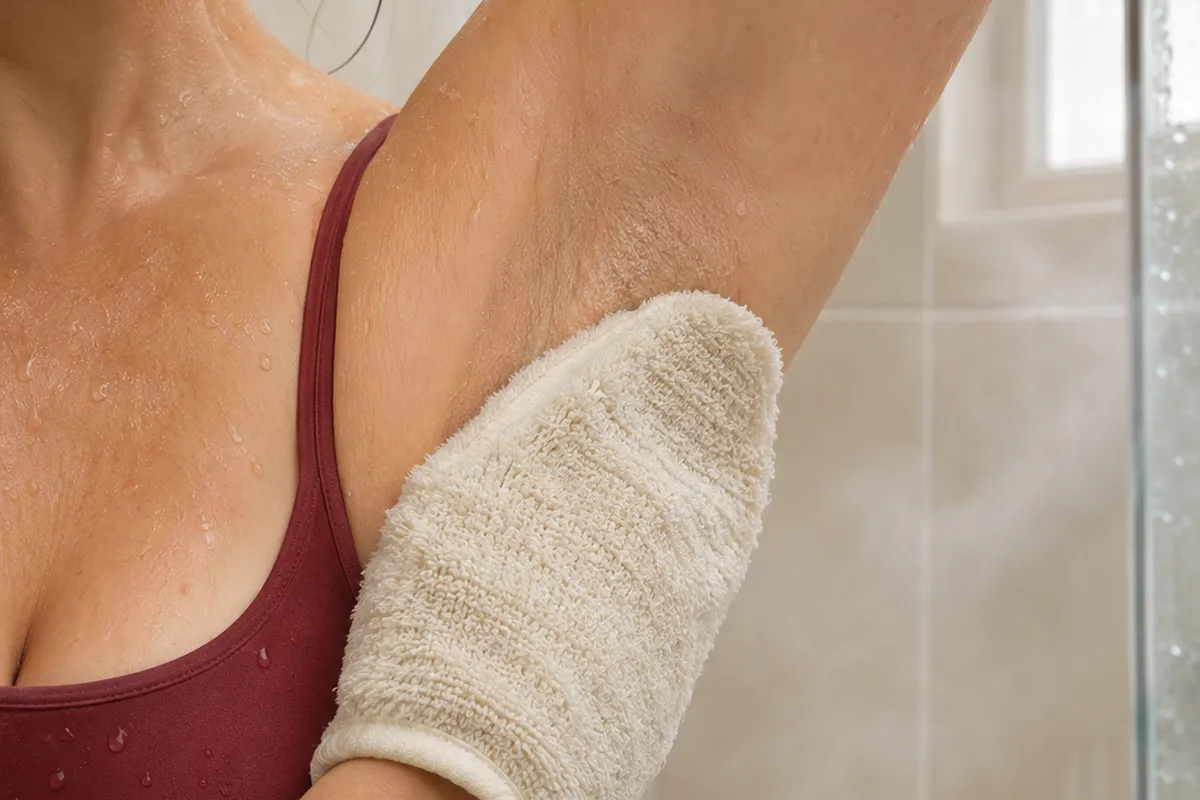
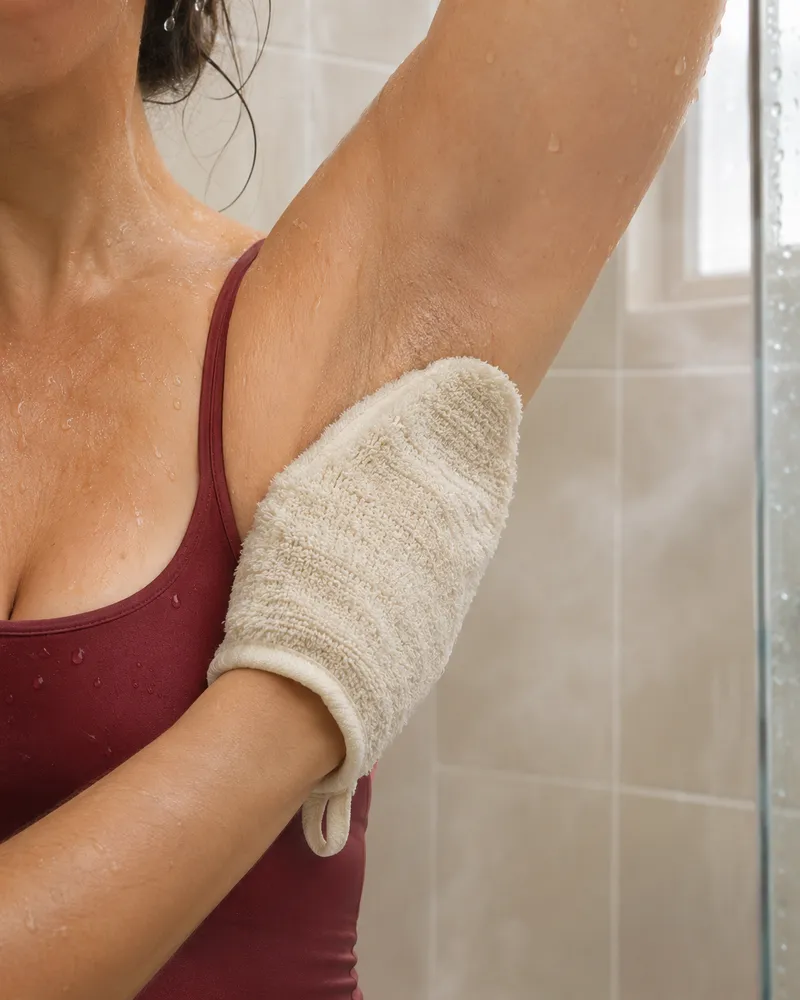
Woman in the shower gently exfoliating her armpit with a mitt

How to recognise it

Could it be rough underarms from a simple cause?

Underarm roughness can have many different causes, and identifying the cause determines which measures will help. These signs can give you an initial indication before your consultation.

Tick what you recognise0/7

Tick the signs you recognise in your case. It is not a diagnosis, it only serves to give you a first idea.

Has the skin become thick, dark and velvety in several folds (underarms, neck, groin), with thirst, tiredness, weight gain or irregular cycles? Are there painful nodules that keep returning in the same place, with pus or scars? Is there a sore that does not heal, a lesion that bleeds, hurts or changes colour or shape, or one underarm different from the other? It needs a medical assessment before any treatment. Out of hours, call SNS 24: 808 24 24 24.

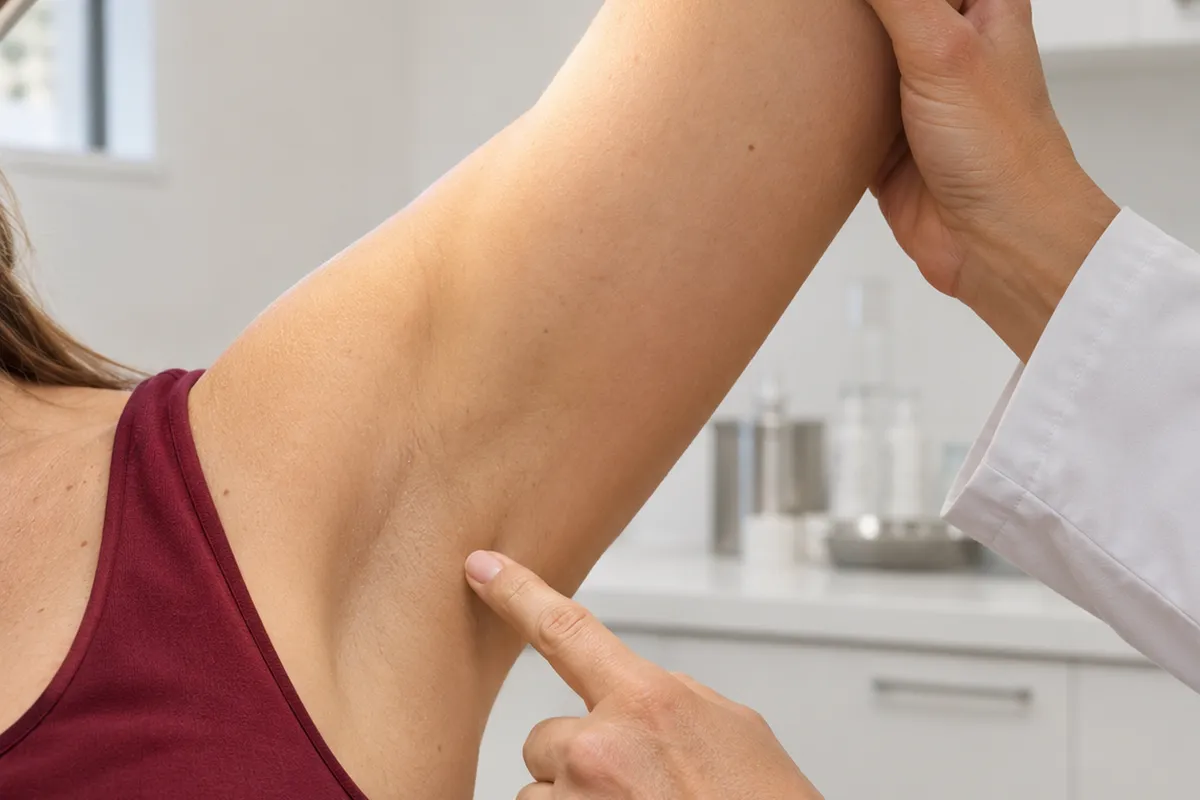
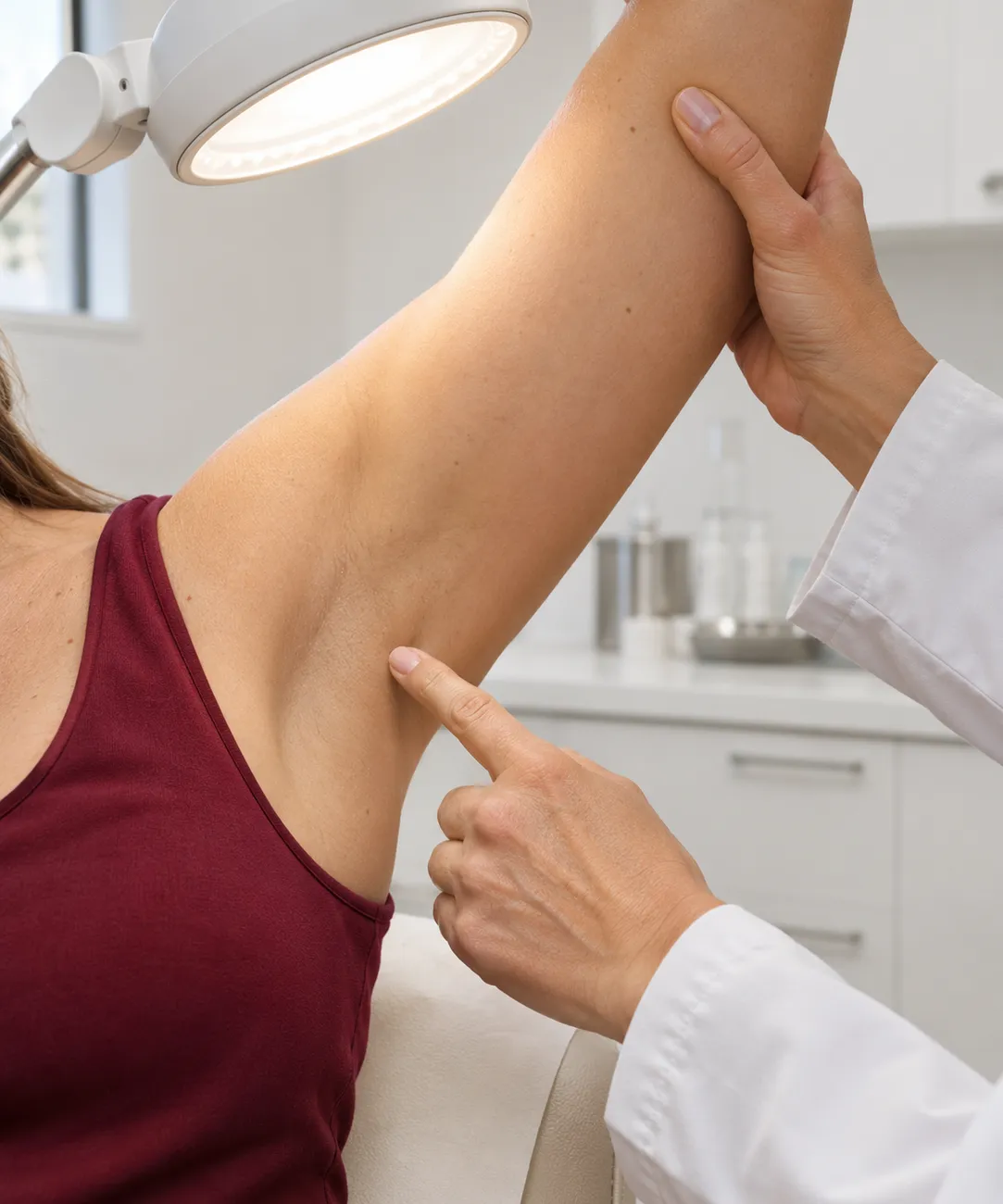
Female doctor examining a patient's armpit, with the arm raised
Photograph of a consultation. The dots mark what the doctor is assessing.

Why it happens

What may be behind rough skin in the underarms

Several causes may coexist. Choose a situation to find out how to recognise it and what usually helps.

Hair removal and ingrown hairs

Removing hair very close to the skin, shaving with a worn razor or without gel, or pulling out many hairs at once makes it more likely that the tip of a hair will grow back into the skin. The body reacts as it would to a splinter: a small papule forms, sometimes red, and repeated irritation makes the skin rough. The inflammation may also leave dark marks or, less commonly, a scar after it heals.

What weighs on it

Shaving too close to the skin, dry-shaving or using a worn razor, going over the same area twice, and removing hair again before the skin has settled.

What helps

A new razor with gel, in the direction of the hair, spacing out hair removal, not stretching the skin and moisturising afterwards; if the bumps persist, the doctor may propose another method.

Normal or to be assessed

Simple roughness or something to assess

Roughness almost always comes from simple, modifiable causes. But some situations call for an assessment before any treatment, because texture is only the visible part.

  • What it looks like. A rough texture or small bumps around the hairs, which appear or worsen after hair removal, with mild dryness, without marked darkening and without a velvety feel.

  • When it is noticed. After hair removal, in winter or in hot periods with a lot of friction, and it improves when the skin is spared for a few weeks.

  • What the clinic does. The doctor takes a history, examines the skin and confirms the cause before recommending an appropriate course of action.

  • At home. Removing hair with care, moisturising every day, changing what irritates and giving the skin four to eight weeks.

Do you have a high fever, a very red, hot and painful underarm, and feel very unwell? Go to A&E and, if the situation is serious, call 112. If you have a changing lesion, recurrent nodules or are unsure what to do, you can call SNS 24 out of hours on 808 24 24 24.

Book an assessment

What the clinic may consider

Options to smooth rough skin in the underarms

In most cases, rough underarm skin improves with the initial measures: gentler hair removal, moisturising, avoiding irritants and gentle exfoliation. A procedure is considered only if these measures have not been enough after a few weeks and the skin has been assessed. For thickened skin, the clinic offers chemical peels. Microneedling, which the clinic also performs on the body, may be considered for persistent marks or uneven texture once the skin has settled, and the doctor will advise whether it is appropriate for you. The evidence is limited: most studies of peels and microneedling have involved other areas and conditions, and few have focused on the underarms. Results are gradual, vary from person to person and require maintenance.

Book an assessment
Dr Michelle Campagnoli, clinical director of Clínica Luxmed

First step

Assessment consultation

The doctor listens to what you are experiencing, examines your case and explains the suitable options. No treatment begins without this consultation.

May be considered when

you want to understand the cause and decide on the best path, with time and without commitment.

Book an assessment
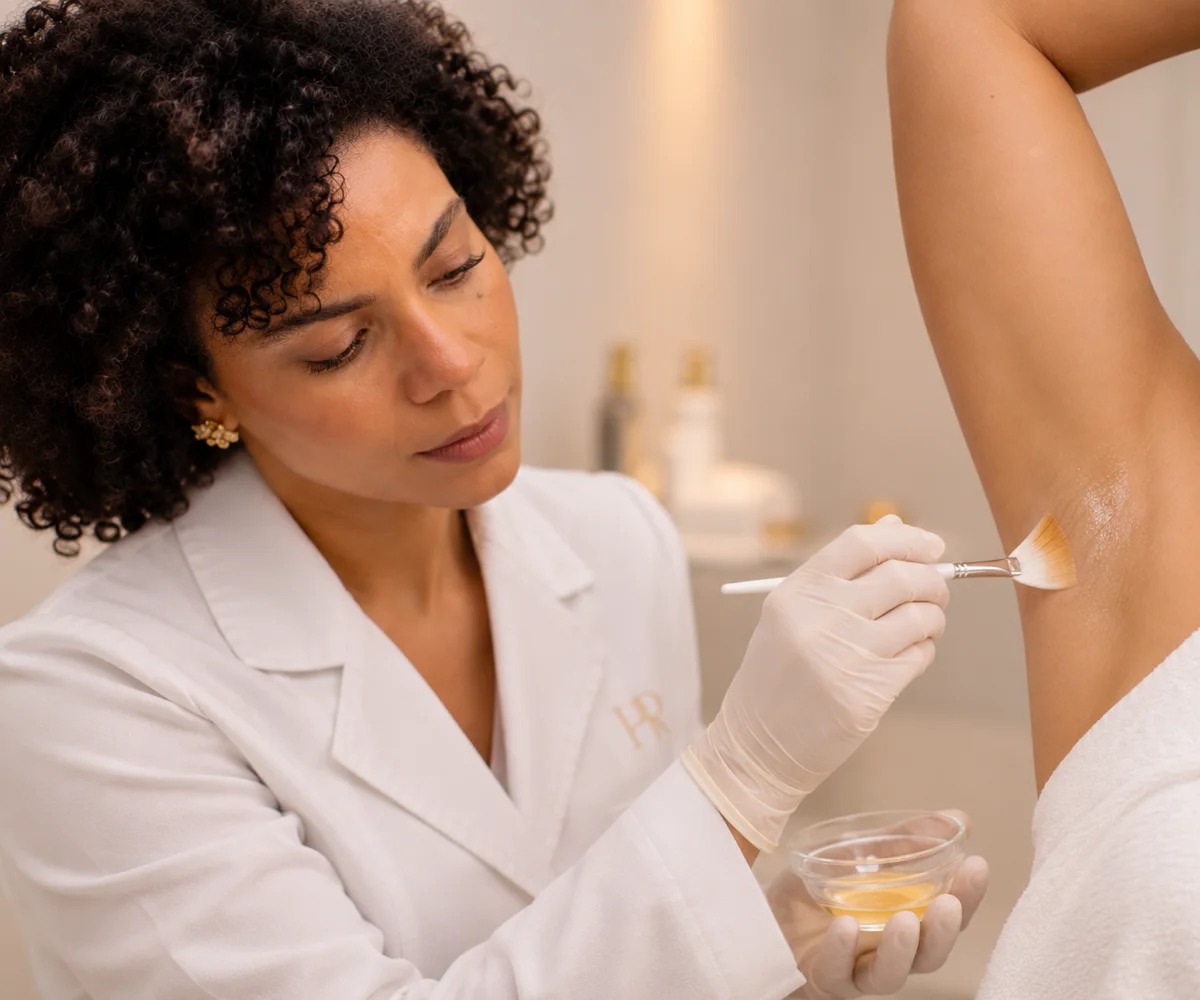
Clinical applicator brush spreading a solution over a skin fold in bright light

Skin renewal

Chemical peel

An acid is applied to the skin to renew its surface layers, even out skin tone and soften thickened or darkened skin in areas such as the underarms, elbows and knees. In darker skin, the agent is chosen carefully because irritation may cause dark pigmentation rather than lightening the skin.

May be considered when

the cause of the roughness has been assessed, the skin is neither irritated nor affected by inflamed bumps, you are not pregnant or breastfeeding, and the doctor has explained the risks and what you can realistically expect.

Find out more

What the journey looks like

From the first conversation to a plan tailored to you

No procedure is carried out without an assessment consultation with the doctor. The simplest measures are almost always tried first, and more intensive options are considered only afterwards.

  1. 01At the clinic

    Telling your story

    The doctor asks how long the skin has been rough, how you remove hair and how often, which deodorants, soaps and creams you use, whether there is itching or flaking, and whether the same problem occurs elsewhere on the body.

  2. 02At the clinic

    Examining the skin

    The texture, colour and thickness of the skin are examined, in the underarms and in other folds. If there are signs of acanthosis, changing lesions or nodules that recur, tests are requested or you are referred to dermatology.

  3. 03At home

    Protecting and moisturising the skin

    Hair removal is adjusted, products that irritate are changed and the skin is moisturised every day. In many cases, this alone improves the texture, after four to eight weeks.

  4. 04Over time

    Decide and follow up

    If the roughness persists, the doctor explains whether a procedure makes sense, what can be expected and how many sessions are needed, without promising results. The examination is repeated and the plan adjusted.

Day to day

What helps at home

Much of the improvement comes from following a simple routine consistently for several weeks. These measures are appropriate while you wait for your consultation and alongside the clinic’s treatment plan.

The golden rule

First sparing the skin, then exfoliating

Skin that continues to be irritated will always become rough again, and a strong exfoliant will only cause further irritation. Reducing irritation, moisturising more and being patient are more effective than any exfoliant. Skin that thickens and darkens quickly should be examined by a doctor rather than being ‘sanded down’ with exfoliants.

Removing hair with more care

A worn razor and close shaving make hairs grow back into the skin.

In practice: a new razor, gel, in the direction of the hair, without stretching the skin or going over it twice, and with longer intervals between hair removals.

Hydrate every day

Dry skin flakes and becomes rough, and moisturiser is the foundation of the rest of the skincare routine.

In practice: at night, a gentle moisturiser; with urea or lactic acid in low concentration if the doctor or pharmacy advises it, and never on freshly shaved or irritated skin.

Choosing gentle products

Perfume and alcohol irritate the thin skin of the underarm.

In practice: unperfumed soap, drying without rubbing and a deodorant without perfume and without alcohol; if it stings or itches, stop.

Exfoliate gently

Removing dead cells may help, but the skin of the underarm is sensitive.

In practice: once a week, with a soft mitt, without pressure, on calm skin and never right after hair removal.

Dr Michelle Campagnoli, clinical director of Clínica Luxmed

Who will look after you

An assessment carried out by the doctor

At Luxmed, in Algés, the first step is always an assessment with Dr Michelle Campagnoli. She will examine your skin, determine whether the roughness is straightforward or whether there is an underlying cause that needs investigation, and discuss the appropriate options with you before any procedure.

  • Physical examination and medical historyA discussion about hair removal, products and habits, and an examination of the skin in several skin folds.
  • A plan tailored to youA clear plan, without promises, with the cause treated first and follow-up over time.
  • No obligationThe cost of any treatment is confirmed only after the assessment.
Book an assessment

Book a consultation

Book your consultation

Choose how you prefer to get in touch. We will arrange the assessment consultation with Dr Michelle Campagnoli.

Booking through the websiteAssessment consultationTalk to our assistant on WhatsApp and ask for the current price of the assessment.

New Life Miraflores, Algés · Office Center, R. Santa Teresa do Menino Jesus n.º 6, 9.º C, 1495-048

Your details are used only for this contact. Any treatment depends on a prior medical assessment.

Request an appointmentIt takes less than a minute.
Speciality
You do not need to go into detail. The doctor will talk to you during the consultation.
Request received. Our team will contact you as soon as possible.
Why do I have rough underarm skin?

Almost always from simple and often combined causes: hairs that become ingrown after hair removal, dry skin, irritation from a deodorant or soap, and friction from clothing and sweat. Less often, the rough bumps are keratosis pilaris, the thick, velvety skin of acanthosis nigricans, or small, soft skin tags. The first step is to identify the cause in your case, as this determines what will help.

Is rough underarm skin a sign of diabetes?

Almost never on its own. Only acanthosis nigricans, which is thick, dark and velvety in several skin folds, may be linked to insulin resistance and other metabolic disorders. Ordinary roughness after hair removal or due to dryness is not a sign of diabetes. If the skin has become velvety and dark, or if you have thirst, tiredness or weight gain, book an appointment and the doctor will decide whether tests are needed.

Are they ingrown hairs or something else?

Ingrown hairs are red or dark papules around a hair, sometimes with the hair visible beneath the skin, and appear after hair removal. If they are painful, large, contain pus or keep returning in the same place, they should be assessed by a doctor, as they may be caused by another condition, such as an infection or hidradenitis. Do not squeeze them at home.

Are the little ‘skin tags’ in my armpits dangerous? Can I remove them?

Soft skin tags (soft fibromas) are generally benign, but only an assessment can confirm what they are. Do not try to pull, cut or burn them off at home: they may bleed and become infected. If they change colour, grow, bleed or hurt, or if there is a lesion on one side only, show it to the doctor. A lesion is only treated after it has been assessed and, if necessary, examined histologically.

How can rough underarm skin be smoothed?

First, remove sources of irritation: use a new razor without going over the same area twice, change any products that cause irritation and reduce friction. Then moisturise every day with a gentle moisturiser or one containing a low concentration of urea or lactic acid. Improvement is usually noticeable after four to eight weeks. If there is no improvement after about two months, or if the skin is also dark and velvety, book an assessment.

Does exfoliating the underarms help or make things worse?

It can help, provided it is gentle: use a mild chemical exfoliant or a soft mitt once a week, when the skin is not irritated. Grainy scrubs and loofahs abrade and irritate the skin, and repeated irritation can make it rougher and darker. Do not exfoliate skin that is red, stinging, broken or freshly shaved, and stop if it stings.

Can a chemical peel treat rough underarm skin?

It may help to soften thickened skin and even out skin tone, and it is the procedure the clinic offers for areas such as the underarms, elbows and knees. However, evidence on peels comes mainly from other areas of the body, and the choice of agent is more limited for darker skin because irritation can leave a dark mark. It is therefore only considered after the cause has been assessed and once the skin is no longer irritated, and it must never be performed during pregnancy or while breastfeeding.

Can I have a peel and remove hair?

Yes, but there must be an interval between the two, and the doctor will tell you how long it should be. In practice, do not remove hair immediately before or after a peel, as the skin will be more sensitive. Agree on the order and timing with the doctor in each case.

Does microneedling help improve underarm skin texture? How many sessions are needed?

The clinic performs microneedling on the body, and the doctor will tell you whether it is appropriate in your case. It creates tiny, controlled micro-injuries in the skin to stimulate renewal, and reviews show improvements in scars, stretch marks and wrinkles. There is little evidence specifically on underarm skin texture, however, and results vary. Several sessions are usually needed, spaced several weeks apart, and the procedure is not performed on irritated or infected skin. Results are neither guaranteed nor permanent.

When should I see a doctor first?

Book a consultation if the skin has become thick, dark and velvety in several folds, if there is thirst, tiredness, weight gain or irregular cycles, if there are painful nodules that keep returning in the same place, or if the skin does not improve with home care after about two months. Also if there is a lesion on one side only, a sore that does not heal or a patch that bleeds, hurts or changes appearance. If in doubt, out of hours call SNS 24 (808 24 24 24). With a high fever, an underarm that is very red, hot and painful and intense feeling of being unwell, go to A&E in a serious situation, call 112.

We could not find that question. Ask us on WhatsApp

Scientific references

This page is based on the sources below and was reviewed by Dr. Michelle Campagnoli. Last updated on .

  1. Karadağ AS, You Y, Danarti R, Al-Khuzaei S, Chen W. Acanthosis nigricans and the metabolic syndrome. Clin Dermatol, 2018.
  2. Hwang S, Schwartz RA. Keratosis pilaris: a common follicular hyperkeratosis. Cutis, 2008.
  3. Pan M, Heinecke G, Bernardo S, Tsui C, Levitt J. Urea: a comprehensive review of the clinical literature. Dermatol Online J, 2013.
  4. Kaufman BP, Aman T, Alexis AF. Postinflammatory hyperpigmentation: epidemiology, clinical presentation, pathogenesis and treatment. Am J Clin Dermatol, 2018.
  5. Alster TS, Graham PM. Microneedling: a review and practical guide. Dermatol Surg, 2018.
  6. Phiske MM. An approach to acanthosis nigricans. Indian Dermatol Online J, 2014.
  7. NHS. Keratosis pilaris. (NHS, acedido 2026-11-11)
  8. NHS. Acanthosis nigricans. (NHS, acedido 2026-11-11)
  9. American Academy of Dermatology Association. Keratosis pilaris: overview. (AAD, acedido 2026-11-11)
  10. DermNet NZ. Pseudofolliculitis barbae (razor bumps). (DermNet, acedido 2026-11-11)
  11. DermNet NZ. Chemical peels. (DermNet, acedido 2026-11-11)
CallAssistantAvailableBook