Algés, Oeiras Mon to Fri · 09:00 to 13:00 and 14:00 to 19:00 · Sat · 09:00 to 14:00
WhatsApp Book a consultation

Body aesthetics

Dark underarms from hair removal and frictionWhen underarms darken after hair removal or after months of clothing, sport and sweat rubbing in the same fold

Many people notice that their underarms have become darker after they start removing hair, change their hair-removal method or go through a period of increased exercise and hot weather. In most cases, this is neither a disease nor poor hygiene: the skin has been subjected to repeated minor trauma and has responded by producing pigment. Sometimes it is not pigmentation at all, but simply the shadow of hairs cut close to the skin. Here we explain how to distinguish between the two; the roles played by shaving, waxing, ingrown hairs and friction; what can help at home; what chemical peels and microneedling can and cannot do; and when a medical assessment is needed before any procedure at Clínica Luxmed, in Algés.

Reviewed by Dr Michelle Campagnoli, clinical director

  • 2procedures for this topic
  • 1assessment, always first
  • Nocommitment
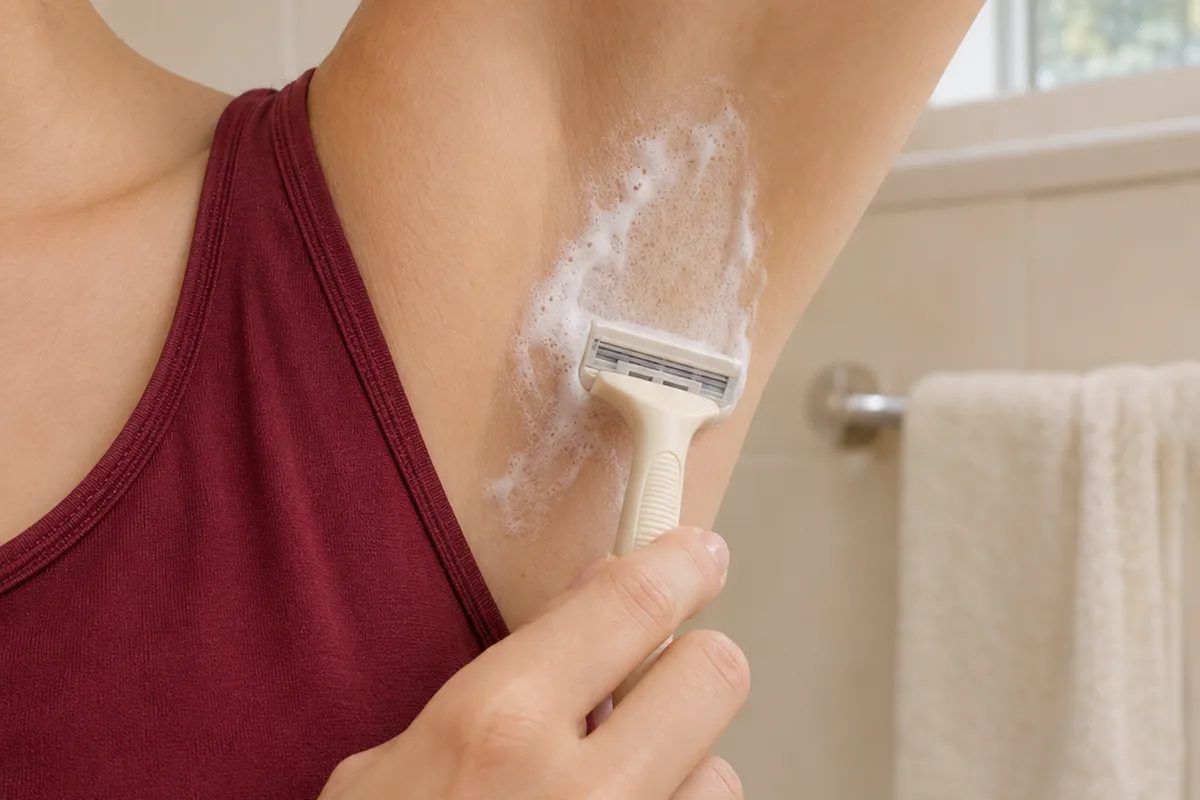
Woman shaving her armpit with a razor in a bathroom

How to recognise it

Could it be darkening from hair removal or friction?

Two situations are easily confused: a shadow that is visible immediately after the hairs are cut and genuine darkening of the skin that remains even after the hairs have grown. The causes differ, so the measures that help differ too.

Tick what you recognise0/7

Tick the signs you recognise in your case. This is not a diagnosis, it is only meant to give you an idea.

Do you have painful, repeated lumps in the underarms, with pus or scars? Is there fever, or is the skin red, hot and swollen? Has the skin become dark, thick and velvety in several folds, or did the darkening appear quickly? Is there a patch on one side only that changes colour, shape or outline, or that bleeds or hurts? It needs a medical assessment before any treatment. Out of hours, call SNS 24: 808 24 24 24.

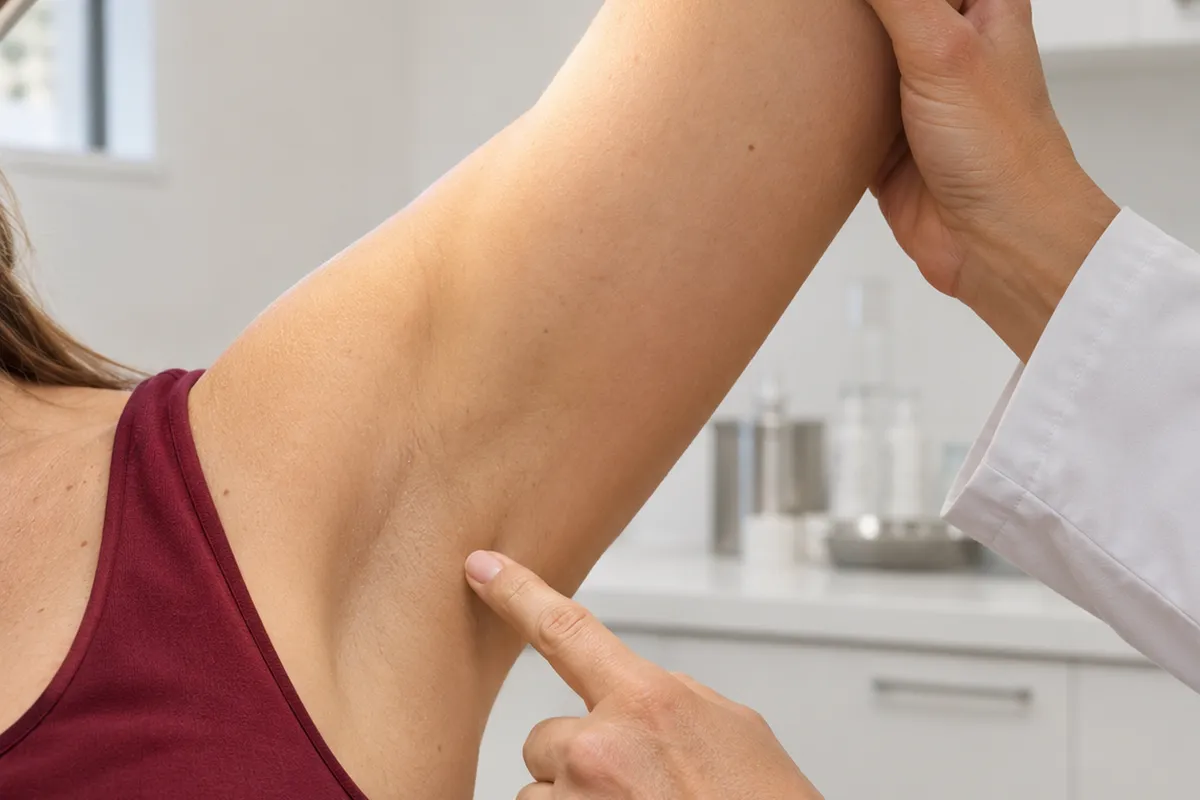
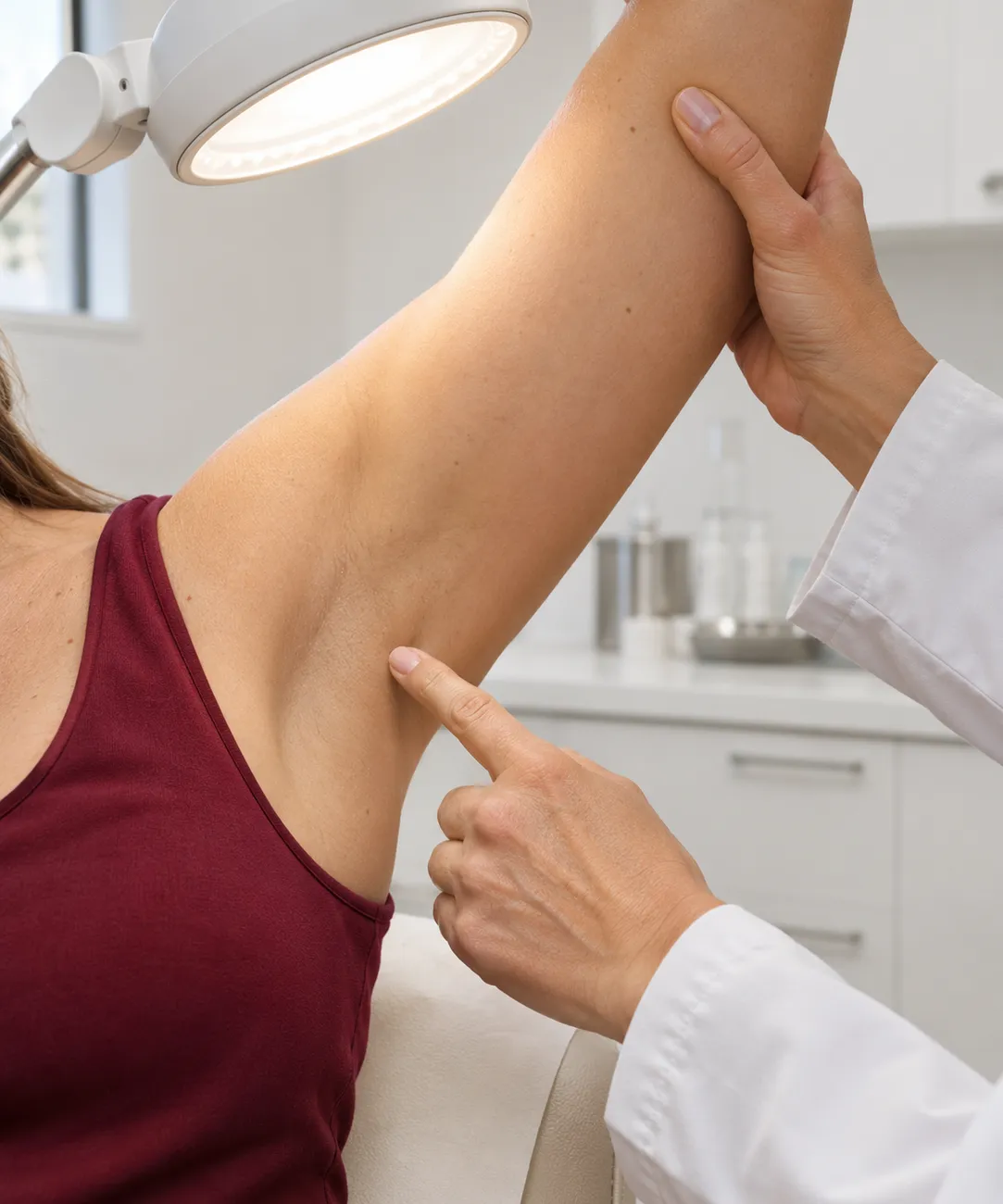
Female doctor examining a patient's armpit, with the arm raised
Photograph of a consultation. The dots mark what the doctor is assessing.

Why it happens

What usually darkens underarms after hair removal

There is almost always more than one contributing factor. Choose a situation to see how it may be involved and what usually helps.

The razor and the hair shadow

When a hair is cut close to the skin, the dark root remains visible beneath the epidermis, creating a shadow that resembles darkening. This is not pigmentation and goes away when the hair is removed or the hair-removal method is changed. However, a razor can also scratch the skin and cause micro-cuts, and this repeated irritation may cause genuine pigmentation.

What weighs on it

Using a blunt razor, shaving without gel or foam, going over the same area several times and shaving every day.

What helps

A new razor, gel or foam, a single pass in the direction of hair growth, and allowing the skin to recover between shaving sessions.

Normal or to be assessed

Darkening from irritation or something to assess

Most of the time, it is simply irritation and friction and resolves with straightforward changes. However, there are situations in which the discolouration is only the visible sign of an underlying problem, and the skin needs to be examined before any treatment.

  • What it looks like. Darkening that is the same on both sides, of gradual onset, linked to the method of hair removal or to periods of more friction, without marked thickening of the skin.

  • When it is noticed. Right after hair removal, on hot days and in sleeveless tops. If it is only hair shadow, it fades as the hairs grow.

  • What the clinic does. The doctor takes a history, examines the skin and hair follicles, and confirms that the changes are due to irritation or friction before recommending an appropriate course of action.

  • At home. Changing the method and rhythm of hair removal, not touching ingrown hairs, wearing loose clothing and drying the skin well, and giving it time to recover.

Do you have a high fever, chills or feel very unwell, with the underarm red, hot and spreading quickly? Seek urgent examination or call 112. If you have repeated lumps, a patch that is changing or have doubts, out of hours you can call SNS 24: 808 24 24 24.

Book an assessment

What the clinic may consider

Options to lighten what hair removal and friction have left

Lightening only makes sense once the cause is under control: if the skin continues to be irritated, the discolouration will return, regardless of how effective the procedure is. The first step is to change the method and frequency of hair removal, reduce friction and allow the skin to recover. If the discolouration persists, the doctor may consider a chemical peel or microneedling, both of which the clinic performs on the body, and will advise whether either is appropriate for you. The evidence is limited: most studies of peels and microneedling for pigmentation have involved other areas and conditions, and few have focused on the underarms. Results are gradual, vary from person to person, rarely make the underarms match the rest of the skin, and require maintenance.

Book an assessment
Dr Michelle Campagnoli, clinical director of Clínica Luxmed

First step

Assessment consultation

The doctor listens to what you are experiencing, examines your case and explains the suitable options. No treatment begins without this consultation.

May be considered when

you want to understand the cause and decide on the best path, with time and without commitment.

Book an assessment
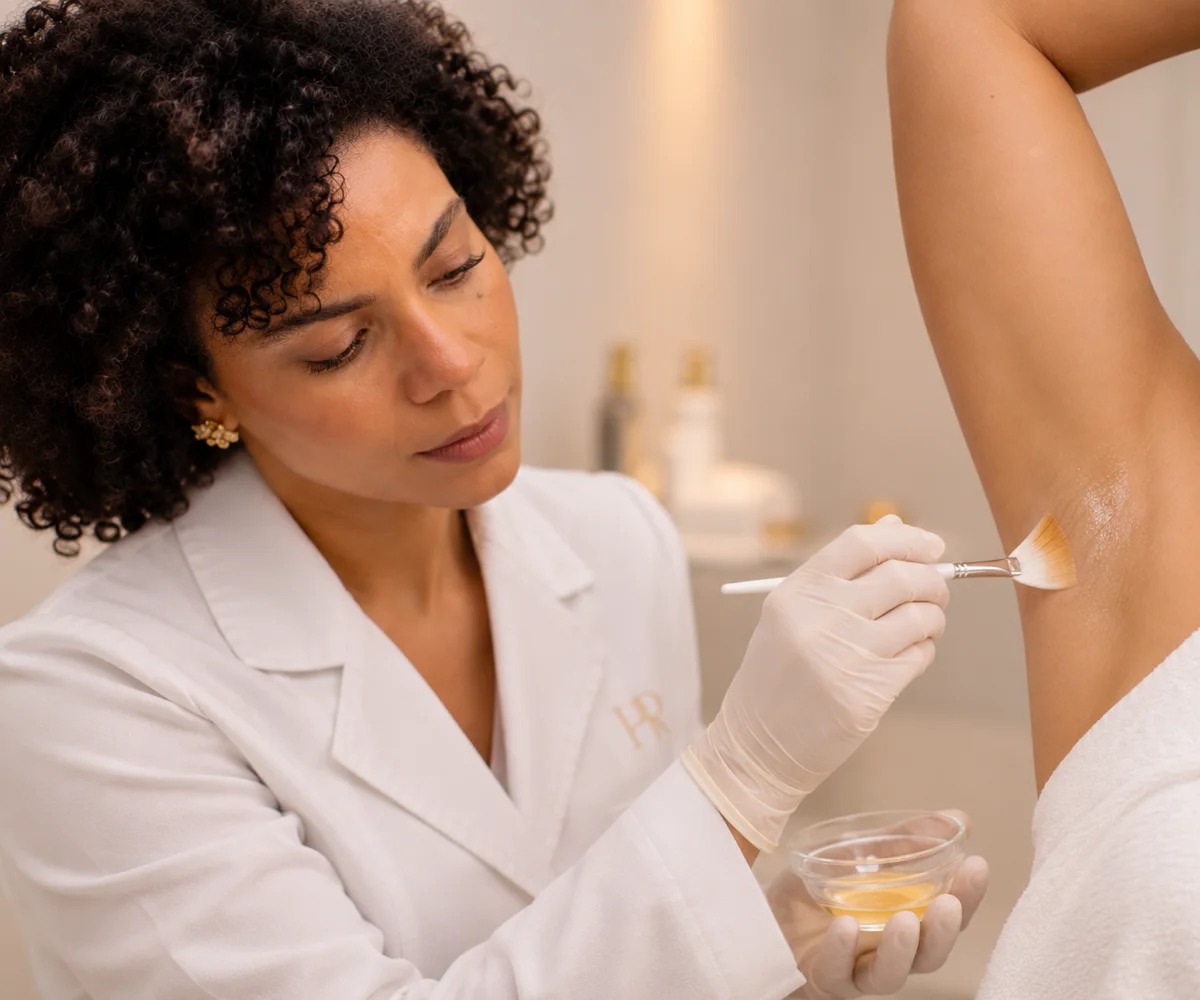
A clinician applying a peel solution to a skin fold with a brush in a brightly lit consulting room

Skin renewal

Chemical peel

Application of an acid to the skin to renew the superficial layers, evening out the tone and softening thickened or darkened skin, in areas such as the underarms, elbows and knees. In darker skin the agent is chosen carefully, because an irritation may darken the area instead of lightening it.

May be considered when

hair removal and friction have already been corrected, the skin has no spots and is not irritated, the cause has been assessed, and the doctor has explained the risks and what is realistic to expect.

Find out more
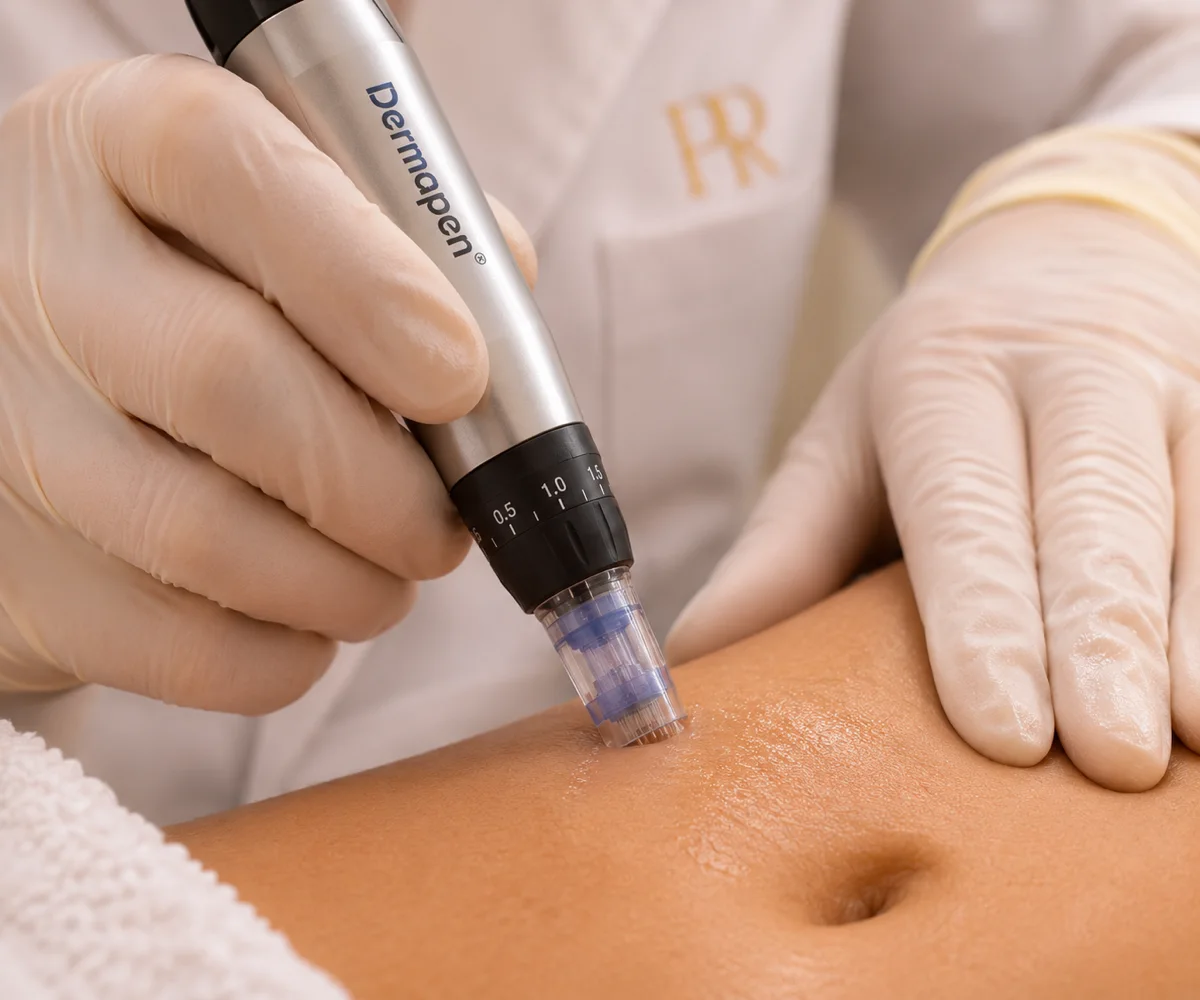
Microneedling pen gliding over the skin in bright clinical lighting

Skin stimulation

Microneedling

Small, controlled micropunctures stimulate skin renewal and the production of collagen and elastin, improving texture and evenness. It is more often used when darkening is caused by hair removal and friction, but there is little specific evidence for underarm pigmentation and results vary. Treatment involves several sessions spaced weeks apart.

May be considered when

the skin is healthy, with no spots, wounds or infection, the method of hair removal has already been changed, and the doctor considers that it makes sense in your case.

Find out more

What the journey looks like

From the first conversation to a plan tailored to you

No procedure is carried out without an assessment consultation with the doctor. Most people start with the simplest measures, and more intensive options are considered only afterwards.

  1. 01At the clinic

    Discussing how you remove hair

    The doctor asks when you first noticed the darkening, which hair-removal method you use and how often, whether you develop spots or ingrown hairs, what clothing you wear, what exercise you do and which products you apply.

  2. 02At the clinic

    Examining the skin and follicles

    The colour, the thickness of the skin, the follicles and the neighbouring folds are examined. If there are repeated lumps, signs of acanthosis or a different patch, tests are requested or you are referred to dermatology.

  3. 03At home

    Changing what irritates and caring for the skin

    The method or frequency of hair removal is changed, friction is reduced and the skin is moisturised and given time to recover. In many cases, these measures alone gradually improve its appearance over several months.

  4. 04Over time

    Decide and follow up

    If the colour persists, the doctor explains whether a peel or microneedling makes sense, what can be expected and how many sessions are needed, without promising results. The examination is repeated and the plan adjusted, including maintenance.

Day to day

What helps at home

What you change at home makes more of a difference than you might think. These measures are appropriate while you wait for your consultation and alongside the clinic’s treatment plan.

The golden rule

Harming the skin less before trying to lighten

Underarm discolouration often reflects each episode of irritation. If the hair-removal method or friction remains unchanged, any lightening achieved today will be undone tomorrow. Changing what irritates the skin therefore matters more than any cream, and skin that improves on its own usually responds better to subsequent treatment.

Changing method or spacing out

Each episode of irritation can leave a dark mark, and the shadow of the hair can be misleading.

In practice: a new razor and gel, a single pass in the direction of the hair, and let the skin recover between hair removals. If the method always irritates, talk to the doctor about another.

Testing the depilatory cream

A depilatory cream may cause chemical dermatitis when the skin reacts badly.

In practice: do a patch test on a small area first and respect the time stated on the packaging.

Reducing friction and keeping the skin dry

Friction and dampness make the skin thicker and darker.

In practice: looser clothing, in cotton or breathable technical fabric, and dry the area well after bathing and sport.

Moisturise and protect

Skin that is moisturised and protected from friction recovers better.

In practice: a gentle cream at night and, if you do sport, an anti-friction balm beforehand. A gentle chemical exfoliation only when the skin is healthy.

Dr Michelle Campagnoli, clinical director of Clínica Luxmed

Who will look after you

An assessment carried out by the doctor

At Luxmed, in Algés, the first step is always an assessment with Dr Michelle Campagnoli. She examines the skin, determines whether the darkening is caused by hair removal and friction or whether another cause needs to be investigated, and agrees the most appropriate approach with you before any procedure.

  • Physical examination and medical historyA conversation about the method of hair removal, clothing and sport, and examination of the skin and follicles.
  • A plan tailored to youA clear plan, without promises, with the cause treated first and follow-up over time.
  • No obligationThe cost of any treatment is confirmed only after the assessment.
Book an assessment

Book a consultation

Book your consultation

Choose how you prefer to get in touch. We will arrange the assessment consultation with Dr Michelle Campagnoli.

Booking through the websiteAssessment consultationTalk to our assistant on WhatsApp and ask for the current price of the assessment.

New Life Miraflores, Algés · Office Center, R. Santa Teresa do Menino Jesus n.º 6, 9.º C, 1495-048

Your details are used only for this contact. Any treatment depends on a prior medical assessment.

Request an appointmentIt takes less than a minute.
Speciality
You do not need to go into detail. The doctor will talk to you during the consultation.
Request received. Our team will contact you as soon as possible.
Does hair removal darken the underarms?

It can, in two ways: through the shadow of hairs cut close to the skin, which is not pigmentation and fades as the hair grows out, and through repeated irritation (micro-cuts from a razor, waxing, depilatory cream or ingrown hairs), which leaves pigmentation after the skin heals. The risk depends on the method, frequency and skin type, and is greater in brown and darker skin tones. The good news is that, once the source of irritation is changed, the skin usually lightens gradually over several months.

What is the best hair-removal method to prevent underarm darkening?

Whichever method causes the least irritation to your skin. A new razor used with gel, with a single pass in the direction of hair growth, usually causes less irritation than a worn razor or dry shaving. An electric shaver causes fewer cuts. Wax and depilatory creams irritate some people’s skin. Laser or intense pulsed light hair reduction, performed by a professional experienced in treating darker skin tones, may reduce hair shadow and ingrown hairs, but it can also cause irritation or pigmentation changes if it is not clinically appropriate or is performed incorrectly. No single method is suitable for everyone.

How can I tell a hair removal shadow from true darkening?

Hair shadow is visible immediately after the hair is cut, is bluish or greyish, does not cause thickening and disappears as the hair grows. True darkening remains even when the hair has grown and may be accompanied by thicker skin. If the skin is dark, thick and velvety in several folds, or if there is a thin, brownish patch with an odour, the cause may be acanthosis nigricans or erythrasma and medical assessment is needed.

Do ingrown hairs leave dark marks? Do they fade?

They often do: inflammation around the hair stimulates pigment production, and the mark may last for months. These marks tend to fade slowly, although not always completely. The most helpful measures are preventing further ingrown hairs, not squeezing or plucking them, allowing them to heal and moisturising the skin. If the problem keeps recurring, it is worth speaking to the doctor about another hair-reduction method.

Does friction from clothing and exercise really darken the underarms?

Yes, it can. The underarm fold rubs against the skin and clothing, while sweat and heat keep the area damp. This repeated friction makes the skin thicker and darker, particularly with tight or synthetic clothing, exercise and excess weight. If friction is reduced, the skin often lightens over several months. Looser clothing, keeping the skin dry and applying an anti-chafing balm before exercise can help.

How can underarms darkened by hair removal be lightened?

The first step is to remove the cause: change the hair-removal method or leave longer intervals between sessions, reduce friction and allow the skin to recover. If the discolouration persists, the doctor may consider a procedure. Depigmenting products should be used only on medical advice, while home ‘remedies’ such as lemon, bicarbonate of soda and toothpaste cause irritation and may darken the skin further. Results are gradual and rarely make the underarms match the rest of the skin.

Laser hair removal on the underarms: does it help or can it cause pigmentation?

Laser hair reduction has good evidence for reducing hair growth and ingrown hairs, and a longer-wavelength laser is most suitable for darker skin tones. However, if it is not clinically appropriate or is performed incorrectly, it may cause irritation and pigmentation changes, particularly in darker skin, and laser hair reduction does not treat existing pigmentation. The decision should be made with a professional experienced in treating this skin type. This is not a procedure presented on this page.

Can a chemical peel lighten the underarms? Is it safe?

It may help to even out skin tone and soften thickened skin, but evidence reviews of peels for pigmentation mainly concern other areas and conditions. In darker skin, the choice of agent is more limited because irritation may darken rather than lighten the skin. The procedure is therefore considered only after the cause has been assessed and when the skin is healthy, with no inflamed bumps, wounds or irritation; it is not performed during pregnancy or while breastfeeding.

Does microneedling help with darkening of the underarms? How many sessions?

Reviews show improvements in scars, stretch marks and wrinkles, but for underarm pigment there is little specific evidence. It is done in several sessions spaced weeks apart, improvement is gradual and results vary, with no promise of a permanent result. If hair removal and friction continue, the colour tends to return, and so maintenance and changing habits count as much as the procedure. It is not done on irritated, broken or infected skin.

When should I see a doctor first?

Book a consultation if you have recurrent painful lumps in the underarms, with pus or scarring (these may be hidradenitis suppurativa); if the skin has become dark, thick and velvety in several folds; if the darkening appeared quickly; or if there is a patch on one side only that changes colour, shape or outline, or that bleeds or hurts. If you are unsure what to do, call SNS 24 out of hours on 808 24 24 24. If you have a high fever or chills, or the skin is red, hot and spreading rapidly, seek urgent medical attention or call 112.

We could not find that question. Ask us on WhatsApp

Scientific references

This page is based on the sources below and was reviewed by Dr. Michelle Campagnoli. Last updated on .

  1. Gan SD, Graber EM. Laser hair removal: a review. Dermatol Surg, 2013.
  2. Ogunbiyi A. Pseudofolliculitis barbae; current treatment options. Clin Cosmet Investig Dermatol, 2019.
  3. Kaufman BP, Aman T, Alexis AF. Postinflammatory hyperpigmentation: epidemiology, clinical presentation, pathogenesis and treatment. Am J Clin Dermatol, 2018.
  4. Karadağ AS, You Y, Danarti R, Al-Khuzaei S, Chen W. Acanthosis nigricans and the metabolic syndrome. Clin Dermatol, 2018.
  5. Sarkar R, Bansal S, Garg VK. Chemical peels for melasma in dark-skinned patients. J Cutan Aesthet Surg, 2012.
  6. Alster TS, Graham PM. Microneedling: a review and practical guide. Dermatol Surg, 2018.
  7. DermNet NZ. Pseudofolliculitis barbae. (DermNet, acedido 2026-11-11)
  8. NHS. Hidradenitis suppurativa (HS). (NHS, acedido 2026-11-11)
  9. NHS. Acanthosis nigricans. (NHS, acedido 2026-11-11)
  10. American Academy of Dermatology Association. Acanthosis nigricans: overview. (AAD, acedido 2026-11-11)
  11. DermNet NZ. Erythrasma. (DermNet, acedido 2026-11-11)
CallAssistantAvailableBook