Algés, Oeiras Mon to Fri · 09:00 to 13:00 and 14:00 to 19:00 · Sat · 09:00 to 14:00
WhatsApp Book a consultation

Body aesthetics

Excessive sweatingWhen sweating too much gets in the way of everyday life and you want to understand whether it is hyperhidrosis or a sign of something else

Sweating is normal: it is how the body cools down. We speak of excessive sweating, or hyperhidrosis, when sweating goes well beyond what the body needs and starts to dictate the clothes you wear, the gestures you avoid and how you organise your days. In most people it is primary, meaning there is no underlying disease, and it is usually noticed in the underarms, hands and feet from an early age. However, sweating can also be the body's way of signalling something else, such as a thyroid disorder, the menopause, diabetes, an infection or a medicine. Here we explain how to distinguish between the two, what you can try first at home and with advice from a pharmacist, what botulinum toxin can and cannot do for underarm sweating, and when to have a medical assessment before any treatment at Clínica Luxmed, in Algés.

Reviewed by Dr Michelle Campagnoli, clinical director

  • 1procedure for the underarms
  • 1assessment, always first
  • Nocommitment
Man in a light blue shirt in a lift, with sweat patches on the back

How to recognise it

Is it too much sweat or normal sweat?

Sweating when it is hot or after running is normal. What matters is sweating for no apparent reason that keeps recurring and interferes with everyday life. These signs can help you understand what may be happening before your assessment.

Tick what you recognise0/7

Tick the signs you recognise in your case. This is not a diagnosis, it is only meant to give you an idea.

Is the sweating new, generalised or does it appear at night, accompanied by fever, unexplained weight loss, palpitations, tremor or tiredness? Did it begin after a new medicine? Does it appear on one side of the body or face only? It needs a medical assessment before any treatment. Out of hours, call SNS 24: 808 24 24 24.

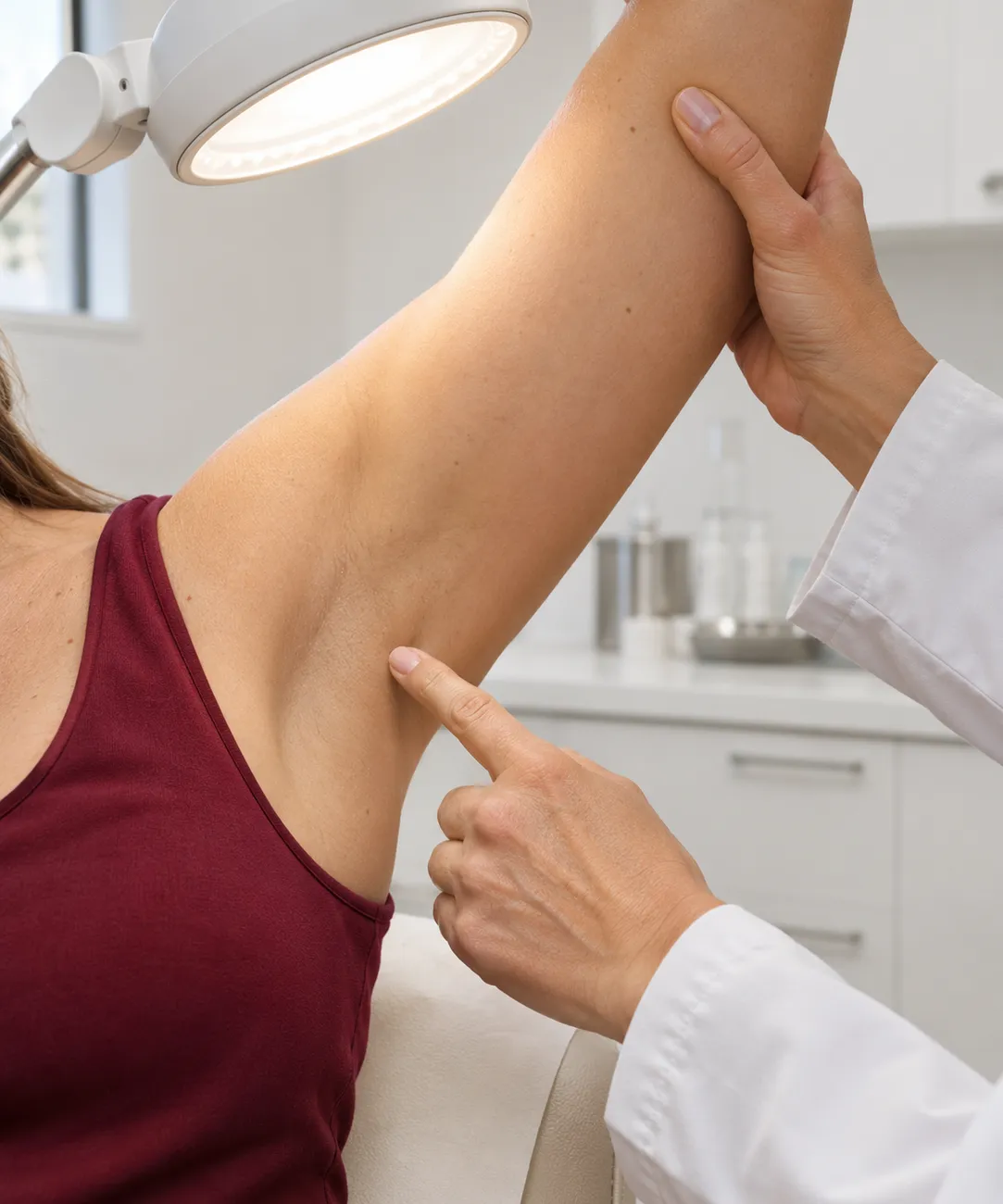
Female doctor examining a patient's armpit, with the arm raised
Photograph of a consultation. The dots mark what the doctor is assessing.

Why it happens

What may be behind excessive sweating

There are two main types: primary hyperhidrosis, with no underlying disease, and secondary hyperhidrosis, which is caused by another condition. Select a situation to see how it fits into the overall picture and what usually helps.

Primary hyperhidrosis

This is the most common form. The sweat glands are normal, but are thought to receive excessive signals from the nervous system. It generally begins in childhood or adolescence, is focal (underarms, hands, feet or face) and symmetrical, and often runs in families. It is not a sign of poor hygiene or an underlying disease.

What weighs on it

Heat, strong emotions, coffee and spicy food may trigger more episodes, which recur several times a week.

What helps

Recognising the pattern, starting with the strong antiperspirant and, if that is not enough, discussing other options with the doctor.

Normal or to be assessed

Primary sweating or something to assess

The pattern of sweating reveals a great deal. It is not always easy to distinguish between the two types yourself, so it is advisable to have a medical assessment before any treatment.

  • What it looks like. Localised sweating (underarms, hands, feet, face), on both sides, that began early and recurs several times a week, often with relatives in the same situation.

  • During sleep. As a rule, the sweating stops while asleep and the person does not wake up drenched.

  • What the clinic does. The doctor listens to the history, examines and confirms the pattern before proposing whatever makes sense for the underarms.

  • First steps. Antiperspirant with aluminium chloride, loose clothing made of natural fabrics, and knowing the triggers.

Do you have chest pain, shortness of breath, fainting or confusion with the cold sweat? Call 112. If the sweating is new, at night or comes with fever, weight loss or palpitations, out of hours you can call SNS 24: 808 24 24 24.

Book an assessment

What the clinic may consider

Options for underarm sweating

There is a stepwise range of options: start with the simplest and move on only if it is not enough. The first step is an antiperspirant containing aluminium chloride, available from a pharmacy, applied to dry skin at night. For the underarms, the clinic offers botulinum toxin when an assessment confirms primary hyperhidrosis. Other options include oral medication, energy-based treatments and surgery, but these decisions are made with the doctor after weighing up the side effects of each. There is good evidence supporting botulinum toxin for underarm sweating, but the effect is not permanent: it lasts several months and repeat treatment is needed to maintain it. Results vary from person to person and cannot be guaranteed.

Book an assessment
Dr Michelle Campagnoli, clinical director of Clínica Luxmed

First step

Assessment consultation

The doctor listens to what you are experiencing, examines your case and explains the suitable options. No treatment begins without this consultation.

May be considered when

you want to understand the cause and decide on the best path, with time and without commitment.

Book an assessment
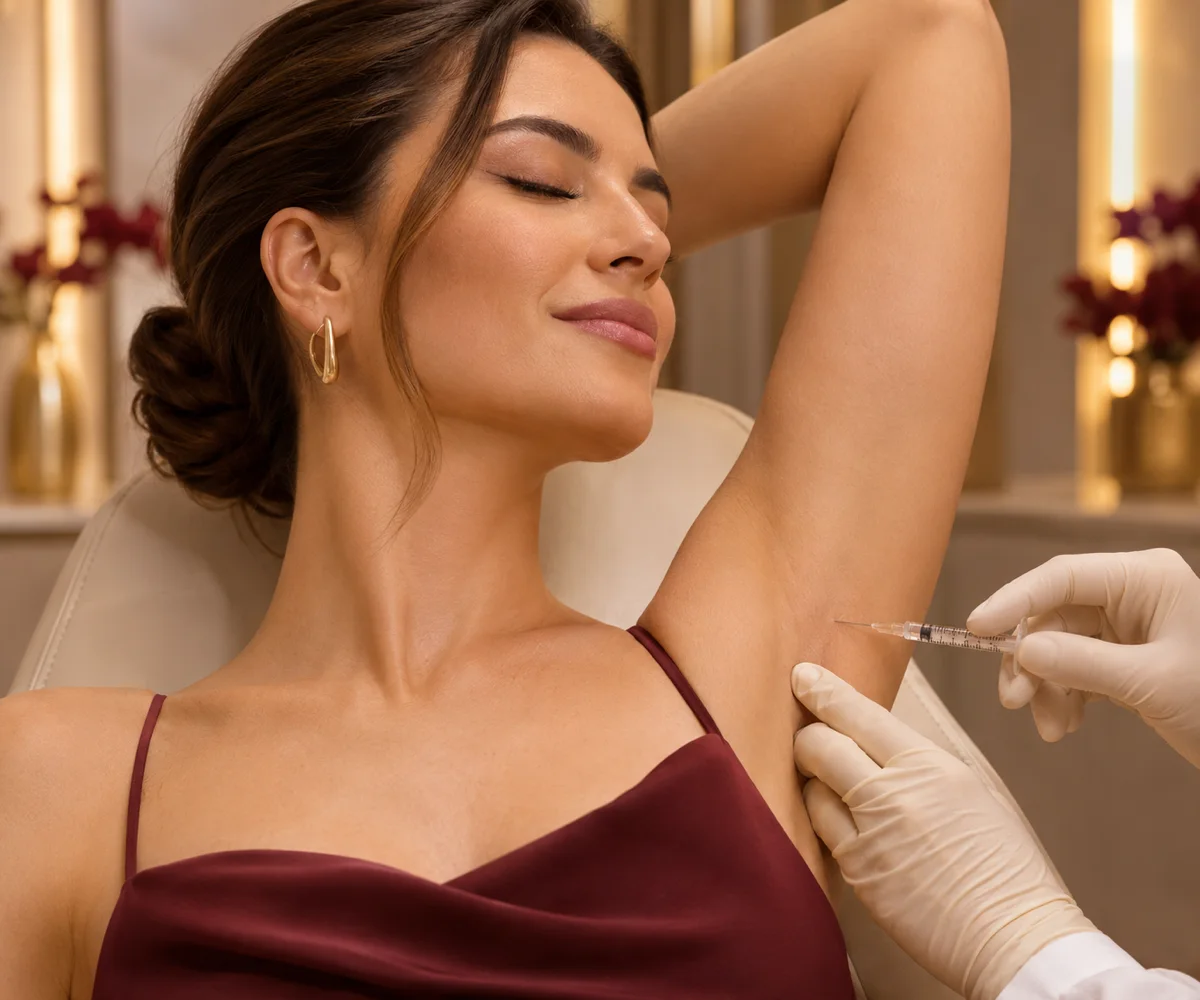
Gloved hands using a fine needle to inject the underarm of a woman seated in a consultation chair with her arm raised

Underarm sweating

Botulinum toxin

Small superficial injections in each underarm temporarily block the nerve signal that activates the sweat glands, reducing sweating and discomfort in everyday life. The effect begins within a few days and lasts several months. It is not permanent and repeat treatment is needed.

May be considered when

the assessment has confirmed primary underarm hyperhidrosis, the strong antiperspirant was not enough or was not tolerated, you are not pregnant or breastfeeding, there is no infection in the area or neuromuscular disease, and the doctor has explained the side effects and what is realistic to expect.

Find out more

What the journey looks like

From the first conversation to a plan tailored to you

No procedure begins without an assessment by the doctor. Most people start with the simplest approach, and only then is anything further considered.

  1. 01At the clinic

    Telling your story

    The doctor asks when the excessive sweating began, where it occurs, whether it happens at night, whether you have fever, weight loss or palpitations, which medical conditions you have and medicines you take, and what you have already tried.

  2. 02At the clinic

    Distinguishing primary from secondary hyperhidrosis

    The pattern of sweating is assessed. If there are signs of an underlying condition, tests are requested or you are referred to your usual doctor. Treatment for the underarms is considered only after this possibility has been ruled out.

  3. 03At home

    Starting with what is simplest

    Antiperspirant with aluminium chloride, applied at night on dry skin and washed off in the morning, loose clothing made of natural fabrics, and knowing the triggers. In some cases, this is enough.

  4. 04Over time

    Decide and follow up

    If the sweating continues to interfere with everyday life, the doctor will explain whether botulinum toxin is appropriate, what you can expect and when treatment may need to be repeated, without promising results. The plan is adjusted over time.

Day to day

What helps at home

What you do at home matters more than you might think. These are sensible measures to take while you wait for your consultation and alongside the clinic’s plan.

The golden rule

First understanding what sweating this is

Sweating that began early, is localised and stops during sleep is generally primary and can be treated. New or generalised sweating, or night sweats, may be a sign of another condition, in which case the cause matters more than the procedure. This is why a medical assessment comes before treatment.

Applying the antiperspirant at night

An antiperspirant containing aluminium chloride is more effective when applied to dry skin at bedtime.

In practice: apply at night on dry skin, wash off in the morning and reduce the frequency once the sweating is under control.

Choosing the right clothing

Tight clothing and synthetic fabrics retain heat and sweat against the skin.

In practice: loose clothing made of natural fabrics, such as cotton, and change any that is damp.

Knowing your triggers

Alcohol, spicy food and coffee trigger sweating in some people.

In practice: note what precedes the episodes and avoid what you can, without depriving yourself of what is essential.

Record and bring to the consultation

It helps the doctor to understand the pattern and to tell primary from secondary.

In practice: note when, where, whether it is at night, new medicines and the products you have already used.

Dr Michelle Campagnoli, clinical director of Clínica Luxmed

Who will look after you

An assessment carried out by the doctor

At Luxmed, in Algés, the first step is always an assessment with Dr Michelle Campagnoli. She will listen to your history, determine whether the sweating is primary or whether there is an underlying cause that needs investigation, and discuss the appropriate options with you before any procedure.

  • Physical examination and medical historyA conversation about the pattern of the sweating, conditions, medication and what you have already tried, and examination of the affected areas.
  • A plan tailored to youA clear plan, without promises, in which the cause is assessed first and your progress is monitored over time.
  • No obligationThe cost of any treatment is confirmed only after the assessment.
Book an assessment

Book a consultation

Book your consultation

Choose how you prefer to get in touch. We will arrange the assessment consultation with Dr Michelle Campagnoli.

Booking through the websiteAssessment consultationTalk to our assistant on WhatsApp and ask for the current price of the assessment.

New Life Miraflores, Algés · Office Center, R. Santa Teresa do Menino Jesus n.º 6, 9.º C, 1495-048

Your details are used only for this contact. Any treatment depends on a prior medical assessment.

Request an appointmentIt takes less than a minute.
Speciality
You do not need to go into detail. The doctor will talk to you during the consultation.
Request received. Our team will contact you as soon as possible.
Excessive sweating: when is it hyperhidrosis?

There is hyperhidrosis when sweating exceeds what the body needs to regulate temperature and interferes with everyday life: marks on clothing, wet hands, avoiding social situations. In most cases it is primary, localised (underarms, hands, feet, face), symmetrical, begins in childhood or adolescence and stops during sleep. When the sweating is new, generalised or at night, or comes with fever, weight loss or palpitations, it is advisable first to see whether it is a sign of another condition. Only a medical assessment confirms it.

What is the difference between primary and secondary hyperhidrosis?

Primary hyperhidrosis has no underlying disease: the glands are normal but receive excessive stimulation. It is the most common type, often runs in families, is localised and symmetrical, and almost always begins early in life. Secondary hyperhidrosis results from another cause, such as a thyroid disorder, the menopause, diabetes, an infection or a medicine; it tends to be more generalised, begin in adulthood and occur during the night. Treating secondary hyperhidrosis involves treating the underlying cause.

Is sweating a lot at night or all over the body hyperhidrosis?

Not always. In primary hyperhidrosis, sweating usually stops during sleep. Repeated night sweats that soak your clothes, or recent-onset sweating all over the body, may be caused by an infection, the menopause, a thyroid disorder, diabetes or a medicine, and require medical assessment, particularly if accompanied by fever, unexplained weight loss or tiredness. Out of hours, you can call SNS 24 on 808 24 24 24.

Is hyperhidrosis a disease? Is there a cure? Does drinking less water help?

It is a recognised medical condition with a real impact on quality of life and deserves to be taken seriously. In general, there is no permanent cure, but treatments can reduce sweating to a meaningful degree, and many people improve considerably with a tailored plan. Drinking less water does not reduce sweating and may be harmful.

Is an antiperspirant the same as a deodorant? How do you use a strong antiperspirant?

No. A deodorant masks odour; an antiperspirant reduces sweating. For excessive underarm sweating, the first step is an antiperspirant containing aluminium chloride, available from a pharmacy: apply it to dry skin at night and wash it off in the morning. Once the sweating is under control, you can reduce how often you use it. If significant irritation occurs, stop using it and talk to a pharmacist or doctor.

What options exist for excessive underarm sweating?

The options are stepwise: an antiperspirant containing aluminium chloride, followed by injectable botulinum toxin. Other options include oral medication (anticholinergics), which works in several areas but can cause dry mouth and blurred vision; energy-based treatments targeting the glands; and, in selected cases, surgery, which is rarely the first choice because it can cause compensatory sweating in other areas. The choice depends on the severity and your preferences and is made with the doctor. At the clinic, the procedure offered for the underarms is botulinum toxin.

How does botulinum toxin work in the underarms and how long does it last?

The toxin blocks the nerve signal that activates the sweat glands in the injected area. The procedure involves several small, superficial injections in each underarm and takes about 15 to 20 minutes. The effect begins within a few days and usually lasts several months, sometimes longer; in studies, the average interval between treatments was around seven months, and some people need fewer repeat treatments. It is not permanent and results vary from person to person.

Does it hurt? What side effects does it have and who should not have it?

The injections are given with fine needles, and topical anaesthetic or cold can be used. There may be mild pain and small bruises at the injection sites and, rarely, temporary local muscle weakness. You can resume normal activities afterwards, but should avoid strenuous exercise and heat for the rest of the day. The procedure should not be performed during pregnancy or while breastfeeding, or in people with certain neuromuscular conditions, an infection in the area or a known allergy. The doctor will assess all of this at your appointment.

Will I stop sweating altogether? Will I sweat more in other areas?

No. Sweating is greatly reduced in the treated area, but the rest of the body continues to sweat normally, which is important for regulating temperature. Unlike sympathectomy (the surgery that acts on the nerves), the toxin does not usually cause significant compensatory sweating in other areas. It is still advisable to have realistic expectations: the effect varies from person to person and there is no guarantee of a result.

When should I see a doctor first?

Book a consultation if the sweating is generalised, new, at night, or if it comes with weight loss, fever, palpitations or tiredness, if it affects only one side of the body, if it began after a new medicine, or if it interferes with work, clothing or social life and antiperspirants are not enough. If in doubt, out of hours call SNS 24 (808 24 24 24). With chest pain, shortness of breath, fainting or confusion, call 112.

We could not find that question. Ask us on WhatsApp

Scientific references

This page is based on the sources below and was reviewed by Dr. Michelle Campagnoli. Last updated on .

  1. Nawrocki S, Cha J. The etiology, diagnosis, and management of hyperhidrosis: a comprehensive review: etiology and clinical work-up. J Am Acad Dermatol, 2019.
  2. Nawrocki S, Cha J. The etiology, diagnosis, and management of hyperhidrosis: a comprehensive review: therapeutic options. J Am Acad Dermatol, 2019.
  3. Heckmann M, Ceballos-Baumann AO, Plewig G; Hyperhidrosis Study Group. Botulinum toxin A for axillary hyperhidrosis (excessive sweating). N Engl J Med, 2001.
  4. Naumann M, Lowe NJ. Botulinum toxin type A in treatment of bilateral primary axillary hyperhidrosis: randomised, parallel group, double blind, placebo controlled trial. BMJ, 2001.
  5. Naumann M, Lowe NJ, Kumar CR, Hamm H; Hyperhidrosis Clinical Investigators Group. Botulinum toxin type A is a safe and effective treatment for axillary hyperhidrosis over 16 months: a prospective study. Arch Dermatol, 2003.
  6. NHS. Excessive sweating (hyperhidrosis). (NHS, acedido 2026-11-11)
  7. American Academy of Dermatology Association. Hyperhidrosis: overview. (AAD, acedido 2026-11-11)
  8. DermNet NZ. Hyperhidrosis. (DermNet, acedido 2026-11-11)
CallAssistantAvailableBook