


Oily skin: what increases sebum production
The problem starts when sebum production is excessive: shine, visible pores and, often, spots. Understanding what controls sebum helps you choose skincare that works.
 Luxmed TeamAuthor
 Dr Michelle CampagnoliClinical review · OM no. 69467
In this article
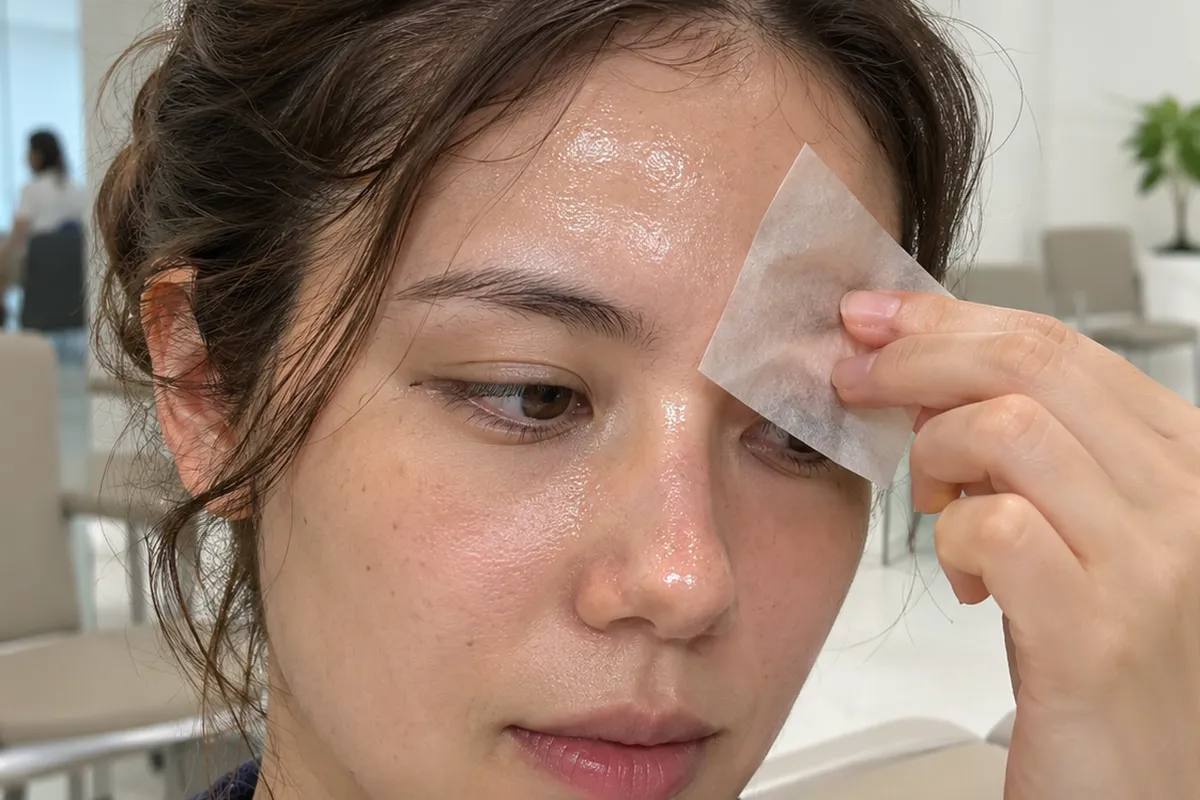
Sebum is an oily substance produced by the sebaceous glands that protects and lubricates the skin. The problem starts when production is excessive: shine, visible pores, make-up that will not stay put and, often, spots. Understanding what controls sebum helps you choose skincare that works and avoid products that, without meaning to, make the skin more irritated.
Three ideas to remember.
What controls sebum production
Hormones
The sebaceous glands have receptors for androgens, the so-called male hormones that also exist in women. More androgenic stimulation means more sebum. That is why oiliness increases at puberty and can vary:
- over the menstrual cycle;
- after stopping the pill;
- during pregnancy;
- in conditions such as polycystic ovary syndrome;
- with the use of anabolic steroids or some supplements.
Genetics
Skin type is largely inherited. People whose parents have oily skin are more likely to have it too.
Age
Sebum production is highest in adolescence and young adulthood and tends to decrease afterwards, especially in women after the menopause.
Climate
Heat and humidity increase the feeling of oiliness and shine, especially in the T-zone.
What does not help, or makes it worse
- Cleansing too often or with harsh products: strips away the protective lipids, irritates the skin and can worsen the feeling of imbalance.
- Alcohol and strong astringents: dry the surface, but do not reduce sebum production.
- Scrubs with grains used frequently.
- Very oily or comedogenic products, which can block the pores.
What helps
| Measure | Effect |
|---|---|
| Gentle cleansing, twice a day | Removes excess oil without irritating |
| Salicylic acid | Penetrates the pore, reduces comedones |
| Topical retinoids | They regulate skin renewal and reduce comedones |
| Niacinamide | In one study, it reduced sebum production after a few weeks |
| Light non-comedogenic moisturiser | Maintains the skin barrier without adding oiliness |
| Lightweight sunscreen | Protects without feeling heavy |
A study of 2% niacinamide applied to the face showed a reduction in sebum production after a few weeks (Draelos et al., 2006). A review on facial pores identified high sebum production as one of the main causes of enlarged pores (Lee et al., 2016).
When to seek medical help
- Intense oiliness with inflammatory acne.
- Oiliness associated with excess hair, hair loss or irregular periods, which may point to a hormonal cause.
- When home care is not enough.
In these cases, there are medical treatments, such as oral isotretinoin or hormonal treatments in some women, that reduce sebum production effectively (Reynolds et al., 2024).
At Luxmed Clinic
At Luxmed, we help to put together a simple routine for oily skin and, when it makes sense, complement it with facial cleansing, peels and intradermotherapy. If the oiliness suggests a hormonal cause, we refer you for medical assessment.
Talk to us
The assessment is a conversation, with no obligation. Tell us what concerns you and our team will reply.
This article is for information purposes and does not replace a consultation. The results of any treatment vary from person to person.
Frequently asked questions
Does oily skin age more slowly?
There is a perception that it does, because the skin tends to be thicker. But sun protection remains the most important factor.
Can I use facial oils?
Some light oils may be tolerated, but in skin prone to acne it is best to be careful.
Does stress increase oiliness?
It may contribute, through hormonal changes, although the effect varies from person to person.
Does diet have an influence?
There is some evidence of an association between diets high in sugar and some dairy products and acne, but the effect on oiliness is less clear.
Does oiliness go away with age?
It tends to decrease over the years, but in many people it persists into adulthood.
Scientific references 3
- Draelos ZD, Matsubara A, Smiles K. The effect of 2% niacinamide on facial sebum production. J Cosmet Laser Ther. 2006;8(2):96-101. doi:10.1080/14764170600717704 Artigo
- Lee SJ, Seok J, Jeong SY, Park KY, Li K, Seo SJ. Facial pores: definition, causes, and treatment options. Dermatol Surg. 2016;42(3):277-285. doi:10.1097/DSS.0000000000000657 Artigo
- Reynolds RV, Yeung H, Cheng CE, et al. Guidelines of care for the management of acne vulgaris. J Am Acad Dermatol. 2024;90(5):1006.e1-1006.e30. doi:10.1016/j.jaad.2023.12.017 Guideline
Editing and development: Rúben Brito · Operial Development
Keep exploring