


- Home
- Facial aesthetics
- Rough, uneven skin
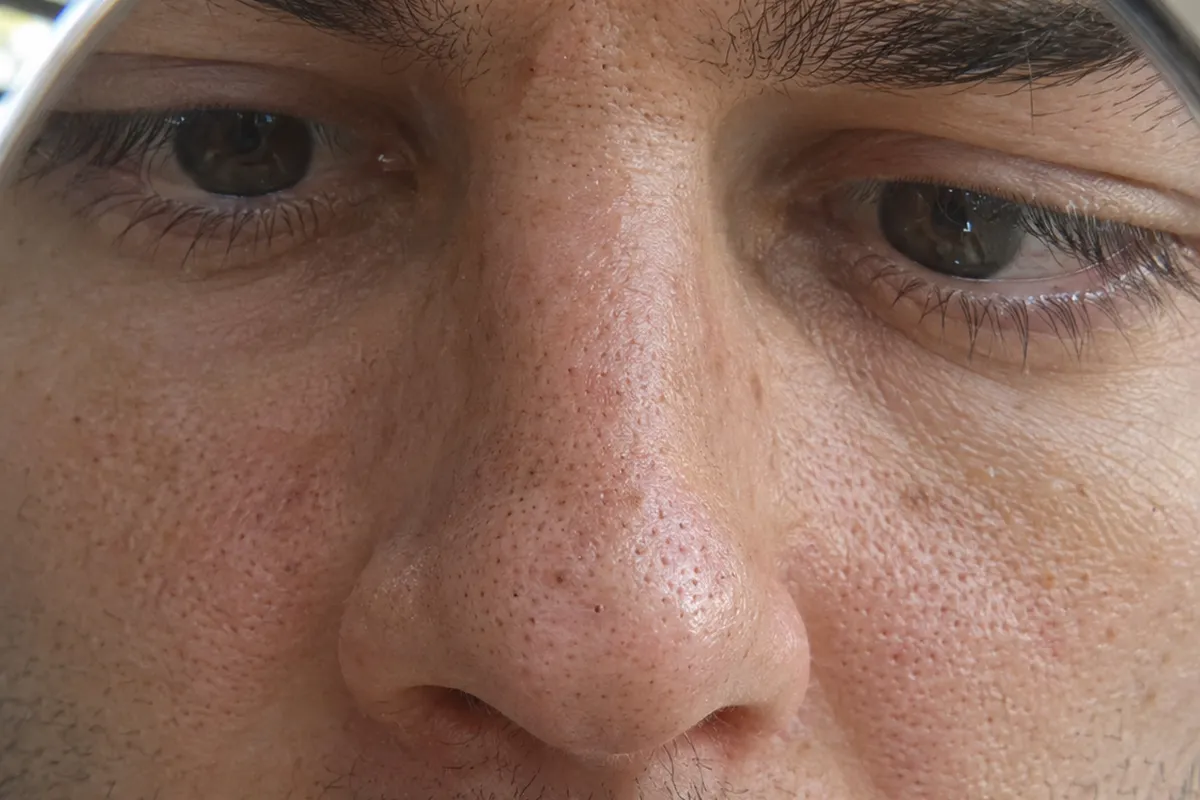
- Uneven texture
Uneven texture: peel, microneedling or laser
To improve skin texture there are three main options in the clinic. All stimulate renewal, but with different results, recovery and risks.
 Luxmed TeamAuthor
 Dr Michelle CampagnoliClinical review · OM no. 69467
In this article
To improve skin texture, there are three main options in the clinic: chemical peels, microneedling and fractional CO2 laser. All of them stimulate skin renewal, but in different ways, with different results, recovery times and risks. Choosing well depends on the cause of the uneven texture, the skin type and the recovery time available.
Three ideas to remember.
Comparing the options
| Chemical peel | Microneedling | Fractional CO2 laser | |
|---|---|---|---|
| How it works | Controlled chemical exfoliation | Microperforations that stimulate repair | Microcolumns of thermal injury |
| Best for | Mild texture, radiance, spots, acne | Acne scars, pores, texture | Marked texture, sun damage, fine wrinkles, scars |
| Sessions | 4 to 6 superficial, or 1 to 2 medium | 3 to 6 | 1 to 3 |
| Recovery | 0 to 7 days, depending on depth | 1 to 3 days | 5 to 10 days |
| Brown skin | Superficial, with caution | Good option | Greater risk of marks |
| Evidence | Good for several indications | Good for scars and texture | Strong for texture and photoageing |
Sources: Soleymani et al., 2018; Alster and Graham, 2018; Manstein et al., 2004.
Chemical peel
Superficial peels, with acids such as glycolic, salicylic or mandelic acid, improve radiance and mild texture, with little or no recovery. Medium peels treat more marked sun damage and texture, with a few days of flaking. The choice of type and concentration depends mainly on skin type and goal (Soleymani et al., 2018; Rendon et al., 2010). There is a dedicated article: Chemical peel: types, depth and recovery.
Microneedling
It creates microperforations that stimulate collagen production, leaving the skin surface largely intact. This allows quick recovery and less risk of marks than ablative lasers, which makes it a good option in darker skin (Alster and Graham, 2018). There is a dedicated article: Facial microneedling: how it works and what to expect.
Fractional CO2 laser
It creates thousands of microcolumns of thermal injury surrounded by intact skin, which stimulate renewal and collagen (Manstein et al., 2004). It is the treatment with the most effect per session on marked texture and sun damage, but it requires a few days of recovery and strict sun protection for weeks.
How to choose
| Condition | Option that usually makes the most sense |
|---|---|
| Dull skin and mild texture, without recovery time | Superficial peels in a series |
| Acne scars and enlarged pores | Microneedling, possibly with radiofrequency |
| Brown skin with a tendency towards spots | Microneedling and superficial peels |
| Marked sun damage, texture and fine wrinkles | Fractional CO2 laser |
| Combination of problems | Staged plan, alternating techniques |
At Luxmed Clinic
At Luxmed, we choose between peel, microneedling and laser according to the cause of the texture, the skin type and the availability for recovery. Often, the best solution is a plan that alternates techniques over a few months.
Talk to us
The assessment is a conversation, with no obligation. Tell us what concerns you and our team will reply.
This article is for information purposes and does not replace a consultation. The results of any treatment vary from person to person.
Frequently asked questions
Which is the most effective?
Per session, fractional CO2 laser. But the most effective for each person depends on the cause and the skin type.
Which has the least recovery?
Superficial peels and microneedling.
Can I have it done on darker skin?
Yes, with careful choice. Microneedling and superficial peels are, in general, the safest options.
Can I combine them?
Yes, in separate sessions. Alternating techniques makes it possible to treat several aspects of the skin.
How long does it take to see results?
Superficial peels give radiance within days; the new collagen from microneedling and laser appears over 2 to 6 months.
Scientific references 4
- Soleymani T, Lanoue J, Rahman Z. A practical approach to chemical peels: a review of fundamentals and step-by-step algorithmic protocol for treatment. J Clin Aesthet Dermatol. 2018;11(8):21-28. Artigo
- Rendon MI, Berson DS, Cohen JL, Roberts WE, Starker I, Wang B. Evidence and considerations in the application of chemical peels in skin disorders and aesthetic resurfacing. J Clin Aesthet Dermatol. 2010;3(7):32-43. Artigo
- Alster TS, Graham PM. Microneedling: a review and practical guide. Dermatol Surg. 2018;44(3):397-404. doi:10.1097/DSS.0000000000001248 Artigo
- Manstein D, Herron GS, Sink RK, Tanner H, Anderson RR. Fractional photothermolysis: a new concept for cutaneous remodeling using microscopic patterns of thermal injury. Lasers Surg Med. 2004;34(5):426-438. doi:10.1002/lsm.20048 Artigo
Editing and development: Rúben Brito · Operial Development
Keep exploring